Results for “caudal-fin”
Type a name: scientific, common, or one a species used to go by. Or narrow the catalogue with the filters.
Filters
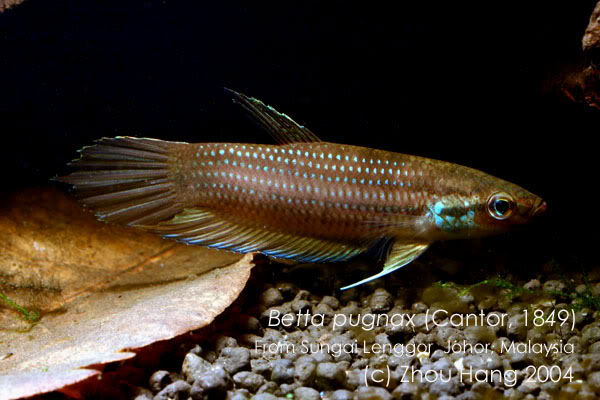
Betta pugnax
Cantor, 1849
Max length70mm SL2.8in SLTank80 × 30cm31 × 12inTemp22–28°C72–82°FpH4.0–7.5It can be told apart from other members of the B. pugnax group by the following characters: chin bar present; no complete second postorbital stripe on opercle; presence of transverse bars in caudal-fin of males; caudal-fin in males broadly lanceolate; opercle scales iridescent blue; anal-fin with reddish subdistal band and black margin; caudal-fin without dark margin; 25-28 anal-fin rays; 28-31 lateral scales; 11-12 postdorsal scales; length of pelvic fins 26.6-43.8 % SL; length of head 27.5-35.2 % SL; inter-orbital width 32.4-53.0 % HL.
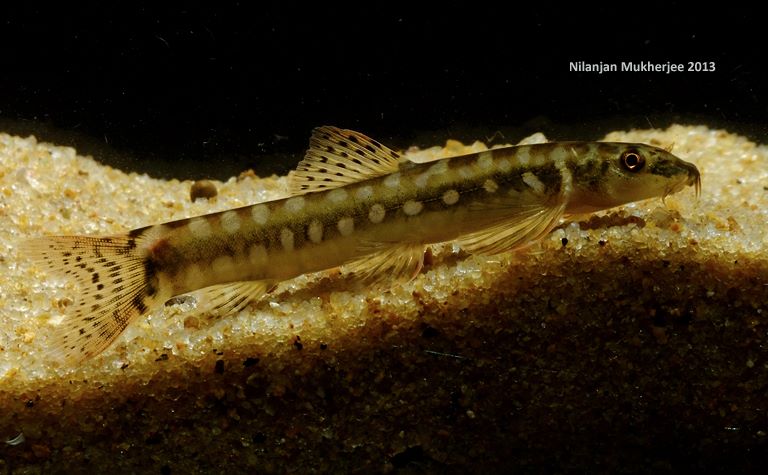
Mesonoemacheilus guentheri
Day, 1867
Max length60mm SL2.4in SLTank60 × 30cm24 × 12inTemp19–25.5°C66–78°FpH6.0–7.5However, according to the identification key of Rema Devi and Indra (2002), the two can be distinguished by a combination of factors as follows: body spots rounded in shape (vs. 'Y' or 'V' shaped in M. herrei); caudal peduncle relatively long (vs. relatively short); anal-fin not reaching base of caudal-fin (vs. anal-fin reaching base of caudal-fin); caudal peduncle with a dark band (vs. caudal peduncle with a dark spot); sub...
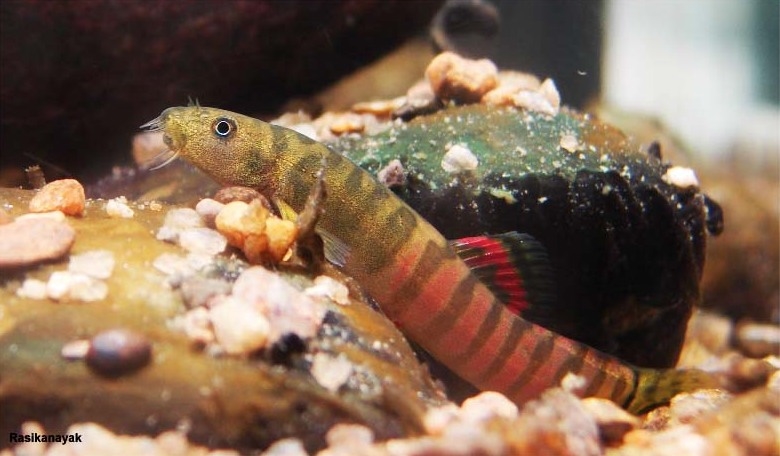
Schistura kodaguensis
Menon, 1987
Max length36mm SL1.4in SLTank60 × 30cm24 × 12inTemp20–25°C68–77°FpH6.0–7.5This species is not a well-known aquarium fish but is maintained by a number of Indian enthusiasts. It can be told apart from related species by the following combination of characters as per Sreekantha et al. (2006): pectoral-fin rays 10; absence of black spot at base of dorsal-fin; presence of rows of spots on caudal-fin; lateral line incomplete; caudal-fin slightly emarginate; 11-14 vertical bars on the body.
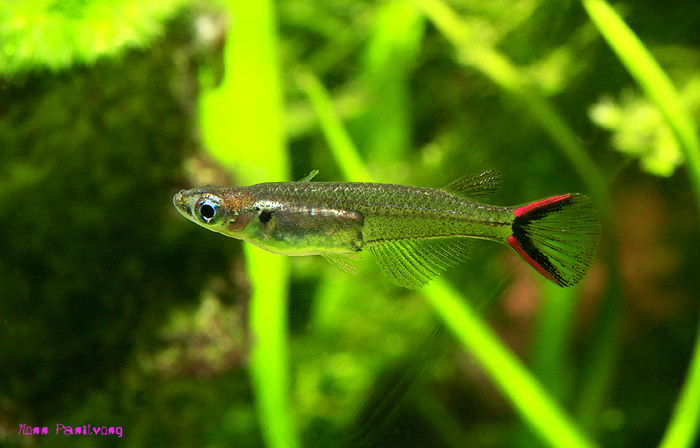
Oryzias mekongensisMekong Ricefish
Uwa & Magtoon, 1986
Max length21mm SL0.8in SLTank40 × 20cm16 × 8inTemp23–27°C73–81°FpH6.0–7.5It can be further distinguished from congeners by the following combination of characters: small adult size; bright orange-red marginal bands on caudal-fin lobes in males; caudal-fin rounded and elongate; 5-7 dorsal-fin rays; relatively few (13-18) anal-fin rays without bony contact organs, the last ray branched; 6-8 pectoral-fin rays. Members of the family Adrianichthyidae are...
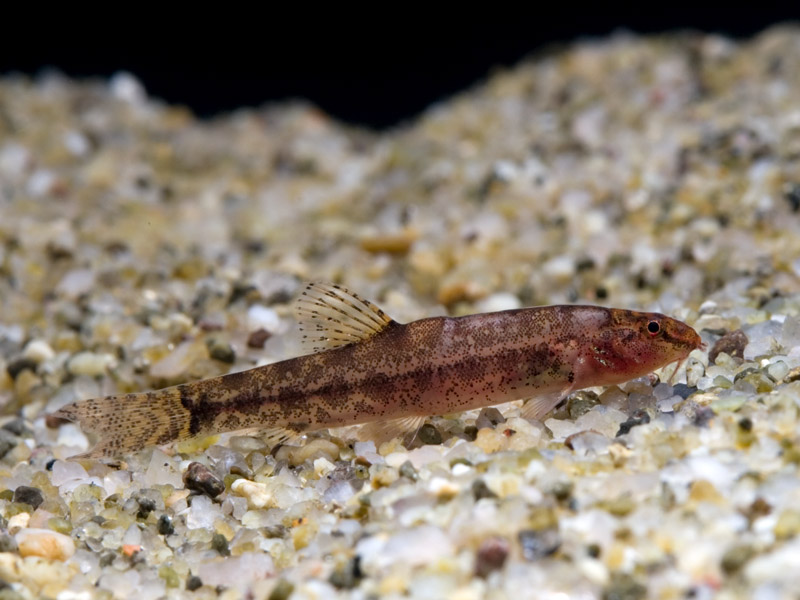
Lepidocephalichthys furcatus
de Beaufort, 1933
Max length50mm SL2.0in SLTank45 × 30cm18 × 12inTemp23–26°C73–79°FpH5.5–7.5This species is not traded often but is occasionally available as bycatch among shipments of other species. It can be told apart from congeners most easily by the prominent, dorsally-orientated, roughly semi-circular lamina circularis in males, a feature unique within the genus. Other distinguishing characters include a combination of: forked caudal-fin; relatively small adult size; dark <-shaped mark at the base of the caudal-fin; a black spot at the base of branched caudal-fin rays 3-5.
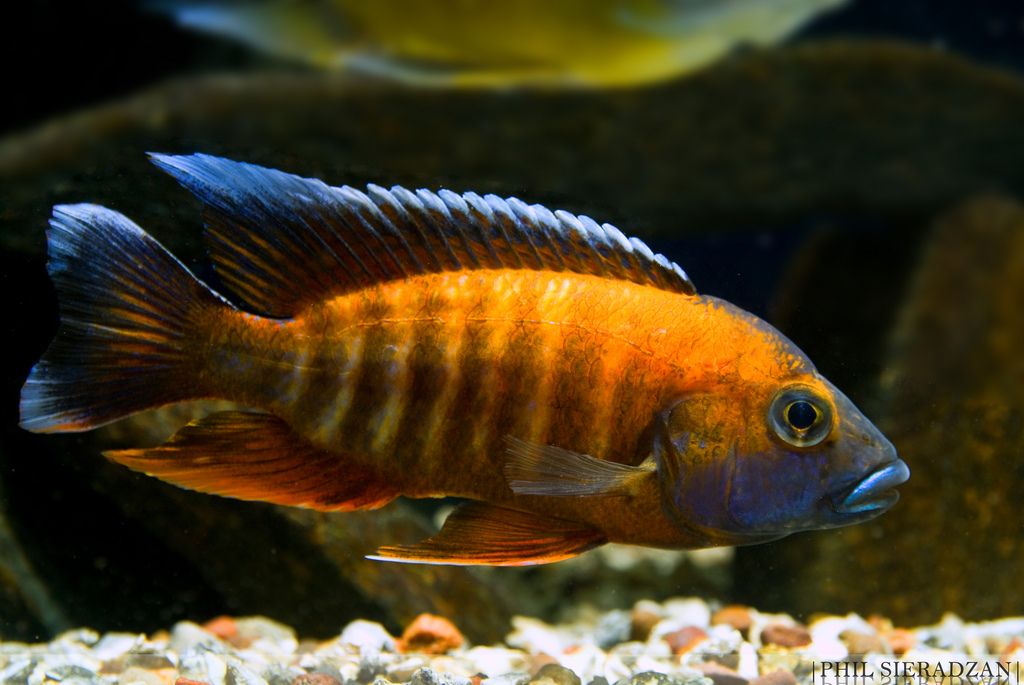
Aulonocara jacobfreibergiMalawi Butterfly
Johnson, 1974
Max length170mm SL7in SLTank120 × 60cm48 × 24inTemp25–29°C77–84°FpH7.5–9.0This was one of the first Aulonocara spp. to enter the hobby and its popularity has endured. It's known by several other vernacular names including 'Freiberg's peacock', 'fairy cichlid' and 'African butterfly' as well as the erroneous 'scientific' names Trematocranus trevori, T. jacobfreigbergi and T. regina. A naturally-occurring, yellowish form from Undu reef, Tanzania is often referred to as 'lemon jake'. It can be told apart from most other members of the genus by the broad, pale distal margins in the dorsal, anal and caudal fins, more deeply-forked caudal fin and larger adult size.
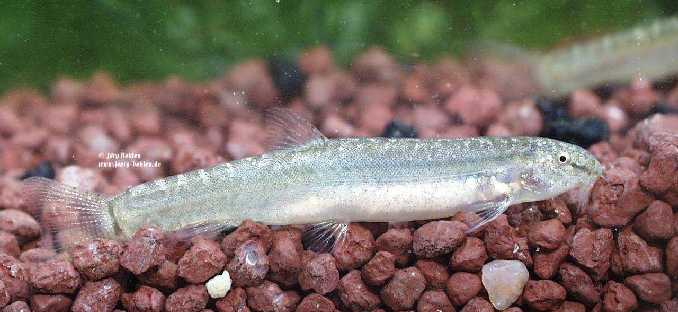
Lepidocephalichthys cf. irrorataLoktak Loach
Hora, 1921
Max length30mm SL1.2in SLTank45 × 30cm18 × 12inTemp20–25°C68–77°FpH5.5–7.5This species is not traded often but may occasionally be exported as bycatch among shipments of other species. It can be distinguished from congeners by the following combination of characters: presence of large, exposed scales on top of head; dorsal-fin origin posterior to pelvic-fin origin; moderate to small size (to 29 mm SL); caudal-fin emarginate and with dark reticulations; caudal-fin lobes with dark, elongated spots along upper and lower edges.
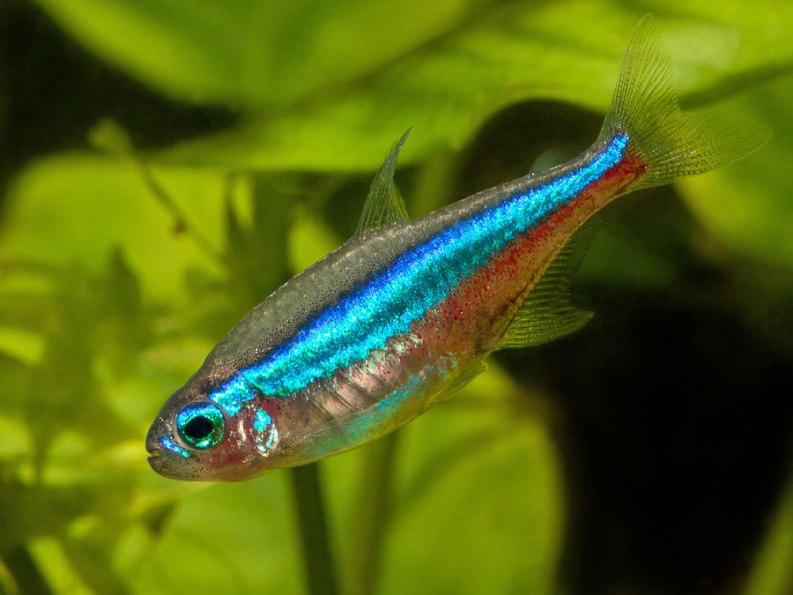
Paracheirodon simulansGreen Neon Tetra
Géry, 1963
Max length25mm SL1.0in SLTank45 × 30cm18 × 12inTemp21–35°C70–95°FpH3.0–6.5For aquarists perhaps more useful are the subtle differences in colour pattern with P. simulans differing from both P. innesi and P. axelrodi in possessing a greener (vs. bluer) lateral stripe which covers more (vs. less) of the eye/head and extends to the caudal-fin base (vs. terminating anterior to caudal-fin base), a lesser (vs. greater) amount of relatively duller (vs. brighter) red pigmentation on the flanks. The taxonomic history of all three species is complicated with earlier authors such as Géry (1960, 1977) ten...
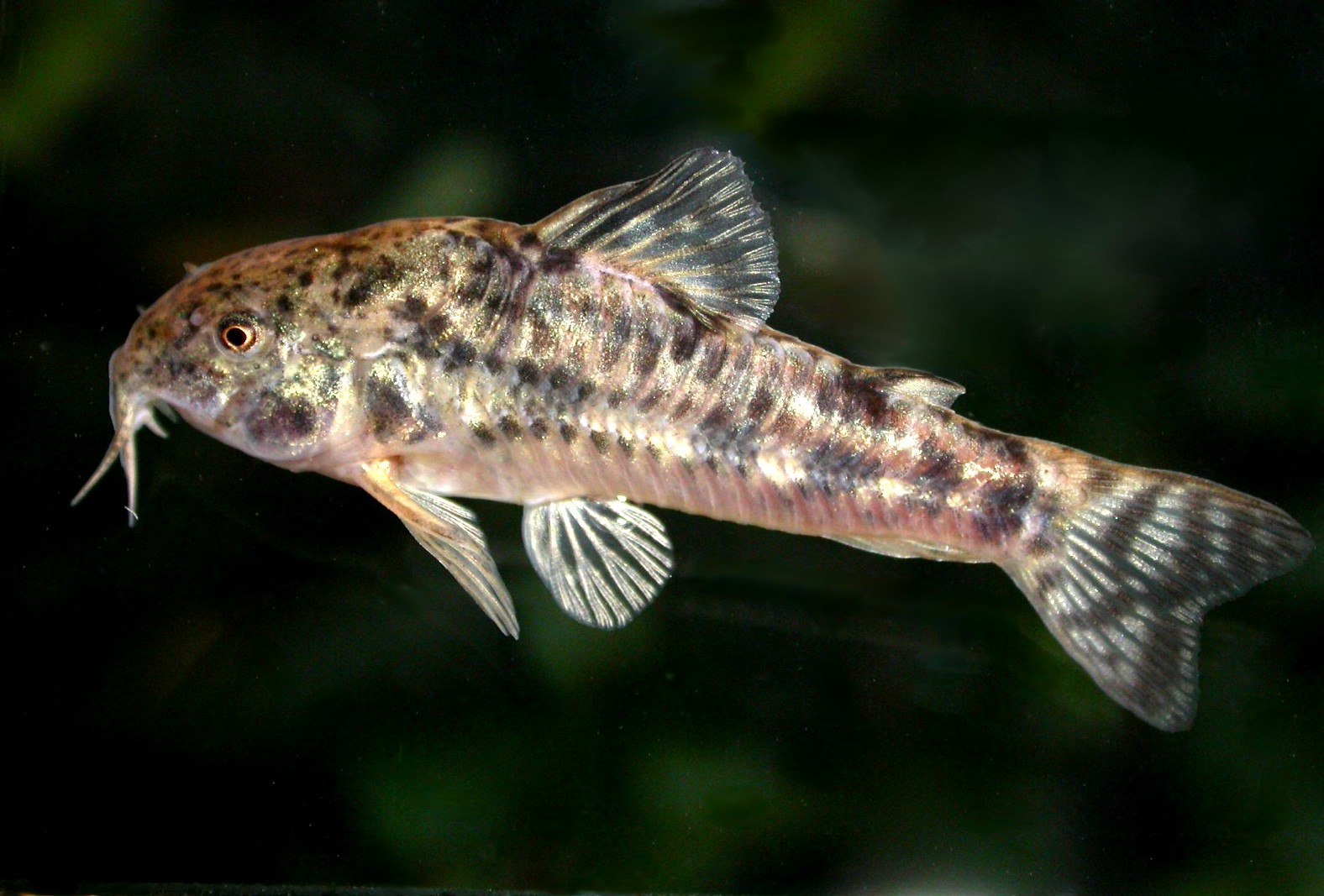
Corydoras petracinii
Calviño & Alonso, 2010
Max length38mm SL1.5in SLTank60 × 30cm24 × 12inTemp10–20°C50–68°FpH7.0–8.0It also exhibits morphological adaptations to an existence among rocks in a flowing environment, such as a cryptic colour pattern, reduced spine length in the dorsal and pectoral fins, ventrally-oriented pectoral fins, slightly emarginate caudal-fin, and reduced body depth. Reduced fin spines and body depth are typical features associated with the related genus Aspidoras, but the...
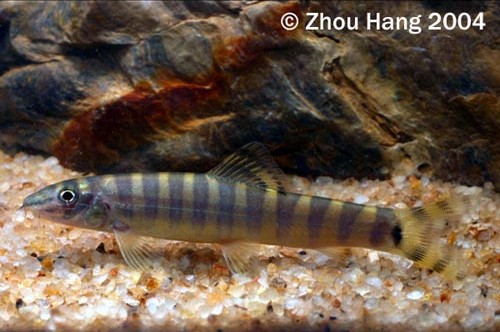
Parabotia lijiangensis
Chen, 1980
Max length83mm SL3.3in SLTank120 × 30cm48 × 12inTemp20–24°C68–75°FpH6.0–7.5It's told apart from congeners by a combination of characters as follows: large scales present on body and sides of head; caudal fin deeply forked with subequal lobes; 10-13 dark, vertical bars on the body; a dark, ocellated spot in the centre of the caudal-fin base; two bars on top of head, dorsal-fin with two rows of greyish spots; caudal-fin lobes with 3-4 dark bands on each; anal-fin with one indistinct band and another, more distinct, submarginal band; ventral fins with two indistinct bands.
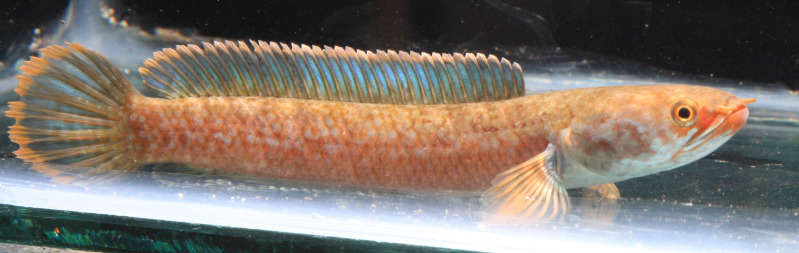
Channa burmanica
Chaudhuri, 1919
Max length200mm SL8in SLTank120 × 45cm48 × 18inTemp10–22°C50–72°FpH6.0–8.0It's one of several genus members to lack pelvic fins and following Chaudhuri (1919) also has 51 lateral line scales, 38 dorsal-fin rays, 28 anal-fin rays, 12 caudal-fin rays, 15 predorsal scales, pectoral-fins with alternating dark and light bands, and white-tipped dorsal...
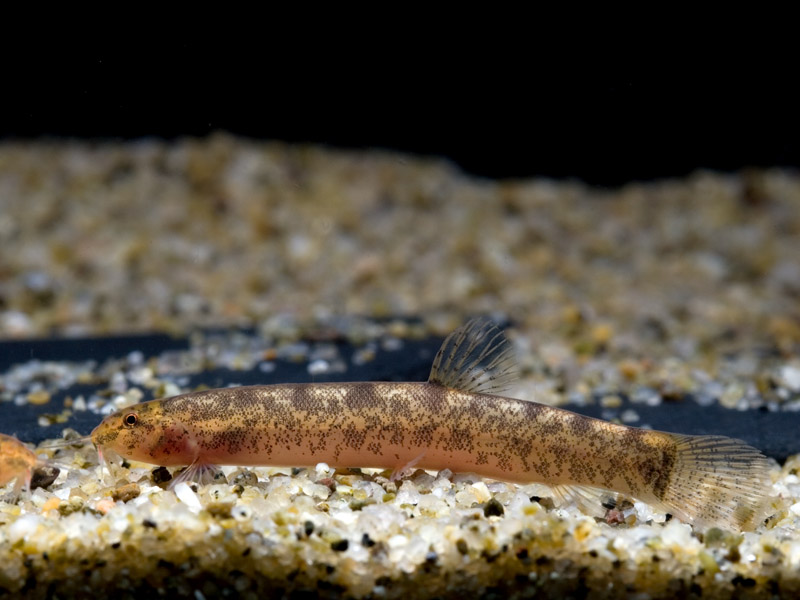
Lepidocephalichthys tomaculum
Kottelat & Lim, 1992
Max length39mm SL1.5in SLTank45 × 30cm18 × 12inTemp23–29°C73–84°FpH3.5–7.0This species is not traded often but may be available occasionally bycatch among shipments of other species. It can be told apart from congeners most easily by the following combination of characters: truncate caudal-fin; scaleless patch on top of head; caudal-fin with reticulated patterning, sometimes appearing as a series of thin vertical bars; body reddish brown with darker markings; 3-7 predorsal and 3-6 postdorsal thin, transverse dark bars running across the dorsal surface; relatively deep...
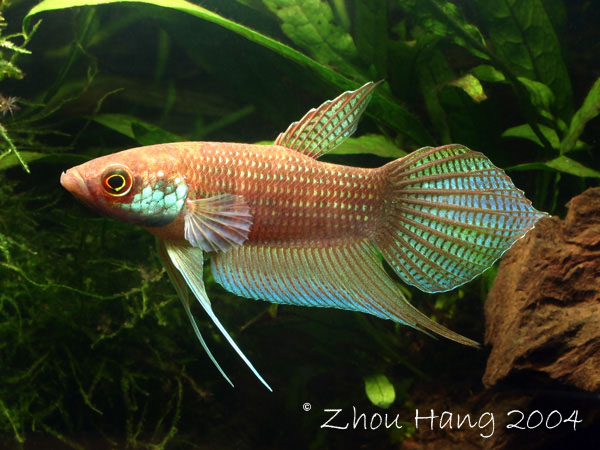
Betta raja
Tan & Ng, 2005
Max length70mm SL2.8in SLTank80 × 30cm31 × 12inTemp22–27°C72–81°FpH4.0–7.0It should be noted that not all authors consider the B. pugnax group to contain the same species, with some placed in the B. picta complex by Schindler and Schmidt (2006), for example. B. raja can be told apart from other members of the B. pugnax group by the following characters: mature males with very long pelvic fins covering 15-23 anal-fin rays or even longer than the base of the anal-fin in some cases; anal-fin and lower caudal-fin with black marginal bands; 25-28 anal-fin rays; 30-32 lat...
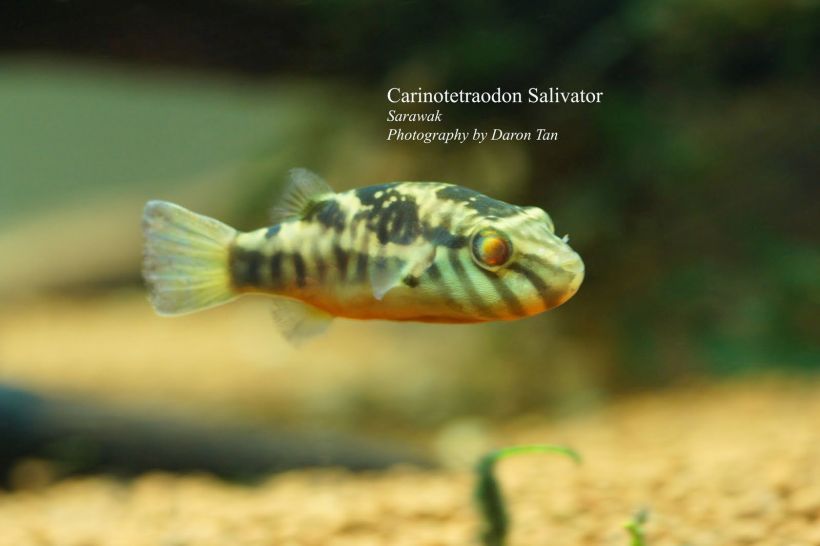
Carinotetraodon salivator
Lim & Kottelat, 1995
Max length50mm SL2.0in SLTank60 × 30cm24 × 12inTemp20–28°C68–82°FpH5.0–7.5It is included in a group often referred to as 'red-eyed puffers', which currently contains four recognised species distributed in Indochina and the Greater Sunda Islands. It can be distinguished from C. borneensis, C. irrubesco, and C. lorteti, the remaining members of this group, by the following combination of characters: 11 dorsal-fin rays; 16 pectoral-fin rays; 11-13 anal-fin rays; 11 caudal-fin rays; eyes not bulging above the head; in males dorsal-fin hyaline, black spot on dorsal-fin base present, pectoral-fin base hyaline, anal-fin hyaline with no black spot at base...
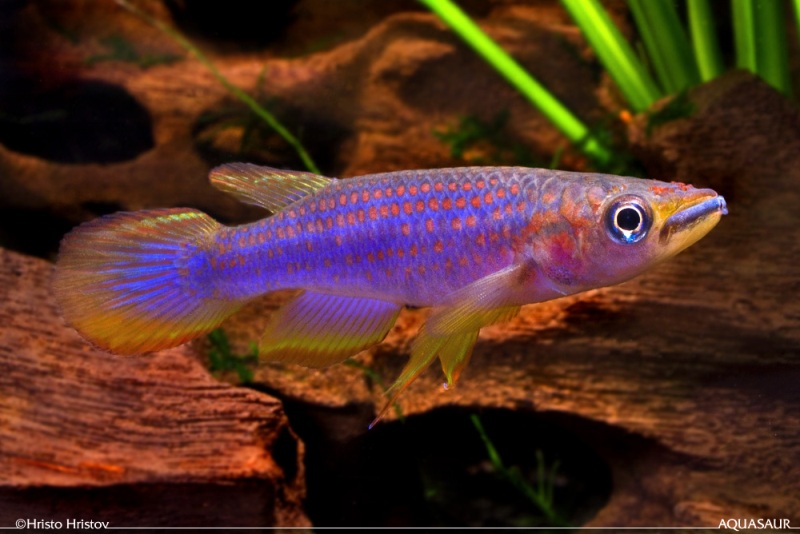
Epiplatys lamotteiRed-spotted Panchax
Daget, 1954
Max length60mm SL2.4in SLTank80 × 30cm31 × 12inTemp18–23°C64–73°FpH5.0–7.0Following the key of Romand (1992) this species can be told apart from congeners by the following combination of characters: adult size > 40 mm SL; large, dark, transverse bars and some reddish-brown pigmentation on flanks; longitudinal bands more-or-less defined; longitudinal bands composed of small red spots; caudal-fin subquadrangular caudal fin; 11-13 anal-fin rays; 16-17 dorsal-fin rays; 7-8 anal-fin rays located anterior to dorsal-fin origin.
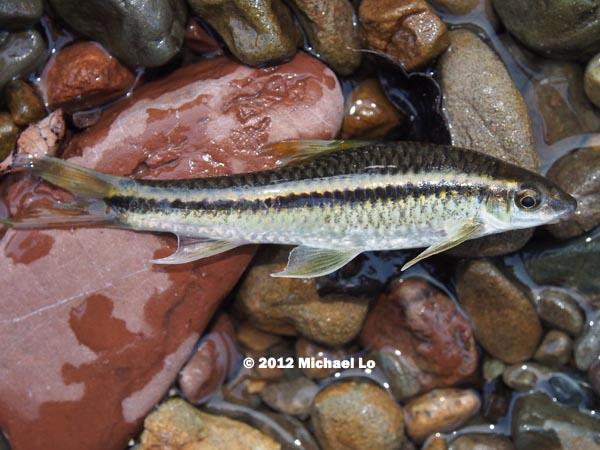
Crossocheilus cobitis
Bleeker, 1854
Max length52mm SL2.0in SLTank100 × 30cm39 × 12inTemp20–26°C68–79°FpHnot recordedGiven its wide natural range it seems logical that this species is or has been available in the aquarium trade, although its correct name may never have been applied. It is told apart from congeners by the following combination of characters: two pairs of barbels; a continuous midlateral stripe from the tip of the snout to the base of the caudal-fin, with a conspicuous small blotch at the posterior extremity, faintly marked on the caudal-fin; a faint mark between the anus and the anal-fin origin in juveniles; a narrow mouth.
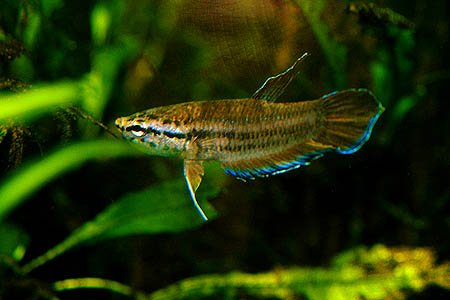
Betta pictaSpotted Betta
Valenciennes, 1846
Max length50mm SL2.0in SLTank60 × 30cm24 × 12inTemp22–28°C72–82°FpH5.5–7.5This species lends its name to the Betta picta complex of closely-related species, an assemblage of which members share the following combination of characters: unpaired fins rounded (anal fin sometimes pointed): I-III, 18-24 anal-fin rays; anal and caudal fins with dark distal margins, most pronounced in mature males; pre- and post-orbital stripes present; chin bar present; opercle with iridescent blue, green, or gold scales.
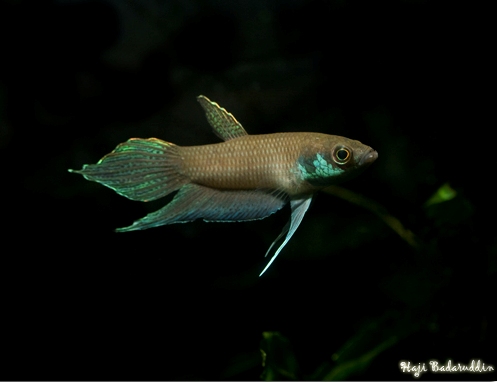
Betta lehi
Tan & Ng, 2005
Max length61mm SL2.4in SLTank60 × 30cm24 × 12inTemp22–27°C72–81°FpH4.0–7.0It can be told apart from other members of the B. pugnax group by the following characters: chin bar absent; prsence of transverse bars in the dorsal-fin; no transverse bars in caudal-fin; green iridescent scales present on opercle and body; anal fin with iridescent, light blue distal band; a pair black markings below the postorbital stripe on the opercle of females and juveniles; anal-fin rays 25-29 (mode 28); lateral scales 28-30 (mode 29); postdorsal scales 10-11 (mode 12); pelvic-fin length 34.8-50.6% SL; head length 33.4-36.8% SL; inter-orbital width 31.7-37.4% HL.
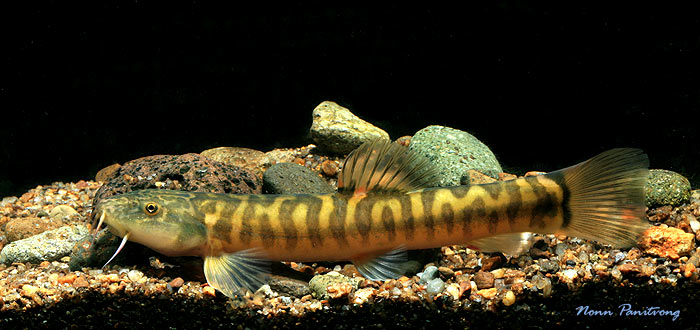
Schistura schultzi
Smith, 1945
Max length93mm SL3.7in SLTank120 × 30cm48 × 12inTemp16–24°C61–75°FpH6.0–8.0There appears to be some discrepancy between Smith's original description and Kottelat (1990) in that Smith states the fish is a member of a group of species lacking an ocellus at the upper caudal-fin base, whereas Kottelat mentions the presence of 'a black spot at upper extremity of caudal-fin base, surrounded by a whitish area'.
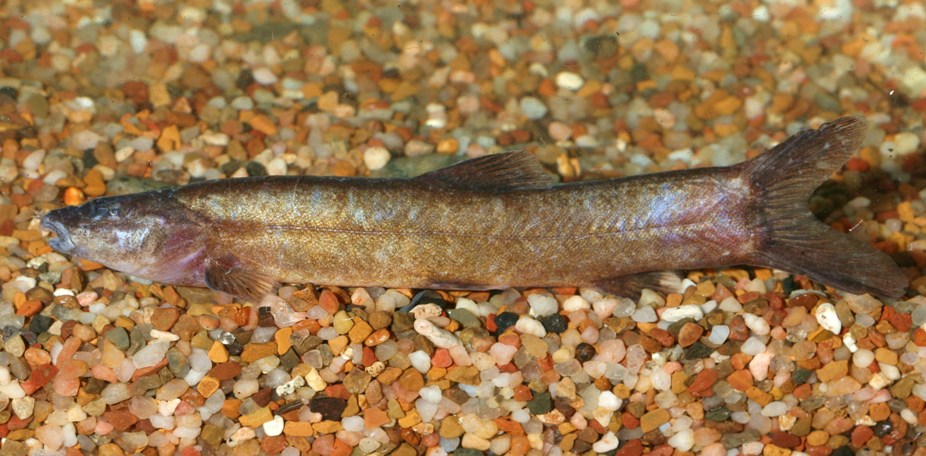
Leptobotia microphthalma
Fu & Ye, 1983
Max length150mm SL6in SLTank120 × 45cm48 × 18inTemp15.5–21°C60–70°FpH6.5–7.5Superficially similar to L. tientainensis but according to the formal description can be separated by a combination of characters including: more deeply-forked caudal-fin (shortest central rays fit 2.6-2.9 times in the outer rays vs. 1.7-2.5 times); significantly smaller eye (fits 26 times in head length vs. 10 times); caudal-fin with 1-2 dark bands at lateral edges v...