Results for “cephalic”
Type a name: scientific, common, or one a species used to go by. Or narrow the catalogue with the filters.
Filters
Brycon cephalusRed-tailed Brycon
authority not recorded
Max length220mm SL9in SLTank210 × 60cm84 × 24inTemp22–26°C72–79°FpH5.5–7.5The Brycon genus is large, at present containing over 50 species. A number of these are very similar, a couple of which (B. rubricauda and B. orbignyanus) resemble B. cephalus quite closely. However this one is the most common in nature and is likely to be the species seen on sale most often. Commonly known as the matrinxã in Brazil, it has an interesting life cycle, migrating twice per year over large distances according to the season. The first movement occurs at the start of...
Rasbora cephalotaeniaPorthole Rasbora
authority not recorded
Max length130mm SL5in SLTank120 × 45cm48 × 18inTemp22–25°C72–77°FpHnot recordedThis species is not often exported which is a shame as it makes an elegant, peaceful resident of the larger community tank. It can be easily distinguished from similar-looking congeners such as R. einthovenii and R. jacobsoni by examining the dark lateral stripe that extends lengthways along the body of the fish as in R. cephalotaenia it is composed of a series of dark spots whereas in the other species it forms a continous solid line. Rainboth's 'Fishes of the Cambodian Mekong'...
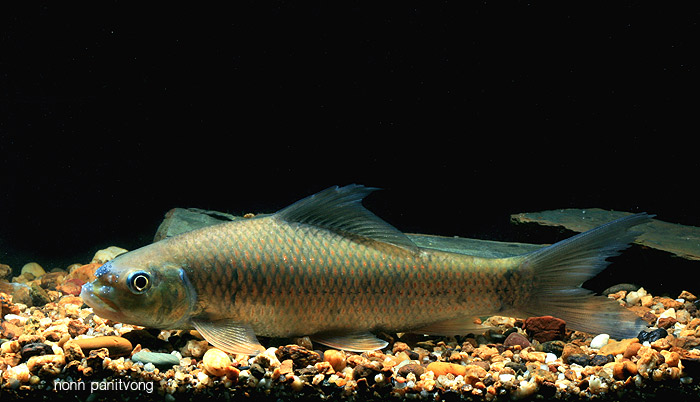
Bangana devdevi
Hora, 1936
Matched on Labeo cephalus, a name it was formerly known by
Max length250mm SL10in SLTanknot recordedTempnot recordedpHnot recordedKnown with certainty from the Irrawaddy River system in Manipur state, India, and Myanmar, and the Salween watershed in eastern Myanmar and northwestern Thailand. Records from the Red River basin in Vietnam appear questionable. Type locality is 'Burma: Myitkyina District: Mali Hka basin: Phungin Hka;'.
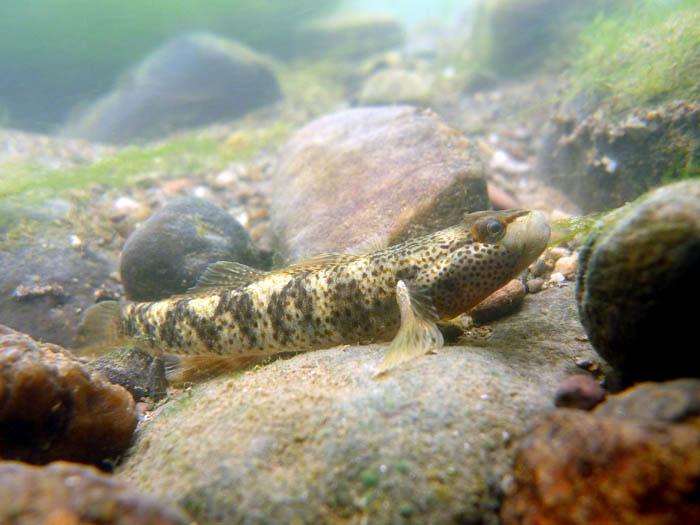
Rhinogobius mekongianus
Pellegrin & Fang, 1940
Matched on Ctenogobius cephalopardus, a name it was formerly known by
Max length50mm SL2.0in SLTank60 × 30cm24 × 12inTemp18–26°C64–79°FpH6.0–7.5Known from various parts of the middle and upper Mekong river basins with record existing from the Nam Tha, Nam Ou, Nam Khan, Nam Lik, Nam Ngum and Nam Mang tributary systems in Laos, the Nam Noeua (a tributary of Nam Ou) in Vietnam, and the Mae Nam Kok in Thailand. Occurrences in the Chao Phraya drainage in central Thailand most likely refer to the congener R. chiengmaiensis.