Results for “chela”
Type a name: scientific, common, or one a species used to go by. Or narrow the catalogue with the filters.
Filters
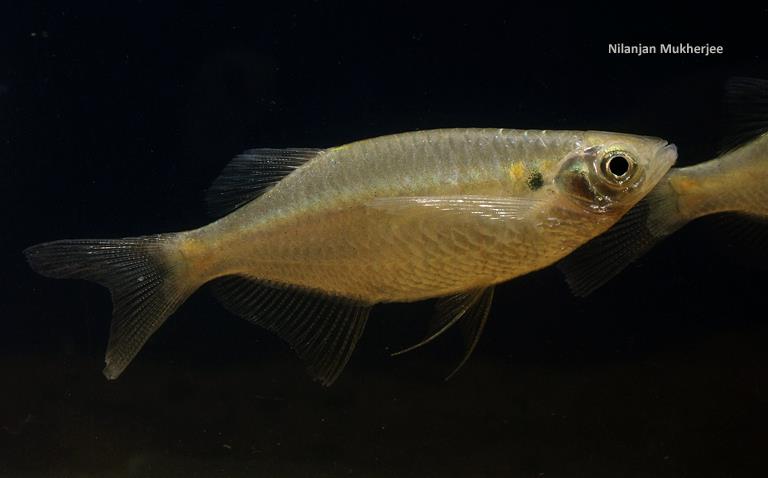
Chela cachiusNeon Hatchet Fish
Hamilton, 1822
Max length50mm SL2.0in SLTank90 × 30cm36 × 12inTemp18–24°C64–75°FpH6.0–8.0It is currently the only valid member of the genus but it is possible that additional taxa exist, particularly in Myanmar, while a number of former species are contained within the Laubuka assemblage, to which C. cachius is closely related. Phylogenetic studies suggest the existence of a monophyletic clade consisting of the genera Devario, Chela, Laubuca, Microdevario and Microrasbora plus the genus Betadevario.
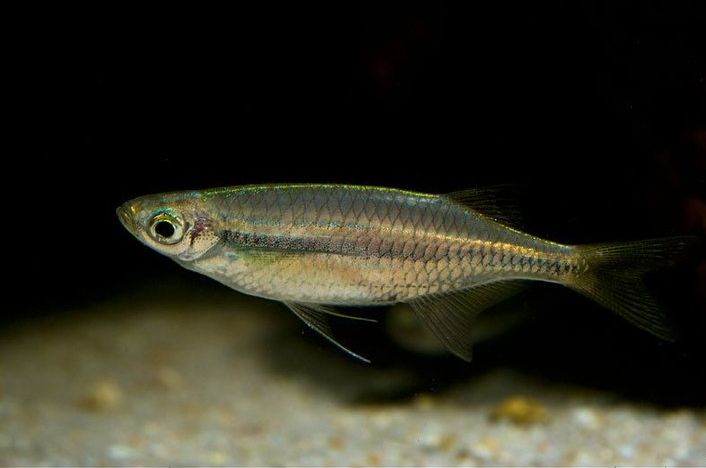
Laubuka fasciataMalabar Hatchet Chela
Silas, 1958
Matched on Chela fasciata, a name it was formerly known by
Max length50mm SL2.0in SLTank120 × 30cm48 × 12inTemp20–26°C68–79°FpH6.5–7.5It can be distinguished from other members of the genus by the following characters: dark longitudinal stripe on body, extending from eye to caudal peduncle; scattered tubercles present on lower jaw; 14½-16½ branched anal-fin rays; pelvic-fin long, reaching beyond anus.
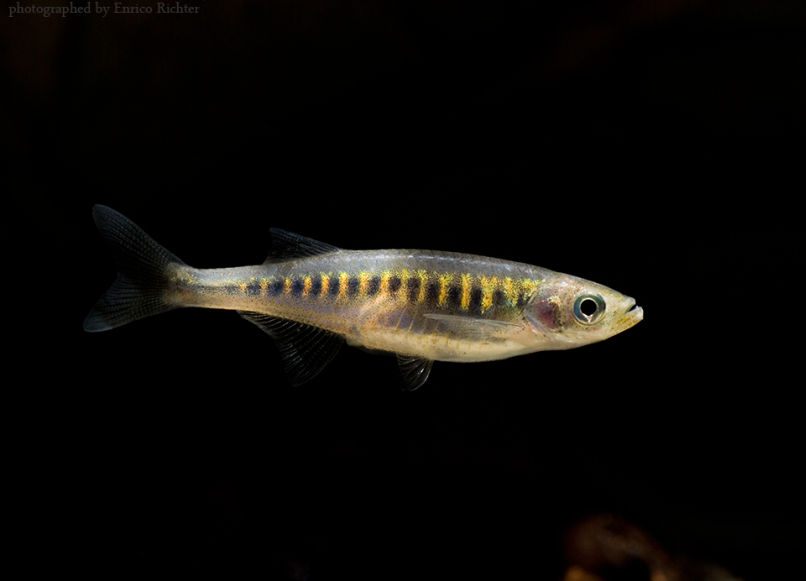
Inlecypris auropurpurea
Annandale, 1918
Max length80mm SL3.1in SLTank90 × 30cm36 × 12inTemp20–24°C68–75°FpH6.0–8.0Originally described as a member of Barilius (Annandale, 1918) but Howes (1980a) considered it more closely related to cheline cyprinids (Chela and Laubuca spp.) based on morphological characters and erected the genus Inlecypris for it (Howes, 1980b). Fang (2003) supported Howes' conclusions in her 2003 phylogenetic study of the genus Danio, hypothesising that Inlecypris and Chela together form a sister group to Devario.
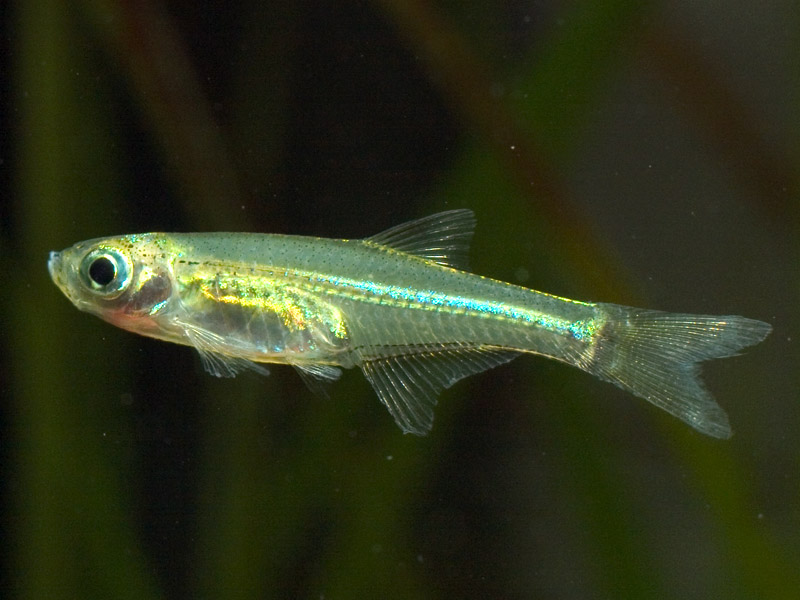
Microdevario gatesi
Herre, 1939
Max length23mm SL0.9in SLTank45 × 30cm18 × 12inTemp20–27°C68–81°FpH6.0–7.5The genus Microdevario was raised by Fang et al. (2009) after phylogenetic analyses revealed that some species formerly included in Microrasbora to be more closely allied with Devario and in need of reclassification. Microdevario is largely separated from Devario and other closely related genera such as Chela and Laubuca by virtue of internal characters but also the following: small adult size; anal and dorsal fins with concave-shaped distal margin; absence of barbels; absence of perforated scales; 9-10 branched anal-fin rays; 7 branched dorsal-fin rays; less abdominal than caudal vertebrae.
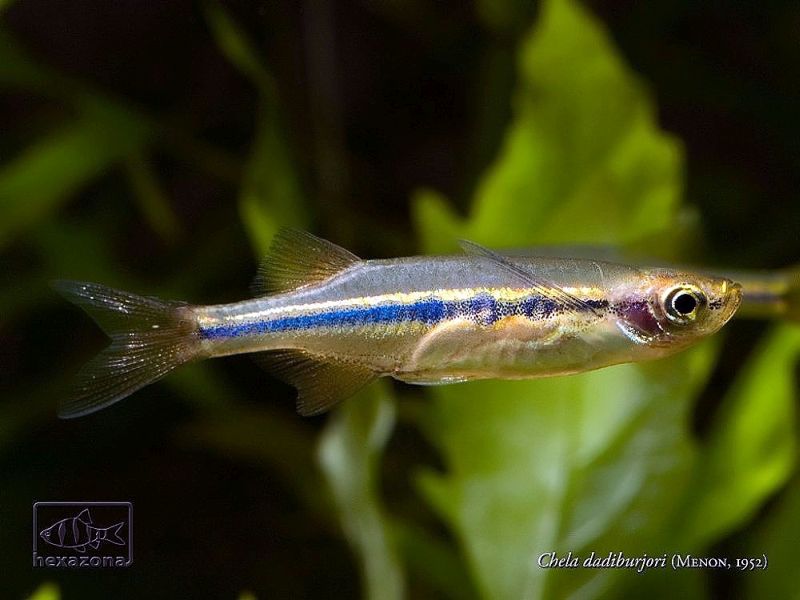
Laubuka dadiburjoriDadio
Menon, 1952
Matched on Chela dadiburjori, a name it was formerly known by
Max length30mm SL1.2in SLTank90 × 30cm36 × 12inTemp20–24°C68–75°FpH6.0–7.5It can be distinguished from other members of the genus by the following characters: lateral line absent or perforating only 2-5 scales; pharyngeal teeth hooked; body size small, not exceeding 30 mm SL; body depth less than 25 % SL; colour pattern comprising a dark bluish lateral stripe extending from the eye to the caudal peduncle, typically, but not always, forming 2-5 circular spots along its length.
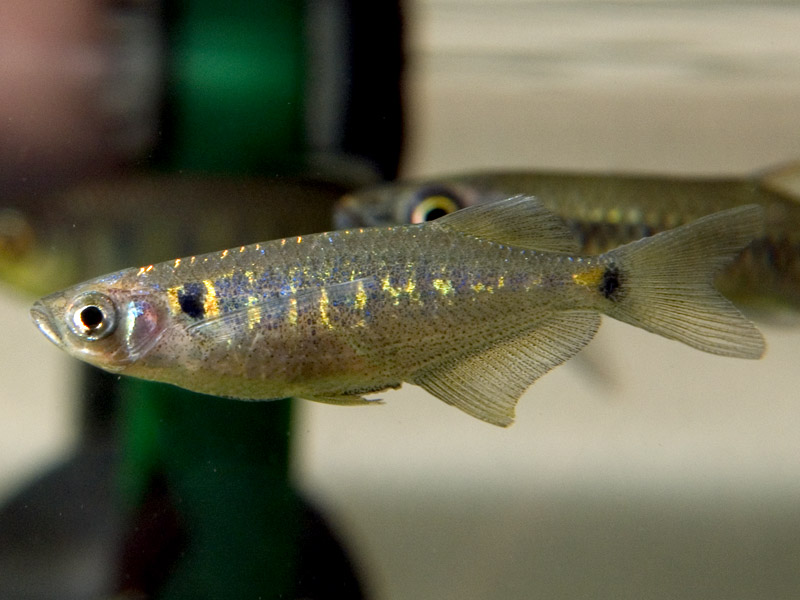
Laubuka laubucaIndian Glass Barb
Hamilton, 1822
Matched on Chela khujairokensis, a name it was formerly known by
Max length60mm SL2.4in SLTank120 × 30cm48 × 12inTemp18–24°C64–75°FpH6.0–8.0Probably endemic to northern India, Bangladesh, and Nepal. Records from Sri Lanka, southern India, Myanmar, Thailand, Laos, Cambodia, Vietnam, Malaysia, and Indonesia appear to represent other species. Given the distribution of L. siamensis, it seems likely that many of the fish entering the aquarium trade are this species and not L. laubuca. The two species can be distinguished b...
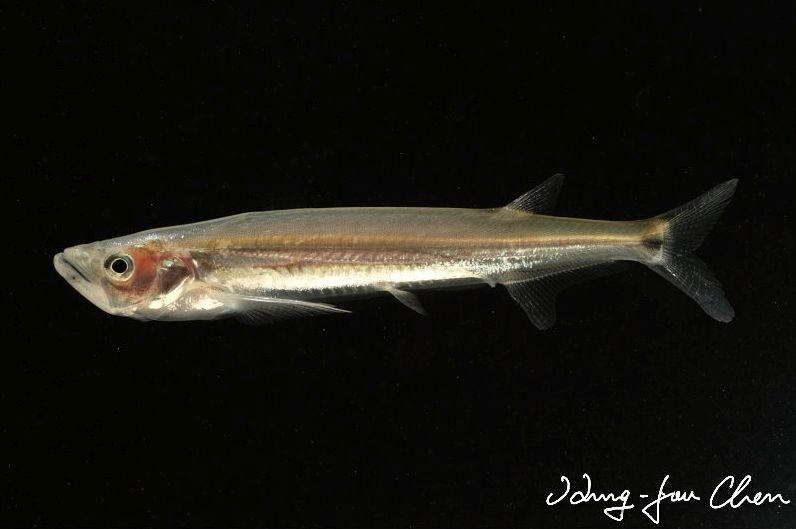
Macrochirichthys macrochirusGiant Sword Minnow
Valenciennes, 1844
Matched on Chela macrochir, a name it was formerly known by
Max length800mm SL31in SLTanknot recordedTemp20–26°C68–79°FpH6.0–8.0It is thought to have been extirpated from the Chao Phraya and Mae Klong rivers, Lake Songkhla, and the entire island of Java due to a variety of anthropogenic factors, and the Mekong populations have also been drastically reduced. In particular, it is sensitive to pollution and gillnetting, and is heavily overfished.