Results for “coastline”
Type a name: scientific, common, or one a species used to go by. Or narrow the catalogue with the filters.
Filters
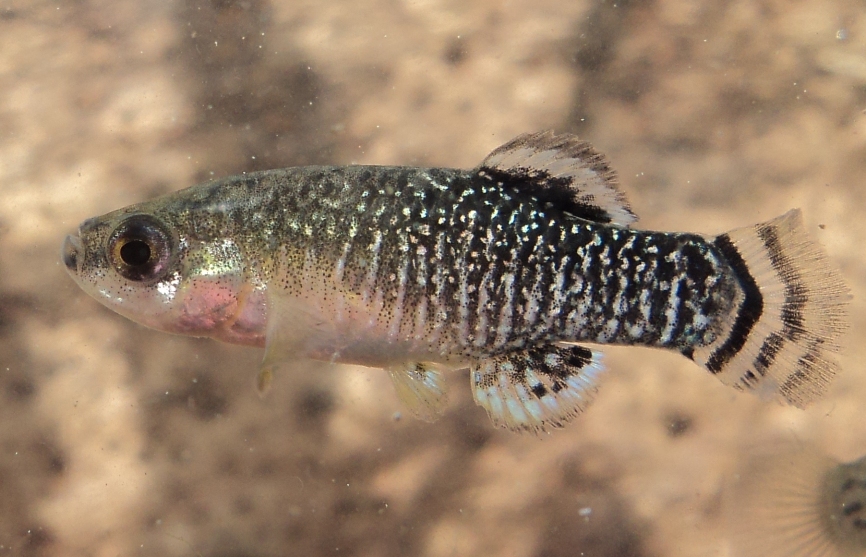
Apricaphanius iberusSpanish Toothcarp
Valenciennes, 1846
Max length50mm SL2.0in SLTank120 × 30cm48 × 12inTemp2–30°C36–86°FpH7.0–9.0Populations of Aphanius from Spain's southern, Atlantic coastline and Algeria previously considered representative of A. iberus have now been elevated to full species status with the names A. baeticus (Doadrio, Carmona & Fernández-Delgado, 2002) and A. saourensis (Blanco, Hrbek & Doadrio, 2006), respectively. All three species look broadly similar although A. saourensis can be easily identified as the patterning in males is mottled and does not form vertical bars, while femal...
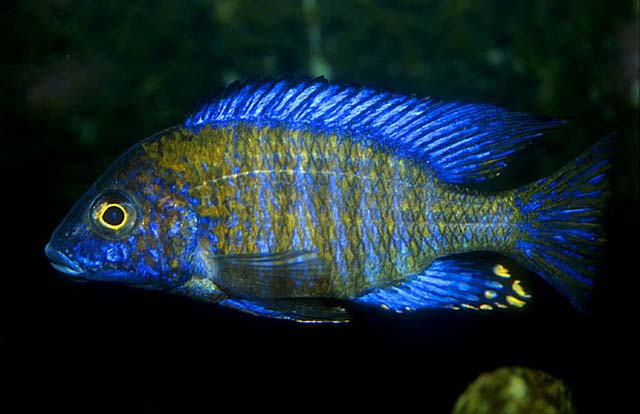
Aulonocara ethelwynnaeNorthern Aulonocara
Meyer, Riehl & Zetzsche, 1987
Max length110mm SL4in SLTank90 × 45cm36 × 18inTemp22–26°C72–79°FpH7.4–9.0Endemic to Lake Malawi where it was described from and only occurs around 'Chitendi Island', now normally referred to as Chitande island plus a short stretch of coastline between Ngara and Chilumba along the lake's northwestern shoreline. Aulonocara spp. are benthophagous by nature employing a method of feeding whereby mouthfuls of substrate are taken and sifted for edible items with the remaining material expelled via the gills and mouth. They're equally-skilled at hunting as grazing, tending to hover above the substrate until tiny movements are detected, and possess enlarged sensory pores on the head which assist in this technique.
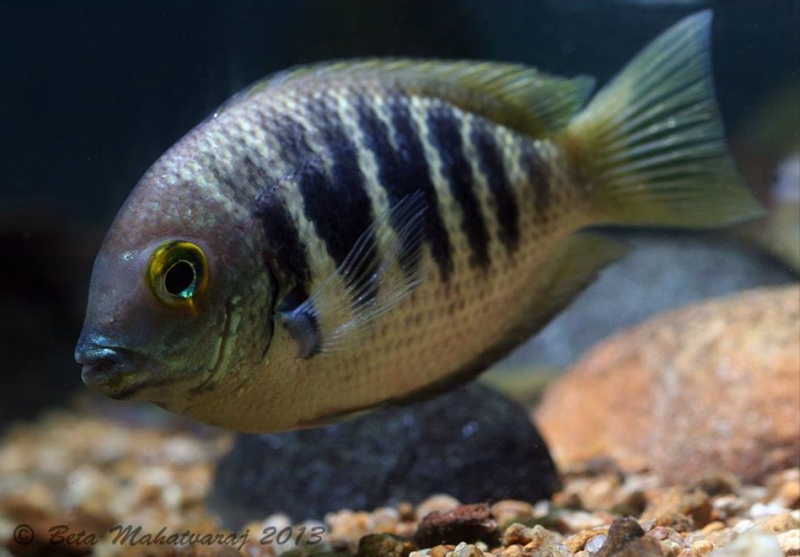
Etroplus canarensisCanara Pearlspot Cichlid
Day, 1877
Max length110mm SL4in SLTank120 × 45cm48 × 18inTemp22–32°C72–90°FpH6.0–7.5Etroplus is the only cichlid genus native to the Indian subcontinent and Sri Lanka and currently comprises three species among which E. canarensis is uniquely limited to freshwater and restricted in range. Its congeners E. maculatus and E. suratensis are both euryhaline inhabiting estuaries, coastal lagoons and the lower reaches of rivers around coastlines of western and southern India plus northern Sri Lanka.
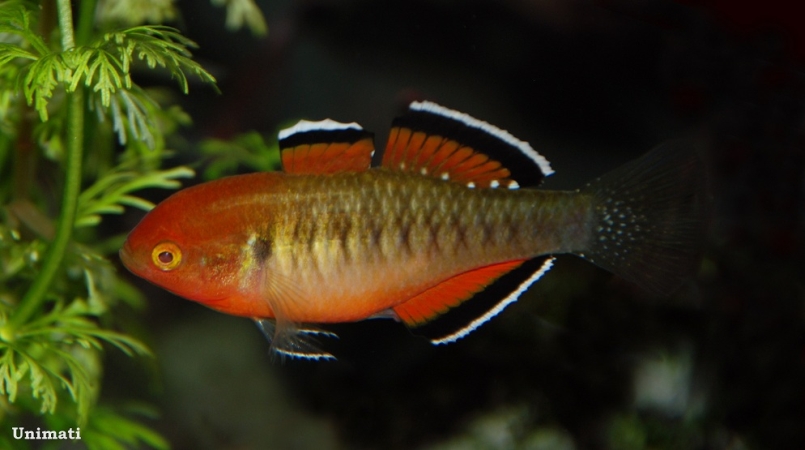
Hypseleotris compressaEmpire Gudgeon
Krefft, 1864
Max length120mm SL5in SLTank80 × 30cm31 × 12inTemp20–35°C68–95°FpH5.0–9.1Occurs in northern and eastern Australia and southern New Guinea. In the former its range extends from the Pilbara and Kimberley regions of Western Australia state around the northern and eastern coastlines of the continent as far as the Towamba river system in New South Wales state.
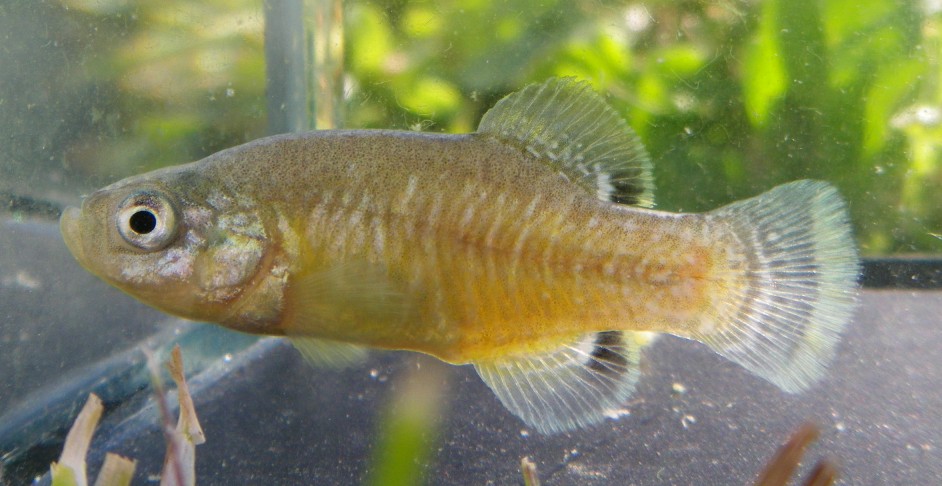
Tellia apodaFootless Toothcarp
Gervais, 1853
Max length45mm SL1.8in SLTank120 × 30cm48 × 12inTemp16–30°C61–86°FpH7.0–9.0The genus Aphanius currently contains 22 species and subspecies which are thought to have derived from a common ancestor originally distributed around the periphery of the former Tethys Sea. These can be separated into two main phylogenetic groups usually referred to as the 'eastern' and 'western' clades by scientists and aquarists because they broadly correspond to those coastlines of the Tethys. The eastern clade comprises the species now found in the Arabian Peninsula and ...
Thalassophryne amazonicaPrehistoric Monster Fish
authority not recorded
Max length150mm SL6in SLTank75 × 30cm30 × 12inTemp24–28°C75–82°FpHnot recordedThere are currently six described species in the genus Thalassophryne, of which T. amazonica is the only freshwater representative. The others (T. nattereri, T. maculosa, T. megalops, T. montevidensis and T. punctata) are all estuarine animals distributed along the western Atlantic coastlines of Central and South America and inhabit brackish-to-marine waters. They are members of the family Batrachoididae or toadfishes, of which most are exclusively marine species. All batrachoidids are ambush pr...