Results for “community aquarium”
Type a name: scientific, common, or one a species used to go by. Or narrow the catalogue with the filters.
Filters
Synodontis petricolaDwarf Lake Synodontis
authority not recorded
Max length130mm SL5in SLTank90 × 30cm36 × 12inTemp24–28°C75–82°FpH7.5–8.5One of our favourite Synos and highly recommended for any Tanganyikan community aquarium. The dwarf form can even be kept in a South American community.
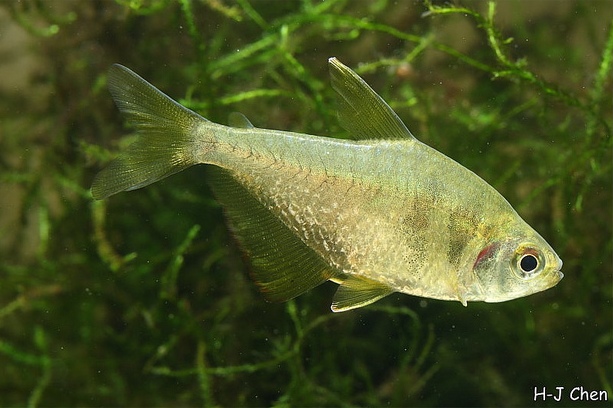
Hyphessobrycon bifasciatusYellow Tetra
Ellis, 1911
Max length45mm SL1.8in SLTanknot recordedTemp20–25°C68–77°FpH5.0–7.5Generally peaceful making it an ideal resident of the well-researched community aquarium. It is perhaps best-maintained alongside similarly-sized characids, gasteropelecids, lebiasinids, smaller callichthyid or loricariid catfishes and non-predatory, medium-sized cichlids. Try to buy a mixed-sex group of at least 8-10 specimens, incl...
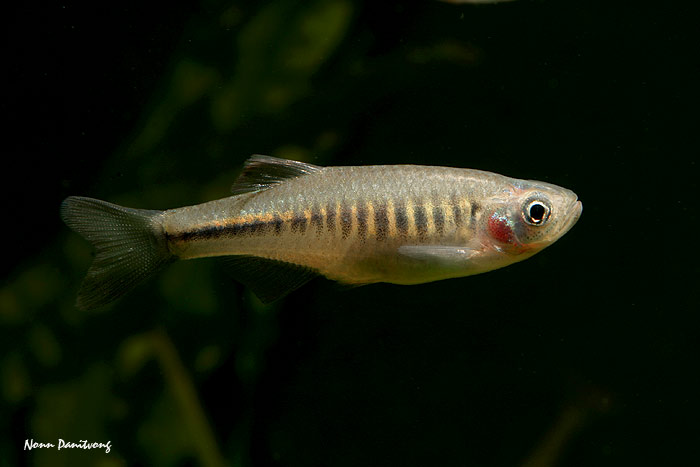
'Inlecypris' maetaengensisFire Bar 'Danio'
Fang, 1997
Max length50mm SL2.0in SLTank75 × 30cm30 × 12inTemp20–26°C68–79°FpH6.0–8.0A peaceful species suited to a well-chosen community aquarium. There are plenty of potential tankmates including many cyprinids, loaches, cichlids, catfishes and characins, although as always proper research is essential in order to avoid problems.
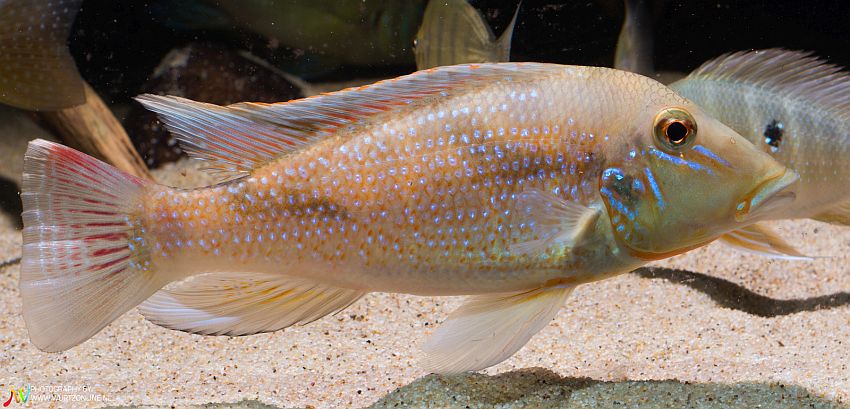
Retroculus lapidifer
Castelnau, 1855
Max length200mm SL8in SLTank210 × 60cm84 × 24inTemp26–32°C79–90°FpH6.0–8.0Retroculus spp. are unsuitable for the standard community aquarium, and should be maintained in a set-up designed to resemble a flowing river. The substrate should be composed of soft sand mixed with small pebbles if the aim is to breed the fish (see 'Reproduction'). Rocks, boulders, roots, branches, and aquatic plants can also be added, although the la...
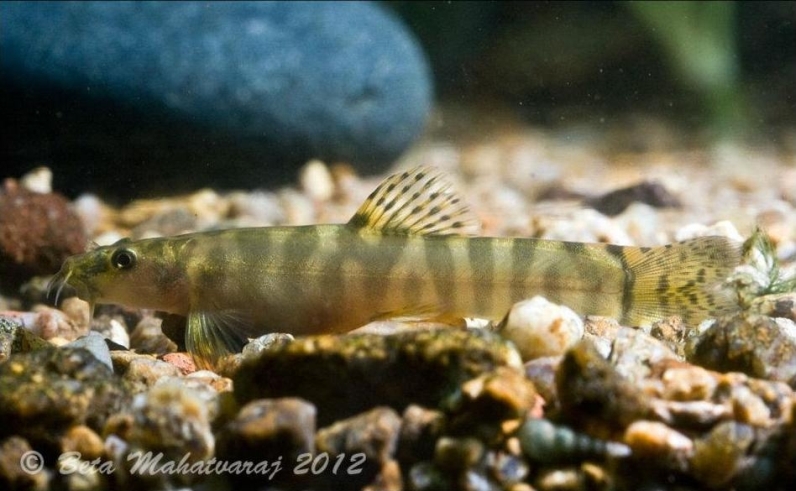
Schistura denisonii
Day, 1867
Max length52mm SL2.0in SLTank75 × 30cm30 × 12inTemp18–24°C64–75°FpH6.0–7.5This species is feisty and largely unsuitable for the general community aquarium. This is not to say it must be kept alone, rather that tankmates must be selected with care and proper research. Slow-moving or long-finned species should certainly be omitted because they're likely to struggle with the necessary level of water movement and may end up with nipped fins.
Synodontis aterrima
authority not recorded
Max length115mm SL5in SLTank90 × 30cm36 × 12inTemp22–27°C72–81°FpH6.0–7.5This species is infrequently offered for sale but makes an attractive addition to the medium sized community aquarium.
Synodontis contractaBig-nosed Upside-down Catfish
authority not recorded
Max length75mm SL3.0in SLTank60 × 30cm24 × 12inTemp22–27°C72–81°FpH6.2–7.2Often confused with the similar S.nigriventris, this species is imported infrequently. It is easily distinguished from nigriventris by its larger eyes and broad mouth and head. These features give rise to the common name "Big-nosed upside-down catfish". S. contracta spends the majority of its time swimming in an inverted position and this, along with its exaggerated facial features,make it a characterful and interesting addition to the community aquarium. It is also known as the Bug-e...
Gymnotus carapoBanded Knifefish
authority not recorded
Max length600mm SL24in SLTank180 × 60cm72 × 24inTemp22–28°C72–82°FpH6.0–7.5Not a good beginner's species, due to its very respectable adult size, but it makes a stunning oddball addition to communities of larger fish. It's sensitive to many aquarium medications, particularly those containing copper. The genus Gymnotus has undergone considerable taxonomic revision in recent years, with over 20 new species being described since 1994, including several that were originally considered to be G. carapo. The systematics of the genus are still not fully understood...
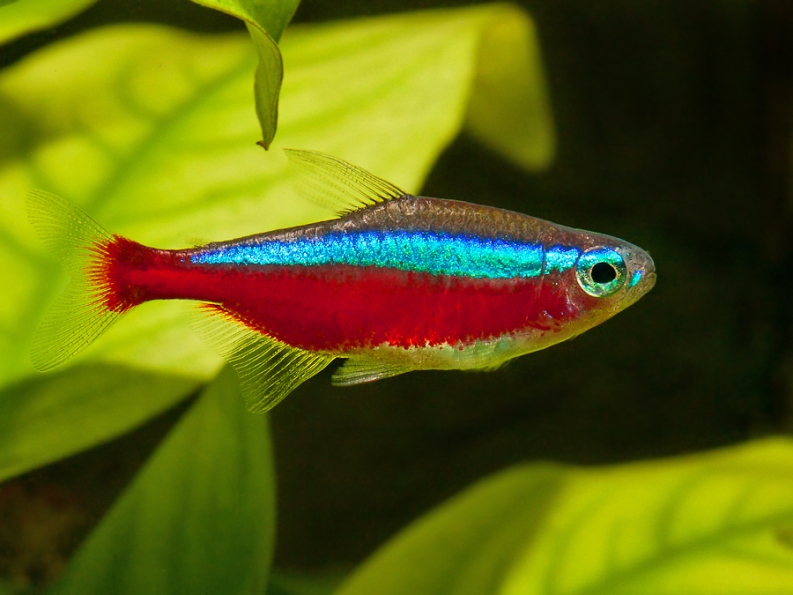
Paracheirodon axelrodiCardinal Tetra
Schultz, 1956
Max length35mm SL1.4in SLTank60 × 30cm24 × 12inTemp23–29°C73–84°FpH3.5–7.5It was initially going to be described as Hyphessobrycon cardinalis by Myers and Weitzman (1956) but just before this was due to be published Schultz presented an alternative description in the hobbyist magazine 'Tropical Fish Hobbyist' and named the fish after the publication's founder, Dr. Herbert R. Axelrod. A significant proportion of the fish available in the aquarium trade are still wild caught or derive from community-led breeding projects such as Project Piaba in the middle Negro region, where this sp...
Heros efasciatusSeverum
authority not recorded
Max length300mm SL12in SLTank120 × 45cm48 × 18inTemp22.2–28.9°C72–84°FpH5.5–7.0The severum is one of the most poular and readily available cichids in the hobby, however not everyone realises that these fish can attain a fairly large size and are therefore not suitable for every aquarium. The fish is normally sold in the standard green variety and also gold. Severums make good fish for a South American community setup, as long as there are no fish small enough for them to eat. They grow quite quickly, so should be housed in an adequately sized tank from the start....
Platystacus cotylephorusBanded Banjo Catfish
authority not recorded
Max length320mm SL13in SLTank120 × 30cm48 × 12inTemp22–25°C72–77°FpH6.0–8.2Not a particularly good catfish for the general community tank, as it's a largely inactive, secretive species that will only emerge and become active under cover of darkness. It is, nonetheless, an interesting aquarium subject for the enthusiast, exhibiting an incredible degree of camouflage. It's designed to resemble a dead leaf, and usually will not even swim to escape a net. When released into the aquarium will simply drift in the current until it hits the bottom. All members of the...
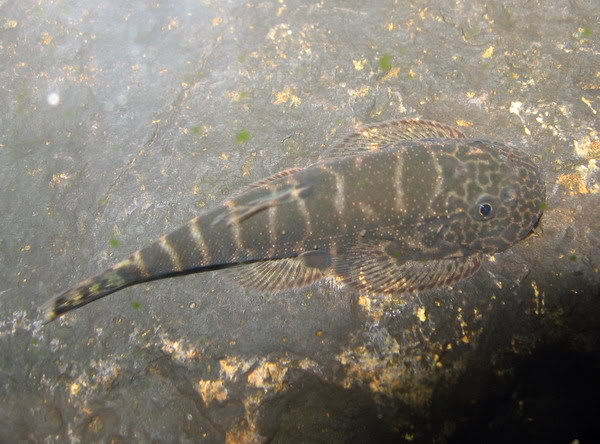
Gastromyzon sp. 'SK04'
authority not recorded
Max length65mm SL2.6in SLTank75 × 30cm30 × 12inTemp20–24°C68–75°FpH6.5–8.0For long-term success it's best to provide a mature aquarium with a plentiful supply of algae-covered rocks and other surfaces. If unable to grow sufficient algae in the main tank or you have a community containing numerous herbivorous fishes which consume what's available quickly it may be necessary to maintain a separate tank in which to grow algae on rocks and switch them with those in the main tank on a cyclical basis.
Lophiobagrus cyclurusAfrican Bullhead
authority not recorded
Max length100mm SL3.9in SLTank75 × 30cm30 × 12inTemp23–26°C73–79°FpH7.5–9.0An interesting addition to the Tanganyikan community that is not often seen in the hobby. There is a rumour that this cat can secrete a poisonous mucous when stressed that can kill other fish in the aquarium but this has not yet been 100% confirmed. It may be wise to keep it in as large an aquarium as possible just in case. There are currently just 4 species of Lophiobagrus described. All are from Lake Tanganyika....