Results for “compressed”
Type a name: scientific, common, or one a species used to go by. Or narrow the catalogue with the filters.
Filters
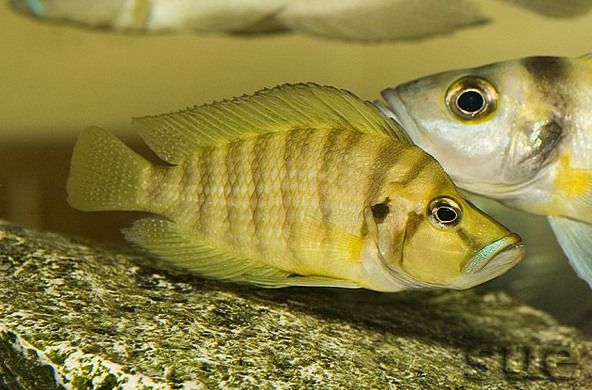
Altolamprologus compressicepsCompressed Cichlid
Boulenger, 1898
Matched on Lamprologus compressiceps, a name it was formerly known by
Max length125mm SL5in SLTank120 × 45cm48 × 18inTemp24–28°C75–82°FpH8.0–9.0This species varies in colour pattern depending on locality. Some of them are sold under several such names with the variant from Kigoma being known variously as A. compressiceps "Kigoma red", "Kigoma red fin", "Kigoma orange top" or "firefin" for example. The different populations should ideally be kept apart in aquaria and clearly labelled with collection locality in order to avoid hybridisation. Forms popular in the aquarium hobby include: - &quo...
Dimidiochromis compressicepsMalawi Eye-Biter
authority not recorded
Max length250mm SL10in SLTank150 × 38cm60 × 15inTemp23–28°C73–82°FpH7.5–8.8D. compressiceps is an ambush predator in nature, its laterally compressed shape and head-down hunting position allowing it to remain hidden among Vallisneria beds and making it tricky to spot in open water. It has a dark stripe running from the snout along the back to the tail which serves to provide further camouflage. Despite its common name, it does not prey solely on the eyes of other species, preferring to hunt small fish (particularly juvenile Copadichromis sp.). It swallows these tai...
Crenicichla compressicepsCompressiceps Dwarf Pike Cichlid
authority not recorded
Matched on the common name Compressiceps Dwarf Pike Cichlid
Max length76mm SL3.0in SLTank90 × 38cm36 × 15inTemp24–27°C75–81°FpH5.0–6.8Crenicichla compressiceps are an excellent little fish. They are small, but they swim a great deal (and can be incredibly quick) so require larger aquaria than other, similar sized fish. In the wild, Compressiceps are insect feeders. They will wait quietly then quickly sweep down and prey on any nearby insects. They have good vision in the night and will often feed in the dark. Be careful when choosing tankmates, though as previously mentioned it may be mandatory to include some fish to e...
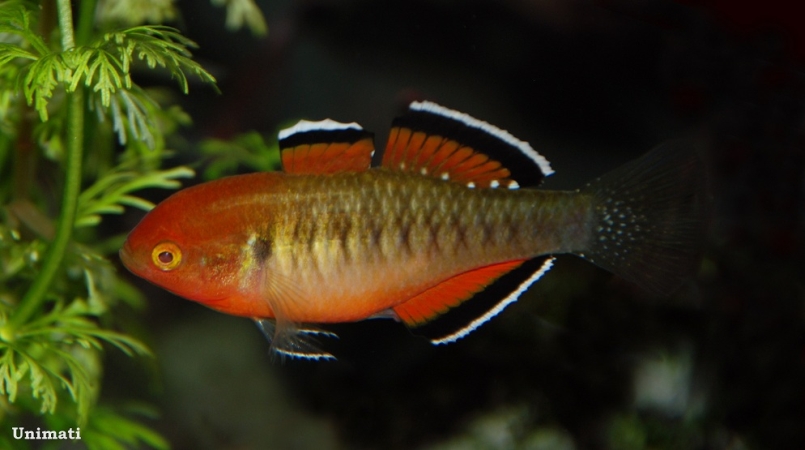
Hypseleotris compressaEmpire Gudgeon
Krefft, 1864
Matched on Eleotris compressus, a name it was formerly known by
Max length120mm SL5in SLTank80 × 30cm31 × 12inTemp20–35°C68–95°FpH5.0–9.1Occurs in northern and eastern Australia and southern New Guinea. In the former its range extends from the Pilbara and Kimberley regions of Western Australia state around the northern and eastern coastlines of the continent as far as the Towamba river system in New South Wales state.
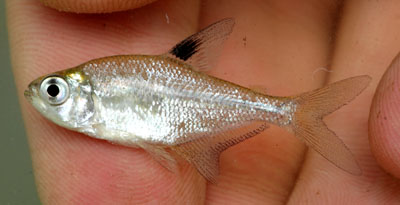
Hyphessobrycon compressusMayan Tetra
Meek, 1904
Matched on Hemigrammus compressus, a name it was formerly known by
Max length45mm SL1.8in SLTanknot recordedTemp20–26°C68–79°FpH6.5–8.0H. compressus is the type species of the genus Hyphessobrycon but is not well-known in the ornamental trade. Hyphessobrycon was raised by Durbin in Eigenmann (1908) as a subgenus of Hemigrammus, differing from the latter by the absence of scales on the caudal-fin.
Serrasalmus altuveiAltuvei
authority not recorded
Max length173mm SL7in SLTank120 × 45cm48 × 18inTempnot recordedpHnot recordedS. altuvei is very scarce in the hobby, most commonly being found among imports of juvenile S. rhombeus (the type species of the genus). It's also known as the "Caribe azul" or "blue caribe" in the trade. There are currently 24 described species of Serrasalmus, many of which look superficially similar. This one is considered a member of the "compressed group". This grouping of morphologically similar species currently comprises S. altuvei, S. geryi, S. compress...
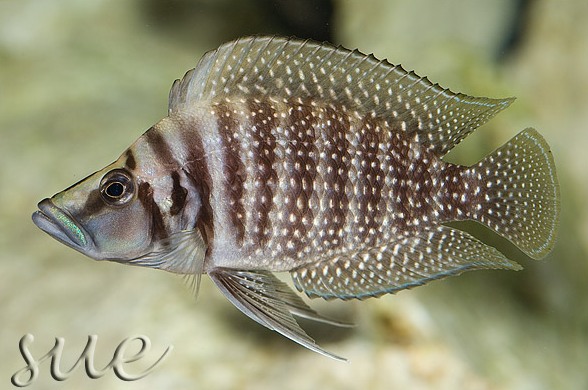
Altolamprologus calvusCalvus Cichlid
Poll, 1978
Max length138mm SL5in SLTanknot recordedTemp24–27°C75–81°FpH7.5–9.0A. calvus is a predator by nature and its body shape has been adapted to allow it to enter small crevices and gaps in the rockwork of Lake Tanganyika to prey on eggs, fry and small fish. Its laterally compressed shape makes the fish hard to spot head on, giving it an advantage over would be predators and prey alike. It is also quite well-armoured, possessing thick scales which can be turned towards potential attackers. These can cause real damage with their serrated edges. Several colour form...
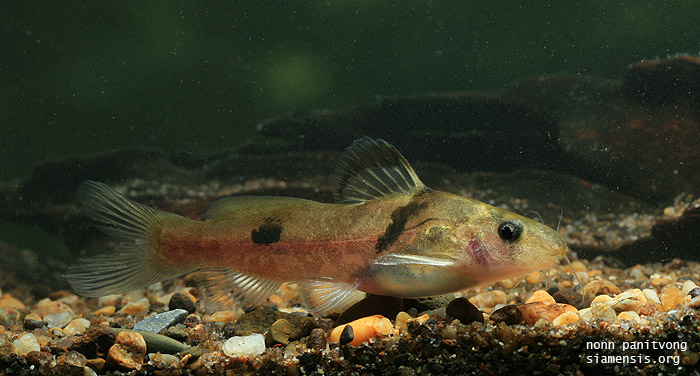
Batasio fluviatilis
Day, 1888
Max length72mm SL2.8in SLTank120 × 30cm48 × 12inTemp16–24°C61–75°FpH6.0–7.0Batasio havmolleri (Smith, 1931) is currently considered a junior synonym of B. fluviatilis. Members of the genus Batasio are characterised by the following combination of characters; laterally-compressed body shape; presence of large sensory pores on the head; a narrow mental region; a pair of prominent posterior proces...
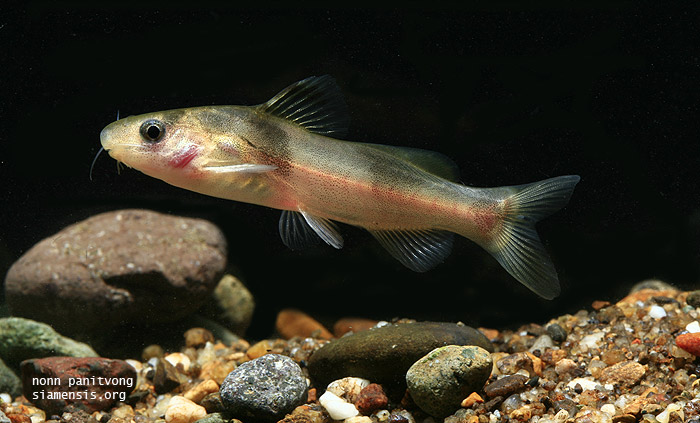
Batasio tigrinus
Ng & Kottelat, 2001
Max length80mm SL3.1in SLTank120 × 30cm48 × 12inTemp17–23°C63–73°FpH6.0–7.0Members of the genus Batasio are characterised by the following combination of characters; laterally-compressed body shape; presence of large sensory pores on the head; a narrow mental region; a pair of prominent posterior processes on the anterior portion of the vomer; a transversely elongated, bar-like entopterygoid; close contact between the metapterygoid and quadrate.
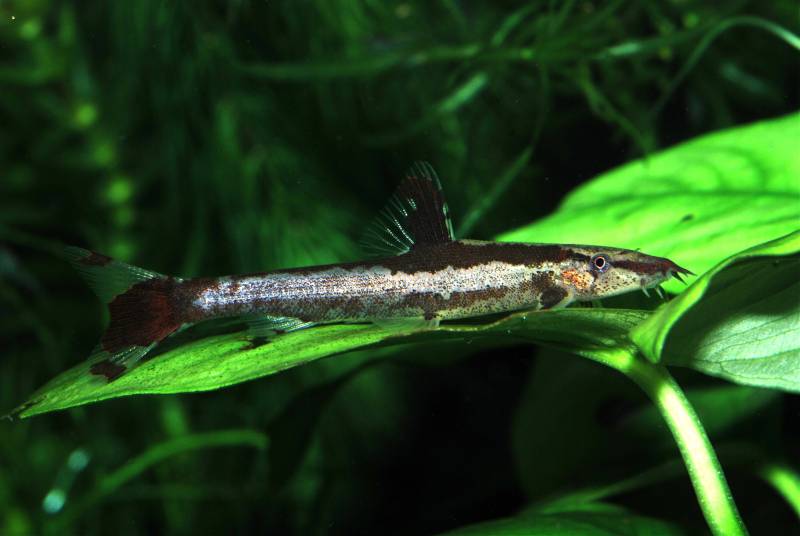
Homaloptera bilineata
Blyth, 1860
Max length100mm SL3.9in SLTank120 × 30cm48 × 12inTemp20–25.5°C68–78°FpH6.0–7.5This rarely-traded species is a member of the H. ocellata 'group' of closely-related congeners, an assemblage which currently comprises H. ocellata, H. bilineata, H. confuzona, H. orthogoniata, H. ogilviei and H. parclitella. Following Tan and Ng (2005) these share possession of a colour pattern with reddish tints and dark brown head markings, elongate head, slightly compressed body, 61-77 lateral line scales and dorsal-fin origin placed in advance of pelvic-fin origin.
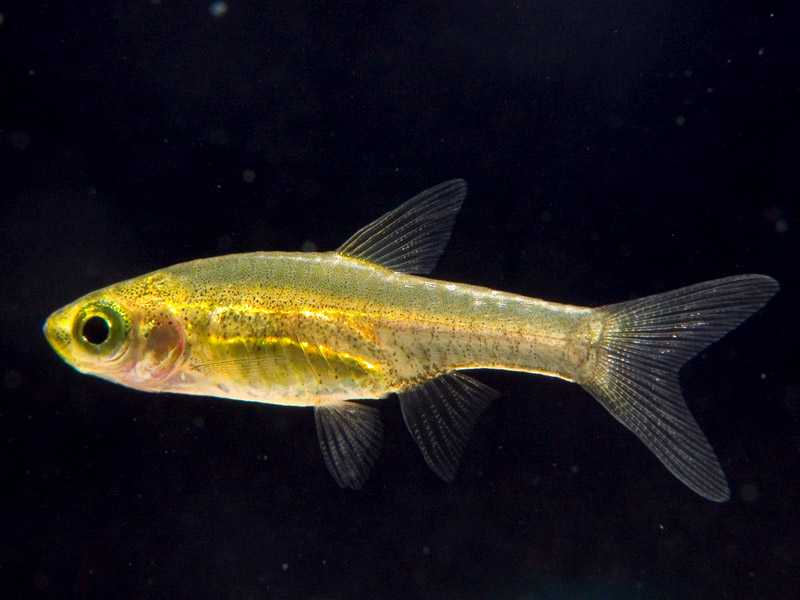
Horadandia atukorali
Deraniyagala, 1943
Max length30mm SL1.2in SLTank45 × 30cm18 × 12inTemp20–26°C68–79°FpH5.5–7.5The genus is monotypic and distinguished from other cyprinid taxa by a combination of a moderately compressed, elongated body with two rows of teeth on the lower pharyngeal (throat) bone and lacking barbles, visible lateral line and a symphyseal knob on the lower jaw (Talwar & Jhingran, 1991). Its small adult size evolved via a process known as miniaturisation characterised by sexually mature adults with a significantly reduced size of less than 20 mm SL. Among bony fishes cyprinids are one of the few groups in which this phenomenon occurs repeatedly...
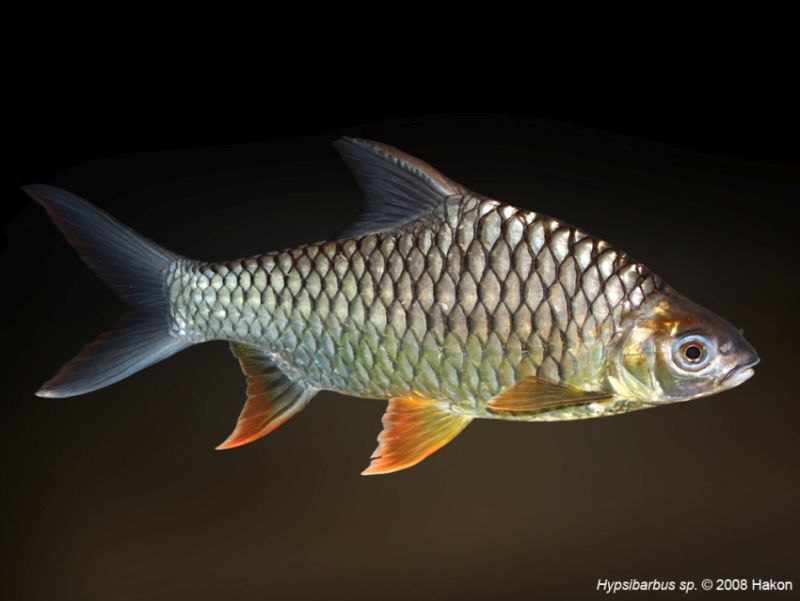
Hypsibarbus wetmorei
Smith, 1931
Max length250mm SL10in SLTank240 × 60cm96 × 24inTemp20–26°C68–79°FpH6.0–8.0H. wetmorei is distinguished from congeners by the following combination of characters: upper body reddish brown; robust body, not compressed; usually 4½ scale rows between lateral line and dorsal-fin origin; 8-12 rakers on first gill arch; 7-9 predorsal scales; 14 circumpeduncular scale rows; usually two scale rows separating vent and anal-fin; <29 lateral line scales; 9-14 serrations on the spinous dorsal-fin ray; distance between distal serrae on posterior margin of last unbranched dorsal-fin ray much greater than the width of their bases.
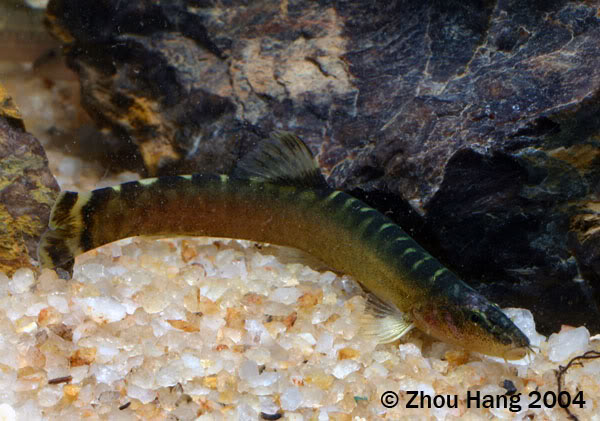
Leptobotia guilinensis
Chen, 1980
Max length100mm SL3.9in SLTank120 × 30cm48 × 12inTemp15.5–21°C60–70°FpH6.5–7.5L. elongata is the type species of the genus but according to current knowledge there exist 13 members in total, all of which are endemic to China and northern Vietnam. They're diagnosable by the following shared characters: possession of a simple (non-bifurcated), short sub-ocular spine not extending beyond the posterior edge of the eye; a laterally-compressed body; relatively deep caudal peduncle; pelvic fins reaching origin of anal-fin; anus below base of dorsal-fin and equidistant between pelvic and anal-fin origins.
Neolamprologus fasciatusBarred Lamprologus
authority not recorded
Max length150mm SL6in SLTank90 × 38cm36 × 15inTemp23–27°C73–81°FpH7.5–9.0N. fasciatus is a predator by nature and its body shape has been adapted to allow it to enter small crevices and gaps in the rockwork of Lake Tanganyika to prey on invertebrates, eggs, fry and small fish. The lateral compression exhibited by this fish also makes the fish hard to spot head on, giving it an advantage over both its predators and prey. It hunts in a head down position a few feet above the substrate, moving its body in sinuous motions to counteract the water currents. It is sometimes...
Serrasalmus geryiGéry's Pirambeba
authority not recorded
Max length181mm SL7in SLTank120 × 60cm48 × 24inTemp22–29°C72–84°FpHnot recordedS. geryi is sometimes sold as the "violet-line piranha" in reference to the unusal purple stripe that runs from the base of the lower jaw over the top of the body. It makes a stunning aquarium fish as it also possesses highly reflective scales, deep orange/red eyes and a compressed, high-bodied shape. Far from widespread in nature or the hobby, it tends to be pricey and highly sought-after when available. There are currently 24 described species of Serrasalmus, many of which look s...
Serrasalmus marginatus
authority not recorded
Max length221mm SL9in SLTank120 × 38cm48 × 15inTemp22–25°C72–77°FpHnot recordedThere are currently 24 described species of Serrasalmus, many of which look superficially similar. S. marginatus has at various times been considered a synonym of S. rhombeus and S. humeralis, but is currently considered to be distinct. It's main distinguishing feature is usually given as the thick, black, v-shaped marking in the anterior portion of the caudal fin. Juveniles are said to differ from similar-looking species such as S. compressus and S. altuvei because the dark body "spot...
Tanganicodus irsacae
authority not recorded
Max length70mm SL2.8in SLTank75 × 30cm30 × 12inTemp24–28°C75–82°FpH8.0–9.0This is one of the so-called Tanganyikan Goby Cichlids. They occur only in the upper few feet of water around rocky shores, also known as the surge zone, where they scrape algae from the rocks with their specialised teeth. This habitat is typified by breaking waves and strong currents. They have a few adaptations allowing them to inhabit such an environment. The swim bladder is rendered useless to reduce their buoyancy. They also have a longand a laterally compressed body shape to allow them to ...
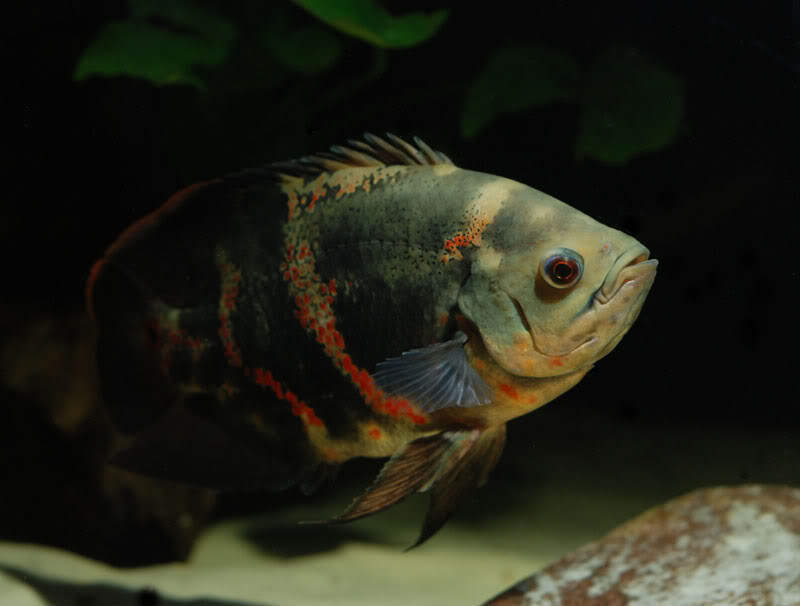
Astronotus ocellatusOscar
Agassiz, 1831
Matched on Acara compressus, a name it was formerly known by
Max length350mm SL14in SLTank150 × 60cm60 × 24inTemp20–28°C68–82°FpH6.0–7.5This species is also referred to as 'velvet cichlid', 'red oscar', 'tiger oscar', or 'marble cichlid'. It is a popular aquarium fish although its adult size and typical life-span of 10-20 years must be taken into account before purchase. Numerous ornamental strains are now available, and while care is more-or-less identical for all of them a degree of additional care must be taken with the 'long-finned' variety which is a little less competitive than other forms.