Results for “conservation”
Type a name: scientific, common, or one a species used to go by. Or narrow the catalogue with the filters.
Filters
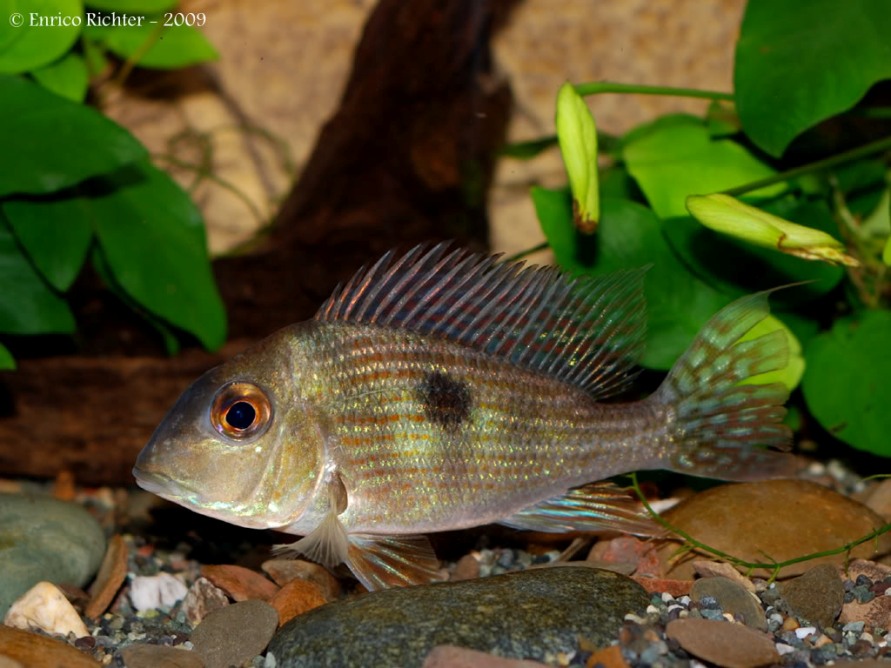
Geophagus sp. 'Pindaré'
authority not recorded
Max length150mm SL6in SLTank150 × 45cm60 × 18inTemp26–29°C79–84°FpH6.0–7.0Known only from the rio Pindaré in Maranhão state, north-eastern Brazil which drains into the Baía de São Marcos (St. Mark's Bay) along with the rios Mearim, of which it is sometimes considered a tributary, and Grajaú. Some sections of the Pindaré have been heavily degraded via removal of riparian vegetation for agriculture and habitats destroyed due to resultant siltation. The river is poorly-studied and the conservation status of its fishes mostly unconfirmed so su...
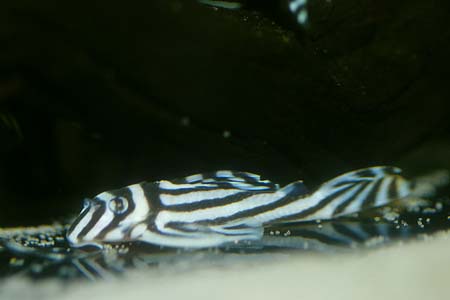
Hypancistrus zebraZebra Plec
Isbrücker and Nijssen, 1991
Max length80mm SL3.1in SLTank60 × 30cm24 × 12inTemp26–30°C79–86°FpH6.0–7.5One of the most enigmatic species in the hobby, this incredible little catfish must rank amongst the most stunning freshwater species known. In the late 1990s and the early part of this century you could buy one of these for as little as twenty pounds. However in 2004, the Brazilian government banned the exportation of the species amid apparent concerns over the exploitation of wild stocks. As yet, the conservation status of the fish has not been confirmed by any scientific proof with the only e...
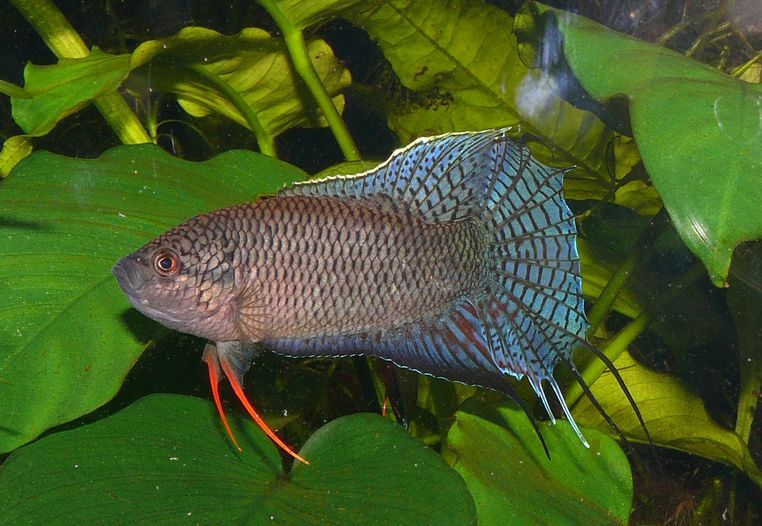
Macropodus spechtiBlack Paradise Fish
Schreitmüller, 1936
Max length80mm SL3.1in SLTank80 × 30cm31 × 12inTemp20–30°C68–86°FpH6.0–8.0M. spechti is also sometimes referred to as M. concolor, particularly in older literature. A dispute regarding conservation of that name was resolved by the ICZN in 2006, however, since M. concolor Ahl, 1937 is a junior primary homonym of M. concolor Schreitmüller, 1936 and thus permanently invalid.
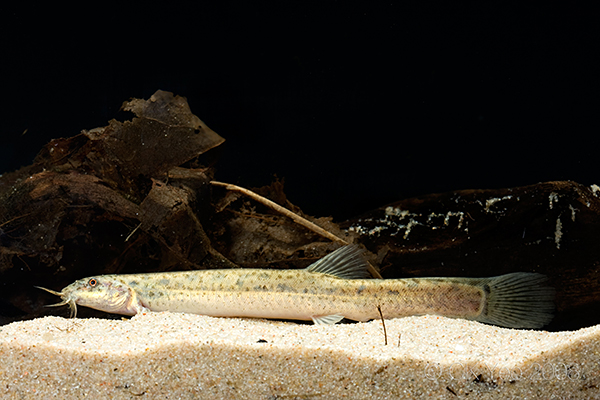
Misgurnus anguillicaudatusOriental Weather Loach
authority not recorded
Max length280mm SL11in SLTank120 × 45cm48 × 18inTempnot recordedpH6.0–8.0An exceptionally hardy and adaptable species tolerant of a wide range of physiological variables and flexible of diet, factors which have allowed it to become established as an alien species around the globe. Its high reproductive potential and low vulnerability to predation have made it a cause for concern to conservation scientists although as yet there remains no proof of it exerting a negative effect on native fishes in countries outside its natural range.
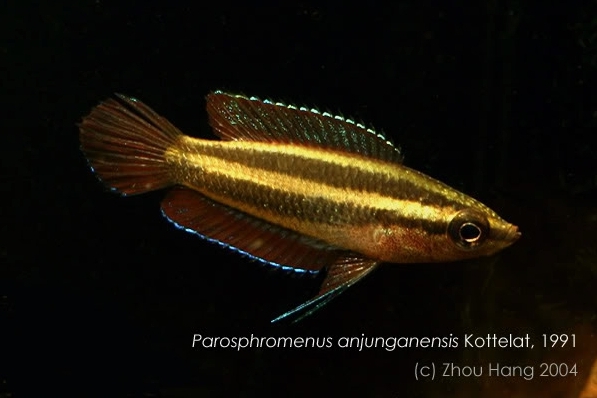
Parosphromenus anjunganensis
Kottelat, 1991
Max length35mm SL1.4in SLTank40 × 20cm16 × 8inTemp22–28°C72–82°FpH3.0–6.5It's care requirements, disposition, and especially conservation status dictate that it should be maintained alone or alongside a group of small, peaceful cyprinids such as Boraras or Sundadanio spp. Likewise, different Parosphromenus spp. should not be kept together since the females of many are very difficult to tell apart and some are undoubtedly capable of hybridising.
Sandelia capensisCape kurper
authority not recorded
Max length215mm SL8in SLTank120 × 45cm48 × 18inTemp18–22°C64–72°FpH6.5–7.2There are only two described species in the genus Sandelia. Both have limited natural ranges in parts of South Africa, which in itself is odd as they're completely isolated from other genera of anabantoids. This is probably due to some ancient radiation of species, but as yet remains unresolved. Sandelia spp. are also considered the most primitive of anabantids, as they possess a less well-developed labyrinth organ than their relatives. S. capensis is of considerable conservation importa...
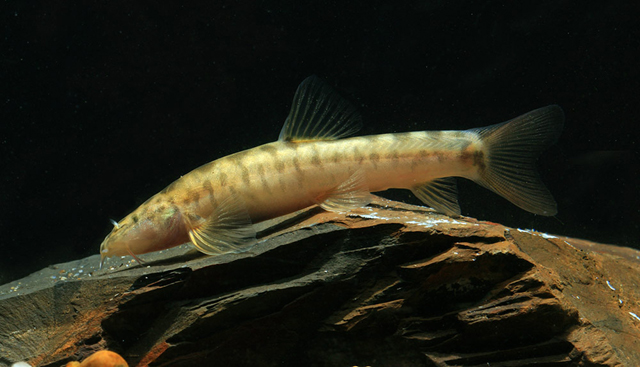
Schistura jarutanini
Kottelat, 1990
Max length67mm SL2.6in SLTanknot recordedTempnot recordedpHnot recordedThis species' conservation status clearly precludes its suitability as an aquarium fish so it's included here for reasons of interest only. It's protected by Thai national law and illegal to remove from its habitat. Species exhibiting morphological, physiological or behavioral adaptations to a subterranean existence are often referred to as troglomorphic.