Results for “derived”
Type a name: scientific, common, or one a species used to go by. Or narrow the catalogue with the filters.
Filters
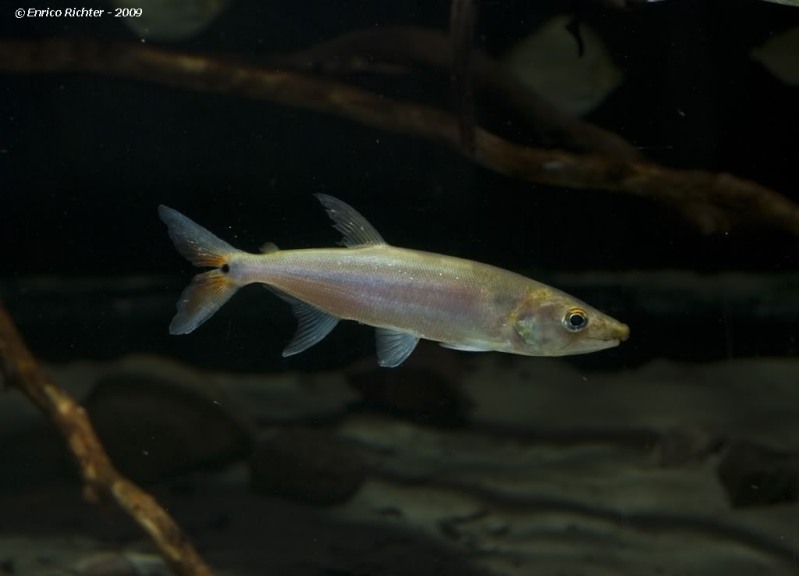
Acestrorhynchus falcatusRed-Tailed Freshwater Barracuda
Bloch, 1794
Max length275mm SL11in SLTank250 × 90cm98 × 36inTemp22–28°C72–82°FpH6.0–7.5The vernacular name of this fish is derived from its appearance and behaviour, rather than a genetic association with the marine barracuda, and it's also sometimes referred to as 'pike characin' or 'spotted cachorro' with local vernacular names including 'Grand dent-chien' (French Guiana), ' Cachorrinho' or 'Ueua' (Brazil). Although most species of Acestrorhynchus appear superficially similar to one another most exhibit distinguishable external chara...
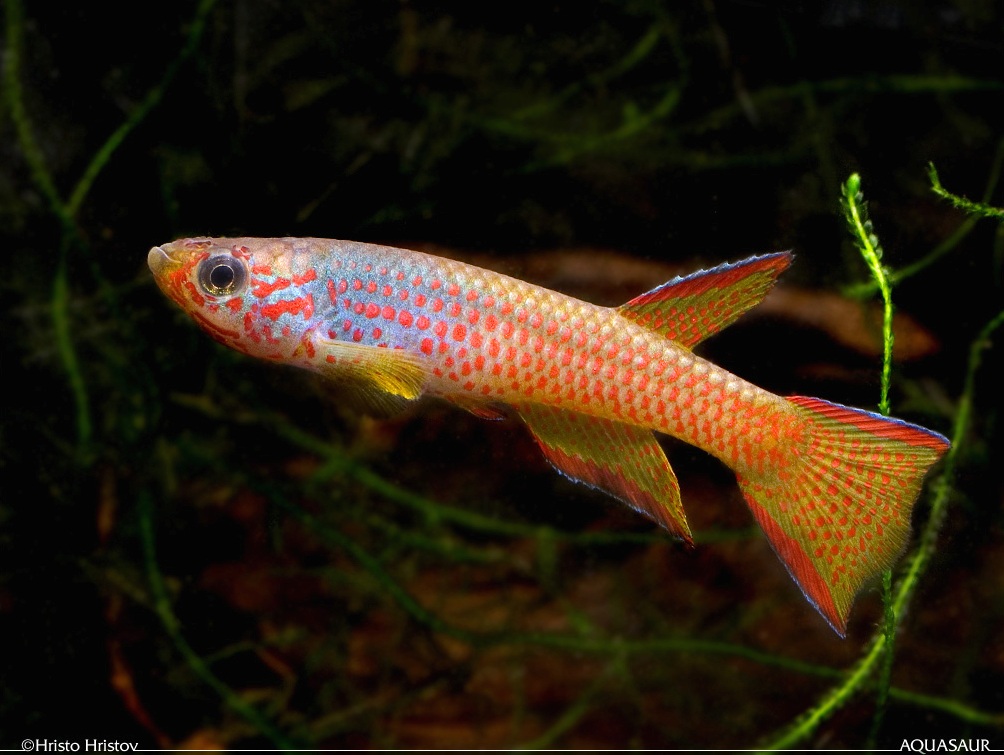
Aphyosemion cognatumRed-Spotted Lyretail
Meinken, 1951
Max length50mm SL2.0in SLTanknot recordedTempnot recordedpHnot recordedThe type material was derived from a commercial shipment of fishes from Leopoldville, now Kinshasa, Democratic Republic of Congo, and presumed to have been collected in the vicinity. The precise extent of its distribution unknown but appears extensive in the middle and lower Congo regions, with specimen collected from Lac Fwa (Sankuru River drainage, a Congo River tributary), many hundreds of kilometres west of Kinshasa, identified as belonging to this species.
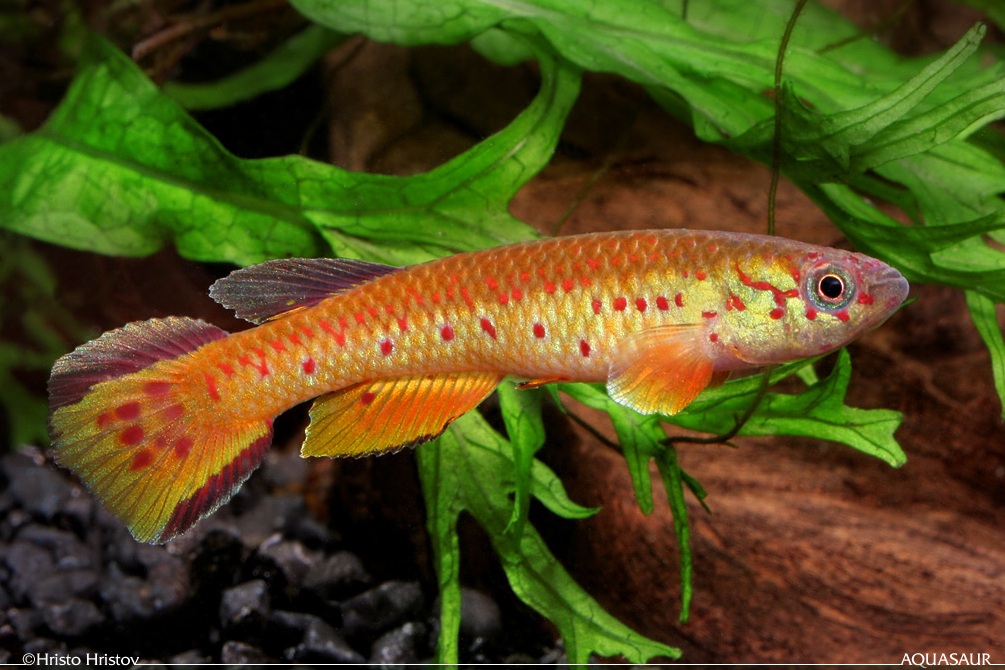
Aphyosemion congicumCongo Lyretail
Ahl, 1924
Max length45mm SL1.8in SLTanknot recordedTempnot recordedpHnot recordedThe type series was derived from a commercial shipment and this species' natural range remains unconfirmed. It may be restricted to the area between the Kwango and Gamba rivers, the latter a tributary of the former, in western Democratic Republic of Congo. The Kwango is itself a tributary of the Kasai, an affluent of the Congo.
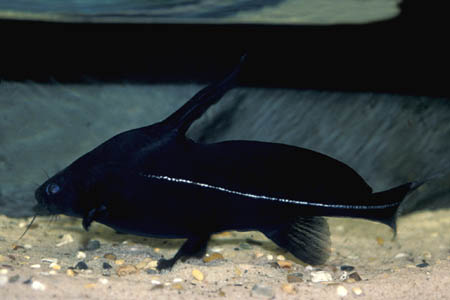
Bagrichthys macracanthusBlack Lancer
Bleeker, 1854
Max length230mm SL9in SLTank120 × 45cm48 × 18inTemp24–28°C75–82°FpH5.5–7.0The vernacular name 'lancer' is derived from the extended dorsal spine possessed by several members of the genus, which currently contains 7 species. Among them B. macracanthus is most similar to B. majusculus and B. vaillantii but can be told apart from the former by possession of shorter pectoral spines (13.3 - 16.2% SL vs. 15.8 - 20.7%), shorter adipose fin (46.0 - 58.0% SL vs. 38.8 - 45.8%), less deep caudal peduncle (7.1 - 7.5% SL vs. 5.6-7.0%) and larger adult size. From B. vaillantii it di...
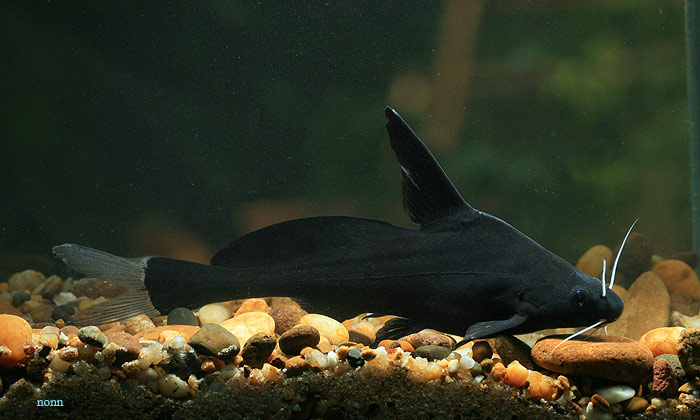
Bagrichthys majusculusWhite-Whisker Lancer
Ng, 2002
Max length177mm SL7in SLTank120 × 45cm48 × 18inTemp24–28°C75–82°FpH5.5–7.0The vernacular name 'lancer' is derived from the extended dorsal spine possessed by several members of the genus, which currently contains 7 species. Among them B. majusculus is most similar to B. macracanthus and B. vaillantii but can be told apart from both by possession of longer pectoral-fin spines (length 15.8 - 20.7 % SL vs. 11.5 - 16.2 %), from the former by possession of a larger adipose fi...
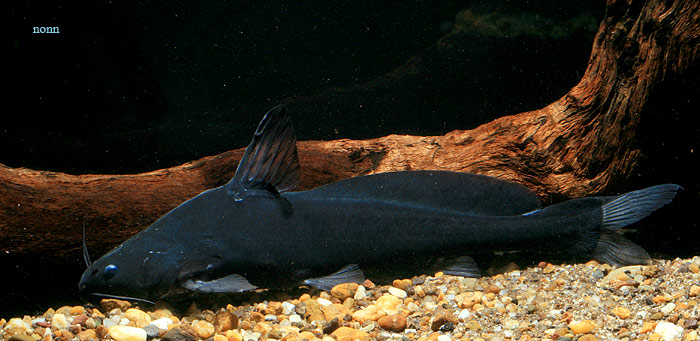
Bagrichthys obscurus
Ng, 1999
Max length249mm SL10in SLTank120 × 45cm48 × 18inTemp24–28°C75–82°FpH5.5–7.0The vernacular name 'lancer' is derived from the extended dorsal spine possessed by several members of the genus, which currently contains 7 species. B. obscurus is diagnosable from congerners by the following combination of characters: mouth opening relatively small and narrow; oral dentition significantly reduced; dorsal-fin spi...
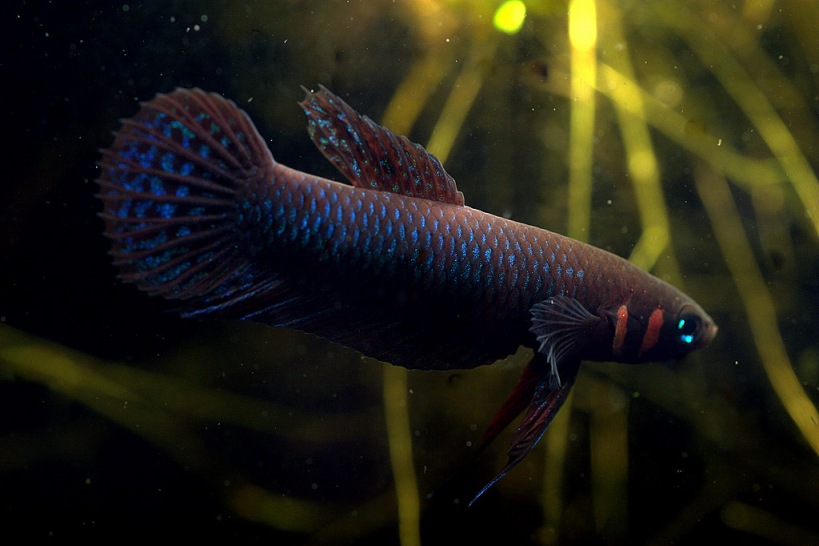
Betta hendra
Schindler & Linke, 2013
Max length45mm SL1.8in SLTank45 × 30cm18 × 12inTemp22–27°C72–81°FpH4.0–6.5This appears to be an undescribed species, and has only been available to the aquarium hobby in limited numbers to date. The rather long-winded trade name derives from the fact that it was initially marketed as two different species, i.e., B. sp. 'Sengalang' and B. sp. 'Palangka'. The spelling of the latter was later corrected but the fish may still be seen with either or both names attached. It looks very similar to fis...
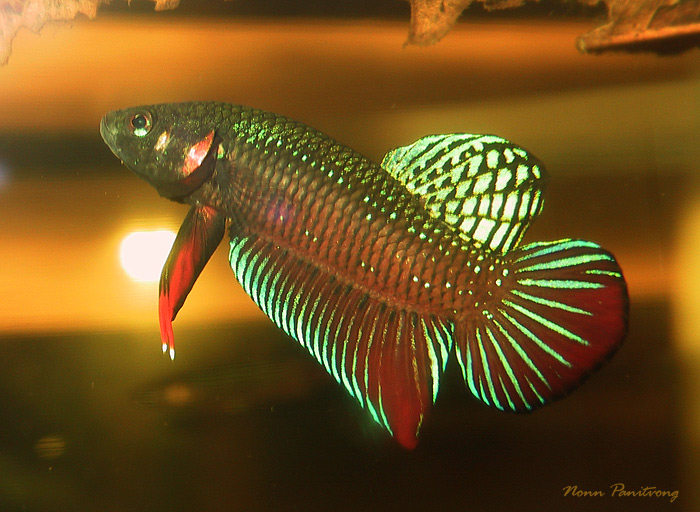
Betta splendensSiamese Fighting Fish
Regan, 1910
Max length70mm SL2.8in SLTank45 × 30cm18 × 12inTemp22–30°C72–86°FpH6.0–8.0This species' common name is derived from the tradition of keeping the fish in order to fight against each other in organised 'bouts' upon which participants and onlookers place wagers. It has been extensively line-bred for vigour, strength, and the ornamental trade, and hybridised with the congeners B. imbellis, B. smaragdina, and B. mahachaiensis.
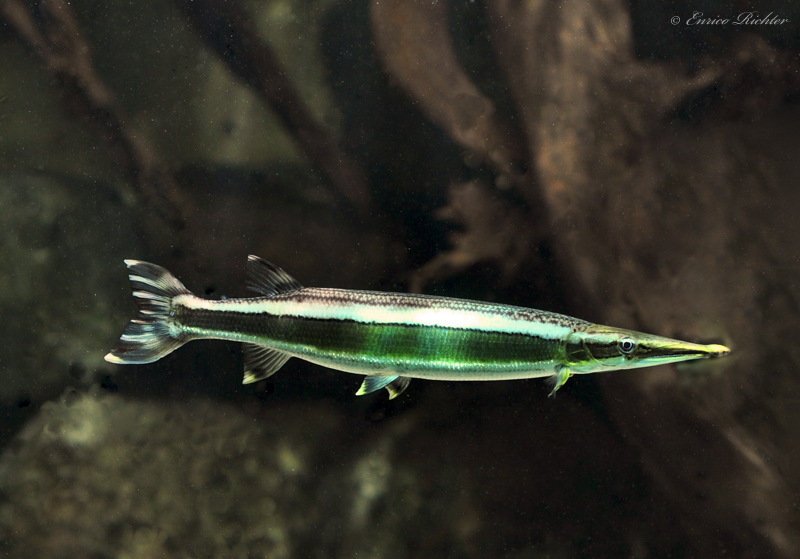
Boulengerella lateristrigaStriped Pike 'Characin'
Boulenger, 1895
Max length258mm SL10in SLTank240 × 90cm96 × 36inTemp22–28°C72–82°FpH4.0–7.0Boulengerella differs from Ctenolucia, the only other genus currently contained in the family Ctenolucidae, by a series of derived features including possession of 87-124 (vs. 45-50) lateral line scales, presence of a strongly (vs. weakly) developed fleshy appendage at the tip of the snout and absence (vs. presence) of fleshy flaps on the lower jaw. Within the order Characiformes the family Ctenoluciidae is also distinguished by a set o...
Clarias batrachusWalking Catfish
authority not recorded
Max length1000mm SL39in SLTank210 × 120cm84 × 48inTemp20–26°C68–79°FpH5.5–8.0An incredibly hardy species, the walking catfish is tolerant of a very wide range of water chemistry and temperature. It can also survive in oxygen-depleted conditions due to its ability to breathe atmospheric air. In fact, it is thought that the fish can literally drown if deprived access to the water surface for long enough. The common name is derived from its natural ability to move across land using its stiff pectoral spines, provided it stays damp. It has special mucous-producing pores ...
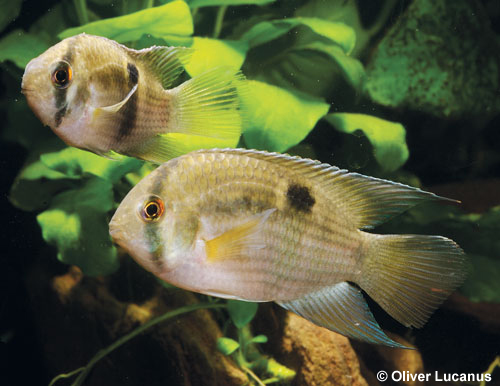
Cleithracara maroniiKeyhole Cichlid
Steindachner, 1881
Max length110mm SL4in SLTank90 × 30cm36 × 12inTemp21–28°C70–82°FpH4.0–7.5This species can be told apart from relatives by the characteristic 'keyhole' shaped marking on each side of the body. It's one of few fishes in which the current generic name is derived from the common name popularised in the aquarium hobby with 'Cleithracara' a combination of the Greek kleithron, meaning lock, and, acará, the Guaraní word for cichlids.
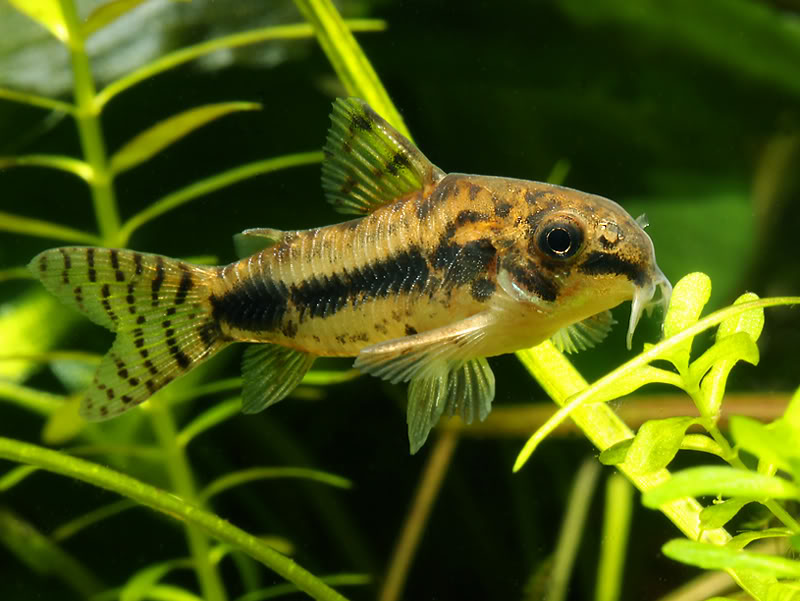
Corydoras habrosusSalt and Pepper Cory
Weitzman, 1960
Max length35mm SL1.4in SLTank60 × 30cm24 × 12inTemp20–26°C68–79°FpH5.5–7.5The majority of records derive from the Río Apure watershed in southwestern Venezuela, where C. habrosus has been collected in the states of Portuguesa, Cojedes, Barinas, Guárico, and Apure. Its distribution in Colombia is less clear but it is known with certainty from the Río Arauca and Río Casanare, the latter a tributary of the lower Río Meta, and it makes sense that it should also be found in other left bank Orinoco affluents between the Meta and Apure, which include the ríos Cinaruco and Capanaparo.
Dermogenys pusillaWrestling Halfbeak
authority not recorded
Max length55mm SL2.2in SLTank60 × 38cm24 × 15inTemp24–28°C75–82°FpH6.5–8.0Halfbeaks derive their common name from the elongated lower jaw shared by all species. The 'wrestling' moniker given to this particular species is due to the tendency of males to fight with each other, often locking jaws in the process. It is used as a fighting fish in some of its native countries, with wagers being placed on the outcome of fights between males. The two fish are placed in a small container for fighting purposes, as they will spar incessantly in such confined conditions...
Hemichromis elongatusFive Star General
authority not recorded
Max length150mm SL6in SLTanknot recordedTemp22–25°C72–77°FpH6.5–7.5A real bruiser of a cichlid, H. elongatus is not seen for sale very often, and with good reason. Pound for pound it must rank as one of the most aggressive cichlids available in the hobby. It is such an efficient predator that, in some of its native countries, it is used to control populations of Tilapia. As a result it's definitely not recommended for the inexperienced aquarist. The common name is derived from the row of 5 dark markings that run laterally along the flanks of the fish. I...
Hemiodontichthys acipenserinusPinocchio Whiptail Catfish
authority not recorded
Max length135mm SL5in SLTank75 × 30cm30 × 12inTemp24–28°C75–82°FpH6.0–7.0Also known as the knob nosed whiptail, this species is difficult to confuse with any other Loricariid due to its distinctive 'diamond' shape when viewed from above, and peculiarly shaped rostrum (nose), which is enlarged at the tip. It also lacks discernible odontotes on the head and pectoral fins. So distinctive is it, in fact, that it is currently monotypic (the only species in its genus). The species name is derived from its superficial resemblance to the sturgeons of the genus Acip...
Ilyodon furcidensGoldbreast Goodeid
authority not recorded
Max length70mm SL2.8in SLTank75 × 30cm30 × 12inTemp18–24°C64–75°FpH7.0–8.0The species name 'furcidens' is derived from the interesting fork-shaped teeth of this fish. This species may develop a cervical hump as it matures. As with other goodeids, there is less of a size difference between the sexes than in many other livebearers. This is thought to be related to the relatively primitive structure of the andropodium, as the fish tend to choose mates that are of similar size so that the sex organs are synchronised. Goodeids are unique among livebearers in t...
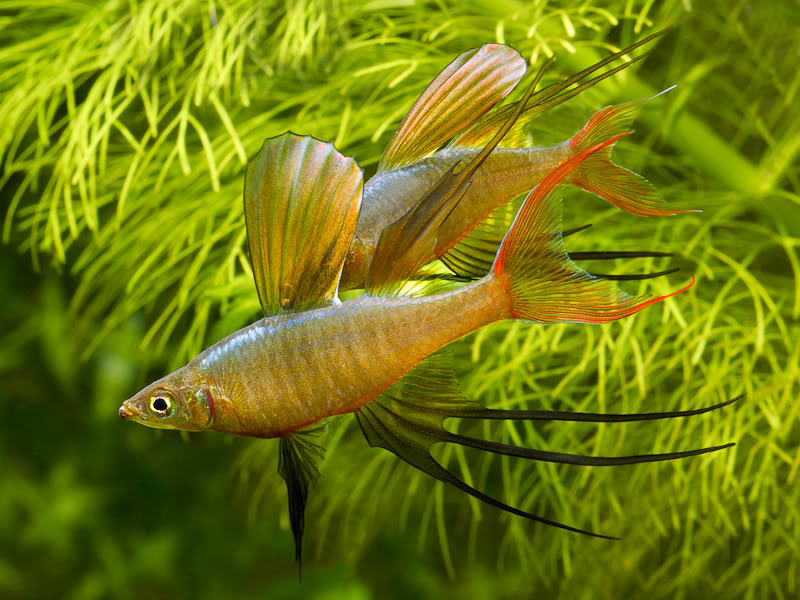
Iriatherina werneriThreadfin Rainbowfish
Meinken, 1974
Max length40mm SL1.6in SLTank60 × 30cm24 × 12inTemp22–30°C72–86°FpH5.0–8.0There also exists a sister-group relationship between the Melanotaeniidae and Malagasy family Bedotiidae, which may seem surprising given their respective modern-day distributional patterns. The precise origin and subsequent dispersal of the two families has been the subject of debate, with some palentologists suggesting that Madagascar's freshwater fishes derived froma trans-oceanic dispersal during the Cenozoic Era, but the most compelling arguments currently indicate a freshwater radiation which occurred during the Mezozoic break-up of Gondwana.
Leporacanthicus galaxiasGalaxy Plec
authority not recorded
Max length250mm SL10in SLTank120 × 45cm48 × 18inTemp22–26°C72–79°FpH5.6–7.0A very stylish looking plec, L. galaxias can also be seen for sale as the vampire or tusken plec. Both these names relate to features of morphology that are shared by all members of the genus. The latter arose from the presence of a characteristic growth on the head of the fish. The vampire moniker, meanwhile, is derived from the unique upper jaw dentition, consisting of, you guessed it, two large teeth or "fangs". The exact use for these is unknown, but they're probably utilised ...
Leporacanthicus heterodonGolden Vampire Plec
authority not recorded
Max length100mm SL3.9in SLTank120 × 30cm48 × 12inTemp22–26°C72–79°FpH6.0–7.0The vampire part of the common name is derived from the unique upper jaw dentition exhibited by members of this genus, consisting of, you guessed it, two large teeth or "fangs". The exact use for these is unknown, but they're probably utilised to grip prey items such as snails or other aquatic invertebrates in some way. When buying one of these (or any Loricariid), be sure to check the fish has a rounded belly and that its eyes aren't sunken, as these are classic signs of ema...
Leporacanthicus joselimaiSultan Plec
authority not recorded
Max length150mm SL6in SLTank120 × 30cm48 × 12inTemp25–27°C77–81°FpH6.0–7.5Leporacanthicus species are commonly referred to as "vampire plecs". This is derived from the unique upper jaw dentition exhibited by members of this genus, unsurprisingly consisting of two large teeth or "fangs". The exact use for these is unknown, but they're probably utilised to grip prey items such as snails or other aquatic invertebrates in some way. Another feature shared by all Leporacanthicus is a small bony growth of unknown use on top of the head. This particul...