Results for “distal”
Type a name: scientific, common, or one a species used to go by. Or narrow the catalogue with the filters.
Filters
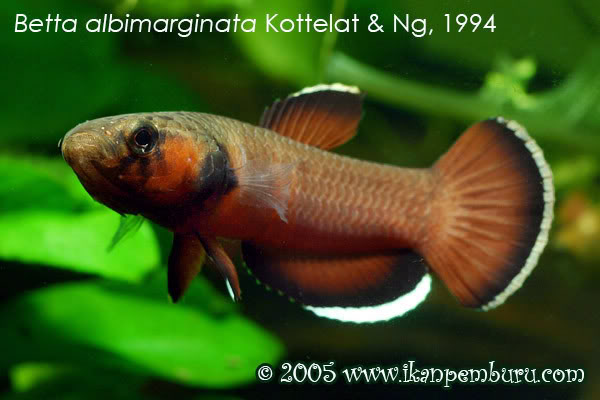
Betta albimarginata
Kottelat & Ng, 1994
Max length30mm SL1.2in SLTank45 × 30cm18 × 12inTemp23–28°C73–82°FpH4.0–6.5Additonally, fin patterning in B. albimarginata, except the pectoral fins, consists of a broad white distal band, broad dark submarginal band with sharp outer margin and less sharp inner margin, and a plain red inner portion, while in B. channoides the dorsal fin is almost entirely red with only a thin white distal band and the dark submarginal band in the caudal fin does not extend into the uppermost portion of the fin. Base body colouration tends towards a brick-red shade in displaying male B. albimarginata, scarlet in B. channoides (pers. obv.).
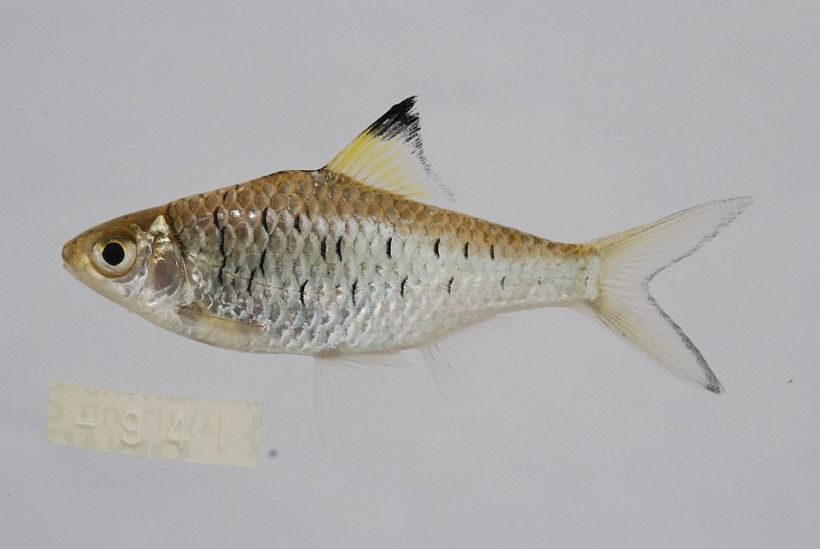
Mystacoleucus atridorsalis
Fowler, 1937
Max length80mm SL3.1in SLTanknot recordedTempnot recordedpHnot recordedThis species can be distinguished from congeners by the following combination of characters: body depth fits 2.5-2.7 times in SL; 28-31 +2-3 lateral line scales; 14-16 circumpeduncular scale rows; 5-5½ scale rows between the lateral line and dorsal-fin origin; a triangular distal blotch on the dorsal-fin; a few body scales with crescent-shaped black edges; a thin dark margin on the dorsal-fin, posterior to the distal blotch; a dark posterior margin on the caudal-fin; normally a single pair of rudimentary barbels present.
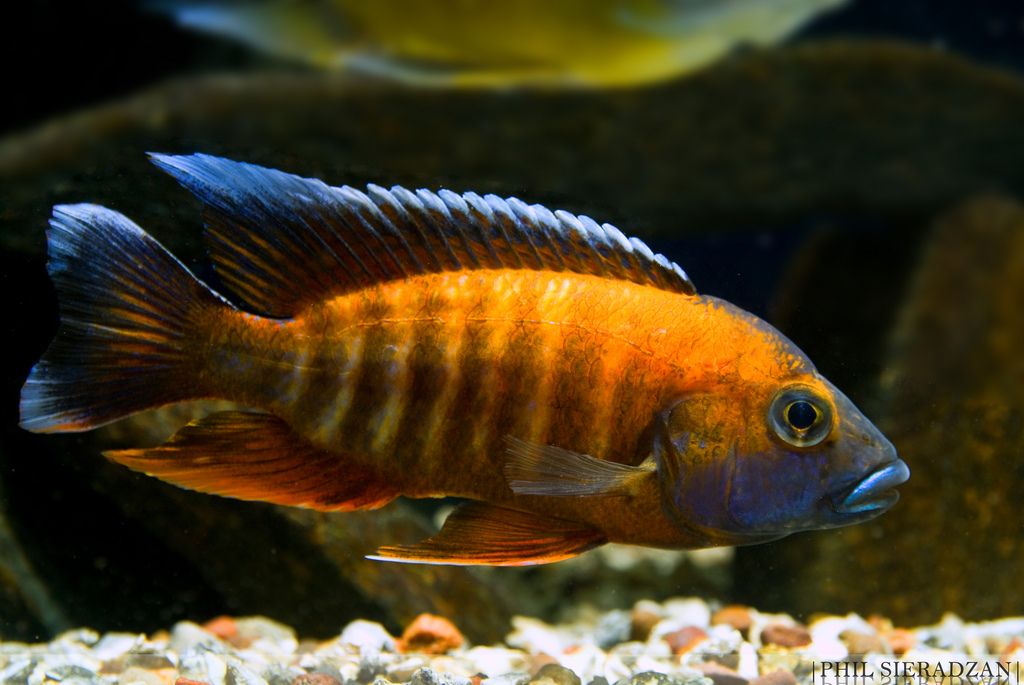
Aulonocara jacobfreibergiMalawi Butterfly
Johnson, 1974
Max length170mm SL7in SLTank120 × 60cm48 × 24inTemp25–29°C77–84°FpH7.5–9.0This was one of the first Aulonocara spp. to enter the hobby and its popularity has endured. It's known by several other vernacular names including 'Freiberg's peacock', 'fairy cichlid' and 'African butterfly' as well as the erroneous 'scientific' names Trematocranus trevori, T. jacobfreigbergi and T. regina. A naturally-occurring, yellowish form from Undu reef, Tanzania is often referred to as 'lemon jake'. It can be told apart from most other members of the genus by the broad, pale distal margins in the dorsal, anal and caudal fins, more deeply-forked caudal fin and larger adult size.
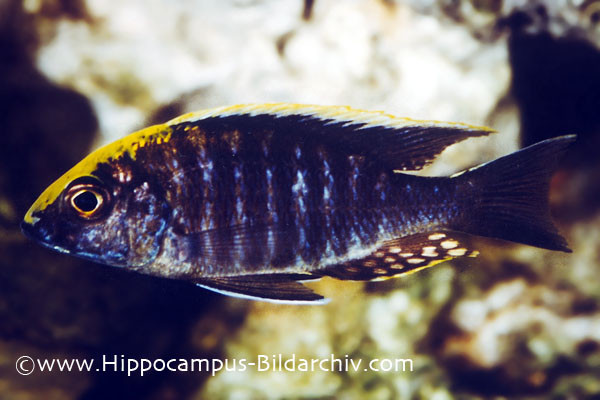
Aulonocara maylandiSulphurhead Peacock
Trewavas, 1984
Max length100mm SL3.9in SLTank120 × 30cm48 × 12inTemp25–29°C77–84°FpH7.5–9.0This species exists in two distinctive phenotypes, with male individuals from West reef and Eccles reef possessing a bright yellow stripe of colour running from the tip of the snout over the anterior portion of the dorsal surface and along the distal margin of the dorsal fin. This form is commonly referred to as 'sulphurhead' or 'sulfurhead' in the aquarium hobby. At Kande Island males exhibit a similar overall colour patterm but the dorsal stripe is whitish in colour and both males and females possess an enlarged lower pharyngeal bone. This population was described...
Baryancistrus chrysolomusMango Pleco
Rapp Py-Daniel, Zuanon & Ribeiro de Oliveira, 2011
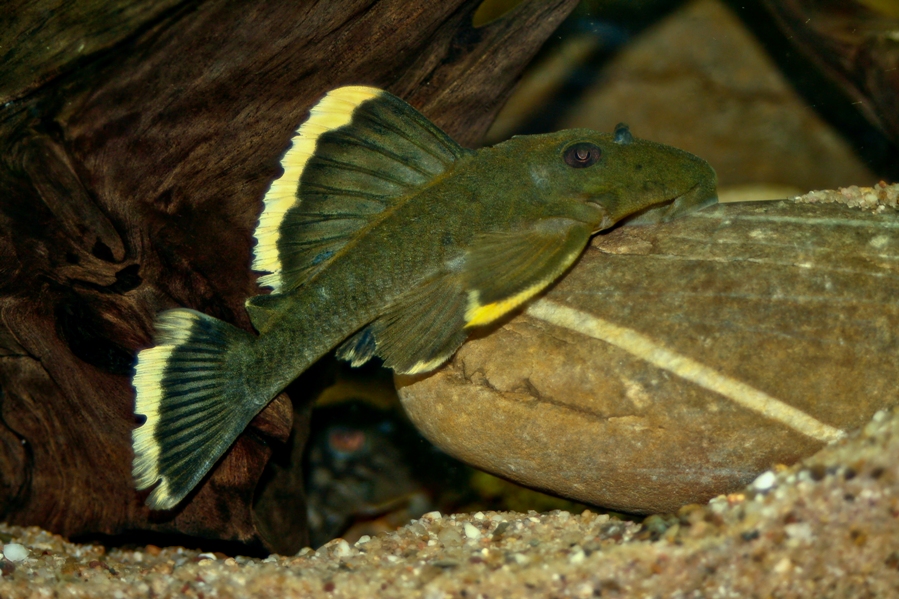
Max length219mm SL9in SLTank120 × 45cm48 × 18inTemp27–32°C81–90°FpH6.0–7.5Prior to description this species was traded under the DATZ code L047 or the alternative vernacular name 'magnum pleco'. It can be distinguished from congeners by a combination of the following characters: presence of a broad, light-coloured (usually yellowish) distal band on the dorsal and caudal fins throughout life, slightly reduced in adults. The only other member of the genus to possess such bands is B. xanthellus but in that species they are reduced to small markings at the fin tips in adults, and the body is covered in pale, normally yellowish, spots.
Betta foerschi
Vierke, 1979
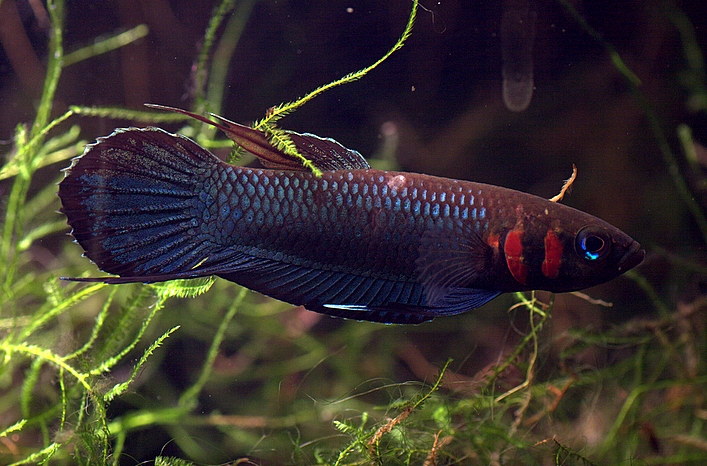
Max length50mm SL2.0in SLTank60 × 30cm24 × 12inTemp22–28°C72–82°FpH4.0–6.0This species lends its name to the Betta foerschi group of closely-related species within the genus, of which members share the following set of characters: possession of iridescent blue or green unpaired fins; rays and interradial membranes in unpaired fins not contrasting; dorsal fin with thin, bright white distal band; opercle with two, reddish-yellow, vertical bars. Members are regarded as being closely-related to bubble nesting Betta specie...
Betta lehi
Tan & Ng, 2005
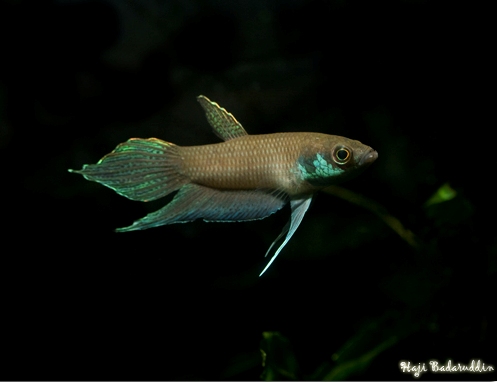
Max length61mm SL2.4in SLTank60 × 30cm24 × 12inTemp22–27°C72–81°FpH4.0–7.0It can be told apart from other members of the B. pugnax group by the following characters: chin bar absent; prsence of transverse bars in the dorsal-fin; no transverse bars in caudal-fin; green iridescent scales present on opercle and body; anal fin with iridescent, light blue distal band; a pair black markings below the postorbital stripe on the opercle of females and juveniles; anal-fin rays 25-29 (mode 28); lateral scales 28-30 (mode 29); postdorsal scales 10-11 (mode 12); pelvic-fin length 34.8-50.6% SL; head length 33.4-36.8% SL; inter-orbital width 31.7-37.4% HL.
Betta mandor
Tan & Ng, 2006
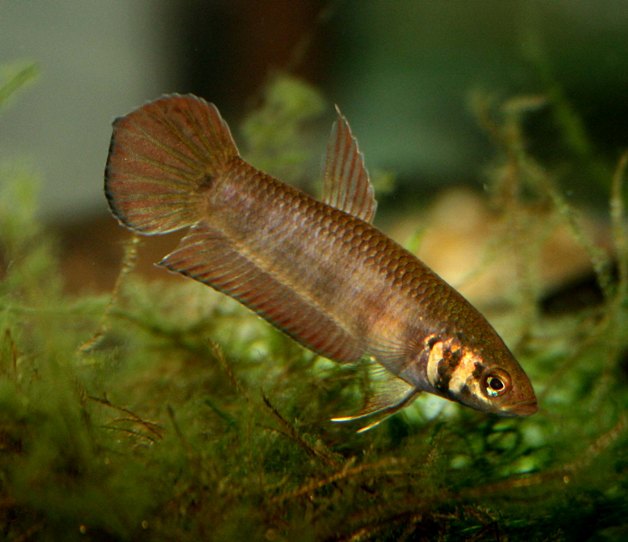
Max length60mm SL2.4in SLTank60 × 30cm24 × 12inTemp22–27°C72–81°FpH4.0–6.5This species was known as B. sp. 'Mandor' or B. sp. 'ninja' prior to official description. It belongs to the Betta foerschi group/complex of closely-related species within the genus, of which members share the following set of characters: possession of iridescent blue or green unpaired fins; rays and interradial membranes in unpaired fins not contrasting; dorsal fin with thin, bright white distal band; opercle with two, reddish-yellow, vertical bars. Members are regarded as being closely-related to bubble-nesting Betta species since they share exhibit certain similarities in morp...
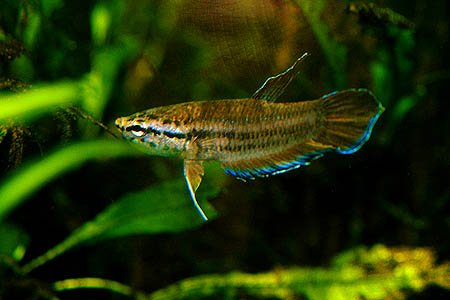
Betta pictaSpotted Betta
Valenciennes, 1846
Max length50mm SL2.0in SLTank60 × 30cm24 × 12inTemp22–28°C72–82°FpH5.5–7.5This species lends its name to the Betta picta complex of closely-related species, an assemblage of which members share the following combination of characters: unpaired fins rounded (anal fin sometimes pointed): I-III, 18-24 anal-fin rays; anal and caudal fins with dark distal margins, most pronounced in mature males; pre- and post-orbital stripes present; chin bar present; opercle with iridescent blue, green, or gold scales.
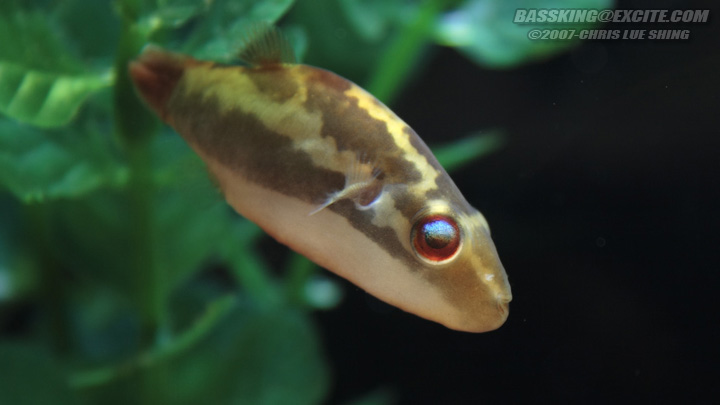
Carinotetraodon irrubescoRed-tailed Redeye Puffer
Tan, 1999
Max length45mm SL1.8in SLTank60 × 30cm24 × 12inTemp20–28°C68–82°FpH6.0–7.5This species is uncommon in the aquarium hobby. It is similar to the congeners C. borneensis and C. lorteti but can be told apart by males possessing a red (vs. bluish to greyish with black and white distal bands in C. lorteti) caudal-fin and lacking (vs. possessing) a black blotch at the base of the dorsal-fin.
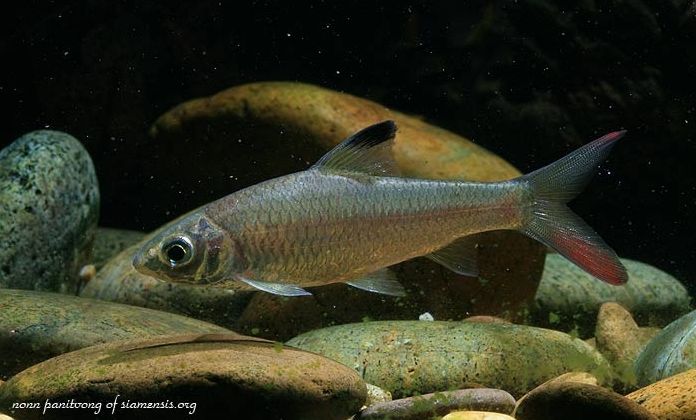
Discherodontus ashmeadi
Fowler, 1937
Max length135mm SL5in SLTank120 × 45cm48 × 18inTemp23–26°C73–79°FpH6.0–7.5D. ashmeadi is the type species and exhibits differences in dental morphology compared with other members of the genus. It can also be told apart from D. halei by the red/pink (vs. orange) colouration in the dorsal and anal fins and serrated (vs. smooth) dorsal spine. D. schroederi is also similar-looking but as it matures the prominent dark dorsal blotch fades to a thin dark distal band whereas in D. ashmeadi it is retained throughout life.
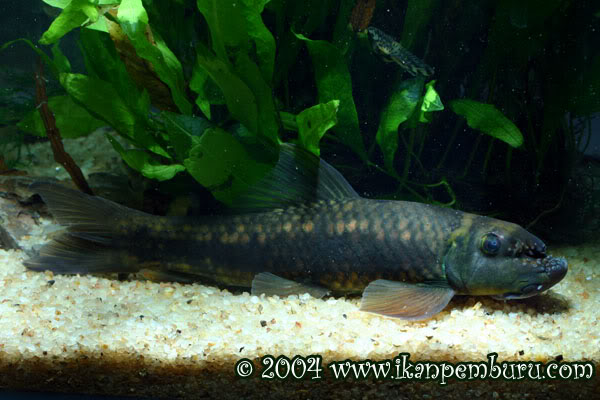
Garra bispinosa
Zhang, 2005
Max length130mm SL5in SLTanknot recordedTempnot recordedpHnot recordedG. bispinosa can be distinguished from all other congeners in Southeast Asia and China by the following combination of characters: a conspicuous, quadrate, anteriorly-directed proboscis orientated ventrally against the snout and anteriorly adorned with a single, large, uniscupid, acanthoid tubercle on the distal tip of each lobe; snout with a deep groove across its tip to form a transverse lobe; 34-35 lateral...
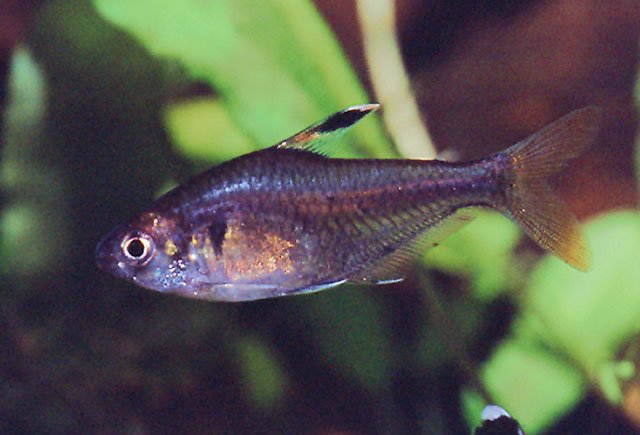
Hyphessobrycon simulatusFalse X-ray Tetra
Géry, 1960
Max length35mm SL1.4in SLTank80 × 30cm31 × 12inTemp20–28°C68–82°FpH5.0–7.0This species is uncommon in the aquarium trade although its name is sometimes applied to other species. It was originally described in the monotypic genus Pseudopristella, and can be distinguished from the vaguely similar Pristella maxillaris by possession of a relatively large (vs. relatively small) humeral spot and having black pigmentation in the anal-fin restricted to the first ray (vs. a prominent distal blotch).
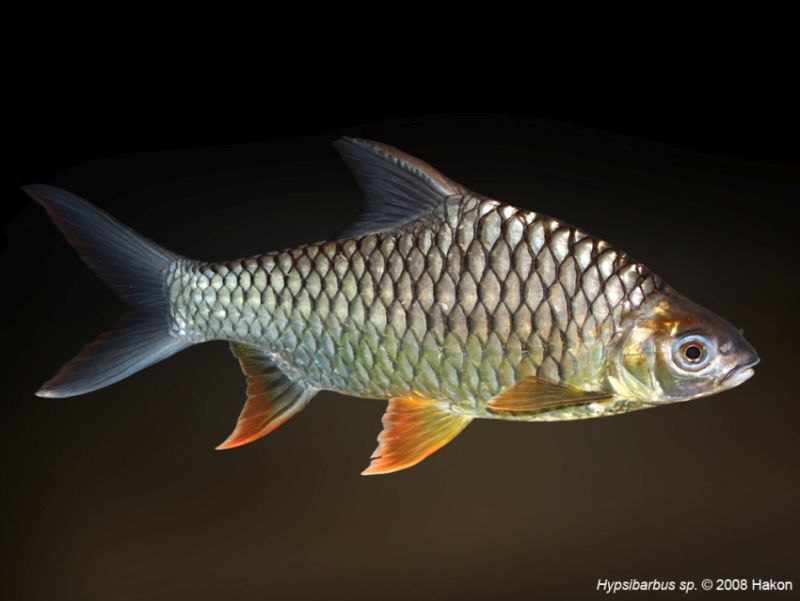
Hypsibarbus wetmorei
Smith, 1931
Max length250mm SL10in SLTank240 × 60cm96 × 24inTemp20–26°C68–79°FpH6.0–8.0H. wetmorei is distinguished from congeners by the following combination of characters: upper body reddish brown; robust body, not compressed; usually 4½ scale rows between lateral line and dorsal-fin origin; 8-12 rakers on first gill arch; 7-9 predorsal scales; 14 circumpeduncular scale rows; usually two scale rows separating vent and anal-fin; <29 lateral line scales; 9-14 serrations on the spinous dorsal-fin ray; distance between distal serrae on posterior margin of last unbranched dorsal-fin ray much greater than the width of their bases.
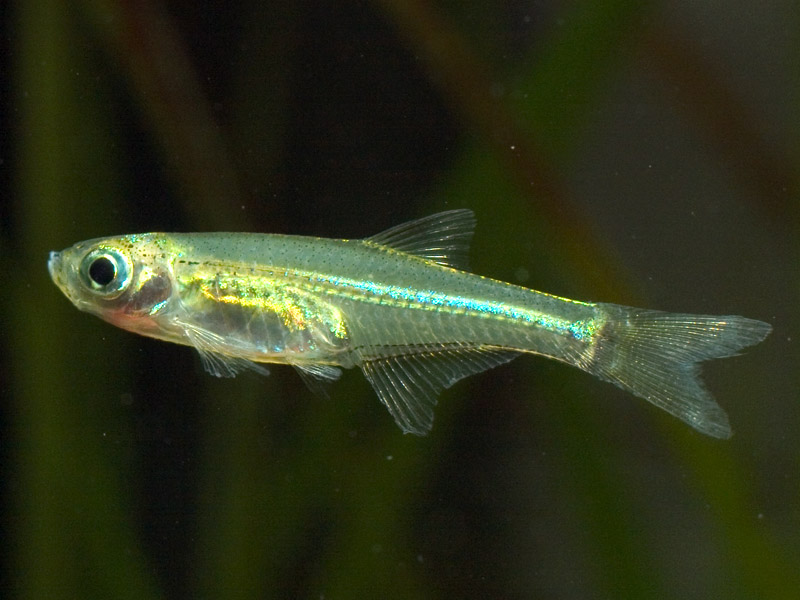
Microdevario gatesi
Herre, 1939
Max length23mm SL0.9in SLTank45 × 30cm18 × 12inTemp20–27°C68–81°FpH6.0–7.5The genus Microdevario was raised by Fang et al. (2009) after phylogenetic analyses revealed that some species formerly included in Microrasbora to be more closely allied with Devario and in need of reclassification. Microdevario is largely separated from Devario and other closely related genera such as Chela and Laubuca by virtue of internal characters but also the following: small adult size; anal and dorsal fins with concave-shaped distal margin; absence of barbels; absence of perforated scales; 9-10 branched anal-fin rays; 7 branched dorsal-fin rays; less abdominal than caudal vertebrae.
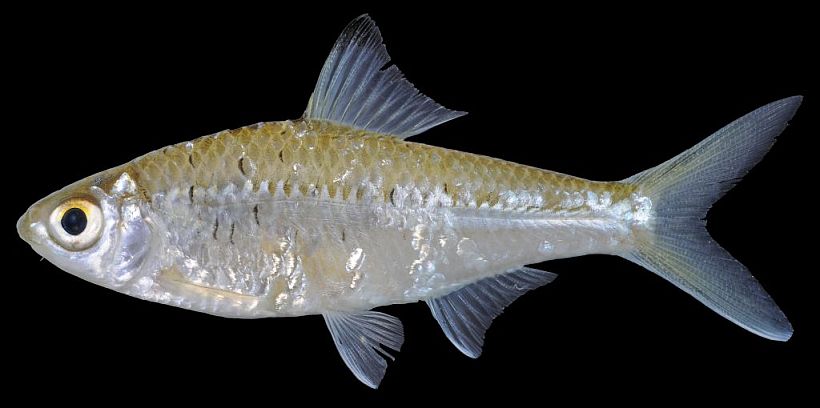
Mystacoleucus lepturus
Huang, 1979
Max length95mm SL3.7in SLTanknot recordedTempnot recordedpHnot recordedThis species can be distinguished from congeners by the following combination of characters: body relatively slender, depth fitting 3.4-3.8 times in SL; 32-33 + 2 lateral line scales; 14 circumpeduncular scale rows; presence of a single pair of barbels; black distal margin on dorsal-fin; numerous body scales with dark, crescent-shaped markings.