Results for “egg”
Type a name: scientific, common, or one a species used to go by. Or narrow the catalogue with the filters.
Filters
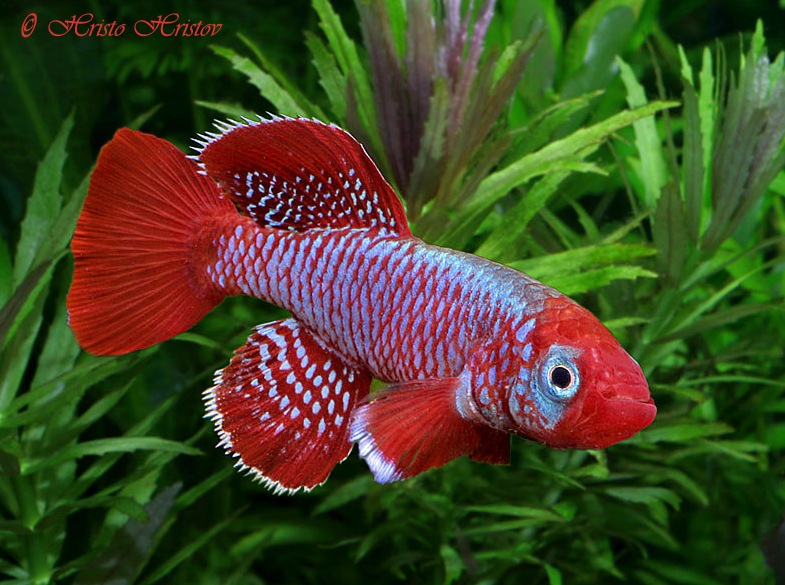
Nothobranchius eggersi
Seegers, 1982
Max length50mm SL2.0in SLTank45 × 30cm18 × 12inTemp20–24°C68–75°FpH7.0–8.2Type locality is 'Rufiji River near Utete, eastern Tanzania', and this species is apparently endemic to the lower Rufiji including the Selous Game Reserve and freshwater parts of the Rufiji delta region. Populations in the aquarium hobby include 'Rufiji river camp', 'Kikongono', 'Ruhoi River', 'Kanga', 'Utete', 'Saadani Game Reserve', 'Ruvu River', 'Bagamoyo', 'Makurunge', 'Killimani', 'Chamakwese', 'Nyamwage', 'Mohoro', and 'Ukuni'.
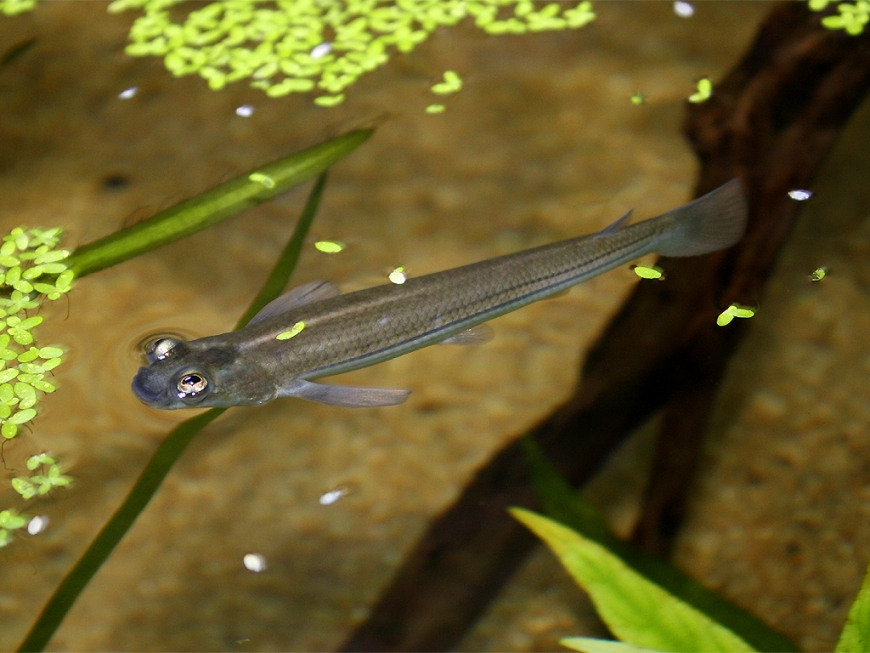
Anableps anablepsFour-Eyed Fish
Linnaeus, 1758
Max length260mm SL10in SLTank150 × 45cm60 × 18inTemp25–31°C77–88°FpH7.5–9.0The eye of Anableps species is split horizontally by a band of epithelial tissue. It has two corneas, two pupils, a single, egg-shaped lens and one retina that's also split into two sections. The lens is oval and asymmetric with the upper part flattened as in the human eye and the lower section curved as in most other fishes. The upper cornea is thicker and enriched with glycogen which possibly helps to protect it from drying and UV irradiation. Two horizontal flaps of the iris are thought ...
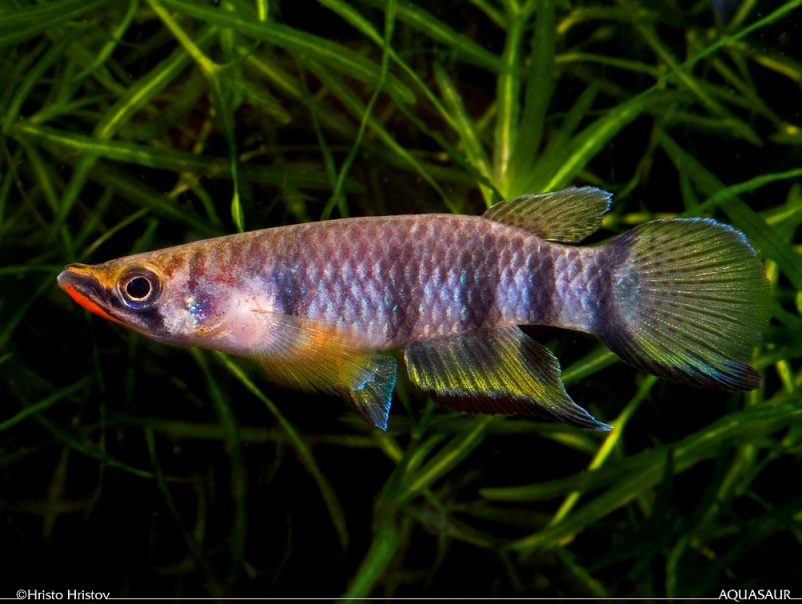
Epiplatys dagetiRed-chinned Panchax
Poll, 1953
Max length45mm SL1.8in SLTank60 × 30cm24 × 12inTemp20–30°C68–86°FpH5.0–7.0This species is also known as 'Daget's panchax', 'black-lipped panchax', 'orange-throated panchax' or 'firemouth killifish' and is an aquarium stalwart with the red-throated form having first been exported in 1908. It's an excellent choice for those new to killifishes or egg-laying species in general since the aquarium strain is well-established, quite hardy and easy to breed. There was some initial confusion after Belgian ich...
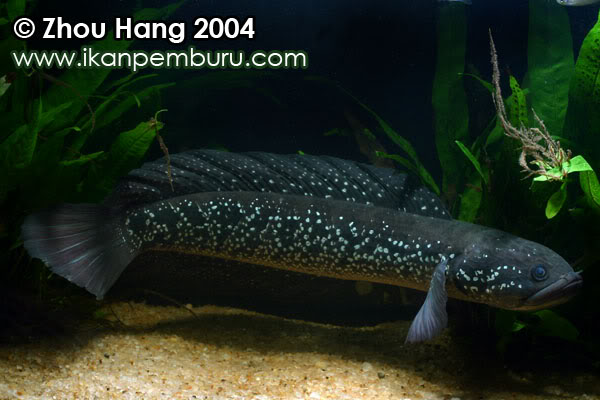
Channa asiaticaChinese Snakehead
Linnaeus, 1758
Max length350mm SL14in SLTank100 × 40cm39 × 16inTemp15–25°C59–77°FpH6.0–8.0No bubble nest is built and several thousand eggs simply float at the surface with both male and female remaining to defend the eggs and fry. The eggs hatch after 24-36 hours depending on temperature and the fry are free swimming in a further 24 hours. At this point they resemble 6-7 mm long black tadpoles. It is important to constantly feed...
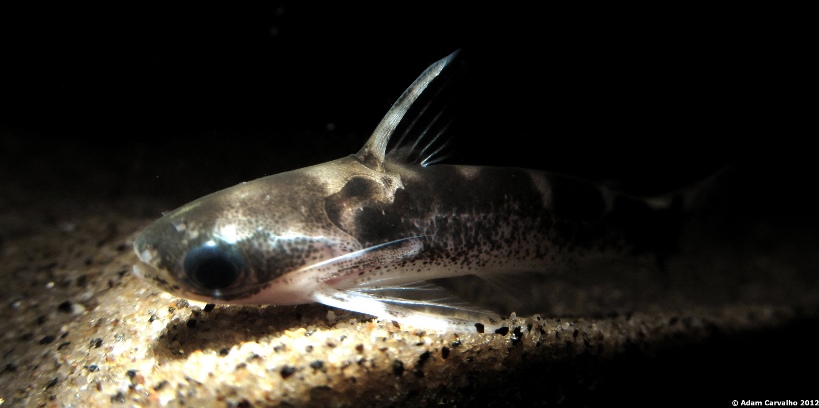
Centromochlus macracanthus
Soares-Porto, 2000
Max length71mm SL2.8in SLTank80 × 30cm31 × 12inTemp22–28°C72–82°FpH4.0–7.0All members of the family Auchenipteridae are thought to practise internal insemination and females can carry mature, unfertilised eggs and sperm packets inside the body for unspecified periods of time. When conditions are satisfactory fertilisation is triggered and the eggs deposited, and there is n...
Dicrossus maculatusSpadetailed Checkerboard Cichlid
authority not recorded
Max length53mm SL2.1in SLTank60 × 30cm24 × 12inTemp26–30°C79–86°FpH3.4–5.4Dicrossus Maculatus are not commonly available in the trade. Sometimes they are mistaken for the more common and popular Dicrossus Filamentosa. The Spadetailed Checkerboards are an absolutely fascinating species to keep. They are a challenge to breed, requiring such acidic and soft water, but when it does happen it is a very rewarding experience. Reports maintain that the pH and temperature of the water when conceived, eggs laid, eggs hatched and in the first month of the fry's life c...
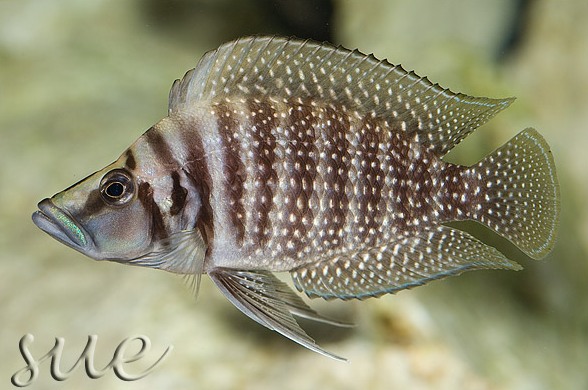
Altolamprologus calvusCalvus Cichlid
Poll, 1978
Max length138mm SL5in SLTanknot recordedTemp24–27°C75–81°FpH7.5–9.0A. calvus is a predator by nature and its body shape has been adapted to allow it to enter small crevices and gaps in the rockwork of Lake Tanganyika to prey on eggs, fry and small fish. Its laterally compressed shape makes the fish hard to spot head on, giving it an advantage over would be predators and prey alike. It is also quite well-armoured, possessing thick scales which can be turned towards potential attackers. These can cause real damage with their serrated edges. Several colour form...
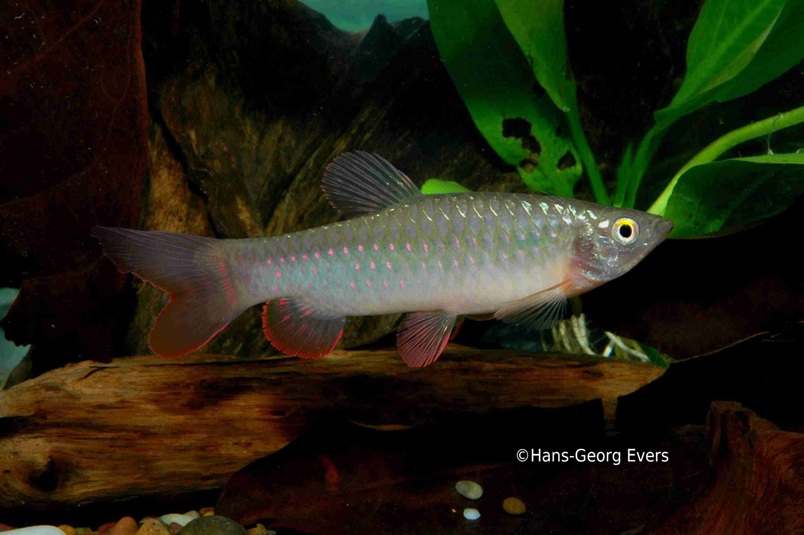
Copeina guttataRed-spotted Tetra
Steindachner, 1876
Max length76mm SL3.0in SLTank120 × 30cm48 × 12inTemp20–28°C68–82°FpH4.0–7.5Known from the middle and upper Amazon river basins in Brazil, Peru, Ecuador and Colombia. Type locality is 'Amazon River at Obidos, Cudajas, and Tabatinga; Rio Negro, Brazil.' It apparently practises an interesting reproductive strategy in which the eggs are deposited in a shallow depression excavated from the substrate and guarded by the male.
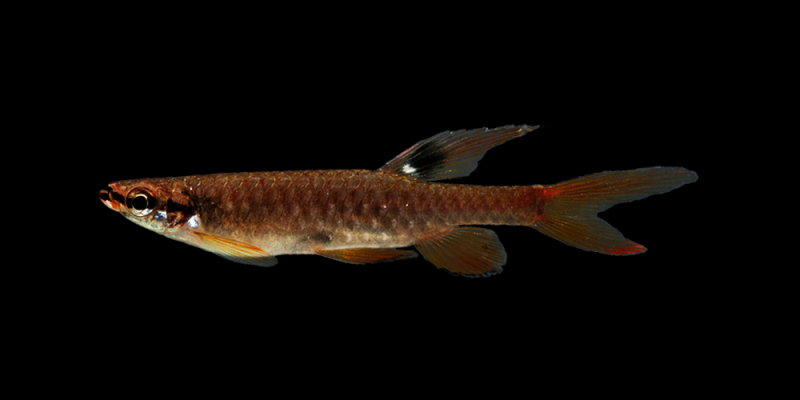
Copella arnoldiSplash Tetra
Regan, 1912
Max length55mm SL2.2in SLTank90 × 30cm36 × 12inTemp20–28°C68–82°FpH4.0–7.5This species is also known as the 'spraying', 'splashing' or 'jumping' tetra and these names are also sometimes applied to its congeners although none of them exhibit a comparable spawning strategy, simply depositing their eggs among vegetation at or around the water surface.
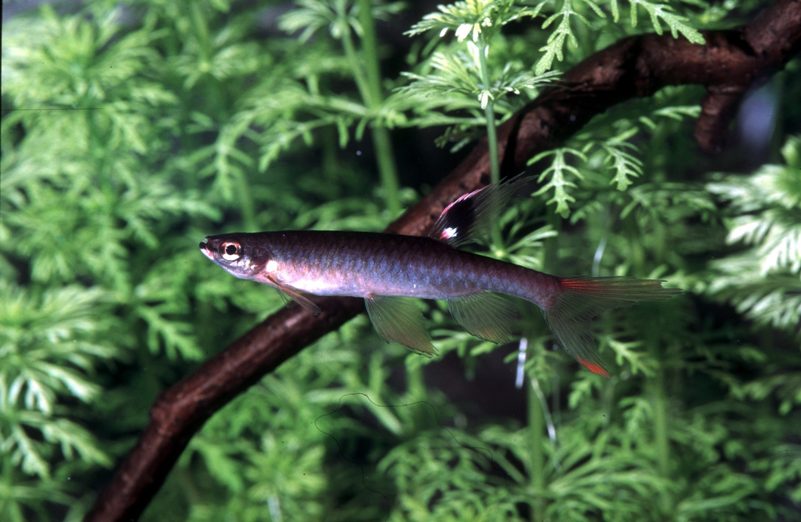
Copella carsevennensis
Regan, 1912
Max length40mm SL1.6in SLTank75 × 30cm30 × 12inTemp20–28°C68–82°FpH4.0–7.0C. carsevennensis has formerly been synonymised with C. arnoldi but was considered separate by Zarske (2011) using the following combination characters: absence (vs. presence) of a silvery-white to white patch in the centre of some of the flank scales in males, particularly in the lower half of the body; absence (vs. presence) of a horizontal dark body bar in nuptial males; absence (vs. presence) of thin black margins in the dorsal, ventral and anal fins; eggs deposited among submerged vegetation (vs. eg...
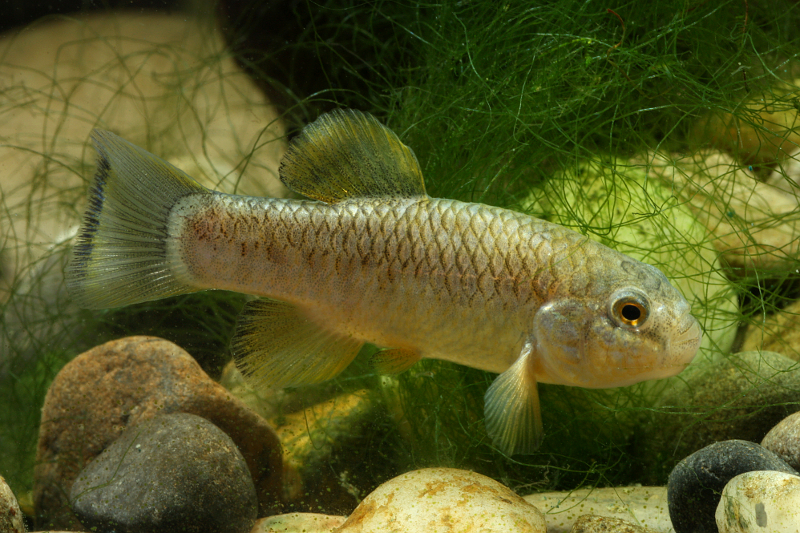
Cyprinodon pachycephalus
Minckley & Minckley, 1986
Max length45mm SL1.8in SLTank60 × 30cm24 × 12inTempnot recordedpHnot recordedNeed not be too complicated so long as there are plenty of broken lines-of-sight. Provide plenty of cover in the form of aquatic plants, wool mops, etc., and if using filtration air-powered, sponge-type units are best as these will not harm eggs or fry. Lighting is unimportant but can be use...
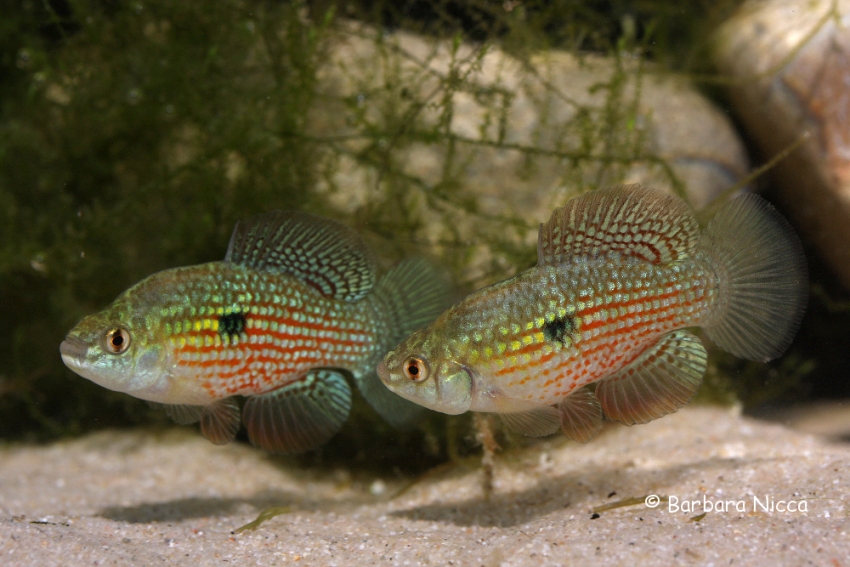
Jordanella floridaeFlorida Flagfish
Goode & Bean, 1879
Max length55mm SL2.2in SLTank60 × 30cm24 × 12inTemp18–30°C64–86°FpH6.5–8.5Contrary to many reports, including a number of scientific papers, this species breeds in the same way as other cyprinodontids and does not dig pits or exhibit extended parental care. It's a fractional spawner with females depositing eggs on a more-or-less continuous basis when a warm temperature is maintained though ideally it should be permitted to breed on a seasonal basis in spring and late summer as it would in nature.
Melanotaenia fluviatilisAustralian Rainbowfish
authority not recorded
Max length100mm SL3.9in SLTank90 × 30cm36 × 12inTemp20–25°C68–77°FpH6.5–8.0Also known as the Murray River or crimson-spotted rainbowfish, this species is not as common in the hobby as some of its relatives, but can still be found from time to time. It is easily confused with the very similar M. duboulayi, indeed these two were once grouped together as a single species. However, there are clear differences in patterning, fin ray counts and the way in which their eggs and fry develop. The range of M. fluviatilis extends further south than any other rainbowfish, and a...
Neolamprologus fasciatusBarred Lamprologus
authority not recorded
Max length150mm SL6in SLTank90 × 38cm36 × 15inTemp23–27°C73–81°FpH7.5–9.0N. fasciatus is a predator by nature and its body shape has been adapted to allow it to enter small crevices and gaps in the rockwork of Lake Tanganyika to prey on invertebrates, eggs, fry and small fish. The lateral compression exhibited by this fish also makes the fish hard to spot head on, giving it an advantage over both its predators and prey. It hunts in a head down position a few feet above the substrate, moving its body in sinuous motions to counteract the water currents. It is sometimes...
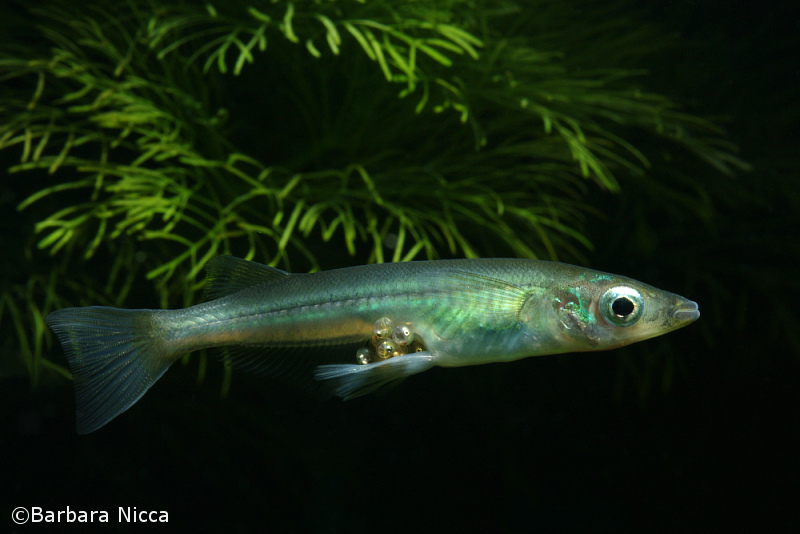
Oryzias sarasinorumSarasin's Buntingi
Popta, 1905
Max length60mm SL2.4in SLTank100 × 30cm39 × 12inTemp24–29°C75–84°FpH7.0–8.0Utilises a strategy which has become known as 'pelvic brooding'. Spawning tends to occur in the early morning, with dominant males darkening in colouration and defending their space by driving away potential competitors, while approaching ripe females in a rigid 'head-down' position. The eggs normally number 8-12 and are expelled as a single mass while being fertilised simultaneously, after which they continue to hang from th...
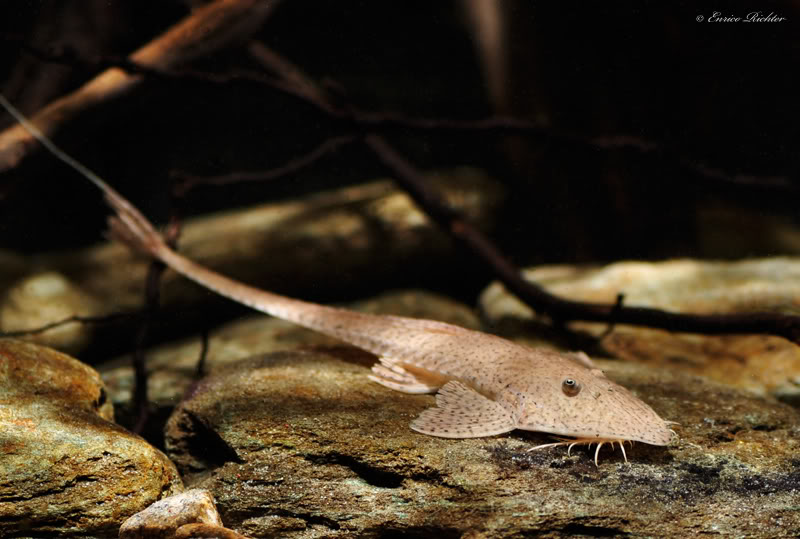
Pseudohemiodon laticepsGiant Whiptail Catfish
Regan, 1904
Max length300mm SL12in SLTank180 × 60cm72 × 24inTemp18–24°C64–75°FpH6.0–7.5A paternal 'lip brooder' which has been bred in aquaria. Post-spawning the male carries the eggs attached to his labial barbels for a period of 12-14 days after which the fry hatch with a large yolk sac attached, this being absorbed over the next 48 hours or so. During incubation the behaviour of the male i...
Pseudotropheus elongatusElongate Mbuna
authority not recorded
Max length135mm SL5in SLTank120 × 38cm48 × 15inTemp24–28°C75–82°FpH7.6–8.8Over 30 different forms of this species occur in Lake Malawi. These should not be mixed in the aquarium as they will hybridise freely. P. elongatus differs morphologically from other mbuna, being relatively slender and elongate. In nature females protect territories which contain 'gardens' of algae which they leave to breed before returning once they are holding eggs. Juvenile fish from previous spawns also inhabit the territory, protecting it when the female is away. This species i...
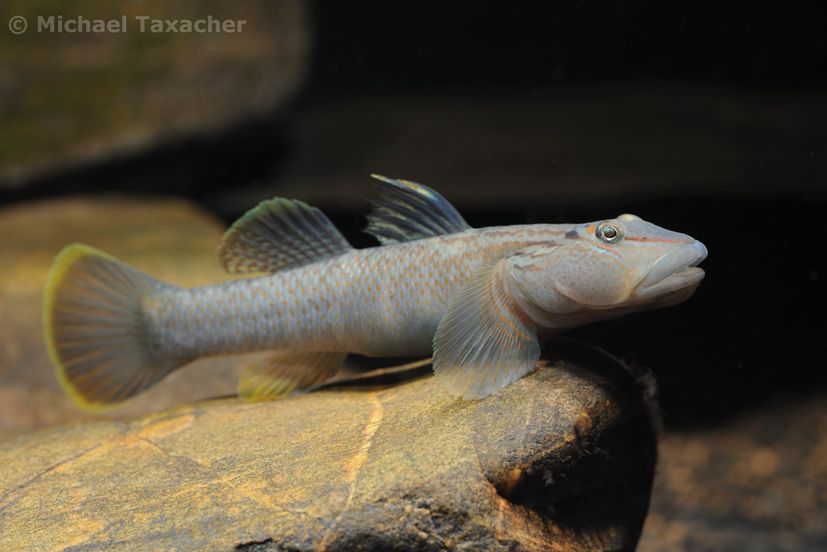
Rhinogobius gigas
Aonuma & Chen, 1996
Max length85mm SL3.3in SLTank80 × 30cm31 × 12inTemp18–28°C64–82°FpH6.0–8.0As is typical for the genus eggs are deposited on the ceiling of a cave or crevice and guarded by the male until hatching. Several potential sites should be offered in the form of rocks (flat slate tends to be easiest to handle, see below), terracotta pipes, plant pots, etc. A nuptial male will select a site and defend it agai...
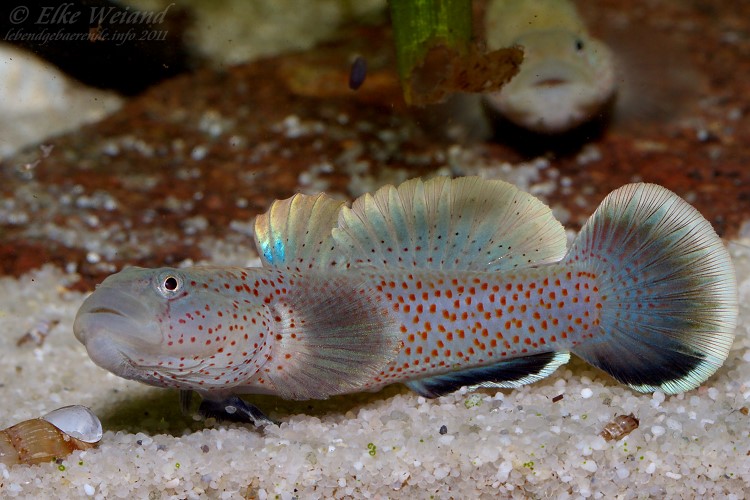
Rhinogobius rubromaculatusRed-spotted Goby
Lee & Chang, 1996
Max length55mm SL2.2in SLTank60 × 30cm24 × 12inTemp18–24°C64–75°FpH6.0–8.0This species occurs in a couple of colour forms with fish from northern and central Taiwan possessing a greyish base body colour and those from the Linbian river, southern Taiwan having a dark marking in the anterior portion of the first dorsal fin and larger, more intense red spots on the body. The latter form is also smaller in size, lays smaller eggs, does not exhibit extreme sexual dimorphism and has been refe...
Silurus glanisWels catfish
authority not recorded
Max length5000mm SL197in SLTanknot recordedTemp3.9–20°C39–68°FpHnot recordedJuvenile specimens are occasionally available in the aquarium trade but this species is clearly not a viable subject for the vast majority of private aquarists. While it's considered a sport fish in some countries (France, Italy, Spain, UK) it's flesh and eggs are considered a delicacy in others (Hungary, Poland, Slovakia, Lithuania) and its skin is also used in the manufacture of leather and glue. The family Siluridae comprises those catfsh species commonly referred to as freshwate...