Results for “euryhaline”
Type a name: scientific, common, or one a species used to go by. Or narrow the catalogue with the filters.
Filters
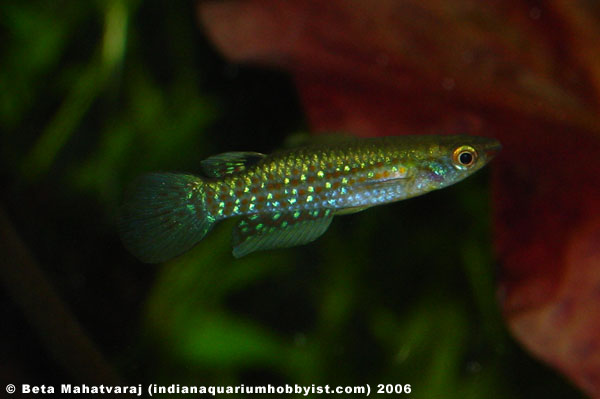
Aplocheilus blockiiGreen Panchax
Arnold, 1911
Max length45mm SL1.8in SLTank45 × 30cm18 × 12inTemp20–28°C68–82°FpH6.0–8.5This species is euryhaline and mostly inhabits lowland, often coastal, habitats containing still or slow-moving brackish or freshwater. It displays a preference for habitats with surface vegetation or overhanging cover and is commonly found in mangrove swamps and rice paddies.
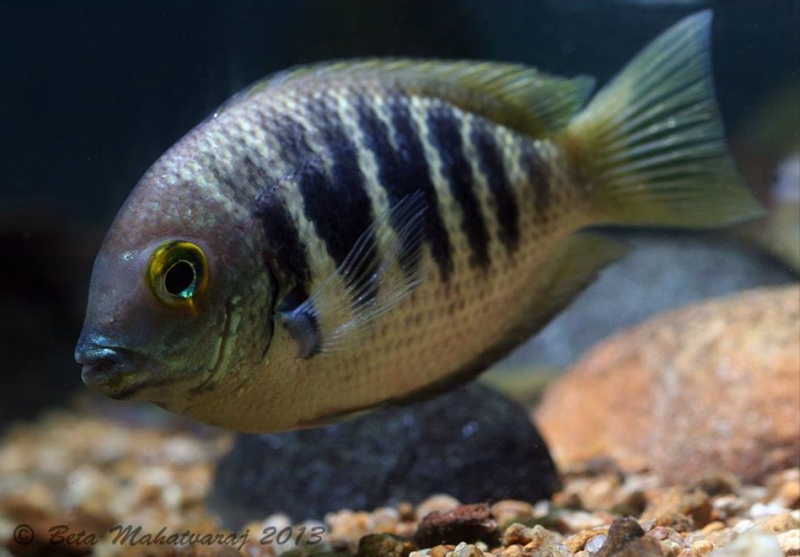
Etroplus canarensisCanara Pearlspot Cichlid
Day, 1877
Max length110mm SL4in SLTank120 × 45cm48 × 18inTemp22–32°C72–90°FpH6.0–7.5Etroplus is the only cichlid genus native to the Indian subcontinent and Sri Lanka and currently comprises three species among which E. canarensis is uniquely limited to freshwater and restricted in range. Its congeners E. maculatus and E. suratensis are both euryhaline inhabiting estuaries, coastal lagoons and the lower reaches of rivers around coastlines of western and southern India plus northern Sri Lanka.
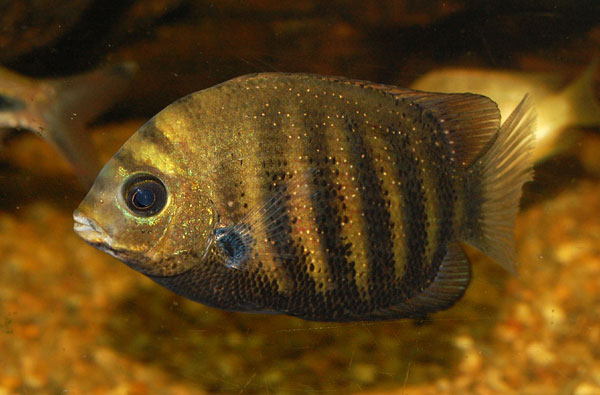
Etroplus suratensisGreen Chromide
Bloch, 1790
Max length350mm SL14in SLTanknot recordedTemp20–30°C68–86°FpH7.0–8.5This species is euryhaline and mostly inhabits brackish estuaries, coastal lagoons and the lower reaches of rivers. It also occurs in freshwater habitats, however, including a number of inland lakes in Sri Lanka although it appears to have been introduced intentionally.
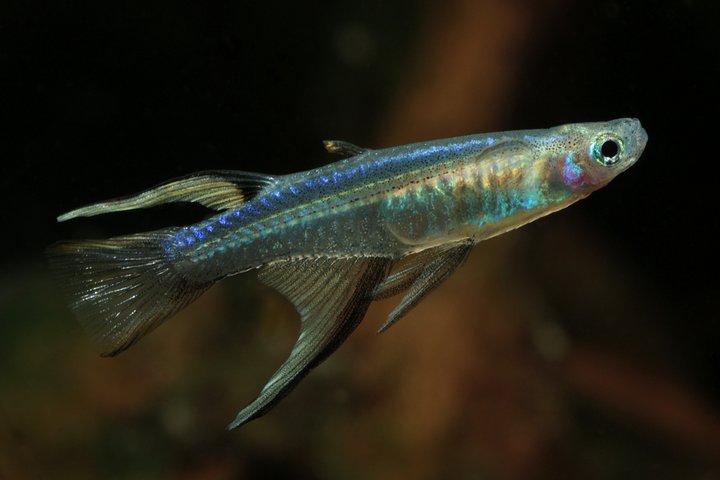
Pseudomugil cyanodorsalisNeon Blue-eye
Allen & Sarti, 1983
Max length35mm SL1.4in SLTank45 × 30cm18 × 12inTemp21–31°C70–88°FpH7.0–8.5Euryhaline and thus capable of withstanding significant fluctuations in salinity and other water conditions. It's been recorded in full marine conditions as well as pure freshwater environments, and commonly inhabits coastal mangrove creeks and swamps. Such changes may occur on a daily or seasonal basis depending on locality, with some habitats influenced by daily tides whereas others become hypersal...
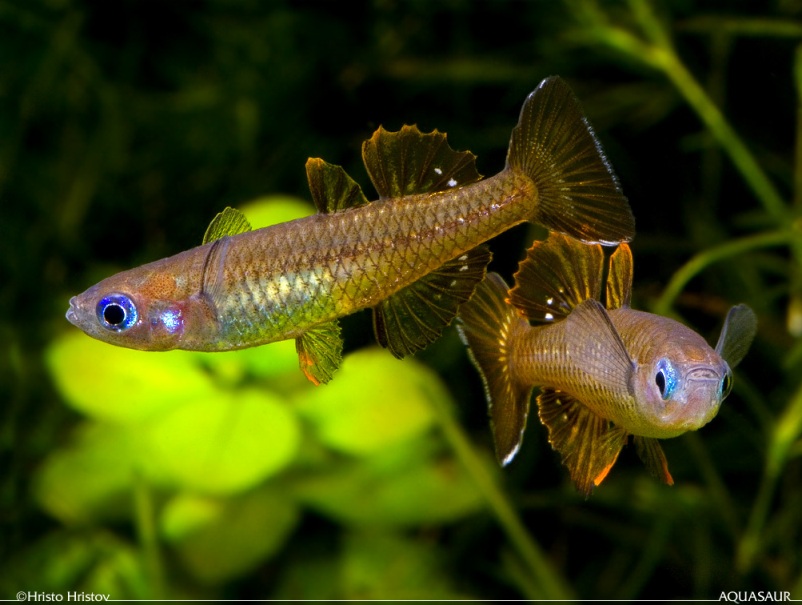
Pseudomugil tenellusDelicate Blue-eye
Taylor, 1964
Max length55mm SL2.2in SLTank75 × 30cm30 × 12inTemp25–32°C77–90°FpH5.5–7.5Euryhaline and mostly inhabits coastal floodplains where it's found in both fresh and brackish habitats, including tidal estuaries and salt marshes. It's particularly common in swamps, billabongs, and slow-moving streams where aquatic vegetation grows densely, but some populations have colonised upper sections of freshwater streams. Larger individuals may also move into main river channels. Tappin (2010) gives the following ranges of parameters based on those taken from various localities: temperature 27 - 38 °C, pH 5...