Results for “falcate”
Type a name: scientific, common, or one a species used to go by. Or narrow the catalogue with the filters.
Filters
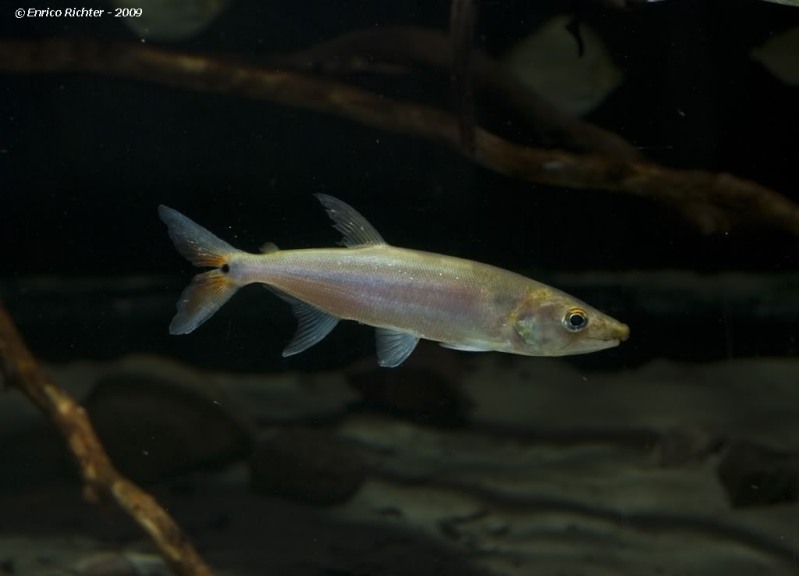
Acestrorhynchus falcatusRed-Tailed Freshwater Barracuda
Bloch, 1794
Matched on Salmo falcatus, a name it was formerly known by
Max length275mm SL11in SLTank250 × 90cm98 × 36inTemp22–28°C72–82°FpH6.0–7.5The vernacular name of this fish is derived from its appearance and behaviour, rather than a genetic association with the marine barracuda, and it's also sometimes referred to as 'pike characin' or 'spotted cachorro' with local vernacular names including 'Grand dent-chien' (French Guiana), ' Cachorrinho' or 'Ueua' (Brazil). Although most species of Acestrorhynchus appear superficially similar to one another most exhibit distinguishable external chara...
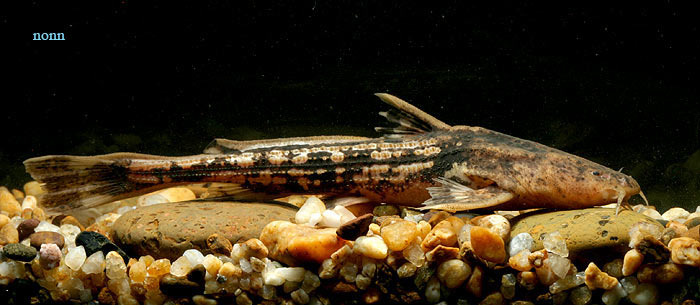
Acrochordonichthys gyrinusFalcate Chameleon Catfish
Vidthayanon & Ng, 2003
Matched on the common name Falcate Chameleon Catfish
Max length80mm SL3.1in SLTank75 × 30cm30 × 12inTemp17.5–24°C64–75°FpH5.0–7.0As in other members of the genus body colouration in this species is variable, even among individuals collected from a single locality, although a few regularities have been observed which can be used to distinguish certain species from one another. This is thought related to the fact that Acrochordonichthys spp. periodically shed their skins and appear paler post-moulting.
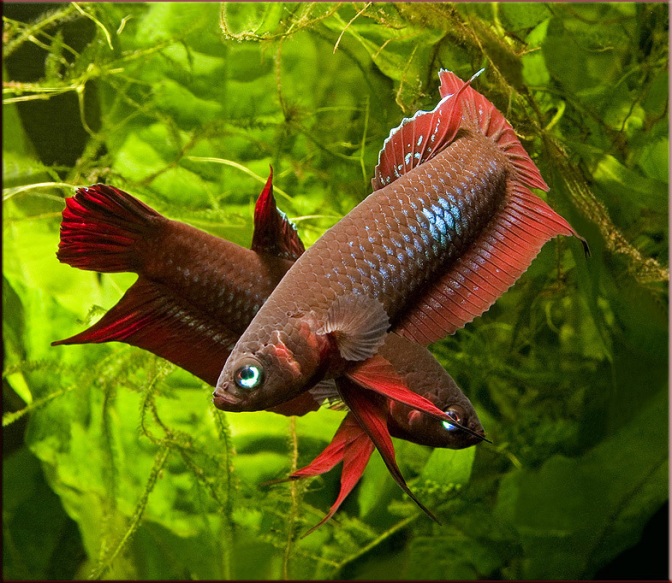
Betta coccinaScarlet Betta
Vierke, 1979
Max length40mm SL1.6in SLTank45 × 30cm18 × 12inTemp22–30°C72–86°FpH4.0–6.0B. coccina can be told apart from other members by the following combination of characters: iridescent green lateral blotch present in male, absent in female; body dark red in colour; no parallel vertical iridescent gold opercle bars; pelvic fin falcate with black filamentous tip, remainder red; median fins with discrete iridescent green spots; dorsal fin-rays 9-12; anal-fin rays 27-29; subdorsal scales 7-8; lateral scales 31-32; predorsal scales 18-21. The genus Betta is the most speciose within the family Osphronemidae with almost 70 reco...
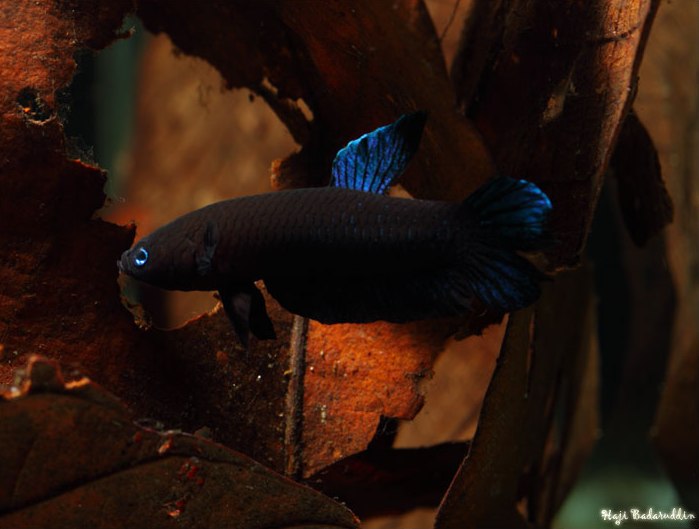
Betta persephone
Schaller, 1986
Max length35mm SL1.4in SLTank45 × 30cm18 × 12inTemp22–28°C72–82°FpH4.0–6.0B. persephone can be told apart from other members of the group by the following characters: no lateral blotch; body blackish; dorsal surface of head posterior to eye sloping gently; no parallel vertical iridescent gold opercle bars; pelvic-fin falcate with white filamentous tip, remainder black to reddish; median fins covered diffusely with light green iridescence; dorsal fin-rays 9; anal-fin rays 24-27; subdorsal scales 6-7; lateral scales 27-29; predorsal scales 17-18.
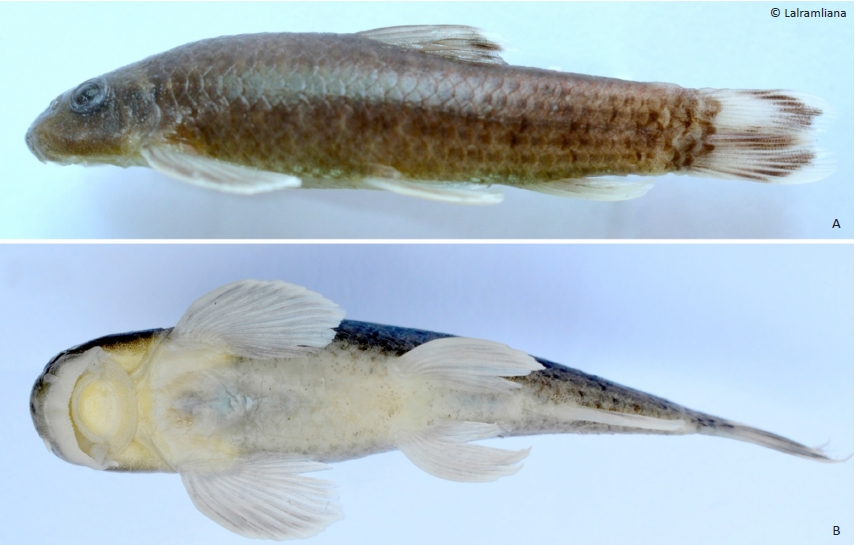
Garra dampaensis
Laironunga, Lainuntluanga & Lairamliana, 2013
Max length55mm SL2.2in SLTanknot recordedTempnot recordedpHnot recordedThis species can be told apart from Indian congeners by the following combination of characters: no transverse groove or proboscis on the snout; tip of dorsal fin falcate; long axillary scale present at the base of pelvic fin, reaching base of last pelvic fin ray; 27–29 lateral-line scales, 10–11 regularly arranged predorsal scales; W-shaped black band across middle of caudal fin; presence of scales on the abdomen.
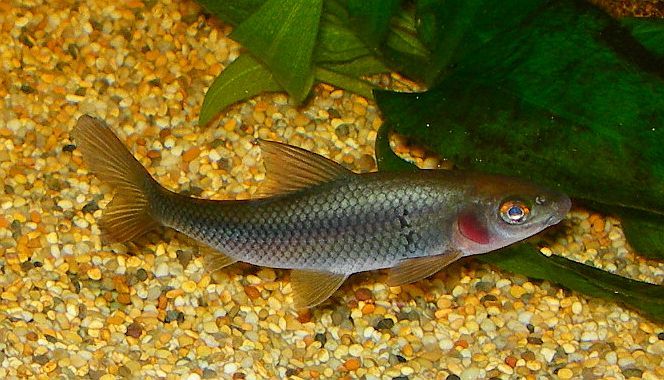
Labeo bogaViolet Shark
Hamilton, 1822
Matched on Cyprinus falcatus, a name it was formerly known by
Max length250mm SL10in SLTank240 × 60cm96 × 24inTemp18–24°C64–75°FpH6.0–8.0Despite its unsuitability for the majority of home aquaria, this species is available in the aquarium trade on an irregular basis, and has also been marketed as 'violet-gilled shark', 'red-gilled violet shark' and 'blushing violet shark'. It appears likely that L. boga as currently recognised represents a complex of closely-related species.