Results for “fin-spine”
Type a name: scientific, common, or one a species used to go by. Or narrow the catalogue with the filters.
Filters
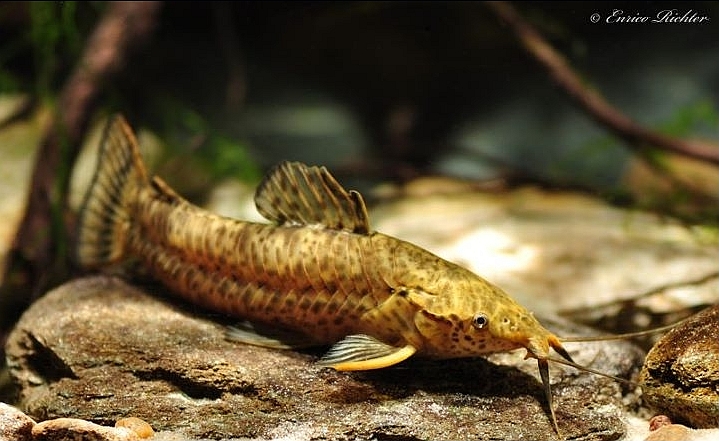
Megalechis pictaBar-tailed Hoplo
Müller & Troschel, 1849
Max length120mm SL5in SLTank120 × 45cm48 × 18inTemp18–28°C64–82°FpH5.0–7.5This species was previously referred to as M. thoracata, but that name is now applied to the species with a relatively short dorsal-fin spine which was formerly known as M. personata. M. picta can be told apart from M. thoracata by presence of a dark vertical bar in the caudal-fin, a comparatively longer dorsal-fin spine (52.0-64.0% vs. 32.0-48.0% of dorsal-fin base in specimens measur...
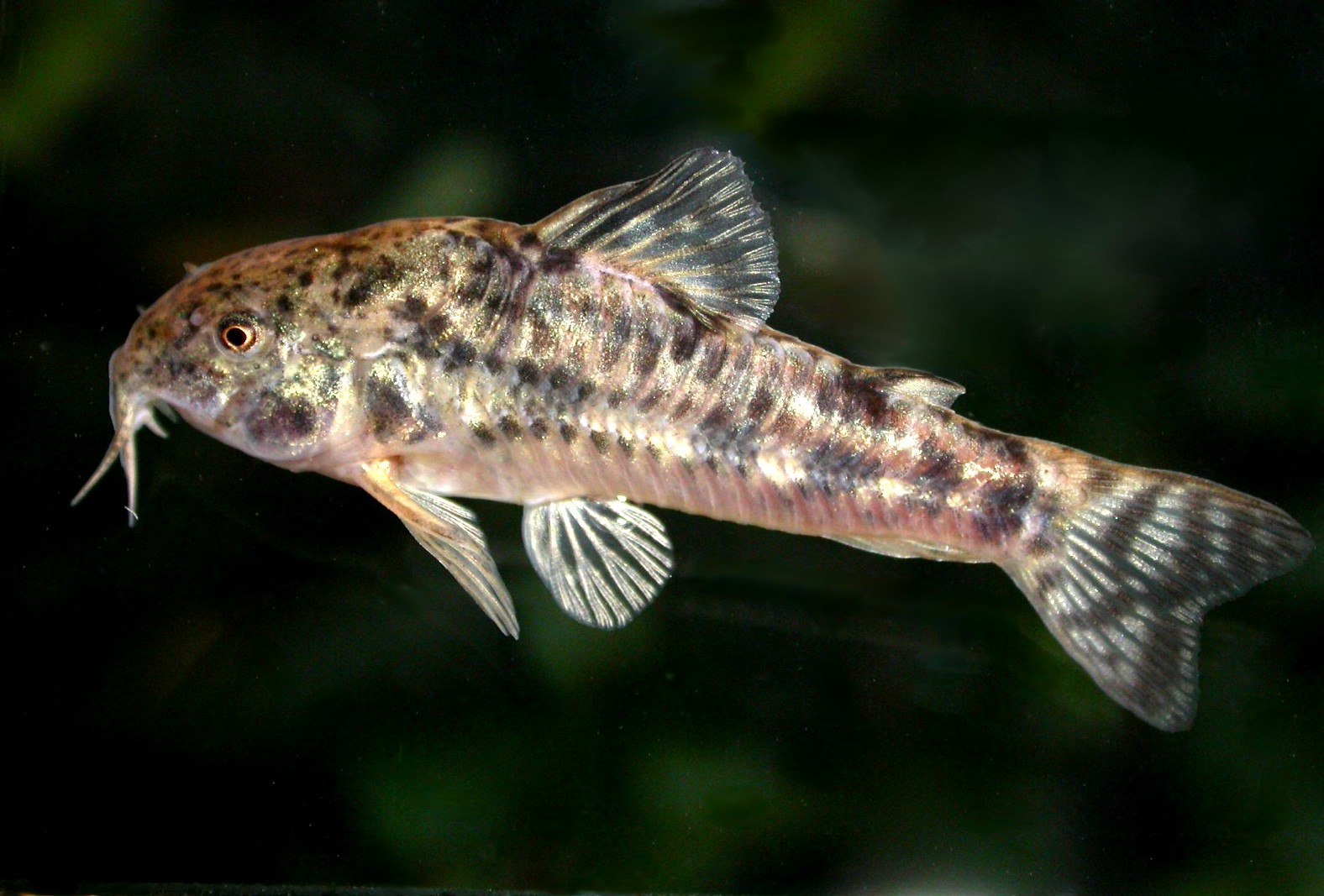
Corydoras petracinii
Calviño & Alonso, 2010
Max length38mm SL1.5in SLTank60 × 30cm24 × 12inTemp10–20°C50–68°FpH7.0–8.0It also exhibits morphological adaptations to an existence among rocks in a flowing environment, such as a cryptic colour pattern, reduced spine length in the dorsal and pectoral fins, ventrally-oriented pectoral fins, slightly emarginate caudal-fin, and reduced body depth. Reduced fin spines and body depth are typical features associated with the related genus Aspidoras, but the...
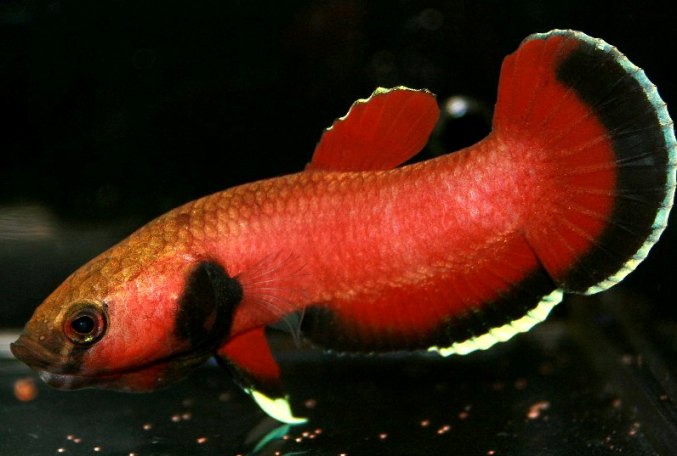
Betta channoidesSnakehead Betta
Kottelat & Ng, 1994
Max length40mm SL1.6in SLTank45 × 30cm18 × 12inTemp23–30°C73–86°FpH4.0–6.5B. channoides and B. albimarginata together comprise the Betta albimarginata group/complex of closely-related species within the genus, these differing from all other members of the genus in colour pattern and by possession of 9-12 anal-fin spines (vs. 0-4). They look very similar to one another but differ in the following characters: anal fin spines 9-11 in B. albimarginata vs. 12 in B. channoides; anal fin rays 21-23 vs. 23-25; lateral scale rows 26-27 vs. 27.5-28; trans...
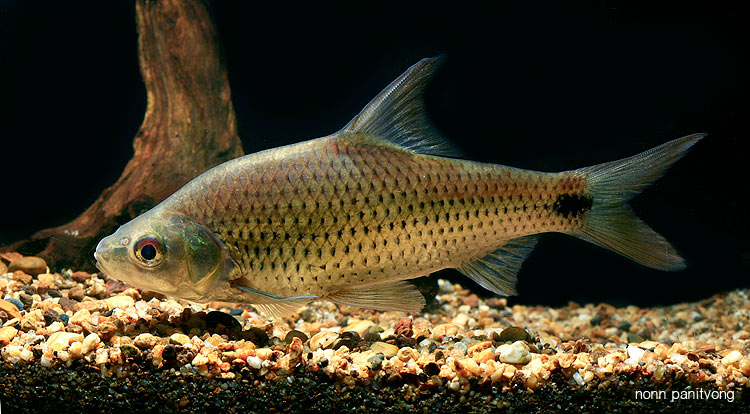
Cyclocheilichthys armatus
Valenciennes, 1842
Max length230mm SL9in SLTank180 × 60cm72 × 24inTemp20–26°C68–79°FpH6.0–8.0It can be distinguished from congeners by possessing one or two pairs of barbels, a black blotch at the base of the caudal-fin, and rows of dark spots along the lateral scale rows. Members of Cyclocheilichthys are characterised by possessing a serrated dorsal fin spine, 9 branched pelvic fin rays, a conical snout, small, subterminal...
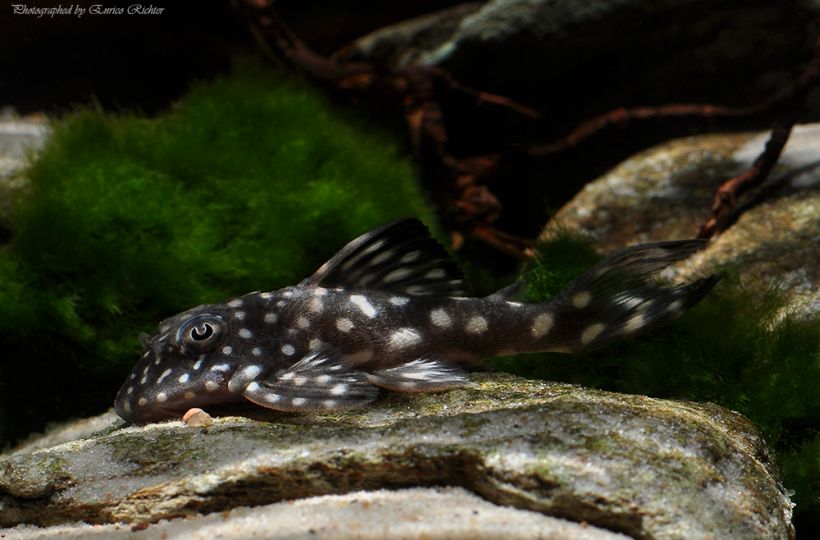
Hypancistrus inspectorL102
Armbruster, 2002
Max length160mm SL6in SLTank120 × 45cm48 × 18inTemp22–30°C72–86°FpH5.0–7.5H. inspector can be told apart from other described species in the genus by the following combination of characters: colour pattern comprising brown to black base with large whitish to yellow spots; adpressed dorsal-fin not reaching the adipose-fin spine; spots on head much smaller than on rest of body; spots in the upper caudal-fin lobe combining to form bands in adults; 24 plates in the mid-ventral series.
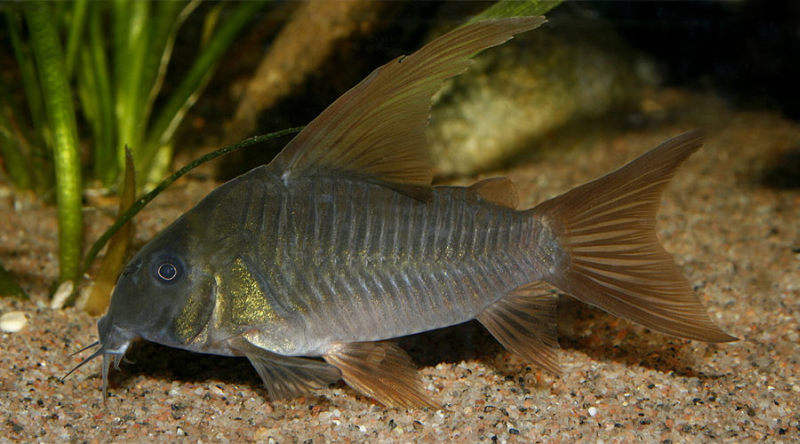
Corydoras concolorSlate Cory
Weitzman, 1961
Max length60mm SL2.4in SLTank80 × 30cm31 × 12inTemp20–26°C68–79°FpH5.5–7.0This species can be told apart from congeners by its uniformly greyish colour pattern, deep body (fitting 2.1-2.4 times in standard length), large eye (3.2-4.0 times in head length), having the pectoral fins completely surrounded by the coracoid, and relatively long dorsal-fin spine (1.1-1.2 times in head length).
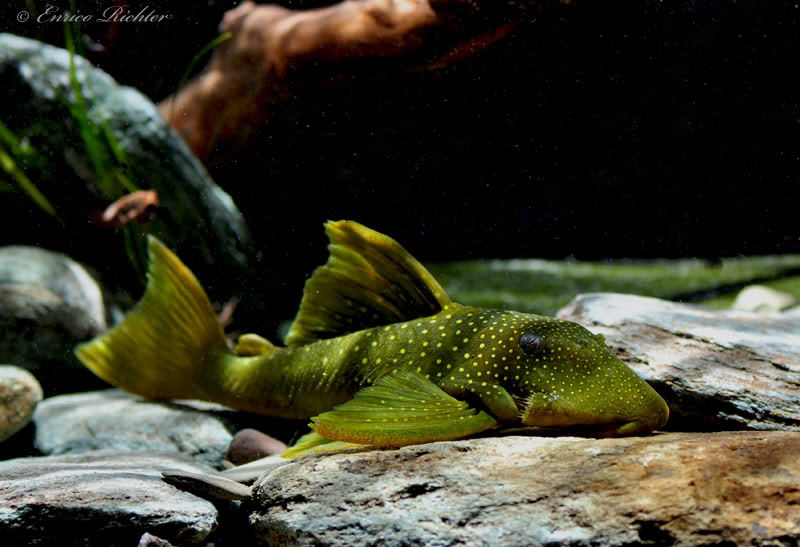
Baryancistrus demantoidesGreen Phantom Pleco
Werneke, Sabaj Pérez, Lujan & Armbruster, 2005
Max length151mm SL6in SLTank120 × 45cm48 × 18inTemp26–30°C79–86°FpH5.5–7.5This species is very similar to Hemiancistrus subviridis in appearance and the two occur sympatrically in nature, although B. demantoides is less common in the aquarium trade. Both have been marketed under the DATZ code L200 with B. demantoides sometimes referred to as 'L200 high-fin' or 'L200a', the former name in reference to its comparatively long dorsal-fin spine (average length in the type series 42.1 mm vs. 34.3 mm in H. subviridis).
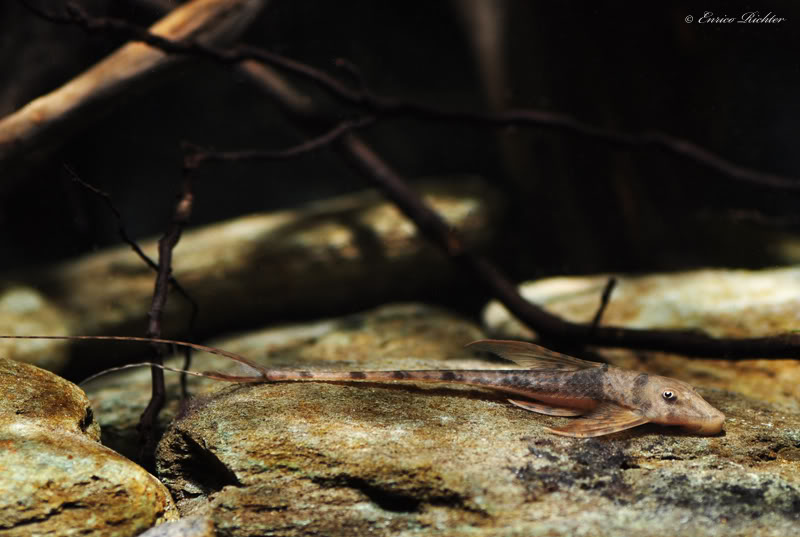
Lamontichthys filamentosusSturgeon Catfish
La Monte, 1935
Max length167mm SL7in SLTank120 × 45cm48 × 18inTemp22–30°C72–86°FpH5.5–7.5This species is relatively common in the aquarium hobby but is not easy to maintain and recommended only for experienced aquarists. It can be told apart from all congeners by specimens larger than 60 mm SL possessing an extended pectoral-fin spine forming an extremely long filament that may be more than four times the length of the first branched pectoral-fin ray (vs. not possessing such a filament in other species of Lamontichthys).
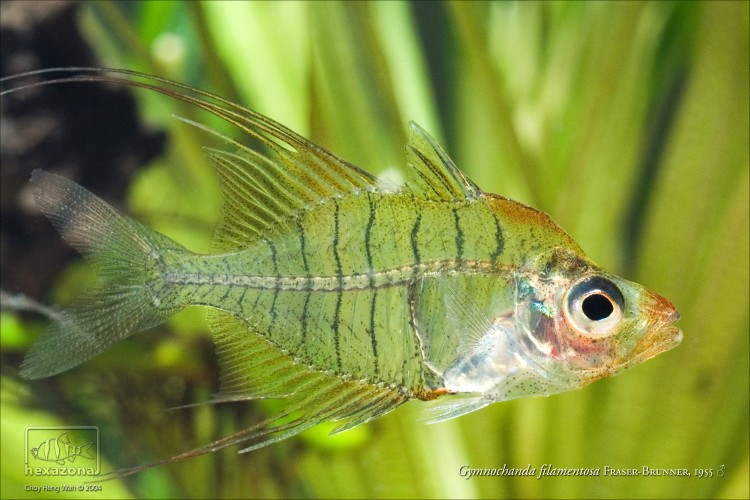
Gymnochanda filamentosa
Fraser-Brunner, 1955
Max length32mm SL1.3in SLTank60 × 30cm24 × 12inTemp20–28°C68–82°FpH4.0–6.0G. filamentosa has appeared in the ornamental trade but is evidently delicate and therefore recommended only to experienced aquarists. It can be told apart from congeners by the following combination of characters: possession of filamentous dorsal and anal-fin rays in males; body transparent to translucent yellowish-brown colour in life; absence of a highly-extended second anal-fin spine; absence of carmine-red pigmentation in the dorsal, anal an...
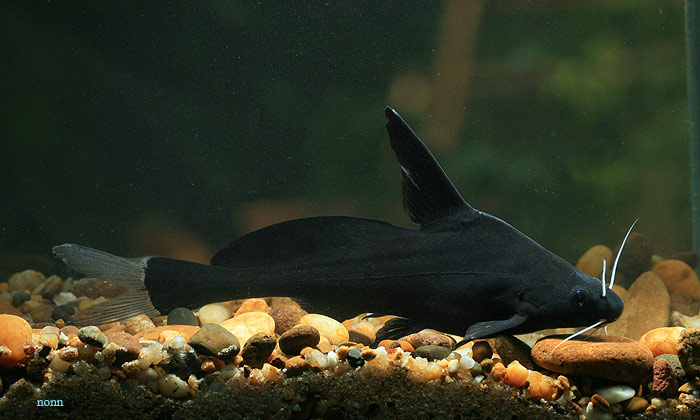
Bagrichthys majusculusWhite-Whisker Lancer
Ng, 2002
Max length177mm SL7in SLTank120 × 45cm48 × 18inTemp24–28°C75–82°FpH5.5–7.0The vernacular name 'lancer' is derived from the extended dorsal spine possessed by several members of the genus, which currently contains 7 species. Among them B. majusculus is most similar to B. macracanthus and B. vaillantii but can be told apart from both by possession of longer pectoral-fin spines (length 15.8 - 20.7 % SL vs. 11.5 - 16.2 %), from the former by possession of a larger adipose fi...
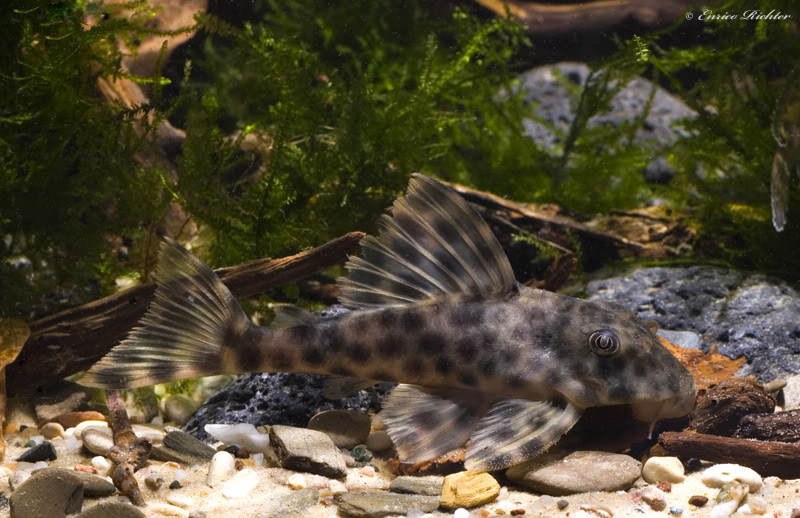
Peckoltia oligospilaL006
Günther, 1864
Max length100mm SL3.9in SLTank120 × 30cm48 × 12inTemp24–30°C75–86°FpH5.5–7.5This species can be distinguished from all congeners except P. bachi and some specimens of P. furcata by possessing only faint spots and saddles on the body. It can be told apart from P. bachi by possession of narrow (vs. wide) pelvic-fin spines, having the eyes positioned high (vs. low) on the head, and distinctly round (vs. appearing more as a mottling) spots on the body.
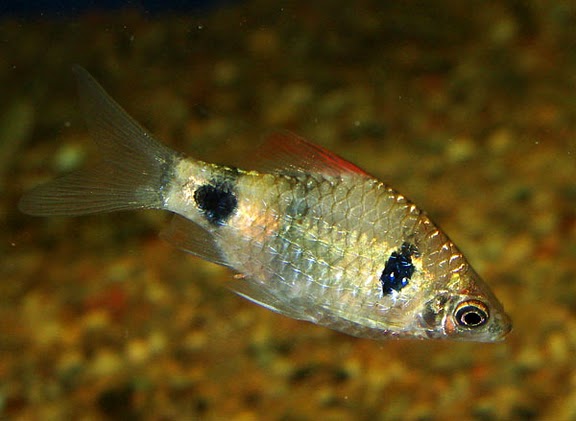
Pethia setnaiNarayan Barb
Chhapgar & Sane, 1992
Max length65mm SL2.6in SLTank90 × 30cm36 × 12inTemp20–26°C68–79°FpH6.0–7.5This species is widely referred to and traded as the congener 'Puntius' narayani (Hora, 1937). The precise identity of the latter is in doubt, however, plus P. setnai possesses a serrated dorsal-fin spine whereas 'P.' It was formerly included in the Puntius conchonius 'group' of closely-related species alongside P. ater, P. bandula, P. conchonius, P. cumingii, P. erythromycter,...
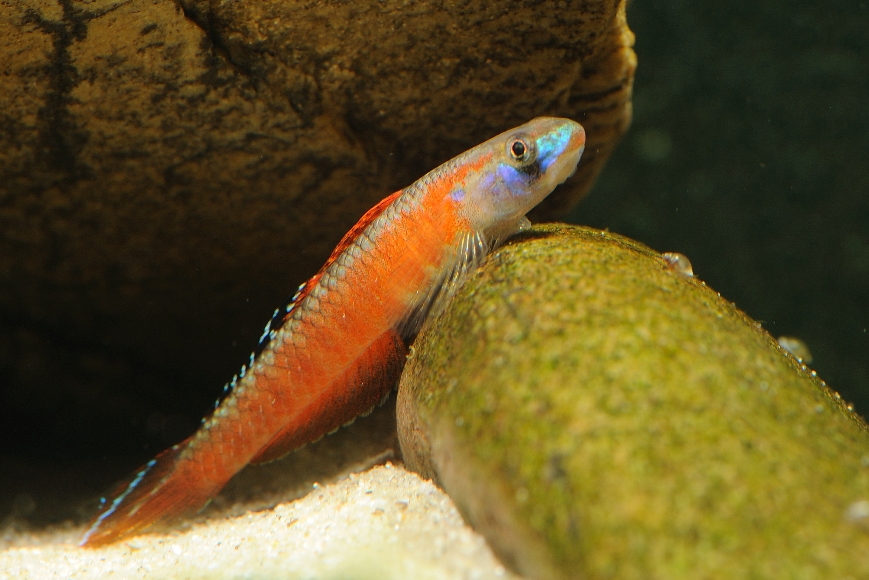
Stiphodon rutilaureus
Watson, 1996
Max length35mm SL1.4in SLTank60 × 30cm24 × 12inTemp22–28°C72–82°FpH6.5–7.5This species is not traded commercially at present and the specimen pictured above was brought back from northern Papua New Guinea by private collectors in 2008. It's diagnosable from other members in the genus by possession of 10 segmented rays in the second dorsal fin, males with filamentous spines in the firstandusually with 14 rays. Colour patterning in males is also distinctive (see 'Sexual Dimorphism'). The Gobiidae is the most speciose vert...
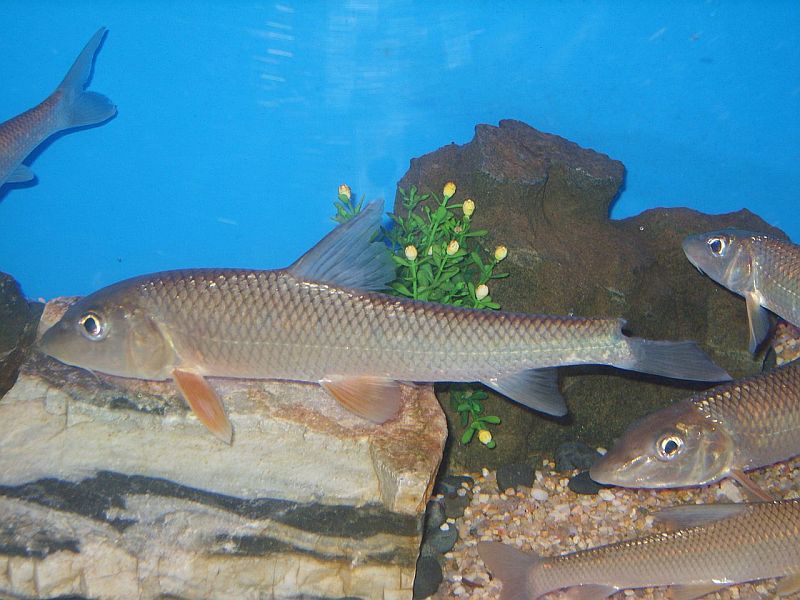
Hemibarbus labeoBarbel Steed
Pallas, 1776
Max length450mm SL18in SLTanknot recordedTempnot recordedpHnot recordedThis species can be distinguished from other members of the genus by the following combination of characters: absence of dark spots on body in adults; body elongate with slightly convex dorsal profile; head longer than body is deep; snout much longer than postorbital head length; lips well developed, lateral lobes of lower lip broad and thick with folds, median process small; barbel thickness shorter or equal to eye diameter; dorsal spine strong, ⅔ of HL; dorsal-fin origin closer to tip of snout than caudal-fin base base; 15+ gill rakers; 6½ branched anal-fin rays; posterior simple dorsal-fin rays ossified and spinous.
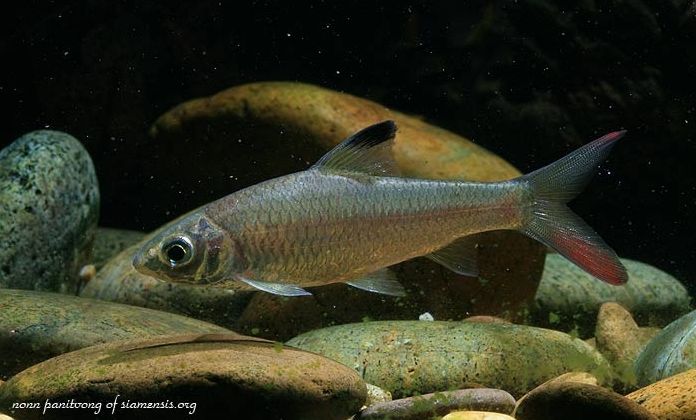
Discherodontus ashmeadi
Fowler, 1937
Max length135mm SL5in SLTank120 × 45cm48 × 18inTemp23–26°C73–79°FpH6.0–7.5D. ashmeadi is the type species and exhibits differences in dental morphology compared with other members of the genus. It can also be told apart from D. halei by the red/pink (vs. orange) colouration in the dorsal and anal fins and serrated (vs. smooth) dorsal spine. D. schroederi is also similar-looking but as it matures the prominent dark dorsal blotch fades to a thin dark distal band whereas in D. ashmeadi it is retained throughout life.
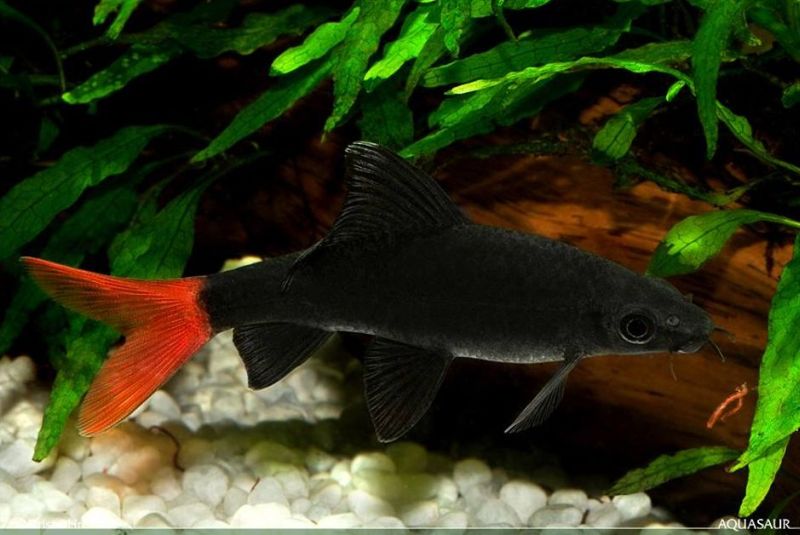
Epalzeorhynchos bicolorRed-Tailed Black Shark
Smith, 1931
Max length125mm SL5in SLTank120 × 45cm48 × 18inTemp20–26°C68–79°FpH6.0–8.0Most members of Epalzeorhynchos were formerly regarded as Labeo spp. and are thus referred to as such in older literature. According to Rainboth (1996) they're characterised by absence of a dorsal spine, possession of 10-13 branched dorsal fin rays, a thin membrane connecting the upper and lower lips and rigid, freely moveable rostral lobes. Epalzeorhynchos itself has undergone some quite recent changes with a handful of species hav...
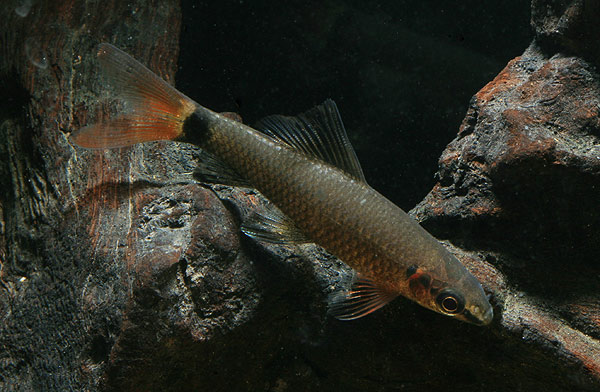
Epalzeorhynchos munense
Smith, 1934
Max length120mm SL5in SLTank120 × 45cm48 × 18inTemp20–26°C68–79°FpH6.5–7.5This species does not appear to be in the aquarium hobby at time of writing though it may have been in the past, when exports of wild Epalzeorhynchos spp. still took place. Most members of the genus were formerly regarded as Labeo spp. and are thus referred to as such in older literature. According to Rainboth (1996) they're characterised by absence of a dorsal spine, possession of 10-13 branched dorsal fin rays, a thin membrane...
Corydoras paleatusPepper Cory
authority not recorded
Max length70mm SL2.8in SLTank61 × 38cm24 × 15inTemp22–26°C72–79°FpH6.0–7.0Corydoras are members of the armoured catfish family. The genus name means "helmet skin" and the fish live up to this name as they are rather tough little fish. They also have spines in the leading rays of the pectoral fins to deter larger predators from eating them. Corydoras are sometimes observed taking a gulp of air at the water surface: this is because they can absorb oxygen through their gut. It is not known why cories do this even on oxygen rich waters. Along with the bronze ...
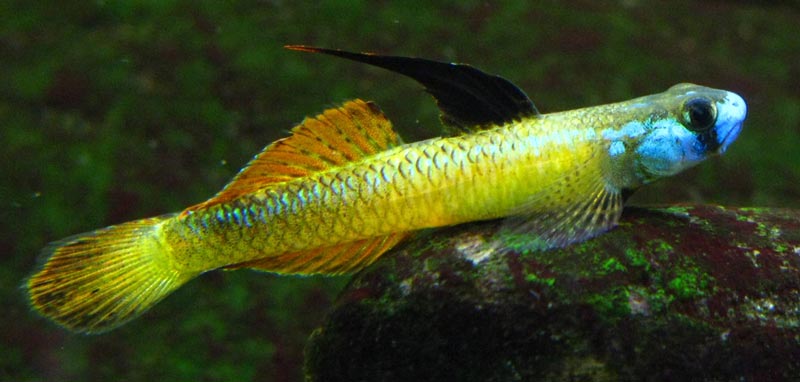
Stiphodon percnopterygionus
Watson & Chen, 1998
Max length35mm SL1.4in SLTank60 × 30cm24 × 12inTemp22–28°C72–82°FpH6.5–7.5This species is rare in the aquarium trade and normally expensive when available. It's one of the most easily-identifiable in the genus by the combination of usually 14 pectoral-fin rays, 10 segmented second dorsal-fin rays, relatively small adult size, unique colouration in males and the shape of the first dorsal-fin in males in which the fourth and fifth spines are...
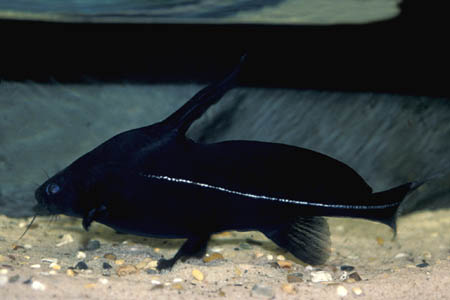
Bagrichthys macracanthusBlack Lancer
Bleeker, 1854
Max length230mm SL9in SLTank120 × 45cm48 × 18inTemp24–28°C75–82°FpH5.5–7.0The vernacular name 'lancer' is derived from the extended dorsal spine possessed by several members of the genus, which currently contains 7 species. Among them B. macracanthus is most similar to B. majusculus and B. vaillantii but can be told apart from the former by possession of shorter pectoral spines (13.3 - 16.2% SL vs. 15.8 - 20.7%), shorter adipose fin (46.0 - 58.0% SL vs. 38.8 - 45.8%), less deep caudal peduncle (7.1 - 7.5% SL vs. 5.6-7.0%) and larger adult size. From B. vaillantii it di...