Results for “flank”
Type a name: scientific, common, or one a species used to go by. Or narrow the catalogue with the filters.
Filters
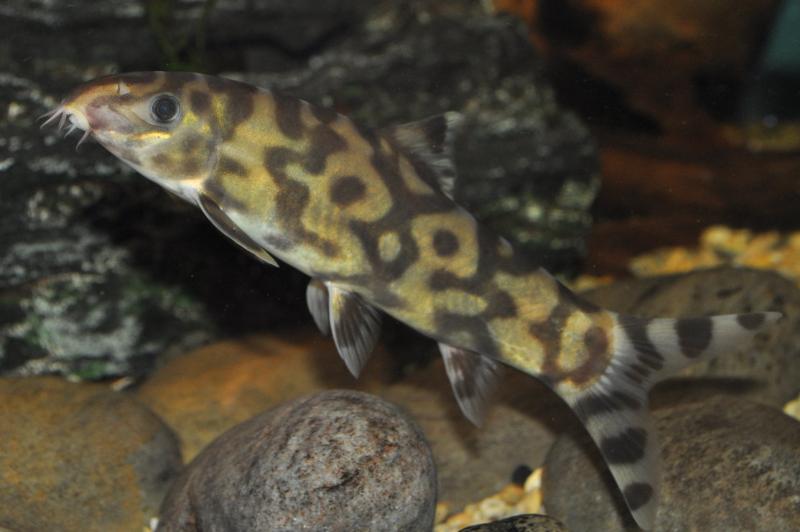
Botia histrionica
Blyth, 1860
Max length130mm SL5in SLTank120 × 45cm48 × 18inTemp22–28°C72–82°FpH6.0–7.5Adult patterning of the different geographical forms can vary considerably though young specimens all possess 5 solid dark bars on each flank and are often confused with those species exhibiting a similar juvenile pattern, particularly B. kubotai. However the horizontal dark bars on the flanks in B. kubotai typically split at quite a young age and/or develop horizontally-orientated 'peaks' whereas those in B. histrionica remain solid for longer and the central bar usually has a pale spot at the top so forms a 'y' shape.
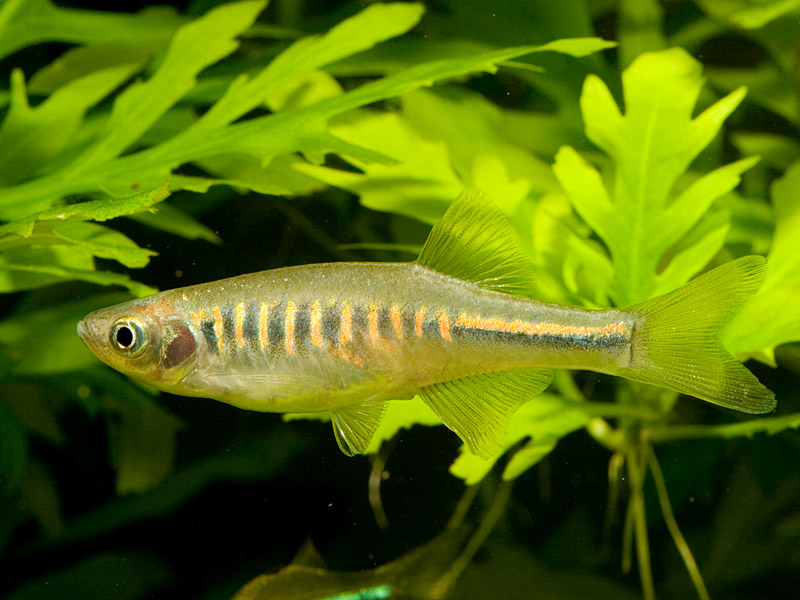
'Inlecypris' shanensis
Hora, 1928
Max length60mm SL2.4in SLTank80 × 30cm31 × 12inTemp18–26°C64–79°FpH6.0–8.0This species is sometimes referred to as 'Hora danio' or Salween danio'. It is distinguished from similar-looking species by a combination of characters as follows: lateral line complete or incomplete with 22-33 pored scales; absence of infraorbital process; 7 branched dorsal-fin rays; usually 10 or 11 branched anal-fin rays; barbels absent or rudimentary; flank markings comprising a series of narrow vertical bars on the anterior portion of each flank, fol...
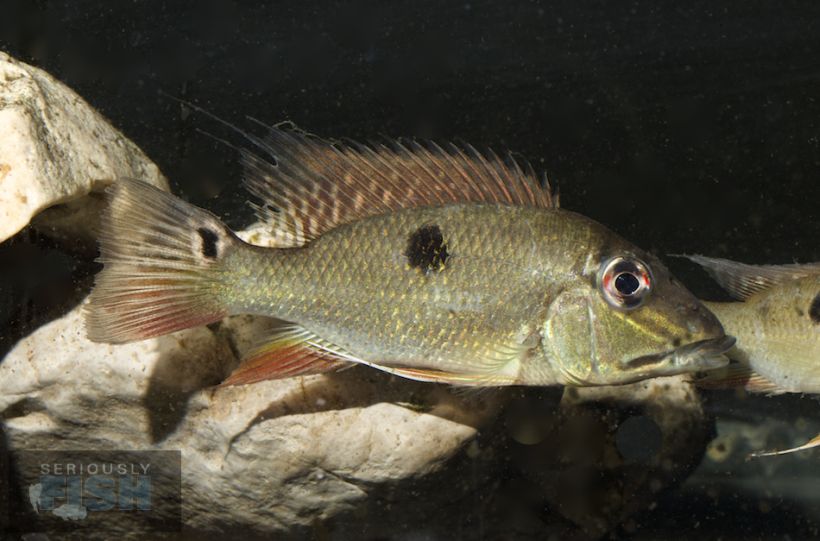
Satanoperca lilith
Kullander & Ferreira, 1988
Max length255mm SL10in SLTank210 × 60cm84 × 24inTemp20–28°C68–82°FpH5.0–7.5Despite its extensive natural distribution S. lilith is uncommon in the ornamental trade, where it is sometimes referred to as 'one-spotted demon fish' or 'one spot eartheater'. It can be distinguished from other members of the genus by possessing a single dark blotch on the flank and a prominent ocellus at the caudal-fin base. Among the named species it is most similar to S. daemon, but that species possesses two blotches on the flank.
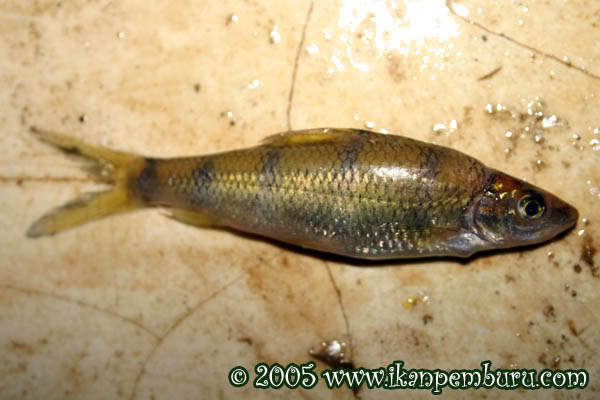
Acrossocheilus iridescens
Nichols & Pope, 1927
Max length300mm SL12in SLTanknot recordedTempnot recordedpHnot recordedA. iridescens and its closest relative A. longipinnis can be distinguished from all other barred species of Acrossocheilus by the following characters: wider (vs. narrower) black vertical bars on the flank in adults, each five to eight (vs. no more than four) scales in width; a horse-shoe shaped (vs. arched) mouth gape; rostral barbel located posteriorly (vs. anteriorly) to a horizontal line through the anteriormost margin of the lower jaw; two postlabial grooves extending anteromedially beyond (vs. away from) a horizontal line through the roots of the rostral barbels.
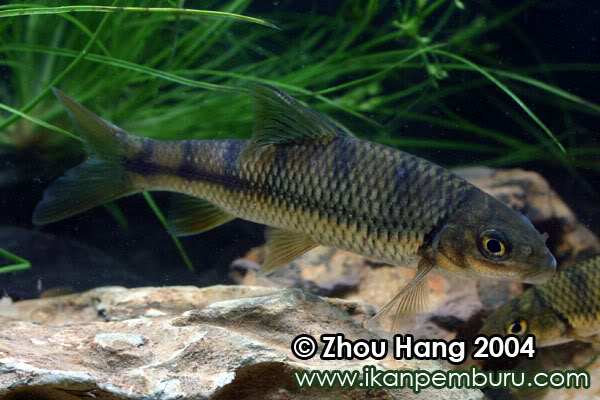
Acrossocheilus parallens
Nichols, 1931
Max length160mm SL6in SLTanknot recordedTempnot recordedpHnot recordedMembers of the genus are characterised by possessing a particular number of dark vertical bar on each flank, and A. parallens belongs to a group of species with five or six such bars, each of which is two scales in width. Congeners sharing this pattern include A. fasciatus, A. hemispinus (in juveniles only), A. jishouensis, A. kreyenbergii, A. paradoxus, A. spinifer, A. wenchowensis, and A. wuyiensis.
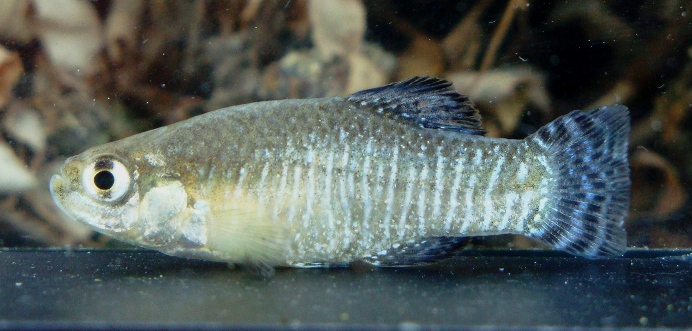
Apricaphanius baeticusBaetican Toothcarp
Doadrio, Carmona & Fernández-Delgado, 2002
Max length50mm SL2.0in SLTank120 × 30cm48 × 12inTemp2–30°C36–86°FpH7.0–9.0Prior to its description this species was considered a geographic variant of A. iberus but the 2002 paper revealed the pair to be genetically quite distinct and also highlighted some morphological differences. It is distinguished from A. iberus by possessing 8-9 (usually 8 ) branched dorsal-fin rays (vs. 8-9, sometimes 10), 9-11 branched anal-fin rays (vs. 8-9), a deeper, more elongate body shape, noticeably shorter snout, relatively thick (vs. thin) vertical bars in males and a flank patterning consisting of a few la...
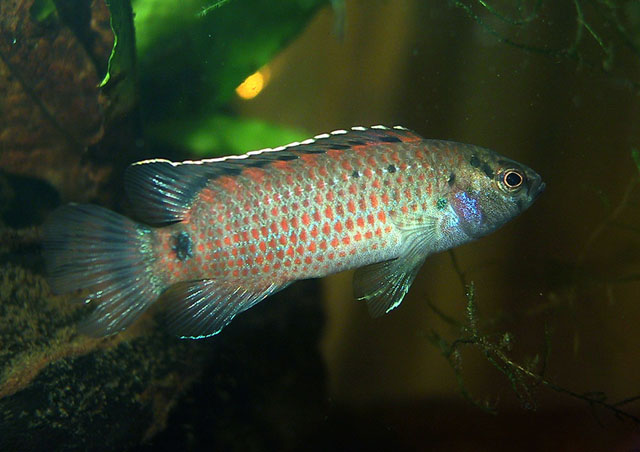
Badis khwae
Kullander & Britz, 2002
Max length60mm SL2.4in SLTank60 × 30cm24 × 12inTemp22–26°C72–79°FpH6.5–7.5Like most badids this species is poorly documented and has yet to find significant popularity in the aquarium hobby, though given its restricted natural distribution it is unlikely ever to be available in large numbers. Within the genus it is most easily confused with B. ruber and B. siamensis but both these species have rows of dark spot-like markings on the flanks which are lacking in B. khwae. The three also differ in the shape of the dark marking on the caudal peduncle; in B. ruber it is rel...
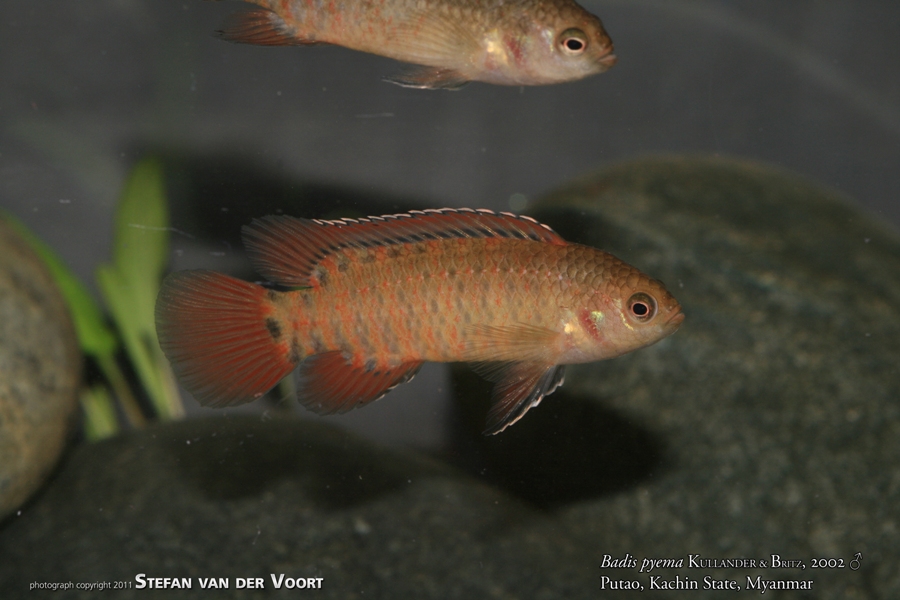
Badis pyema
Kullander & Britz, 2002
Max length45mm SL1.8in SLTank60 × 30cm24 × 12inTemp15–25°C59–77°FpH6.5–7.5Like most badids B. pyema is poorly documented in aquarium literature and has yet to find significant popularity in the hobby, though given its restricted natural distribution it is unlikely ever to be available in large numbers and has only been collected on three occasions to date. It has a very slender body shape, likely an adaptation to its habitat, and in this respect is similar to B. kyar. However B. kyar possesses relatively solid dark, uniform vertical bars on the flanks whereas in B. p...
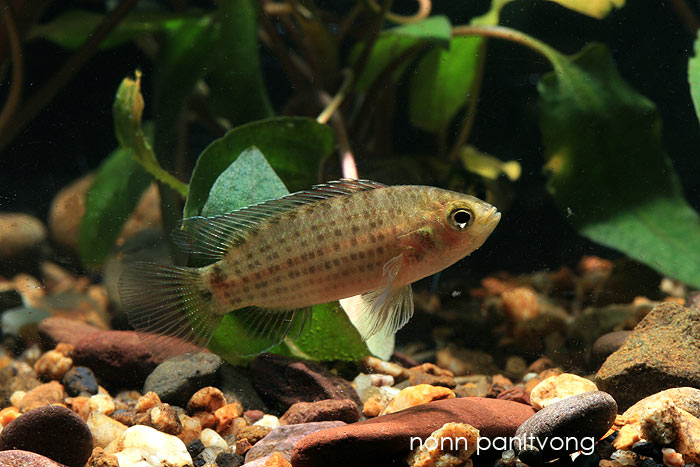
Badis siamensis
Klausewitz, 1957
Max length60mm SL2.4in SLTank60 × 30cm24 × 12inTemp22–26°C72–79°FpH6.5–7.5Like most badids this species is poorly documented and has yet to find significant popularity in the aquarium hobby; to date it has only been exported in very limited numbers. It was for a number of years known as Badis badis siamensis and will be seen labelled as such in older literature. Within the genus it is most easily confused with B. khwae and B. ruber but can be identified by the flank patterning which consists of rows of horizontally-arranged dark markings. In B. ruber these appear mor...
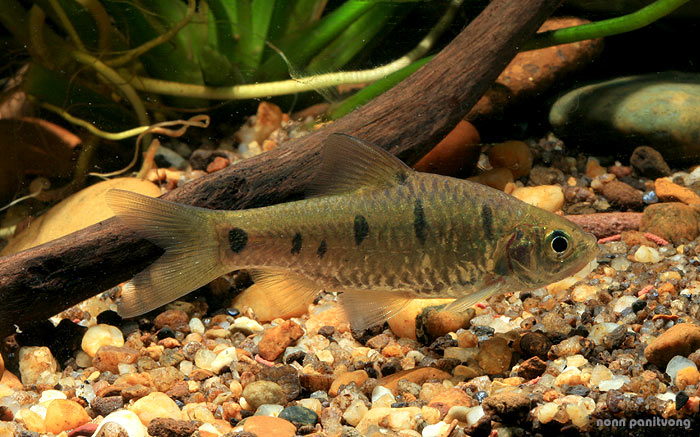
Barbodes aurotaeniatus
Tirant, 1885
Max length65mm SL2.6in SLTank80 × 30cm31 × 12inTemp18–26°C64–79°FpH6.0–7.5B. aurotaeniatus is uncommon in the aquarium trade. Following Kottelat (1998) it has a single pair of maxillary barbels, a complete lateral line and colour pattern usually comprising four small, vertically-orientated black markings on the flanks (located above anterior lateral line origin, below dorsal-fin origin, below posterior end of dorsal-fin base and on caudal peduncle, respectively) and one on the dorsal surface, below dorsal-fin origin.
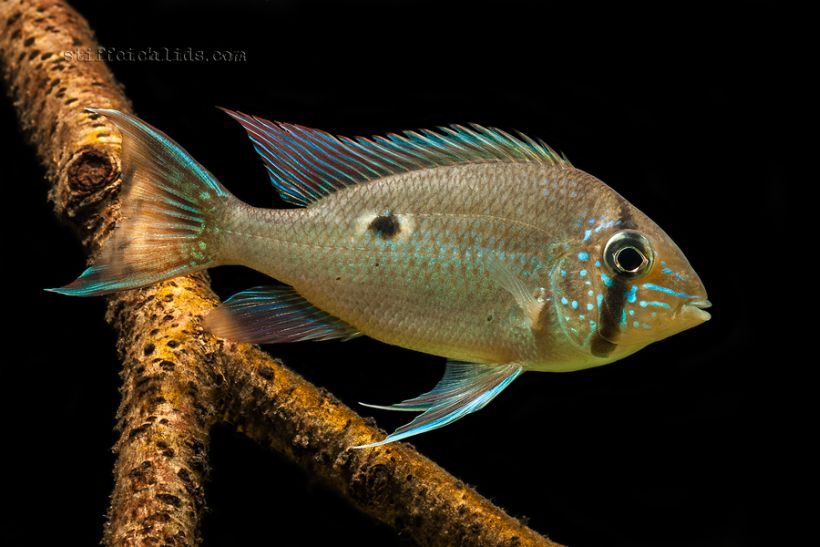
Biotodoma wavriniOrinoco Eartheater
Gosse, 1963
Max length100mm SL3.9in SLTank150 × 45cm60 × 18inTemp20–30°C68–86°FpH4.0–6.5Populations known in the aquarium trade include 'Cuao', 'Orinoco', 'San Antonio', and 'Sipapo Ventuari'. B. wavrini and its congener B. cupido can be separated by body shape and position of the dark blotch on the posterior portion of the flank. In B. cupido the body is relatively compact and the blotch located above the upper lateral line, whereas in B. wavrini the body is noticeably elongate and the blotch on or below the upper lateral line.
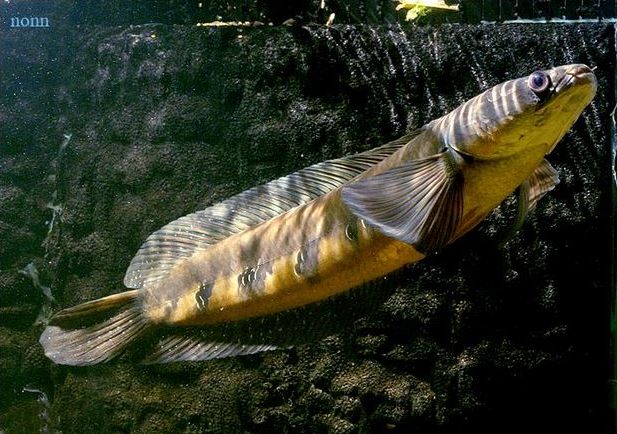
Channa marulioidesEmperor Snakehead
Bleeker, 1851
Max length650mm SL26in SLTanknot recordedTemp22–30°C72–86°FpH6.0–8.0This species is often confused with the nominal congeners C. marulius (Hamilton, 1822) and C. melanoptera (Bleeker, 1855) with all three presenting taxonomic problems. For example, C. marulioides exhibits a number of variations in colour pattern depending on collection locality with the most common possessing a brownish base colour with a series of dark, chevron-like markings along each flank and some scales margined posteriorly in white.
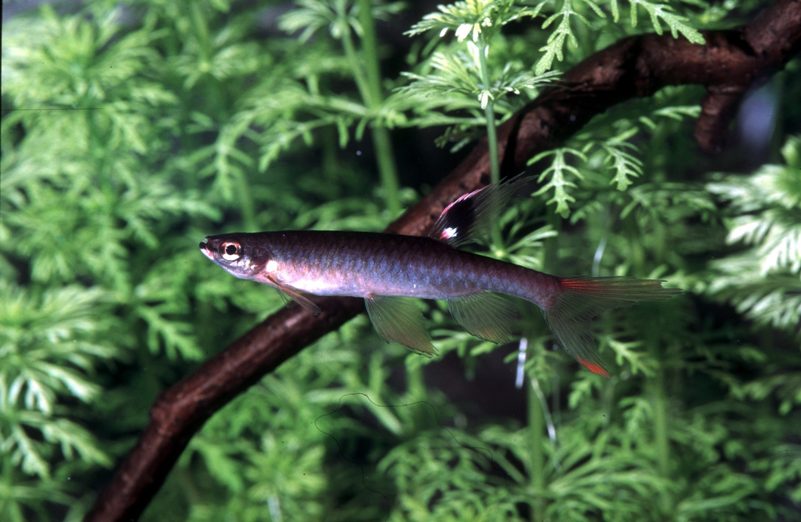
Copella carsevennensis
Regan, 1912
Max length40mm SL1.6in SLTank75 × 30cm30 × 12inTemp20–28°C68–82°FpH4.0–7.0C. carsevennensis has formerly been synonymised with C. arnoldi but was considered separate by Zarske (2011) using the following combination characters: absence (vs. presence) of a silvery-white to white patch in the centre of some of the flank scales in males, particularly in the lower half of the body; absence (vs. presence) of a horizontal dark body bar in nuptial males; absence (vs. presence) of thin black margins in the dorsal, ventral and anal fins; eggs deposited among submerged vegetation (vs. eg...
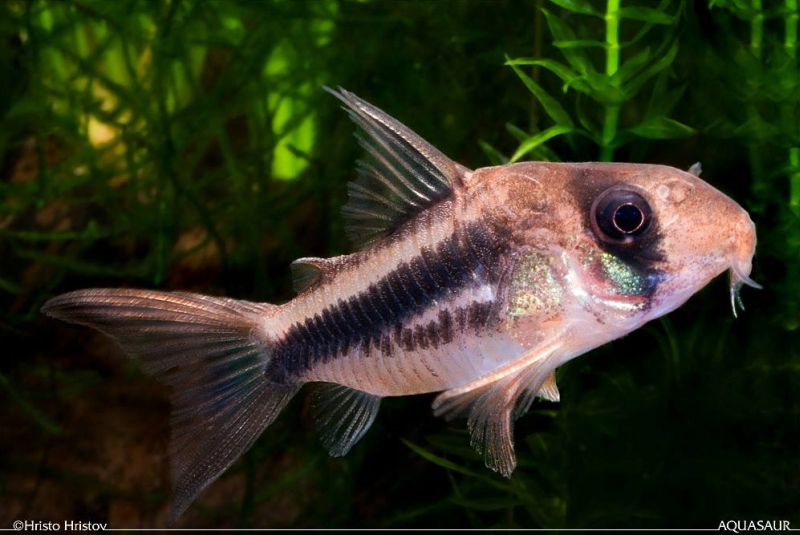
Corydoras axelrodiAxelrod's Cory
Rössel, 1962
Max length50mm SL2.0in SLTanknot recordedTemp22–26°C72–79°FpH5.0–7.0This species is somewhat variable in appearance and can have between 1-3 dark lateral stripes on each flank, for example. It's also known by the alternative common name 'pink corydoras'. It looks similar to the congener C. loxozonus plus unidentified fishes which have been assigned the codes C003 and CW021, and all four are sometimes traded under the fabricated names C. 'deckeri' or C. sp. 'decker/deker'.
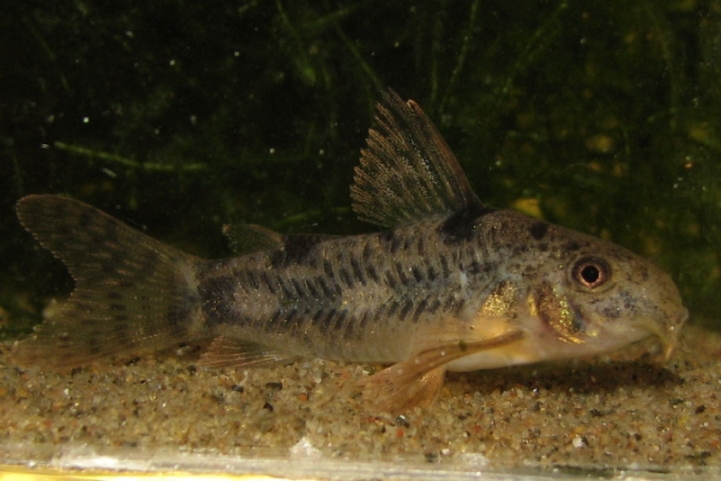
Corydoras carlae
Nijssen & Isbrücker, 1983
Max length45mm SL1.8in SLTanknot recordedTemp15–22°C59–72°FpH6.5–8.0This species is not available on a commercial basis but was collected and introduced to the aquarium hobby by Hans Georg-Evers in 2010. It's similar in appearance to a number of congeners including C. diphyes, C. erhardti, C. garbei, C. paleatus and C. steindachneri but can be told apart from most of them by possession of two large, indistinct, dark blotches in the middle of each flank.
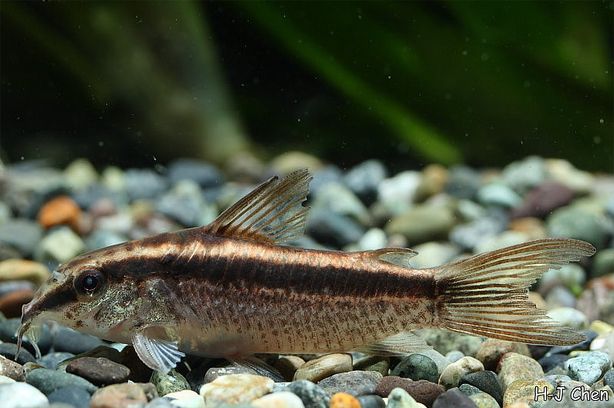
Corydoras gracilis
Nijssen & Isbrücker, 1976
Max length40mm SL1.6in SLTank60 × 30cm24 × 12inTemp20–26°C68–79°FpH5.0–7.5It can be distinguished from the majority of other Corydoras species by its distinctive colour pattern, comprising a uniform, lightish base pigmentation with a dark arched stripe extending over the upper portion of each flank, from the tip of the snout to the caudal-fin base. This is shared with a few congeners, however, including C. arcuatus, C. narcissus, and C. urucu.
Cynotilapia afraDogtooth Cichlid
authority not recorded
Max length100mm SL3.9in SLTank100 × 30cm39 × 12inTemp25–29°C77–84°FpH7.5–8.5C. afra is easily confused with some species of Pseudotropheus, but can be distinguished by its smaller adult size and unicuspid (as opposed to bicuspid) teeth. Also in this species the black bars on the flanks continue into the dorsal fin, unlike in Pseudotropheus zebra, for example. It exists in many different colour forms in nature. These forms should not be mixed in aquaria as they may spawn with each other, producing unwanted hybrid fry. Despite this ability to interbreed, it's probabl...
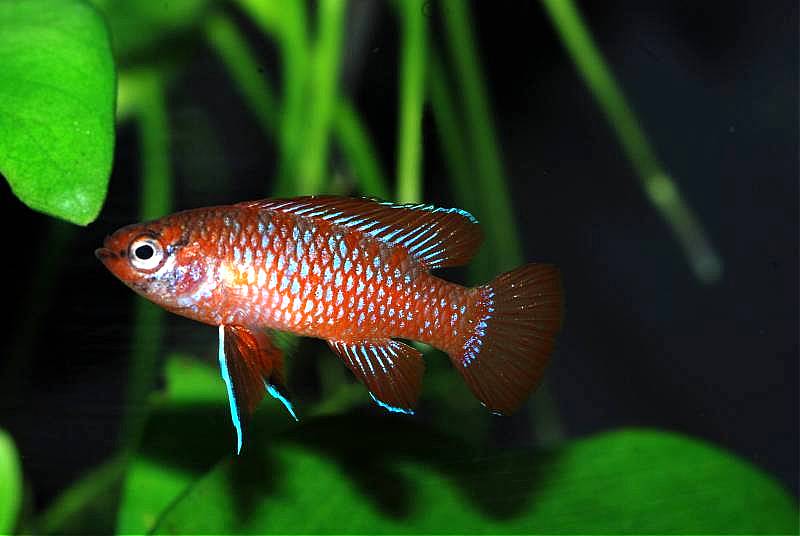
Dario darioScarlet Badis
Hamilton, 1822
Max length20mm SL0.8in SLTank45 × 30cm18 × 12inTemp18–26°C64–79°FpH6.5–8.5This species is among the more well-known badids in the aquarium hobby, and is a popular choice for 'nano' aquaria since it is among the smallest percoid fishes known. It is easily told apart from congeners since it is the only species in which males possess a series of seven iridescent blue vertical bars on the flanks.
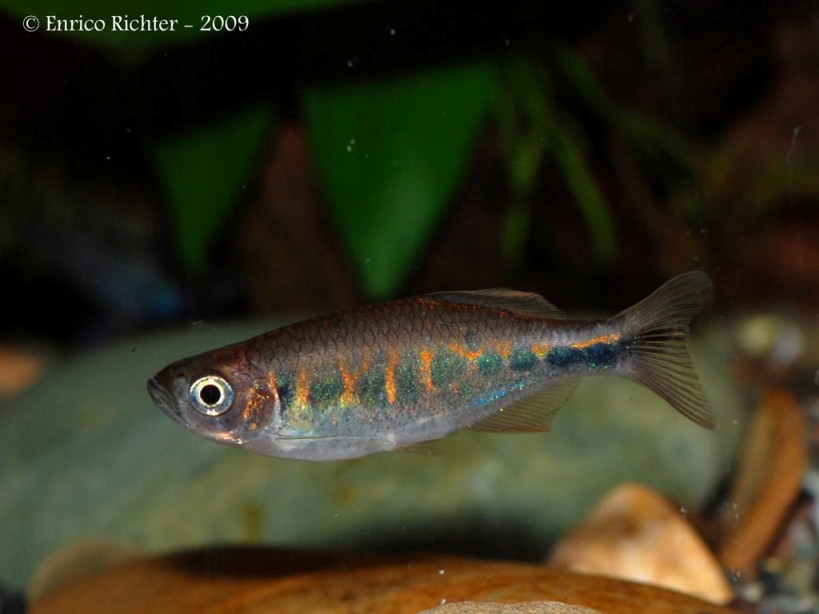
Devario pathiranaBarred 'Danio'
Kottelat & Pethiyagoda, 1990
Max length80mm SL3.1in SLTank120 × 45cm48 × 18inTemp23–26°C73–79°FpH6.0–7.5This species is diagnosable from other members of the genus primarily by its unique colour pattern which consists of 7-11 dark blue, irregularly-shaped, parallel vertical bars on the anterior portion of each flank plus a short horizontal stripe on the caudal peduncle which extends into the central caudal fin rays. Phylogenetic analyses suggest it's most closely-related to Indian Devario spp. plus D. xyrops from the western slope of the Rakhine Yoma mountains in Myanmar (Fang et al., 2009; Fang and Kullander, 2009).
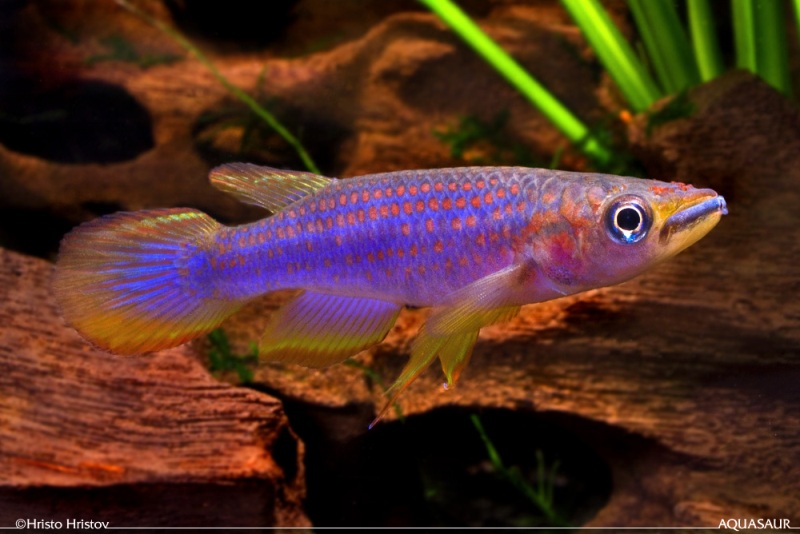
Epiplatys lamotteiRed-spotted Panchax
Daget, 1954
Max length60mm SL2.4in SLTank80 × 30cm31 × 12inTemp18–23°C64–73°FpH5.0–7.0Following the key of Romand (1992) this species can be told apart from congeners by the following combination of characters: adult size > 40 mm SL; large, dark, transverse bars and some reddish-brown pigmentation on flanks; longitudinal bands more-or-less defined; longitudinal bands composed of small red spots; caudal-fin subquadrangular caudal fin; 11-13 anal-fin rays; 16-17 dorsal-fin rays; 7-8 anal-fin rays located anterior to dorsal-fin origin.