Results for “flashing”
Type a name: scientific, common, or one a species used to go by. Or narrow the catalogue with the filters.
Filters
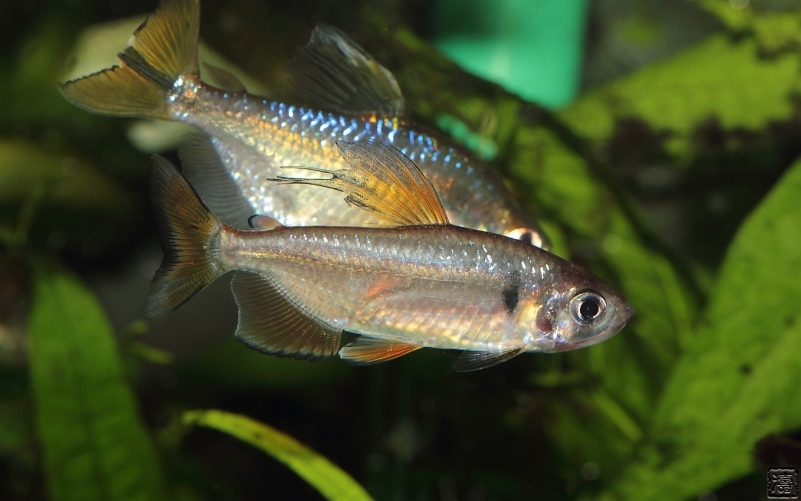
Alestopetersius nigropterusAfrican Rainbow Tetra
Poll, 1967
Matched on the common name Orange Flash Congo Tetra
Max length60mm SL2.4in SLTank120 × 30cm48 × 12inTemp22–26°C72–79°FpH5.0–7.0This fish is normally traded as A. nigropterus or A. cf. ansorgii although neither appears to be its correct name meaning it remains unidentified at present. A. nigropterus is a valid congener that is not in the aquarium trade with little to no export from Lake Mai-Ndombe, to which it is endemic, while A. ansorgii is a synonym of Nannopetersius ansorgii.
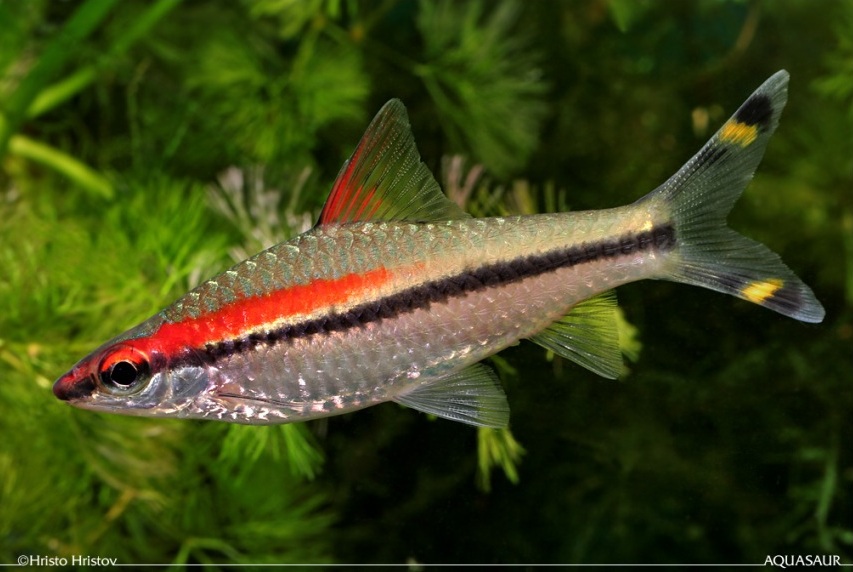
Sahyadria denisoniiRed-line Torpedo Barb
Day, 1865
Max length110mm SL4in SLTank120 × 45cm48 × 18inTemp15–25°C59–77°FpH6.5–7.8This species has become an extremely popular aquarium fish since it first appeared in the ornamental trade during the late 1990s, and it has been sold under various names including 'Denison's barb', 'denisoni barb', 'Denison's flying fox', 'rose line shark', 'bleeding-eye barb', 'red flash barb', and 'Indian flasher barb'. In India it is known locally as 'Miss Kerala' and 'Chorai Kanni' ( literally 'bleeding eyes').
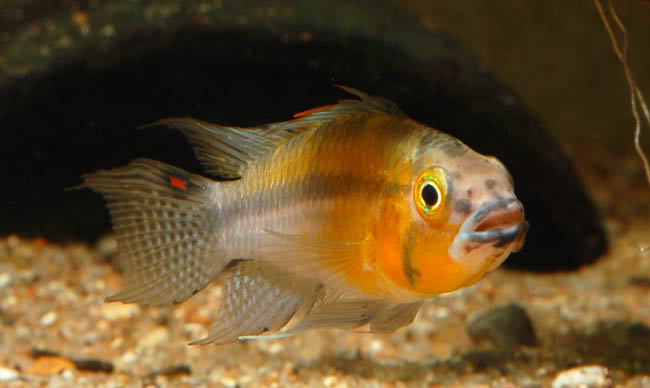
Apistogramma cacatuoidesCockatoo Cichlid
Hoedeman, 1951
Max length♂ 75 · ♀ 50mm SL♂ 3.0 · ♀ 2.0in SLTank60 × 30cm24 × 12inTemp22–29°C72–84°FpH5.0–6.0Numerous ornamental forms of this species have been selectively line-bred for the aquarium trade, vernacular names for which include "sunset", "sunburst", "double red", "triple red", "gold", "white gold", "orange flash" and "albino". It has also been assigned the 'A' number A200 under the DATZ system with possibly conspecific, related forms similarly numbered A201, A202 and A203 depending on locality. Th...
Leporacanthicus triactisThree Beacon Plec
authority not recorded
Max length245mm SL10in SLTank120 × 45cm48 × 18inTemp24–27°C75–81°FpH6.0–7.6There are a few different colour forms of this lovely suckermouth available, each of which possess varying amounts of orange patterning in the fins. Some of these are given extravagant sounding names such as "dragon fin" or "tiger fin". What's nice about this species, is that these flashes of colour don't fade with age, as with many of its relatives, making for a striking fish when fully grown. Leporacanthicus species are commonly referred to as "vampire ple...