Results for “forked”
Type a name: scientific, common, or one a species used to go by. Or narrow the catalogue with the filters.
Filters
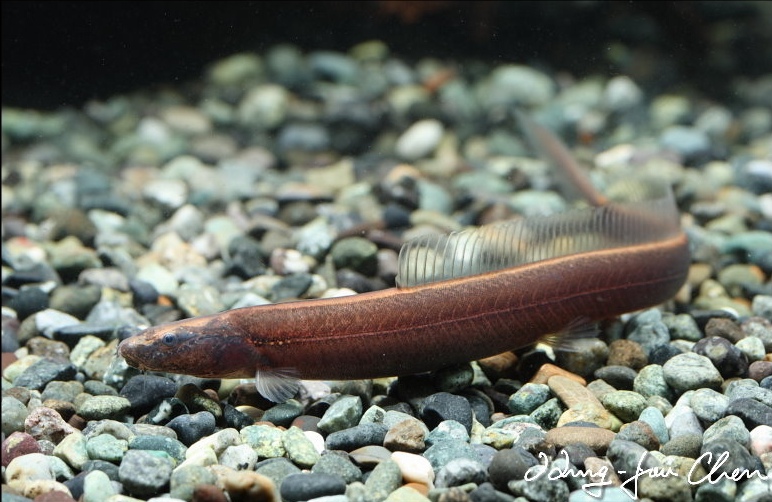
Vaillantella maassiFork-tailed Loach
Weber & de Beaufort, 1912
Matched on the common name Fork-tailed Loach
Max length125mm SL5in SLTank120 × 30cm48 × 12inTemp23–29°C73–84°FpH3.5–7.2This species is traded under various names including 'chocolate scissor-tailed loach', chocolate long-finned loach', 'red line cobra loach', 'spiny eel loach' and 'dragon loach'. It's apparently difficult to find in its natural habitats and thus time-consuming to collect, meaning it's rarely traded in numbers, sought after by enthusiasts and tends to carry a relatively high price tag when available. The genus currently contains just three...
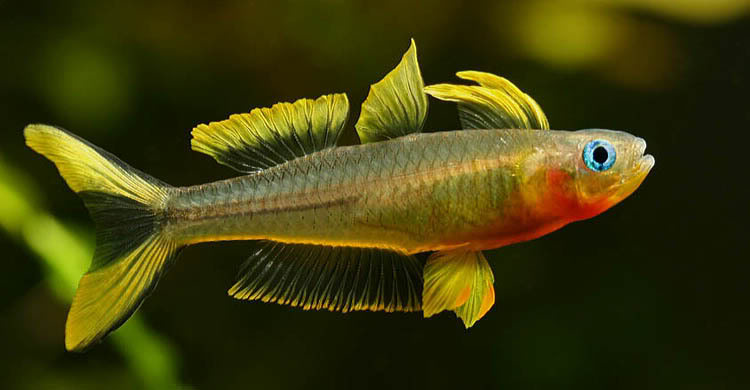
Pseudomugil furcatusForktail Blue-eye
Nichols, 1955
Matched on the common name Forktail Blue-eye
Max length60mm SL2.4in SLTank60 × 30cm24 × 12inTemp24–28°C75–82°FpH7.0–8.0This species is also traded as 'forktail rainbowfish' or 'yellow forktail', and it's also undergone several changes in scientific name since description. Pseudomugil furcatus is the original designation, but Allen (1980) created the genus Popondetta for it on the basis of morphological characters including number of anal-fin rays (16-20 in P. furcatus, 8-12 in other Pseudomugil spp.), absence of anterior...
Ilyodon furcidensGoldbreast Goodeid
authority not recorded
Max length70mm SL2.8in SLTank75 × 30cm30 × 12inTemp18–24°C64–75°FpH7.0–8.0The species name 'furcidens' is derived from the interesting fork-shaped teeth of this fish. This species may develop a cervical hump as it matures. As with other goodeids, there is less of a size difference between the sexes than in many other livebearers. This is thought to be related to the relatively primitive structure of the andropodium, as the fish tend to choose mates that are of similar size so that the sex organs are synchronised. Goodeids are unique among livebearers in t...
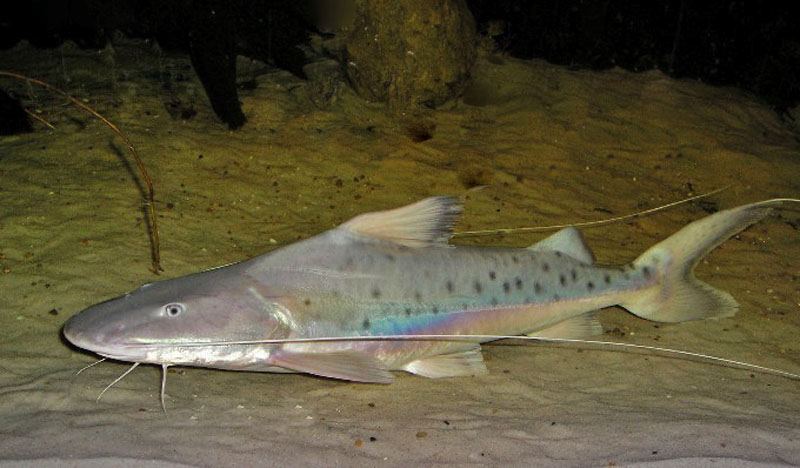
Brachyplatystoma capapretum
Lundberg & Akama, 2005
Max length880mm SL35in SLTanknot recordedTemp22–28°C72–82°FpH6.0–8.0This species can be told apart from the very similar-looking congener B. filamentosum by its smaller adult size (B. filamentosum can grow to almost 3 m in length), shorter maxillary barbels (never extending beyond base of adipose fin (vs. extending beyond base of adipose fin), moderately-forked with lobes of equal size (vs. deeply-forked caudal fin with upper lobe usually longer than the lower) and body col...
Microsynodontis batesiiDwarf Synodontis
authority not recorded
Max length88mm SL3.5in SLTank60 × 30cm24 × 12inTemp22–26°C72–79°FpH6.7–7.5There are a dozen described species of Microsynodontis but most are not seen in the hobby. This species is one of the commoner ones however. Microsynodontis are much smaller than Synodontis species, with M. batesii being the largest. They can be distinguished from Synos and the similar Mochokiella by the rounded or slightly forked caudal fin. The is highly forked in the other genera. Interestingly in Microsynodontis the eyeball is fixed and cannot be moved unlike in Synodontis which has a moveab...
Microsynodontis polliPygmy Synodontis
authority not recorded
Max length40mm SL1.6in SLTank45 × 30cm18 × 12inTemp24–27°C75–81°FpH6.8–7.5There are a dozen described species of Microsynodontis but most are not seen in the hobby. This species is one of the commoner ones however. Microsynodontis are much smaller than Synodontis species, with M. batesii being the largest. They can be distinguished from Synos and the similar Mochokiella by the rounded or slightly forked caudal fin. The is highly forked in the other genera. Interestingly in Microsynodontis the eyeball is fixed and cannot be moved unlike in Synodontis which has a moveab...
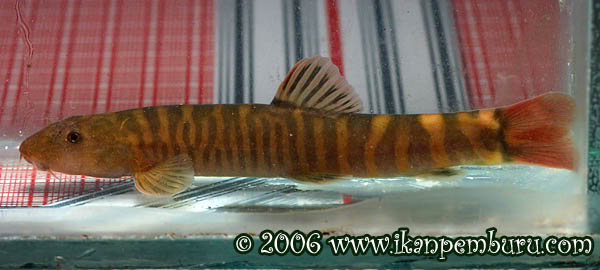
Schistura yingjiangensis
Zhu, 1982
Max lengthnot recordedTank80 × 30cm31 × 12inTemp20–24°C68–75°FpH6.0–7.5Following Kottelat (1990) the genus Nemacheilus is characterised by a combination of characters as follows: elongate body; complete lateral line; presence of enlarged scales above and below the lateral line in some species; caudal-fin forked to deeply forked with enlarged upp...
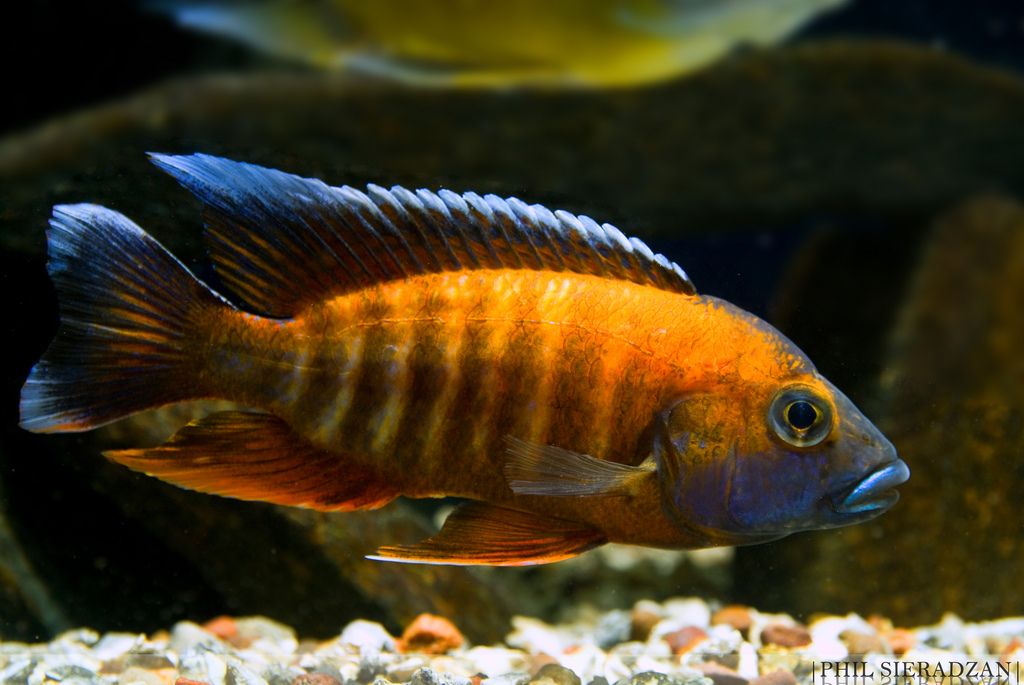
Aulonocara jacobfreibergiMalawi Butterfly
Johnson, 1974
Max length170mm SL7in SLTank120 × 60cm48 × 24inTemp25–29°C77–84°FpH7.5–9.0This was one of the first Aulonocara spp. to enter the hobby and its popularity has endured. It's known by several other vernacular names including 'Freiberg's peacock', 'fairy cichlid' and 'African butterfly' as well as the erroneous 'scientific' names Trematocranus trevori, T. jacobfreigbergi and T. regina. A naturally-occurring, yellowish form from Undu reef, Tanzania is often referred to as 'lemon jake'. It can be told apart from most other members of the genus by the broad, pale distal margins in the dorsal, anal and caudal fins, more deeply-forked caudal fin and larger adult size.
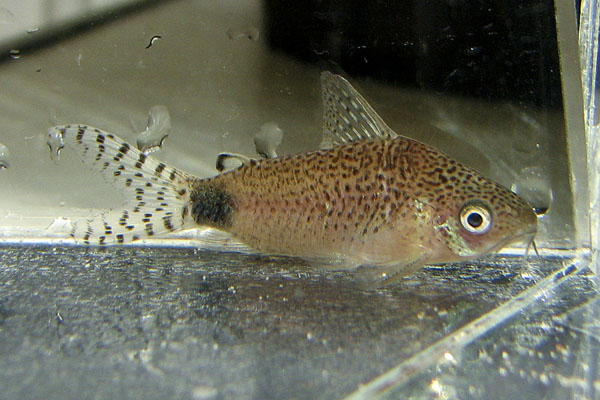
Corydoras guaporeGuaporé Cory
Knaack, 1961
Max length50mm SL2.0in SLTank90 × 30cm36 × 12inTemp22–28°C72–82°FpH5.0–7.0C. guapore is a sought after aquarium fish although it is not often traded. It exhibits slightly different behaviour to the majority of congeners in that it tends to form aggregations in midwater and spends a large proportion of its time away from the substrate. Its morphology exhibits corresponding adaptations towards a pelagic existence with a relatively large eye, a more terminal mouth position, more strongly-forked caudal-fin, and more symmetrical body shape than most other Corydoras species.
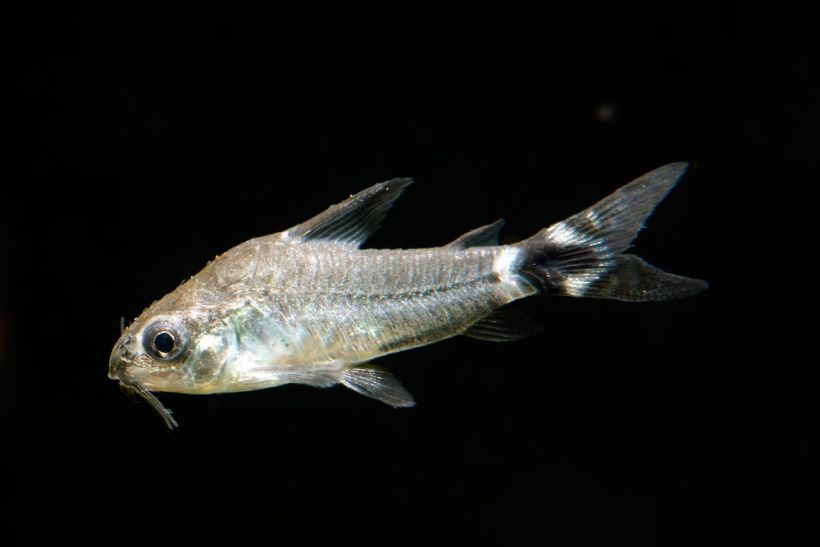
Corydoras hastatusTail-spot Pygmy Cory
Eigenmann & Eigenmann, 1888
Max length32mm SL1.3in SLTank60 × 30cm24 × 12inTemp20–26°C68–79°FpH6.0–7.5It exhibits slightly different behaviour to the majority of congeners in that it tends to swim in midwater and spends a large proportion of its time away from the substrate. Its morphology exhibits corresponding adaptations towards a pelagic existence with a relatively large eye, a more terminal mouth position, more strongly-forked caudal-fin, and more symmetrical body shape than most other Corydoras species.
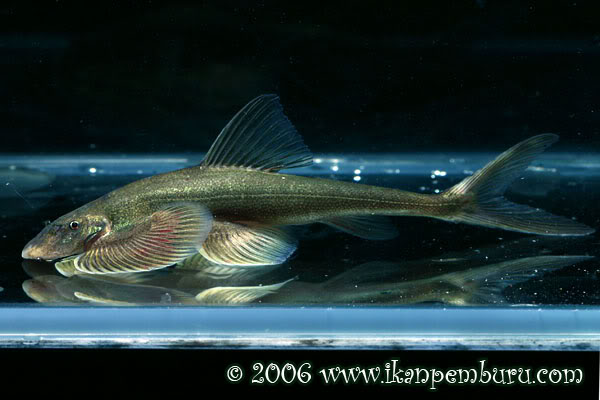
Jinshaia sinensis
Sauvage & Dabry de Thiersant, 1874
Max length75mm SL3.0in SLTank90 × 30cm36 × 12inTemp20–24°C68–75°FpH6.0–7.5This species may not yet have been seen in the aquarium trade outside its native country but has been maintained by a few private collectors. There are currently three species recognised in the genus, all endemic to the Yangtze river drainage, and they're separated from other balitorids by a combination of characters including: relatively long, deeply-forked caudal-fin; roun...
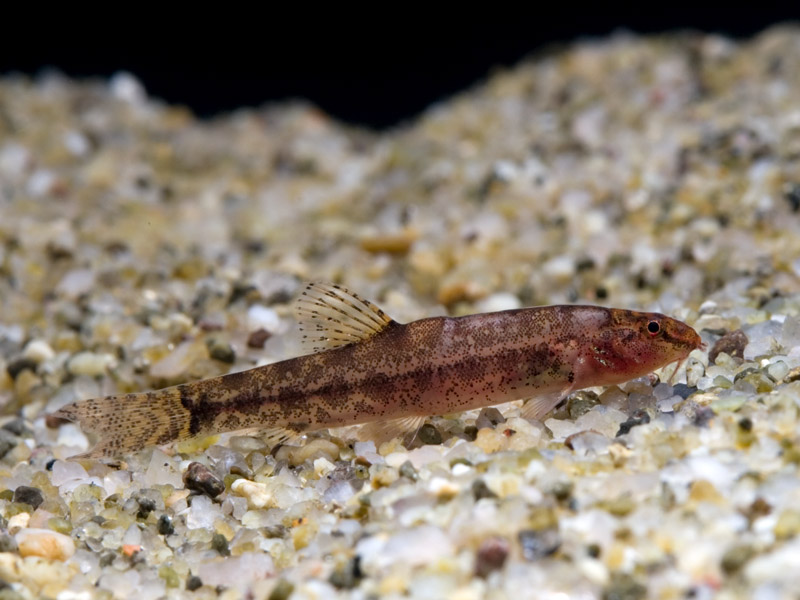
Lepidocephalichthys furcatus
de Beaufort, 1933
Max length50mm SL2.0in SLTank45 × 30cm18 × 12inTemp23–26°C73–79°FpH5.5–7.5This species is not traded often but is occasionally available as bycatch among shipments of other species. It can be told apart from congeners most easily by the prominent, dorsally-orientated, roughly semi-circular lamina circularis in males, a feature unique within the genus. Other distinguishing characters include a combination of: forked caudal-fin; relatively small adult size; dark <-shaped mark at the base of the caudal-fin; a black spot at the base of branched caudal-fin rays 3-5.
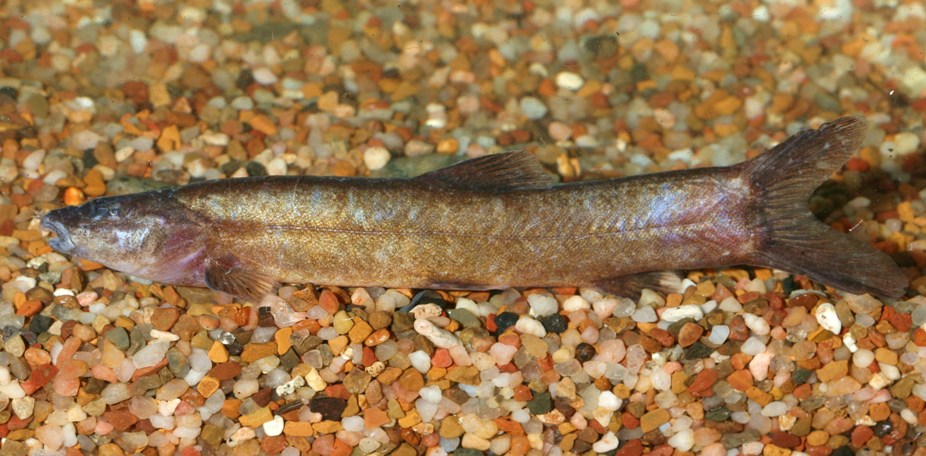
Leptobotia microphthalma
Fu & Ye, 1983
Max length150mm SL6in SLTank120 × 45cm48 × 18inTemp15.5–21°C60–70°FpH6.5–7.5Superficially similar to L. tientainensis but according to the formal description can be separated by a combination of characters including: more deeply-forked caudal-fin (shortest central rays fit 2.6-2.9 times in the outer rays vs. 1.7-2.5 times); significantly smaller eye (fits 26 times in head length vs. 10 times); caudal-fin with 1-2 dark bands at lateral edges v...
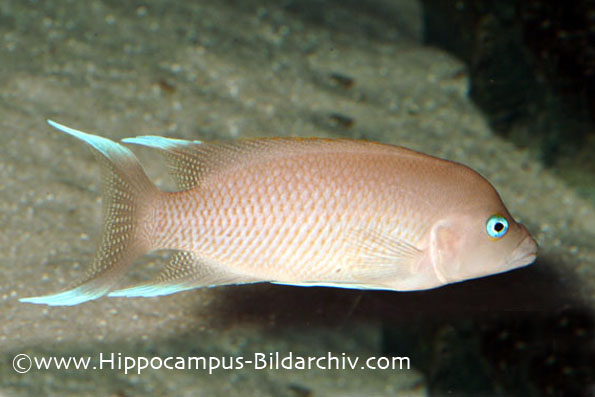
Neolamprologus marunguensis
authority not recorded
Max length60mm SL2.4in SLTanknot recordedTemp23–27°C73–81°FpH7.5–9.0A less often seen but good looking species with a deeply forked tail. It was previously sold as Neolamprologus sp. "walteri".
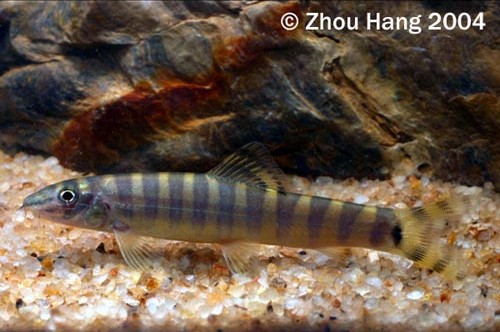
Parabotia lijiangensis
Chen, 1980
Max length83mm SL3.3in SLTank120 × 30cm48 × 12inTemp20–24°C68–75°FpH6.0–7.5It's told apart from congeners by a combination of characters as follows: large scales present on body and sides of head; caudal fin deeply forked with subequal lobes; 10-13 dark, vertical bars on the body; a dark, ocellated spot in the centre of the caudal-fin base; two bars on top of head, dorsal-fin with two rows of greyish spots; caudal-fin lobes with 3-4 dark bands on each; anal-fin with one indistinct band and another, more distinct, submarginal band; ventral fins with two indistinct bands.
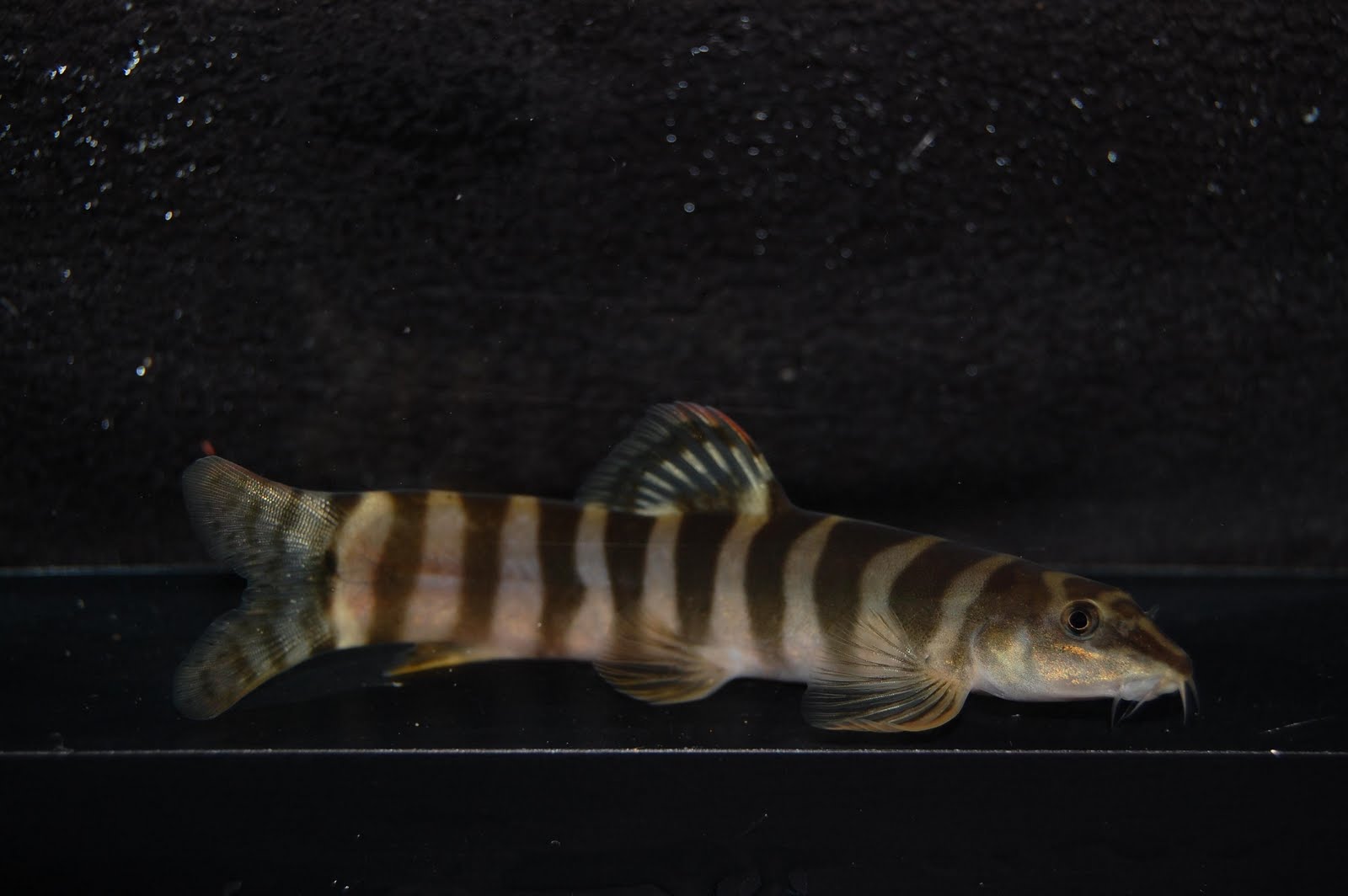
Schistura hypsiuraSuper Convict Loach
Bohlen, Ŝlechtová & Udomritthiruj, 2014
Max length73mm SL2.9in SLTank80 × 30cm31 × 12inTemp18–24°C64–75°FpH6.0–7.5It can be distinguished from congeners by the following combination of characters: caudal peduncle deep, ≥ the deepest part of the remainder of the body; no dorsal or ventral skin crests along the caudal peduncle; caudal-fin deeply forked, the outermost principal rays in the upper and lower lobes more than twice the length of the innermost: suborbital flap in males present; a well-developed suborbital groove in females; 6–8 very regular bars along the flank.