Results for “freshwater”
Type a name: scientific, common, or one a species used to go by. Or narrow the catalogue with the filters.
Filters
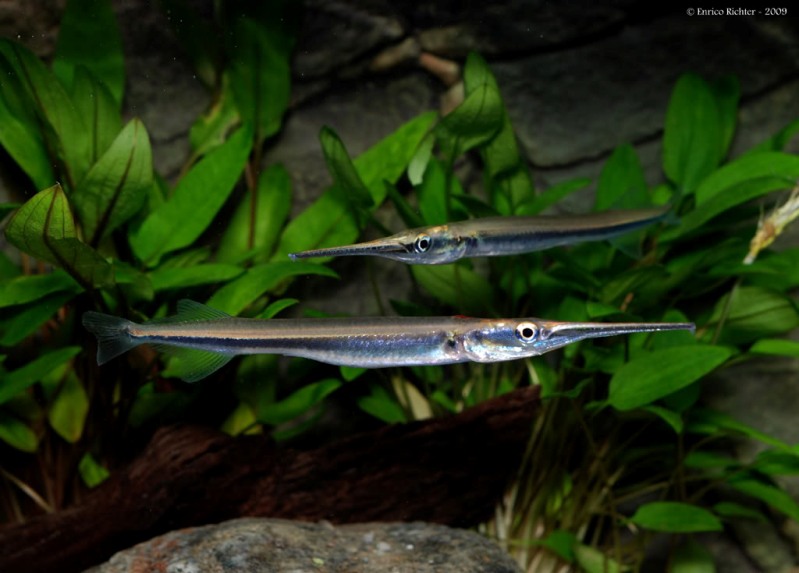
Xenentodon cancilaFreshwater Needlefish
Hamilton, 1822
Matched on the common name Freshwater Needlefish
Max length350mm SL14in SLTank180 × 60cm72 × 24inTemp18–30°C64–86°FpH6.0–8.0X. cancila is often seen referred to as 'freshwater garfish', and although it does superficially resemble the true gars of the family Lepisosteidae, it's actually a member of the Belonidae, or needlefishes, the majority of which are marine or estuarine in existence. There are currently just two species in the genus although the probable existence of a third member has been noted by Roberts (1989) among oth...
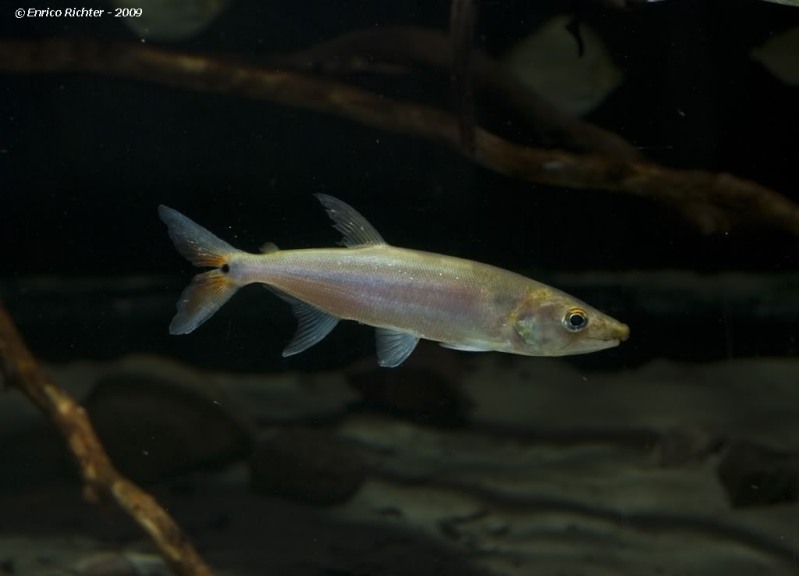
Acestrorhynchus falcatusRed-Tailed Freshwater Barracuda
Bloch, 1794
Matched on the common name Red-Tailed Freshwater Barracuda
Max length275mm SL11in SLTank250 × 90cm98 × 36inTemp22–28°C72–82°FpH6.0–7.5The vernacular name of this fish is derived from its appearance and behaviour, rather than a genetic association with the marine barracuda, and it's also sometimes referred to as 'pike characin' or 'spotted cachorro' with local vernacular names including 'Grand dent-chien' (French Guiana), ' Cachorrinho' or 'Ueua' (Brazil). Although most species of Acestrorhynchus appear superficially similar to one another most exhibit distinguishable external chara...
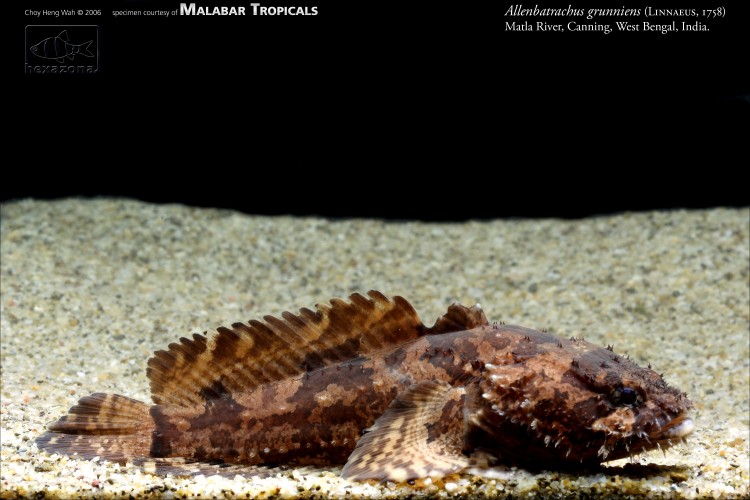
Allenbatrachus grunniensFreshwater Toadfish
Linnaeus, 1758
Matched on the common name Freshwater Toadfish
Max length300mm SL12in SLTanknot recordedTemp23–28°C73–82°FpH7.5–9.0This species is relatively common in the aquarium hobby but contrary to popular belief is not venomous in any way. Its dorsal and opercular spines can pierce the skin, however, meaning extreme caution is necessary when netting it or performing aquarium maintenance. The genus Allenbatrachus was erected in 1997 to accom...
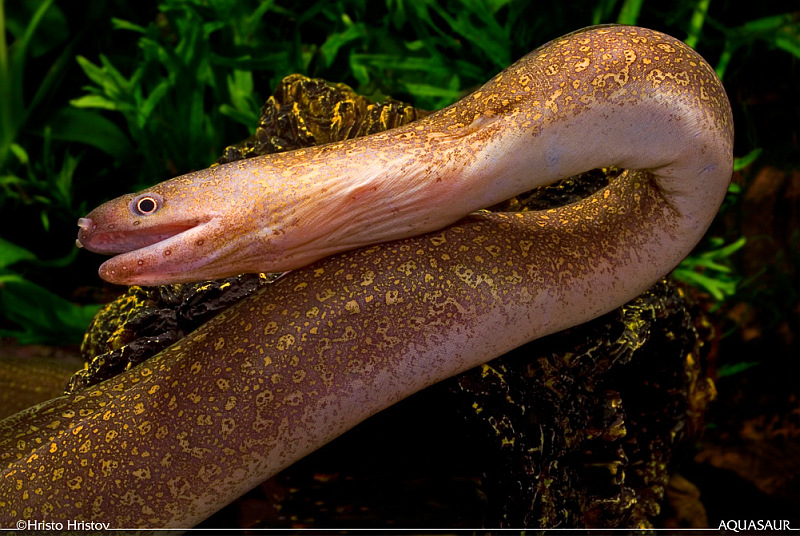
Gymnothorax tile'Freshwater' Moray Eel
Hamilton, 1822
Matched on the common name 'Freshwater' Moray Eel
Max length600mm SL24in SLTank120 × 60cm48 × 24inTemp20–28°C68–82°FpH7.5–9.0Gymnothorax tile
Craterocephalus stercusmuscarum stercusmuscarumFly-specked Hardyhead
authority not recorded
Max length70mm SL2.8in SLTank76 × 30cm30 × 12inTempnot recordedpHnot recordedA rarely seen species in the trade, although it's kept quite often by Australian hobbyists. Members of this genus are thought to have a more ancient association with Australian freshwaters than most others found in these habitats. Craterocephalus also contains the most species of any Australian freshwater fish genus. It has been shown that there are quite large genetic differences between groups of the species living in close proximity to each other, and even sharing the same waters. In ...
Gobioides broussonnetiiViolet Goby
authority not recorded
Max length625mm SL25in SLTank120 × 60cm48 × 24inTemp22–26°C72–79°FpH7.5–9.0This fish is also commonly sold as the dragon or Peruvian goby, or dragon fish, and its bizarre appearance has made it popular in the trade. This is unfortunate, as not only does it grow very large, but it has specialised feeding requirements and does not survive for very long in freshwater. When provided with the correct conditions, however, it makes a unique and fascinating captive subject. There is a smaller species in the genus, G. peruanus, that does survive in freshwater, being a riverine ...
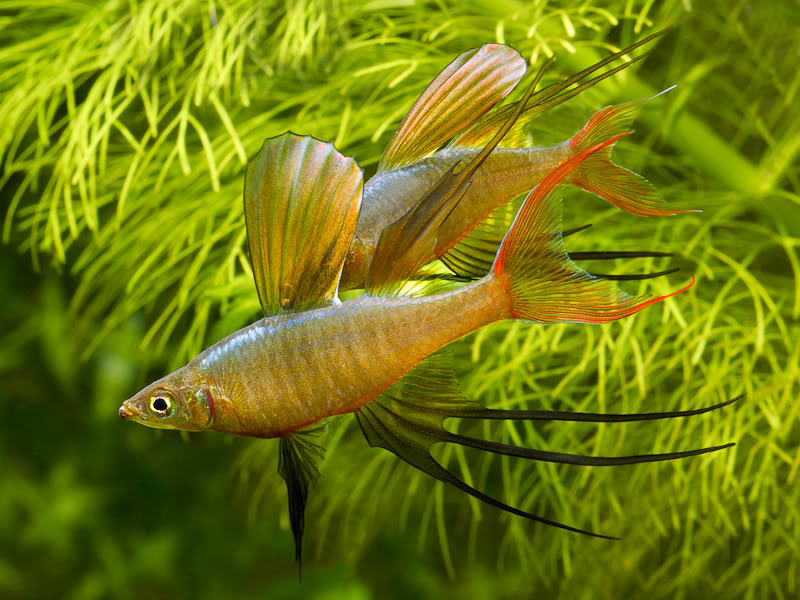
Iriatherina werneriThreadfin Rainbowfish
Meinken, 1974
Max length40mm SL1.6in SLTank60 × 30cm24 × 12inTemp22–30°C72–86°FpH5.0–8.0There also exists a sister-group relationship between the Melanotaeniidae and Malagasy family Bedotiidae, which may seem surprising given their respective modern-day distributional patterns. The precise origin and subsequent dispersal of the two families has been the subject of debate, with some palentologists suggesting that Madagascar's freshwater fishes derived froma trans-oceanic dispersal during the Cenozoic Era, but the most compelling arguments currently indicate a freshwater radiation which occurred during the Mezozoic break-up of Gondwana.
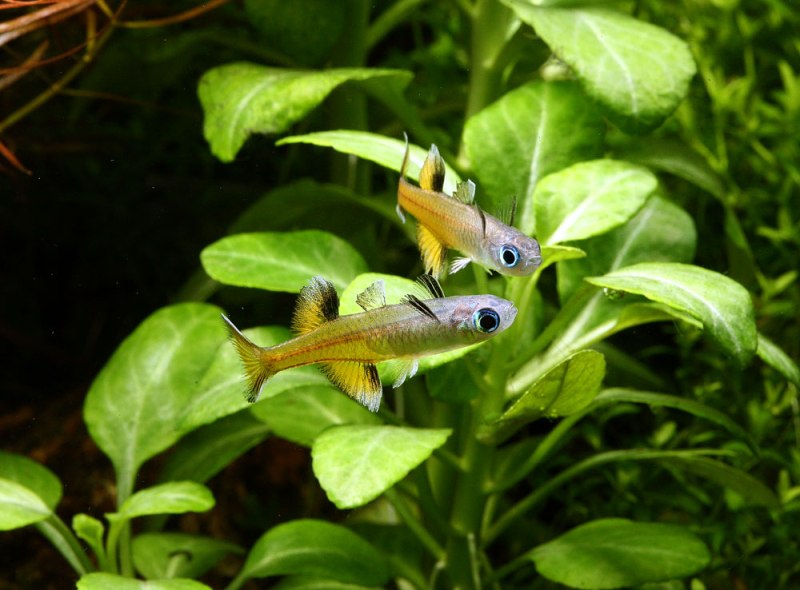
Pseudomugil signiferPacific Blue-eye
Kner, 1866
Max length70mm SL2.8in SLTank60 × 30cm24 × 12inTemp20–26°C68–79°FpH6.5–7.5Generally found within 15-20 km of the sea but habitat-type is extremely variable. It's been recorded in full marine conditions as well as pure freshwater environments, and commonly inhabits coastal mangrove creeks, swamps, and salt marshes. Freshwater habitats tend to comprise lowland swamps or forest streams with clear water but some populations inhabit acidic, tannin-stained, black waters. It's also abundant in the artificial canals typical of residential zones in the Gold Coast, southern Queensland.
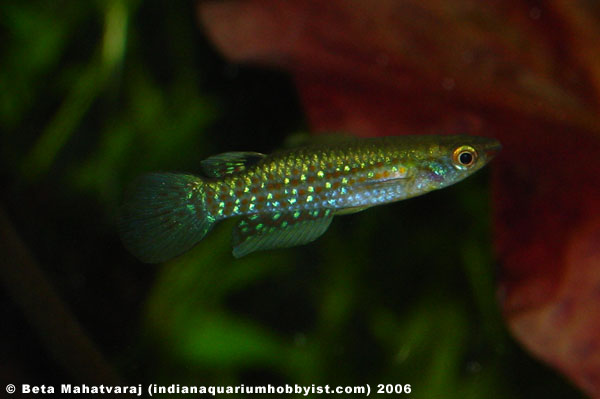
Aplocheilus blockiiGreen Panchax
Arnold, 1911
Max length45mm SL1.8in SLTank45 × 30cm18 × 12inTemp20–28°C68–82°FpH6.0–8.5This species is euryhaline and mostly inhabits lowland, often coastal, habitats containing still or slow-moving brackish or freshwater. It displays a preference for habitats with surface vegetation or overhanging cover and is commonly found in mangrove swamps and rice paddies.
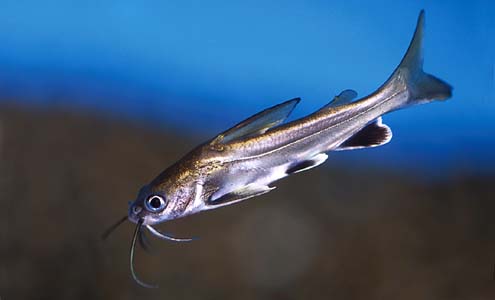
Ariopsis seemanniColombian Shark Catfish
Günther, 1864
Max length350mm SL14in SLTank240 × 60cm96 × 24inTemp22–26°C72–79°FpH6.8–8.5This species is not recommended to those lacking the facilities to house it for life. Sadly it's all too often seen for sale as an attractive, silvery 2-3" juvenile, supposedly suitable for the general freshwater community tank. To make matters worse, it is also usually given an 'alluring' name such as 'black-finned' or 'silvertip' shark catfish. The fate of the majority of these specimens is in all likelihood a depressing one.
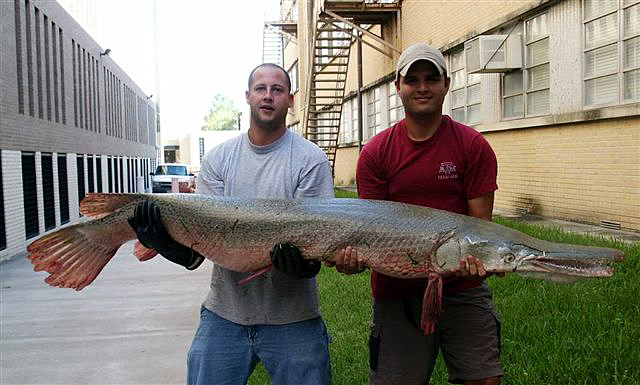
Atractosteus spatulaAlligator Gar
Lacepède, 1803
Max length3050mm SL120in SLTanknot recordedTemp11–23°C52–73°FpH6.0–8.0This is one of the largest freshwater fish species in the world, and clearly shouldn't be considered a home aquarium subject at all given its eventual size and the fact it can live for well in excess of 50 years. We include it here only because some public aquaria are able to maintain it long-term. Unfortunately, juveniles are seen for sale quite regularly in the aquari...
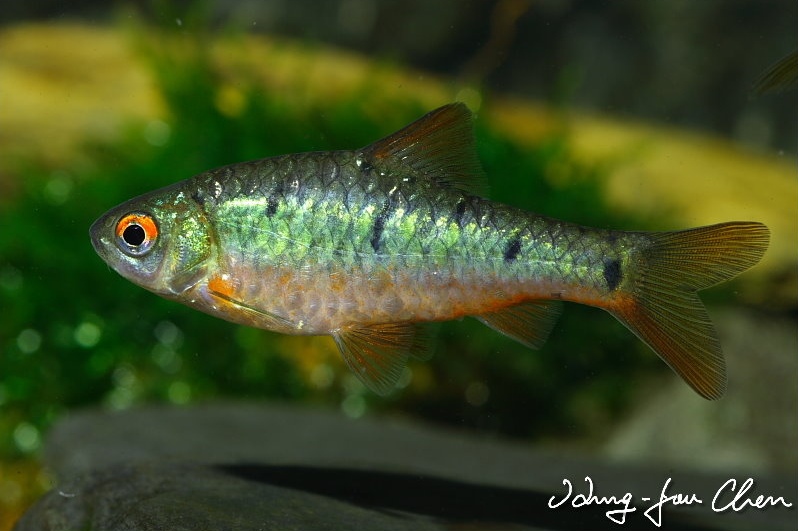
Barbodes semifasciolatusGolden Barb*
Günther, 1868
Max length75mm SL3.0in SLTank90 × 30cm36 × 12inTemp16–24°C61–75°FpH6.0–8.0This species is also known by the alternative names 'green' or 'Chinese' barb. The natural 'green' form is an infrequent find in the aquarium trade whereas the selectively-bred 'golden' variant is farmed in huge numbers and is among the most popular of freshwater aquarium fish. The latter was first produced in the 1960s and is now so ubiquitous that many hobbyists are initially unaware that it is not the natural form.
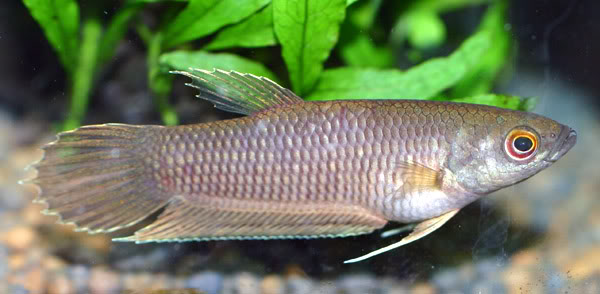
Betta spilotogena
Ng & Kottelat, 1994
Max length70mm SL2.8in SLTank80 × 30cm31 × 12inTemp22–27°C72–81°FpH4.0–6.5Inhabits freshwater swamps and associated streams, typically shaded from the sun by dense riparian vegetation. The water is normally clear or lightly stained with tannins, and the fish found in water less than a metre deep alongside related species including Betta edithae, B. miniopinna, and B. fusca. PH has been measured to range between 4.9-5.5.
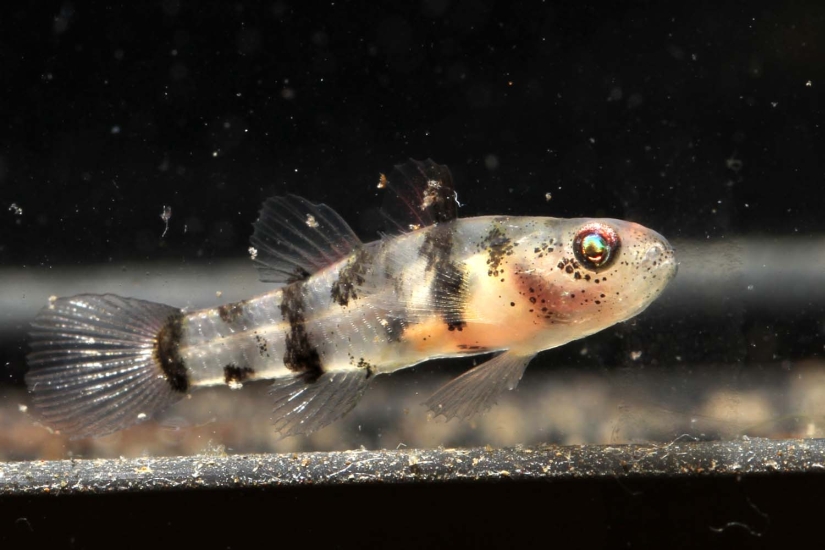
Brachygobius mekongensisMekong Bumblebee Goby
Larson & Vidthayanon, 2000
Max length18mm SL0.7in SLTank45 × 30cm18 × 12inTemp22–28°C72–82°FpH5.5–7.5Apparently restricted to slow-moving or standing freshwater habitats such as marshes, temporal swamps and floodplains where aquatic vegetation and submerged grasses proliferate. One locality consisted of undisturbed marshland with lightly tannin-stained water and dense growth of Vallisneria spp.
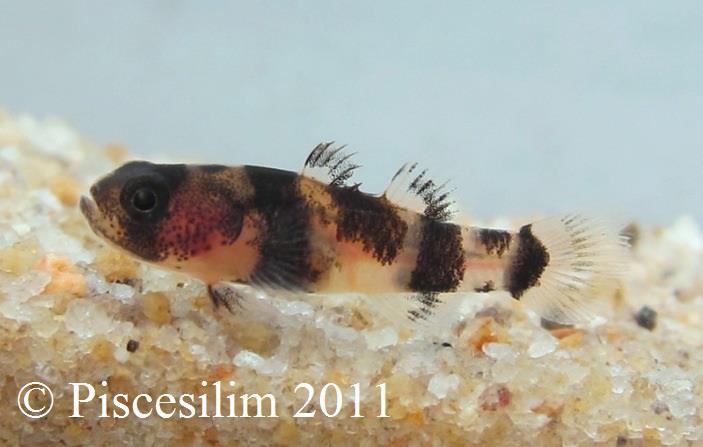
Brachygobius xanthomelas
Herre, 1937
Max length20mm SL0.8in SLTank45 × 30cm18 × 12inTemp22–28°C72–82°FpH7.0–8.5Type locality is '55 miles north of Singapore, freshwater ditches, Mawai District, Johore, Malaysia', and this species has been recorded throughout much of Peninsular Malaysia and southern Thailand. Records from Borneo and Singapore appear to be in error although it may have been extirpated from the latter but as with most members of the genus a degree of confusion surrounds its identity (see 'Notes').
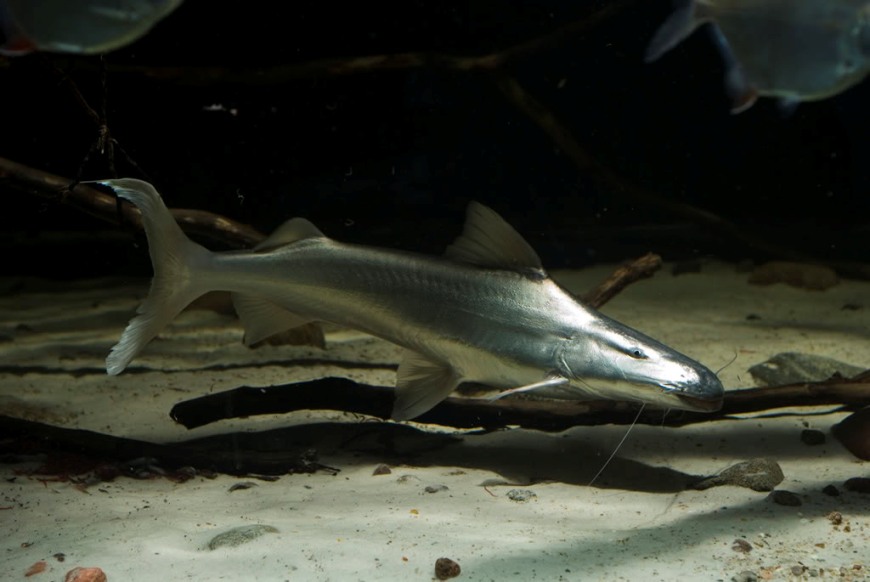
Brachyplatystoma rousseauxiiDourada
Castelnau, 1855
Max length1900mm SL75in SLTanknot recordedTemp22–28°C72–82°FpH6.0–8.0Study of B. rousseauxii has revealed that sexually mature adults are found only in the western Amazon, with no mature individual ever recorded east of Manaus despite the intensive commercial fishery operating there. The total distance covered by some populations during migration from the delta was as much as 5500 km, making it the longest known in any freshwater fish species.
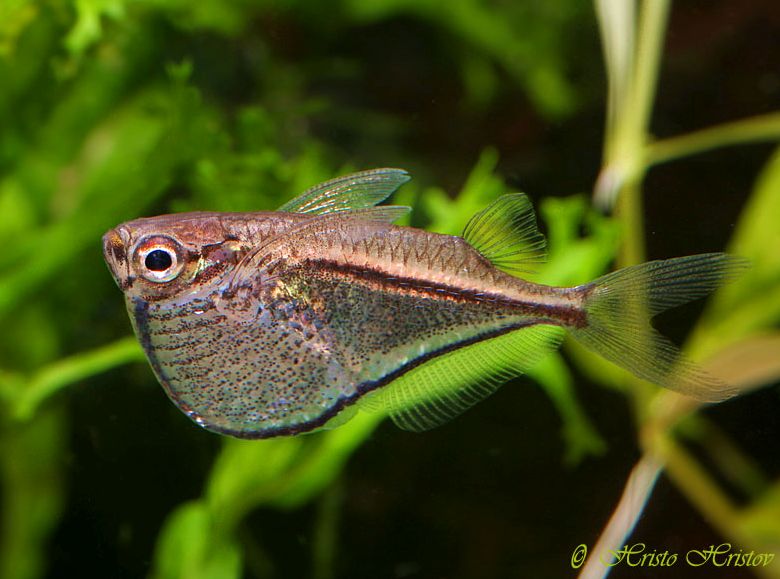
Carnegiella marthaeBlackwing Hatchetfish
Myers, 1927
Max length28mm SL1.1in SLTank60 × 30cm24 × 12inTemp20–28°C68–82°FpH4.0–7.0Gasteropelecids are commonly-referred to as 'freshwater hatchetfishes' due to their heavily-keeled body shape which has evolved in such a way due to possessing an enlarged, heavily-muscled pectoral girdle, and which resembles the shape of a hatchet head. They are sometimes said to be capable of propelled flight above the water surface by beating their pectoral fins but in fact this is not the case and was disproven by Wiest (1995) who used...
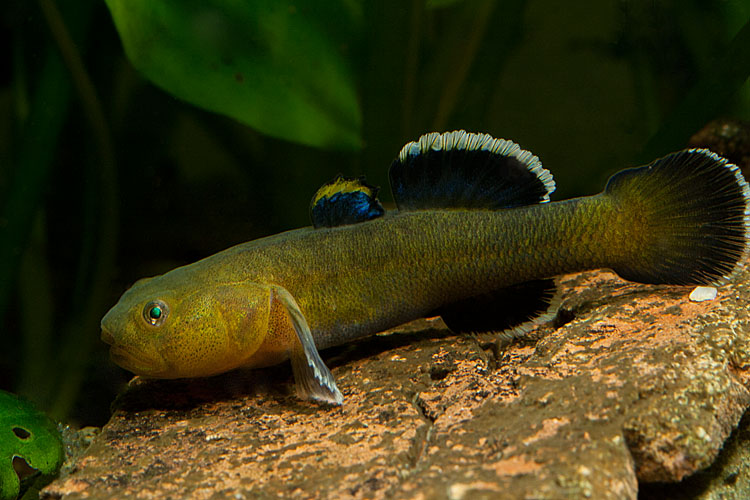
Chlamydogobius eremiusDesert Goby
Zietz, 1896
Max length60mm SL2.4in SLTank45 × 30cm18 × 12inTemp20–28°C68–82°FpH7.0–8.5Lake Eyre is a vast endorheic basin within which lies the lowest point in Australia at some 15 m BMSL. It only fills with water occasionally and when it does so forms the country's largest salt lake. C. eremius does not occur in the lake itself since no fishes are able to survive there, rather it inhabits isolated freshwater springs, flowing artesian bores (wells), and ephemeral waterholes where it tends to be associated with rocks and other submerged cover.
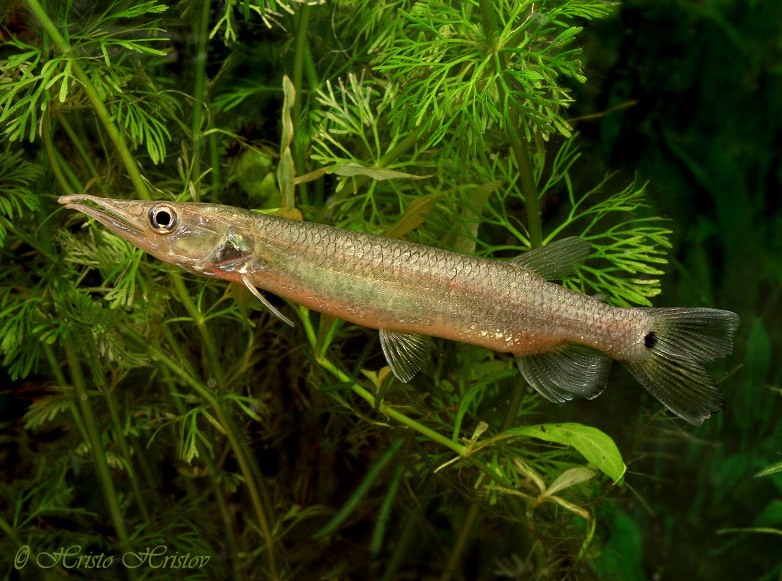
Ctenolucius hujetaGar 'Characin'
Valenciennes, 1850
Max length250mm SL10in SLTank180 × 60cm72 × 24inTemp22–28°C72–82°FpH5.0–7.5C. hujeta is traded under various names including 'slant-nosed gar', 'hujeta gar', 'rocket gar' and 'freshwater barracuda' but it and other members of the family Ctenoluciidae have traditionally been referred to as 'pike characids'. They're all predatory fishes native to South America, included in the order Characiformes and currently spread across two genera; Ctenolucius with two species and Boulengerella with five. The two genera are ...
Cyathopharynx furciferFeatherfin Cichlid
authority not recorded
Max length200mm SL8in SLTank180 × 45cm72 × 18inTemp24–27°C75–81°FpH8.0–9.0There are only two described species of Cyathopharynx, each with several colour forms. These should not be kept together in aquaria, as they can hybridise. They are among the most beautiful of all freshwater fish and are highly sought after in the hobby, although they are fairly delicate. The highest water quality is required for males to fully develop their stunning adult colouration, which happens when they are around 4" in length. This may take a good few months if you are buying young f...