Results for “gill raker”
Type a name: scientific, common, or one a species used to go by. Or narrow the catalogue with the filters.
Filters
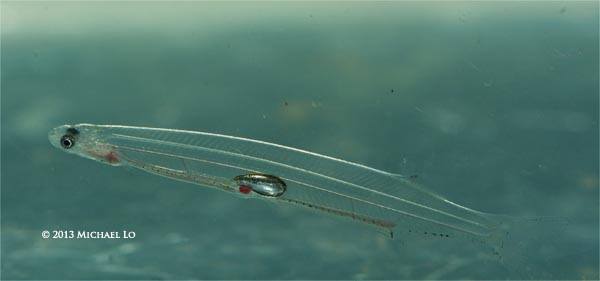
Sundasalanx microps
Roberts, 1981
Max length20mm SL0.8in SLTank45 × 30cm18 × 12inTemp22–26°C72–79°FpHnot recordedThe genus Sundasalanx is distributed throughout much of Southeast Asia and currently comprises seven species which have primarily been distinguished on the basis of oral and dental morphology, gill rakers and eye size. S. microps possesses 0-3 small conical teeth on ceratobranchial 5, 0-2 minute gill rakers on the first arch and a small eye measuring less...
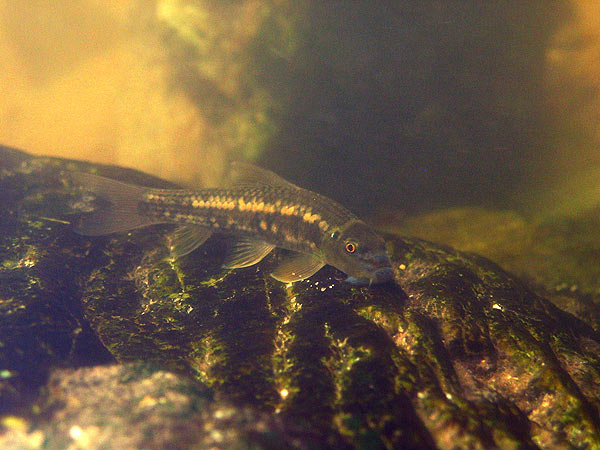
Garra fuliginosa
Fowler, 1934
Max length150mm SL6in SLTank150 × 45cm60 × 18inTemp20–27°C68–81°FpHnot recordedFollowing Rainboth (1996) distinguishing characters for G. fuliginosa include: presence of rostral and maxillary barbels; a well-developed, trilobed rostrum; possession of 10 gill rakers on the lower portion of the first gill arch; no mid-lateral body stripe; 32-34 lateral line scales; body dark with random lighter scales in places. Kottelat (2001) states that the species can be told apart from other Garra occurring in Laos by a combination of: snout with a secondary rostrum, proboscis about twice as wide...
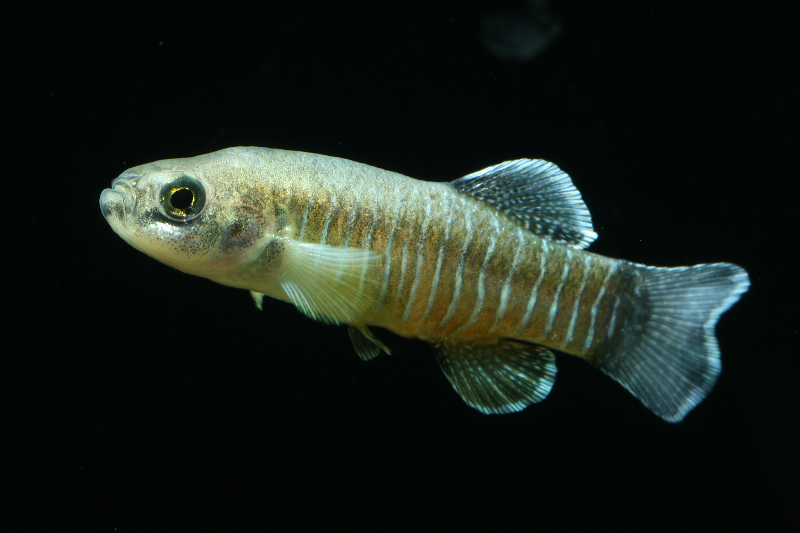
Esmaeilius arakensisArak Toothcarp
Teimori, Esmaeili, Gholami, Zarei, & Reichenbacher, 2012
Max length35mm SL1.4in SLTank120 × 30cm48 × 12inTemp8–32°C46–90°FpH7.0–8.5This species was available in the aquarium hobby for a number of years prior to publication of the official description and was generally referred to as A. sp. 'Namak' or A. sp. 'Namak River'. It can be distinguished from other members of the genus by the following combination of characters: 10–12 anal-fin rays; 28–32 lateral line scales, 10–13 caudal peduncle scales; 8–10 gill rakers; 12–19, commonly 1...
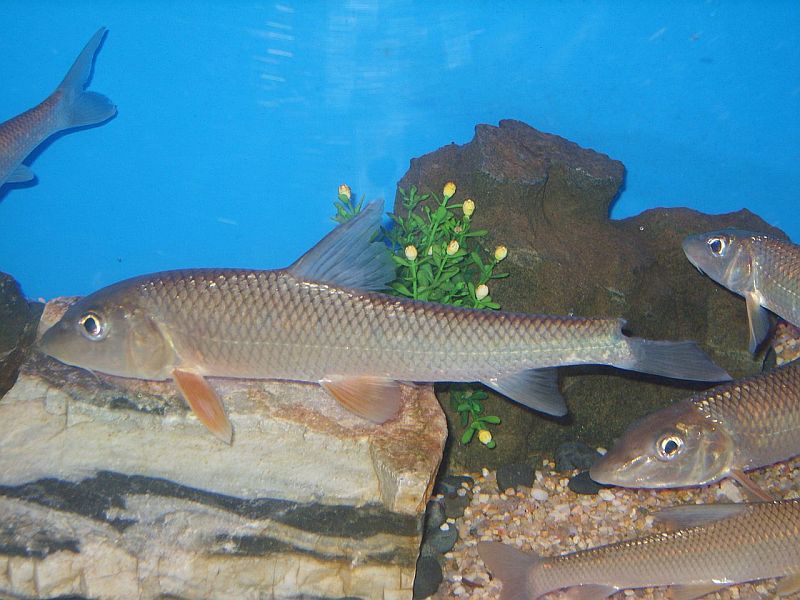
Hemibarbus labeoBarbel Steed
Pallas, 1776
Max length450mm SL18in SLTanknot recordedTempnot recordedpHnot recordedThis species can be distinguished from other members of the genus by the following combination of characters: absence of dark spots on body in adults; body elongate with slightly convex dorsal profile; head longer than body is deep; snout much longer than postorbital head length; lips well developed, lateral lobes of lower lip broad and thick with folds, median process small; barbel thickness shorter or equal to eye diameter; dorsal spine strong, ⅔ of HL; dorsal-fin origin closer to tip of snout than caudal-fin base base; 15+ gill rakers; 6½ branched anal-fin rays; posterior simple dorsal-fin rays ossified and spinous.
Hemisynodontis membranaceusMoustache Catfish
authority not recorded
Max length500mm SL20in SLTank120 × 60cm48 × 24inTemp22–26°C72–79°FpH6.5–7.5There is some confusion as to where this species should be placed taxonomically. It is currently the only species in the genus Hemisynodontis but it has been regularly moved between Synodontis, Hemisynodontis and Brachysynodontis. The main morphological differences that set it apart are the presence of additional gill rakers in this species and the fact it has relatively few mandibular teeth compared to Synodontis species. It also possesses the chracteristic "moustache", which is in fa...
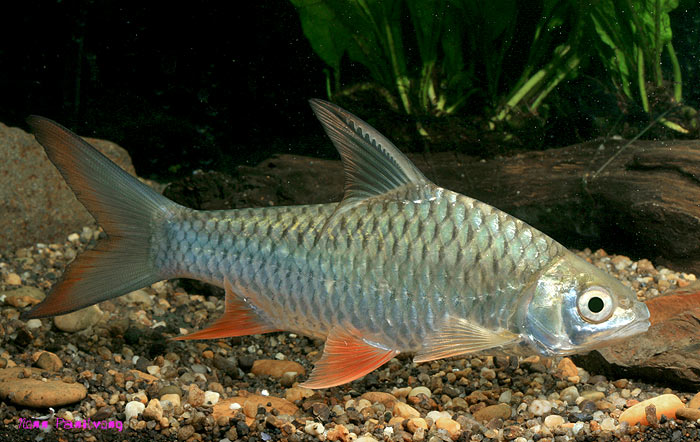
Hypsibarbus malcolmiGoldfin Tinfoil Barb
Smith, 1945
Max length500mm SL20in SLTanknot recordedTemp20–26°C68–79°FpH6.0–8.0H. malcolmi is distinguished from congeners by the following combination of characters: 12-17 (usually 14-15) rakers on first gill arch; usually 16 circumpeduncular scale rows; less than 30 lateral line scales; some branched lateral line canals, but branching not extensive, median portion of dorsal-fin dark.
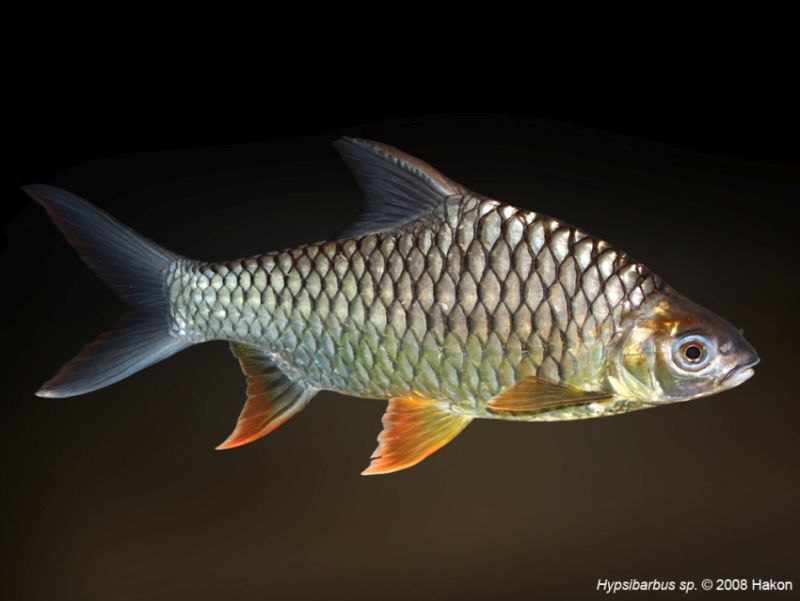
Hypsibarbus wetmorei
Smith, 1931
Max length250mm SL10in SLTank240 × 60cm96 × 24inTemp20–26°C68–79°FpH6.0–8.0H. wetmorei is distinguished from congeners by the following combination of characters: upper body reddish brown; robust body, not compressed; usually 4½ scale rows between lateral line and dorsal-fin origin; 8-12 rakers on first gill arch; 7-9 predorsal scales; 14 circumpeduncular scale rows; usually two scale rows separating vent and anal-fin; <29 lateral line scales; 9-14 serrations on the spinous dorsal-fin ray; distance between distal serrae on posterior margin of last unbranched dorsal-fin ray much greater than the width of their bases.
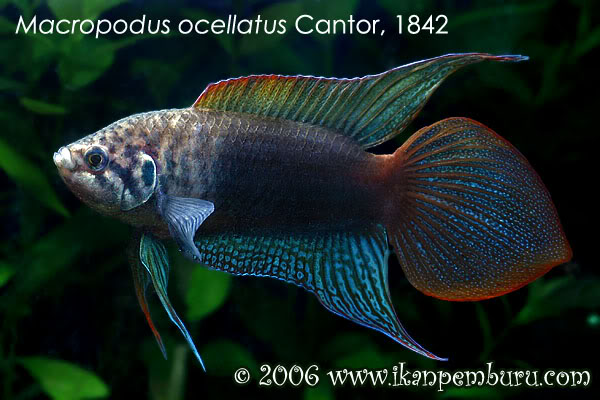
Macropodus ocellatusRoundtail Paradise Fish
Cantor, 1842
Max length80mm SL3.1in SLTank80 × 30cm31 × 12inTemp10–22°C50–72°FpH6.0–7.5M. ocellatus can be distinguished from congeners by the following combination of characters: caudal-fin rounded; eye stripe not connecting spot on posterior projection of opercle with eye; dorsal-fin rays filamentous posterior to a vertical through the posterior anal-fin rays in adults; 16-19 spinous dorsal-fin rays; 6-13 rakers on ceratobranchial of first gill arch; posterior tip or margin of body scales not darker than scales.