Results for “infraorbital”
Type a name: scientific, common, or one a species used to go by. Or narrow the catalogue with the filters.
Filters
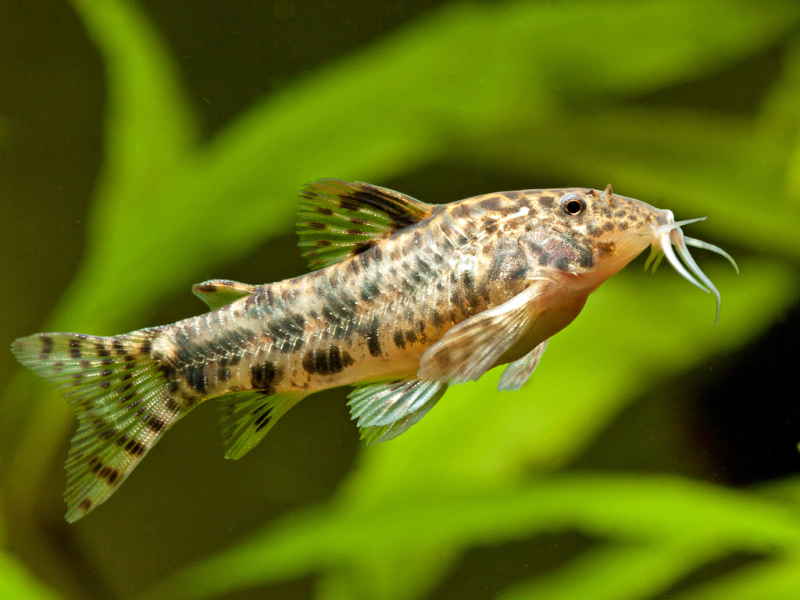
Aspidoras taurus
Lima & Britto, 2001
Max length55mm SL2.2in SLTank75 × 30cm30 × 12inTemp20–25°C68–77°FpH6.0–7.5A. taurus can be told apart from congeners by the following combination of characters: infraorbitals and preopercle covered by thick skin and not visible externally (vs. covered by thin skin and externally visible in other Aspidoras); nuchal plate reduced, covered by thick skin and not visible externally (vs. well developed, covered by thin skin and visible externally); lateral line absent posterior to two small lateral line ossicles (vs. lateral line present on at least first body plate).
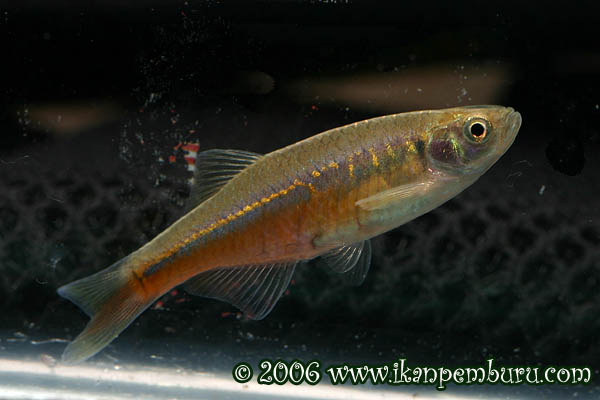
Devario chrysotaeniatus
Chu, 1981
Max length75mm SL3.0in SLTank120 × 30cm48 × 12inTemp23–26°C73–79°FpH6.0–7.0This species is poorly known and first appeared in the hobby during 2005 but has rarely been seen since, probably because its natural waters lie outside the range of most commercial collectors. It can be distinguished by a combination of characters including: lateral line complete; infraorbital process absent; two pairs of short barbels; 8-9 branched dorsal fin rays; 12-13 branched anal fin rays; P stripe originating above pelvic fin and extending to en...
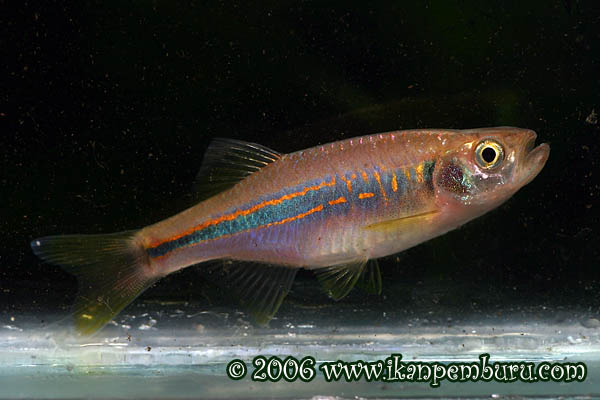
Devario laoensis
Pellegrin & Fang, 1940
Max length65mm SL2.6in SLTank90 × 30cm36 × 12inTemp23–26°C73–79°FpH6.0–7.5It can be further distinguished from other species in the genus by colour pattern consisting of a dark, horizontal P stripe originating around mid-body, where it's relatively faint, this becoming thicker and darker in the posterior portion of the body and terminating at the base of the caudal-fin. Among congeners it's most similar to D. chrysotaeniatus but that species lacks the infraorbital process, has three rows of pharyngeal teeth and the P stripe extends to the end of the caudal-fin rays.
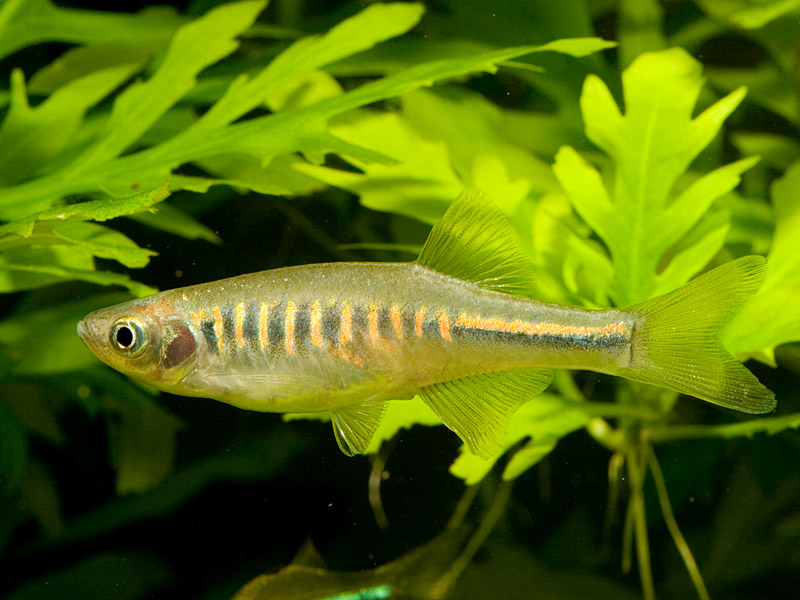
'Inlecypris' shanensis
Hora, 1928
Max length60mm SL2.4in SLTank80 × 30cm31 × 12inTemp18–26°C64–79°FpH6.0–8.0This species is sometimes referred to as 'Hora danio' or Salween danio'. It is distinguished from similar-looking species by a combination of characters as follows: lateral line complete or incomplete with 22-33 pored scales; absence of infraorbital process; 7 branched dorsal-fin rays; usually 10 or 11 branched anal-fin rays; barbels absent or rudimentary; flank markings comprising a series of narrow vertical bars on the anterior portion of each flank, fol...