Results for “interbreed”
Type a name: scientific, common, or one a species used to go by. Or narrow the catalogue with the filters.
Filters
Cynotilapia afraDogtooth Cichlid
authority not recorded
Max length100mm SL3.9in SLTank100 × 30cm39 × 12inTemp25–29°C77–84°FpH7.5–8.5C. afra is easily confused with some species of Pseudotropheus, but can be distinguished by its smaller adult size and unicuspid (as opposed to bicuspid) teeth. Also in this species the black bars on the flanks continue into the dorsal fin, unlike in Pseudotropheus zebra, for example. It exists in many different colour forms in nature. These forms should not be mixed in aquaria as they may spawn with each other, producing unwanted hybrid fry. Despite this ability to interbreed, it's probabl...
Poecilia latipinnaSailfin Molly
Lesueur, 1821
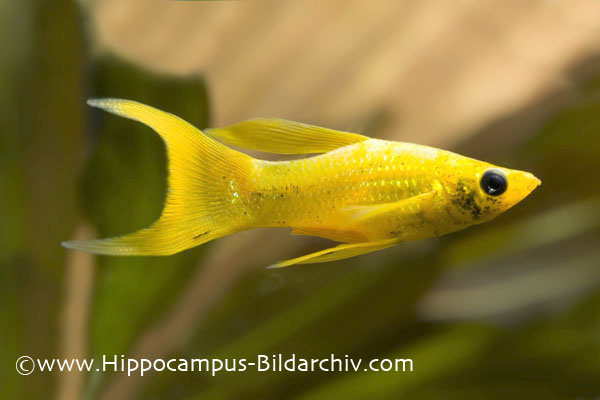
Max length125mm SL5in SLTank76 × 38cm30 × 15inTemp21–26°C70–79°FpH7.0–8.5The wild fish can exhibit several different types of patterning. P. latipinna has been selectively bred into many different colour morphs for the aquarium trade, and has also been crossbred with other molly species, particularly P. sphenops. They will also interbreed readily in the aquarium and in order to avoid this we suggest keeping only one species of molly per tank. There also exists a (in our opinion) grotesque 'balloon' variety of this fish in which the body is malformed and rou...
Poecilia sphenopsShort-finned Molly/Black Molly
Valenciennes, 1846
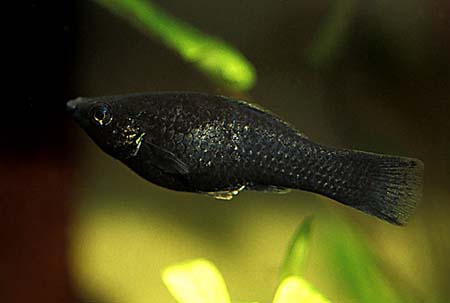
Max length80mm SL3.1in SLTank90 × 30cm36 × 12inTemp21–28°C70–82°FpH7.0–8.5A hugely popular aquarium fish. Many aquarium-bred colour morphs of this species are available, including the ubiquitous black molly. There are also Gold, Green, Lyretail, Silver and Dalmation varieties. Some of these are the results of P. sphenops being crossed with P. latipinnis. The 2 species will also interbreed readily in the aquarium and in order to avoid this we suggest keeping only one of them per tank. There also exists a (in our opinion) grotesque 'balloon' variety of this fi...
Poecilia wingeiEndler's Livebearer
Poeser, Kempkes & Isbrucker, 2005
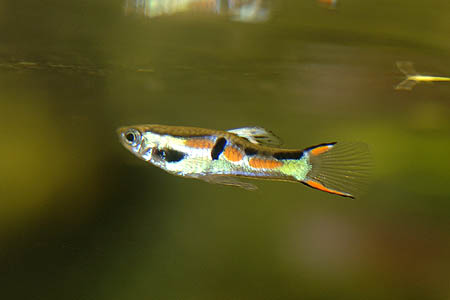
Max length25mm SL1.0in SLTank45 × 30cm18 × 12inTemp24–30°C75–86°FpH7.0–8.5Endler's Livebearer was actually discovered in 1937 by Franklyn F. Bond before being rediscovered by John Endler in 1975 in Laguna de Patos, Cumana, northeastern Venezuela. It was found coexisting, but not interbreeding with, a wild form of P. reticulata. Both species are native to this area of Venezuela, but P. reticulata was much less common in areas where P. wingei was thriving. This is thought to be partially related to habitat type, as guppies are usually found in colder, running water...
Pseudotropheus flavus
authority not recorded
Max length90mm SL3.5in SLTank90 × 45cm36 × 18inTemp24–28°C75–82°FpH7.6–8.8Although it is a good choice for the general mbuna community, as mentioned above P. flavus should not be kept together with any member of the P. elongatus complex. Not only will these species interbreed, producing undesirable hybrid offspring, but males of these species will clash very heavily. As with other members of the genus it possesses flat, bicuspid teeth which are designed for scraping algae and other organisms from the surface of rocks....