Results for “line breeding”
Type a name: scientific, common, or one a species used to go by. Or narrow the catalogue with the filters.
Filters
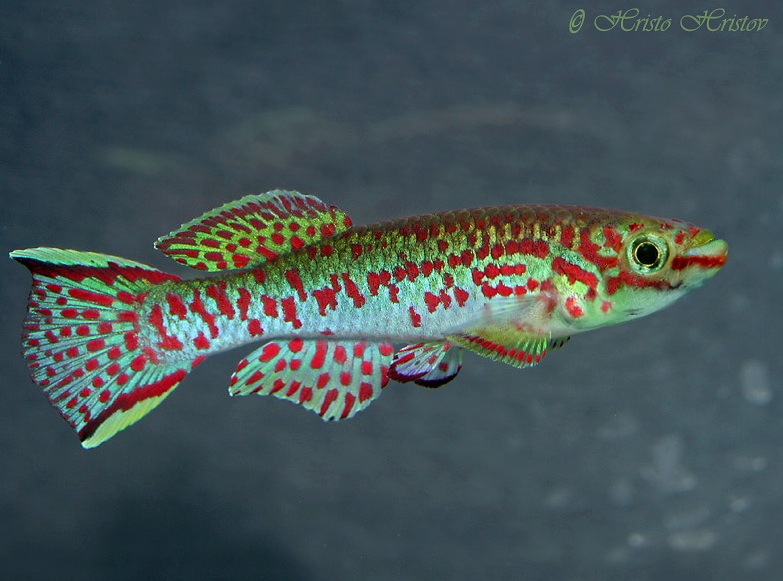
Fundulopanchax gardneriSteel-blue Killifish
Boulenger, 1911
Max length55mm SL2.2in SLTanknot recordedTemp20–26°C68–79°FpH6.0–7.5This species is also known as 'Gardner's Killi' and 'blue lyretail' and the commonly-available aquarium forms are perhaps among the best choices for those new to keeping killifishes being relatively hardy, colourful and easy to breed. A number of ornamental strains have also been line-bred by aquarists including 'gold' and 'albino'.
Tilapia guinasana
authority not recorded
Max length140mm SL6in SLTank120 × 30cm48 × 12inTemp19–25°C66–77°FpH7.0–7.8Rare in the hobby, this species is unfortunately considered critically endangered in the wild. The lake in which it is found is receiving less groundwater than it once was, due to extraction of water for agriculture. Even if this were not the case, the species is found over such an enclosed range that it would still be at extreme risk. All attempts at captive breeding are therefore to be encouraged, with care being taken to keep the different lines pure. Interestingly, as there are no natural...
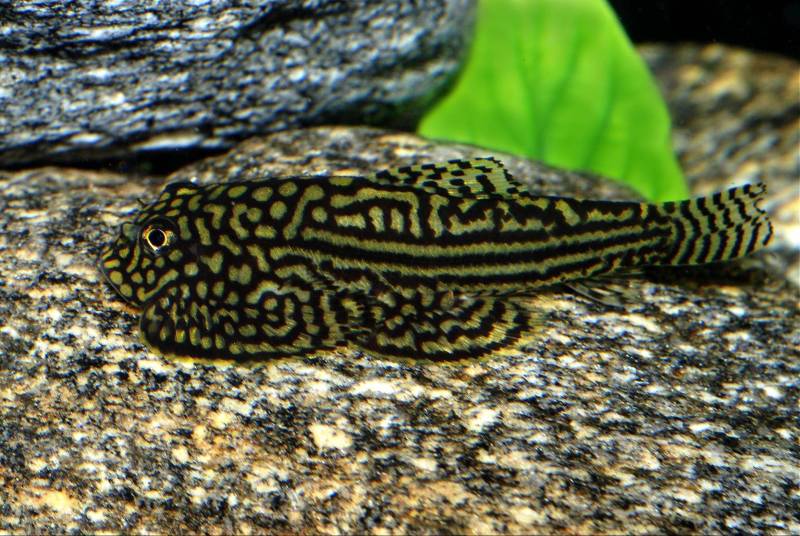
Sewellia lineolataTiger Hillstream Loach
Valenciennes, 1846
Max length65mm SL2.6in SLTank75 × 30cm30 × 12inTemp20–24°C68–75°FpH6.0–7.5S. lineolata was first recorded by Diard over 150 years prior to its 'rediscovery' in the early-1990s. It became available to the aquarium trade in the mid-2000s and swiftly established itself as one of the more popular balitorids in the hobby due to its attractive body markings and ease of breeding. It's also sold under the names 'reticulated hillstream loach', 'Vietnamese hillstream loach' and 'gold ring butterfly sucker'. It's difficult to...
Mylochromis melanonotusHaplochromis Yellow-black Line
authority not recorded
Max length260mm SL10in SLTank150 × 60cm60 × 24inTemp24–28°C75–82°FpH7.6–8.8M. melanonotus is rarely imported and little information is available regarding its captive care. The shovel-like lower jaw possessed by some individuals of this species has been the cause of some confusion regarding the fishes' true identity. It was originally placed in the genus Platygnathochromis, in which it was the only species. However, Ad Konings observed that amongst wild breeding populations there existed individuals both with and without the modified lower jaw. The specimens witho...