Results for “marine”
Type a name: scientific, common, or one a species used to go by. Or narrow the catalogue with the filters.
Filters
Thalassophryne amazonicaPrehistoric Monster Fish
authority not recorded
Max length150mm SL6in SLTank75 × 30cm30 × 12inTemp24–28°C75–82°FpHnot recordedThere are currently six described species in the genus Thalassophryne, of which T. amazonica is the only freshwater representative. The others (T. nattereri, T. maculosa, T. megalops, T. montevidensis and T. punctata) are all estuarine animals distributed along the western Atlantic coastlines of Central and South America and inhabit brackish-to-marine waters. They are members of the family Batrachoididae or toadfishes, of which most are exclusively marine species. All batrachoidids are ambush pr...
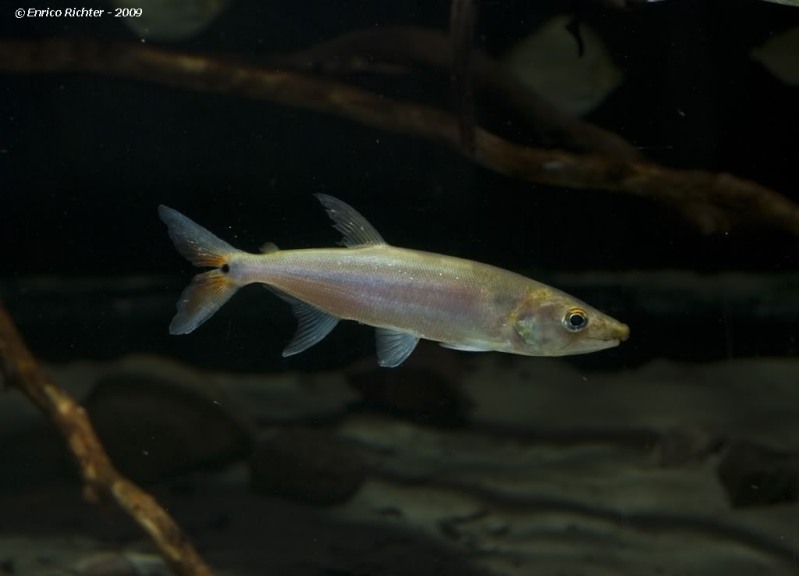
Acestrorhynchus falcatusRed-Tailed Freshwater Barracuda
Bloch, 1794
Max length275mm SL11in SLTank250 × 90cm98 × 36inTemp22–28°C72–82°FpH6.0–7.5The vernacular name of this fish is derived from its appearance and behaviour, rather than a genetic association with the marine barracuda, and it's also sometimes referred to as 'pike characin' or 'spotted cachorro' with local vernacular names including 'Grand dent-chien' (French Guiana), ' Cachorrinho' or 'Ueua' (Brazil). Although most species of Acestrorhynchus appear superficially similar to one another most exhibit distinguishable external chara...
Cichlasoma urophthalmusMayan Cichlid
authority not recorded
Max length400mm SL16in SLTank210 × 60cm84 × 24inTemp20–30°C68–86°FpH7.0–8.0A hardy and robust fish that can tolerate and breed in full marine conditions. The Mayan cichlid is also referred to as the Mexican Mojarra and is occasionally offered for sale in the UK, or can be obtained through specialist cichlid dealers. This species is regarded as a potential pest fish in the USA due to its tolerance of a wide range of conditions and the threat it could pose to native fauna....
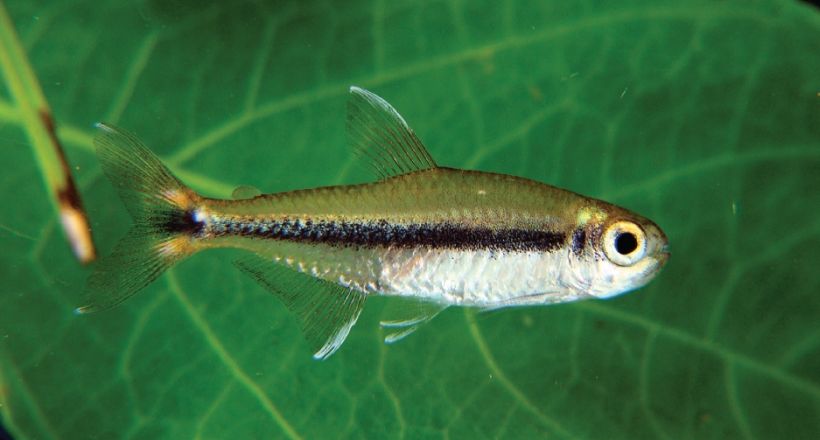
Hyphessobrycon stegemanniSavanna Tetra
Géry, 1961
Max length35mm SL1.4in SLTank60 × 30cm24 × 12inTemp20–25°C68–77°FpH5.5–7.5In the aquarium hobby the name Hyphessobrycon stegemanni has frequently been misapplied to a species that has been described as Hemigrammus ataktos Marinho, Dagosta, & Birindelli 2014. The reasons for this confusion are presumably that the two occur sympatrically in the rio Tocantins system and both possess a dark lateral stripe on the body.
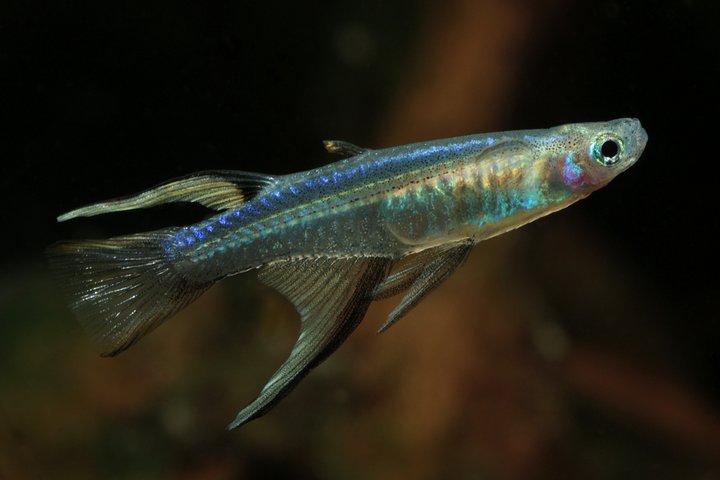
Pseudomugil cyanodorsalisNeon Blue-eye
Allen & Sarti, 1983
Max length35mm SL1.4in SLTank45 × 30cm18 × 12inTemp21–31°C70–88°FpH7.0–8.5Euryhaline and thus capable of withstanding significant fluctuations in salinity and other water conditions. It's been recorded in full marine conditions as well as pure freshwater environments, and commonly inhabits coastal mangrove creeks and swamps. Such changes may occur on a daily or seasonal basis depending on locality, with some habitats influenced by daily tides whereas others become hypersal...
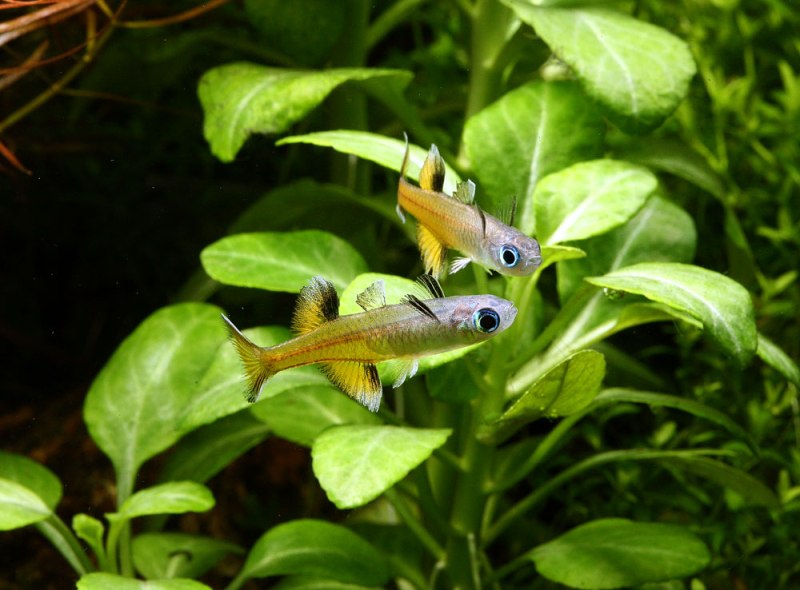
Pseudomugil signiferPacific Blue-eye
Kner, 1866
Max length70mm SL2.8in SLTank60 × 30cm24 × 12inTemp20–26°C68–79°FpH6.5–7.5Generally found within 15-20 km of the sea but habitat-type is extremely variable. It's been recorded in full marine conditions as well as pure freshwater environments, and commonly inhabits coastal mangrove creeks, swamps, and salt marshes. Freshwater habitats tend to comprise lowland swamps or forest streams with clear water but some populations inhabit acidic, tannin-stained, black waters. It's also abundant in the artificial canals typical of residential zones in the Gold Coast, southern Queensland.
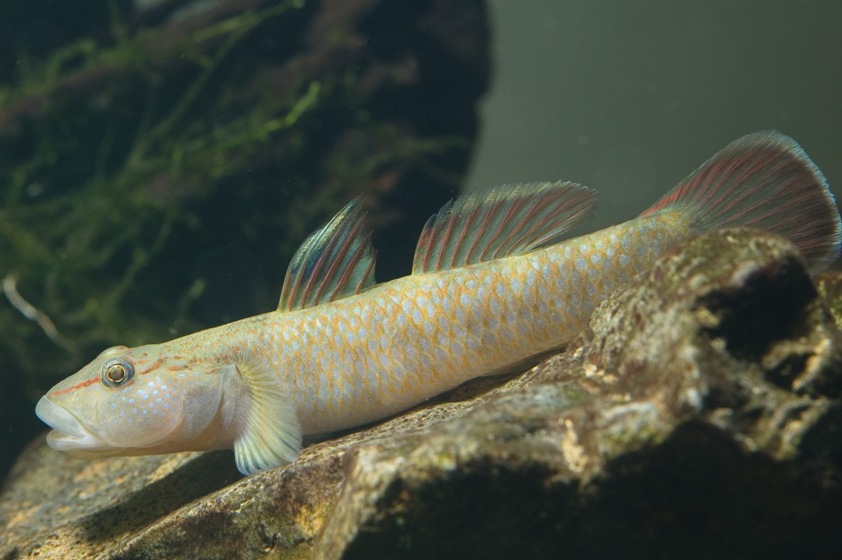
Rhinogobius sp. 'CO'
authority not recorded
Max lengthnot recordedTanknot recordedTempnot recordedpHnot recordedSome wild populations have evolved a complex amphidromous breeding strategy in which adults live and spawn in freshwater or brackish streams and the pelagic post-hatch larvae are washed downstream to the sea where the post-larval fry spend the first part of their life developing in estuarine nursery zones under brackish to full marine conditions. Once they reach a certain stage of development they begin to migrate upstream with some mov...
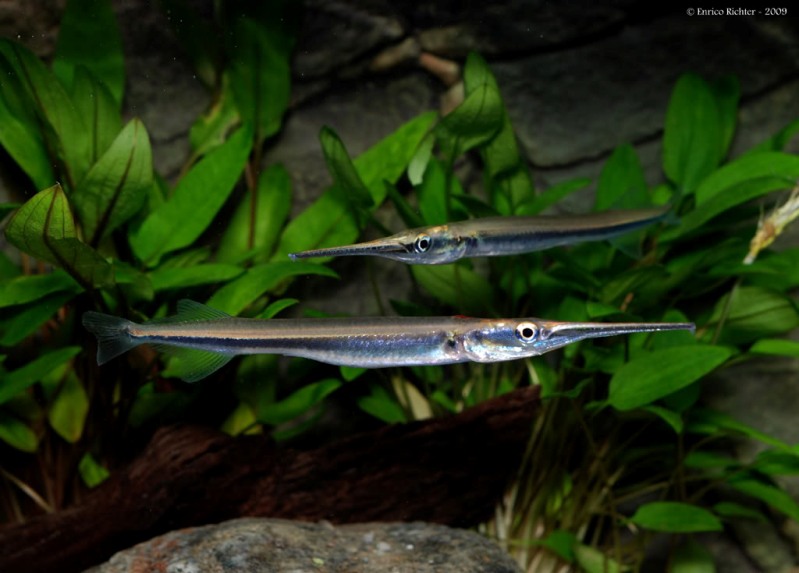
Xenentodon cancilaFreshwater Needlefish
Hamilton, 1822
Max length350mm SL14in SLTank180 × 60cm72 × 24inTemp18–30°C64–86°FpH6.0–8.0X. cancila is often seen referred to as 'freshwater garfish', and although it does superficially resemble the true gars of the family Lepisosteidae, it's actually a member of the Belonidae, or needlefishes, the majority of which are marine or estuarine in existence. There are currently just two species in the genus although the probable existence of a third member has been noted by Roberts (1989) among oth...