Results for “operculum”
Type a name: scientific, common, or one a species used to go by. Or narrow the catalogue with the filters.
Filters
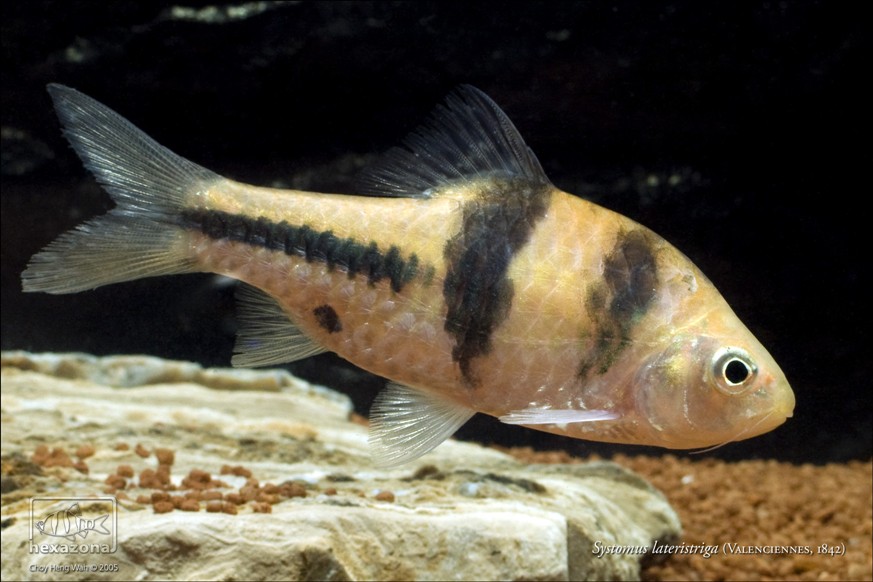
Barbodes lateristrigaSpanner Barb
Valenciennes, 1842
Max length150mm SL6in SLTank150 × 45cm60 × 18inTemp20–28°C68–82°FpH6.0–8.0This species is commonly-referred to as 'T-barb' in some countries. It's closely-affiliated with and sometimes traded as the congener B. kuchingensis but that species can be told apart by colour pattern comprising a prominent row of dark spots along the lateral line, plus a short, horizontally-orientated streak extending from the upper part of the operculum. In B. lateristriga the lateral markings usually form a solid stripe and there is no streak extending from the operculum.
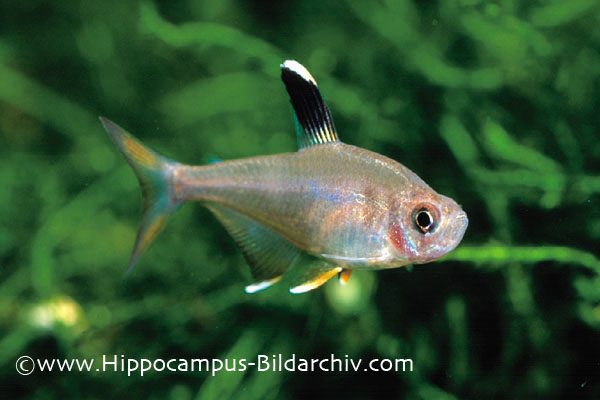
Hyphessobrycon rosaceusRosy Tetra
Durbin, 1909
Max length40mm SL1.6in SLTank60 × 38cm24 × 15inTemp24–28°C75–82°FpH5.5–7.5A beautiful species that is very similar to a host of others in the genus, some of which are undescribed. The most common of these in the hobby is H. bentosi. The two are so similar in appearance that H. rosaceus was once considered to be a subspecies of H. bentosi. The easiest way to distinguish them is by the presence of a dark marking just behind the operculum in H. bentosi, which is lacking in H. rosaceus. As with the closely related Hemigrammus, the taxonomic status of all species in the...
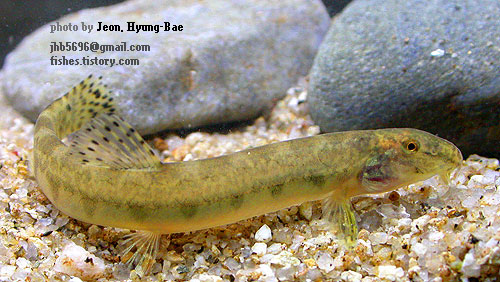
Iksookimia yongdokensis
Kim & Park, 1997
Max length160mm SL6in SLTank100 × 30cm39 × 12inTemp20–24°C68–75°FpH7.0–8.0Among them it's most similar to I. longicorpus and I. hugowolfeldi but can be distinguished by the following combination of characters: body patterning consisting of 9-13 dark vertical bars along the flanks plus a small dark spot at the base of the upper caudal-fin lobe; no black blotch or markings posterior to the operculum; reduced lamina circularis in males; interorbital width measures 14.7-17.8% o...
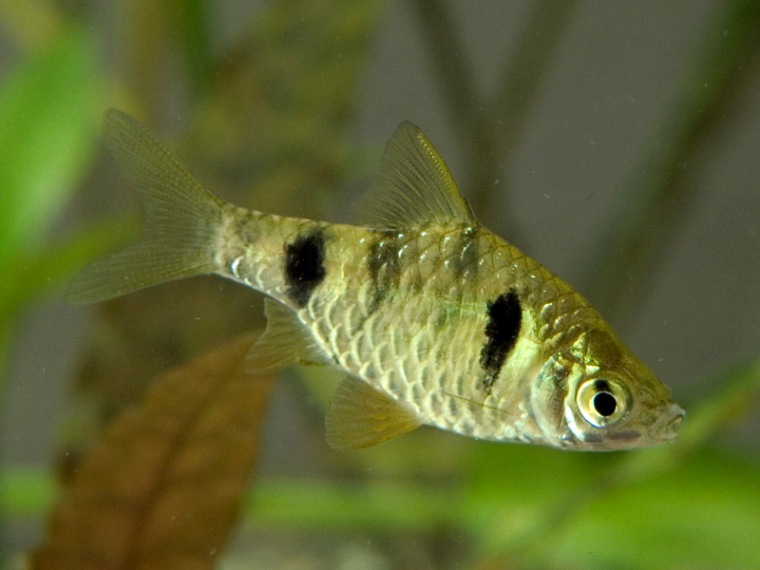
Pethia phutunioDwarf Barb
Hamilton, 1822
Max length30mm SL1.2in SLTank60 × 30cm24 × 12inTemp21–26°C70–79°FpH6.0–7.0In P. phutonio the flank markings comprise two black, vertically-orientated blotches, one posterior to the operculum and the other on the caudal peduncle, and within the P. conchonius group this patterning is shared with P. bandula, P. cumingii, P. didi, P. meingangbii, P. padamya, and P. tiantian. It can be told apart from these by the following combination of characters: smaller adult size of 25 - 30 mm vs. at least 35 - 40 mm; minute maxillary barbels; incomplete lateral line with ab...
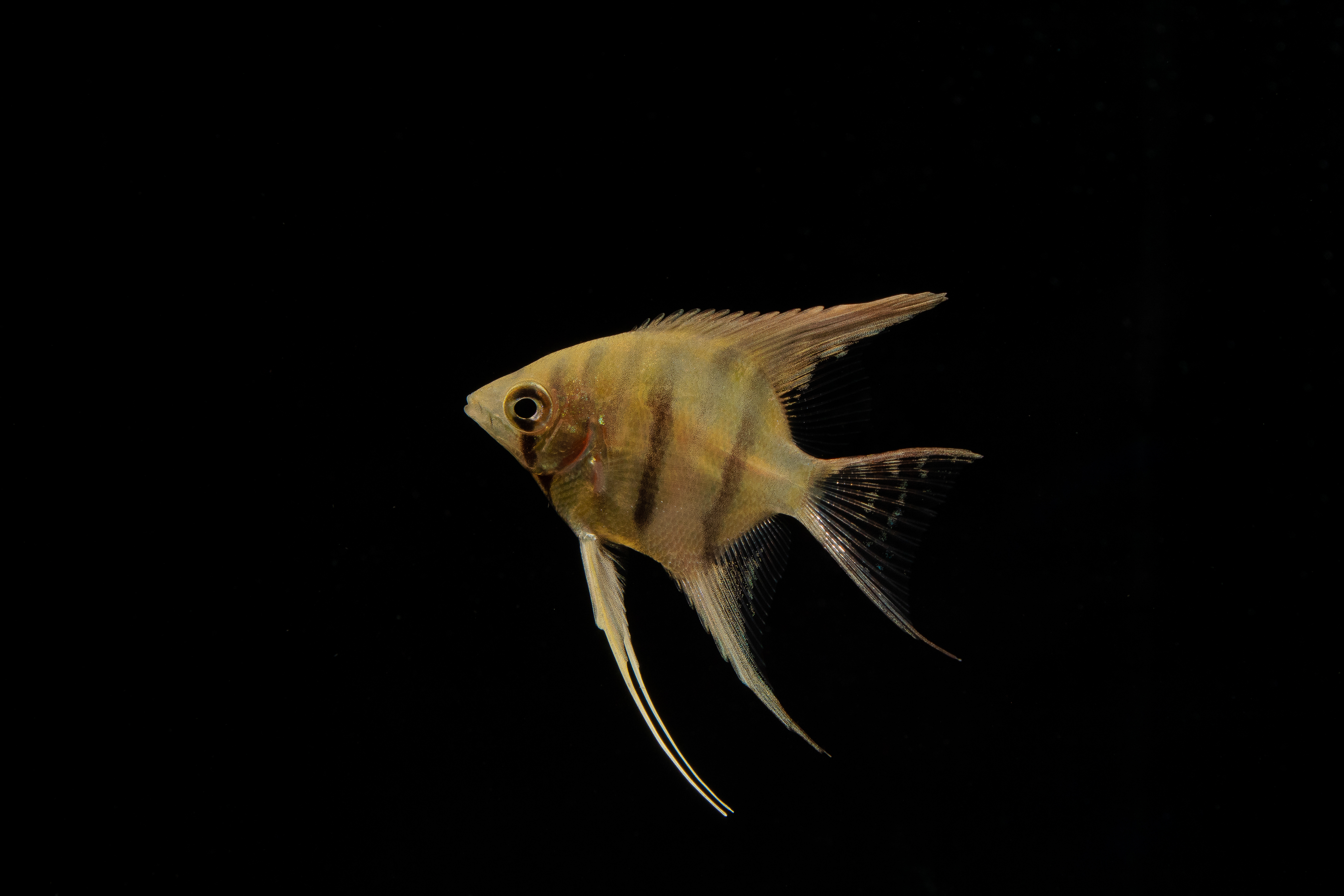
Pterophyllum leopoldiRoman Nose Angelfish
Gosse, 1963
Max length100mm SL3.9in SLTank90 × 30cm36 × 12inTemp22–29°C72–84°FpH5.0–7.0Pterophyllum leopoldi can be differentiated from other members of the genus by the presence of up to 11 vertical stripes on the body, though often only the 3 largest, boldest stripes can be seen. This species also shows a dark patch over the operculum. In adult specimens, a red/maroon hue over the back and fins is characteristic of the species, leading some to believe the most colourful natural form Angelfish. The name-sake roman nose possessed by the fish is also very distinctive and used as a meristic feature.
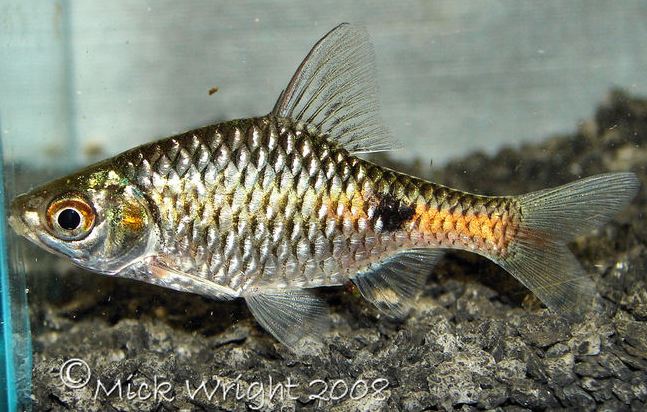
Puntius terioOnespot Barb
Hamilton, 1822
Max length90mm SL3.5in SLTank80 × 30cm31 × 12inTemp18–26°C64–79°FpH6.5–7.5This species is uncommon in the aquarium trade which is a little surprising given its huge natural range. Different populations can vary in colour pattern to an extent though all share the defining aspects given by Hamilton, comprising a diffuse yellow-golden marking on the operculum plus a dark spot on the caudal peduncle. The latter is usually surrounded by a variably-sized golden-yellow margin, and the dorsal-fin often contains irregular dark spots and streaks, these sometimes forming a longitudinal band.