Results for “papillate”
Type a name: scientific, common, or one a species used to go by. Or narrow the catalogue with the filters.
Filters
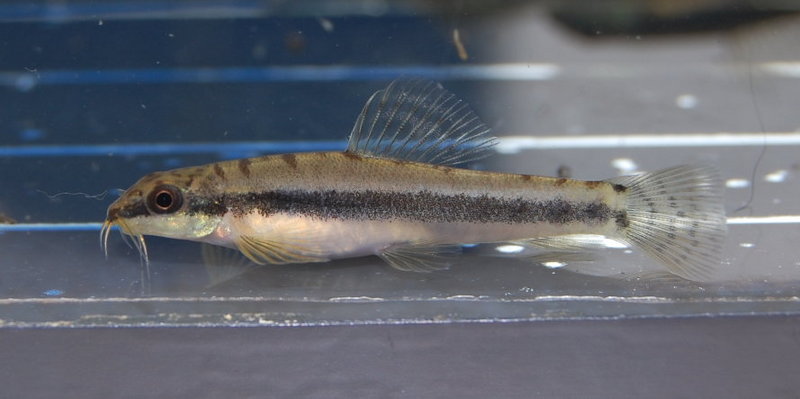
Paracanthocobitis zonalternans
Blyth, 1860
Max length78mm SL3.1in SLTank60 × 30cm24 × 12inTemp20–25°C68–77°FpH6.0–7.5According to Kottelat (1990) the chief distinguishing characters for the genus are: possession of 9-18½ branched dorsal-fin rays; colour pattern without black basal caudal bar, but with an ocellus at upper base of caudal-fin; upper lip with or without several rows of papillae; lower lip with a broad median interruption and a widened, papillated pad on each side.
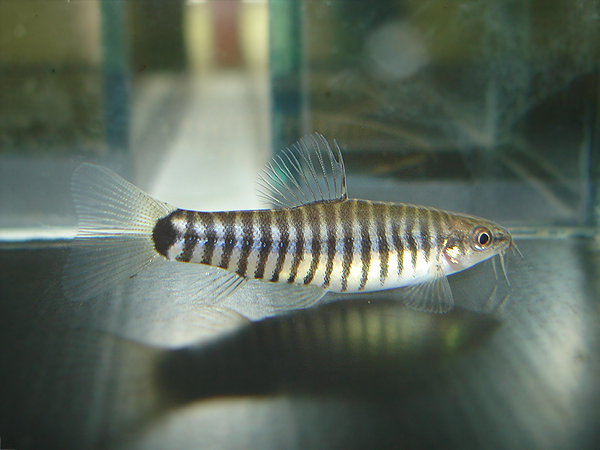
Micronemacheilus cruciatus
Rendahl, 1944
Max length40mm SL1.6in SLTank60 × 30cm24 × 12inTemp22–27°C72–81°FpH6.0–7.5This species is traded under various names including 'Vietnamese multi-banded zebra loach', 'hovering zebra loach', 'Laos pygmy multi-stripe loach', and 'banded dwarf loach'. It can be distinguished from related species by the following combination of characters: body with distinct vertical bars; 8 branched dorsal-fin rays; 3-10 pored lateral line scales; one pair of large papillae in median portion of upper lip; two pairs of large papillae in median portion of lower lip; lower posterior edge of opercle with 3-4 prominent indentations.
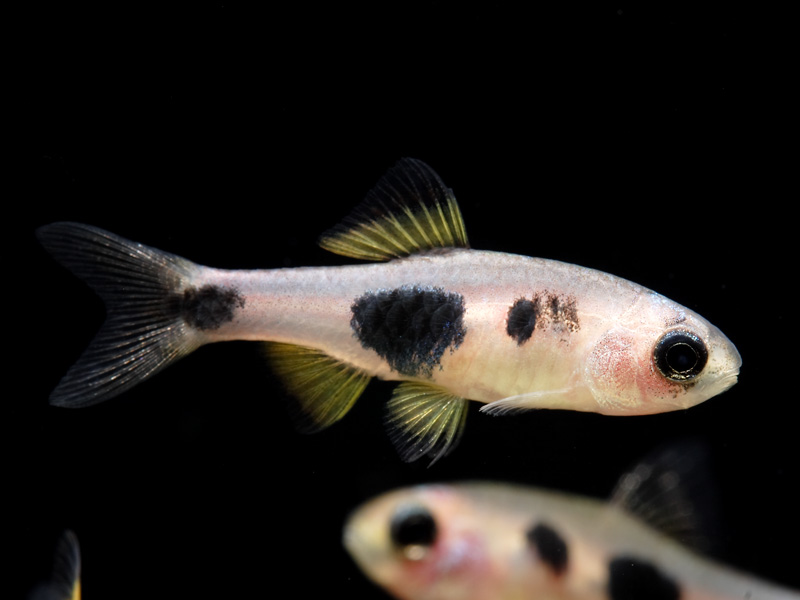
'Barbus' hulstaertiAfrican Butterfly Barb
Poll, 1945
Max length35mm SL1.4in SLTank45 × 30cm18 × 12inTemp17–24°C63–75°FpH5.0–6.5Two closely-related species are also found in the Congo basin and infrequently seen in the trade. 'B.' candens has been collected northeast of the range of 'B.' hulstaerti around the city of Kisangani (formerly Stanleyville) and nearby town of Yangambi. It can be distinguished from 'B.' hulstaerti by its paler body colouration, smaller dark markings on the body and red ventral and anal fins in males. 'B.' papillo is known only from its type locality close to the eastern town of Kindu between the Lualaba and Lomami rivers. It has an elongated central body marking and males possess black dorsal, ventral and anal fins.
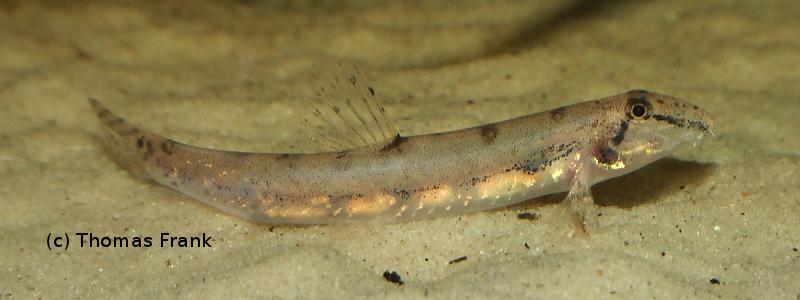
Kottelatlimia hipporhynchos
Kottelat & Tan, 2008
Max length52mm SL2.0in SLTank60 × 30cm24 × 12inTemp23–26°C73–79°FpH4.0–6.5This species differs from congeners in the presence of papillae covering the mouthparts (lips, barbels, and lobes) which are absent in other species. It's also the largest species in the genus and the serrae on the second pectoral fin rays in males form a broa...
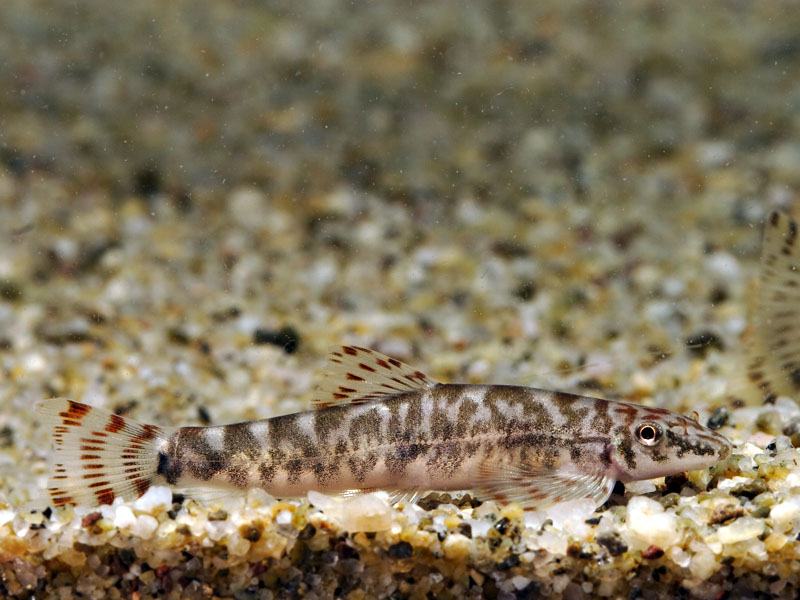
Liniparhomaloptera disparisBroken-band Hillstream Loach
Lin, 1934
Max length80mm SL3.1in SLTank80 × 30cm31 × 12inTemp20–24°C68–75°FpH6.5–8.0L. disparis is sometimes available as bycatch among shipments of other species such as Rhinogobius duospilus but also appears on trade lists under the fictitious scientific name 'Homaloptera hoffmani'. It can be told apart from similar-looking members of the genus Formosania by its noticeably shorter barbels and from Vanmanenia spp. by the fact that the rostral fold is not lobed and the mouth is relatively small (25% head width. In addition the lower lip in Liniparhomaloptera is not divided and has a flat, papillated edge.
Osteochilus hasseltiiHard-lipped Barb
authority not recorded
Max length320mm SL13in SLTank180 × 60cm72 × 24inTemp22–25°C72–77°FpHnot recordedThere are currently 34 described species of Osteochilus although none can be considered popular in the aquarium hobby. According to Rainboth's 'Fishes of the Cambodian Mekong' members of the genus are characterised by lack of aspine, presence of 11-18rays, large rostral and maxillary barbels, papillae on both upper and lower lips, darkened but not black median fins and the fact that the lower lip is not separated from the isthmus by a deep post-labial groove. O. hasseltii can be f...
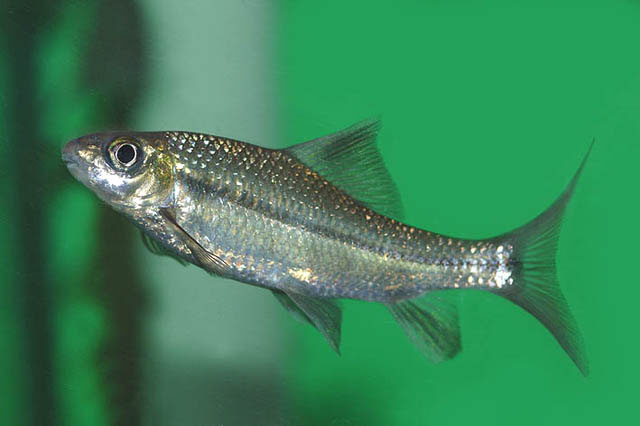
Osteochilus nashii
authority not recorded
Max length180mm SL7in SLTank120 × 45cm48 × 18inTemp22–25°C72–77°FpH6.5–7.5This species is very scarce in the trade indeed and you're most likely to see it on sale as a contaminant among import of other Indian species. There are currently 34 described species of Osteochilus although none can be considered popular in the aquarium hobby. According to Rainboth's 'Fishes of the Cambodian Mekong' members of the genus are characterised by lack of aspine, presence of 11-18rays, large rostral and maxillary barbels, papillae on both upper and lower lips,...
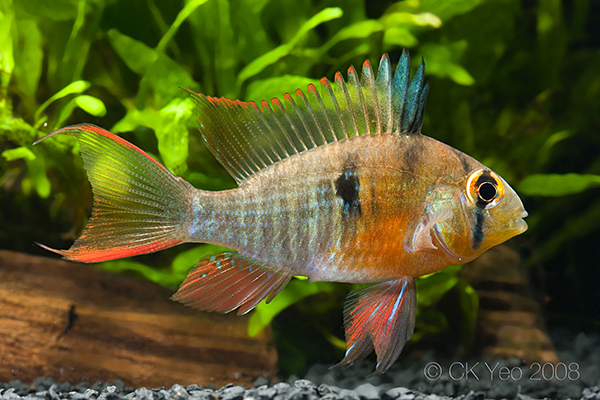
Mikrogeophagus altispinosusBolivian Ram
Haseman, 1911
Matched on Papiliochromis altispinosus, a name it was formerly known by
Max length80mm SL3.1in SLTank90 × 45cm36 × 18inTemp24–28°C75–82°FpH6.0–7.5This species appears endemic to the upper rio Madeira basin in Bolivia and Brazil. Records exist from the Río Mamoré and Río Guaporé drainages in Bolivia (where the Guaporé is known as the Iténez) and Brazil plus the upper Río Orthon (ríos Tahuamanu and Manuripi). Type locality is 'sand-bank in the Rio Marm...
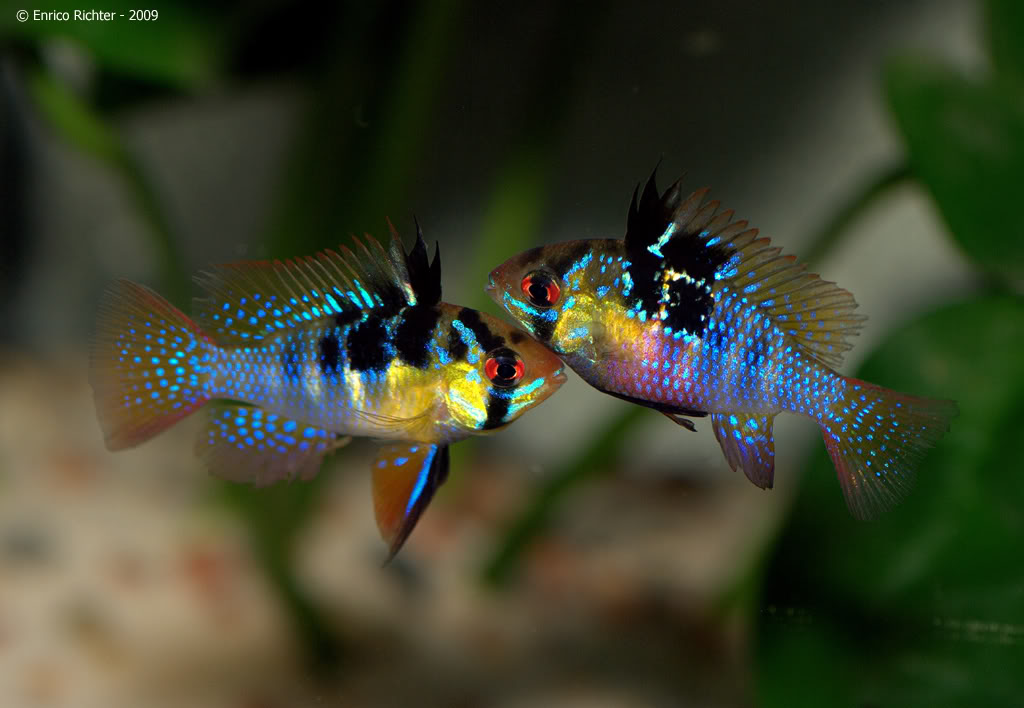
Mikrogeophagus ramireziRam
Myers & Harry, 1948
Matched on Papiliochromis ramirezi, a name it was formerly known by
Max length40mm SL1.6in SLTank60 × 30cm24 × 12inTemp27–30°C81–86°FpH4.0–7.0M. ramirezi is also known by the names 'Ramirez' dwarf cichlid' and 'butterfly cichlid' and is among the more popular dwarf cichlids in the aquarium hobby. As a result, it is produced on a commercial basis in huge numbers and a number of ornamental strains have been developed including 'gold', 'long-finned' (both blue and gold forms; also traded as 'lyre-tail', 'veil-tail' and 'hi-fin'), 'electric/neon blue', 'super neon blue gold' 'pearl/perlmutt' and 'balloon'.
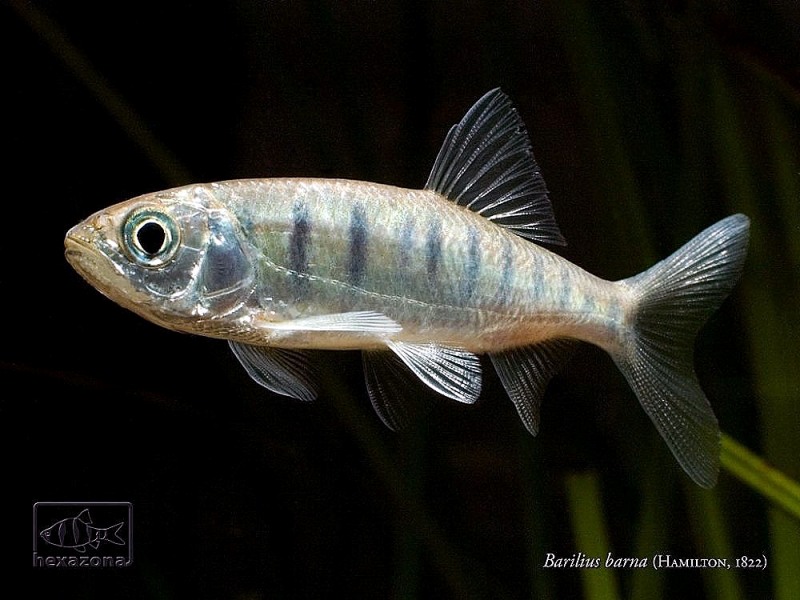
Opsarius barna
Hamilton, 1822
Matched on Barilius papillatus, a name it was formerly known by
Max length130mm SL5in SLTank150 × 60cm60 × 24inTemp16–24°C61–75°FpH6.0–8.0This species occasionally appears in the ornamental trade, usually as 'striped hill trout' or 'banded hill trout'. It can be distinguished from congeners by the following combination of characters: lateral line complete with 40-42 scales; barbels absent; 10-13 anal-fin rays; body with 9-11 dark blue vertical bars; last dorsal-fin ray extending to caudal-fin base.