Results for “postorbital”
Type a name: scientific, common, or one a species used to go by. Or narrow the catalogue with the filters.
Filters
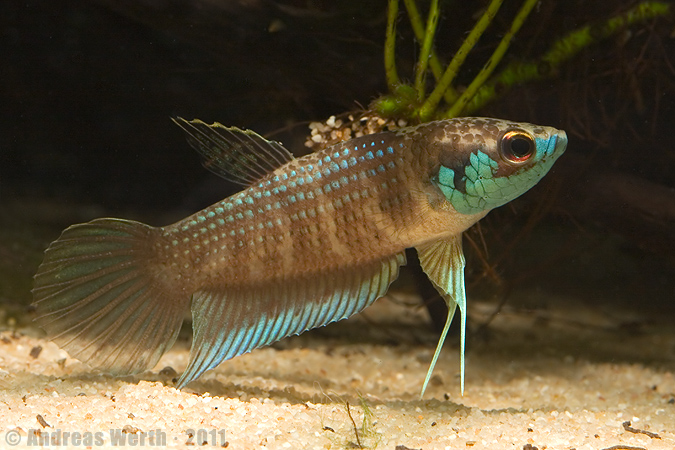
Betta kuehnei
Schindler & Schmidt, 2008
Max length60mm SL2.4in SLTank60 × 30cm24 × 12inTemp21–25°C70–77°FpH6.0–7.5It can be told apart from other members of the B. pugnax group by the following characters: caudal fin rounded in both males and females; chin bar and second postorbital stripe absent; adult males possess intensive blue or bluish-green iridescent (blackish in preservation) colouration on the sides of the head and throat extending from the snout tip to posterior edge of opercle; possession of two central body stripes, the upper extending from the pec...
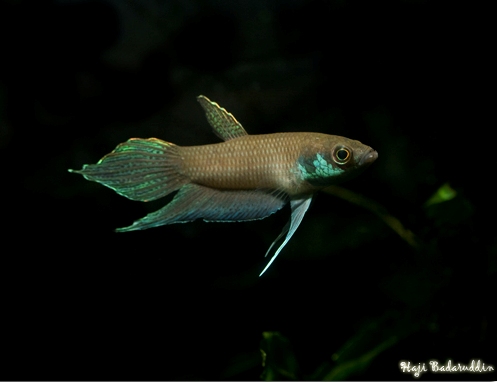
Betta lehi
Tan & Ng, 2005
Max length61mm SL2.4in SLTank60 × 30cm24 × 12inTemp22–27°C72–81°FpH4.0–7.0It can be told apart from other members of the B. pugnax group by the following characters: chin bar absent; prsence of transverse bars in the dorsal-fin; no transverse bars in caudal-fin; green iridescent scales present on opercle and body; anal fin with iridescent, light blue distal band; a pair black markings below the postorbital stripe on the opercle of females and juveniles; anal-fin rays 25-29 (mode 28); lateral scales 28-30 (mode 29); postdorsal scales 10-11 (mode 12); pelvic-fin length 34.8-50.6% SL; head length 33.4-36.8% SL; inter-orbital width 31.7-37.4% HL.
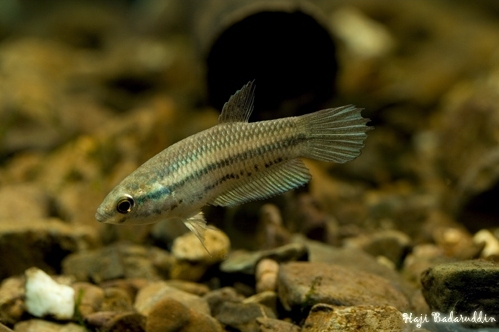
Betta prima
Kottelat, 1994
Max length50mm SL2.0in SLTank60 × 30cm24 × 12inTemp23–27°C73–81°FpH4.0–7.0It can be told apart from other members of the B. pugnax group by the following characters: second postorbital stripe on opercle complete; no transverse bars in caudal-fin; 20-22 predorsal scales; preanal length 50.6-54.8 % SL. Not all authors consider it a member of this group, however, with some placing it in the B. picta complex, e.g., Schindler and Schmidt (2006). The genus is th...
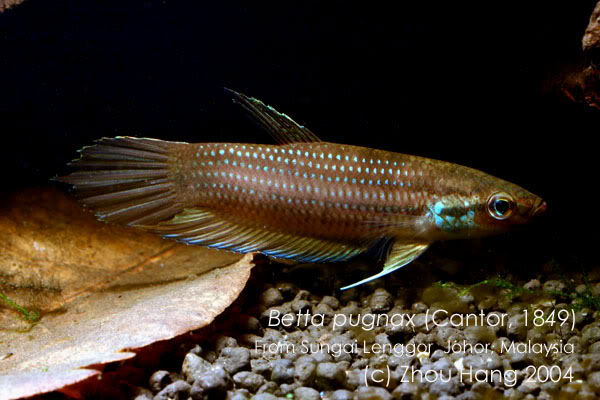
Betta pugnax
Cantor, 1849
Max length70mm SL2.8in SLTank80 × 30cm31 × 12inTemp22–28°C72–82°FpH4.0–7.5It can be told apart from other members of the B. pugnax group by the following characters: chin bar present; no complete second postorbital stripe on opercle; presence of transverse bars in caudal-fin of males; caudal-fin in males broadly lanceolate; opercle scales iridescent blue; anal-fin with reddish subdistal band and black margin; caudal-fin without dark margin; 25-28 anal-fin rays; 28-31 lateral scales; 11-12 postdorsal scales; length of pelvic fins 26.6-43.8 % SL; length of head 27.5-35.2 % SL; inter-orbital width 32.4-53.0 % HL.
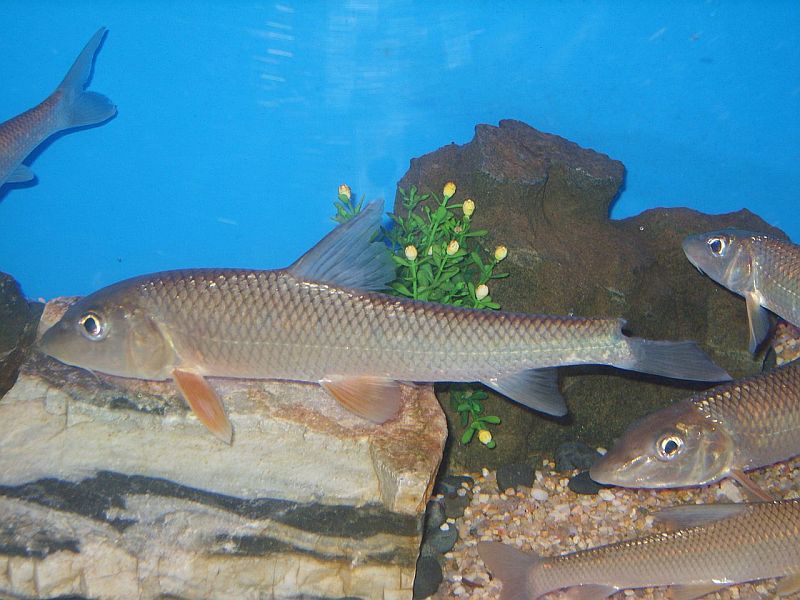
Hemibarbus labeoBarbel Steed
Pallas, 1776
Max length450mm SL18in SLTanknot recordedTempnot recordedpHnot recordedThis species can be distinguished from other members of the genus by the following combination of characters: absence of dark spots on body in adults; body elongate with slightly convex dorsal profile; head longer than body is deep; snout much longer than postorbital head length; lips well developed, lateral lobes of lower lip broad and thick with folds, median process small; barbel thickness shorter or equal to eye diameter; dorsal spine strong, ⅔ of HL; dorsal-fin origin closer to tip of snout than caudal-fin base base; 15+ gill rakers; 6½ branched anal-fin rays; posterior simple dorsal-fin rays ossified and spinous.