Results for “saline”
Type a name: scientific, common, or one a species used to go by. Or narrow the catalogue with the filters.
Filters
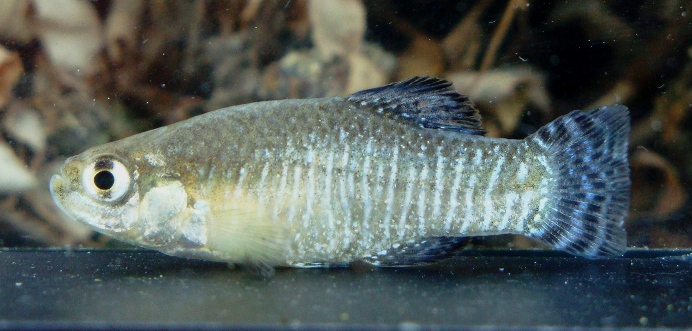
Apricaphanius baeticusBaetican Toothcarp
Doadrio, Carmona & Fernández-Delgado, 2002
Matched on the common name Salinete
Max length50mm SL2.0in SLTank120 × 30cm48 × 12inTemp2–30°C36–86°FpH7.0–9.0Prior to its description this species was considered a geographic variant of A. iberus but the 2002 paper revealed the pair to be genetically quite distinct and also highlighted some morphological differences. It is distinguished from A. iberus by possessing 8-9 (usually 8 ) branched dorsal-fin rays (vs. 8-9, sometimes 10), 9-11 branched anal-fin rays (vs. 8-9), a deeper, more elongate body shape, noticeably shorter snout, relatively thick (vs. thin) vertical bars in males and a flank patterning consisting of a few la...
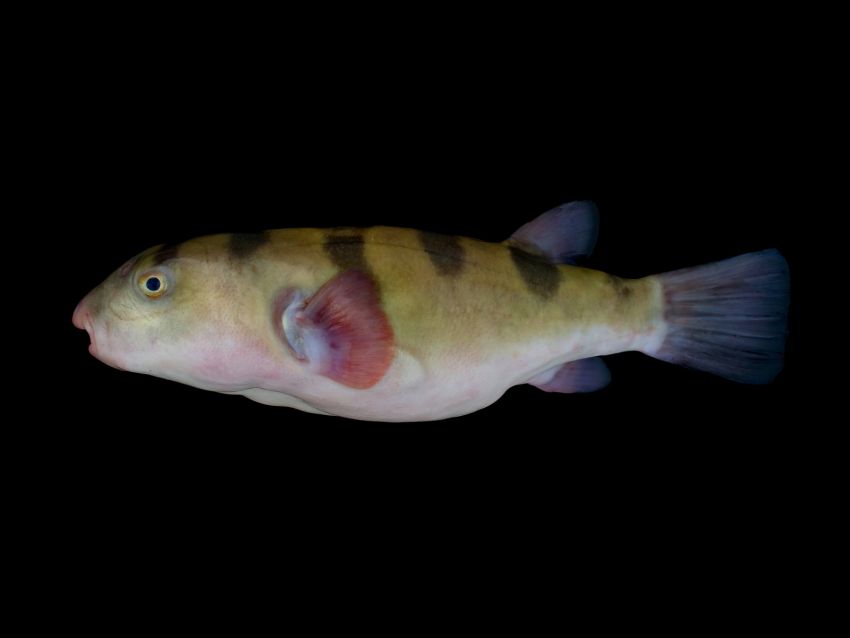
Colomesus psittacusBanded Puffer
Bloch & Schneider, 1801
Max length290mm SL11in SLTank180 × 60cm72 × 24inTemp20–26°C68–79°FpH7.0–9.0Although it does penetrate the lower basins of rivers, particularly the Amazon where it has been collected from the rio Xingu several hundred kilometres from its mouth, this species is predominantly an inhabitant of mangrove swamps, estuaries, and other such saline habitats. It is particularly common in tidal channels, shallow inshore lagoons, and the lower reaches of rivers.
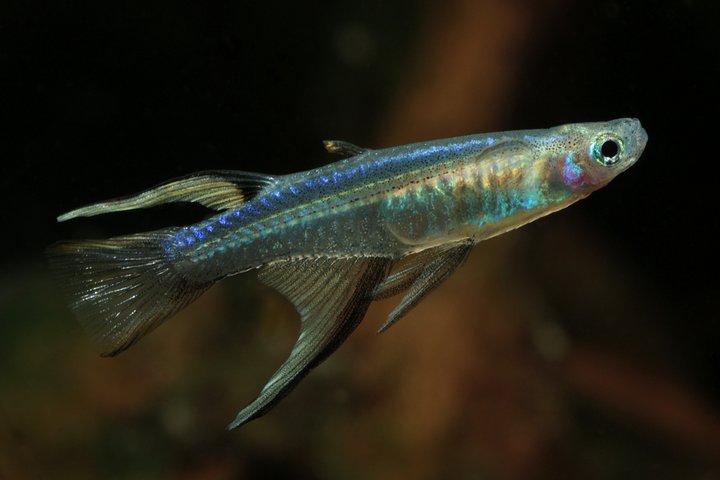
Pseudomugil cyanodorsalisNeon Blue-eye
Allen & Sarti, 1983
Max length35mm SL1.4in SLTank45 × 30cm18 × 12inTemp21–31°C70–88°FpH7.0–8.5Euryhaline and thus capable of withstanding significant fluctuations in salinity and other water conditions. It's been recorded in full marine conditions as well as pure freshwater environments, and commonly inhabits coastal mangrove creeks and swamps. Such changes may occur on a daily or seasonal basis depending on locality, with some habitats influenced by daily tides whereas others become hypersal...