Results for “serra”
Type a name: scientific, common, or one a species used to go by. Or narrow the catalogue with the filters.
Filters
Serrasalmus elongatusPike Piranha
authority not recorded
Max length300mm SL12in SLTank120 × 60cm48 × 24inTemp24–28°C75–82°FpHnot recordedS. elongatus is known as "Caribe Pinche" in its native countries and is a rare find in the trade, tending to be quite expensive as a result. Individuals seem to vary in personality. While some are particularly fearless and will actively chase and attempt to bite hands or fingers placed in or up against the aquarium, others will always appear to be shy and nervous. The streamlined body form that gives rise to the species name is unique among serrasalmids, and has probably developed as a...
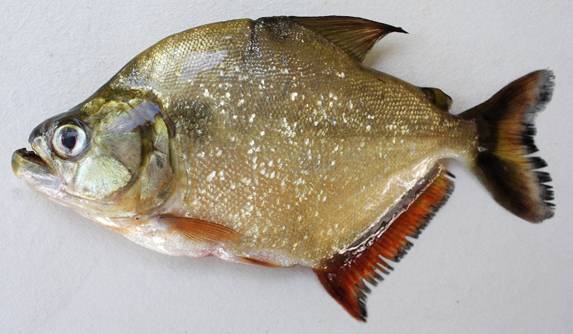
Serrasalmus brandtiiWhite Piranha
Lütken, 1875
Matched on Serrasalmo brandtii, a name it was formerly known by
Max length250mm SL10in SLTank150 × 60cm60 × 24inTemp20–26°C68–79°FpH5.0–8.0A number of sources state that S. brandtii can be identified by the relatively anterior position of the anal-fin origin beneath the first few dorsal-fin rays. However, images of specimens collected from the rio São Francisco, where it is the only member of the genus present, suggest that this is not always the case and this is also supported by the figure from Eigenmann (1915). No recent diagnosis of the species is available.
Serrasalmus altuveiAltuvei
authority not recorded
Max length173mm SL7in SLTank120 × 45cm48 × 18inTempnot recordedpHnot recordedS. altuvei is very scarce in the hobby, most commonly being found among imports of juvenile S. rhombeus (the type species of the genus). It's also known as the "Caribe azul" or "blue caribe" in the trade. There are currently 24 described species of Serrasalmus, many of which look superficially similar. This one is considered a member of the "compressed group". This grouping of morphologically similar species currently comprises S. altuvei, S. geryi, S. compress...
Serrasalmus geryiGéry's Pirambeba
authority not recorded
Max length181mm SL7in SLTank120 × 60cm48 × 24inTemp22–29°C72–84°FpHnot recordedS. geryi is sometimes sold as the "violet-line piranha" in reference to the unusal purple stripe that runs from the base of the lower jaw over the top of the body. It makes a stunning aquarium fish as it also possesses highly reflective scales, deep orange/red eyes and a compressed, high-bodied shape. Far from widespread in nature or the hobby, it tends to be pricey and highly sought-after when available. There are currently 24 described species of Serrasalmus, many of which look s...
Serrasalmus maculatusMac
authority not recorded
Max length210mm SL8in SLTank120 × 45cm48 × 18inTemp21.1–30°C70–86°FpHnot recordedS. maculatus is one of the better choices for aquarists new to this group of fishes. It grows to a manageable size, is relatively hardy, attractive and usually quite inexpensive. It's sometimes referred to by the alternative vernacular names "gold piranha" or "golden mac" in the hobby. There are in excess of 30 described species of Serrasalmus many of which appear superficially similar and have confusing taxonomic histories. S. maculatus and S. spilopleura have often ...
Serrasalmus marginatus
authority not recorded
Max length221mm SL9in SLTank120 × 38cm48 × 15inTemp22–25°C72–77°FpHnot recordedThere are currently 24 described species of Serrasalmus, many of which look superficially similar. S. marginatus has at various times been considered a synonym of S. rhombeus and S. humeralis, but is currently considered to be distinct. It's main distinguishing feature is usually given as the thick, black, v-shaped marking in the anterior portion of the caudal fin. Juveniles are said to differ from similar-looking species such as S. compressus and S. altuvei because the dark body "spot...
Serrasalmus rhombeusBlack Piranha/Rhom
authority not recorded
Max length450mm SL18in SLTank210 × 45cm84 × 18inTemp22.2–27.8°C72–82°FpHnot recordedThere are in excess of 30 described species of Serrasalmus many of which appear superficially similar and have confusing taxonomic histories. S. rhombeus is among the most convoluted of all with numerous synonyms of which S. niger is the most well-known. There has also been a muddle surrounding the common names "white" and "black" piranha, both of which have been used to describe the species. Of greater interest to both scientists and hobbyists has been the discovery of n...
Serrasalmus sancheziSanchez's Piranha
authority not recorded
Max length114mm SL4in SLTank120 × 30cm48 × 12inTemp24–28°C75–82°FpHnot recordedThere are currently 24 described species of Serrasalmus, many of which look superficially similar. S. sanchezi has frequently been confused with S. spilopleura in the past, and is sometimes still sold as "Spilo cf" or "Ruby-red Spilo". It actually appears to be more closely related to S. rhombeus or S. irritans than S. spilopleura. The characteristic red throat has also led to it being confused with S. medinai and even the red-bellied piranha Pygocentrus nattereri on occasion...
Serrasalmus serrulatus
authority not recorded
Max length190mm SL7in SLTank120 × 45cm48 × 18inTemp24–28°C75–82°FpHnot recordedThere are currently 24 described species of Serrasalmus, many of which look superficially similar. S. serrulatus occupies a particularly confusing taxonomic position and is very tricky to identify positively. According to scientific literature it is very close in appearance to several congeners, most notably S. eigenmanni, S. hollandi, S. humeralis and S. nalseni. The separation of these is largely based on geographical range and it's possible that some of them may turn out to be synonymous...
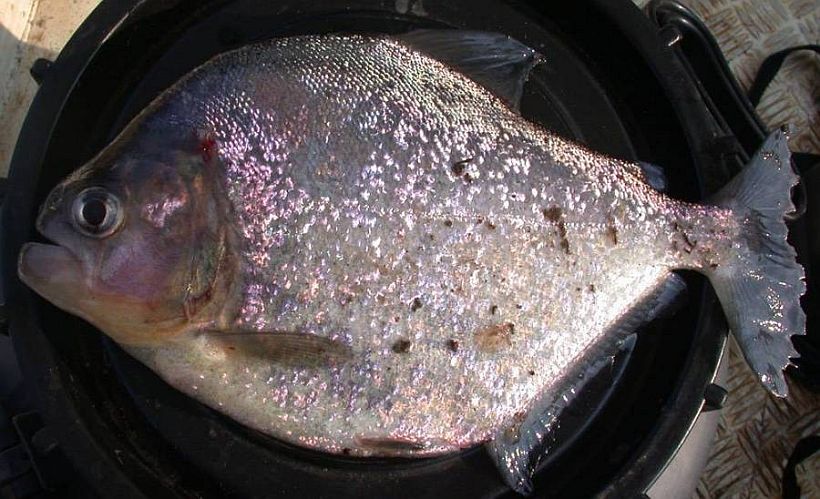
Serrasalmus gouldingiGoulding's Piranha
Fink & Machado-Allison, 1992
Max length280mm SL11in SLTank150 × 60cm60 × 24inTemp24–28°C75–82°FpH4.0–7.0This species occasionally appears in the ornamental trade where it is sometimes referred to as 'blue tiger piranha' Following Fink and Macaht can be distinguished from other members of the genus by the following combination of characters: body shape deep and rhomboid; head robust, snout blunt; eye large; mouth moderate, jaw projecting; 1-3 ontogeneticlly var...
Serrasalmus manueliManny
authority not recorded
Max length435mm SL17in SLTank210 × 75cm84 × 30inTempnot recordedpHnot recordedThe native name for this species is Caribito Parguasero. It's sometimes sold as the "green tiger piranha" in the trade and is usually highly coveted and expensive when available. A notoriously sensitive traveller, mortality rates are sadly quite high among imported fish. The lack of fully-grown specimens known to the hobby is also a worry, and would suggest that the majority are not being maintained correctly. This really is a species for the specialist with the resources necessar...
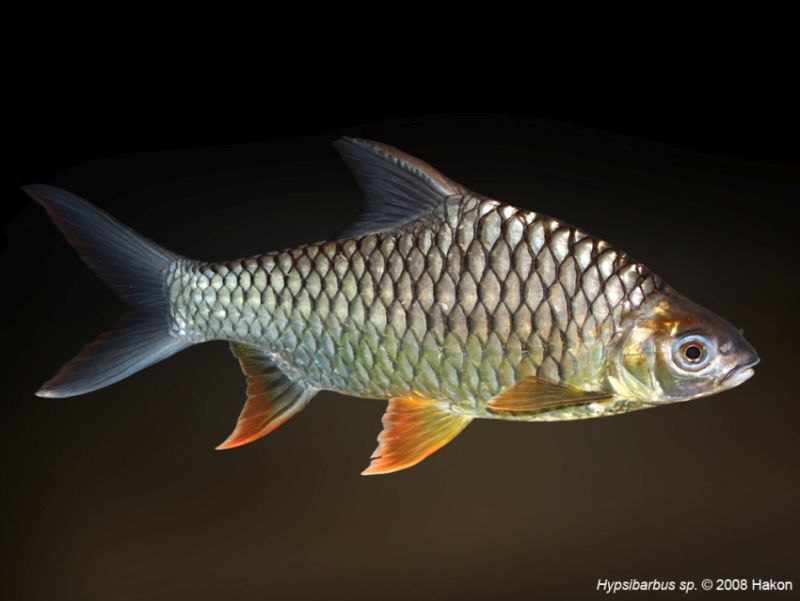
Hypsibarbus wetmorei
Smith, 1931
Max length250mm SL10in SLTank240 × 60cm96 × 24inTemp20–26°C68–79°FpH6.0–8.0H. wetmorei is distinguished from congeners by the following combination of characters: upper body reddish brown; robust body, not compressed; usually 4½ scale rows between lateral line and dorsal-fin origin; 8-12 rakers on first gill arch; 7-9 predorsal scales; 14 circumpeduncular scale rows; usually two scale rows separating vent and anal-fin; <29 lateral line scales; 9-14 serrations on the spinous dorsal-fin ray; distance between distal serrae on posterior margin of last unbranched dorsal-fin ray much greater than the width of their bases.
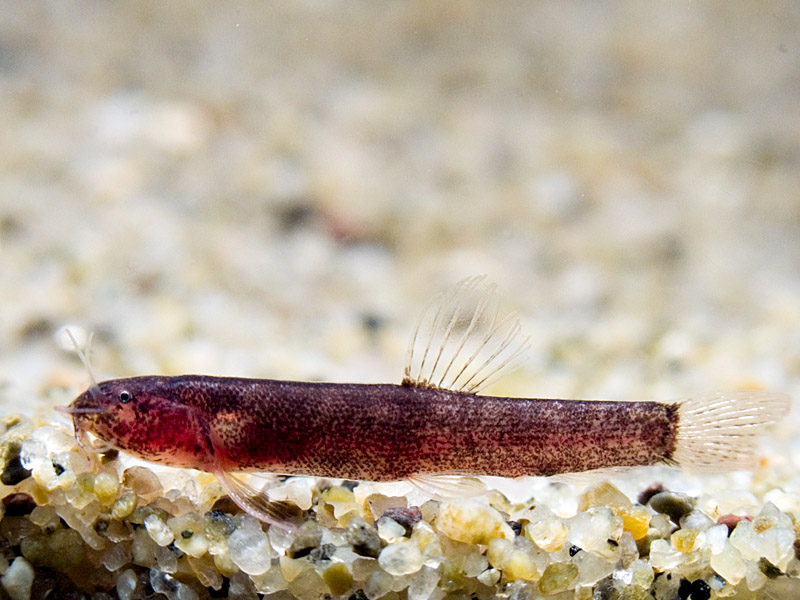
Kottelatlimia katik
Kottelat & Lim, 1992
Max length14mm SL0.6in SLTank45 × 30cm18 × 12inTemp23–26°C73–79°FpH3.5–6.5We're unaware of this species having yet appeared in the aquarium trade although a few private collectors have experience with it. Among congeners it uniquely possesses a simple suborbital spine and further differs from K. pristes by: smaller adult size (13.5 mm SL vs. 40); presence of a long nasal barbel (vs. absence); anatomy of the modified second pectoral ray in males (6-7 fine, narrow serrae vs. 8-11 pointed, anteriorly-orientated serrae). In K. hipporhynchos the serrae on the second pectoral ray in males form a broad, contiguous blade-like structure but other differences are the same as for K. pristes.
Gambusia affinisWestern Mosquitofish
authority not recorded
Max length40mm SL1.6in SLTanknot recordedTemp18–27°C64–81°FpH6.0–8.0For many years G. affinis was thought to be the same species as the Eastern Mosquitofish, G. holbrooki, but has since been given distinct species status. They can be distinguished by several means. In G. holbrooki the leading ray of the males' gonopodium has a serrated edge, theusually has 7 rays and males also generally have a higher degree of dark spotting on the body than G. affinis males. Male G. affinis also lack the serrated leading ray of the gonopodium and this species usually has o...
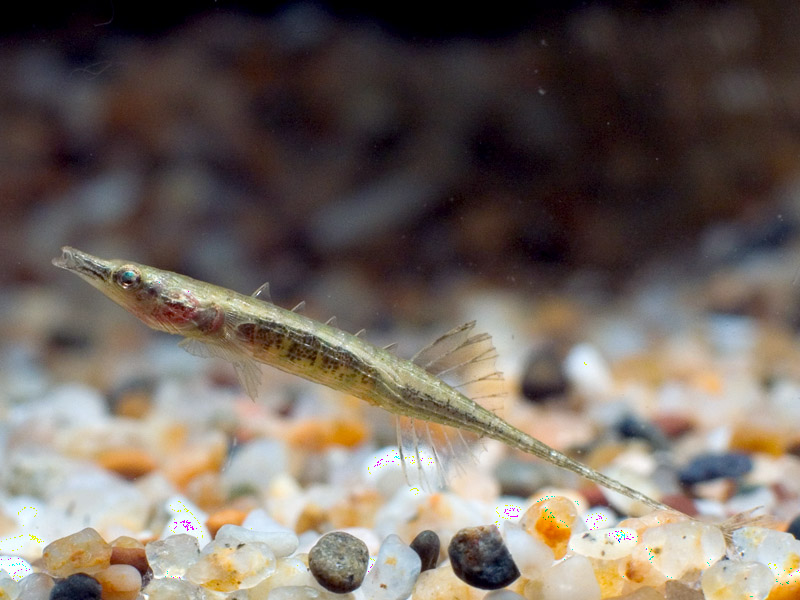
Indostomus paradoxusArmoured Stickleback
Prashad & Mukerji, 1929
Max length30mm SL1.2in SLTank40 × 20cm16 × 8inTemp22–27°C72–81°FpH6.5–7.5This species is rare in the aquarium hobby though its name is often misapplied to the closely-related I. crocodilus. It can be told apart from congeners by the following characters: dorsal and anal fins without dark markings, with a light brown bar in breeding males; ventral surface light brown; throat white, occasionally with a few brown spots; ridges of head bones weakly serrated or not serrated, depending on the bone. The family Indostomidae currently contains just a single genus with three species of which I. paradoxus is the type. It was raised alongside both family...
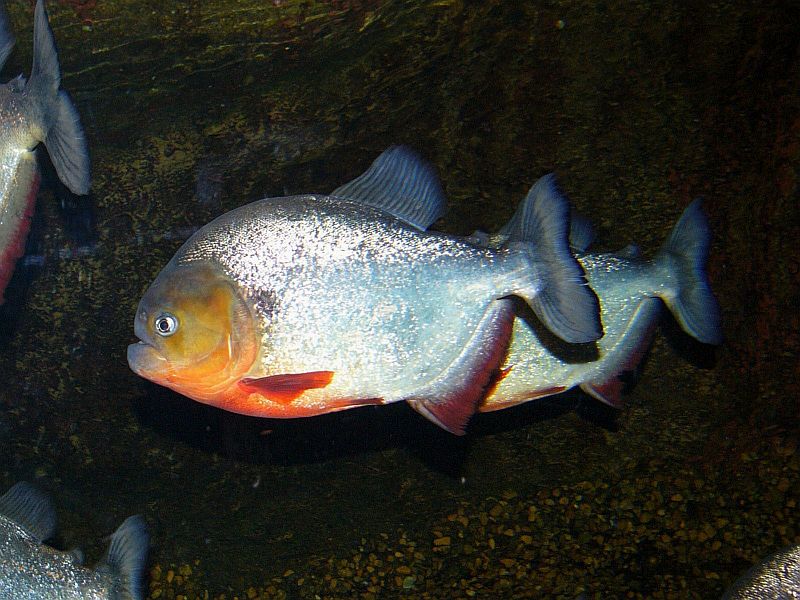
Pygocentrus caribaBlack Spot Piranha
Humboldt, 1821
Matched on Serrasalmo cariba, a name it was formerly known by
Max length350mm SL14in SLTank240 × 90cm96 × 36inTemp20–28°C68–82°FpH4.0–7.0Has been recorded from major river channels, smaller tributaries, and floodplain lakes, many of which comprise acidic, mineral-poor blackwater environments with brownish, tannin-stained water, although it has been observed to inhabit clear waters as well. Many of its habitats lie within the Venezuelan and Colombian llanos, a vast, highly biodiverse system of tropical savannah grasslands, seasonally-flooded plains and forests covering an area measuring almost 600,000 square kilo...
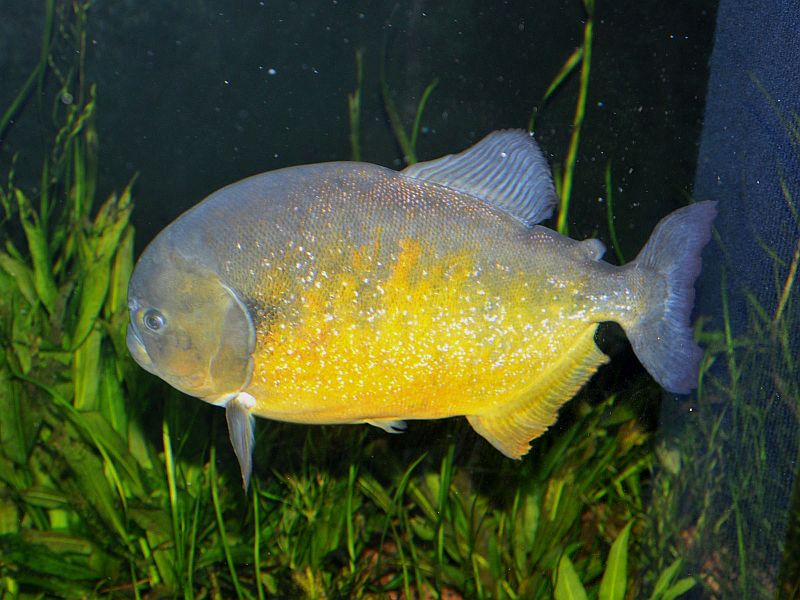
Pygocentrus pirayaPiraya
Cuvier, 1819
Matched on Serrasalmus piraya, a name it was formerly known by
Max length350mm SL14in SLTanknot recordedTemp20–28°C68–82°FpH6.0–8.0Following Fink (1993), P. piraya can be distinguished from congeners by the following combination of characters: adipose fin with rays in larger specimens (vs. always without rays in other Pygocentrus species); branched dorsal-fin rays 15-18, usually 16 (vs. 14-18, usually 15); usually 7 neural spines anterior to first pterygiophore (vs. usually 6); vertebrae 36-39, usually 38 (vs. 35-38, usually 36). It can also be identified by colour pattern since it possesses distinctive bright yellow-orange pigmentation on the lower jaw, opercle and lateral body in life.
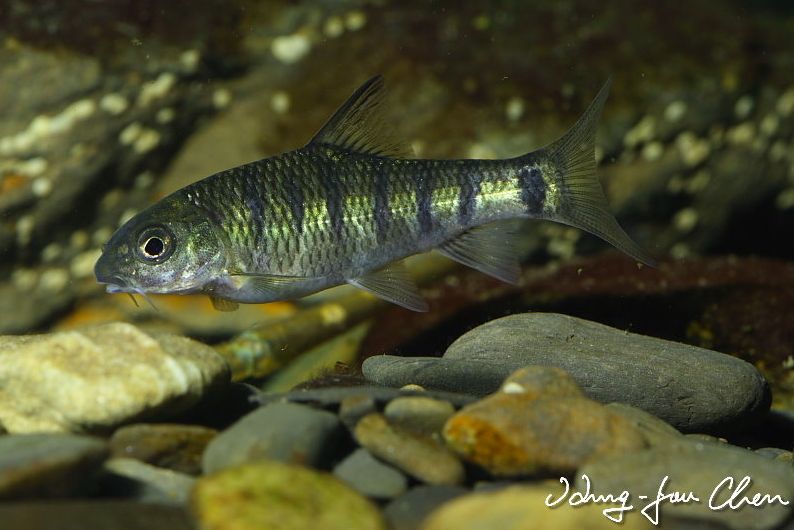
Acrossocheilus paradoxusTaiwan Banded Barb
Günther, 1868
Max length200mm SL8in SLTank180 × 45cm72 × 18inTemp15–25°C59–77°FpH6.0–8.0The genus Acrossocheilus is restricted to southern China, northern Vietnam and northern Laos. It can be distinguished from related genera by the following combination of characters: rostral fold present; lips fleshy and continuous around corners of mouth; lower lip with a median interruption; mouth inferior; horny sheath on lower jaw; two pairs of barbels; last simple ray of dorsal fin osseous with a serrated or smooth posterior margin.
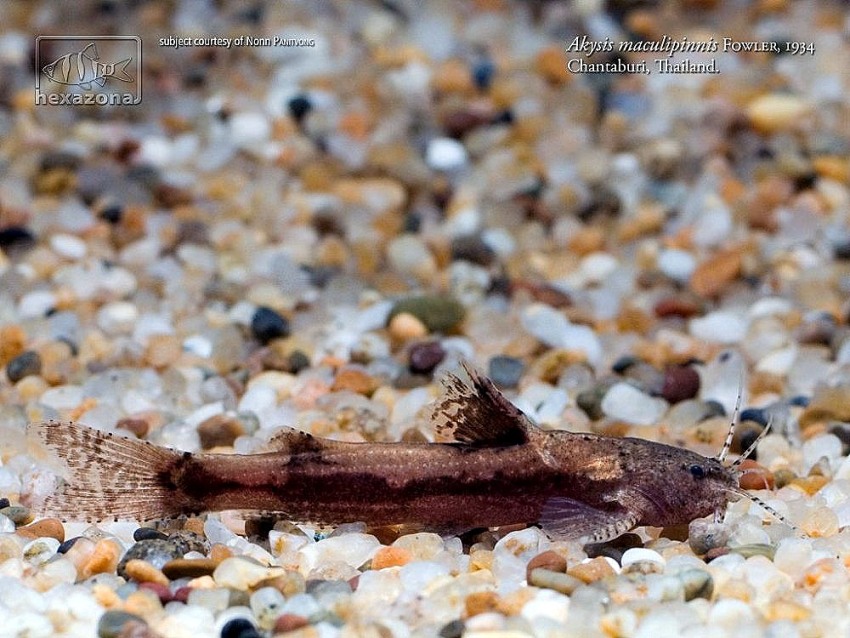
Akysis maculipinnisSpotfin Stream Catfish
Fowler, 1934
Max length35mm SL1.4in SLTank45 × 30cm18 × 12inTemp16.5–24°C62–75°FpH6.0–7.5This species has been exported for the aquarium hobby and ranks among the smaller members of the family. It can be differentiated from all other Akysis species by the following combination of characters: head length 22.0-28.6% of standard length (SL); caudal peduncle depth 8.8-10.7% of SL; anal-fin base length 15.2-19.1% of SL; eye diameter 12-16% of head length (HL); nasal barbel length 57 92% of HL; posession of 3-4 serrae on the posterior edge ofspine; body patterning mottled with indistinct ...
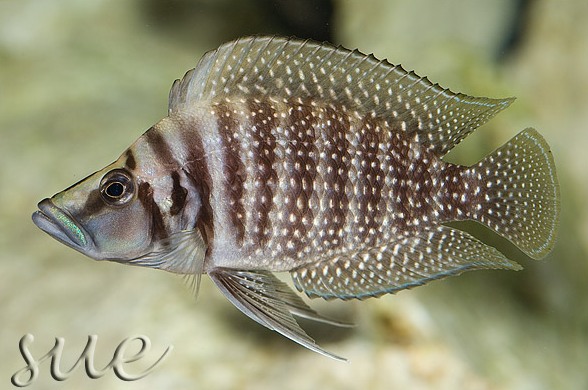
Altolamprologus calvusCalvus Cichlid
Poll, 1978
Max length138mm SL5in SLTanknot recordedTemp24–27°C75–81°FpH7.5–9.0A. calvus is a predator by nature and its body shape has been adapted to allow it to enter small crevices and gaps in the rockwork of Lake Tanganyika to prey on eggs, fry and small fish. Its laterally compressed shape makes the fish hard to spot head on, giving it an advantage over would be predators and prey alike. It is also quite well-armoured, possessing thick scales which can be turned towards potential attackers. These can cause real damage with their serrated edges. Several colour form...