Results for “spawning substrate”
Type a name: scientific, common, or one a species used to go by. Or narrow the catalogue with the filters.
Filters
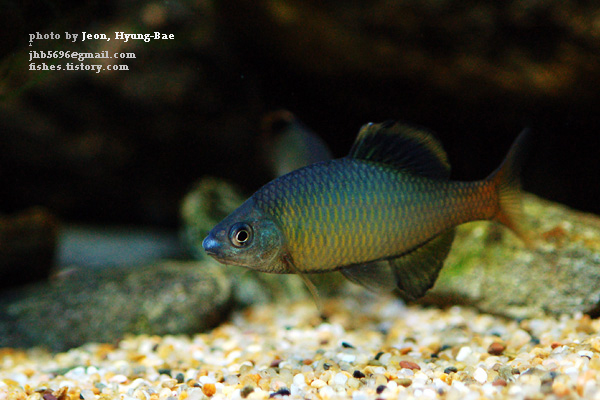
Tanakia signiferKorean Bitterling
Berg, 1907
Max length75mm SL3.0in SLTanknot recordedTempnot recordedpHnot recordedBitterlings (see 'Notes') exhibit an unusual spawning symbiosis in which the interlamellar spaces of the paired inner and outer gills of living unionid mussels are used as a spawning substrate. During the reproductive period females develop a long ovipositor which is used to deposit eggs through the mussel’s exhalant siphon. Males then move in to males release milt...
Lamprologus callipterus
authority not recorded
Max length150mm SL6in SLTank90 × 30cm36 × 12inTemp24–27°C75–81°FpH7.5–9.0In nature, the spawning nests of large male fish may measure several meters across and contain hundreds of snail shells. Interestingly, when they are protecting brooding females males do not eat and eventually become so weak that their territories are taken over by stronger fish. Immature and sub-dominant males can be seen over areas of open substrate where they feed voraciously in large shoals. Females are only ever found in areas containing the nests of dominant males. It appears that the ...