Results for “speciose”
Type a name: scientific, common, or one a species used to go by. Or narrow the catalogue with the filters.
Filters
Lamprologus speciosus
authority not recorded
Max length65mm SL2.6in SLTanknot recordedTemp23–27°C73–81°FpH7.5–9.0This species is very similar to L. ocellatus and often carries the trade name "black ocellatus". It is found living alongside L. stappersi in nature....
Sewellia speciosa
Roberts, 1998
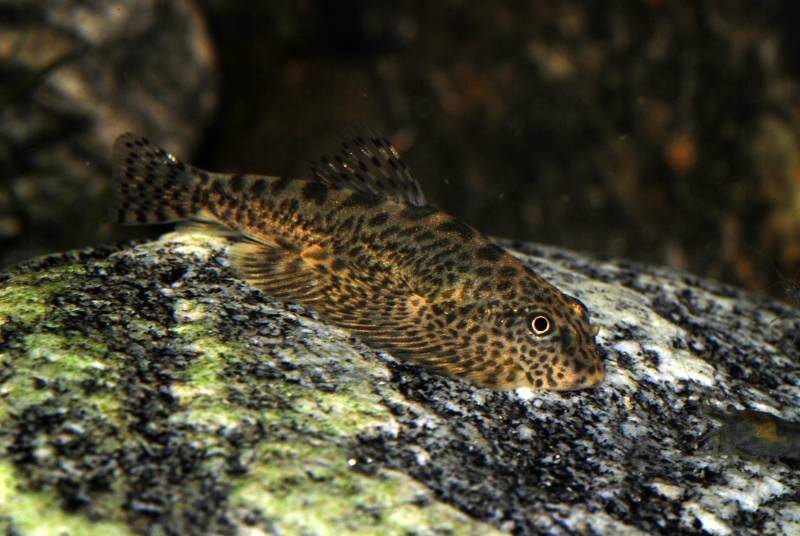
Max length55mm SL2.2in SLTank75 × 30cm30 × 12inTemp20–24°C68–75°FpH6.0–7.5This species first became available in early 2010 and sometimes appears on trade lists under the vernacular names 'Laos sucker' or 'Laos Sakura sucker'. It's distinguishable from other members of the genus by the following combination of characters: body spotted and without stripes; no concentric bands on paired fins; origin of pelvic-fin below origin of dorsal-fin; origin of pectoral-fin posterior to corner of mouth; pelvic fin reaching origin of anal fin; small elevated ...
Apistogramma agassiziiAgassizi's Dwarf Cichlid
Steindachner, 1875
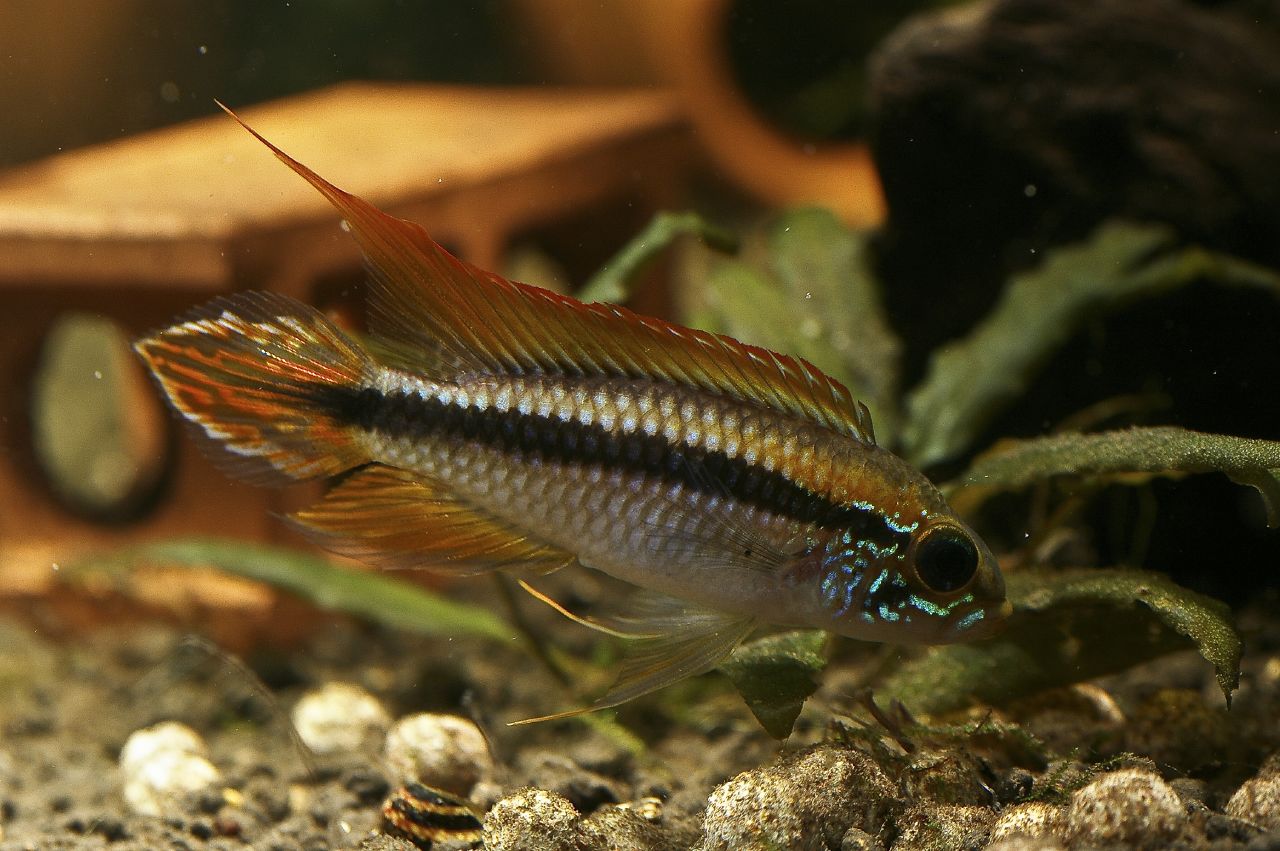
Max length♂ 75 · ♀ 50mm SL♂ 3.0 · ♀ 2.0in SLTank60 × 30cm24 × 12inTemp22–29°C72–84°FpH3.0–4.0Numerous ornamental forms of this species have been selectively-bred for the aquarium trade, some of which include. It has also been assigned the 'A' number A234 under the DATZ system with possibly conspecific, related forms similarly numbered A235, A236, A237, A238, A239, A240, A241 and A242 depending on locality. The genus Apistogramma is among the most speciose of South American cichlid genera with around 70 species valid at present but many more awaiting description. In addition ...
Apistogramma elizabethaeA208
Kullander, 1980
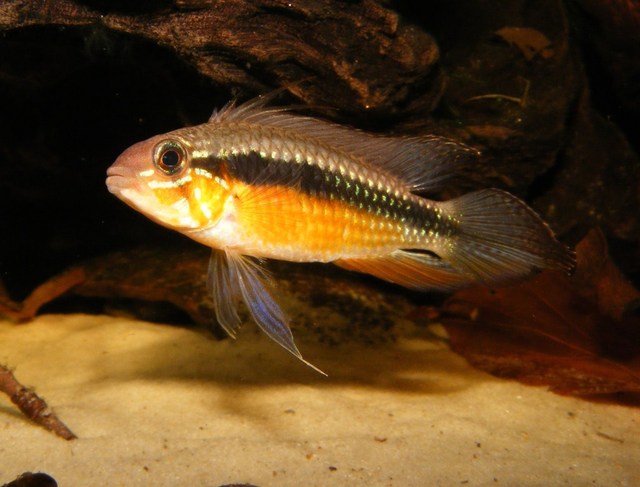
Max length50mm SL2.0in SLTank45 × 30cm18 × 12inTemp23–29°C73–84°FpH4.0–6.0The form from the rio Içana tends to have more blue markings on the head than that from the Uaupés, while a reddish population apparently collected close to the settlement of Tucana (sometimes mis-spelled 'Tucano') on the Uaupés is sometimes traded as A. elizabethae 'super red'. Apistogramma is among the most speciose of South American cichlid genera with around 70 species valid at present but many more awaiting description.
Apistogramma eunotus
Kullander, 1981
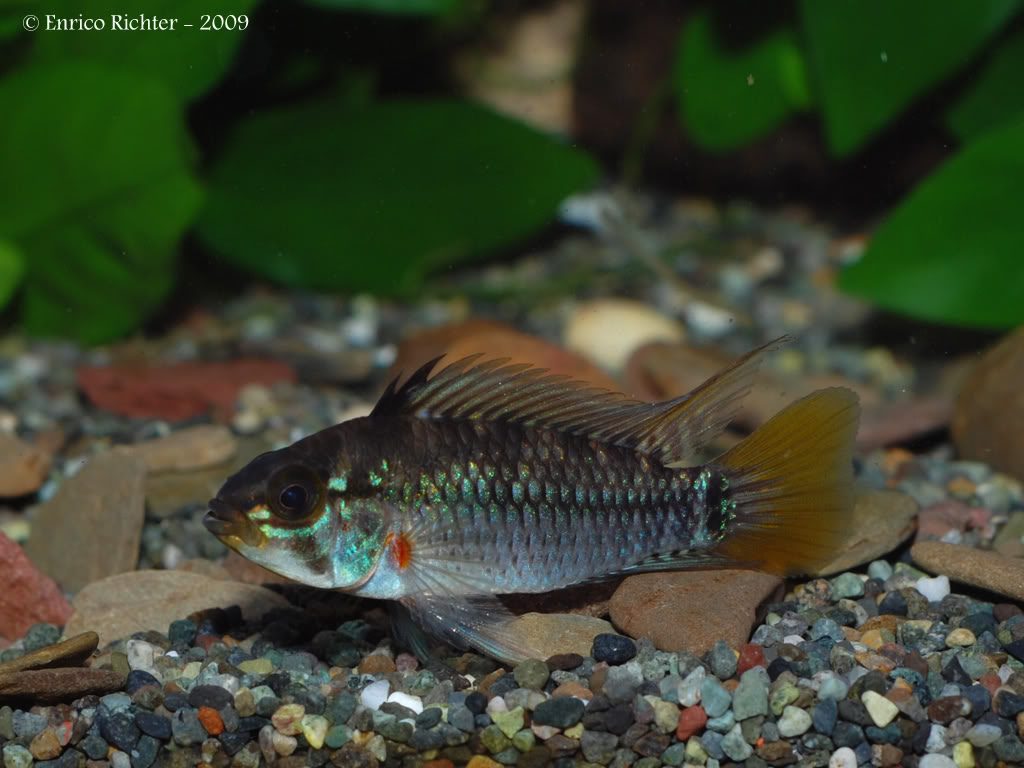
Max length♂ 55 · ♀ 40mm SL♂ 2.2 · ♀ 1.6in SLTank45 × 30cm18 × 12inTemp23–29°C73–84°FpH5.5–7.0The genus Apistogramma is among the most speciose of South American cichlid genera with around 70 species valid at present but many more awaiting description. In addition many species exist in two or more geographical colour forms which may or may not turn out to be distinct in the future. Hobbyists tend to label these with collection data if available in order to avoid mixing them and the potential of hybridisation.
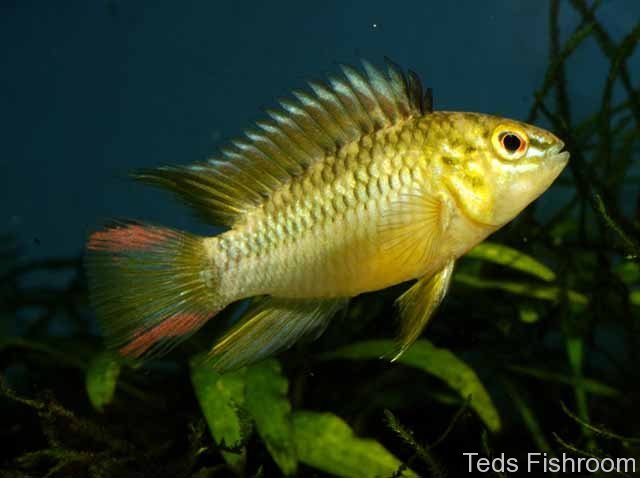
Apistogramma hoignei
Meinken, 1965
Max length60mm SL2.4in SLTank45 × 30cm18 × 12inTemp23–29°C73–84°FpH5.0–7.0The genus Apistogramma is among the most speciose of South American cichlid genera with around 70 species valid at present but many more awaiting description. In addition many species exist in two or more geographical colour forms which may or may not turn out to be distinct in the future. Hobbyists tend to label these with collection data if available in order to avoid mixing them and the potential of hybridisation. Member species have also been organised into a series of species lineages, sublineages, complexes and groups by authors in order to better separate them.
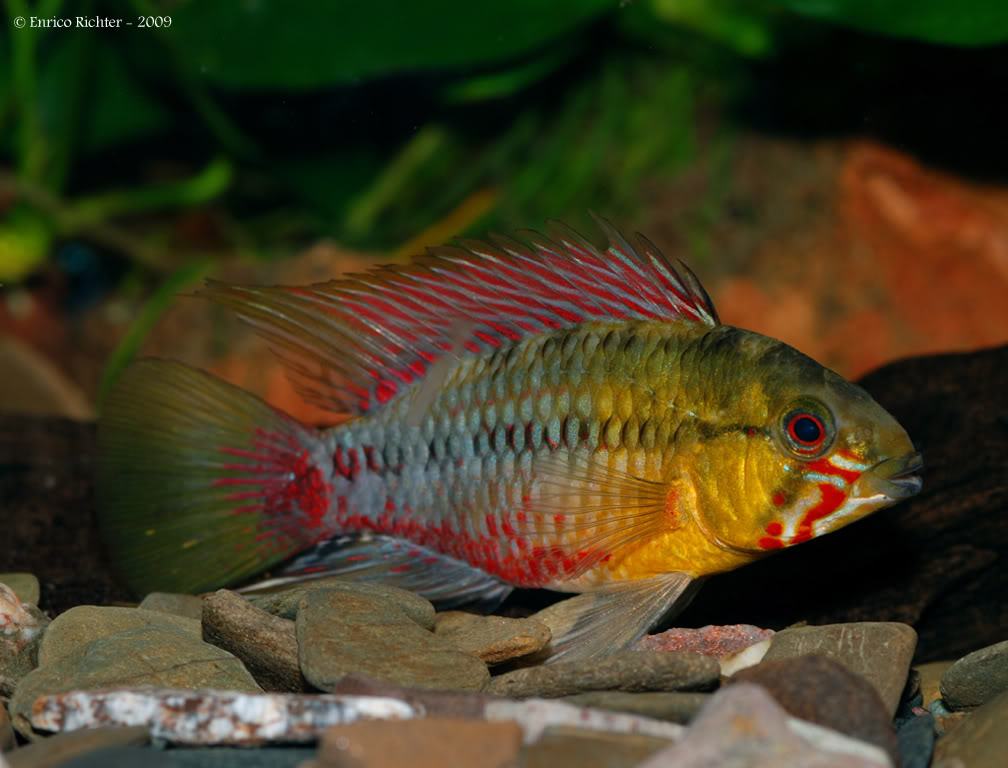
Apistogramma hongsloi
Kullander, 1979
Max length60mm SL2.4in SLTank45 × 30cm18 × 12inTemp23–29°C73–84°FpH5.5–7.0The genus Apistogramma is among the most speciose of South American cichlid genera with around 70 species valid at present but many more awaiting description. In addition many species exist in two or more geographical colour forms which may or may not turn out to be distinct in the future. Hobbyists tend to label these with collection data if available in order to avoid mixing them and the potential of hybridisation.
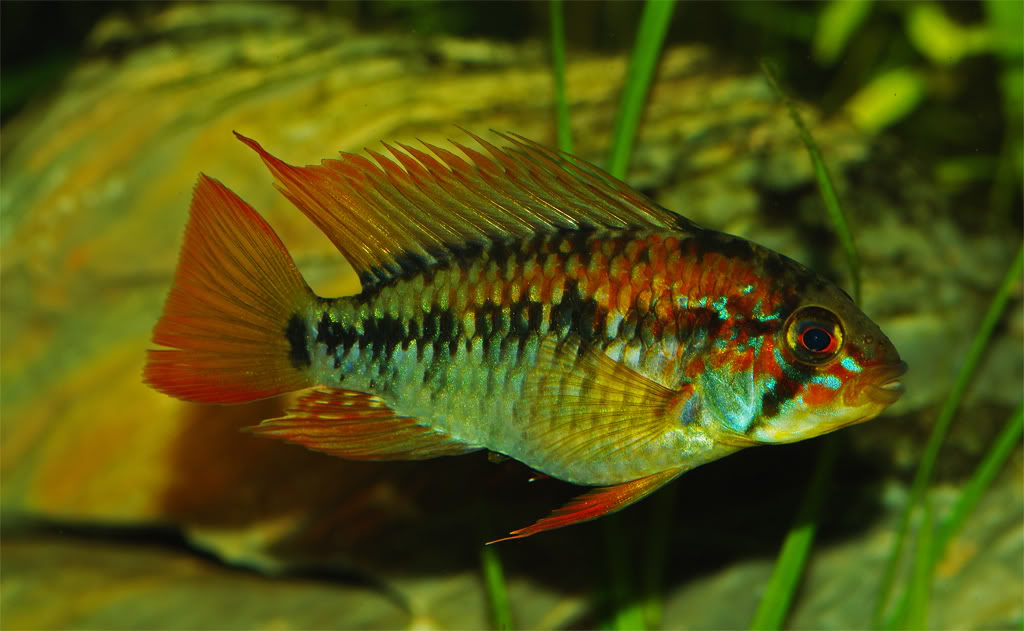
Apistogramma macmasteri
Kullander, 1979
Max length♂ 55 · ♀ 40mm SL♂ 2.2 · ♀ 1.6in SLTank45 × 30cm18 × 12inTemp24–28°C75–82°FpH5.5–7.0The genus Apistogramma is among the most speciose of South American cichlid genera with around 70 species valid at present but many more awaiting description. In addition many species exist in two or more geographical colour forms which may or may not turn out to be distinct in the future. Hobbyists tend to label these with collection data if available in order to avoid mixing them and the potential of hybridisation. Member species have also been organised into a series of species lineages, complexes and groups by authors in order to better separate them.
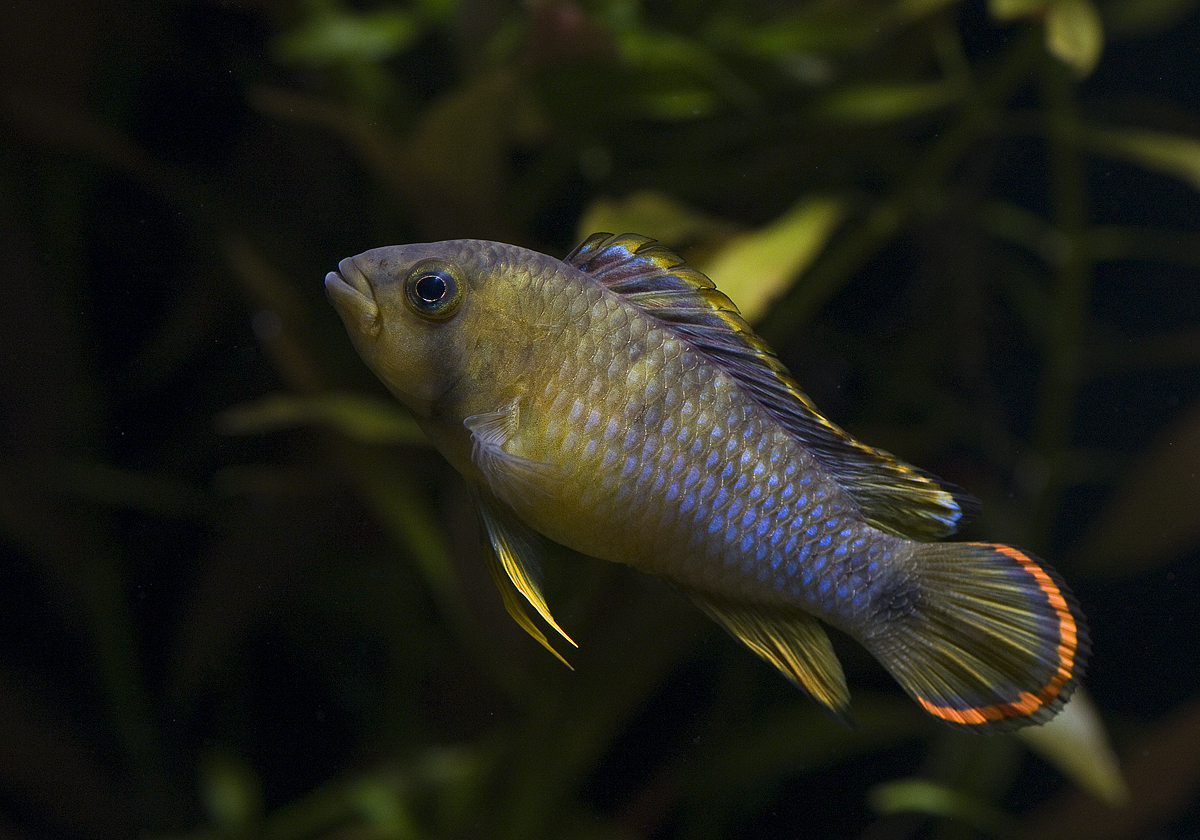
Apistogramma nijsseni
Kullander, 1979
Max length♂ 85 · ♀ 70mm SL♂ 3.3 · ♀ 2.8in SLTank60 × 30cm24 × 12inTemp24–28°C75–82°FpH5.0–6.5The genus Apistogramma is among the most speciose of South American cichlid genera with around 70 species valid at present but many more awaiting description. In addition many species exist in two or more geographical colour forms which may or may not turn out to be distinct in the future. Hobbyists tend to label these with collection data if available in order to avoid mixing them and the potential of hybridisation. Member species have also been organised into a series of species lineages, complexes and groups by authors in order to better separate them. Such lists have been augmented by fish that have appeared in the aquarium trade and are in a state of near-constant flux
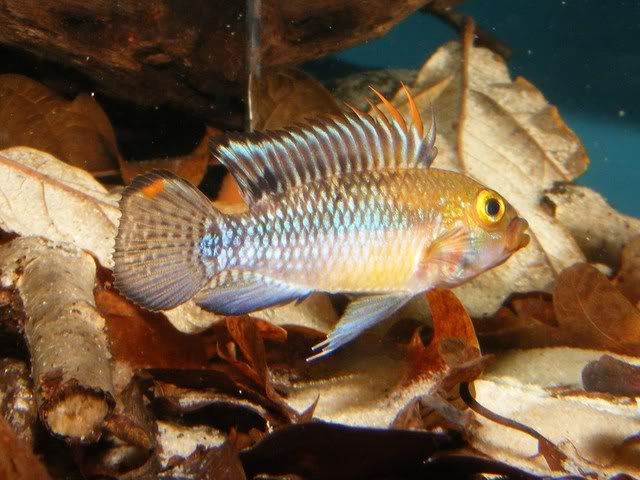
Apistogramma norberti
Staeck, 1991
Max length♂ 60 · ♀ 40mm SL♂ 2.4 · ♀ 1.6in SLTank45 × 30cm18 × 12inTemp24–28°C75–82°FpH4.5–6.5Prior to decription this species was known as A. sp. 'großmaul' or 'bigmouth', and it has also been assigned the code A190 under the DATZ system. The genus Apistogramma is among the most speciose of South American cichlid genera with around 70 species valid at present but many more awaiting description. In addition many species exist in two or more geographical colour forms which may or may not turn out to be distinct in the future. Hobbyists tend to label these with collection data if available in order to avoid mixing them and the potential of hybridisation.
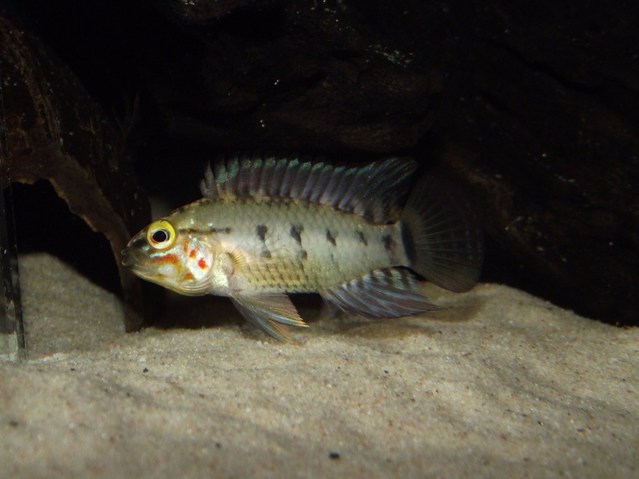
Apistogramma paulmuelleriA52
Römer, Beninde, Duponchelle, García Dávila, Vela Díaz & Renno, 2013
Max length♂ 42 · ♀ 33mm SL♂ 1.7 · ♀ 1.3in SLTank45 × 30cm18 × 12inTemp22–31°C72–88°FpH4.0–6.5This species is assigned the code A52 under the DATZ 'A' number system and is also known by the trade names A. sp. 'Apache', A. sp. 'Peru (II)', A. sp. 'Peru-regani', A. sp. cf. regani (Belém) and A. sp. 'carapintada'. Apistogramma is among the most speciose of South American cichlid genera with around 70 species valid at present but many more awaiting description. In addition many species exist in two or more geographical colour forms which may or ma...
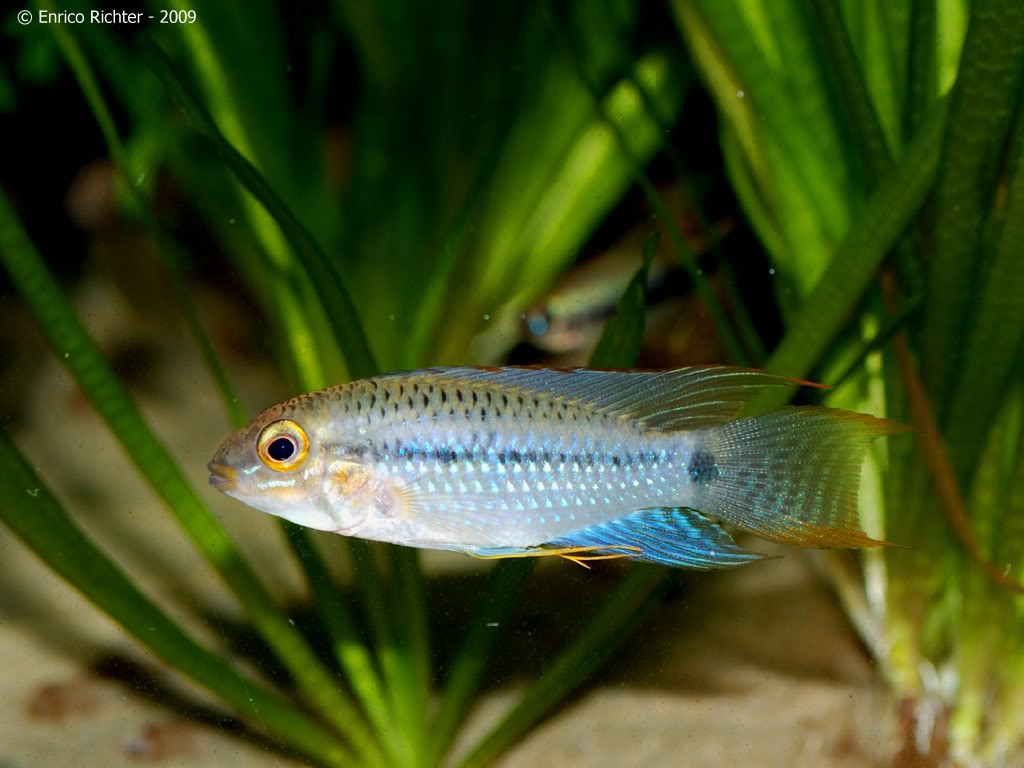
Apistogramma steindachneriSteindachner's Apisto
Regan, 1908
Max length♂ 80 · ♀ 50mm SL♂ 3.1 · ♀ 2.0in SLTank90 × 30cm36 × 12inTemp20–25°C68–77°FpH4.0–7.5This species is assigned the code A138 under the DATZ system, with the Venezuelan variant referred to as A139 for easy reference. The genus Apistogramma is among the most speciose of South American cichlid genera with around 70 species valid at present but many more awaiting description. In addition many species exist in two or more geographical colour forms which may or may not turn out to be distinct in the future. Hobbyists tend to label these with collection dat...
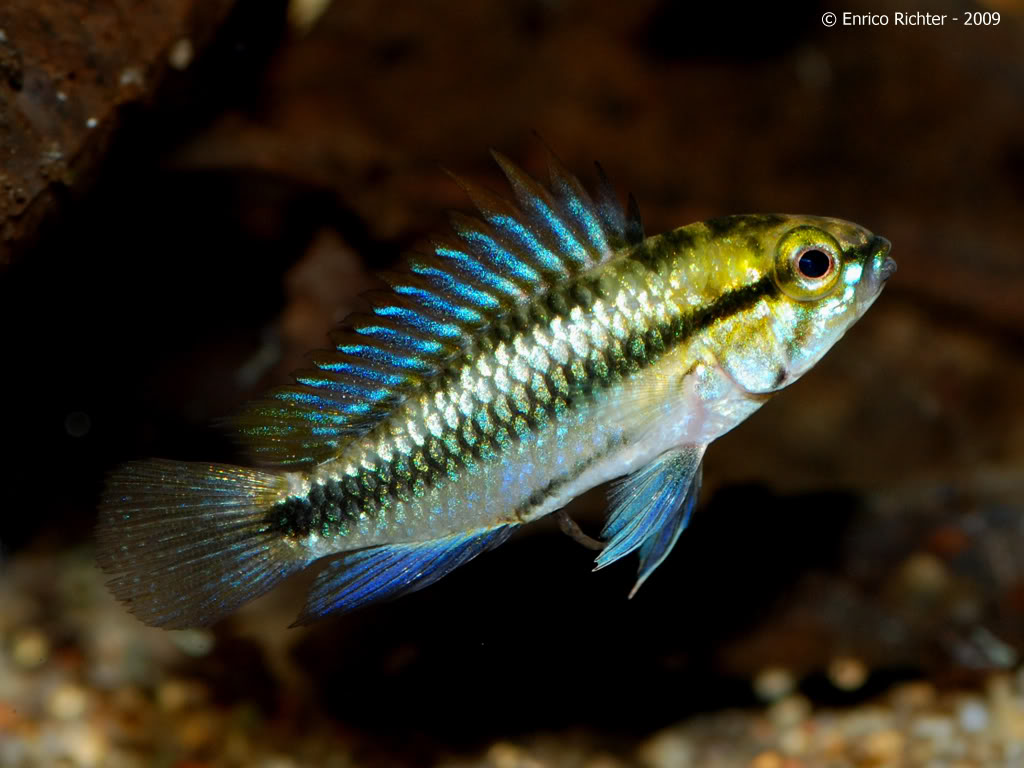
Apistogramma trifasciataThree-striped Apisto
Eigenmann & Kennedy, 1903
Max length♂ 55 · ♀ 40mm SL♂ 2.2 · ♀ 1.6in SLTank45 × 30cm18 × 12inTemp20–25°C68–77°FpH5.0–7.0This species is assigned the 'A' number A204 under the DATZ system with possibly conspecific, related forms coded A205 or A206 depending on collection locality and representing populations from Argentina and the rio Guaporé, respectively. The genus Apistogramma is among the most speciose of South American cichlid genera with around 70 species valid at present but many more awaiting description.
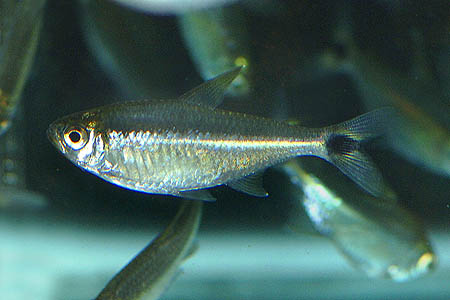
Astyanax kennedyiKennedy's Tetra
Géry, 1964
Max length50mm SL2.0in SLTank80 × 30cm31 × 12inTemp26–29°C79–84°FpH5.5–7.0Endemic to pthe upper Amazon basin in Peru, around the city of Iquitos. Most Astyanax spp. are not popular in the aquarium hobby, though the genus is among the most speciose within the family Characidae. A. kennedyi is no exception; you'll rarely see it offered for sale but may find the occasional specimen mixed among other species in shipments of wild fishes from Peru.
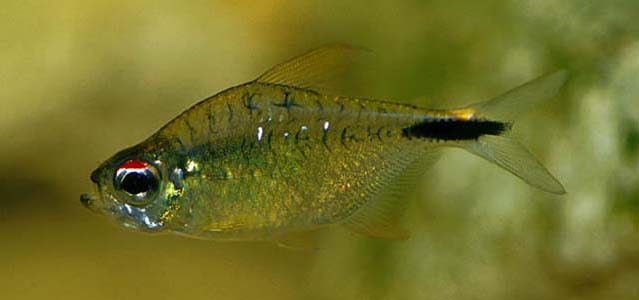
Astyanax leopoldiLeopold's Tetra
Géry, Planquette & Le Bail, 1988
Max length60mm SL2.4in SLTank60 × 30cm24 × 12inTemp23–27°C73–81°FpH5.5–7.0Most Astyanax spp. are not popular in the aquarium hobby, though the genus is among the most speciose within the family Characidae. A. leopoldi is no exception in that you'll rarely see it offered for sale but may find the occasional specimen mixed among other species in shipments of wild fishes from Peru.
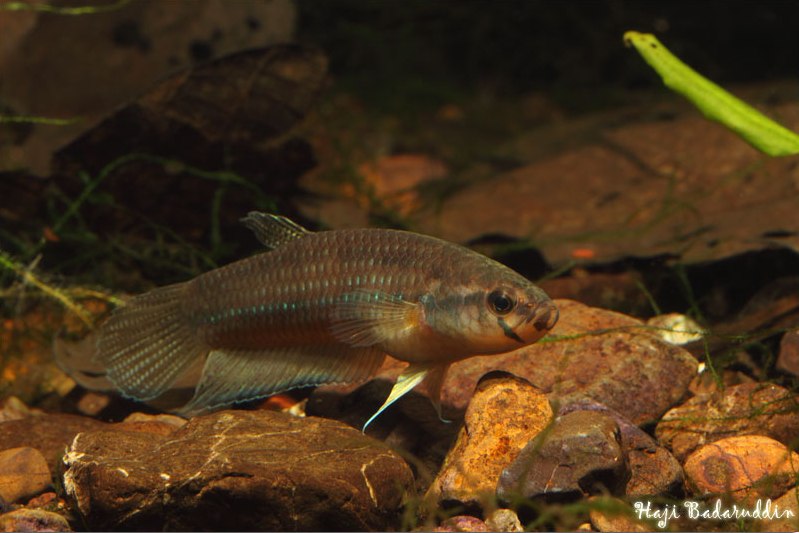
Betta antoni
Tan & Ng, 2006
Max length50mm SL2.0in SLTank60 × 30cm24 × 12inTemp22–27°C72–81°FpH5.5–7.0The genus Betta is the most speciose within the family Osphronemidae with almost 70 recognised members and looks set to grow further with new ones continuing to be described on a regular basis since the turn of the century. Member species have successfully adapted to inhabit a variety of ecological niches from stagnant ditches to flowing hill streams including some extreme environments such as highly acidic peat swamp forests.
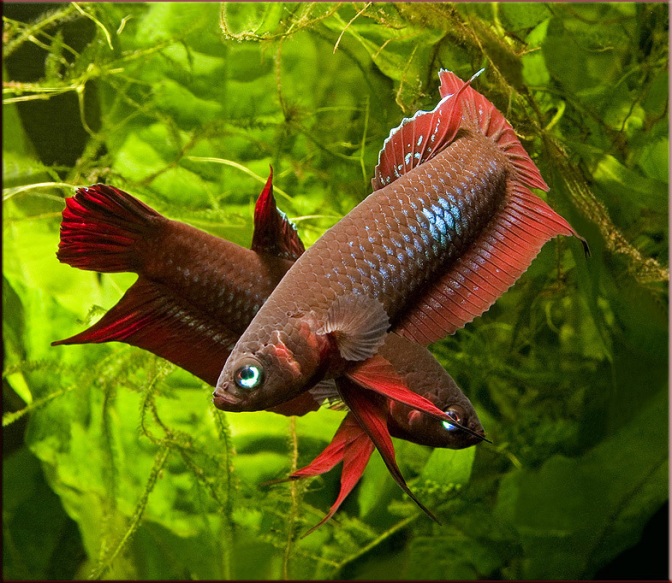
Betta coccinaScarlet Betta
Vierke, 1979
Max length40mm SL1.6in SLTank45 × 30cm18 × 12inTemp22–30°C72–86°FpH4.0–6.0B. coccina can be told apart from other members by the following combination of characters: iridescent green lateral blotch present in male, absent in female; body dark red in colour; no parallel vertical iridescent gold opercle bars; pelvic fin falcate with black filamentous tip, remainder red; median fins with discrete iridescent green spots; dorsal fin-rays 9-12; anal-fin rays 27-29; subdorsal scales 7-8; lateral scales 31-32; predorsal scales 18-21. The genus Betta is the most speciose within the family Osphronemidae with almost 70 reco...
Corydoras geryi
authority not recorded
Max length70mm SL2.8in SLTank60 × 38cm24 × 15inTemp22–26°C72–79°FpH6.0–7.2There are currently over 180 described species of Corydoras (commonly shortened to "cory"), making it one of the most speciose of all South American fish genera. There are also loads of undescribed species, many of which have been assigned a "C number" for identification purposes. This is a very simple system of numbering and is similar to the L number scheme used to identify undescribed Loricariids. Both systems were implemented by the German aquarium magazine DATZ (Die Aqua...
Corydoras leucomelasBlackfin Cory
Eigenmann & Allen, 1942
Max length55mm SL2.2in SLTank90 × 30cm36 × 12inTemp22–26°C72–79°FpHnot recordedThere are currently over 180 described species of Corydoras (commonly shortened to "cory"), making it one of the most speciose of all South American fish genera. There are also loads of undescribed species, many of which have been assigned a "C number" for identification purposes. This is a very simple system of numbering and is similar to the L number scheme used to identify undescribed Loricariids. Both systems were implemented by the German aquarium magazine DATZ (Die Aqua...
Corydoras loretoensis
authority not recorded
Max length50mm SL2.0in SLTank45 × 38cm18 × 15inTemp22–25°C72–77°FpH6.0–7.2There are currently over 180 described species of Corydoras (commonly shortened to "cory"), making it one of the most speciose of all South American fish genera. There are also loads of undescribed species, many of which have been assigned a "C number" for identification purposes. This is a very simple system of numbering and is similar to the L number scheme used to identify undescribed Loricariids. Both systems were implemented by the German aquarium magazine DATZ (Die Aqua...