Results for “swamp”
Type a name: scientific, common, or one a species used to go by. Or narrow the catalogue with the filters.
Filters
Monopterus albusSwamp Eel
authority not recorded
Matched on the common name Swamp Eel
Max length1000mm SL39in SLTank180 × 60cm72 × 24inTemp25–28°C77–82°FpH6.0–8.0An incredibly hardy species, M. albus has the ability to travel over land for short distances if kept moist and as mentioned above, often burrows into moist earth (sometimes up to a depth of 1.5 metres!) in order to survive dry conditions. It has only a single gill slit, located on the bottom of the throat, that allows it to trap air in its specially adapted gills. These contain an accessory breathing organ, which takes the form of a pair of lung-like sacs at the rear of the gill chamber. In thi...
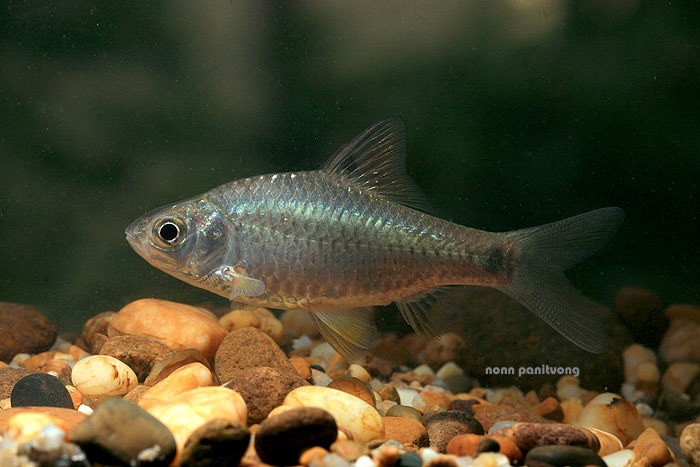
Puntius cholaSwamp Barb
Hamilton, 1822
Matched on the common name Swamp Barb
Max length130mm SL5in SLTank120 × 45cm48 × 18inTemp18–26°C64–79°FpH5.5–8.0P. chola was retained in Puntius sensu stricto, of which members are defined by the following combination of characters: adult size usually less than 120 mm SL; maxillary barbels absent or present; rostral barbels absent; 3-4 unbranched and 8 branched dorsal-fin rays; 3 unbranched and 5 branched anal-fin rays; last unbranched dorsal-fin ray weak or strong and unserrated; lateral line complete with 22-28 pored body scales...
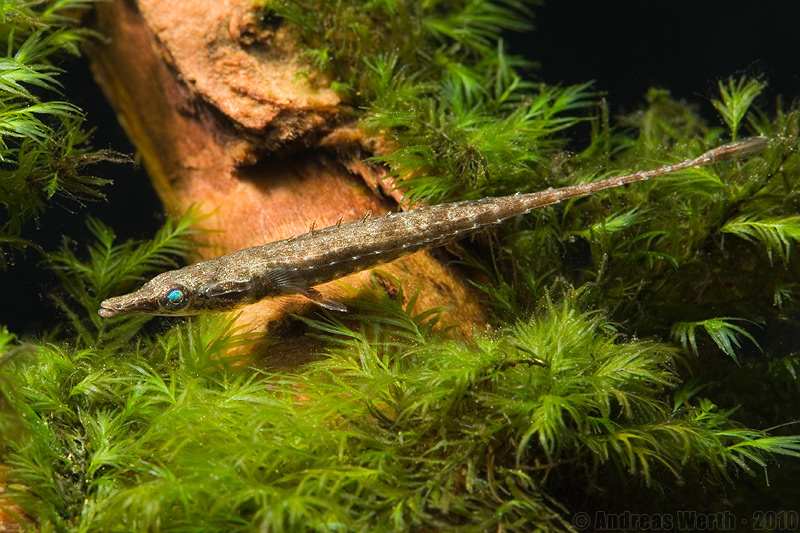
Indostomus crocodilus
Britz & Kottelat, 1999
Max length30mm SL1.2in SLTank40 × 20cm16 × 8inTemp22–27°C72–81°FpH5.0–7.0The type series was collected from a blackwater stream in Toh Daeng Peat swamp forest with the fish found in slow-moving or standing habitats among submerged shoreline roots and leaf litter. In the Tapi River floodplain it was collected from stagnant waters, one of which was an oxbow lake approximately 200 m long and 30 m across at its widest point, surrounded by 'freshwater scrub and swamp trees'. The substrate was composed of mud, woody structures including fallen twigs and branches, and decomposing plant material.
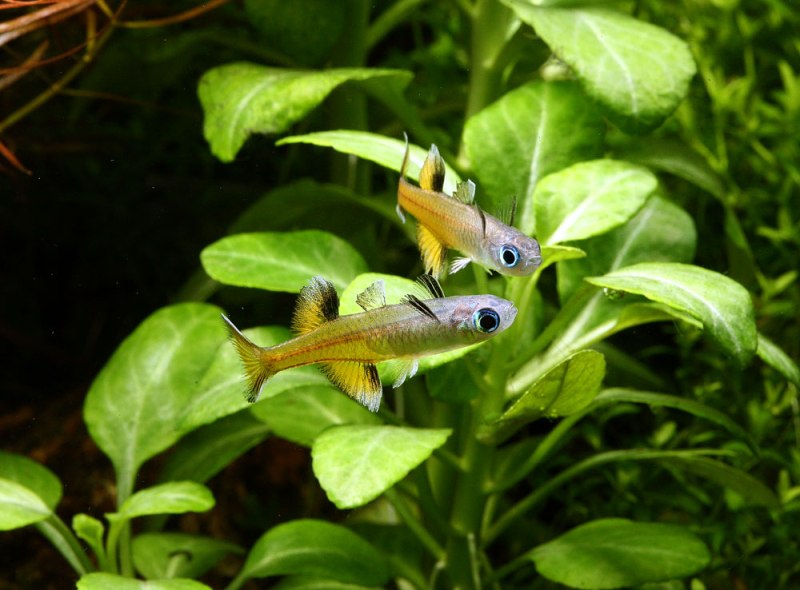
Pseudomugil signiferPacific Blue-eye
Kner, 1866
Max length70mm SL2.8in SLTank60 × 30cm24 × 12inTemp20–26°C68–79°FpH6.5–7.5Generally found within 15-20 km of the sea but habitat-type is extremely variable. It's been recorded in full marine conditions as well as pure freshwater environments, and commonly inhabits coastal mangrove creeks, swamps, and salt marshes. Freshwater habitats tend to comprise lowland swamps or forest streams with clear water but some populations inhabit acidic, tannin-stained, black waters. It's also abundant in the artificial canals typical of residential zones in the Gold Coast, southern Queensland.
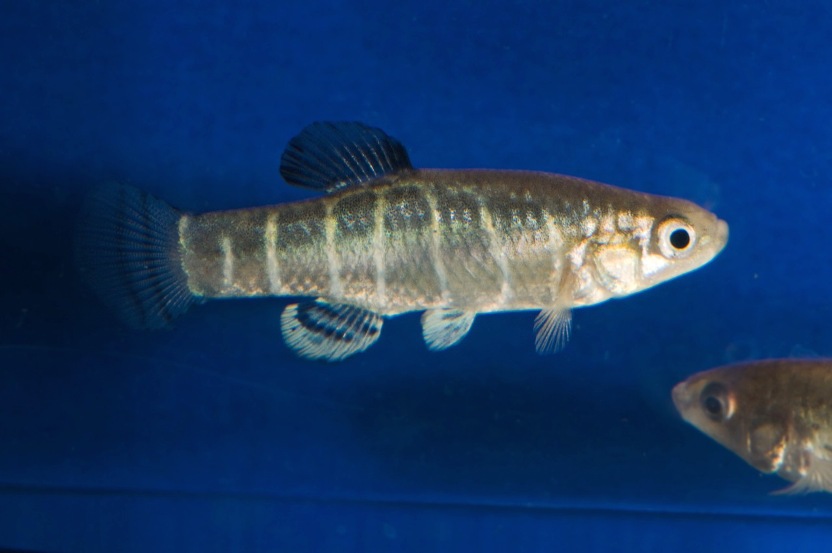
Anatolichthys danfordiiDanford's Toothcarp
Boulenger, 1890
Max length50mm SL2.0in SLTank120 × 30cm48 × 12inTemp10–30°C50–86°FpH7.0–8.5This species has something of a confused history having been previously been considered synonymous with both A. sophiae and A. fasciatus. Another species, A. chantrei is still listed as valid by some sources but is now known to be a junior synonym of A. danfordii. This became clear during a 1999 study in which the type specimens of A. danfordii were found to be indistinguishable from the Aphanius population living in the Sultan Swamps, the type locality of A. chantrei. You're unlikely t...
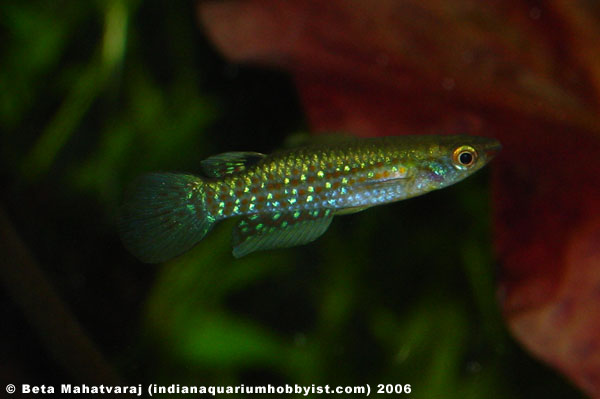
Aplocheilus blockiiGreen Panchax
Arnold, 1911
Max length45mm SL1.8in SLTank45 × 30cm18 × 12inTemp20–28°C68–82°FpH6.0–8.5This species is euryhaline and mostly inhabits lowland, often coastal, habitats containing still or slow-moving brackish or freshwater. It displays a preference for habitats with surface vegetation or overhanging cover and is commonly found in mangrove swamps and rice paddies.
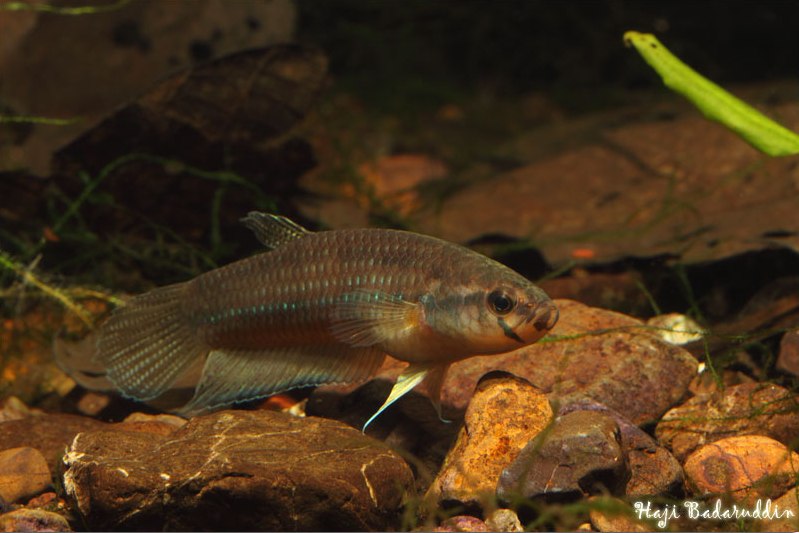
Betta antoni
Tan & Ng, 2006
Max length50mm SL2.0in SLTank60 × 30cm24 × 12inTemp22–27°C72–81°FpH5.5–7.0The genus Betta is the most speciose within the family Osphronemidae with almost 70 recognised members and looks set to grow further with new ones continuing to be described on a regular basis since the turn of the century. Member species have successfully adapted to inhabit a variety of ecological niches from stagnant ditches to flowing hill streams including some extreme environments such as highly acidic peat swamp forests.
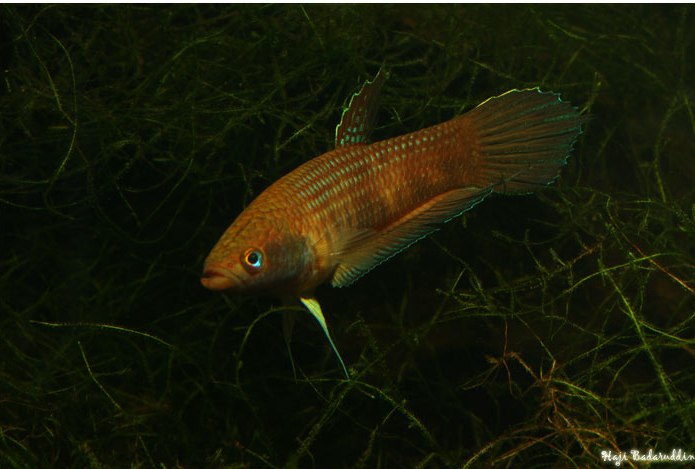
Betta cracens
Tan & Ng, 2005
Max length60mm SL2.4in SLTank80 × 30cm31 × 12inTemp22–27°C72–81°FpH5.5–6.5The type locality is a stream in a forest swamp with dense growth of Barclaya motleyi at intervals, part of which had been turned over to cultivation of rubber trees in 1997. The water depth varied between 5-80 cm, pH was 5.8 and syntopic species included 'Puntius' banksi, Rasbora einthoveni, Trigonopoma pauciperforatum, Hemirhamphodon pogonognathus, Betta pugnax, Sphaerichthys osphromenoides, Trichogaster trichopterus, Channa gachua and C. lucius.
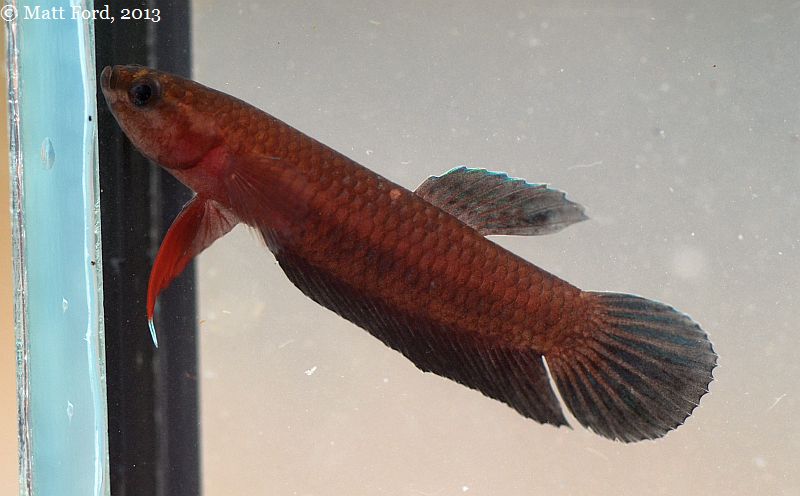
Betta miniopinna
Tan & Tan, 1994
Max length35mm SL1.4in SLTank45 × 30cm18 × 12inTemp22–28°C72–82°FpH4.0–6.0Bintan has been developed for tourism over the last decades and is heavily-promoted by Indonesia, with luxury beach resorts and golf courses increasing in number. Further deforestation has occurred in order to establish large rubber plantations in the interior of the island. B. miniopinna is now restricted to a few remaining pockets of primary peat swamp forest and has been listed as 'Critically Endangered' on the IUCN Red List of Threatened Species since 1996.
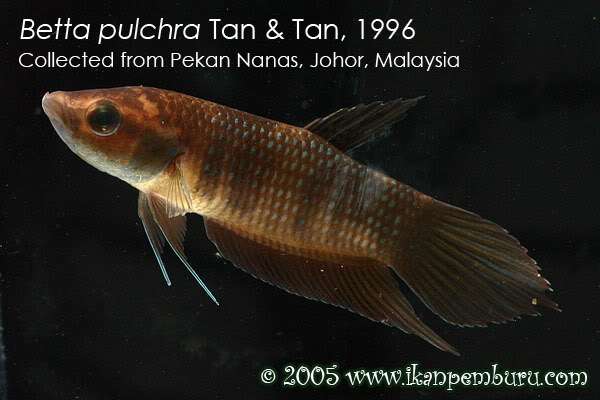
Betta pulchra
Tan & Tan, 1996
Max length60mm SL2.4in SLTank80 × 30cm31 × 12inTemp22–27°C72–81°FpH3.5–6.5Restricted to remnant blackwater habits in heavily-disturbed areas of former peat swamp forest, the original vegetation having been cleared to make space for plantations of oil pal, pineapple and rubber. It's now typically found among overhanging marginal vegetation of irrigation canals, with sympatric species including Belontia hasseltii, Betta bellica, B. imbellis, Sphaerichthys osphromenoides, Parosphromenus sp., and Trichopsis vittata. PH in its natural waters has been recorded over the range 3.9 - 4.2.
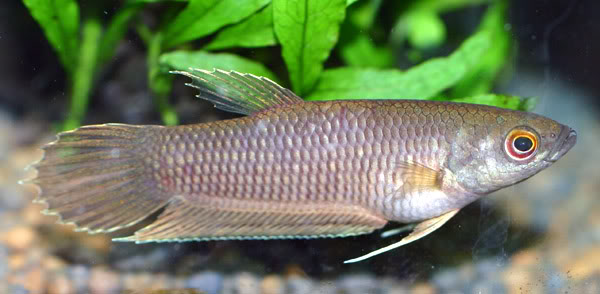
Betta spilotogena
Ng & Kottelat, 1994
Max length70mm SL2.8in SLTank80 × 30cm31 × 12inTemp22–27°C72–81°FpH4.0–6.5Inhabits freshwater swamps and associated streams, typically shaded from the sun by dense riparian vegetation. The water is normally clear or lightly stained with tannins, and the fish found in water less than a metre deep alongside related species including Betta edithae, B. miniopinna, and B. fusca. PH has been measured to range between 4.9-5.5.
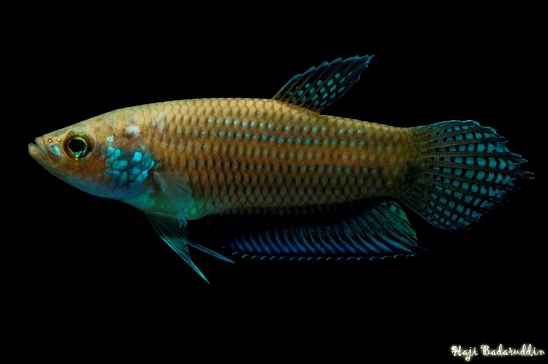
Betta stigmosa
Tan & Ng, 2005
Max length50mm SL2.0in SLTank60 × 30cm24 × 12inTemp22–28°C72–82°FpH5.0–7.0Known only forest hill streams with flowing, clear water. These are typically shaded from the sun by dense riparian vegetation. The substrate is composed of rocks or gravel, fallen leaves, branches and submerged tree roots, and presumably the fish show a preference for quieter marginal zones as with related congeners. The type locality was described as a 'swampy stream' and sympatric species incl...
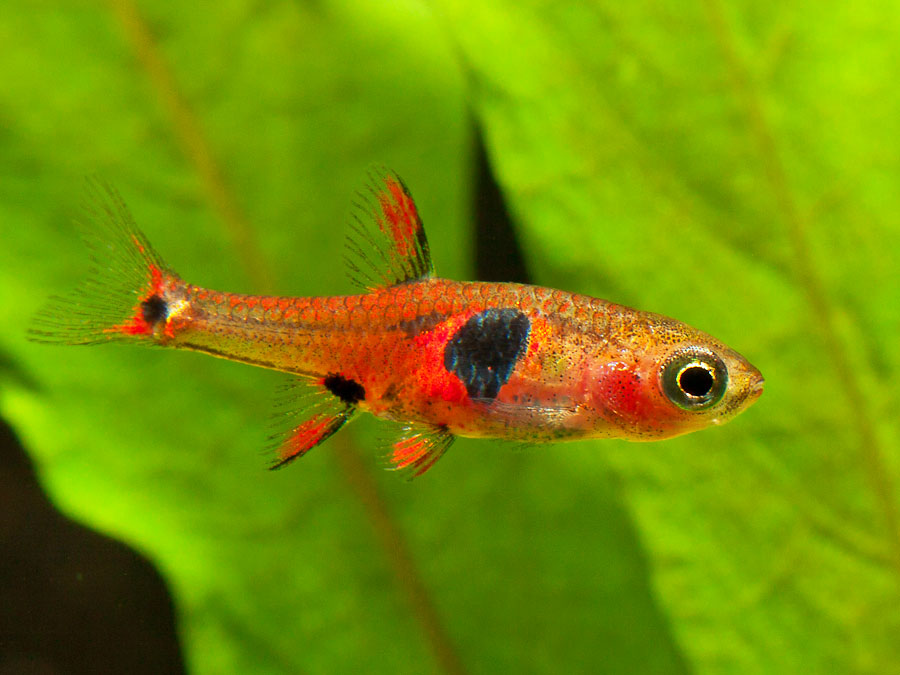
Boraras naevus
Conway & Kottelat, 2011
Max length20mm SL0.8in SLTank45 × 30cm18 × 12inTemp20–28°C68–82°FpH5.0–7.0Known only from southern (peninsular) Thailand with the type series originating from a swamp some 83 km north of Surat Thani city, Surat Thani province. It's been recorded at additional locations, all within the lower Tapi river drainage on the Gulf of Thailand slope of the Malay Peninsula. In the description Conway and Kottelat (2011) report the occurence of a similar-looking, possibly conspecific fish on the Andaman Sea side of the Peninsula, close to Trang province.
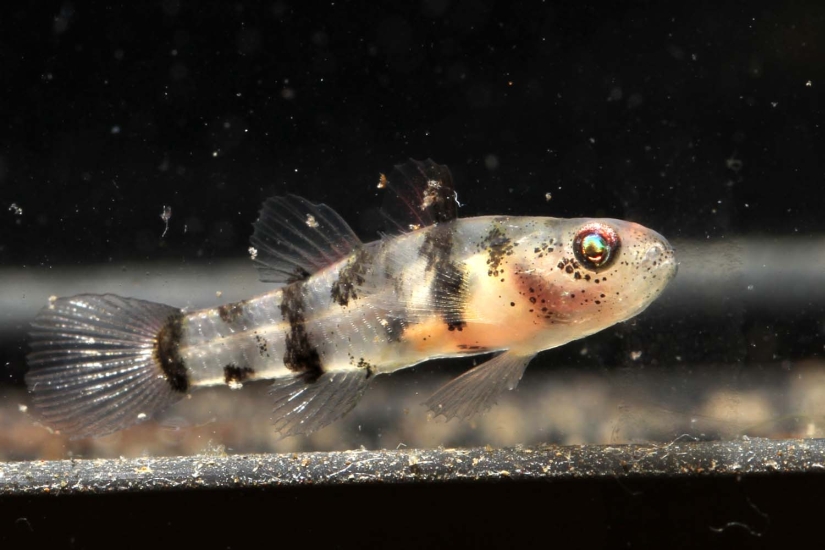
Brachygobius mekongensisMekong Bumblebee Goby
Larson & Vidthayanon, 2000
Max length18mm SL0.7in SLTank45 × 30cm18 × 12inTemp22–28°C72–82°FpH5.5–7.5Apparently restricted to slow-moving or standing freshwater habitats such as marshes, temporal swamps and floodplains where aquatic vegetation and submerged grasses proliferate. One locality consisted of undisturbed marshland with lightly tannin-stained water and dense growth of Vallisneria spp.
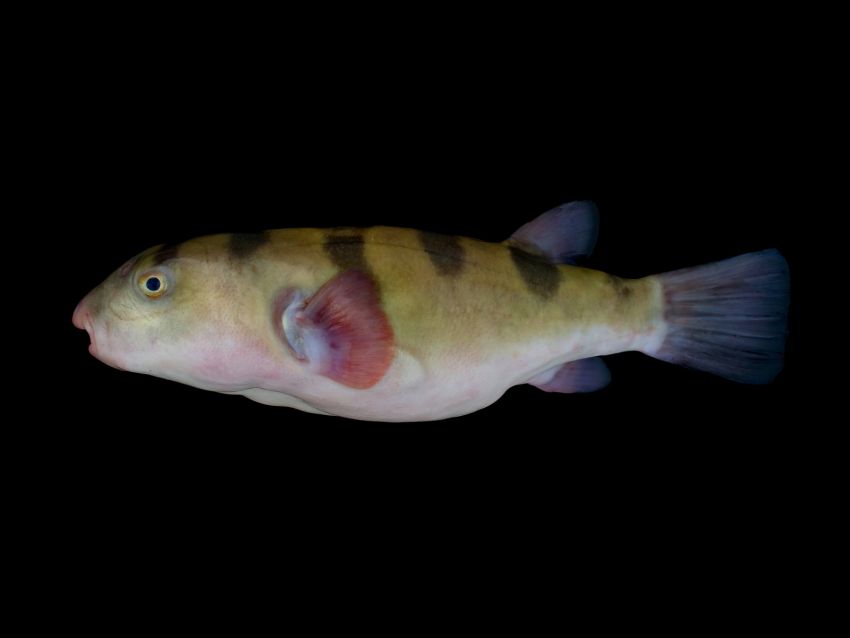
Colomesus psittacusBanded Puffer
Bloch & Schneider, 1801
Max length290mm SL11in SLTank180 × 60cm72 × 24inTemp20–26°C68–79°FpH7.0–9.0Although it does penetrate the lower basins of rivers, particularly the Amazon where it has been collected from the rio Xingu several hundred kilometres from its mouth, this species is predominantly an inhabitant of mangrove swamps, estuaries, and other such saline habitats. It is particularly common in tidal channels, shallow inshore lagoons, and the lower reaches of rivers.
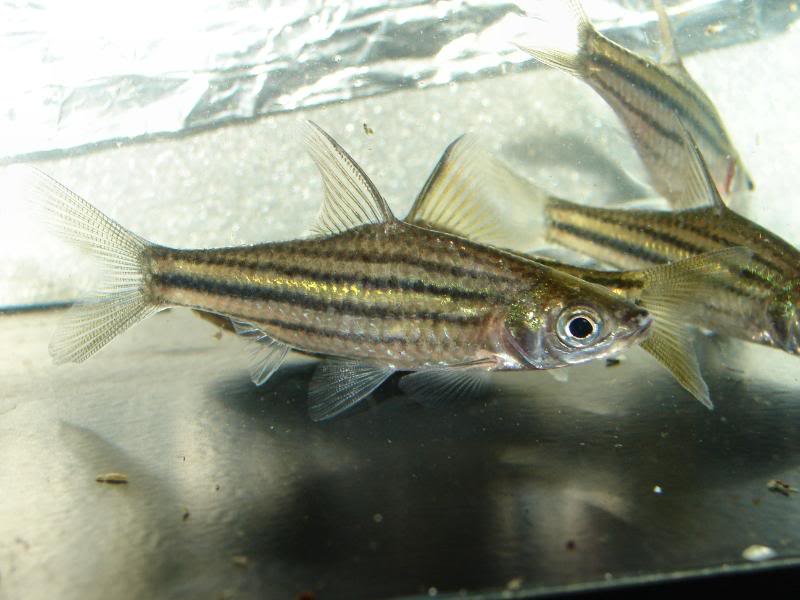
Desmopuntius gemellus
Kottelat, 1996
Max length100mm SL3.9in SLTank120 × 45cm48 × 18inTemp22–25°C72–77°FpH4.0–7.0The type series was purchased from a market in Jambi province, eastern Sumatra, Indonesia and this species is also known from neighbouring Riau province plus the island province of Bangka. On Sumatra it may be restricted to the Indragiri and Batang Hari river systems. Inhabits peat swamp forests and associated black water streams in which the water is typically stained brown with humic acids and other chemicals released by decaying organic material. The dissolved mineral content is generally negligible and the pH can be as...
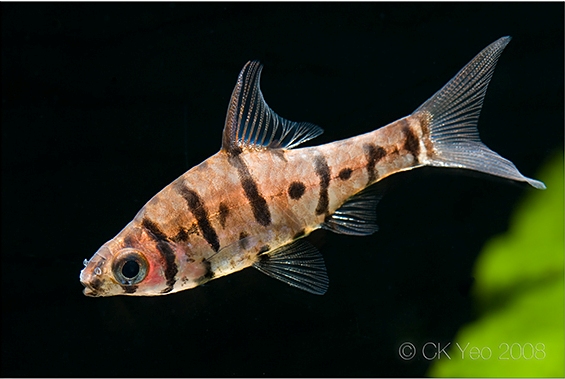
Eirmotus insignis
Tan & Kottelat, 2008
Max length36mm SL1.4in SLTank60 × 30cm24 × 12inTemp20–26°C68–79°FpH5.0–7.0Typically inhabits slow-moving, shallow, shady rainforest streams and swamps with dense submerged and marginal vegetation. The conditions are often rather turbid and the substrate composed of mud or fallen leaves, twigs and branches. Such environments characteristically contain soft, weakly acidic water and are often dimly-lit due to the rainforest canopy above. The fish are found sheltering among overhanging tree roots and aquatic vegetation.
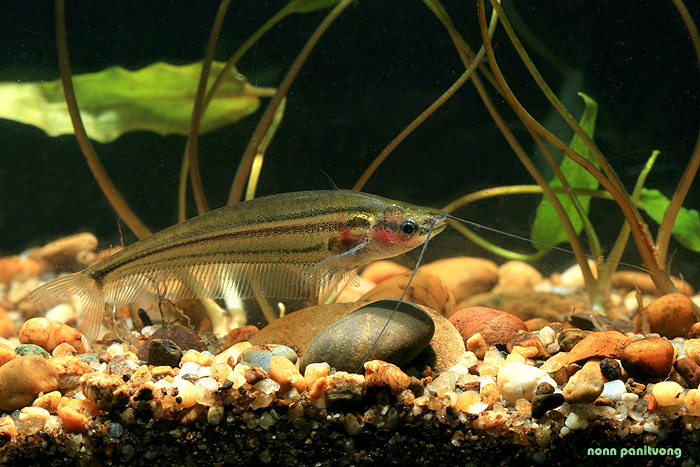
Kryptopterus macrocephalusStriped Glass Catfish
Bleeker, 1858
Max length100mm SL3.9in SLTank120 × 30cm48 × 12inTemp20–26°C68–79°FpH4.0–7.0Has been recorded in fast-flowing environments but most commonly associated with peat swamp forests and associated blackwater streams. Many such habitats have suffered degradation of some kind but in unaltered cases the dense canopy of branches above means very little light penetrates the surface of such environments, and riparian vegetation also tends to grow thickly.
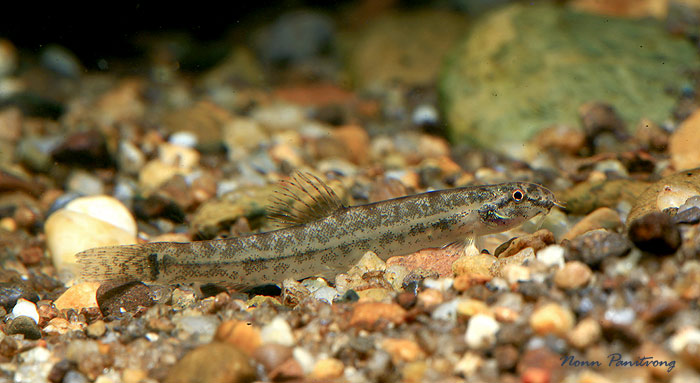
Lepidocephalichthys hasselti
Valenciennes, 1846
Max length60mm SL2.4in SLTank60 × 30cm24 × 12inTemp23–26°C73–79°FpH5.5–7.5At one locality close to Ban Na Hwai, Chiang Mai Province, Thailand L. hasselti was collected from a shallow (<0.5 m) pool in a swampy zone between forest and rice fields. The substrate was of mud, there was no aquatic vegetation and it was being used as drinking water by local animals, with the only effluent connected to a 'small creek'. Other species found there were Physoschistura pseudobrunneana, Rasbora hobelmani and Systomus cf. orphoides.
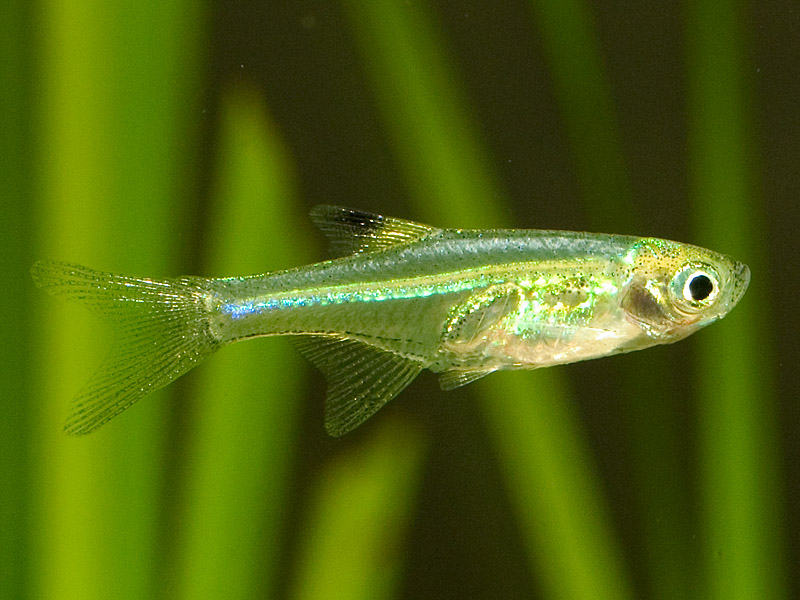
Microdevario nanus
Kottelat & Witte, 1999
Max length16mm SL0.6in SLTank45 × 30cm18 × 12inTemp20–27°C68–81°FpH6.0–7.5Towards the Andaman Sea the lower part of the delta gives way to brackish mangrove swamps. The climate is wet, with annual precipitati0n of 1500 - 2500 mm, up to 90% of which falls between mid May and mid November, and warm with average air temperatures of 22 - 37 °C over the course of the year. At one locality M. nanus was collected in less then 30cm of water from an oxbow lake among floating Pistia-like vegetation and gra...