Results for “tannin”
Type a name: scientific, common, or one a species used to go by. Or narrow the catalogue with the filters.
Filters
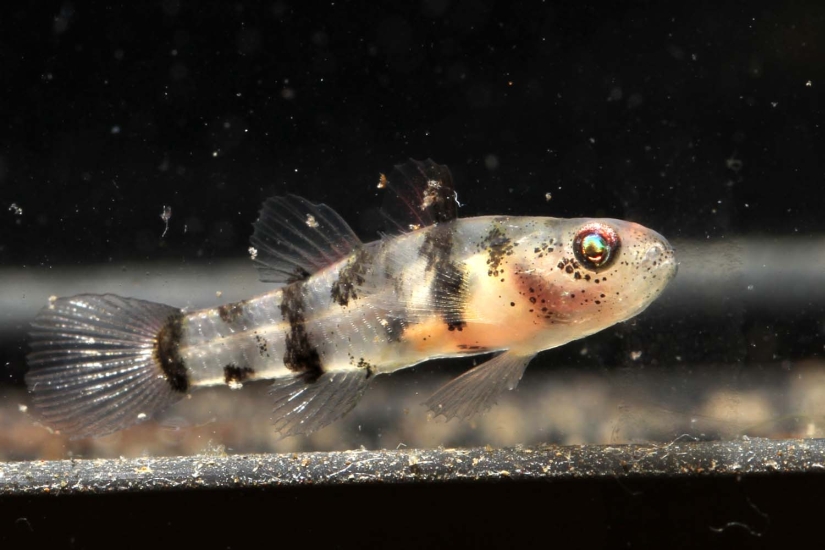
Brachygobius mekongensisMekong Bumblebee Goby
Larson & Vidthayanon, 2000
Max length18mm SL0.7in SLTank45 × 30cm18 × 12inTemp22–28°C72–82°FpH5.5–7.5Apparently restricted to slow-moving or standing freshwater habitats such as marshes, temporal swamps and floodplains where aquatic vegetation and submerged grasses proliferate. One locality consisted of undisturbed marshland with lightly tannin-stained water and dense growth of Vallisneria spp.
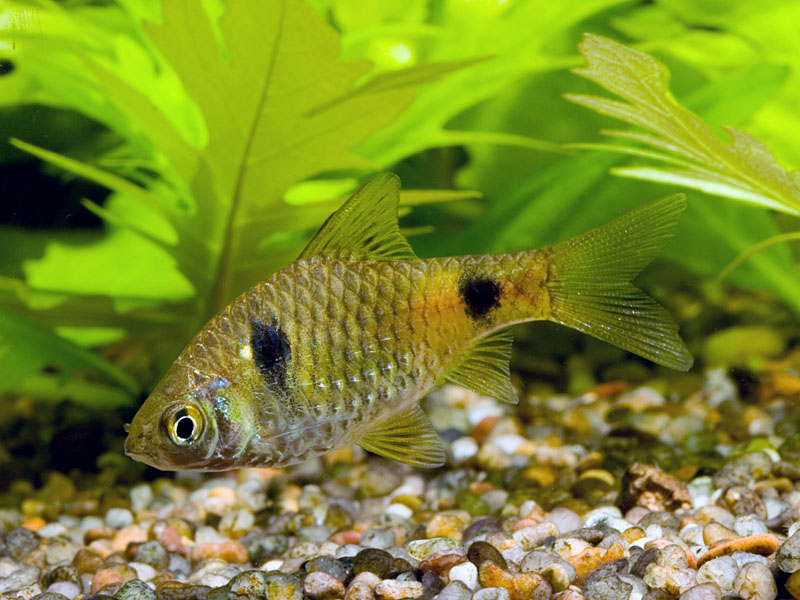
Pethia didi
Kullander & Fang, 2005
Max length41mm SL1.6in SLTank60 × 30cm24 × 12inTemp15–25°C59–77°FpH6.5–9.0The type locality is a stream with a mixed substrate of mud and stones which flows swiftly through an area of bamboo forest so is quite well-shaded. At time of collection the water was clear but slightly tannin-stained and sympatric species included Pethia thelys, Puntius sophore, Devario strigillifer, Rasbora daniconius, R. rasbora, Acanthocobitis botia, Notopterus notopterus, plus unidentified species of Oreichthys, Parambassis, Xenentodon, and Mastacembelus.
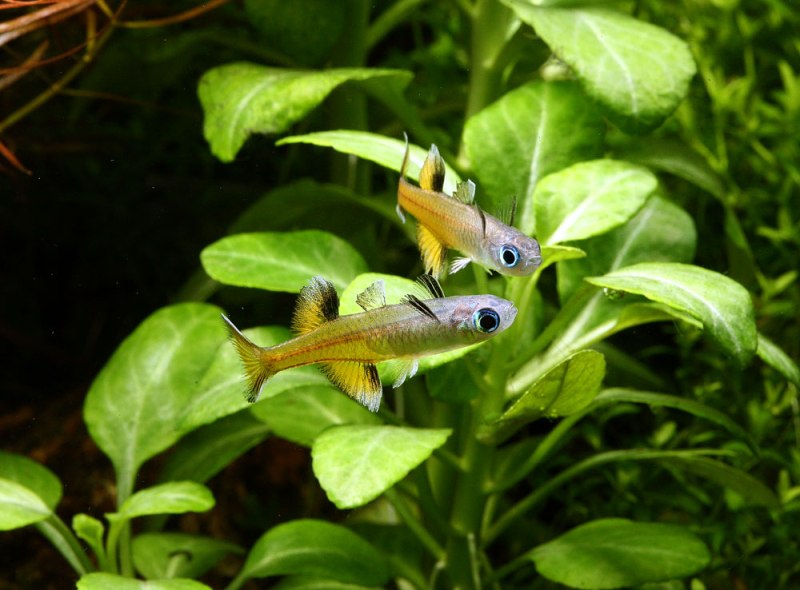
Pseudomugil signiferPacific Blue-eye
Kner, 1866
Max length70mm SL2.8in SLTank60 × 30cm24 × 12inTemp20–26°C68–79°FpH6.5–7.5Generally found within 15-20 km of the sea but habitat-type is extremely variable. It's been recorded in full marine conditions as well as pure freshwater environments, and commonly inhabits coastal mangrove creeks, swamps, and salt marshes. Freshwater habitats tend to comprise lowland swamps or forest streams with clear water but some populations inhabit acidic, tannin-stained, black waters. It's also abundant in the artificial canals typical of residential zones in the Gold Coast, southern Queensland.
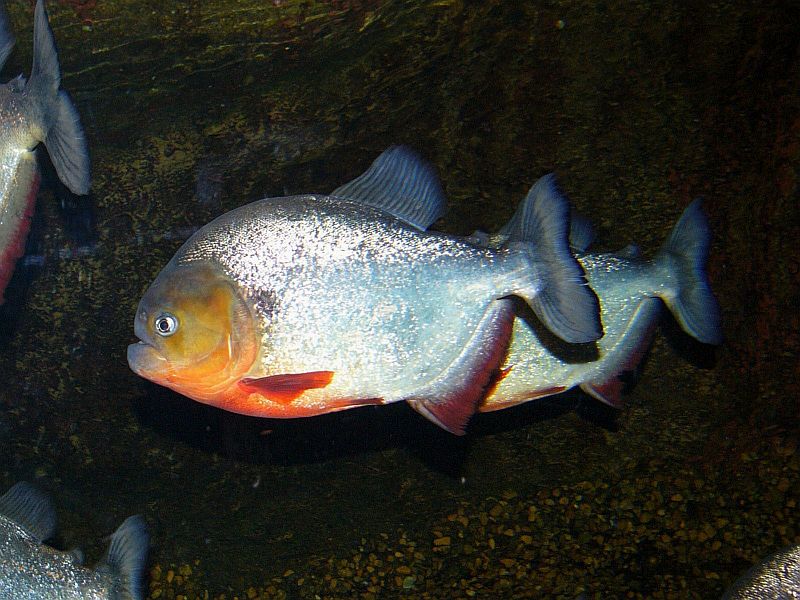
Pygocentrus caribaBlack Spot Piranha
Humboldt, 1821
Max length350mm SL14in SLTank240 × 90cm96 × 36inTemp20–28°C68–82°FpH4.0–7.0Has been recorded from major river channels, smaller tributaries, and floodplain lakes, many of which comprise acidic, mineral-poor blackwater environments with brownish, tannin-stained water, although it has been observed to inhabit clear waters as well. Many of its habitats lie within the Venezuelan and Colombian llanos, a vast, highly biodiverse system of tropical savannah grasslands, seasonally-flooded plains and forests covering an area measuring almost 600,000 square kilo...
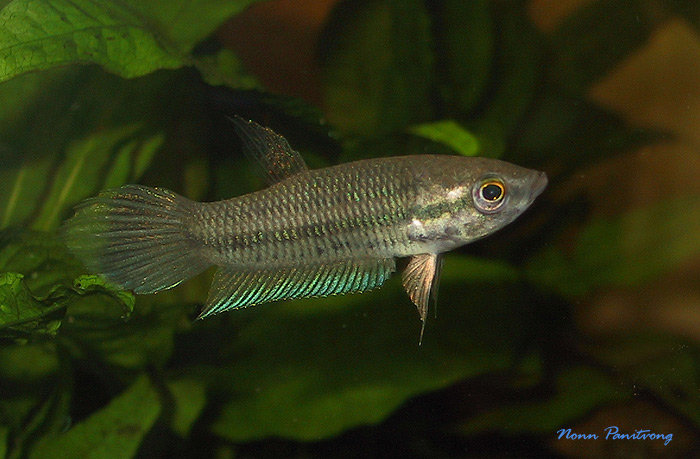
Betta pallida
Schindler & Schmidt, 2004
Max length40mm SL1.6in SLTank60 × 30cm24 × 12inTemp22–27°C72–81°FpH5.5–7.0Has been collected from a slowly-moving creek which ranged in depth from 20-50 cm. The water was clear and slightly-stained with tannins and the subtrate was covered by a layer of leaf litter. PH was 6.3, conductivity 82 µS/cm and water temperature 25.5°C. At another locality pH was 6.5, conductivity 69 µS/cm and water temperature 26.6 °C.
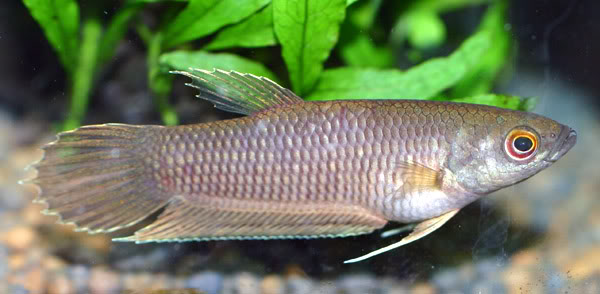
Betta spilotogena
Ng & Kottelat, 1994
Max length70mm SL2.8in SLTank80 × 30cm31 × 12inTemp22–27°C72–81°FpH4.0–6.5Inhabits freshwater swamps and associated streams, typically shaded from the sun by dense riparian vegetation. The water is normally clear or lightly stained with tannins, and the fish found in water less than a metre deep alongside related species including Betta edithae, B. miniopinna, and B. fusca. PH has been measured to range between 4.9-5.5.