Results for “thoracic”
Type a name: scientific, common, or one a species used to go by. Or narrow the catalogue with the filters.
Filters
Megalechis thoracataSpotted Hoplo
authority not recorded
Max length150mm SL6in SLTank120 × 38cm48 × 15inTemp18–28°C64–82°FpH6.0–8.0Still widely referred to as hoplosternum thoracatum the hoplo cat is a popular and hardy fish. These fish have the ability to breathe atmospheric air by gulping down mouthfuls of air and the oxygen is then absorbed into the bloodstream through the intestine. This allows the fish to endure poor conditions in the wild but it can still be observed exhibiting this behaviour in captivity. The hoplo is also eaten as a food fish in parts of South America....
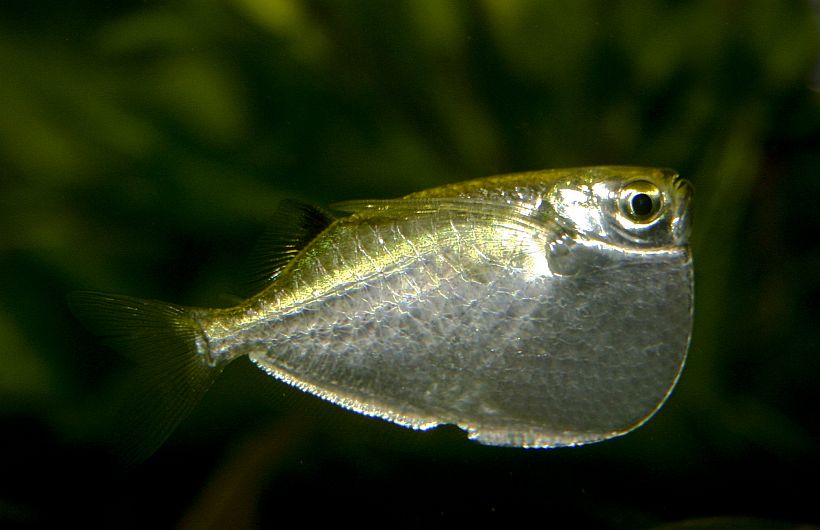
Thoracocharax stellatusSpotfin Hatchetfish
Kner, 1858
Max length70mm SL2.8in SLTank120 × 45cm48 × 18inTemp20–28°C68–82°FpH5.0–7.5T. stellatus is superficially similar to its only congener T. securis, but can immediately be identified by the presence (vs. absence) of a prominent dark spot in the dorsal-fin. It is sometimes traded as 'platinum hatchetfish'. The genus Thoracocharax was originally erected by Fowler in 1906 as a subgenus of Gasteropelecus, but was elevated to generic status by Weitzman (1960).
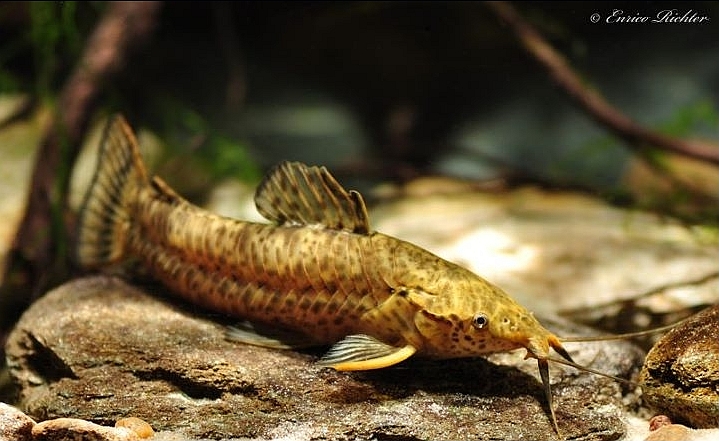
Megalechis pictaBar-tailed Hoplo
Müller & Troschel, 1849
Max length120mm SL5in SLTank120 × 45cm48 × 18inTemp18–28°C64–82°FpH5.0–7.5This species was previously referred to as M. thoracata, but that name is now applied to the species with a relatively short dorsal-fin spine which was formerly known as M. personata. M. picta can be told apart from M. thoracata by presence of a dark vertical bar in the caudal-fin, a comparatively longer dorsal-fin spine (52.0-64.0% vs. 32.0-48.0% of dorsal-fin base in specimens measur...
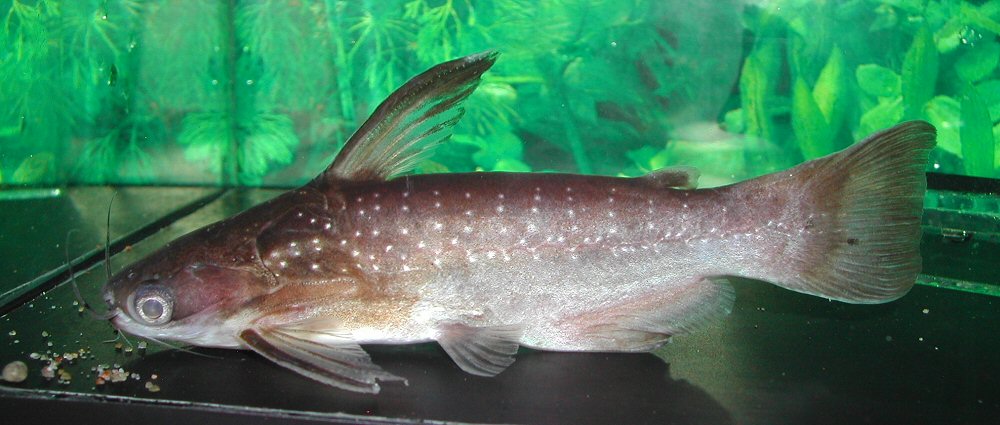
Auchenipterichthys coracoideusMidnight Catfish
Eigenmann & Allen, 1942
Max length110mm SL4in SLTank80 × 30cm31 × 12inTemp22–25°C72–77°FpH6.0–7.2This species is also known by the alternative vernacular name of 'Zamora woodcat', and is often misidentified as A. thoracatus. The latter is a valid species and very similar to A. coracoideus in that the coracoid bone is exposed ventrally and covered only by a thin layer of integument in both species. The two differ principally in the number of anal fin rays...