Results for “valence”
Type a name: scientific, common, or one a species used to go by. Or narrow the catalogue with the filters.
Filters
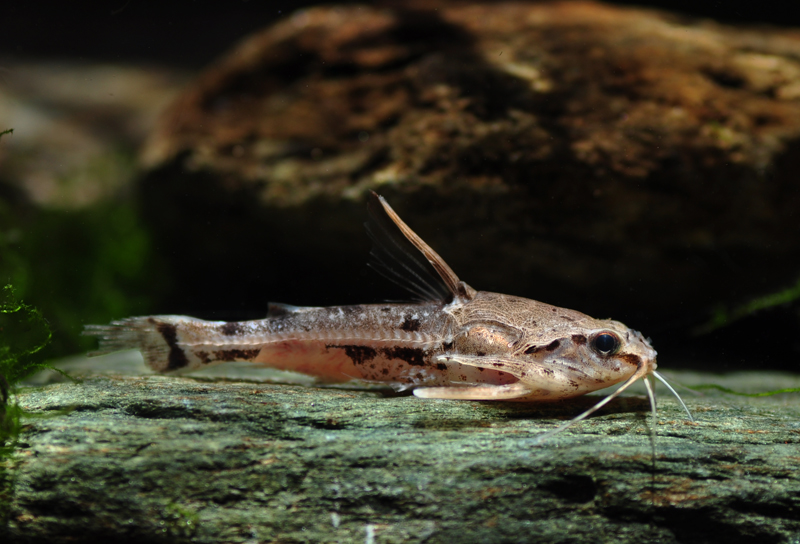
Amblydoras nauticusMarbled Talking Catfish
Cope, 1874
Max length75mm SL3.0in SLTank60 × 30cm24 × 12inTemp23–28°C73–82°FpH5.5–7.5This species was previously thought to be, and is often still sold as, A. hancockii, a name currently considered synonymous with Platydoras hancockii (Valenciennes 1840). It's also known by the vernacular names of blue-eyed catfish or Hancock's doradid, and in many ways is an ideal beginners' catfish, being hardy and tolerant of a wide range of water conditions...
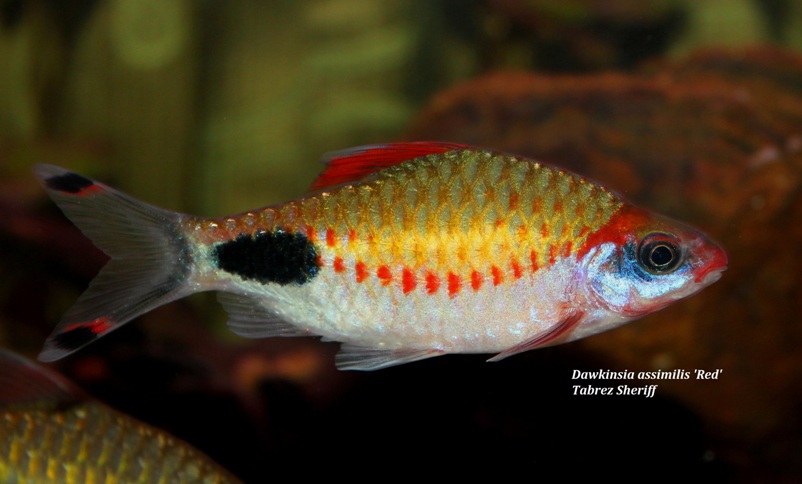
Dawkinsia assimilisMascara Barb
Jerdon, 1849
Max length120mm SL5in SLTank120 × 45cm48 × 18inTemp19–25°C66–77°FpH6.0–7.0D. assimilis has been misidentified as Puntius mahecola (Valenciennes 1844) in the past but the identity of both species was resolved by Pethioyagoda and Kottelat (2005 a, 2005b). They inspected the syntypes of P. mahecola and concluded that though valid it isn't closely related to any Dawkinsia (then the Puntius filamentosus group) but is rather a smaller, silvery fish with a single dark blotch on the caudal peduncle, located entirely posterior to the anal-fin. It's wi....
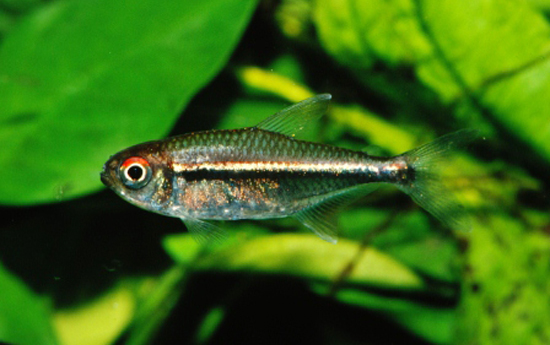
Hyphessobrycon heterorhabdusFlag Tetra
Ulrey, 1894
Max length35mm SL1.4in SLTank80 × 30cm31 × 12inTemp20–26°C68–79°FpH5.5–7.5Its name appears to have been misapplied to similar-looking fishes occurring throughout much of the middle and lower Amazon in Brazil and Colombia, plus the rio Orinoco drainage in Colombia and Venezuela, and coastal systems of the Guianas. Some of these have been described as distinct species (e.g. Hyphessobrycon amapaensis Zarske & Géry 1998; H. eschwartzae García-Alzate, Román-Valencia & Ortega 2013; H. montagi Lima, Couthino & Woziacki 2014), whereas the identity of others remains un...
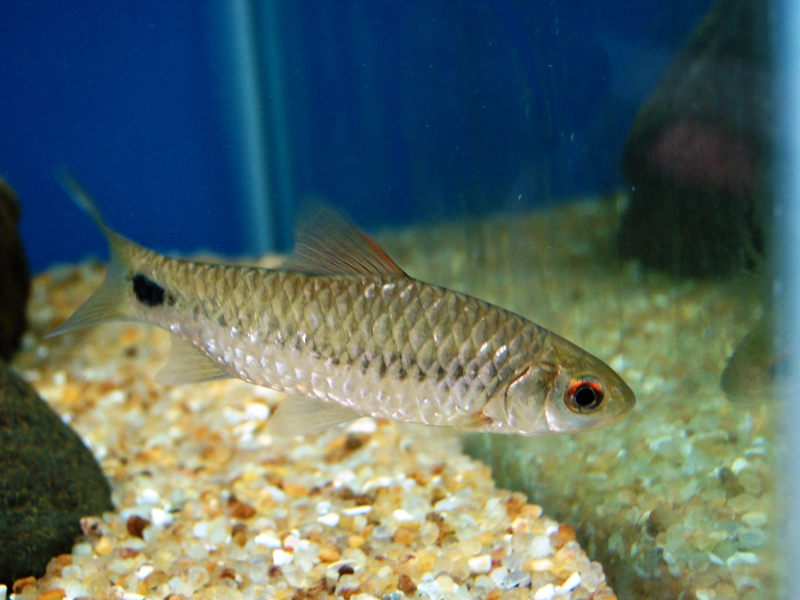
Puntius mahecola
Valenciennes, 1844
Max length75mm SL3.0in SLTank90 × 30cm36 × 12inTemp18–24°C64–75°FpH6.0–7.5This species has a chaotic taxonomic history with certain issues still to be resolved. While the name P. mahecola was misapplied to members of the genus Dawkinsia for over a century the fish itself has been widely misidentified as the congener P. amphibius (Valenciennes 1842). Its identity was partially resolved by Pethiyagoda and Kottelat (2005b) who demonstrated that though valid P. mahecola is not a Dawkinsia spp. but rather a smaller, relatively plain species with a single dark blotc...
Rasbora cf. dandia
authority not recorded
Max length99mm SL3.9in SLTank120 × 45cm48 × 18inTemp22–25°C72–77°FpHnot recordedThis fish may well be a form of R. dandia itself but in the absence of scientific confirmation we list it with a 'cf' abbreviation for the time being. It appears to be widely available in the trade but is often (mis)identified as R. wilpita, a species now confirmed as endemic to a small number of streams in Sri Lanka and which is probably much rarer in the hobby than previously thought. Valenciennes initially described Leuciscus dandia as a new species from Sri Lanka in 1844 but the...
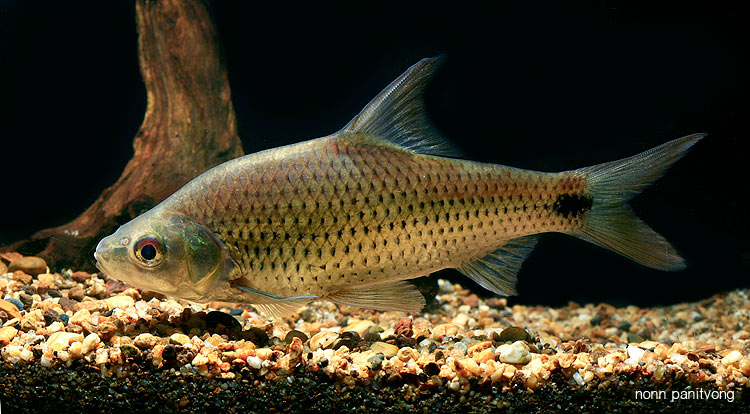
Cyclocheilichthys armatus
Valenciennes, 1842
Matched on Barbus valenciennesii, a name it was formerly known by
Max length230mm SL9in SLTank180 × 60cm72 × 24inTemp20–26°C68–79°FpH6.0–8.0It can be distinguished from congeners by possessing one or two pairs of barbels, a black blotch at the base of the caudal-fin, and rows of dark spots along the lateral scale rows. Members of Cyclocheilichthys are characterised by possessing a serrated dorsal fin spine, 9 branched pelvic fin rays, a conical snout, small, subterminal...