Results for “white spot”
Type a name: scientific, common, or one a species used to go by. Or narrow the catalogue with the filters.
Filters
Crenicichla albopunctataWhite-spotted Pike Cichlid
authority not recorded
Matched on the common name White-spotted Pike Cichlid
Max length200mm SL8in SLTank120 × 38cm48 × 15inTemp24–27°C75–81°FpH6.0–7.0Crenicichla albopunctata
Tropheus duboisiWhite-Spotted Cichlid
authority not recorded
Matched on the common name White-Spotted Cichlid
Max length120mm SL5in SLTanknot recordedTemp23–27°C73–81°FpH8.0–9.5Like others in the genus, Tropheus duboisi is something of an enigma in the aquarium hobby and despite it's popularity, is not a good species for the beginner. There has been much arguement and discussion about how best to maintain it in the aquarium, and some of these debates still rage on. We have provided the generally accepted method of keeping the fish, but in reality what works for one aquarist may not for another. One aspect which is always true, is that water quality is of the utmos...
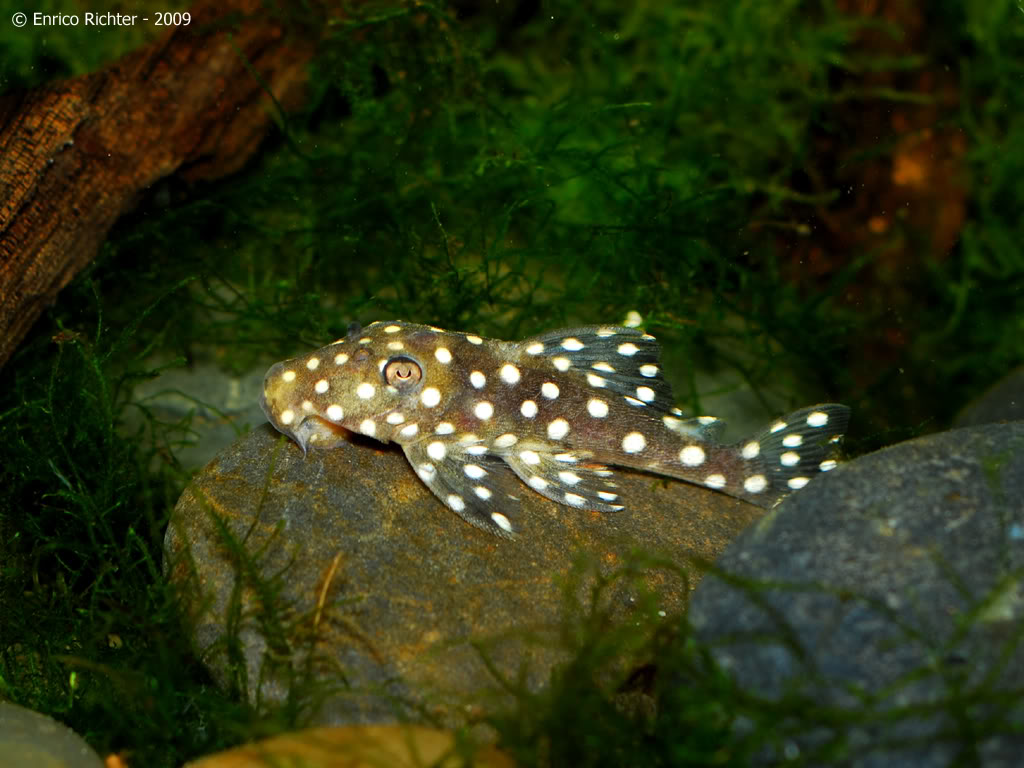
Baryancistrus sp. L142Big White Spot Pleco
authority not recorded
Matched on the common name Big White Spot Pleco
Max length250mm SL10in SLTank120 × 45cm48 × 18inTemp27–32°C81–90°FpH6.0–7.5The genus Baryancistrus can be distinguished from all other loricariids by possession of an enlarged membrane located posteriorly to the last branched dorsal-fin ray. This membrane may or may not reach the supporting structure of the adipose fin and in this way members can be told apart from the genera Oligancistrus, Parancistrus, and Spectracanthicus, in which the dorsal and adipose fins are completely connected, and Hemiancistrus...
Hypostomus reganiGiant White Spot Plec
authority not recorded
Matched on the common name Giant White Spot Plec
Max length400mm SL16in SLTanknot recordedTemp24–28°C75–82°FpH6.0–7.0An attractive and very hardy larger plec.
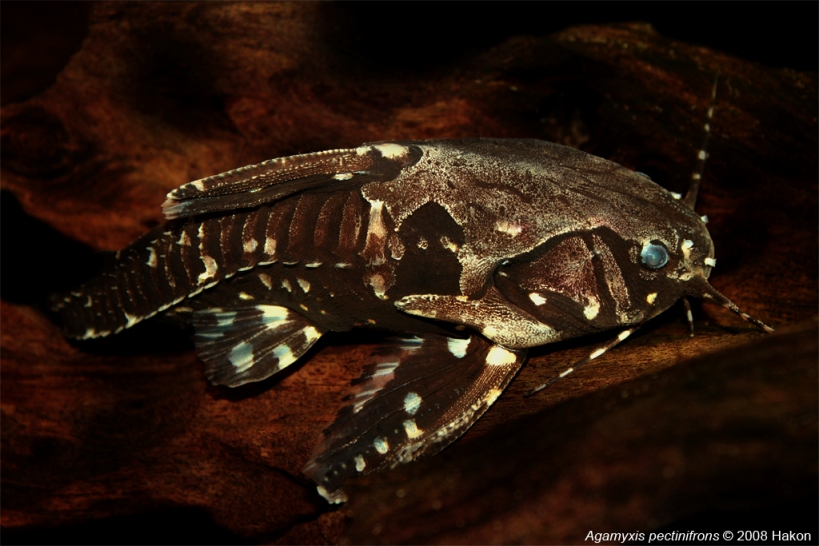
Agamyxis pectinifronsSpotted Talking Catfish
Cope, 1870
Max length150mm SL6in SLTank120 × 30cm48 × 12inTemp22–26°C72–79°FpH5.5–7.5This species, which may also be referred to by the alternative vernacular names 'spotted raphael', 'white-spotted' or 'white-barred' catfish, is very common in the trade and despite its adult size is recommended to beginners and experienced aquarists alike since it is hardy, attractive and relatively-long-lived. The light body markings are highly variable in terms of exact placement and may be either white or pale to darkish yellow in colour. It is very similar i...
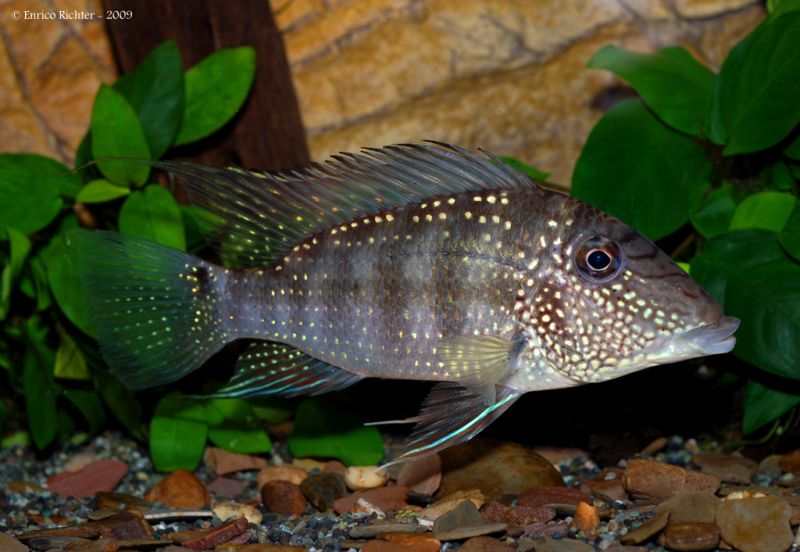
Satanoperca leucostictaWhitespot Eartheater
Müller & Troschel, 1849
Max length150mm SL6in SLTank180 × 60cm72 × 24inTemp20–28°C68–82°FpH5.5–7.5S. leucosticta is frequently available in the ornamental trade and farmed for the purpose in several countries. It is often confused with its congener S. jurupari in aquarium literature and on websites, but is easily recognised by presence (vs. absence) of prominent white spots or vermiform markings on the sides of the head. Although the presence of white spots on the head does not distinguish it from all known Satanoperca populations (see below), it can...
Chaetostoma sp.Spotted Bulldog Plec
authority not recorded
Max length120mm SL5in SLTanknot recordedTemp20–22.8°C68–73°FpH6.8–7.8Also known popularly as the rubbernose plecs, Chaetostoma species are seen for sale quite often these days. This is one of the more commonly seen, and provided its needs are adequately met, is a very hardy little fish. There's a bit of mystery surrounding its true identity, hence the species name, and it's sometimes misidentified in shops. The true L187 is currently known as Chaetostoma pearsei, and is a white-spotted fish. When buying Loricariids such as this always check the fish ...
Mastacembelus armatusTyre-Track Eel
authority not recorded
Max length910mm SL36in SLTank120 × 60cm48 × 24inTemp24–28°C75–82°FpH6.0–7.0The tyre track eel is also referred to as the white-spotted spiny eel. A member of the spiny eel family, which range across tropical Asia and Africa, Mastacembelus armatus is one of the more common species available to the hobby, along with the peacock eel ((Macrognathus siamensis)and the fire eel (Mastacembelus erythrotaenia). These species are all from Asia but there are some members of the family from Africa that are occasionally seen for sale. These majority of these species are from the ...
Potamotrygon henleiBlack Stingray
authority not recorded
Max length600mm SL24in SLTanknot recordedTemp23–28°C73–82°FpHnot recordedP. henlei is one of the more sought after ray species in the hobby due to its striking colours and impressive adult size. A fully grown one of these makes a stunning sight. Sadly exports from Brazil are now illegal under the IBAMA regulations, although captive bred fish are available occasionally. The price tends to be very expensive as a result. The species exists in various colour forms, with either white or yellow spots and a background colour varying between black and dark brown. The patt...
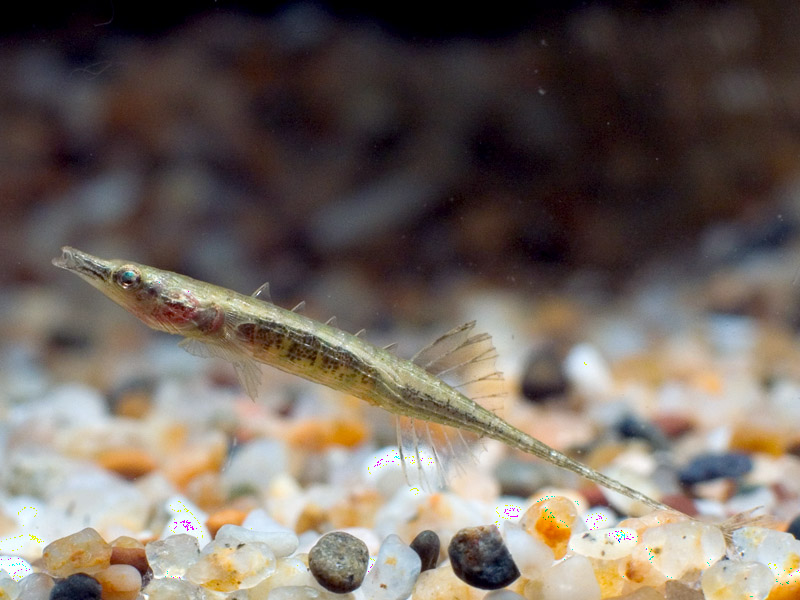
Indostomus paradoxusArmoured Stickleback
Prashad & Mukerji, 1929
Max length30mm SL1.2in SLTank40 × 20cm16 × 8inTemp22–27°C72–81°FpH6.5–7.5This species is rare in the aquarium hobby though its name is often misapplied to the closely-related I. crocodilus. It can be told apart from congeners by the following characters: dorsal and anal fins without dark markings, with a light brown bar in breeding males; ventral surface light brown; throat white, occasionally with a few brown spots; ridges of head bones weakly serrated or not serrated, depending on the bone. The family Indostomidae currently contains just a single genus with three species of which I. paradoxus is the type. It was raised alongside both family...
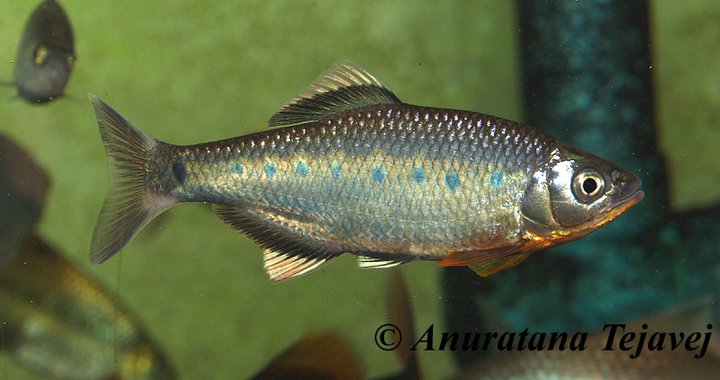
Barilius bakeri
Day, 1865
Max length130mm SL5in SLTank150 × 60cm60 × 24inTemp18–26°C64–79°FpH6.0–7.5This species is traded under several names including 'royal danio', 'blue-spotted hill trout', and 'blue-dotted mirror fish'. It can be distinguished from congeners by possessing a single row of bluish-green spots along the length of the body, white margins on the dorsal and anal fins, 37-38+1 lateral line scales, and fleshy rudi...
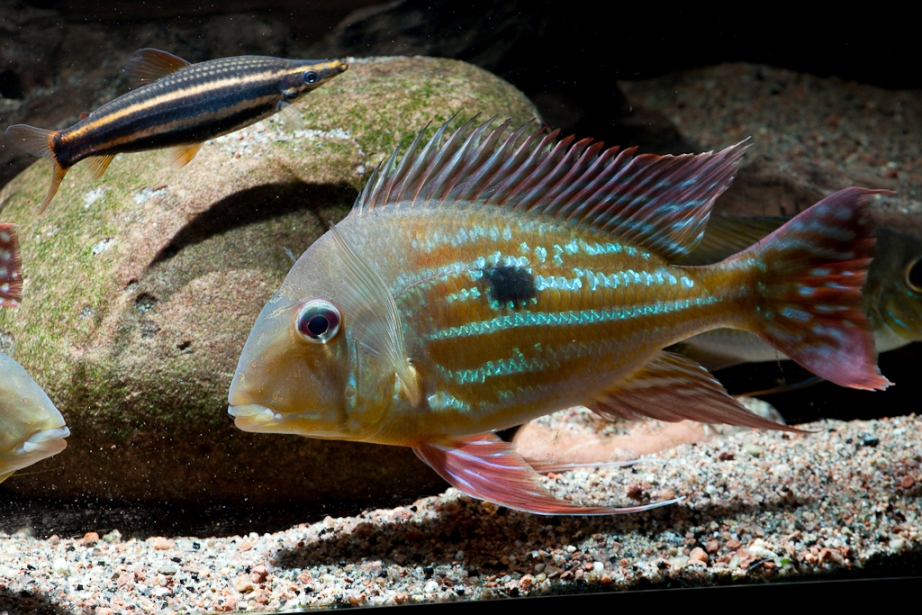
Geophagus winemilleri
López-Fernández & Taphorn, 2004
Max length200mm SL8in SLTank180 × 60cm72 × 24inTemp26–30°C79–86°FpH4.0–7.0This species is rare in the hobby although other species are sometimes sold under the name. It's a member of the nominal G. surinamensis 'group' of closely-related species within the genus and can be identified by a combination of characters including: possession of dark preopercular marking; four parallel, ventrally-inclined bars on each flank (normally visible only when the fish are stressed, spawning or preserved); dark lateral spot positioned within the second vertical bar; caudal fin red with variable pattern of large, iridescent blue to white spo...