Nothobranchius rachovii
Bluefin Nothobranch
On this page11 sections
Quick facts
Difficulty5 of 6 measures
More bars, more demanding.
- Space
- modest tank
- Water
- tap water
- Temp
- steady heat
- Temperament
- unknown
- Social
- in a pair
- Compatibility
- not a community fish
Described from close to the city of Beira, Mozambique and for many years thought widely-distributed between the Kruger National Park, South Africa to the Kwa-Kwa River north of the Zambezi delta. Populations from the south and north of this range exhibiting differences in colour pattern and morphology have now been described as N. pienaari and N. krysanovi, respectively, meaning N. rachovii sensu stricto is restricted to the area between the lower Pungwe and Zambezi river basins in eastern Mozambique.
Distribution
Described from close to the city of Beira, Mozambique and for many years thought widely-distributed between the Kruger National Park, South Africa to the Kwa-Kwa River north of the Zambezi delta. Populations from the south and north of this range exhibiting differences in colour pattern and morphology have now been described as N. pienaari and N. krysanovi, respectively, meaning N. rachovii sensu stricto is restricted to the area between the lower Pungwe and Zambezi river basins in eastern Mozambique.
Habitat
Inhabits ephemeral, water-filled depressions, pools and swamps mostly located in lowland floodplains. Water levels in these seasonally-variable habitats typically decrease during the dry season and eventually become completely dessicated for several months each year. PH values are typically 6.0 - 7.0. Aquatic plant species include Nymphea, Ottelia, Lagarosiphon and Utricularia species with common sympatric fishes including the congeners N. kadleci and N. orthonotus plus Clarias gariepinus, Ctenopoma multispine, Protopterus annectens and unidentified 'Barbus' spp. Some habitats are apparently used for low intensity, subsistence rice cultivation.
Aquarium size
Unless isolated temporarily for spawning purposes even a single pair should be offered an aquarium with base dimensions of 45 ∗ 30 cm18 ∗ 12 in or more.
Maintenance
This species does not require peat although peat moss is often used as a spawning medium.
Water conditions
These boxes carry affiliate links and we may earn a commission. What they recommend comes from each profile’s own figures, never chosen by hand or paid for.
Diet
A natural micropredator meaning small live or frozen foods such as Daphnia, Artemia and chopped bloodworm should form the basis of the diet.
Sexual dimorphism
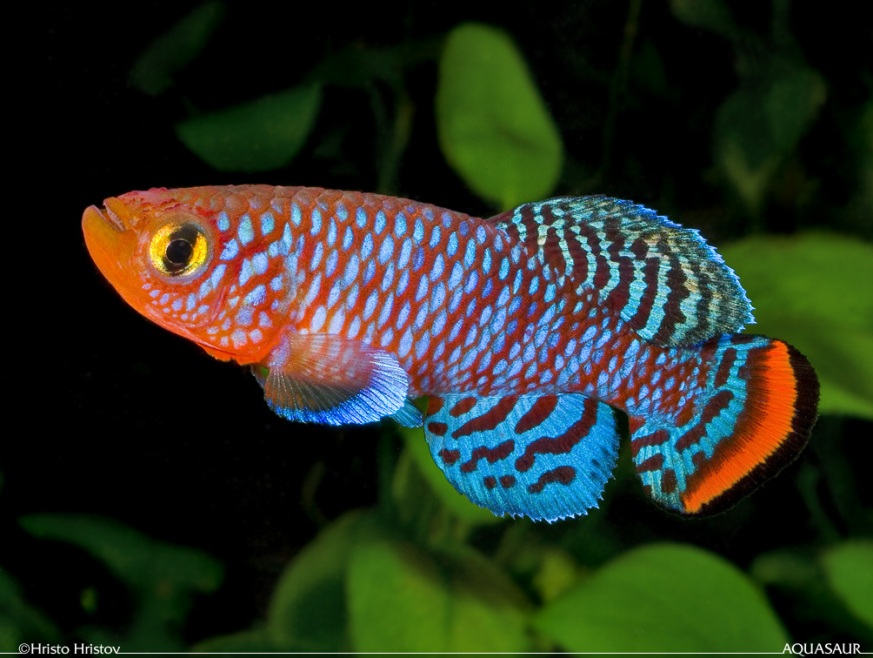
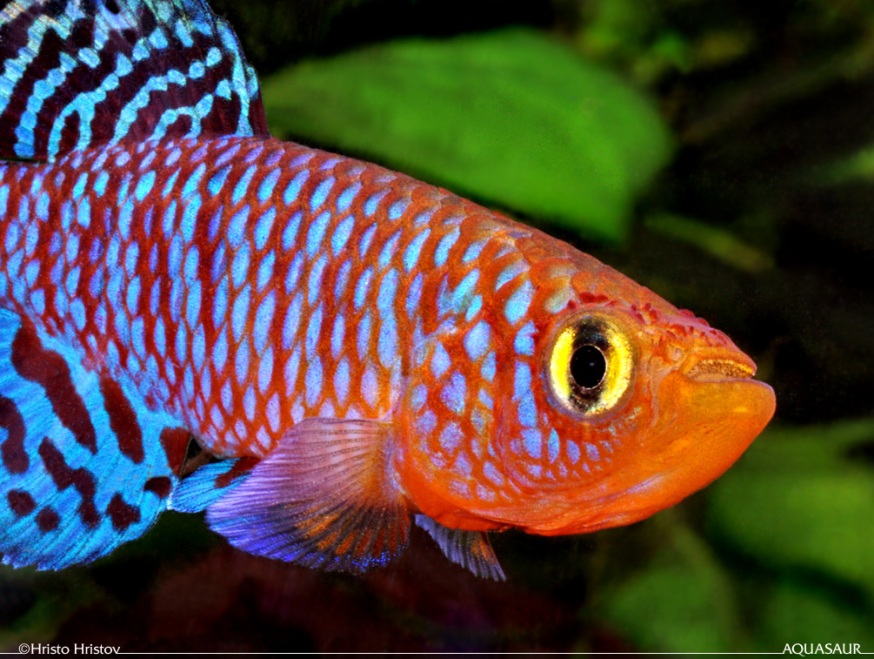
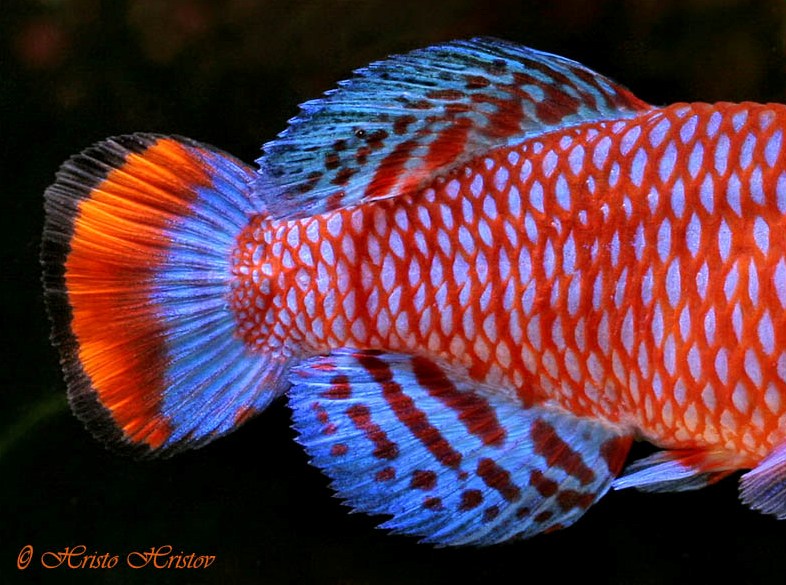
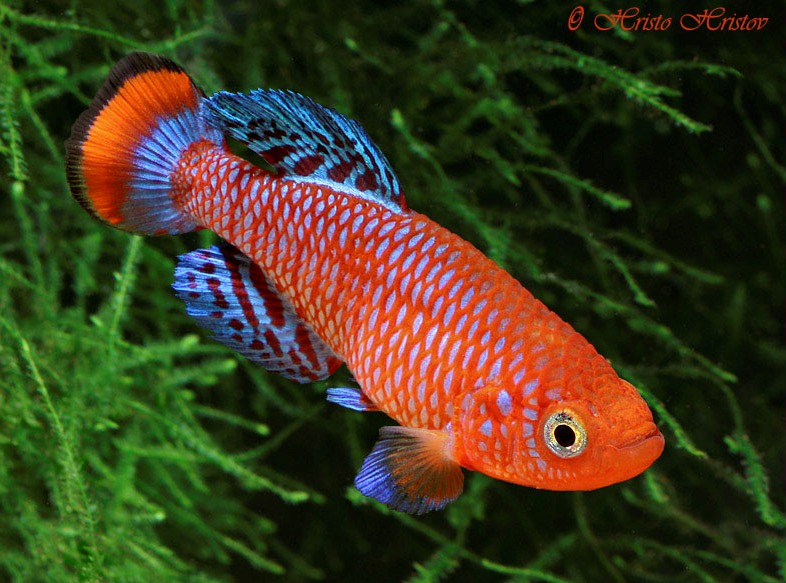
Males grow larger and are far more colourful than females.
Reproduction
When its natural habitats become dessicated during the dry season the adult fish die, leaving fertilised eggs encased within the substrate. These are resistant to dessication and remain there until the rains return some 5-6 months later at which point the fry hatch and grow very quickly with sexual maturity reached at around 3 weeks of age. Typical lifespan in the aquarium is 6-12 months and eggs should be stored at a temperature of 21.1 – 25 °C70 – 77 °F for 5-7 months before being wetted.
Notes
There exists an aquarium strain which is apparently derived from an import made by Roloff in 1958 while other collections are generally labelled with some form of code in order that they can be told apart, thus limiting the possibility of hybridisation. Examples include 'Beira 1998' in reference to a commercial collection made in that area during 1998 and MOZ 99/1, MOZ 99/2, MOX 99/3, etc. in which 'MOZ' represents 'Mozambique', '99' the year of collection (1999) and the latter figure collection locality. The putative subgenus Zononothobranchius, to which N. rachovii has been assigned in the past, currently contains only the single species known as Nothobranchius rubroreticulatus according to the mtDNA analyses of Shidlovskiy et al. (2010).
References
- Shidlovskiy, K. M., B. R. Watters, and R. H. Wildekamp (2010). Notes on the annual killifish species Nothobranchus rachovii (Cyprinodontiformes: Nothobranchiidae) with the description of two new species. Zootaxa 2724, 37-57
- Dorn, A., E. Ng'oma , K. Janko , K. Reichwald, M. Polačik, M. Platzer, A. Cellerino, and M. Reichard (2011). Phylogeny, genetic variability and colour polymorphism of an emerging animal model: The short-lived annual Nothobranchius fishes from southern Mozambique. Molecular Phylogenetics and Evolution 61(3), 739-749
Species images · 6
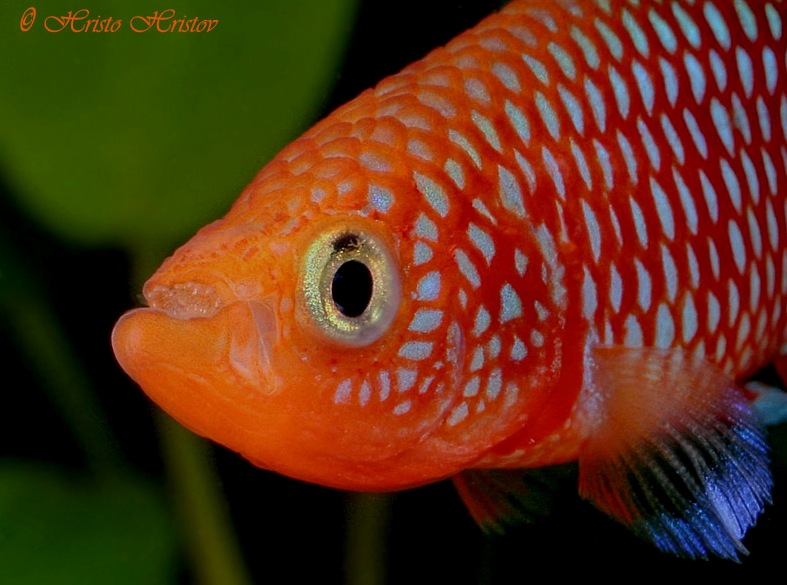
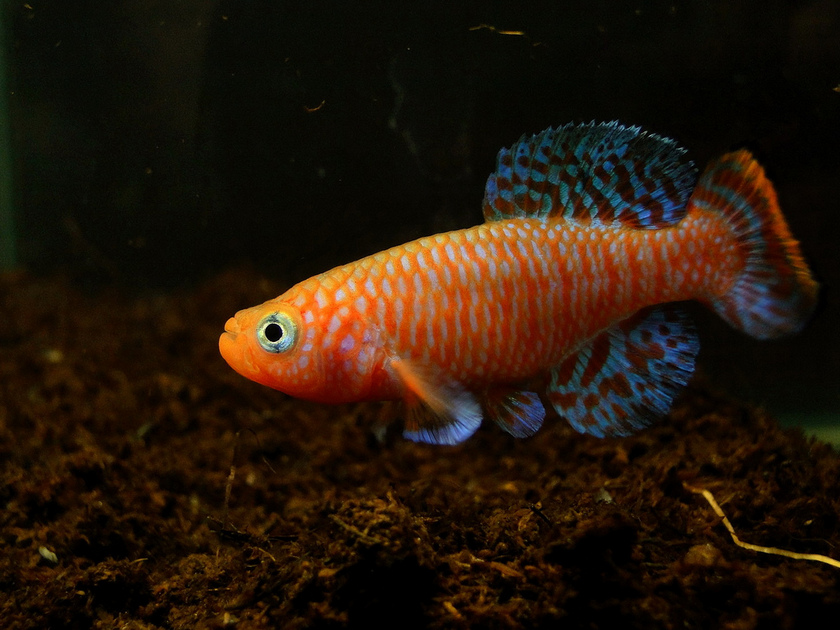
Used with the photographer’s permission. Not licensed for reuse.
Distribution
Profile completeness20 of 24
83% complete
Missing: temperament, water condition notes, behaviour and compatibility, etymology.