Oliotius oligolepis
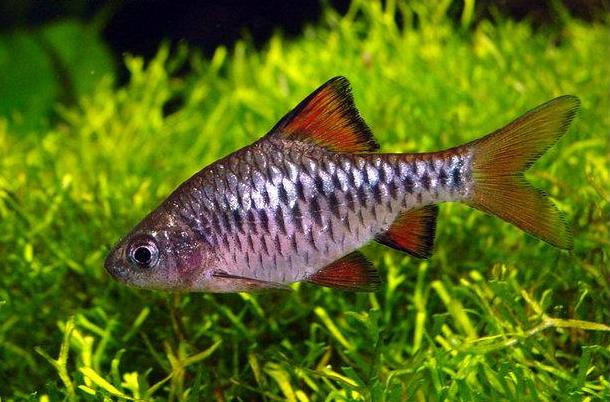
Checkered Barb
Formerly Capoeta oligolepis Bleeker, 1853 · Puntius oligolepis Bleeker, 1853
On this page12 sections
Quick facts
Difficulty6 of 6 measures
More bars, more demanding.
- Space
- modest tank
- Water
- tap water
- Temp
- unfussy
- Temperament
- peaceful
- Social
- shoal
- Compatibility
- community tank
This species is also traded as 'checker barb', 'checkerboard barb', or 'island barb', and is among the most ubiquitous species available in the aquarium trade. It is farmed commercially in enormous numbers with wild examples rarely, if ever, available. It was formerly included in the polyphyletic catch-all genus Puntius which contained over 100 species, but this situation has been largely resolved since the turn of the century.
Etymology
Oliotius: formed from part of the species name oligolepis and part of the former generic name Puntius.
oligolepis: from the Ancient Greek ὀλίγοι (olígoi), meaning 'few', and λεπίς (lepís), meaning 'fish scale'.
Distribution
Apparently endemic to western central Sumatra, Indonesia, but the full extent of its distribution is unclear. The few recent records that exist pertain to lower basins of the Aek Sibundung, Aek Sumuran, and Aek Garoga rivers in Sumatera Utara (North Sumatra) province, with the Batang Gadis drainage and associated National Park possibly representing the northern limit of its range (D. Lumbantobing, pers. comm.).
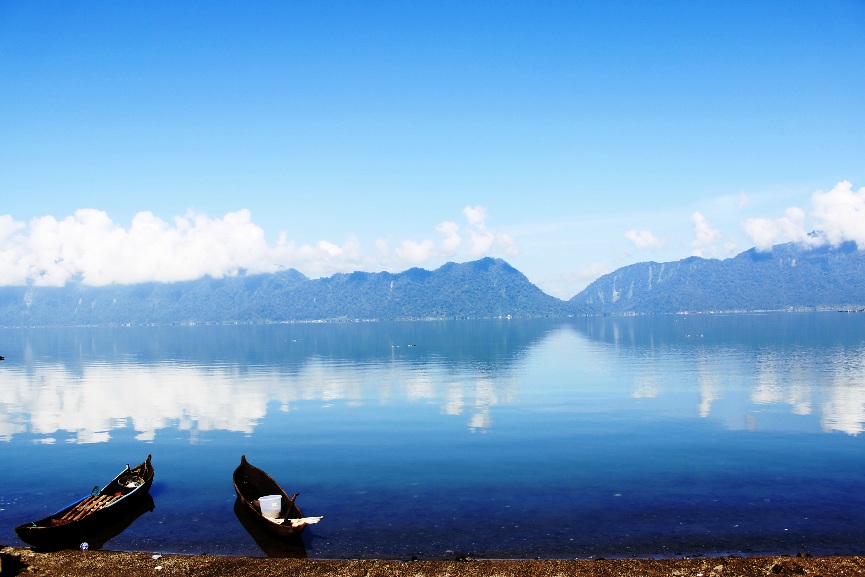
Type locality is 'Lake Meninju, Sumatra, Indonesia', which corresponds to the crater lake Danau Maninjau in Sumatera Barat (West Sumatra) province.
Aquarium size
An aquarium with dimensions of 75 ∗ 30 ∗ 30 cm30 ∗ 12 ∗ 12 in or larger is required.
Maintenance
Choice of décor is not especially critical though it tends to show better colouration in a well-decorated set-up. The addition of floating or overhanging vegetation and driftwood roots or branches also seems to be appreciated.
Water conditions
These boxes carry affiliate links and we may earn a commission. What they recommend comes from each profile’s own figures, never chosen by hand or paid for.
Diet
Probably an omnivore feeding primarily on aquatic invertebrates, as well as smaller amounts of plant material and organic detritus in nature.
In the aquarium it is easily-fed but the best condition and colours offer regular meals of small live and frozen foods such as chironomid larvae (bloodworm), Daphnia, and Artemia, alongside good quality dried flakes and granules.
Behaviour and compatibility
Generally very peaceful making it an ideal resident of the well-researched community aquarium.
It is a schooling species by nature, and at least 6-10 specimens should be purchased. Maintaining it in such numbers will not only make the fish less skittish but result in a more effective, natural looking display, and males will develop better colours in the presence of conspecific rivals.
Sexual dimorphism
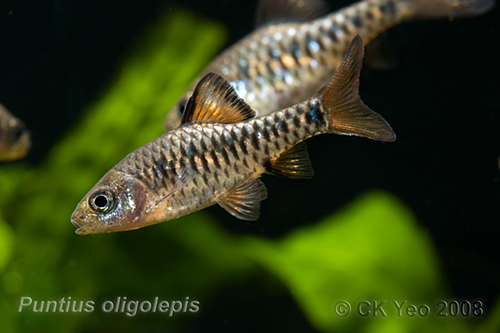
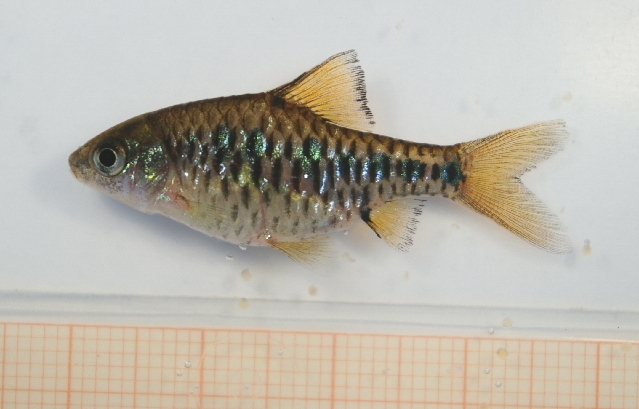
Adult males are noticeably smaller, slimmer, and more colourful than females, the latter character being more noticeable in nuptial individuals.
Reproduction
An egg-scattering free spawner exhibiting no parental care.
When in good condition it will spawn often, and in a mature aquarium it is possible that small numbers of fry may start to appear without intervention. If you wish to maximise yield a more controlled approach is required, however.
The adult group can be conditioned together but an additional aquarium should be set up and filled with mature water. This should be dimly lit and the base covered with some kind of mesh of a large enough grade so that the eggs can fall through, but small enough so that the adults cannot reach them. The widely available plastic 'grass'-type matting can also be used and works well, as does a layer of glass marbles. Alternatively, filling much of the tank with a fine-leaved plant such as Taxiphyllum spp. or spawning mops can also return decent results.
The water itself should be of slightly acidic to neutral pH with a temperature towards the upper end of the range suggested above, and an air-powered sponge filter or air stone(s) should also be included to provide oxygenation and water movement.
When the females appear gravid one or two pairs can then be introduced, and spawning should take place the following morning. A second option is to spawn the fish in a group with half a dozen specimens of each sex being a good number, although a larger aquarium may be necessary.
In either situation the adults should be removed post-spawning. The eggs should hatch in 24 - 48 hours with fry swimming freely around 24 hours later. They should be fed on an infusoria-grade food for the first few days until large enough to accept microworm, Artemia nauplii, or suchlike.
Notes
This species is also traded as 'checker barb', 'checkerboard barb', or 'island barb', and is among the most ubiquitous species available in the aquarium trade. It is farmed commercially in enormous numbers with wild examples rarely, if ever, available.
It was formerly included in the polyphyletic catch-all genus Puntius which contained over 100 species, but this situation has been largely resolved since the turn of the century.
Oliotius was raised by Kottelat (2013) in order to accommodate O. oligolepis since it possesses a unique suite of distinguishing characters in comparison with other former Puntius from Southeast Asia. It is diagnosed as follows: colour pattern comprising black crescent-shaped marks on all scales; scales large, with 8 circumpeduncular rows, 17 in lateral line series; 3.5/1/3.5 scales between dorsal-fin origin and ventral midline anterior to pelvic-fin base.
The following characters also aid in identification: presence of rows of papillae on sides of snout, infraorbital area, opercle, interorbital area and throat shared only with Striuntius among related genera from the region; posterior simple dorsal-fin ray unserrated; rostral barbels absent; maxillary barbels present; lips smooth and thin, postlabial groove interrupted medially; lateral line incomplete, with 6–7 pored scales; 3-5 gill rakers on first gill arch.
References
- Kottelat, M. and H-H Tan (2011). Systomus xouthos, a new cyprinid fish from Borneo, and revalidation of Puntius pulcher (Teleostei: Cyprinidae). Ichthyological Exploration of Freshwaters 22(3), 209-214
- Tan, H-H. and M. Kottelat (2008). Revision of the cyprinid fish genus Eirmotus, with description of three new species from Sumatra and Borneo. Raffles Bulletin of Zoologhy 56(2), 423-433
- Bleeker, P. (1853). Diagnostische beschrijvingen van nieuwe of weinig bekende vischsoorten van Sumatra. Tiental V-X. Natuurkundig Tijdschrift voor Nederlandsch Indië v. 4, 243-3
- Pethiyagoda, R., M. Meegaskumbura, and K. Maduwage (2012). A synopsis of the South Asian fishes referred to Puntius (Pisces: Cyprinidae). Ichthyological Exploration of Freshwaters 23(1), 69-95
- Pethiyagoda, R. (2013). Haludaria, a replacement generic name for Dravidia (Teleostei: Cyprinidae). Zootaxa 3646(2), 199
- Kottelat, M. (2013). The fishes of the inland waters of southeast Asia: a catalogue and core bibiography of the fishes known to occur in freshwaters, mangroves and estuaries. The Raffles Bulletin of Zoology Supplement 27, 1-663
Species images · 6
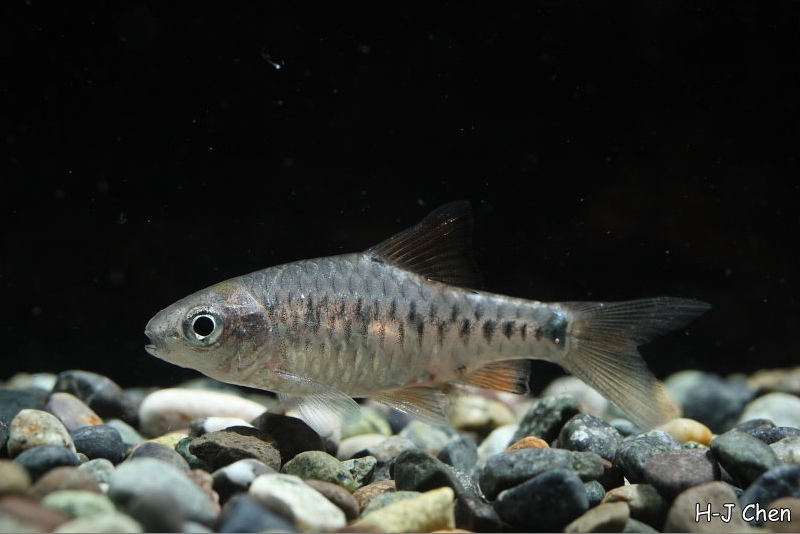
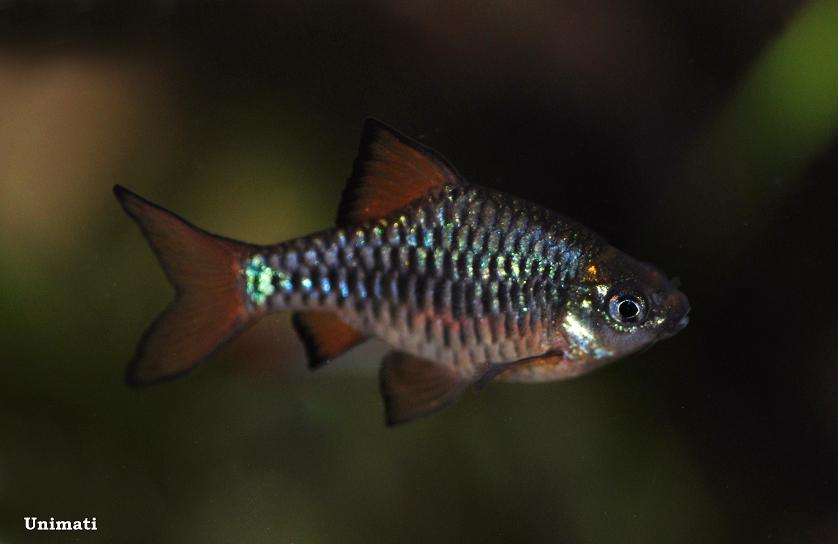
Used with the photographer’s permission. Not licensed for reuse.
Distribution
Profile completeness22 of 24
92% complete
Missing: habitat, water condition notes.