Country · Asia
South Korea
Every profile recorded in South Korea, native or introduced.
- Species
- 16
- Families
- 6
- Genera
- 10
- Found only here
- 5
- Photographed
- 16 of 16
Where it isAsia
Shares its fishes withspecies recorded in both
Found only here5
5 of these profiles carry South Korea and no other country. That is not the same as endemic. Most of these distributions are only half recorded.
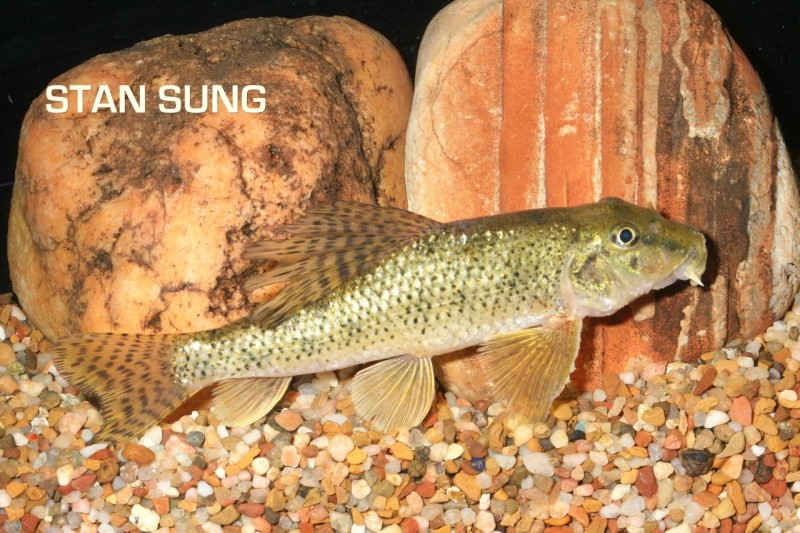
Abbottina rivularisChinese False Gudgeon
Cyprinidae · Basilewsky, 1855
Native to continental China, the Korean peninsula, and southern Japan. Type locality is given only as 'Lakes and rivers, northern China', with the type series possibly originating from the Pai-ho River near Beijing. It has been widely introduced and is considered invasive elsewhere, including the Mekong river basin (records from Laos and Thailand), Salween river (Myanmar), northern Japan, Taiwan, Turkmeni...
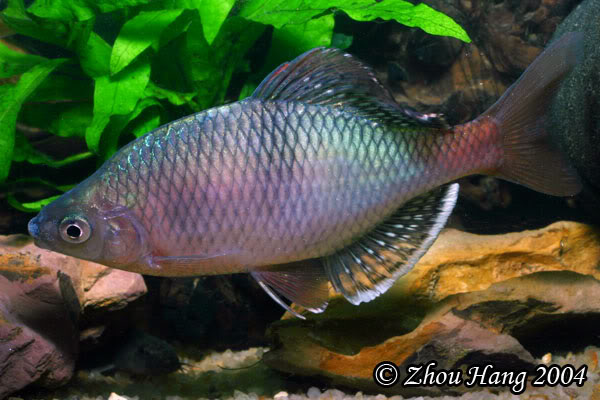
Acheilognathus macropterusGiant Chinese Bitterling
Cyprinidae · Bleeker, 1871
A. macropterus appears in the ornamental trade on an irregular basis and should only be considered by more experienced aquarists with sufficiently large facilities. Given its wide geographical distribution there is a possibility that it represents a group of closely-related species, with genetic studies indicating the existence of several distinct clades.
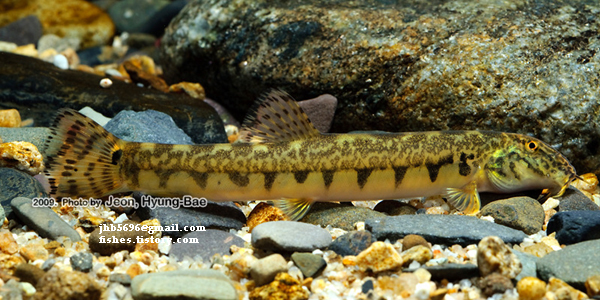
Iksookimia hugowolfeldi
Cobitidae · Nalbant, 1993
It appears that I. hugowolfeldi, I. longicorpus and I. yongdokensis form a biogeographic lineage distinct from I. koreensis and I. pumila, with the former group distributed to the south of the Taebaek and Noryeong moutnain ranges and the latter to the west. This is further evidenced by the fact that the lamina circularis in males of the southern gro...
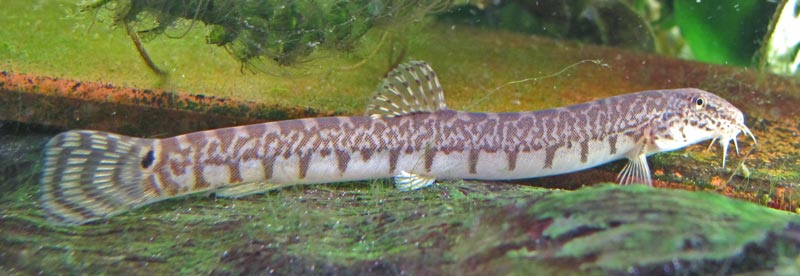
Iksookimia koreensis
Cobitidae · Kim, 1975
Among them it's most similar to I. pumila which was initially described as a subspecies but is now considered distinct. The two are most easily-separated by colour pattern; I. koreensis has 10 or...
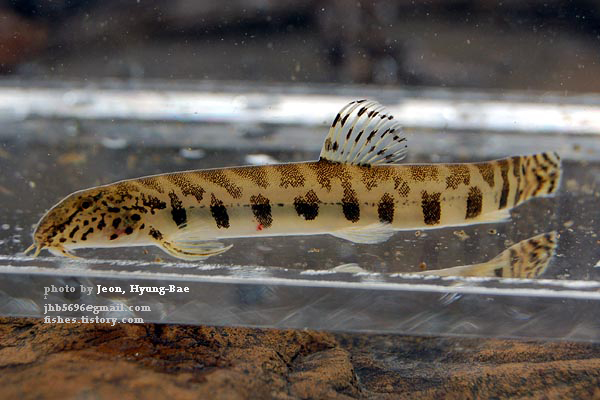
Iksookimia pumila
Cobitidae · Kim & Lee, 1987
All Iksookimia species are endemic to Korea, and I. pumila is known only from the Baek River drainage in south-western Korea where its presence has been undermined at some localities due to construction of a dam in the middle reaches of the river during the late 1990s. Type locality is 'Paikchon stream at Sangso-myon, Puan-gun, Chollabuk-do, South Korea'. The reservoir formed by the dam has also be...
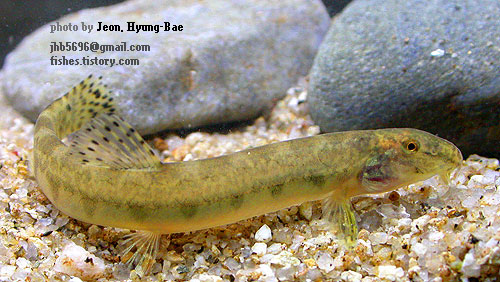
Iksookimia yongdokensis
Cobitidae · Kim & Park, 1997
Among them it's most similar to I. longicorpus and I. hugowolfeldi but can be distinguished by the following combination of characters: body patterning consisting of 9-13 dark vertical bars along the flanks plus a small dark spot at the base of the upper caudal-fin lobe; no black blotch or markings posterior to the operculum; reduced lamina circularis in males; interorbital width measures 14.7-17.8% o...
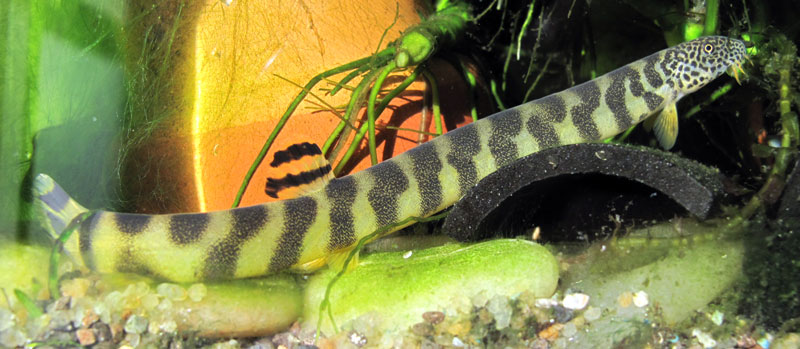
Kichulchoia multifasciata
Cobitidae · Wakiya & Mori, 1929
It's most easily told apart from K. brevifasciata, its only congener, by body patterning consisting of dark, vertical bars running along the dorso-ventral part of the body (vs. dark bars running alongside the midventral part of the body), lips with wrinkled surfaces (vs. smooth) and barbels short (vs. long).
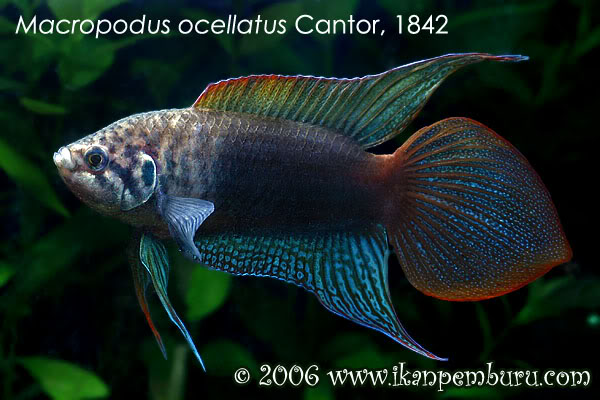
Macropodus ocellatusRoundtail Paradise Fish
Osphronemidae · Cantor, 1842
M. ocellatus can be distinguished from congeners by the following combination of characters: caudal-fin rounded; eye stripe not connecting spot on posterior projection of opercle with eye; dorsal-fin rays filamentous posterior to a vertical through the posterior anal-fin rays in adults; 16-19 spinous dorsal-fin rays; 6-13 rakers on ceratobranchial of first gill arch; posterior tip or margin of body scales not darker than scales.
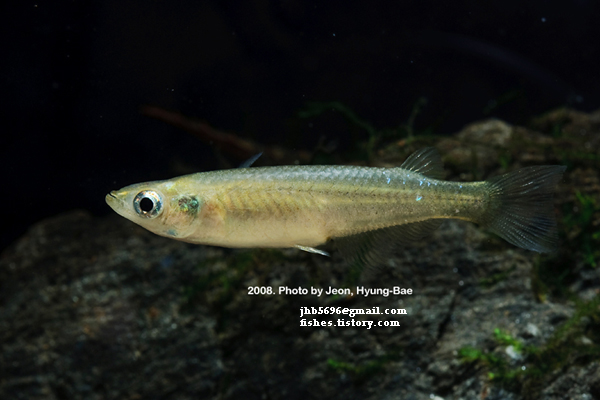
Oryzias latipesMedaka
Adrianichthyidae · Temminck & Schlegel, 1846
Commonly known as 'Japanese rice fish' or simply 'rice fish', O. latipes is well-known to science having been widely used as a model organism in genomic and experimental biology for well over a century and was the first vertebrate animal to mate in space during the mid-1990s. It's also been a popular aquarium fish for many years, though is less widely-available than it once was, with the ornamental 'gold' vari...
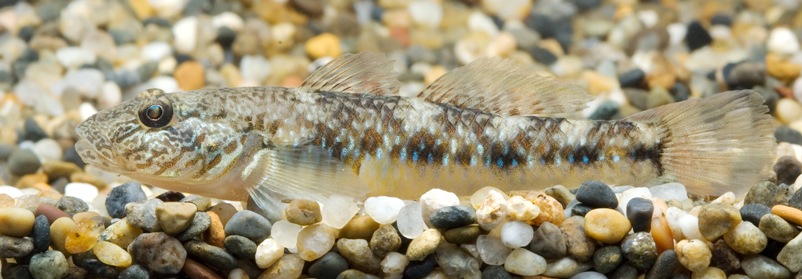
Rhinogobius giurinus
Gobiidae · Rutter, 1897
This species appears to exist in a number of different forms which exhibit differences in colour pattern, morphology, or both, and it's currently unclear whether all of them are truly conspecific or not although to avoid confusion we list all together here.
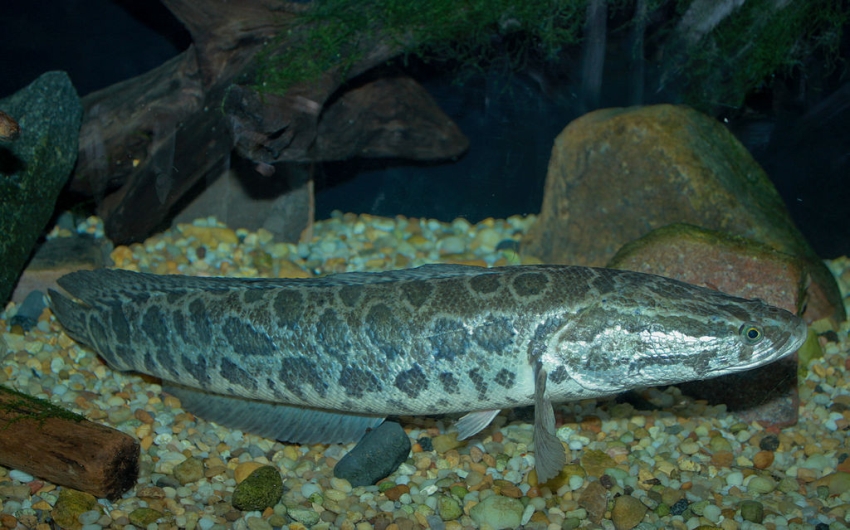
Channa argusNorthern Snakehead
Channidae · Cantor, 1842
This species is largely unsuitable for the home aquarium given its eventual size and natural behaviour, and we know of only a handful of private aquarists with the facilities required to house it long-term. It's currently illegal to import or own the species in the United States, United Kingdom and several other countries unless in possession of an official license.
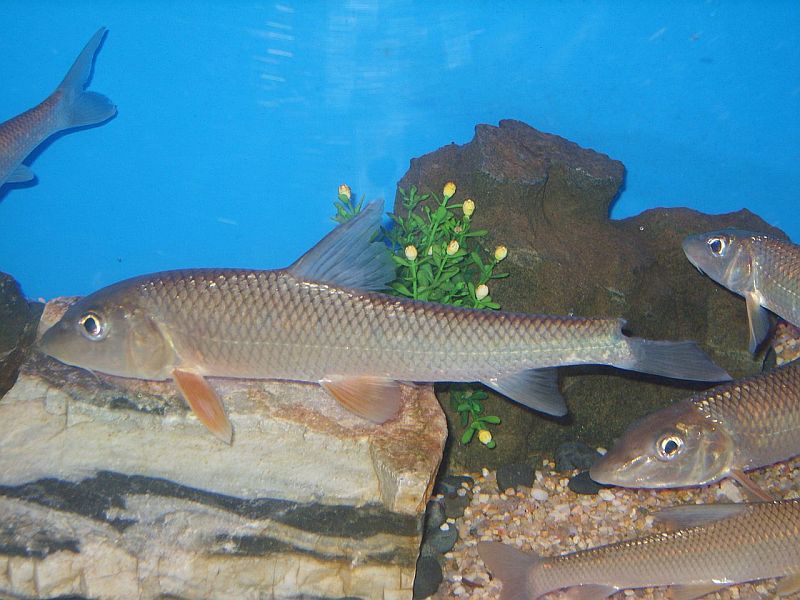
Hemibarbus labeoBarbel Steed
Cyprinidae · Pallas, 1776
This species can be distinguished from other members of the genus by the following combination of characters: absence of dark spots on body in adults; body elongate with slightly convex dorsal profile; head longer than body is deep; snout much longer than postorbital head length; lips well developed, lateral lobes of lower lip broad and thick with folds, median process small; barbel thickness shorter or equal to eye diameter; dorsal spine strong, ⅔ of HL; dorsal-fin origin closer to tip of snout than caudal-fin base base; 15+ gill rakers; 6½ branched anal-fin rays; posterior simple dorsal-fin rays ossified and spinous.
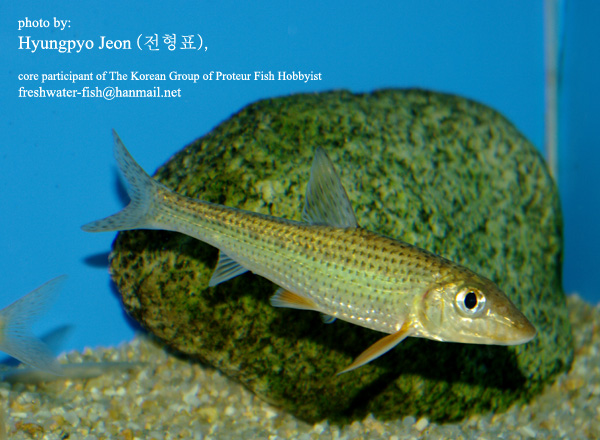
Hemibarbus longirostris
Cyprinidae · Regan, 1908
A predominantly riverine fish preferring clear, well-oxygenated, running waters with substrates of sand, gravel, rock or mud, where adults tend to form schools just above the substrate in slower-moving sections.
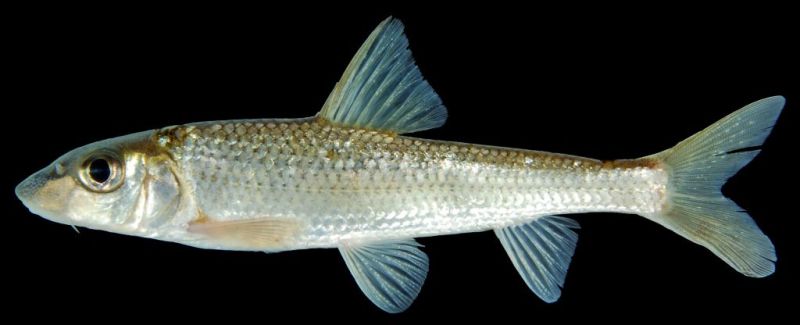
Hemibarbus maculatusSpotted Steed
Cyprinidae · Bleeker, 1871
Widepread in eastern Asia between the Yangtze and Amur river basins, including China (mainland and islands of Taiwan and Hainan), Korea, Mongolia, Russia, and Japan. It probably been introduced to Vietnam and Laos, or records from these countries represent another species.
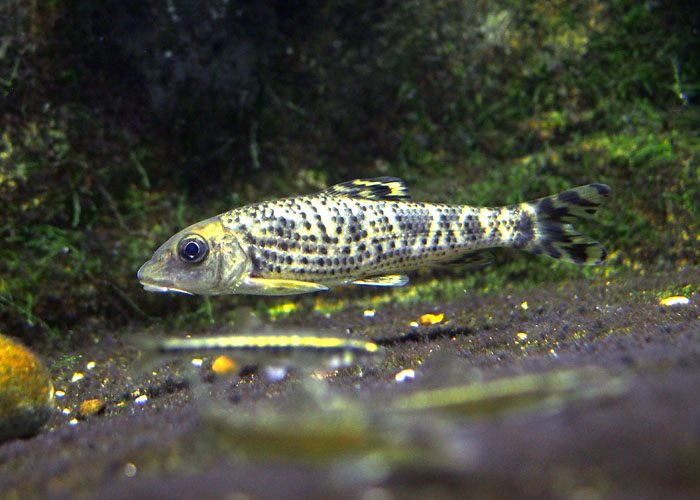
Hemibarbus mylodon
Cyprinidae · Berg, 1907
Endemic to the Korean peninsula where it occurs throughout North Korea and South Korea. Type locality is 'Keumsan River, near Pusan, South Korea.'
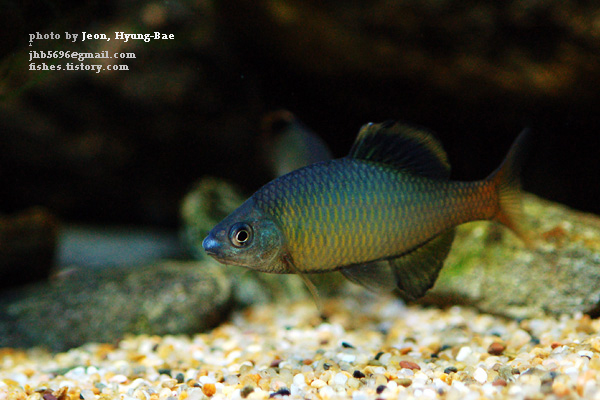
Tanakia signiferKorean Bitterling
Cyprinidae · Berg, 1907
Bitterlings (see 'Notes') exhibit an unusual spawning symbiosis in which the interlamellar spaces of the paired inner and outer gills of living unionid mussels are used as a spawning substrate. During the reproductive period females develop a long ovipositor which is used to deposit eggs through the mussel’s exhalant siphon. Males then move in to males release milt...