Country · Asia
Japan
Every profile recorded in Japan, native or introduced.
- Species
- 23
- Families
- 8
- Genera
- 13
- Found only here
- 5
- Photographed
- 22 of 23
Where it isAsia
Regions herethe places aquarists name
Shares its fishes withspecies recorded in both
Found only here5
5 of these profiles carry Japan and no other country. That is not the same as endemic. Most of these distributions are only half recorded.
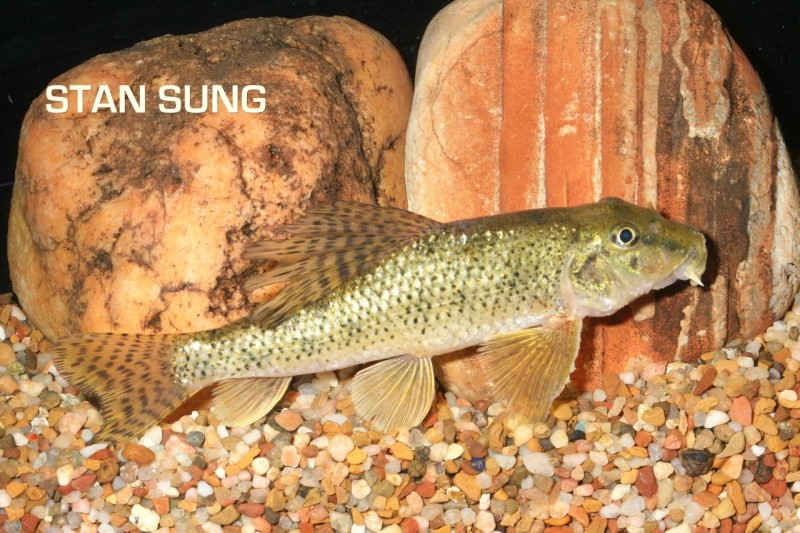
Abbottina rivularisChinese False Gudgeon
Cyprinidae · Basilewsky, 1855
Native to continental China, the Korean peninsula, and southern Japan. Type locality is given only as 'Lakes and rivers, northern China', with the type series possibly originating from the Pai-ho River near Beijing. It has been widely introduced and is considered invasive elsewhere, including the Mekong river basin (records from Laos and Thailand), Salween river (Myanmar), northern Japan, Taiwan, Turkmeni...
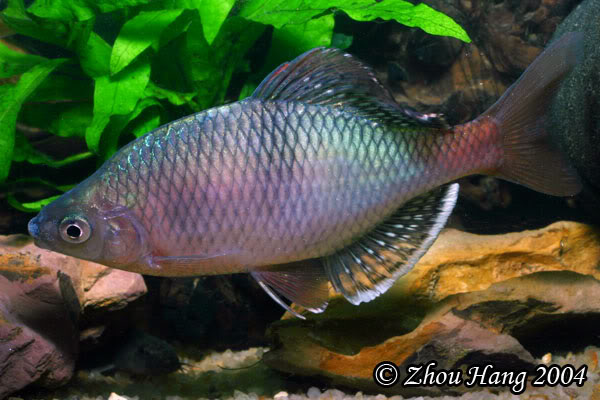
Acheilognathus macropterusGiant Chinese Bitterling
Cyprinidae · Bleeker, 1871
A. macropterus appears in the ornamental trade on an irregular basis and should only be considered by more experienced aquarists with sufficiently large facilities. Given its wide geographical distribution there is a possibility that it represents a group of closely-related species, with genetic studies indicating the existence of several distinct clades.
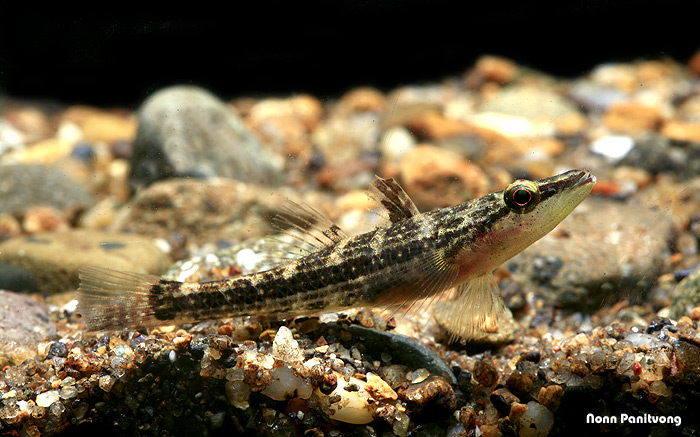
Butis amboinensisOlive Flathead Gudgeon
Eleotridae · Bleeker, 1853
This species is not traded for aquaria but is occasionally exported as bycatch among shipments of other species. It differs from congeners in that the outermost row of teeth are not enlarged plus the interorbital space and cheek below eye are not scaled. Butis spp. are largely nocturnal ambush predators with cryptic...
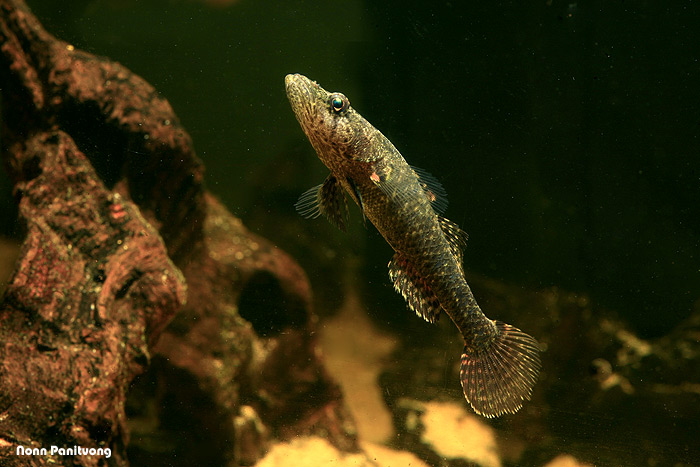
Butis butisCrazy Fish
Eleotridae · Hamilton, 1822
Butis spp. are largely nocturnal ambush predators with cryptic patterning to help them blend in with their surroundings. They can also lighten and darken their body colouration to an extent, have a habit of aligning themselves with solid surfaces whether horizontal, vertical, or inverted, and often swim in an upside-down position. The genus is usually included in the family Eleotridae of which members are often referred to...
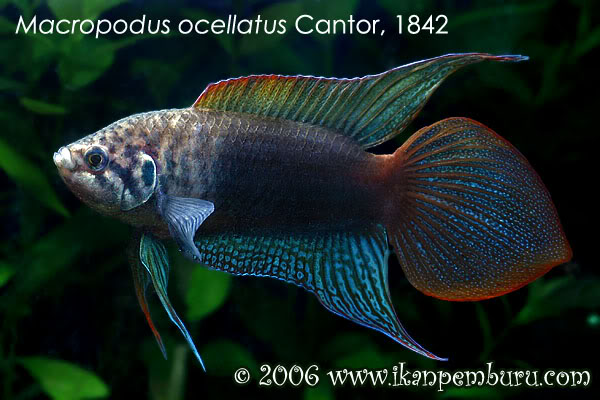
Macropodus ocellatusRoundtail Paradise Fish
Osphronemidae · Cantor, 1842
M. ocellatus can be distinguished from congeners by the following combination of characters: caudal-fin rounded; eye stripe not connecting spot on posterior projection of opercle with eye; dorsal-fin rays filamentous posterior to a vertical through the posterior anal-fin rays in adults; 16-19 spinous dorsal-fin rays; 6-13 rakers on ceratobranchial of first gill arch; posterior tip or margin of body scales not darker than scales.
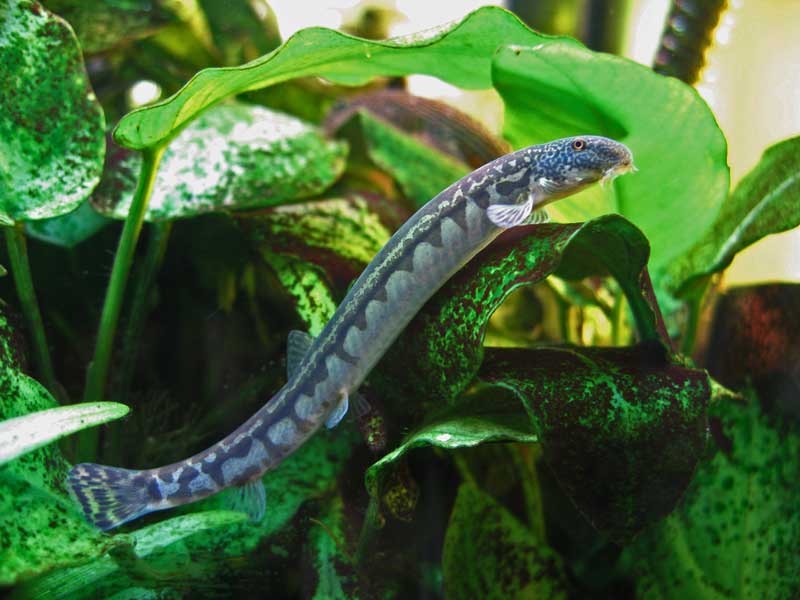
Niwaëlla delicataAjime Loach
Cobitidae · Niwa, 1937
During winter months N. delicata retreats to streams or underflows where it remains dormant between October and April (Kano, 2000) before emerging to spawn. Other species living alongside it in nature include Rhinogobius flumineus, Cottus pollux and Phoxinus spp. Niwaëlla is closely related to Cobitis and N. delicata, also the type species, was described as C. delicata (Niwa, 1937). The combination of characters used to tell it...
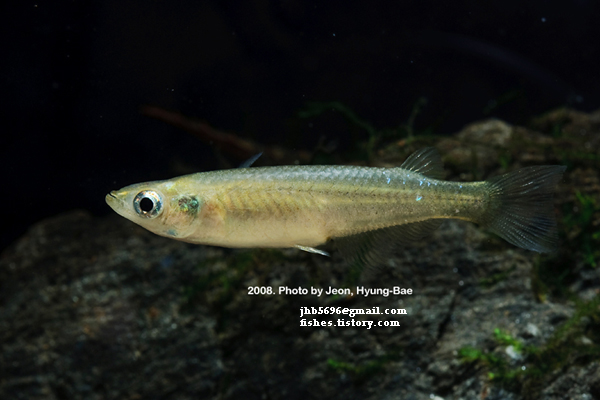
Oryzias latipesMedaka
Adrianichthyidae · Temminck & Schlegel, 1846
Commonly known as 'Japanese rice fish' or simply 'rice fish', O. latipes is well-known to science having been widely used as a model organism in genomic and experimental biology for well over a century and was the first vertebrate animal to mate in space during the mid-1990s. It's also been a popular aquarium fish for many years, though is less widely-available than it once was, with the ornamental 'gold' vari...
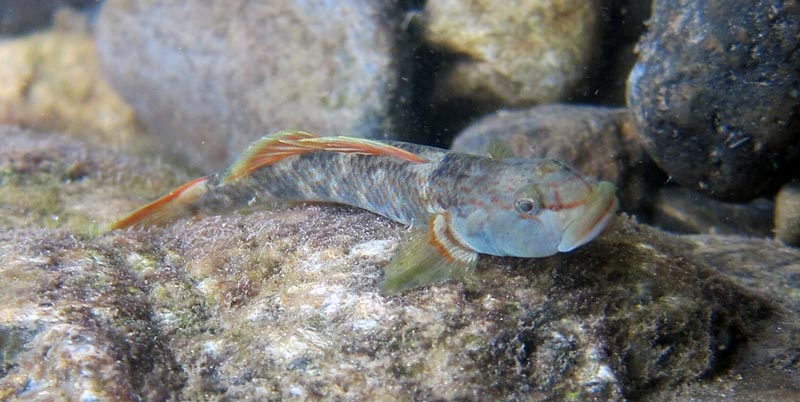
Rhinogobius flumineus
Gobiidae · Mizuno, 1960
In addition, there appear to exist two colour forms based on male dorsal-fin morphology and patterning; one in which the 4th ray of the first dorsal-fin is longest with a square bluish-black blotch on the anterior ⅔ of the fin, and a second in which the 2nd and 3rd rays of the first dorsal-fin are longest with the fin itself paler and lacking dark markings.
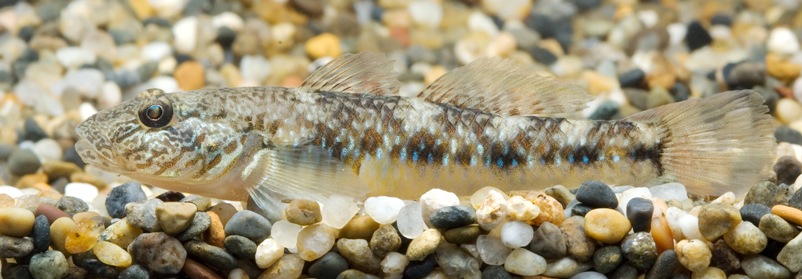
Rhinogobius giurinus
Gobiidae · Rutter, 1897
This species appears to exist in a number of different forms which exhibit differences in colour pattern, morphology, or both, and it's currently unclear whether all of them are truly conspecific or not although to avoid confusion we list all together here.
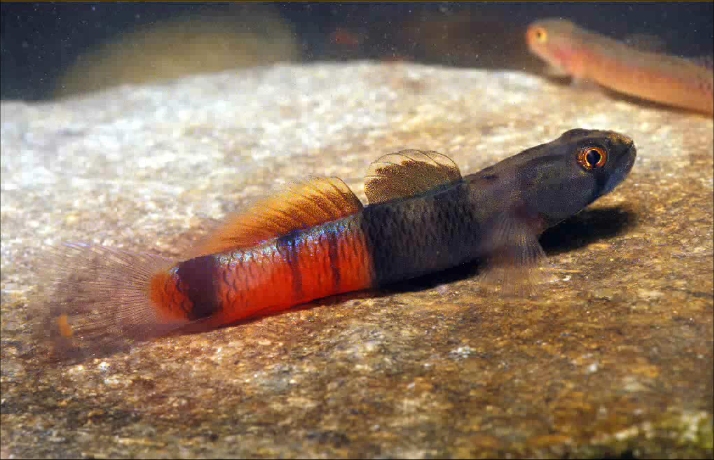
Sicyopus zosterophorus
Gobiidae · Bleeker, 1856
Type locality is given as 'Boleling, northern Bali, Indonesia' which appears to correspond to modern-day Buleleng, but this species is currently understood to have a patchy but wide distribution with a range stretching westwards from the Marquesas Islands (French Polynesia), throughout much of Vanuatu, New Caledonia, the Solomon Islands, Papua New Guinea, Palau, Fiji, Indonesia, the Philippines, Japan, Taiwan, and most recently, southern mainland China...
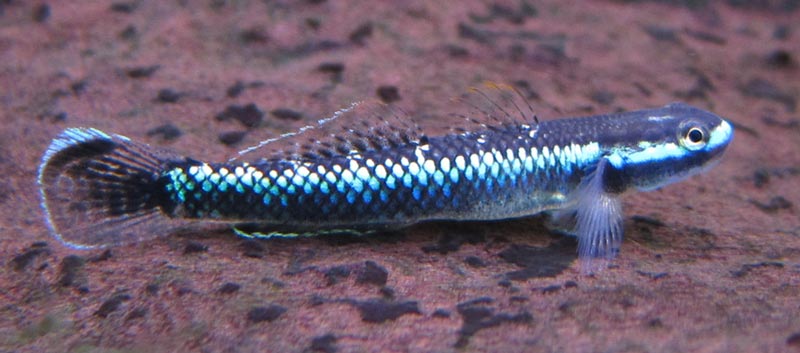
Stiphodon atropurpureusBlue Neon Goby
Gobiidae · Herre, 1927
This species is available occasionally, though not always under the correct name. We've seen it on sale as S. elegans on numerous occasions, for example, and other trade names include 'Sumatran blue neon goby' (it's not found on Sumatra), 'cobalt blue goby' and 'freshwater neon goby'. Further...
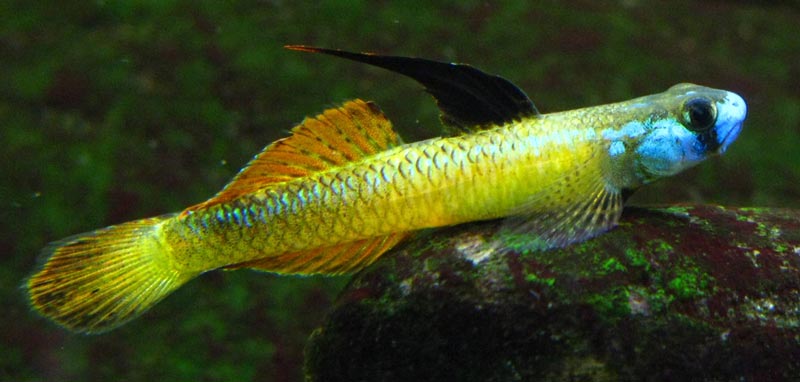
Stiphodon percnopterygionus
Gobiidae · Watson & Chen, 1998
This species is rare in the aquarium trade and normally expensive when available. It's one of the most easily-identifiable in the genus by the combination of usually 14 pectoral-fin rays, 10 segmented second dorsal-fin rays, relatively small adult size, unique colouration in males and the shape of the first dorsal-fin in males in which the fourth and fifth spines are...
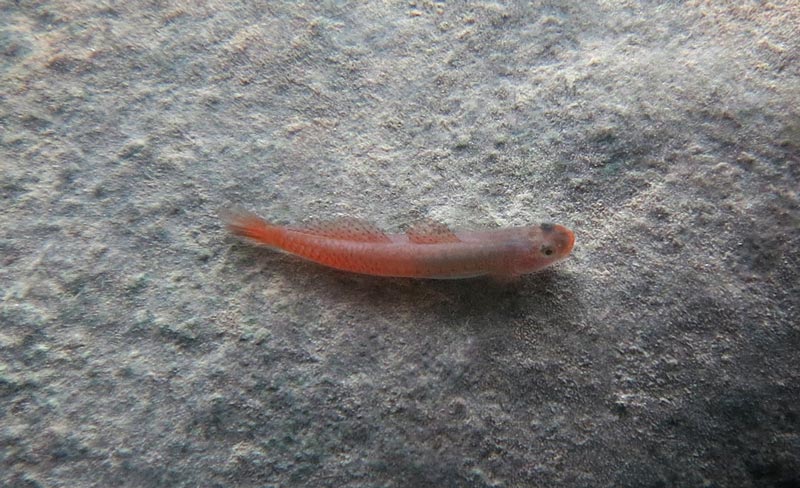
Stiphodon surrufus
Gobiidae · Watson & Kottelat, 1995
As with all members of the genus sexual dimorphism is pronounced. Males are brightly-coloured, with a reddish-orange stripe extending posteriorly from the pectoral-fin, with the posterior portion of the body entirely suffused with red. A darkish band extends from behind the eye to the edge of the opercle, and the basal third of the caudal-fin is reddish-orange.
Xiphophorus helleriiGreen Swordtail
Poeciliidae · Heckel, 1848
Wild swordtails are a fairly basic green colur. However the vast majority of swordtails available in the hobby today are hybrids of X.helleri with X.maculatus or X.variatus. There are a huge number of selectively-bred varieties available, including wagtail, lyretail, tuxedo, albino, neon, red, green and hi-fin. Swordtails may undergo what appears to be a change in sex. In young fish this may simply be late development. However some adult females develop male characteristics which is thought ...
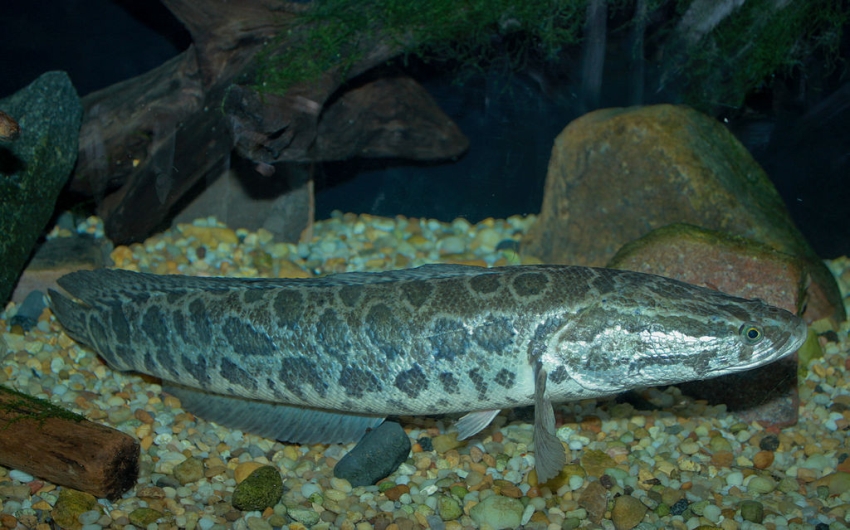
Channa argusNorthern Snakehead
Channidae · Cantor, 1842
This species is largely unsuitable for the home aquarium given its eventual size and natural behaviour, and we know of only a handful of private aquarists with the facilities required to house it long-term. It's currently illegal to import or own the species in the United States, United Kingdom and several other countries unless in possession of an official license.
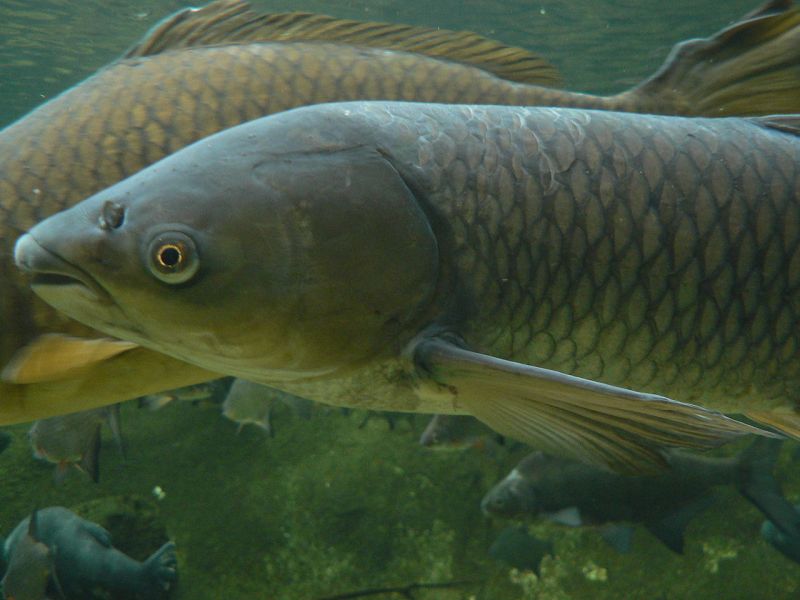
Ctenopharyngodon idellaGrass Carp
Cyprinidae · Valenciennes, 1844
Despite being a wholly unsuitable aquarium subject, C. idella is often traded as such, with an albino form having been developed specifically for the ornamental market. Individuals which have outgrown their aquarium or pond should never be released into natural waters, either, since this species has proven capable of causing serious environmental damage under a wide range of climatic conditions.
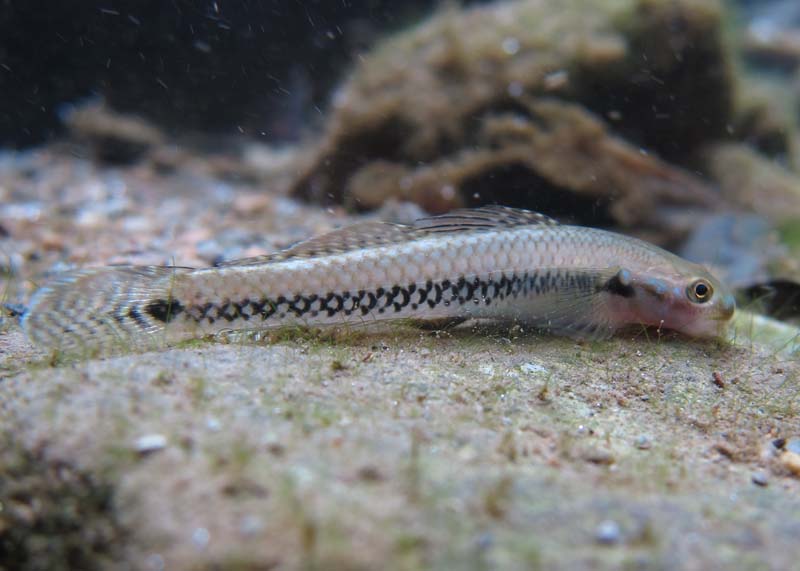
Stiphodon alcedo
Gobiidae · Maeda, Mukai & Tachihara, 2011
Known only from the Ryukyu Islands, Japan, and thus far recorded from just 4 streams on Okinawa island and two on Iriomote island. The type series derived from both islands with Okinawa given as type locality. It may be more widely-distributed than this however, and was possibly transported to the Ryukyu Islands via the Kuroshio Current, an ocean current similar to the Gulf Stream transporting warm, tropical water northward from an area east of Taiwan past Japan towards the polar region.
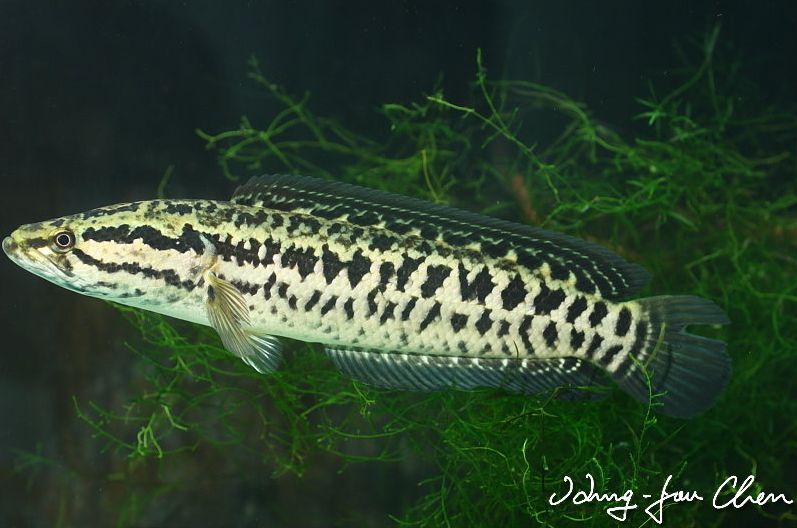
Channa maculataBlotched Snakehead
Channidae · Lacepède, 1801
This species is frequently confused with C. argus but can be distinguished by the following characters: dorsal-fin rays 38-45 (vs. 47-50 in C. argus); anal fin rays 26-29 (vs. 31-36); lateral line scales 50-56 (vs. 60-66); 2-3 rounded blotches on caudal peduncle (vs. no blotches on caudal peduncle). It is widely-distributed in Pacific coastal drainages of southeastern China (e.g. the Yangtze, Minjiang, Hangjiang River, and Pearl (Nanjiu...
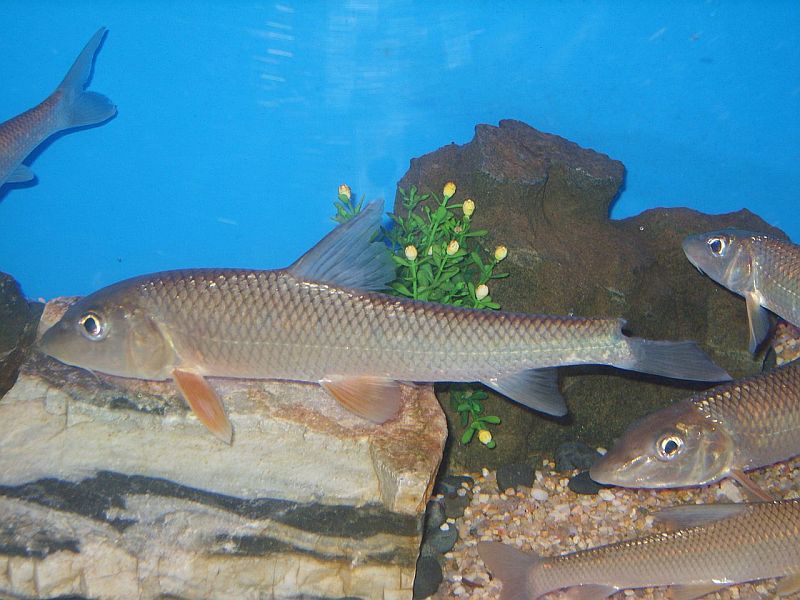
Hemibarbus labeoBarbel Steed
Cyprinidae · Pallas, 1776
This species can be distinguished from other members of the genus by the following combination of characters: absence of dark spots on body in adults; body elongate with slightly convex dorsal profile; head longer than body is deep; snout much longer than postorbital head length; lips well developed, lateral lobes of lower lip broad and thick with folds, median process small; barbel thickness shorter or equal to eye diameter; dorsal spine strong, ⅔ of HL; dorsal-fin origin closer to tip of snout than caudal-fin base base; 15+ gill rakers; 6½ branched anal-fin rays; posterior simple dorsal-fin rays ossified and spinous.
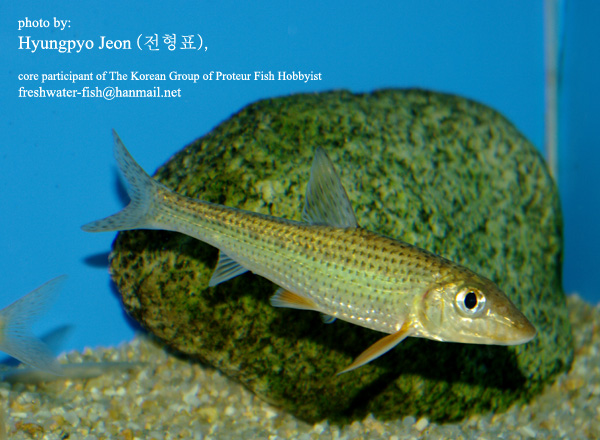
Hemibarbus longirostris
Cyprinidae · Regan, 1908
A predominantly riverine fish preferring clear, well-oxygenated, running waters with substrates of sand, gravel, rock or mud, where adults tend to form schools just above the substrate in slower-moving sections.
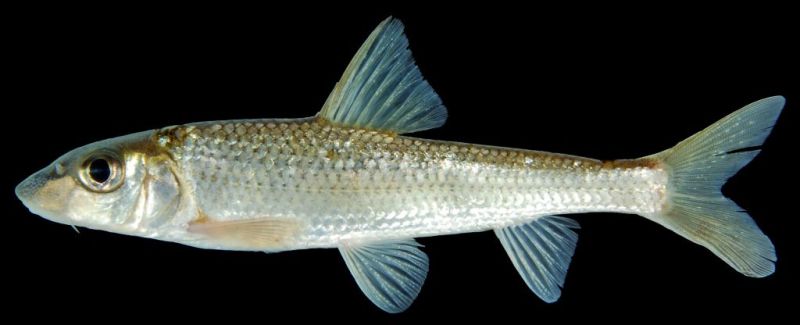
Hemibarbus maculatusSpotted Steed
Cyprinidae · Bleeker, 1871
Widepread in eastern Asia between the Yangtze and Amur river basins, including China (mainland and islands of Taiwan and Hainan), Korea, Mongolia, Russia, and Japan. It probably been introduced to Vietnam and Laos, or records from these countries represent another species.
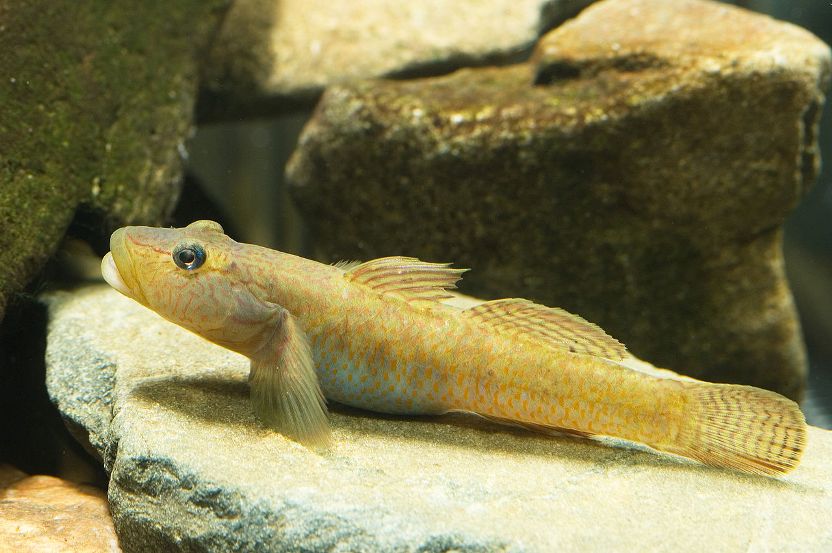
Rhinogobius sp. 'CB'
Gobiidae · authority not recorded
There are a number of unidentified species within the grouping of which several are referred to using a two-letter code based on their respective colour pattern for ease of reference, with 'CB' shorthand for 'cross band', for example. R. sp. 'CB' is the commonest member of the grouping in Japan but has not yet entered the international aquarium trade as far as we know.
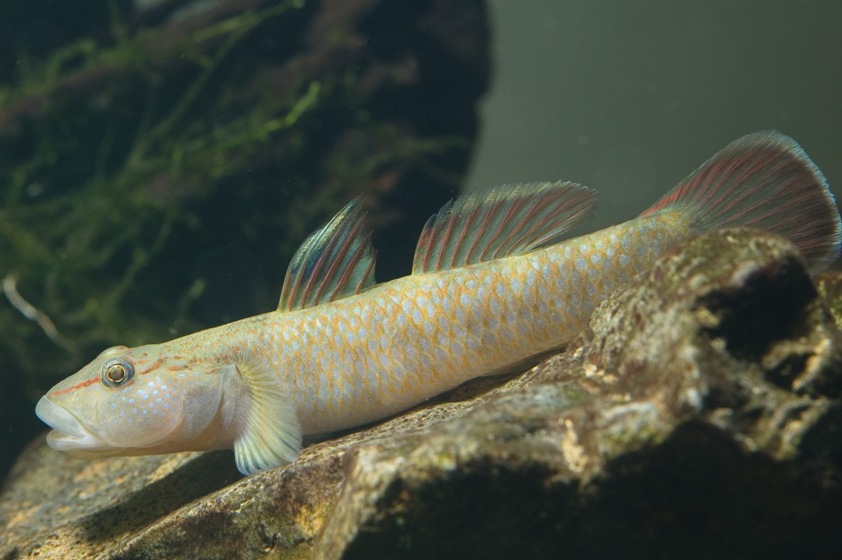
Rhinogobius sp. 'CO'
Gobiidae · authority not recorded
Some wild populations have evolved a complex amphidromous breeding strategy in which adults live and spawn in freshwater or brackish streams and the pelagic post-hatch larvae are washed downstream to the sea where the post-larval fry spend the first part of their life developing in estuarine nursery zones under brackish to full marine conditions. Once they reach a certain stage of development they begin to migrate upstream with some mov...