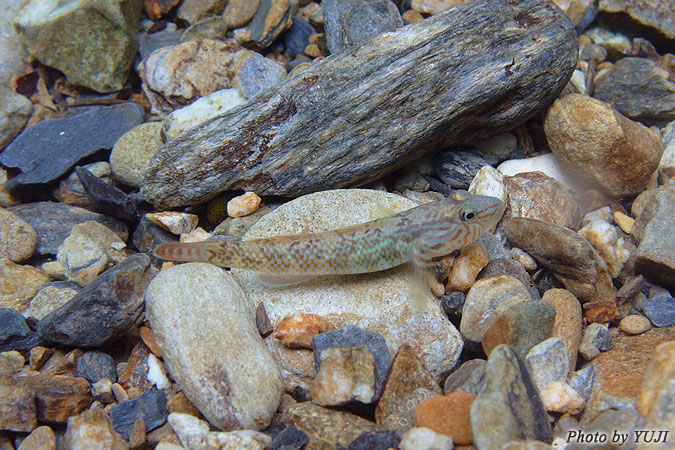
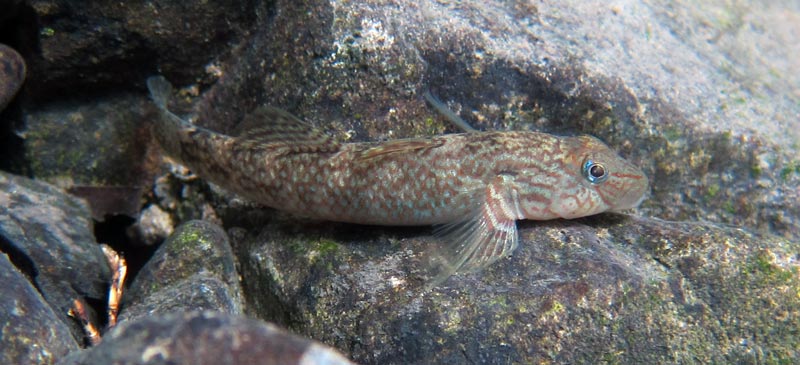
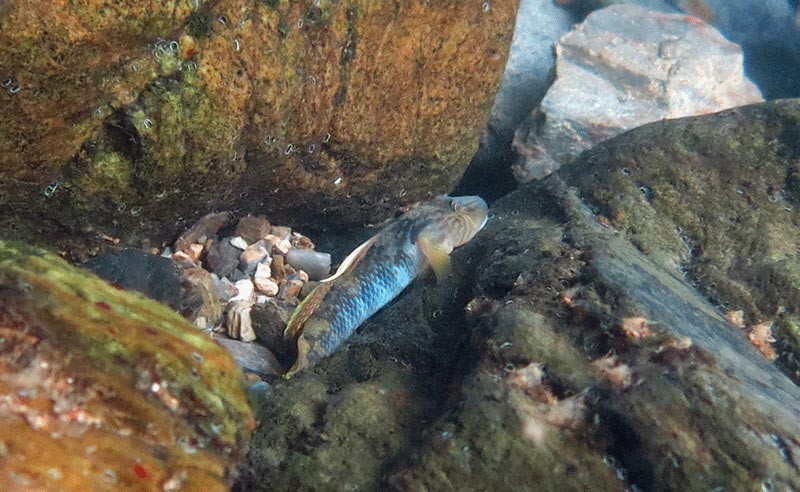
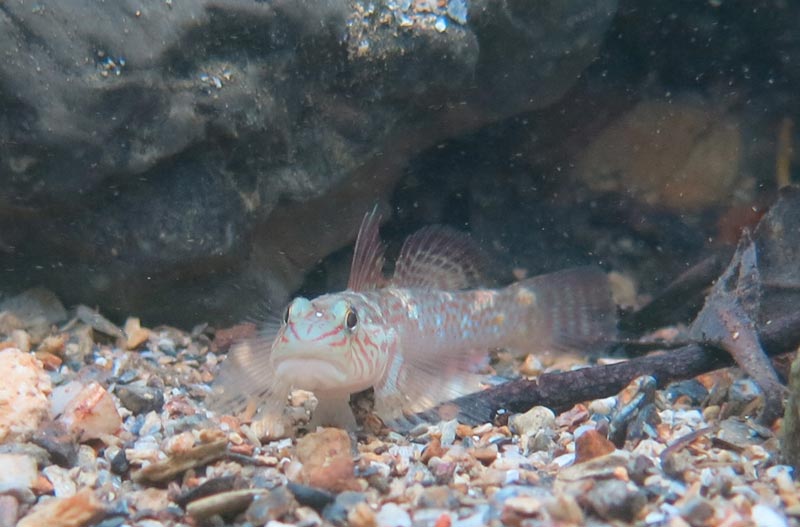
Rhinogobius sp. 'CB'
On this page7 sections
Quick facts
Difficulty2 of 6 measures
Not enough data to rate
More bars, more demanding.
- Space
- unknown
- Water
- unknown
- Temp
- unknown
- Temperament
- unknown
- Social
- shoal
- Compatibility
- not a community fish
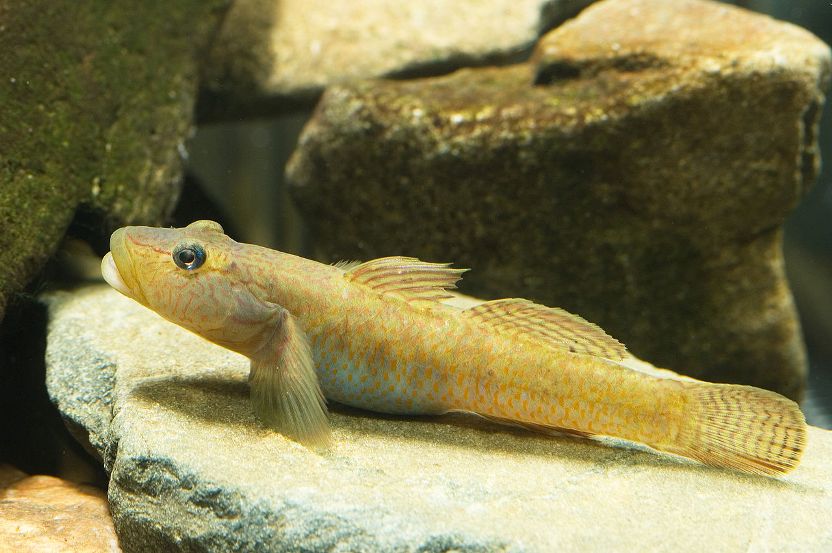
There are a number of unidentified species within the grouping of which several are referred to using a two-letter code based on their respective colour pattern for ease of reference, with 'CB' shorthand for 'cross band', for example. R. sp. 'CB' is the commonest member of the grouping in Japan but has not yet entered the international aquarium trade as far as we know.
Etymology
Rhinogobius: from the Greek rhinos, meaning 'nose', and the generic name Gobius.
Distribution
Widely-distributed throughout the majority of Japan with the exception of Hokkaido, the northernmost island in the archipelago.
Habitat
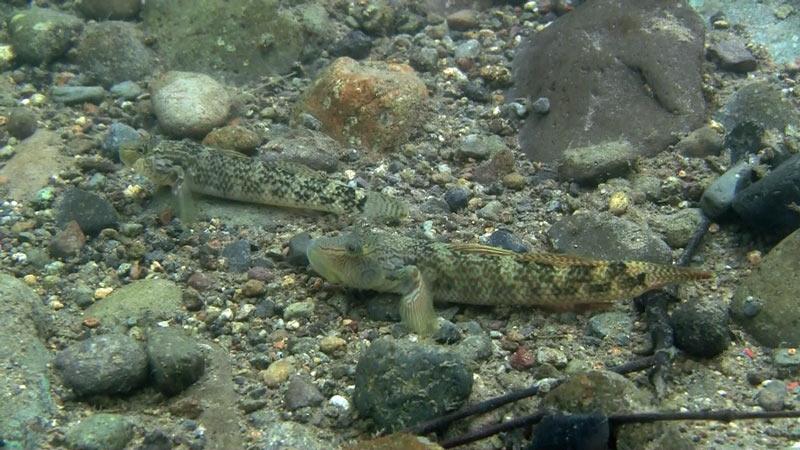
Inhabits smaller tributaries and streams with substrates of gravel, rocks, boulders, and exposed bedrock which undergo seasonal variations in water flow rate, depth and turbidity.
Reproduction
Some wild populations have evolved a complex amphidromous breeding strategy in which adults live and spawn in freshwater or brackish streams and the pelagic post-hatch larvae are washed downstream to the sea where the post-larval fry spend the first part of their life developing in estuarine nursery zones under brackish to full marine conditions.
Once they reach a certain stage of development they begin to migrate upstream with some moving into freshwater tributaries and others remaining in lower, tidally-influenced habitats.
Other populations are land-locked with the entire life cycle occurring in freshwater, and these tend to produce larger eggs than the amphidromous forms.
In nature the fish are reproductively active from summer to early autumn and during this period males begin to defend territories which tend to be centred around a flattish rock or stone beneath which the eggs are deposited.
Post-spawning the female is ejected and the male assumes responsibility for brood care and guarding.
Notes
This unidentified species is a member of the R. brunneus complex of closely-related species within the genus Rhinogobius.
Members share the following combination of characters: predorsal naked, or with small cycloid scales, the scaled area never extending beyond the vertical of the posterior margin of the preoperculum; cheek with 2 mainly horizontal rows of sensory papillae.
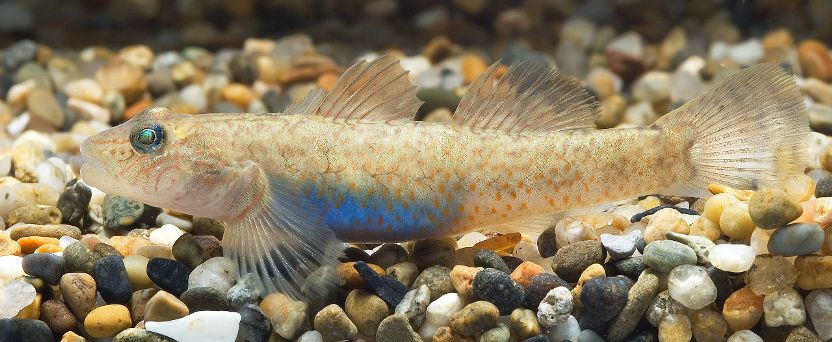
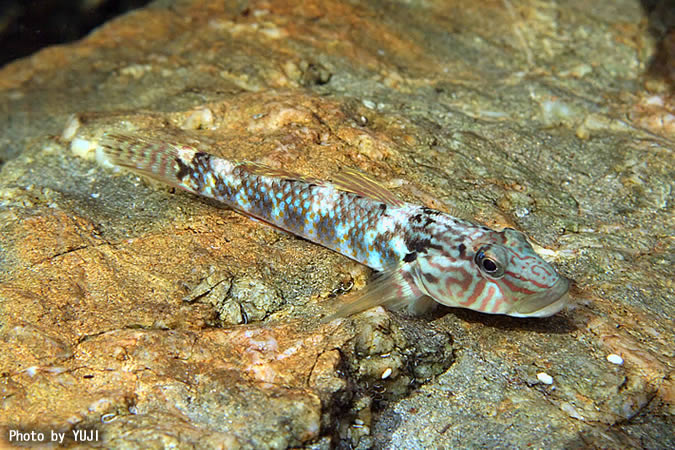
There are a number of unidentified species within the grouping of which several are referred to using a two-letter code based on some diagnostic character of their respective colour pattern, with 'CB' shorthand for 'cross band' in reference to the dark bars on the body.
R. sp. 'CB' is the commonest member of the grouping in Japan but has not yet entered the international aquarium trade as far as we know.
References
- Tsunagawa, T. and T. Arai (2011). Migratory history of the freshwater goby Rhinogobius sp. CB in Japan. Ecology of Freshwater Fish 20, 33-41
- Chen, I-S. and K.-T. Shao (1996). A taxonomic review of the gobiid fish genus Rhinogobius Gill, 1859, from Taiwan, with description of three new species. Zoological Studies 35(3), 200-214
Species images · 8
Used with the photographer’s permission. Not licensed for reuse.
Distribution
Profile completeness11 of 24
46% complete
Missing: water parameters, hardness, maximum size, aquarium size, taxonomic authority, a common name, temperament, aquarium notes, maintenance, water condition notes, diet, behaviour and compatibility, sexual dimorphism.