Genus
Barilius
- Species
- 8
- Photographed
- 8 of 8
- Difficulty rated
- 8 of 8
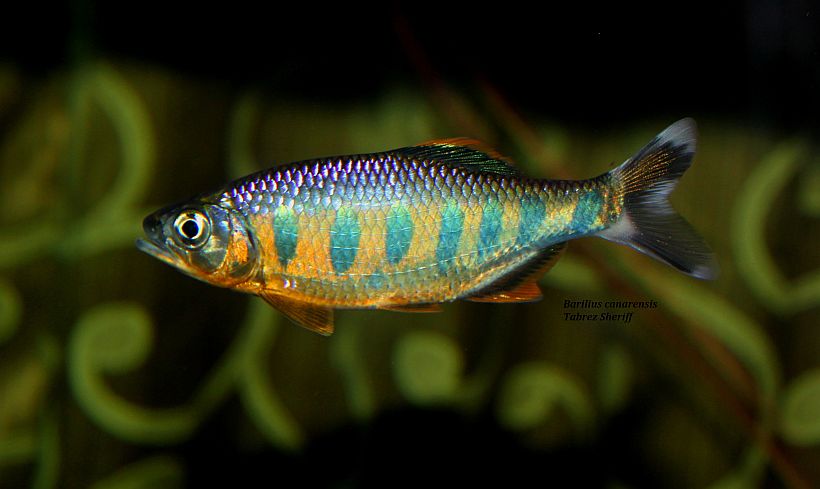
Barilius ardens
Knight, Rai, d'Souza & Vijaykrishnan, 2015
Prior to its description this species was typically identified as the congener B. canarensis in the ornamental trade. It can be distinguished from congeners by the following combination of characters: uni...
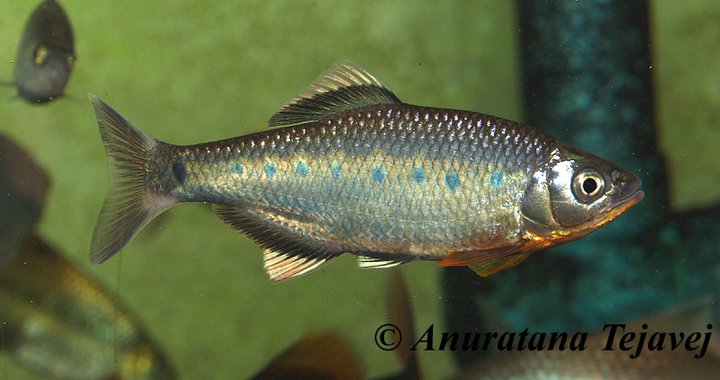
Barilius bakeri
Day, 1865
This species is traded under several names including 'royal danio', 'blue-spotted hill trout', and 'blue-dotted mirror fish'. It can be distinguished from congeners by possessing a single row of bluish-green spots along the length of the body, white margins on the dorsal and anal fins, 37-38+1 lateral line scales, and fleshy rudi...
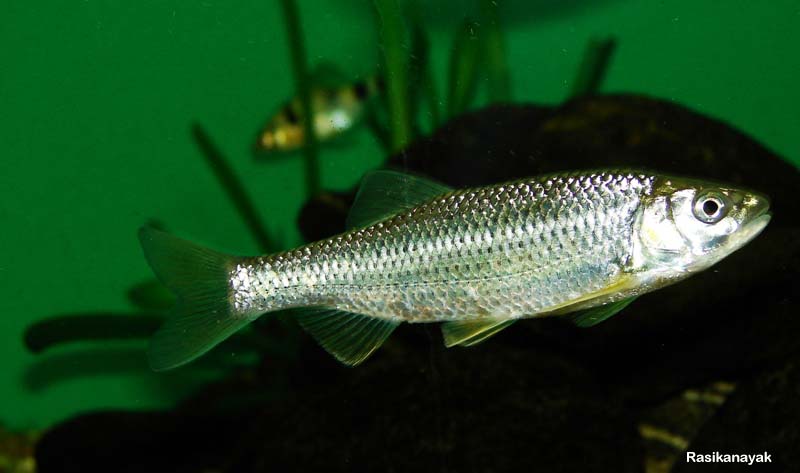
Barilius bendelisis
Hamilton, 1807
Type locality is given as 'Cedawáti [Vedawati] stream, headwaters of Krishna River near Heriuru, Mysore, India', with the species currently considered to occur throughout India, Bangladesh, Nepal, and probably Bhutan. It's also been recorded in Pakistan, Myanmar, Thailand and Sri Lanka although some or all of these reports may refer to other species.
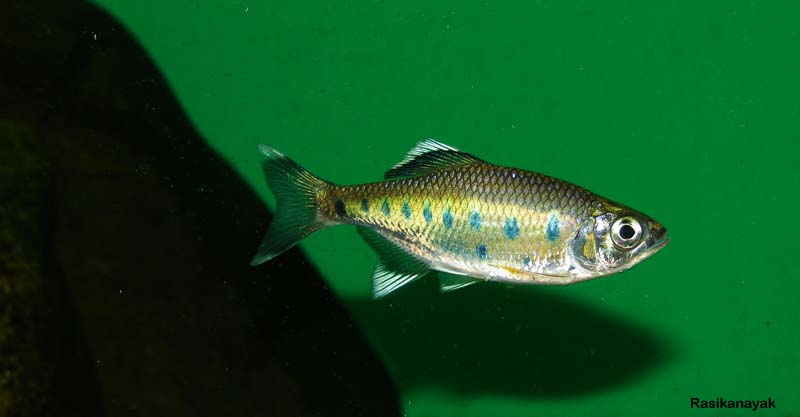
Barilius canarensis
Jerdon, 1849
Type locality is 'Canara, southern India', which corresponds to a coastal region of approximately 300 km in length covering several districts of Karnataka and Kerala states, southwestern India. Rivers in this area drain the Western Gha...
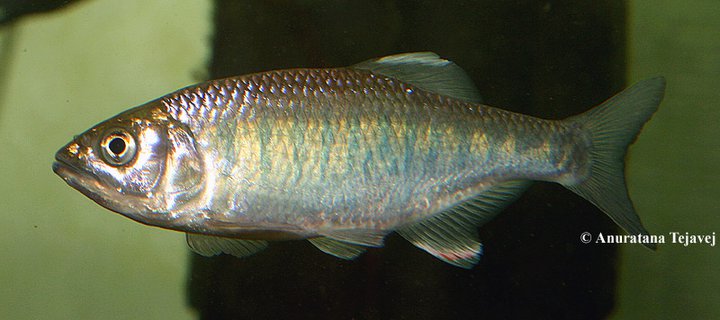
Barilius gatensisMalabar Baril
Valenciennes, 1844
This species is traded very occasionally, sometimes under the alternative vernacular names of 'river baril, 'river carp-baril', or 'striated hill trout'. It can be told apart from congeners by the following combination of characters: 1 pair of minute rostra...
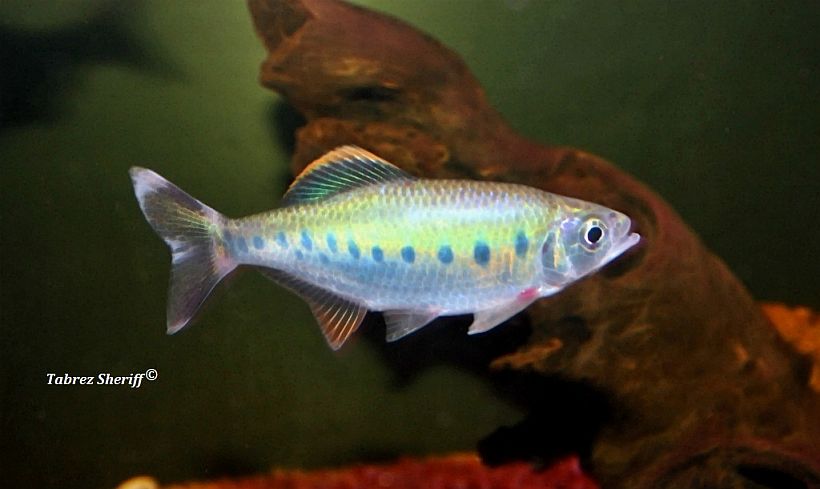
Barilius malabaricus
Jerdon, 1849
Probably restricted to southern parts of Karnataka state and northern Kerala state in southwestern India. Following its revalidation in 2015 (see 'Notes') it is known with certainty only from the Payaswini and Vallapattanam river systems in Kerala although it is thought to occur elsewhere.
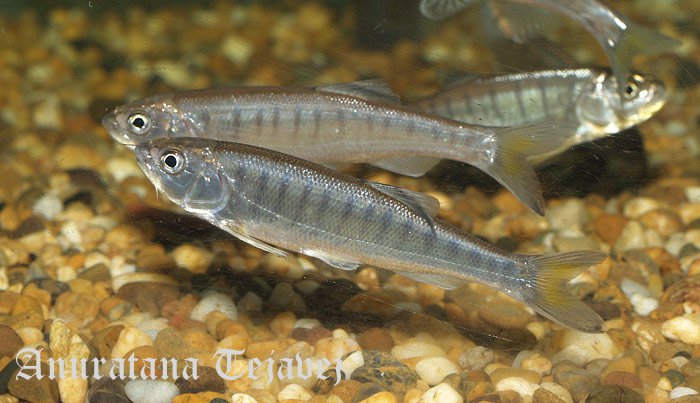
Barilius shacra
Hamilton, 1822
Like many fishes that naturally inhabit running waters it's intolerant to the accumulation of organic wastes and requires spotless water at all times in order to thrive. It also does best if there is a high proportion of dissolved oxygen and moderate degree of water movement so external filters, powerheads, airstones, etc., should be employed as necessary.
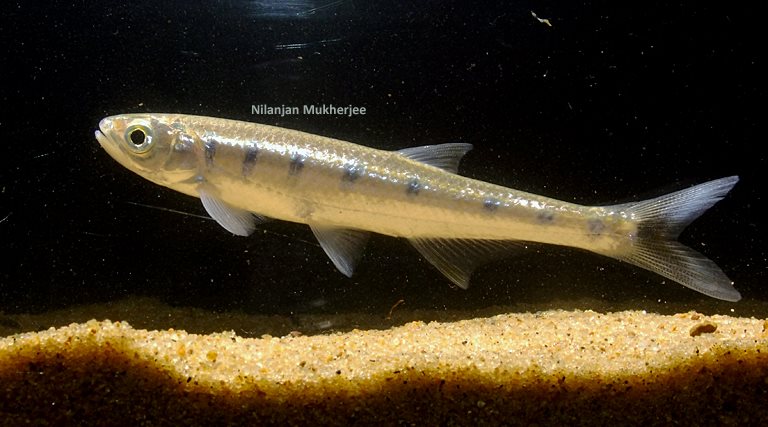
Barilius vagra
Hamilton, 1822
Barilius spp. are near-exclusive surface-feeders preying mostly on flying insects in nature with some small fishes and benthic invertebrates probably taken as well but in the aquarium they're largely unfussy and will accept most foods.