Genus
Betta
- Species
- 60
- Photographed
- 60 of 60
- Difficulty rated
- 60 of 60
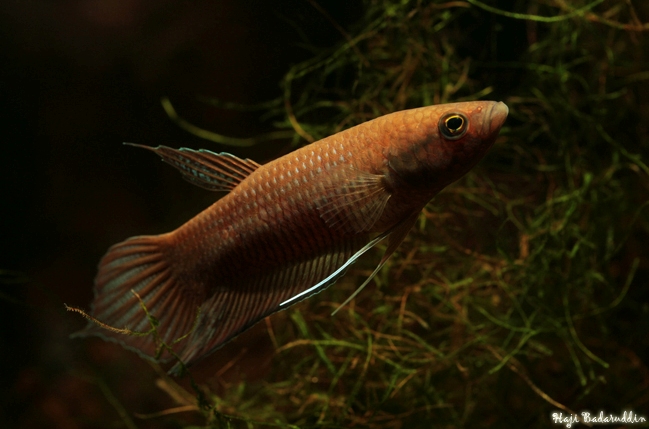
Betta akarensis
Regan, 1910
Like others in the suborder Anabantoidei this species possesses an accessory breathing organ known as the labyrinth. So-called due to its maze-like structure this organ allows the fish to breathe atmospheric air to a certain extent. Comprising paired suprabranchial organs formed via expansion of the epibranchial (upper) section of the first gill arch and housed in a chamber above the gills, it contains...
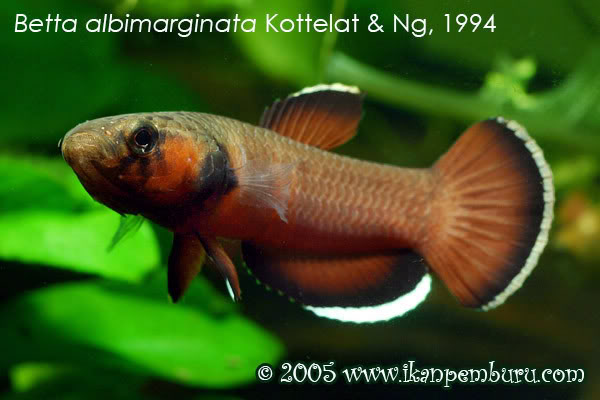
Betta albimarginata
Kottelat & Ng, 1994
Additonally, fin patterning in B. albimarginata, except the pectoral fins, consists of a broad white distal band, broad dark submarginal band with sharp outer margin and less sharp inner margin, and a plain red inner portion, while in B. channoides the dorsal fin is almost entirely red with only a thin white distal band and the dark submarginal band in the caudal fin does not extend into the uppermost portion of the fin. Base body colouration tends towards a brick-red shade in displaying male B. albimarginata, scarlet in B. channoides (pers. obv.).
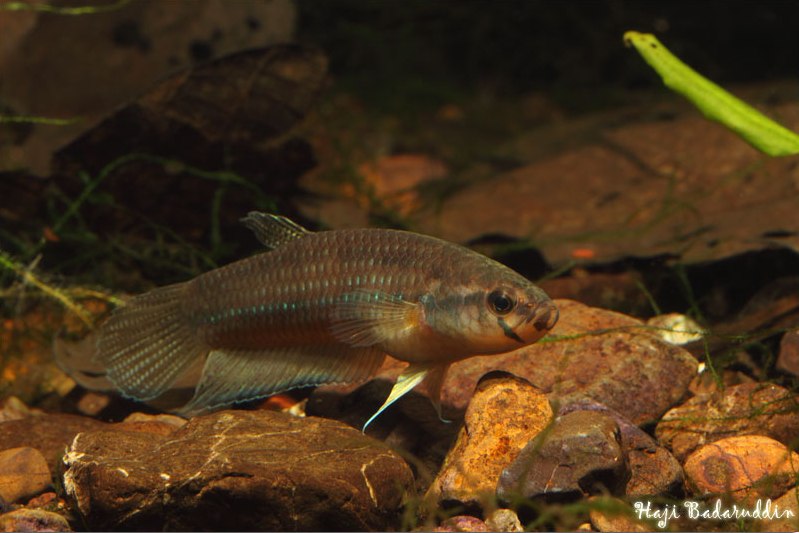
Betta antoni
Tan & Ng, 2006
The genus Betta is the most speciose within the family Osphronemidae with almost 70 recognised members and looks set to grow further with new ones continuing to be described on a regular basis since the turn of the century. Member species have successfully adapted to inhabit a variety of ecological niches from stagnant ditches to flowing hill streams including some extreme environments such as highly acidic peat swamp forests.
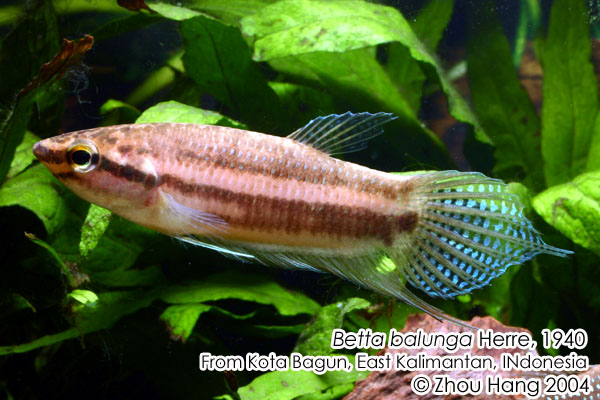
Betta balunga
Herre, 1940
Likely to prey on insects and other small invertebrates/zooplankton in nature. Captive fish will normally accept dried products once they're recognised as edible, but should be offered plenty of small live or frozen foods such as Daphnia, Artemia or bloodworm regularly to ensure development of optimal colour and condition. Small insects such as crickets or Drosophila fru...
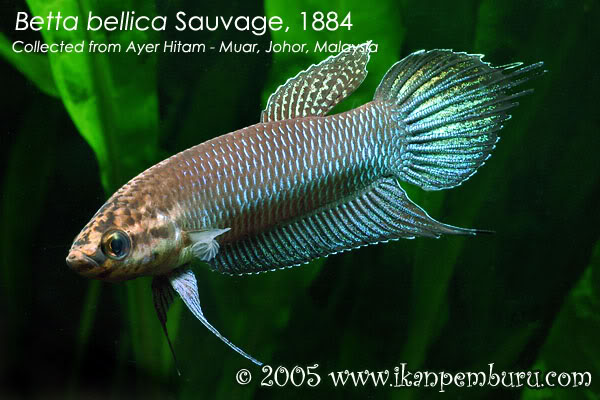
Betta bellicaSlender Betta
Sauvage, 1884
This species lends it name to the B. bellica group/complex of closely-related species within the genus, an assemblage of which members share the following set of characters: long and slender body with dorsal and ventral margins almost parallel; body depth 23-28 % SL; 30-33 anal-fin rays; 11-13 dorsal-fin rays; 32-34 total vertebrae; body dark brown in colour with iridescent green markings on each individual scale.
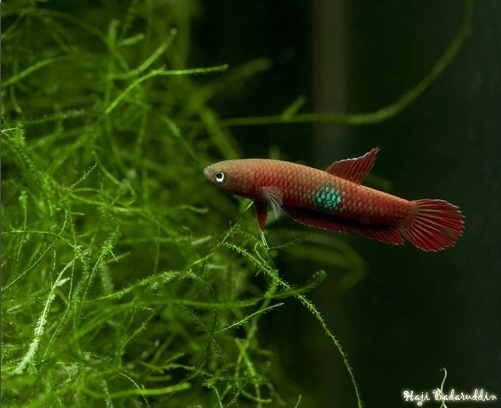
Betta brownorum
Witte & Schmidt, 1992
B. brownorum is included in the Betta coccina group/complex of closely-related species within the genus. This assemblage mostly comprises small, red-coloured fishes with the exceptions of B. persephone and B. miniopinna which are darkish. Identifying some of the red ones correctly is not always easy as the patterning in them can be both similar and confusingly variable. In B. brownorum and B. livida, for example, both male and female individuals may or may not possess a green lateral blotch.
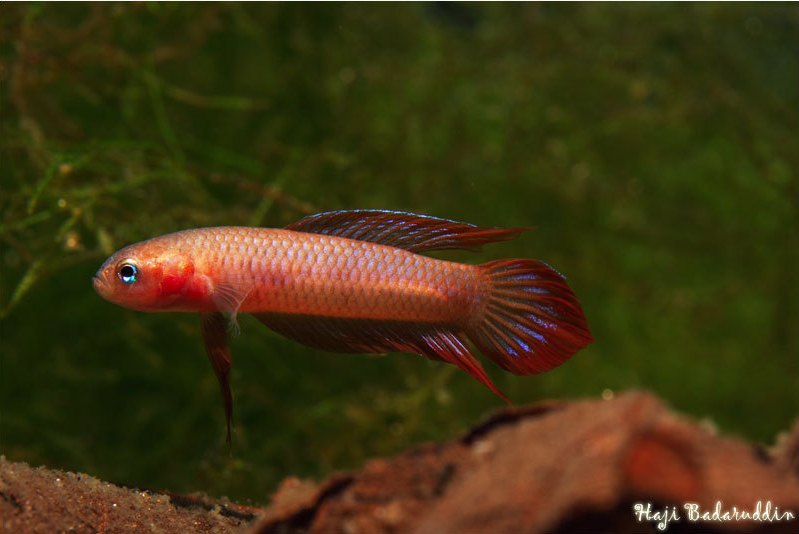
Betta burdigala
Kottelat & Ng, 1994
B. burdigala is exceptionally rare in the hobby with many fishes traded or pictured as such being B. uberis or other congener. It's included in the Betta coccina group/complex of closely-related species within the genus. This assemblage mostly comprises small, red-coloured fishes with the exceptions of B. persephone and B. miniopinna which are darkish. Identifying some of the red ones correctly is not always easy as the patterning in them can be both similar and confusingly variable.
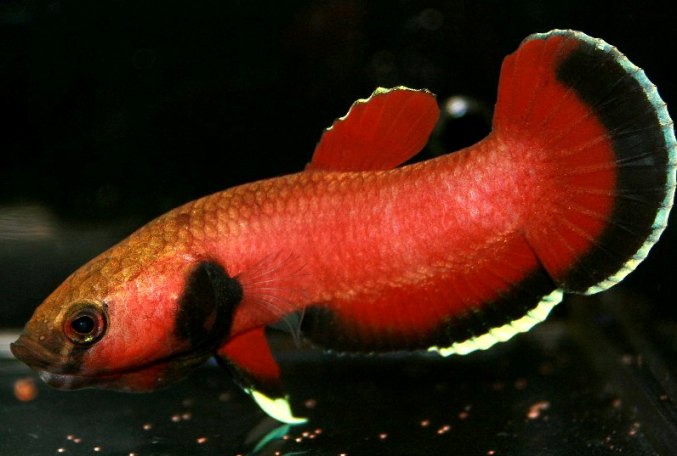
Betta channoidesSnakehead Betta
Kottelat & Ng, 1994
B. channoides and B. albimarginata together comprise the Betta albimarginata group/complex of closely-related species within the genus, these differing from all other members of the genus in colour pattern and by possession of 9-12 anal-fin spines (vs. 0-4). They look very similar to one another but differ in the following characters: anal fin spines 9-11 in B. albimarginata vs. 12 in B. channoides; anal fin rays 21-23 vs. 23-25; lateral scale rows 26-27 vs. 27.5-28; trans...
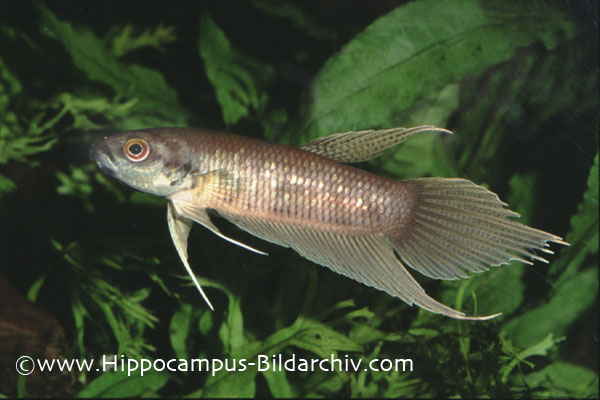
Betta chloropharynxGreen Throat Mouthbrooder
Kottelat & Ng, 1994
B. chloropharynx is included in the Betta waseri group/complex of closely-related species within the genus, an assemblage which also includes a handful of potentially new species such as B. sp. 'Medas' on an unofficial basis. The easiest way to distinguish these is by examining the throat markings which vary according to species. In this case the lighter of these form a shape that roughly resembles a horizontal figure of ei...
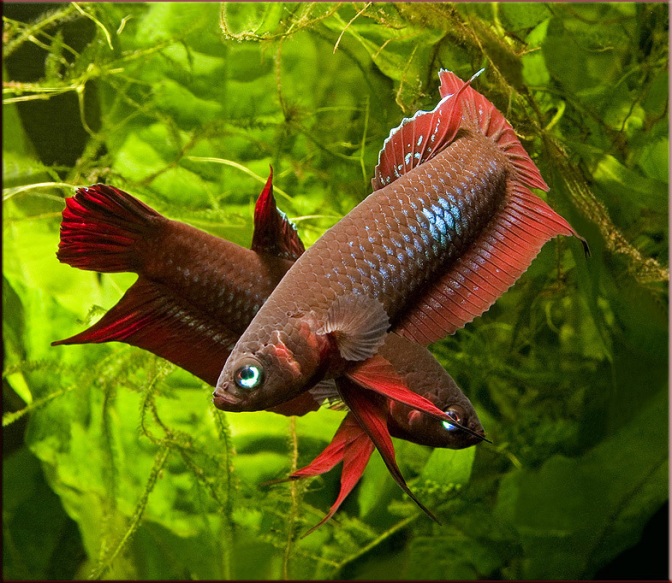
Betta coccinaScarlet Betta
Vierke, 1979
B. coccina can be told apart from other members by the following combination of characters: iridescent green lateral blotch present in male, absent in female; body dark red in colour; no parallel vertical iridescent gold opercle bars; pelvic fin falcate with black filamentous tip, remainder red; median fins with discrete iridescent green spots; dorsal fin-rays 9-12; anal-fin rays 27-29; subdorsal scales 7-8; lateral scales 31-32; predorsal scales 18-21. The genus Betta is the most speciose within the family Osphronemidae with almost 70 reco...
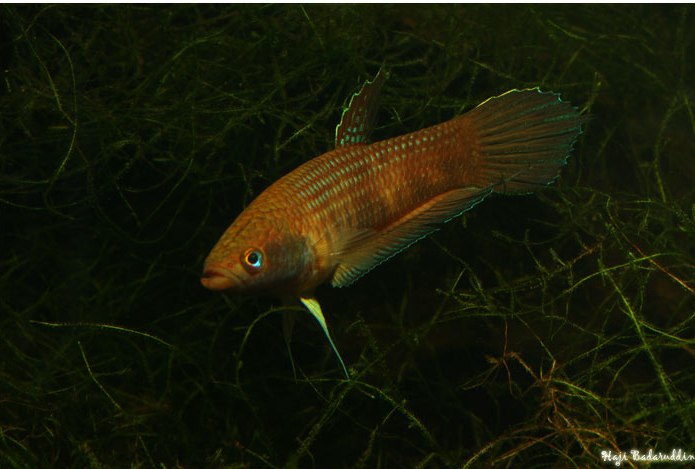
Betta cracens
Tan & Ng, 2005
The type locality is a stream in a forest swamp with dense growth of Barclaya motleyi at intervals, part of which had been turned over to cultivation of rubber trees in 1997. The water depth varied between 5-80 cm, pH was 5.8 and syntopic species included 'Puntius' banksi, Rasbora einthoveni, Trigonopoma pauciperforatum, Hemirhamphodon pogonognathus, Betta pugnax, Sphaerichthys osphromenoides, Trichogaster trichopterus, Channa gachua and C. lucius.
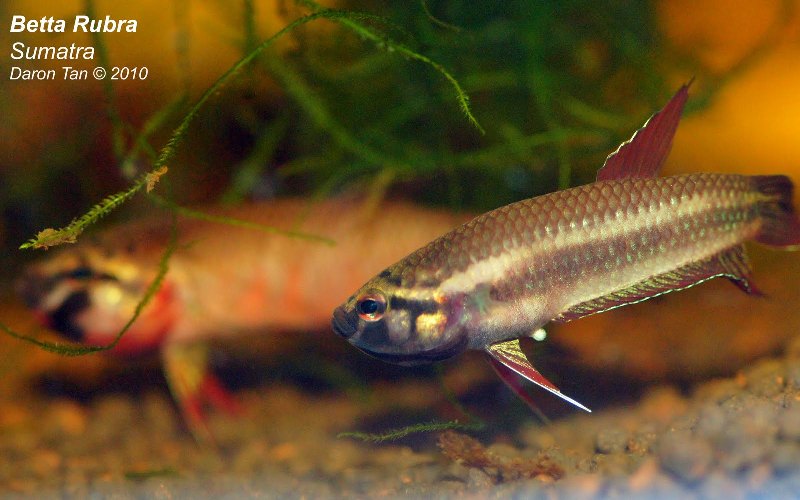
Betta dennisyongi
Tan, 2013
This species is available in the aquarium hobby but is not traded in large numbers and may have been inadvertently hybridised with the similar-looking congener B. rubra prior to its description since they're typically exported mixed together. It's included in the B. rubra group of closely-related species within the genus, an assemblage erected by Schindler and van der Voort (2012) who...
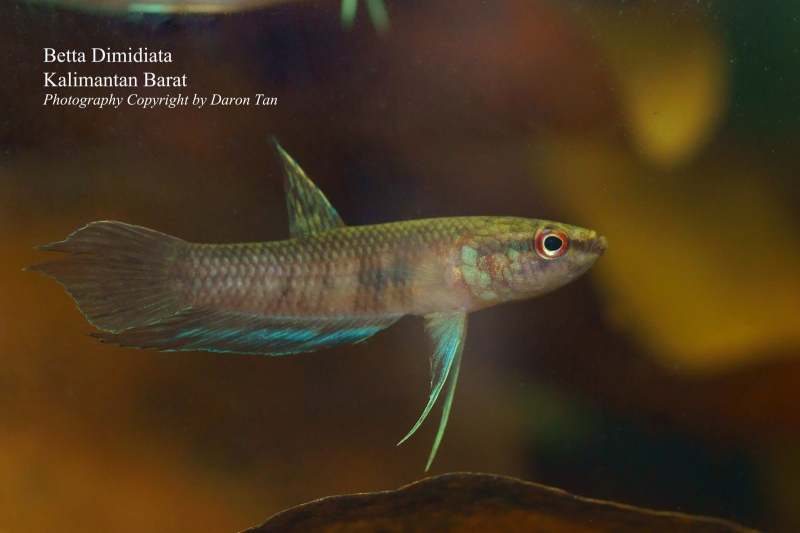
Betta dimidiata
Roberts, 1989
This species is often confused with B. krataios in the aquarium trade, the latter having been known as B. sp. 'Kapuas' prior to description. The two can easily be told apart as the caudal-fin is rounded in B. krataios but spade-shaped and in adults, highly-extended in B. dimidiata. Together these two comprise the B. dimidiata group of closely-related species within the gen...
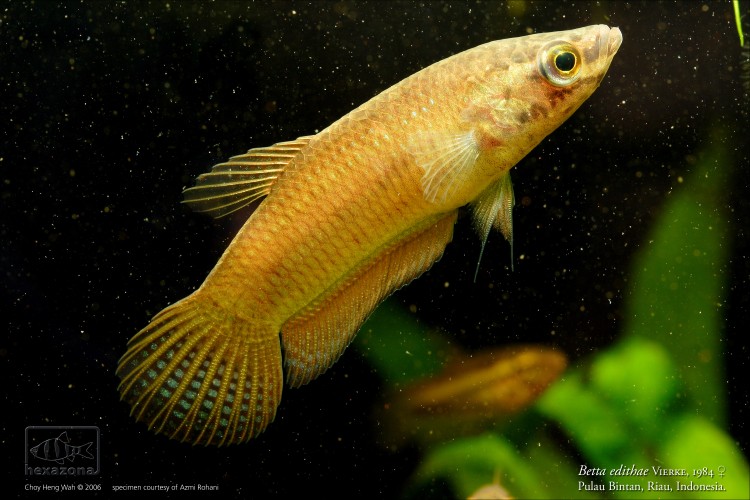
Betta edithae
Vierke, 1984
This species is the only member of the B. edithae group within the genus, and separated from all other Betta spp. by the fact that the branchiostegal membrane and posterior portion of the opercle are opaque or translucent. The original diagnosis by Vierke also states that it has relatively small eyes and short fins with a typical pattern of partial barring.
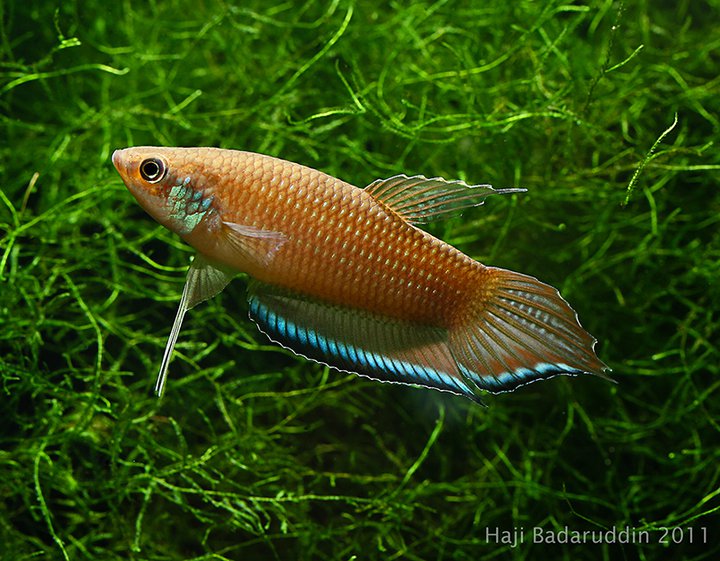
Betta enisae
Kottelat, 1995
This species is included in the B. pugnax complex of closely-related species within the genus, an assemblage of which members are notoriously difficult to tell apart from one another, but which can be characterised collectively by the following set of shared characters: relatively large head measuring 28-40% SL; live colouration usually brown with green or blue iridescent spots; male with similarly-coloured scales on opercle, sometimes extending to abdomen; juveniles and females usually brown with two central body stripes and a dark marking on the caudal peduncle; anal-fin in mature specimens pointed and often elongated; caudal-fin lanceolate.
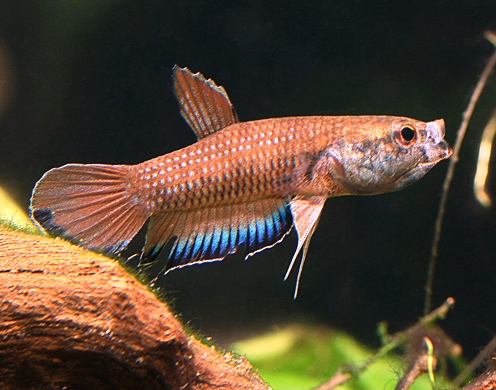
Betta falx
Tan & Kottelat, 1998
B. falx is included in the Betta picta group/complex of closely-related species within the genus, an assemblage comprising species with the following shared characters: unpaired fins rounded (anal-fin sometimes tapering to a blunt point); anal-fin rays I-III, 18-24; dark marginal band on anal and caudal fins, more pronounced in mature males; presence of pre-orbital and post-orbital stripes; presence of chin bar on throat; iridescent green, gold, or blue scales on opercle.
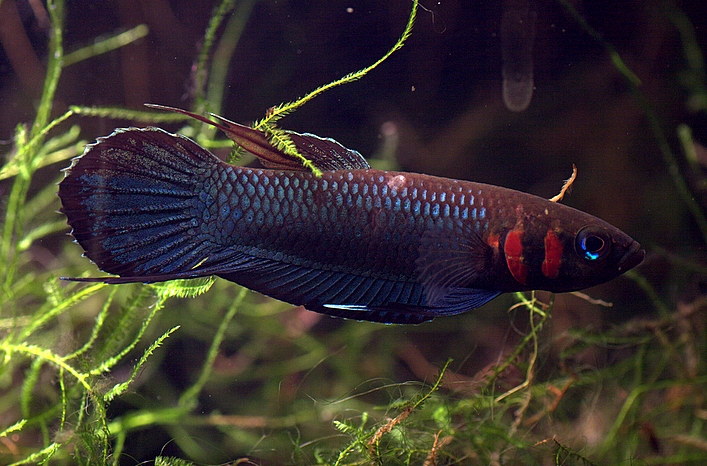
Betta foerschi
Vierke, 1979
This species lends its name to the Betta foerschi group of closely-related species within the genus, of which members share the following set of characters: possession of iridescent blue or green unpaired fins; rays and interradial membranes in unpaired fins not contrasting; dorsal fin with thin, bright white distal band; opercle with two, reddish-yellow, vertical bars. Members are regarded as being closely-related to bubble nesting Betta specie...
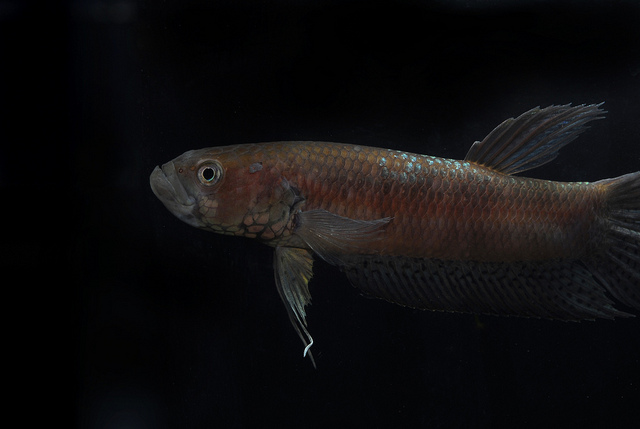
Betta gladiator
Tan & Ng, 2005
Presumed endemic to the geographically-isolated Maliau basin, a roughly circular plateau enclosed by hills in Sabah state, Malaysia, Borneo. The Maliau River is part of the much larger Kinabantangan watershed, Malaysia's second longest river. The type series was collected from heath forest alongside 'Puntius' sealei and Hemibagrus cf. baramensis in acidic water with a pH of 4.2-4.8. Adult individuals were spaced around a metre apa...
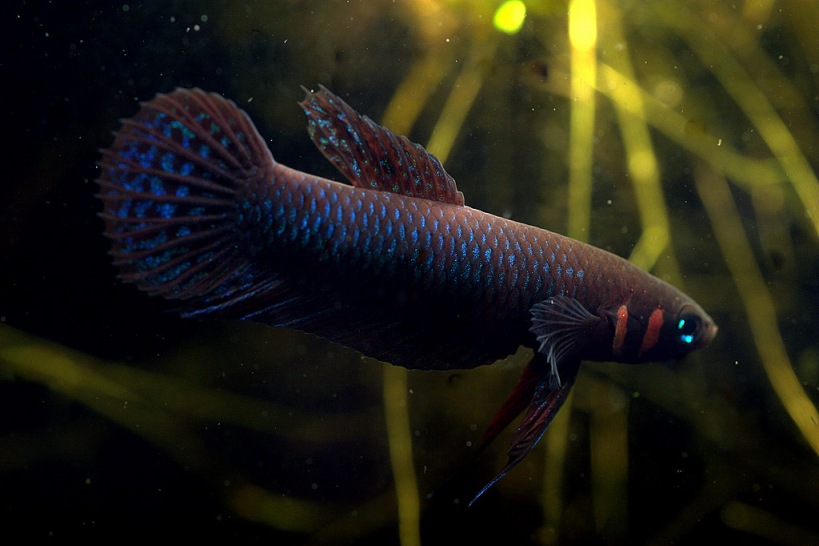
Betta hendra
Schindler & Linke, 2013
This appears to be an undescribed species, and has only been available to the aquarium hobby in limited numbers to date. The rather long-winded trade name derives from the fact that it was initially marketed as two different species, i.e., B. sp. 'Sengalang' and B. sp. 'Palangka'. The spelling of the latter was later corrected but the fish may still be seen with either or both names attached. It looks very similar to fis...
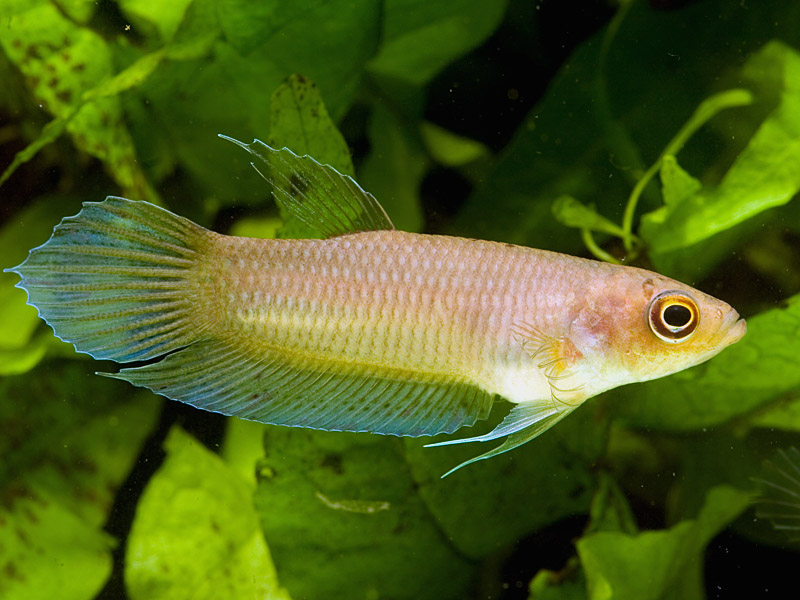
Betta hipposideros
Ng & Kottelat, 1994
The easiest way to distinguish these is by examining the throat markings, which vary according to species, and in the case of B. hipposideros form a black horse-shoe shape. It can also be separated from other group members by the following suite of characters: dark blotch on throat joined to black lower lip; presence of transverse bars in dorsal and caudal fins; absence of dark margin in anal-fin; opercle usually with gold scales, without iridescrent green scales; ventral margin of opercle brown; 6.5-7 subdorsal scales (mode 6.5); 9-10 postdorsal scales (mode 9.5); 31-32 lateral scales (mode 32).
Betta ibanorum
Tan & Ng, 2004
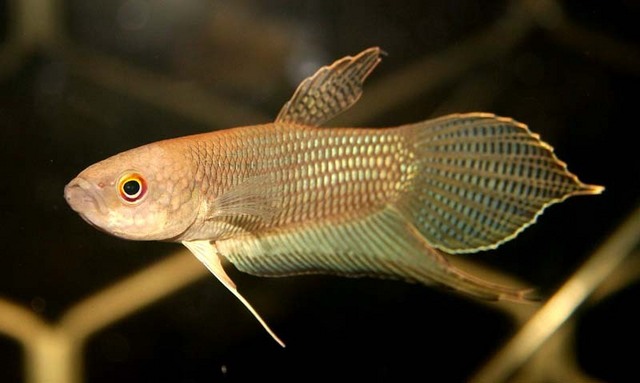
B. ibanorum is uncommon in the hobby and is apparently more frequently fished for food than the aquarium trade. It's included in the Betta akarensis group/complex of closely-related species within the genus, of which members share the following set of characters: possession of pre-orbital and post-orbital stripes (the post-orbital stripe is faint or interrupted in some species); chin bar present; caudal-fin lance...
Betta ideii
Tan & Ng, 2006
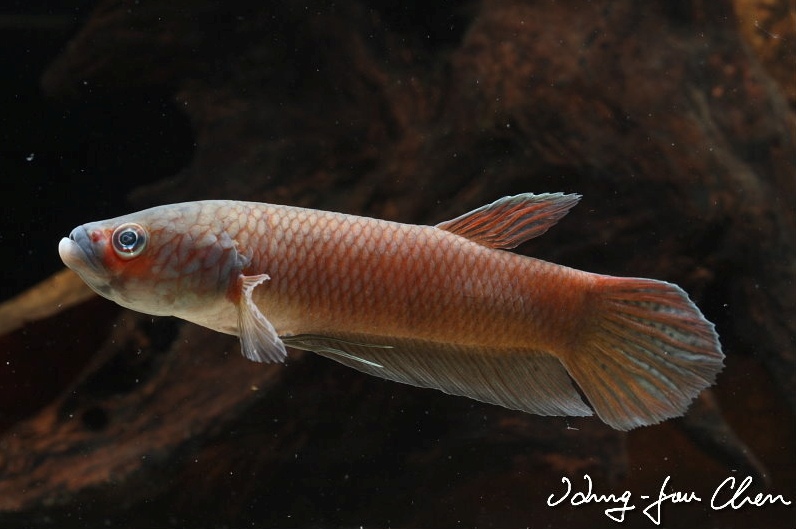
Prior to official description this species was traded as B. sp. 'Laut'. It's included in the Betta unimaculata complex of closely-related species within the genus, , of which members share the following set of characters: body long and slender with depth at dorsal fin origin 18-25 % SL; head large and blunt with width 19-24 % SL; long maxilla and lower lip with distance from tip of lower jaw to posterior end of maxilla 27-54 % HL; caudal-fin rounded in sha...
Betta imbellisCrescent Betta
Ladiges, 1975
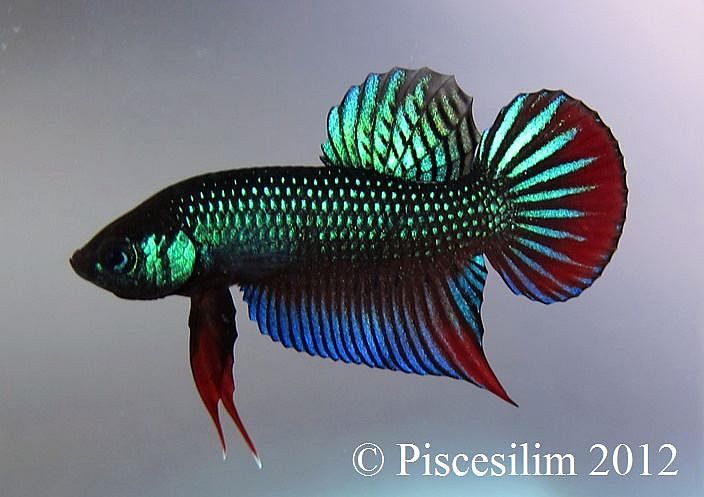
B. imbellis is included in the Betta splendens complex of closely-related species within the genus, of which members share the following set of characters: head length short 22-31 % SL; often a brightly-coloured body; iris of the eye with iridescent green or blue patches; body elongate or slender; opercles parallel when head viewed dorsally; caudal-fin rays red or brown and contrasting with the iridescent interradial membranes; unpaired fins without an irides...
Betta krataios
Tan & Ng, 2006
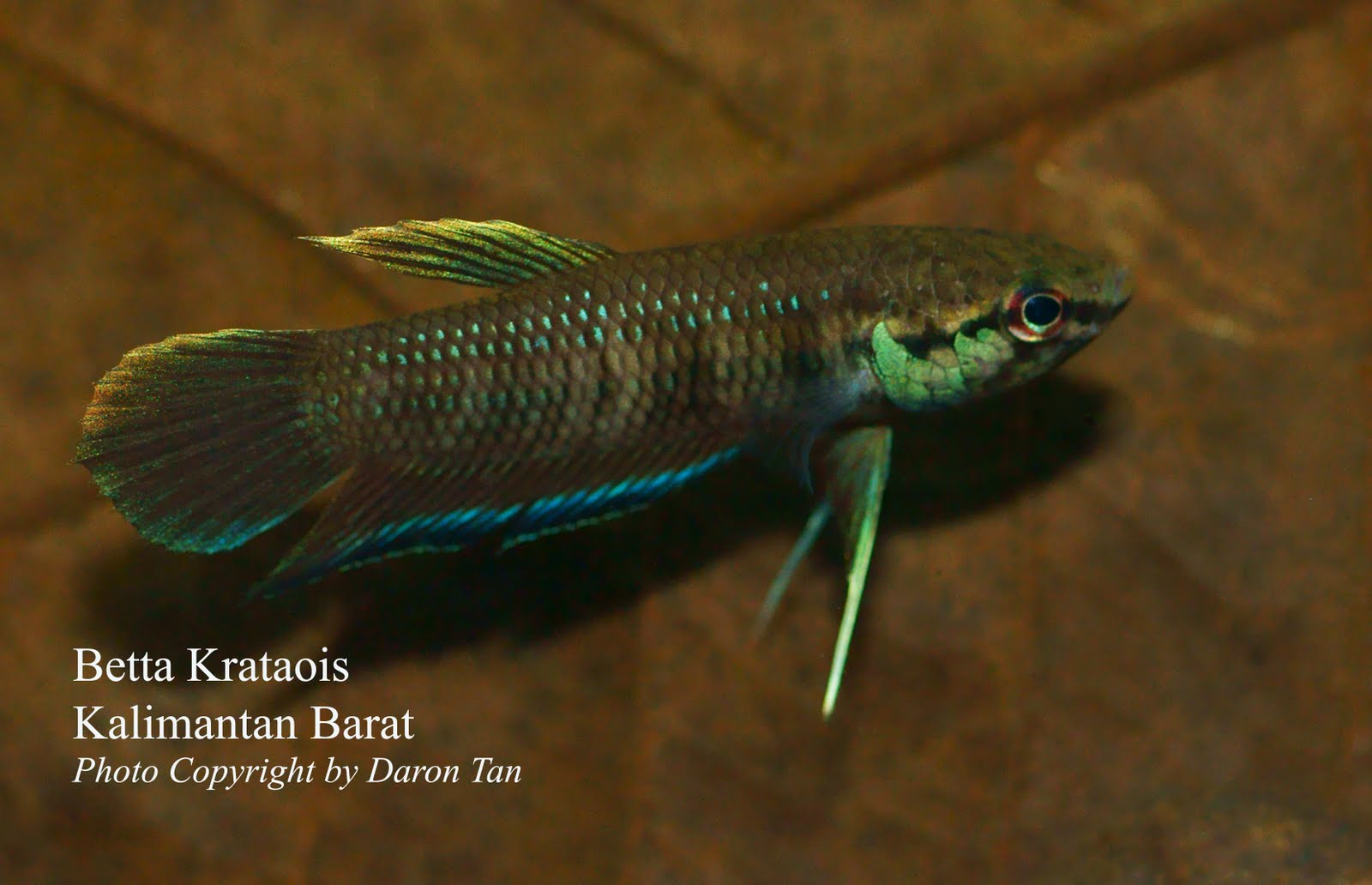
This species was traded as B. sp. 'Kapuas' prior to its formal description and continues to be mislabelled B. dimidiata. The two can easily be told apart as the caudal-fin is rounded in B. krataios but spade-shaped and in adults, highly-extended in B. dimidiata. Together these two comprise the B. dimidiata group/complex of closely-related species within the genus, members of which can be characterised b...
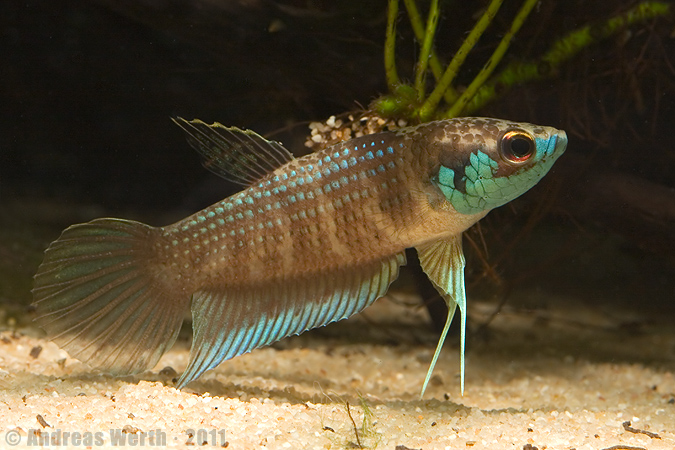
Betta kuehnei
Schindler & Schmidt, 2008
It can be told apart from other members of the B. pugnax group by the following characters: caudal fin rounded in both males and females; chin bar and second postorbital stripe absent; adult males possess intensive blue or bluish-green iridescent (blackish in preservation) colouration on the sides of the head and throat extending from the snout tip to posterior edge of opercle; possession of two central body stripes, the upper extending from the pec...
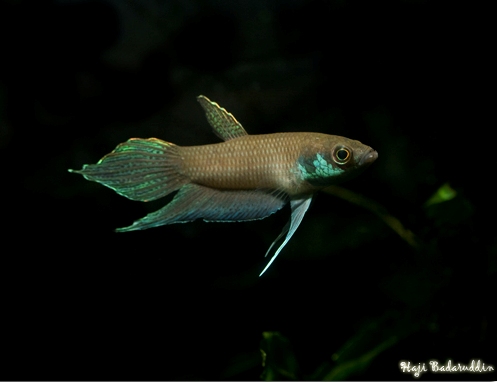
Betta lehi
Tan & Ng, 2005
It can be told apart from other members of the B. pugnax group by the following characters: chin bar absent; prsence of transverse bars in the dorsal-fin; no transverse bars in caudal-fin; green iridescent scales present on opercle and body; anal fin with iridescent, light blue distal band; a pair black markings below the postorbital stripe on the opercle of females and juveniles; anal-fin rays 25-29 (mode 28); lateral scales 28-30 (mode 29); postdorsal scales 10-11 (mode 12); pelvic-fin length 34.8-50.6% SL; head length 33.4-36.8% SL; inter-orbital width 31.7-37.4% HL.
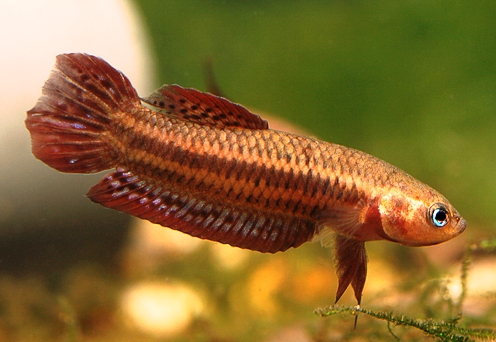
Betta livida
Ng & Kottelat, 1992
This species is included in the B. coccina group/complex of closely-related species within the genus. This assemblage mostly comprises small, red-coloured fishes, with the exceptions of B. persephone and B. miniopinna which are darkish, and identifying some of them can be problematic as the patterning in them can be both similar and confusingly variable. Members possess the foll...
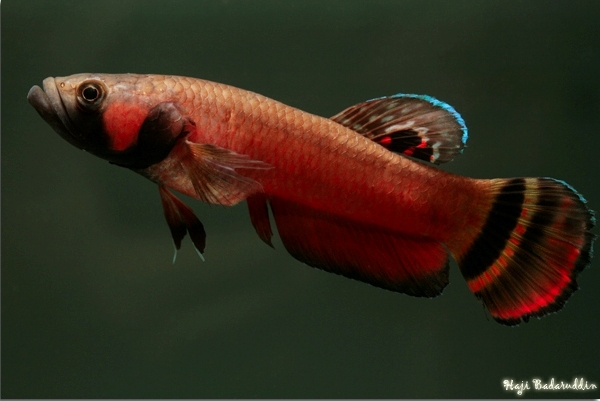
Betta macrostomaBrunei Beauty
Regan, 1910
B. macrostoma is included in the Betta unimaculata complex of closely-related species within the genus, of which members share the following set of characters: body long and slender with depth at dorsal fin origin 18-25 % SL; head large and blunt with width 19-24 % SL; long maxilla and lower lip with distance from tip of lower jaw to posterior end of maxilla 27-54 % HL; caudal-fin rounded in shape, occasionally with elongated median rays; pelvic-fin short and filamentous; dorsal and anal fins relatively pointed.
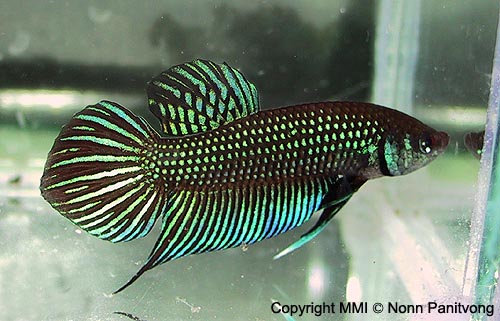
Betta mahachaiensis
Kowasupat, Panijpan, Ruenwongsa & Sriwattanarothai, 2012
Known only from a handful of localities in Bangkok, Samut Sakhon, Samut Songkhram and Samut Prakan provinces in central Thailand, all of which lie on the coast of the Gulf of Thailand. Most habitats are in close proximity to Bangkok, which continues to expand rapidly, are considered under extreme threat, and recent surveys have failed to confirm that the fish is still present in Samut Songkhram and Samut Prakan.
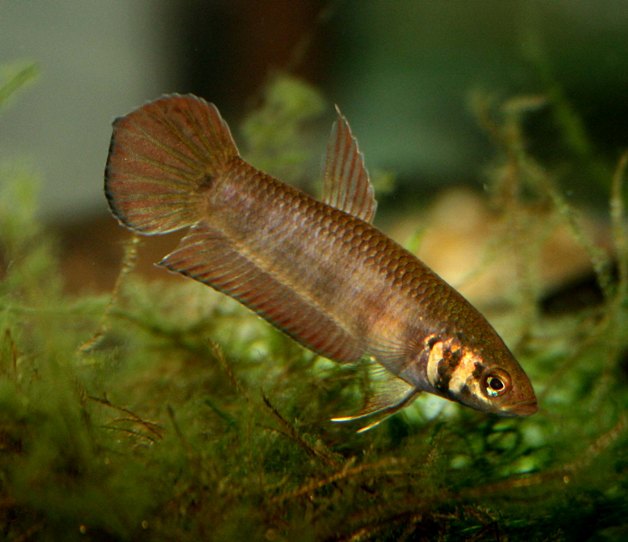
Betta mandor
Tan & Ng, 2006
This species was known as B. sp. 'Mandor' or B. sp. 'ninja' prior to official description. It belongs to the Betta foerschi group/complex of closely-related species within the genus, of which members share the following set of characters: possession of iridescent blue or green unpaired fins; rays and interradial membranes in unpaired fins not contrasting; dorsal fin with thin, bright white distal band; opercle with two, reddish-yellow, vertical bars. Members are regarded as being closely-related to bubble-nesting Betta species since they share exhibit certain similarities in morp...
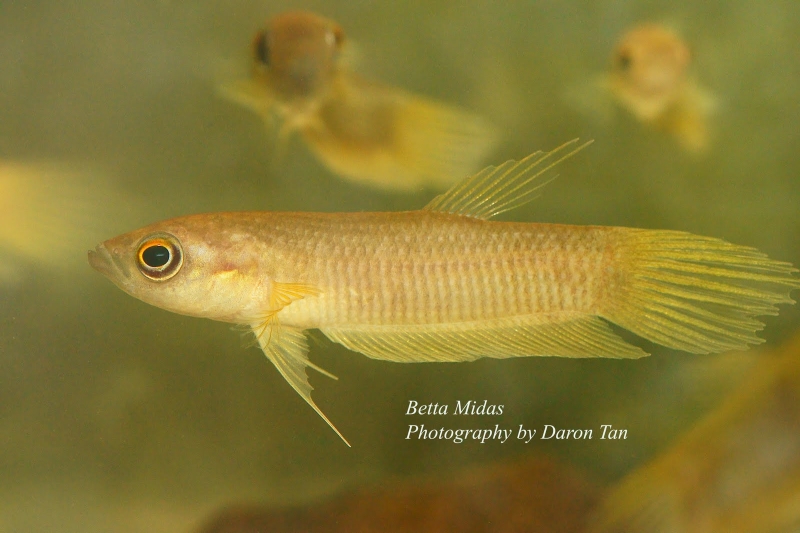
Betta midas
Tan, 2009
Not recommended for the standard community set-up for reasons already touched upon. It's requirements and disposition mean it's best kept alone or with very peaceful species since much bigger or more vigorous fishes are likely to intimidate and outcompete it. Some small cyprinids and loaches that inhabit similar environments in nature are compat...
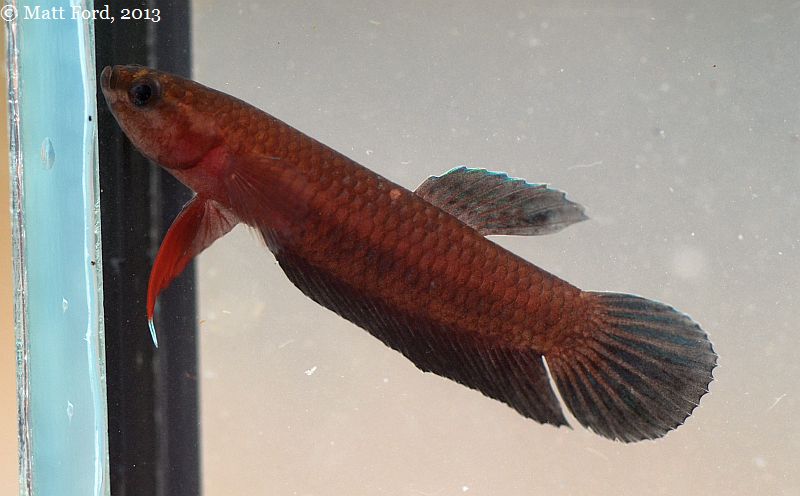
Betta miniopinna
Tan & Tan, 1994
Bintan has been developed for tourism over the last decades and is heavily-promoted by Indonesia, with luxury beach resorts and golf courses increasing in number. Further deforestation has occurred in order to establish large rubber plantations in the interior of the island. B. miniopinna is now restricted to a few remaining pockets of primary peat swamp forest and has been listed as 'Critically Endangered' on the IUCN Red List of Threatened Species since 1996.
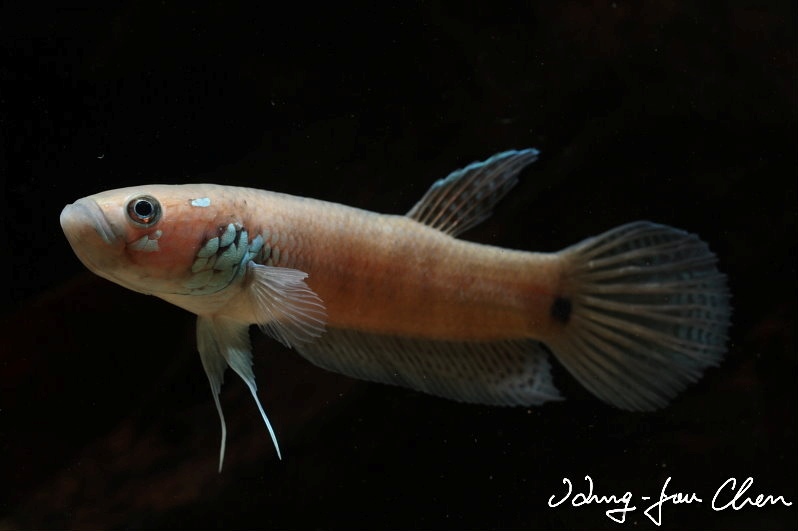
Betta ocellata
de Beaufort, 1933
This species is included in the Betta unimaculata complex of closely-related species within the genus, of which members share the following set of characters: body long and slender with depth at dorsal fin origin 18-25 % SL; head large and blunt with width 19-24 % SL; long maxilla and lower lip with distance from tip of lower jaw to posterior end of maxilla 27-54 % HL; caudal-fin rounded in shape, occasionally with elongated median rays; pelvic-fin short and filamentous; dorsal and anal fins relatively pointed.
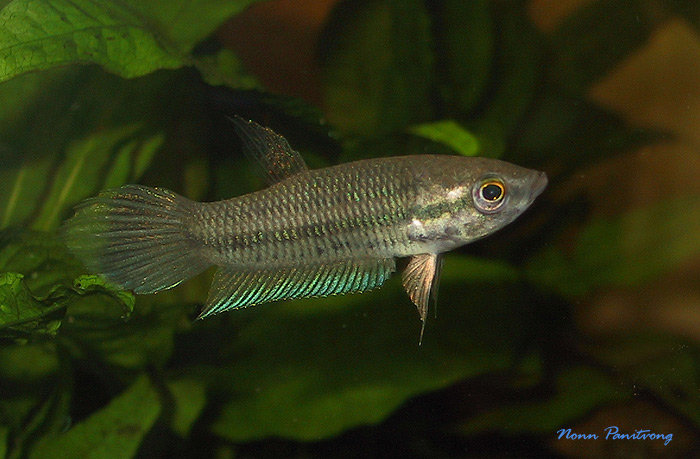
Betta pallida
Schindler & Schmidt, 2004
Has been collected from a slowly-moving creek which ranged in depth from 20-50 cm. The water was clear and slightly-stained with tannins and the subtrate was covered by a layer of leaf litter. PH was 6.3, conductivity 82 µS/cm and water temperature 25.5°C. At another locality pH was 6.5, conductivity 69 µS/cm and water temperature 26.6 °C.
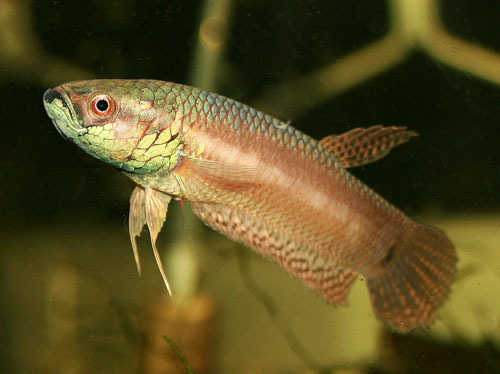
Betta pallifina
Tan & Ng, 2005
This species is included in the Betta unimaculata complex of closely-related species within the genus, of which members share the following set of characters: body long and slender with depth at dorsal fin origin 18-25 % SL; head large and blunt with width 19-24 % SL; long maxilla and lower lip with distance from tip of lower jaw to posterior end of maxilla 27-54 % HL; caudal-fin rounded in shape, occasionally with elongated median rays; pelvic-fin short and filamentous; dorsal and anal fins relatively pointed.
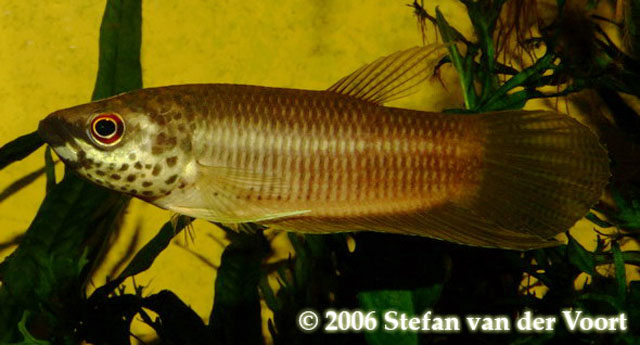
Betta pardalotos
Tan, 2009
This species is included in the Betta waseri group/complex of closely-related species within the genus, an assemblage which also includes a handful of unidentified fishes such as B. sp. 'Medas' on an unofficial basis. Group members share the following combination of characters: base body colouration clay yellow; opercle scales iridescent gold in mature males of all species except ...
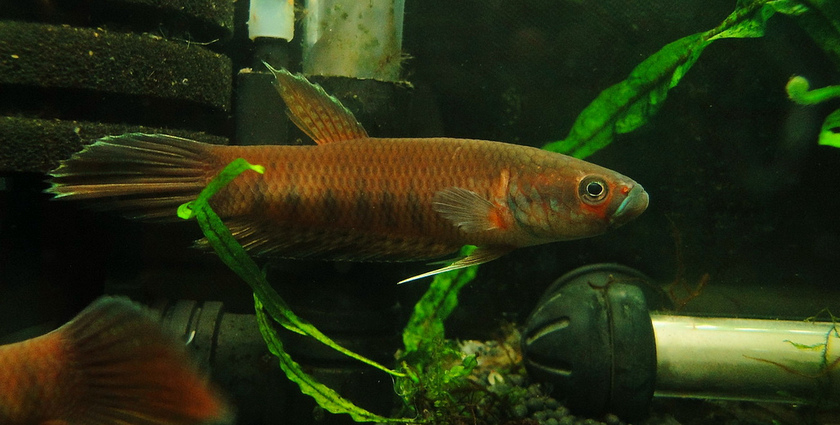
Betta patoti
Weber & de Beaufort, 1922
This species is included in the Betta unimaculata complex of closely-related species within the genus, of which members share the following set of characters: body long and slender with depth at dorsal fin origin 18-25 % SL; head large and blunt with width 19-24 % SL; long maxilla and lower lip with distance from tip of lower jaw to poste...
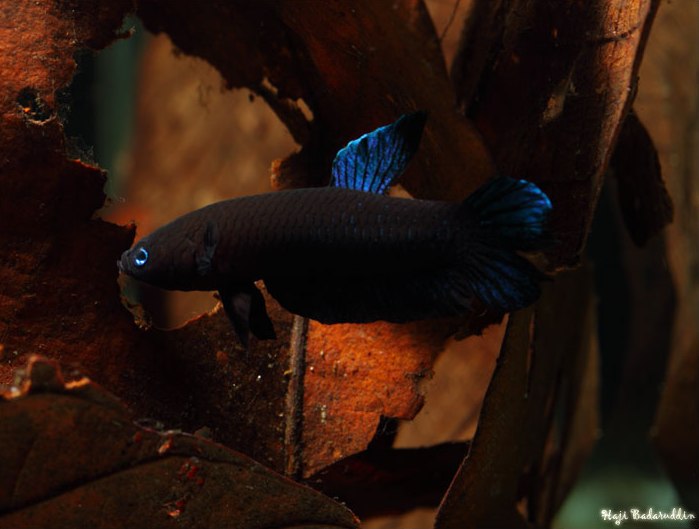
Betta persephone
Schaller, 1986
B. persephone can be told apart from other members of the group by the following characters: no lateral blotch; body blackish; dorsal surface of head posterior to eye sloping gently; no parallel vertical iridescent gold opercle bars; pelvic-fin falcate with white filamentous tip, remainder black to reddish; median fins covered diffusely with light green iridescence; dorsal fin-rays 9; anal-fin rays 24-27; subdorsal scales 6-7; lateral scales 27-29; predorsal scales 17-18.
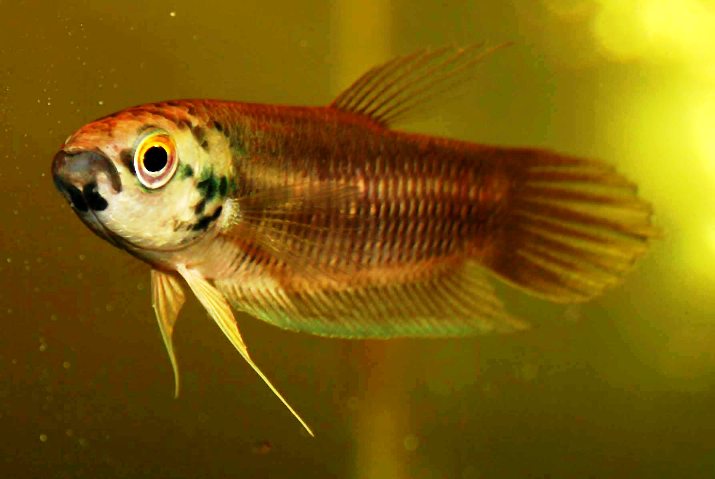
Betta pi
Tan, 1998
B. pi is included in the Betta waseri group of closely-related species within the genus, an assemblage within which members share the following combination of characters: base body colouration clay yellow; opercle scales iridescent gold in mature males of all species except B. tomi; throat with black markings which join with black lower jaw in some species; no chin bar.
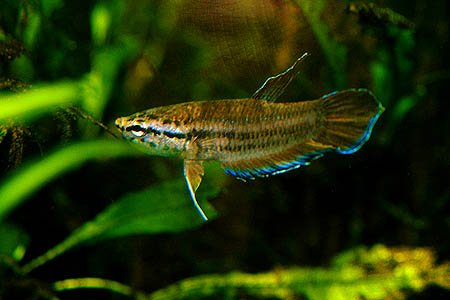
Betta pictaSpotted Betta
Valenciennes, 1846
This species lends its name to the Betta picta complex of closely-related species, an assemblage of which members share the following combination of characters: unpaired fins rounded (anal fin sometimes pointed): I-III, 18-24 anal-fin rays; anal and caudal fins with dark distal margins, most pronounced in mature males; pre- and post-orbital stripes present; chin bar present; opercle with iridescent blue, green, or gold scales.
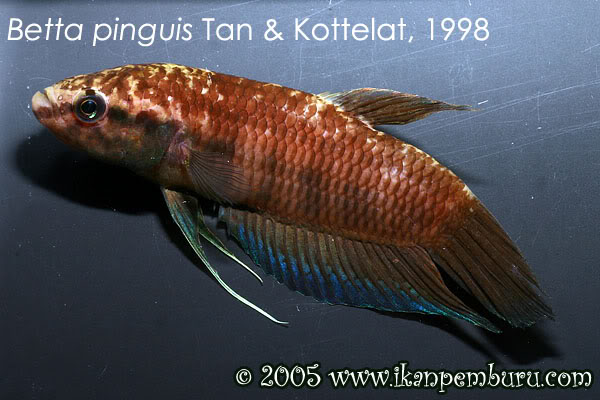
Betta pinguis
Tan & Kottelat, 1998
B. pinguis is included in the Betta akarensis group/complex of closely-related species within the genus, of which members share the following set of characters: possession of pre-orbital and post-orbital stripes (the post-orbital stripe is faint or interrupted in some species); chin bar present; caudal-fin lanceolate with highly extended median rays in mature males; caudal fin usually with transverse bars; greenish or bluish iridescent scales on body of males in some species; opercle without iridescent scales except in juveniles.
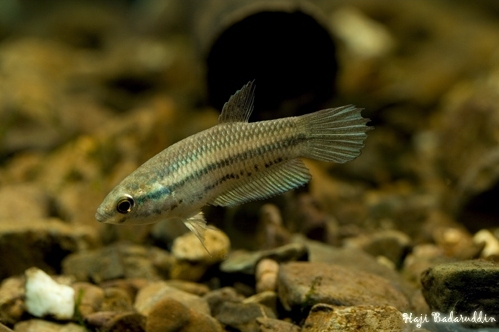
Betta prima
Kottelat, 1994
It can be told apart from other members of the B. pugnax group by the following characters: second postorbital stripe on opercle complete; no transverse bars in caudal-fin; 20-22 predorsal scales; preanal length 50.6-54.8 % SL. Not all authors consider it a member of this group, however, with some placing it in the B. picta complex, e.g., Schindler and Schmidt (2006). The genus is th...
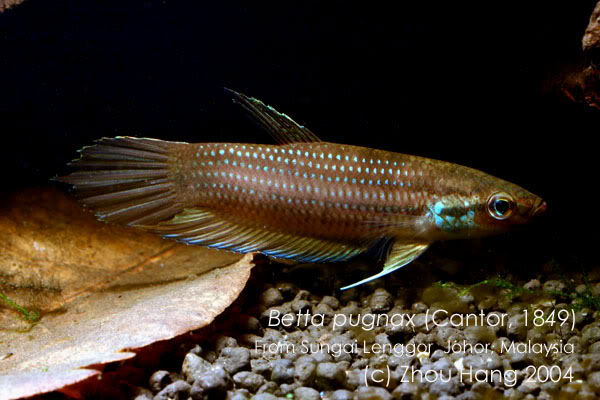
Betta pugnax
Cantor, 1849
It can be told apart from other members of the B. pugnax group by the following characters: chin bar present; no complete second postorbital stripe on opercle; presence of transverse bars in caudal-fin of males; caudal-fin in males broadly lanceolate; opercle scales iridescent blue; anal-fin with reddish subdistal band and black margin; caudal-fin without dark margin; 25-28 anal-fin rays; 28-31 lateral scales; 11-12 postdorsal scales; length of pelvic fins 26.6-43.8 % SL; length of head 27.5-35.2 % SL; inter-orbital width 32.4-53.0 % HL.
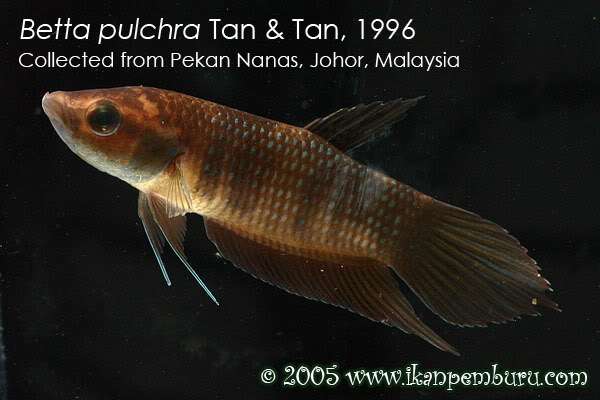
Betta pulchra
Tan & Tan, 1996
Restricted to remnant blackwater habits in heavily-disturbed areas of former peat swamp forest, the original vegetation having been cleared to make space for plantations of oil pal, pineapple and rubber. It's now typically found among overhanging marginal vegetation of irrigation canals, with sympatric species including Belontia hasseltii, Betta bellica, B. imbellis, Sphaerichthys osphromenoides, Parosphromenus sp., and Trichopsis vittata. PH in its natural waters has been recorded over the range 3.9 - 4.2.
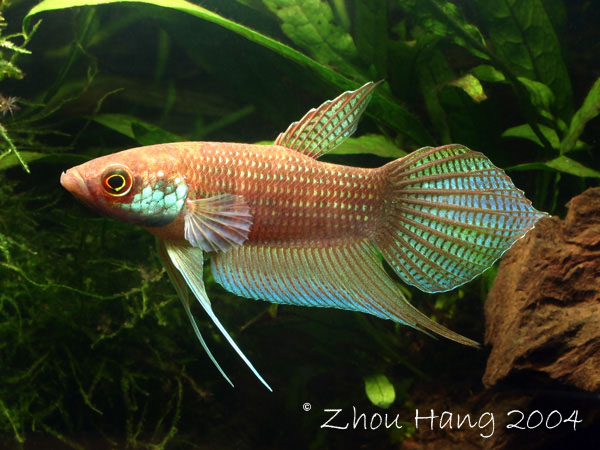
Betta raja
Tan & Ng, 2005
It should be noted that not all authors consider the B. pugnax group to contain the same species, with some placed in the B. picta complex by Schindler and Schmidt (2006), for example. B. raja can be told apart from other members of the B. pugnax group by the following characters: mature males with very long pelvic fins covering 15-23 anal-fin rays or even longer than the base of the anal-fin in some cases; anal-fin and lower caudal-fin with black marginal bands; 25-28 anal-fin rays; 30-32 lat...
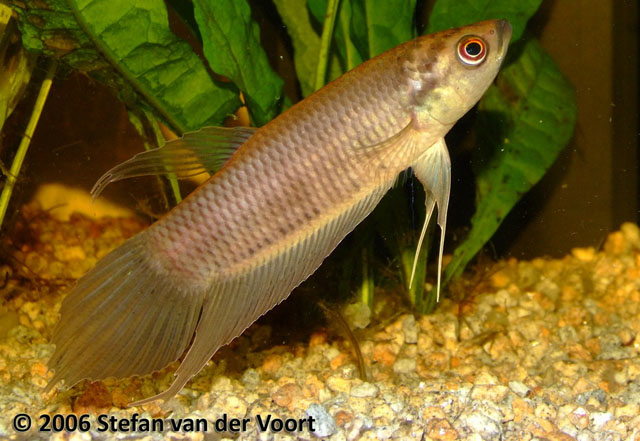
Betta renata
Tan, 1998
This species is included in the Betta waseri group/complex of closely-related species within the genus, an assemblage which also includes a handful of potentially new species such as B. sp. 'Medas' on an unofficial basis. Group members share the following combination of characters: base body colouration clay yellow; opercle scales iridescent gold in mature males of all species except B. tomi; throat with black markings which join with black lower jaw in some species; no chin bar.
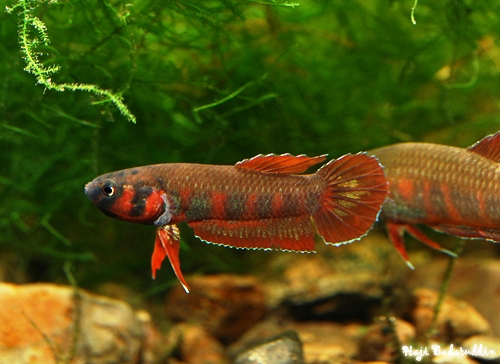
Betta rubra
Perugia, 1893
This species was previously included in the Betta foerschi group of closely-related species within the genus, but following its redescription in 2012 now lends its name to the B. rubra group. It was first placed into its own species group by Witte and Schmidt (1992), primarily on the basis of a triangular marking that appears below the eyes of the fish, although Tan and Ng (2005) suggested that this feature is insufficient to warrant the fo...
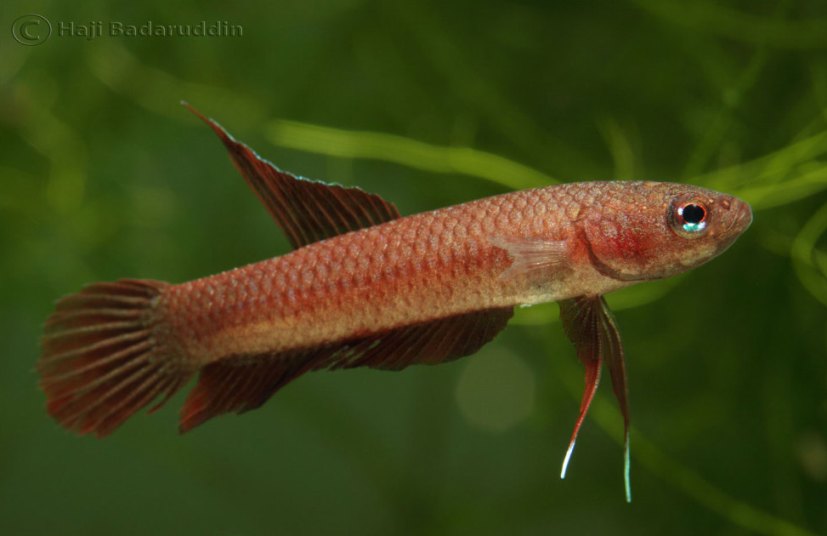
Betta rutilans
Witte & Kottelat, 1991
This species is included in the B. coccina group/complex of closely-related Betta species within the genus. This assemblage mostly comprises small, red-coloured fishes, with the exceptions of B. persephone and B. miniopinna which are darkish, and identifying some of them can be problematic as external patterning can be both similar and confusingly variable.
Betta siamorientalis
Kowasupat, Panijpan, Ruenwongsa & Jeenthong, 2012
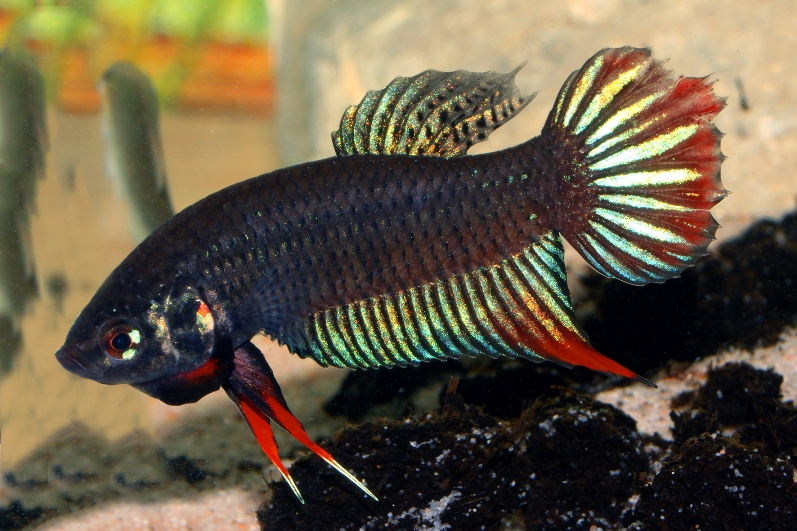
This species was considered a colour form of the closely-related B. imbellis and commonly-referred to as 'black imbellis' prior to description due to its blackish opercle and body. It's also previously been confused with B. splendens due to the colour of the vertical opercular bars which tend to be reddish (but may also be pale red, greenish-silvery, plain silvery or without colour in some populations), but DNA analysis has demonstrated it...
Betta simorum
Tan & Ng, 1996
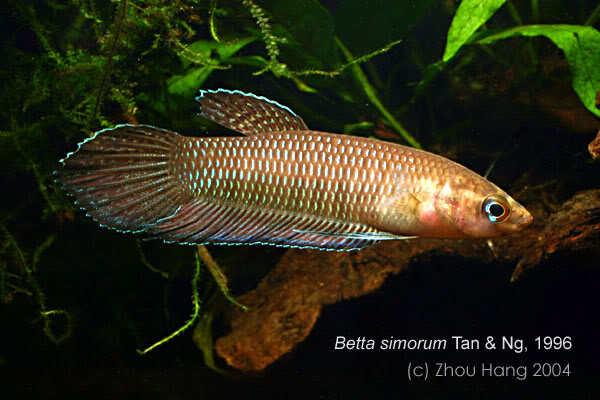
This species is included in the B. bellica group/complex of closely-related species within the genus, an assemblage of which members share the following set of characters: long and slender body with dorsal and ventral margins almost parallel; body depth 23-28 % SL; 30-33 anal-fin rays; 11-13 dorsal-fin rays; 32-34 total vertebrae; body dark brown in colour with iridescent green markings on each individual scale.
Betta simplex
Kottelat, 1994
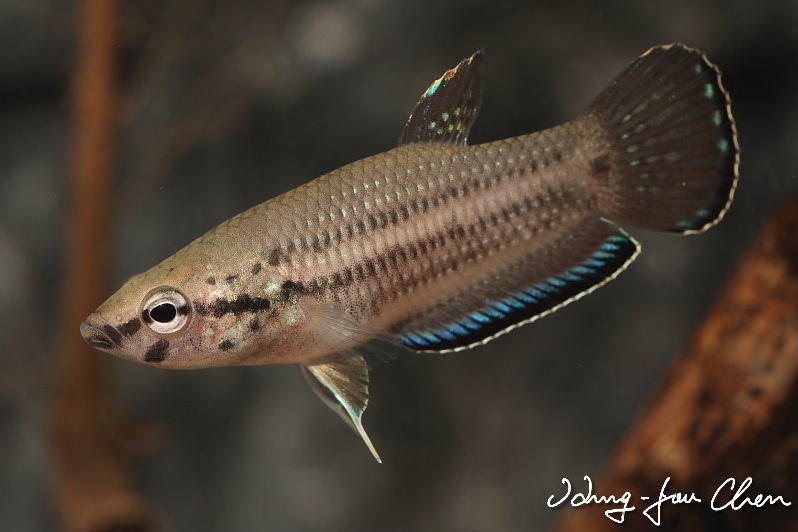
B. simplex is included in the Betta picta group/complex of closely-related species within the genus, an assemblage comprising species with the following shared characters: unpaired fins rounded (anal-fin sometimes tapering to a blunt point); anal-fin rays I-III, 18-24; dark marginal band on anal and caudal fins, more pronounced in mature males; presence of pre-orbital and post-orbital stripes; presence of chin bar on throat; iridescent green, gold, or blue scales on opercle.
Betta smaragdinaEmerald Betta
Ladiges, 1972
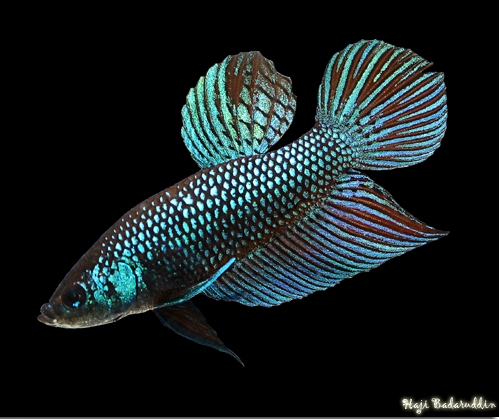
This species is included in the Betta splendens complex of closely-related species within the genus, of which members share the following set of characters: head length short 22-31 % SL; often a brightly-coloured body; iris of the eye with iridescent green or blue patches; body elongate or slender; opercles parallel when head viewed dorsally; caudal-fin rays red or brown and contrasting with the iridescent interradial membranes; unpaired fins without an iridescent margin; opercle with red or blue vertical bars in males; dorsal-fin rays 0-II, 7-9; anal-fin rays II-V, 21-26.
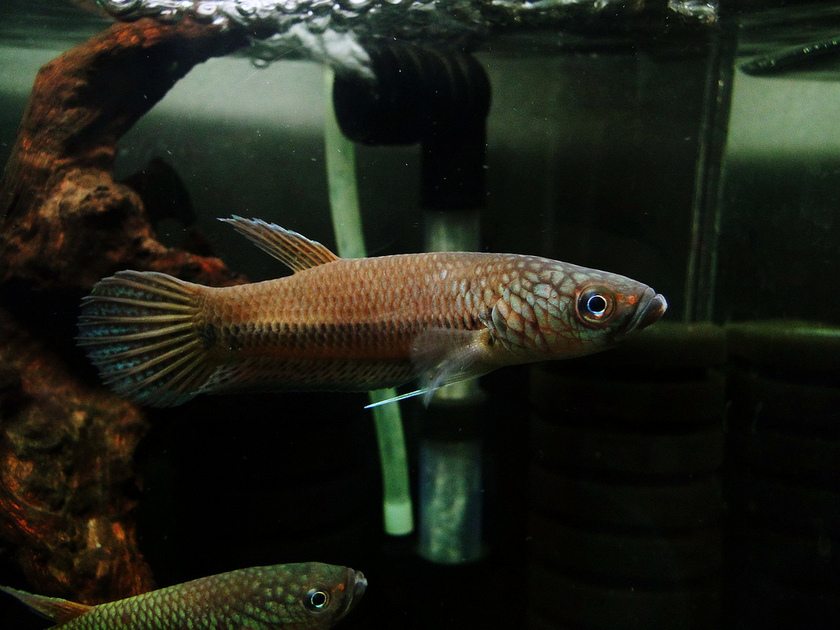
Betta sp. 'Antuta/Bulungan'
authority not recorded
This hypothetically-undescribed species appears to be a member of the Betta unimaculata complex of closely-related species within the genus, of which members share the following set of characters: body long and slender with depth at dorsal fin origin 18-25 % SL; head large and blunt with width 19-24 % SL; long maxilla and lower lip with distance from tip of lower jaw to posterior end of maxilla 27-54 % HL; caudal-fin rounded in shape, occasionally with elongated median rays; pelvic-fin short and filamentous; dorsal and anal fins relatively pointed.
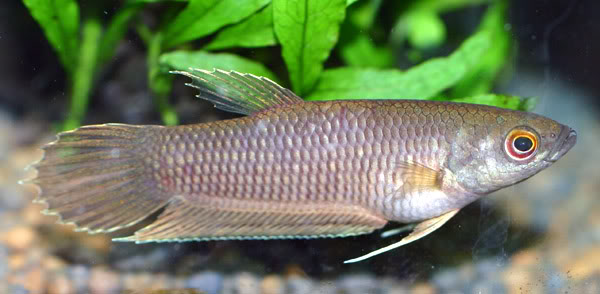
Betta spilotogena
Ng & Kottelat, 1994
Inhabits freshwater swamps and associated streams, typically shaded from the sun by dense riparian vegetation. The water is normally clear or lightly stained with tannins, and the fish found in water less than a metre deep alongside related species including Betta edithae, B. miniopinna, and B. fusca. PH has been measured to range between 4.9-5.5.
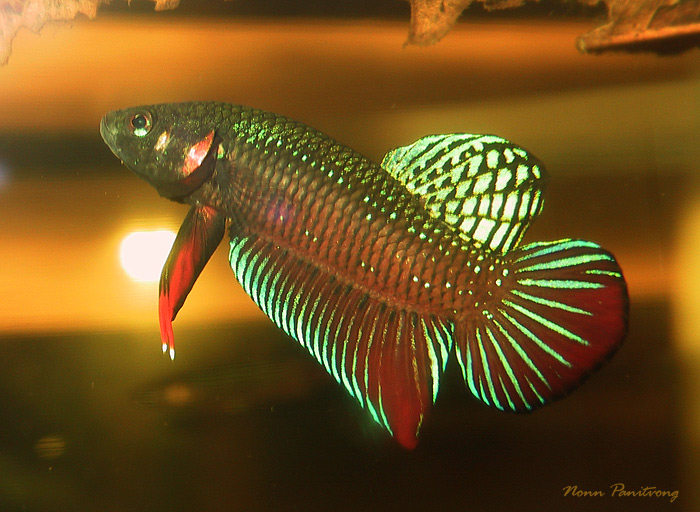
Betta splendensSiamese Fighting Fish
Regan, 1910
This species' common name is derived from the tradition of keeping the fish in order to fight against each other in organised 'bouts' upon which participants and onlookers place wagers. It has been extensively line-bred for vigour, strength, and the ornamental trade, and hybridised with the congeners B. imbellis, B. smaragdina, and B. mahachaiensis.
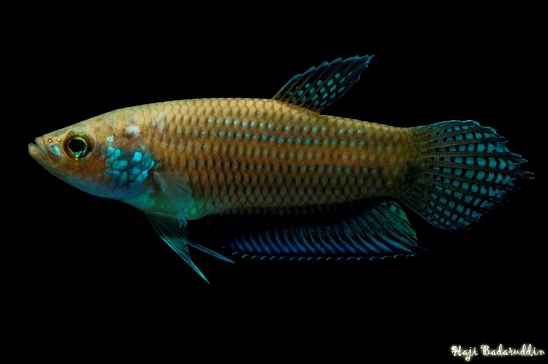
Betta stigmosa
Tan & Ng, 2005
Known only forest hill streams with flowing, clear water. These are typically shaded from the sun by dense riparian vegetation. The substrate is composed of rocks or gravel, fallen leaves, branches and submerged tree roots, and presumably the fish show a preference for quieter marginal zones as with related congeners. The type locality was described as a 'swampy stream' and sympatric species incl...
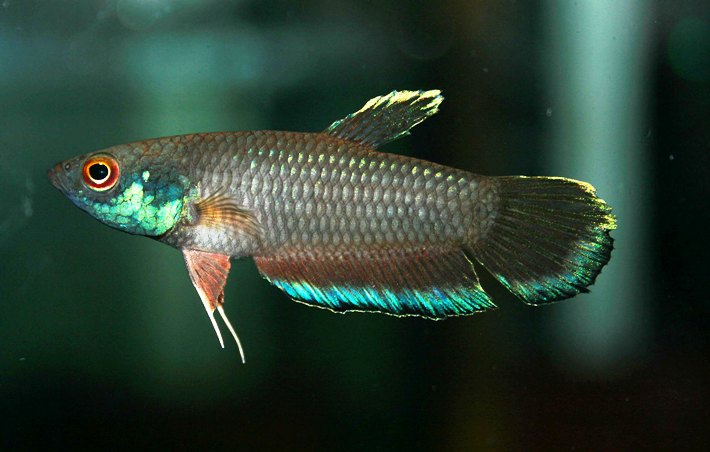
Betta taeniata
Regan, 1910
At one locality close to Serian, Sarawak, the habitat comprised a swiftly-flowing, clear hill stream with a substrate of quartz gravel and variably-sized rocks. The pH was 7.0 and there was no aquatic vegetation. The stream was approximately 10 metres across at its widest point and between 5-80 cm deep. B. taeniata was found in sluggish stretches among submerged tree roots, leaf litter, or overhanging riparian vegetation.
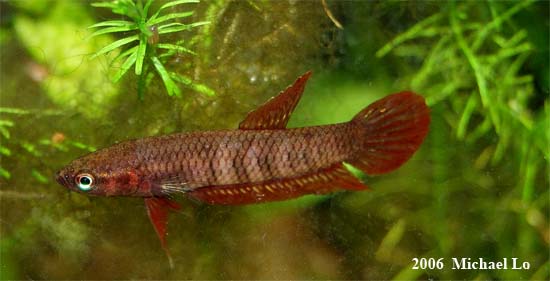
Betta tussyae
Schaller, 1985
This poorly-known betta is included in the B. coccina group of closely-related species within the genus. This assemblage mostly comprises small, red-coloured fishes, with the exceptions of B. persephone and B. miniopinna which are darkish, and identifying some of them can be problematic as external patt...
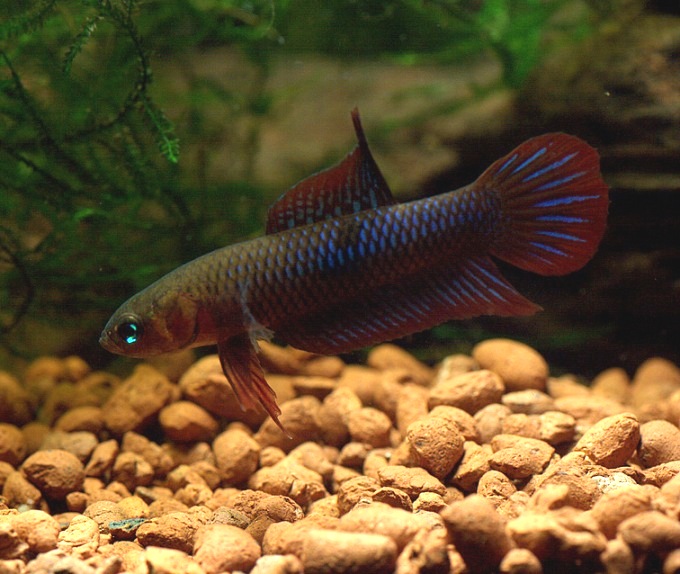
Betta uberis
Tan & Ng, 2006
The majority of records pertain to an area sandwiched between the lower Arut and Kumai rivers, south of the towns of Pangkalan Bun and Kumai in Kalimantan Tengah (Central Kalimantan) province, Borneo, Indonesia. Addditional collections have taken place in the Sampit river basin to the east, and several hundred kilometres further north in Sukadana district Kalimantan Barat (West Kalimantan) province. Type locality is 'Indonesia: Borneo: Kalimantan Tengah: Arut basin: Pankalanbun', with the specimens having been obtained from the aquarium trade.
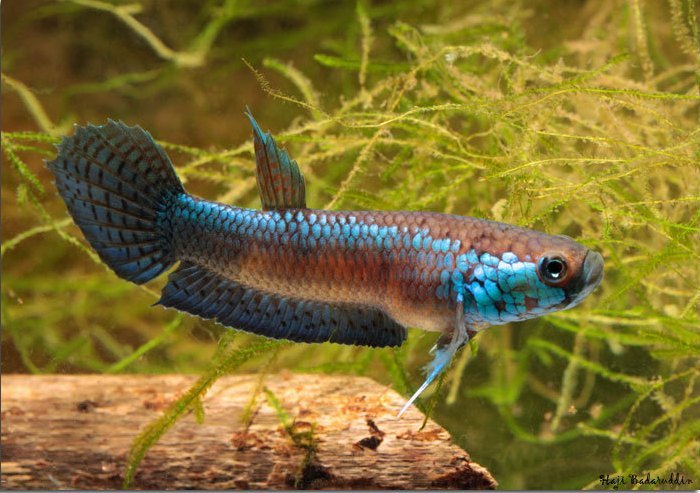
Betta unimaculata
Popta, 1905
This species is included in the Betta unimaculata complex of closely-related species within the genus, of which members share the following set of characters: body long and slender with depth at dorsal fin origin 18-25 % SL; head large and blunt with width 19-24 % SL; long maxilla and lower lip with distance from tip of lower jaw to posterior end of maxilla 27-54 % HL; caudal-fin rounded in shape, occasionally with elongated median rays; pelvic-fin short and filamentous; dorsal and anal fins relatively pointed.