Genus
Opsarius
- Species
- 9
- Photographed
- 9 of 9
- Difficulty rated
- 9 of 9
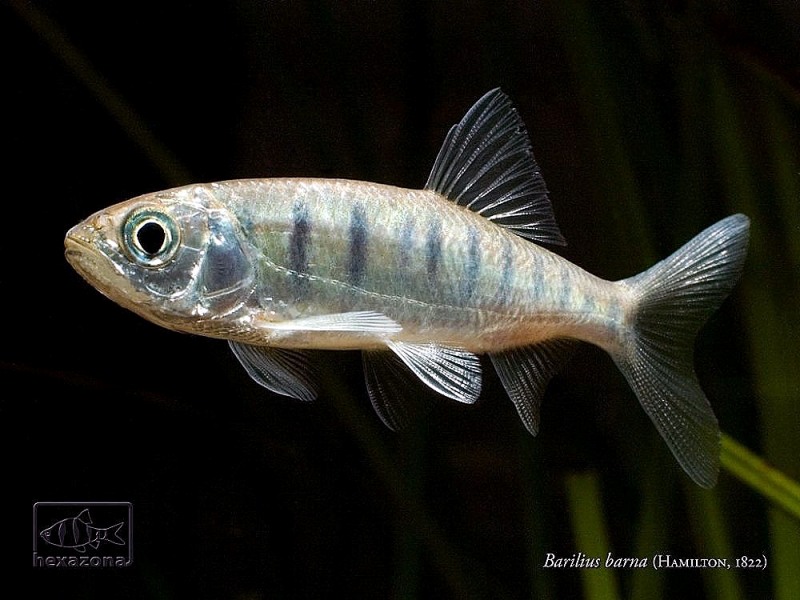
Opsarius barna
Hamilton, 1822
This species occasionally appears in the ornamental trade, usually as 'striped hill trout' or 'banded hill trout'. It can be distinguished from congeners by the following combination of characters: lateral line complete with 40-42 scales; barbels absent; 10-13 anal-fin rays; body with 9-11 dark blue vertical bars; last dorsal-fin ray extending to caudal-fin base.
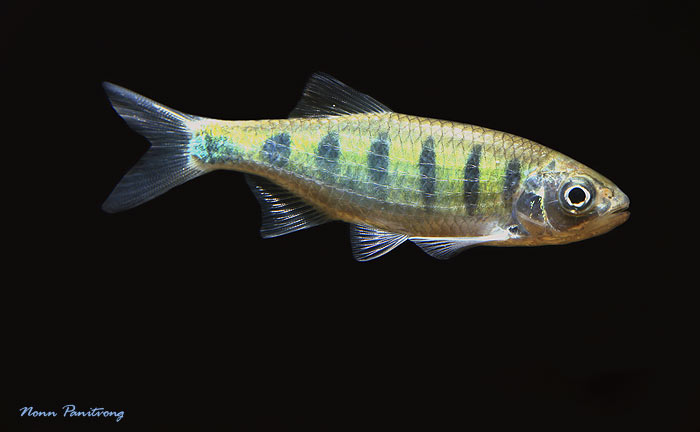
Opsarius bernatziki
Koumans, 1937
Type locality is ' Kapa, northwestern peninsular Thailand', which may refer to modern-day Kapoe district, Ranong province, and additional records exist from other localities in Ranong as well as Phang-nga and Pattani provinces. Although the precise extent of its distribution is unclear it appears to occur in river systems on both sides of the Tennaserim Hills in pen...
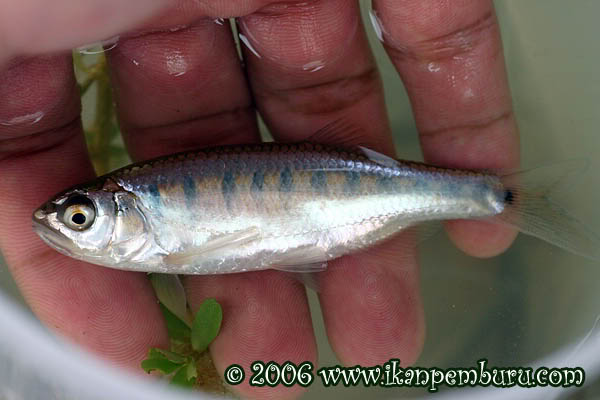
Opsarius caudiocellatus
Chu, 1984
This species may have appeared in the aquarium trade though probably not under the correct name. It can be told apart from similar-looking congeners by the following combination of characters: presence of a black round spot at the caudal base; dorsal-fin rays black with connecting membranes transparent; posterior dorsal-fin origin located midway between upper angle of gill aperture and caudal-fin base, or slightly closer to the latter.
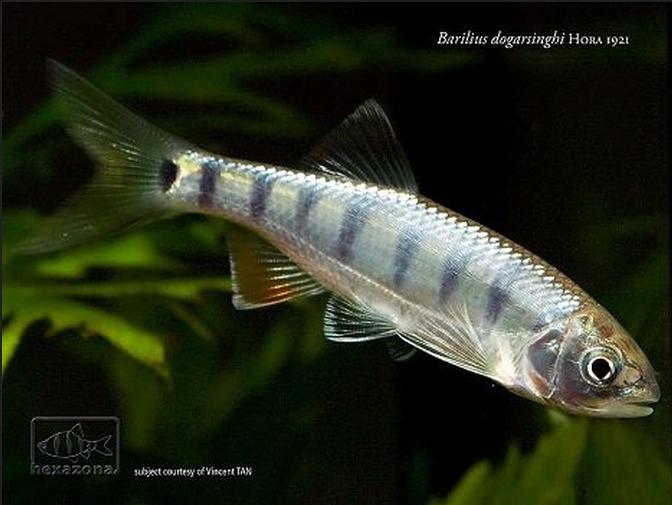
Opsarius dogarsinghiManipur Baril
Hora, 1921
Described from 'Etok stream near Chanderkhong, southern watershed of the Naga Hills, Manipur, Assam', located within the Chindwin River basin in northern India. The Chindwin is the major tributary of the Ayeyarwady/Irrawaddy River and most of it flows within Myanmar although two of its own tributaries, the Manipur and Yu rivers, originate in the Indian states of Manipur and Nagaland.
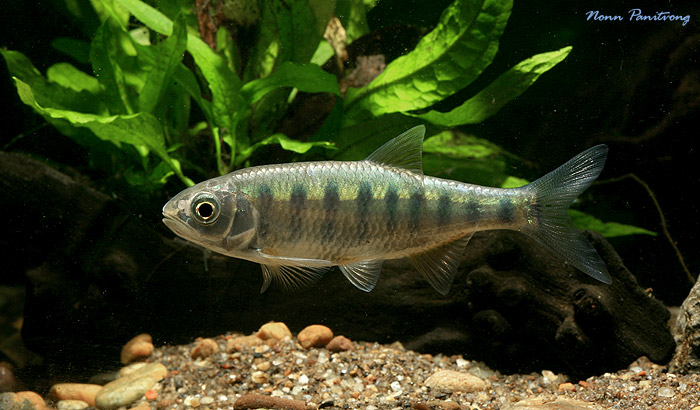
Opsarius infrafasciatus
Fowler, 1934
This species has previously been considered synonymous with both O. ornatus and O. pulchellus but is currently considered to be distinct following (Tejavej, 2012). It can be distinguished from congeners by a combination of characters including: small caudal spot presen...
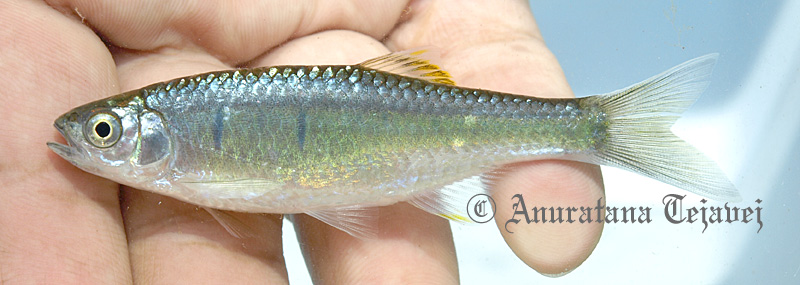
Opsarius koratensis
Smith, 1931
Inhabits well-oxygenated, low-to-medium gradient, slow to moderate-flowing rivers and streams with substrates of gravel, cobbles, larger boulders and exposed bedrock. At the habitat in our image pH was 7.5, temperature 26°C and cond...
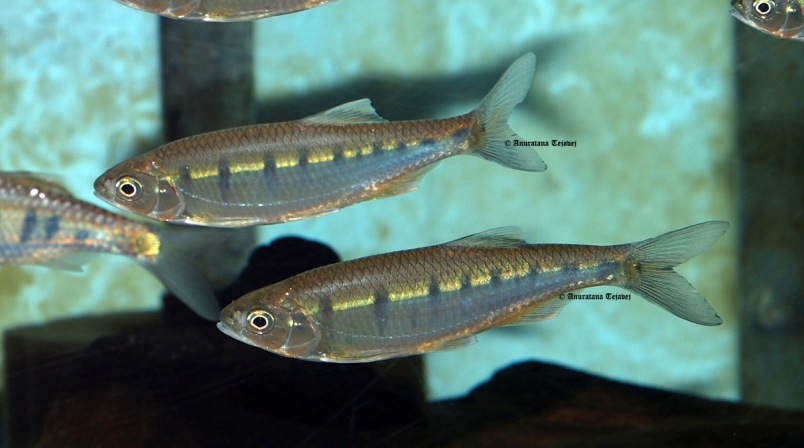
Opsarius ornatus
Sauvage, 1883
Type locality is 'Mé-Nam River, Thailand', with 'Mé-Nam' having been considered an older name for the Chao Phraya river in central and western Thailand prior to this species' redescription by Tejavej (2012). In fact 'menam' is the Thai word for 'river' and thus could refer to any drainage, and B. ornatus is restricted to...
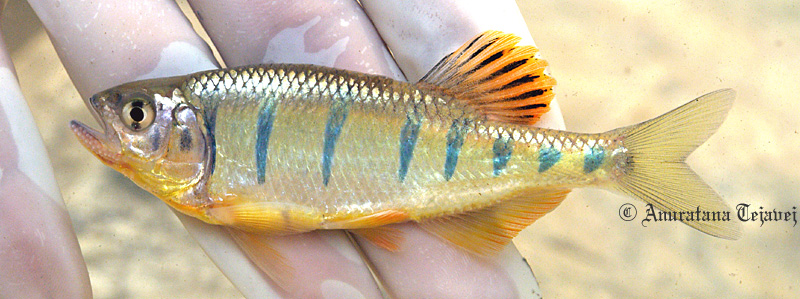
Opsarius pulchellus
Smith, 1931
This species is traded for aquaria under various names including 'butterfly barb', 'mackerel barb', 'green-barred danio', and 'royal opsarius'. It can be told apart from other memb...
Opsarius signicaudus
Tejavej, 2012
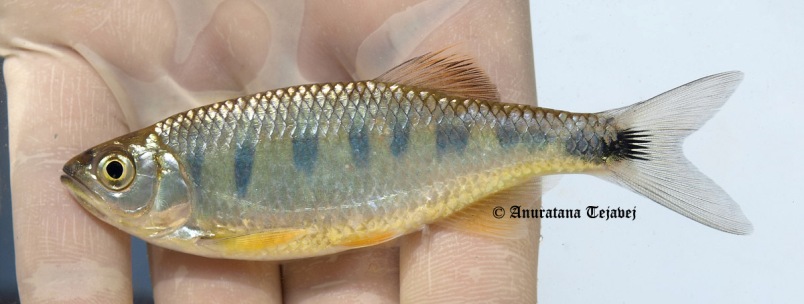
O. dogarsinghi and O. bernatziki are the only two Southeast Asian congeners to possess a large blotch at the caudal-fin base but in the former the blotch is vertically-orientated and hardly extends onto the fin itself (vs. laterally-elongate and extending onto the basal fin rays) and long (vs. short) barbels, while th...