Hobbyist group · Perciformes
Other perciforms
Other perciforms spans 2 families.
- Species
- 24
- Families
- 2
- Genera
- 3
- Photographed
- 24 of 24
- Difficulty rated
- 24 of 24
Families in this group
Where they come fromnative records only
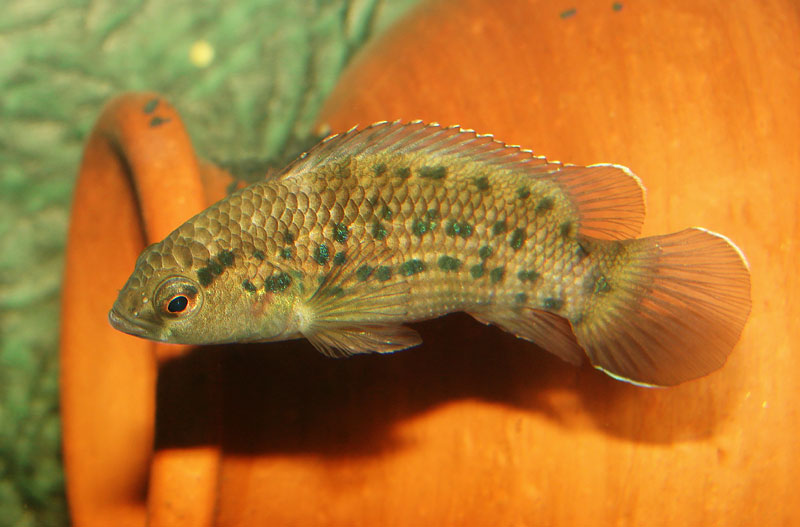
Badis assamensis
Badidae · Ahl, 1937
Like most badids this species is poorly documented and has yet to find significant popularity in the aquarium hobby. It is easily confused with B. blosyrus at first glance as the body patterning of the two is almost identical but can be distinguished by its slightly larger adult size, noticeably shorter jaw profile and some other, mostly internal, meristic characters. Prior to 2002 the family Badidae inc...
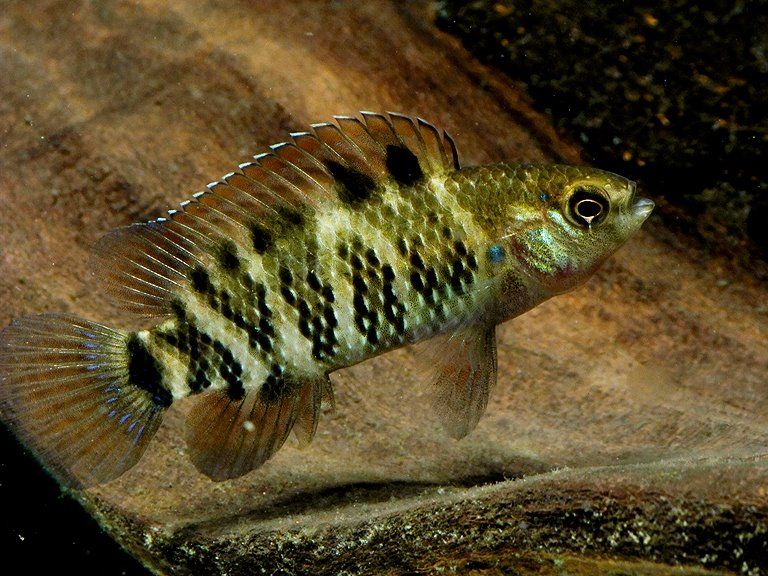
Badis badisBadis
Badidae · Hamilton, 1822
This species is sometimes sold under the trade name of 'chameleon fish' due to its ability to rapidly change colour, especially when breeding or stressed. It was originally described as Labrus badis by Hamilton but Bleeker reclassified it as Badis buchanani in 1854; he had adopted the species name 'badis' as the new name for the genus and wished to avoid using a tautonym. At that time the use of tautonyms was avoided in zoological taxonomy but is now permissible under ICZN ru...
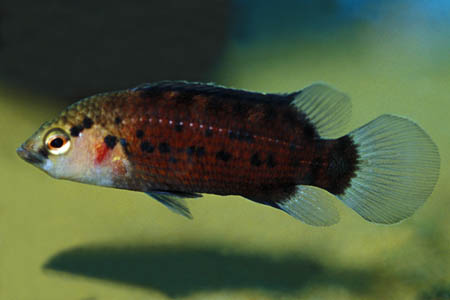
Badis blosyrus
Badidae · Kullander & Britz, 2002
Like most badids this species is poorly documented and has yet to find significant popularity in the aquarium hobby. It is easily confused with B. assamensis at first glance as the body patterning of the two is almost identical but can be distinguished by its slightly smaller adult size, noticeably elongated, more well-developed jaw profile and some other, mostly internal, meristic characters.
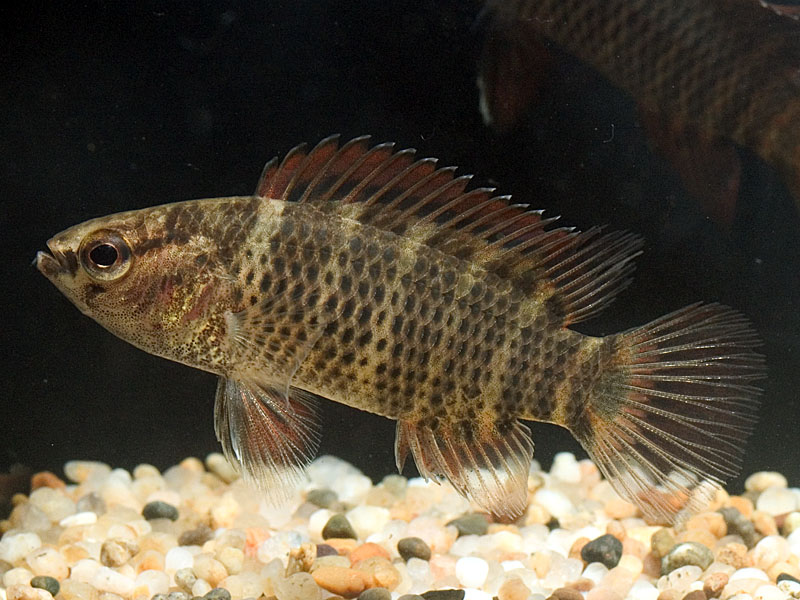
Badis corycaeus
Badidae · Kullander & Britz, 2002
Like most badids this species is poorly documented and has yet to find significant popularity in the aquarium hobby. Within the genus it is most closely-related to B. pyema but the two are unlikely to be confused as B. corycaeus is much the deeper, darker-bodied fish. Prior to 2002 the family Badidae included just five species of which only B. badis and, to a lesser extent, Badis dario (referred to as B. bengalensis by some sources) were popular in the aquarium hobby. However an extensive rev...
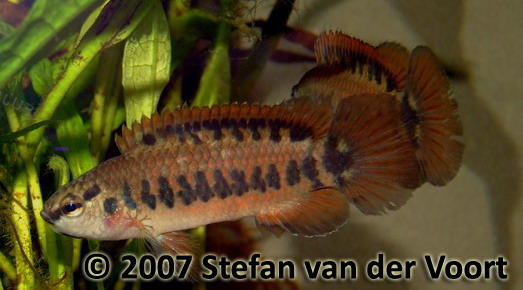
Badis ferrarisi
Badidae · Kullander & Britz, 2002
Like most badids this species is poorly documented and has yet to find significant popularity in the aquarium hobby. It is arguably the most attractive member of the genus and we hope to see it more widely available; the fish in our images representing what is thought to be the only batch exported from Myanmar to date. It is most closely related...
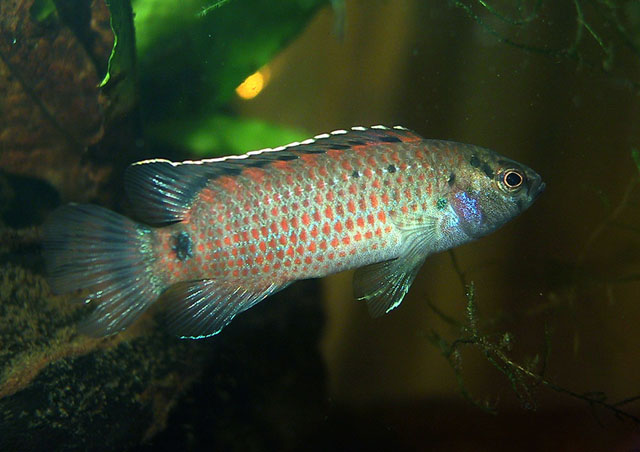
Badis khwae
Badidae · Kullander & Britz, 2002
Like most badids this species is poorly documented and has yet to find significant popularity in the aquarium hobby, though given its restricted natural distribution it is unlikely ever to be available in large numbers. Within the genus it is most easily confused with B. ruber and B. siamensis but both these species have rows of dark spot-like markings on the flanks which are lacking in B. khwae. The three also differ in the shape of the dark marking on the caudal peduncle; in B. ruber it is rel...
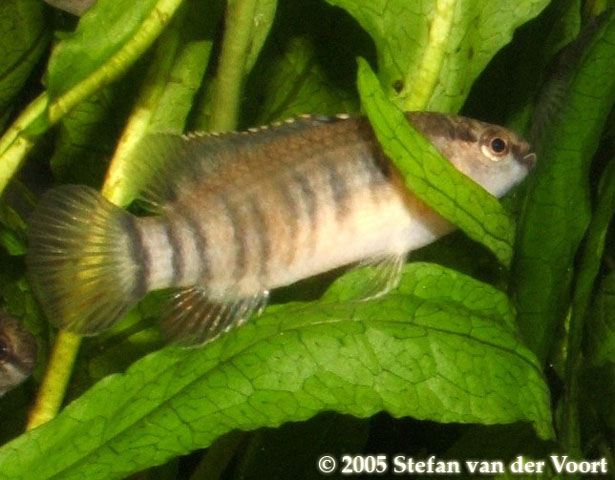
Badis kyar
Badidae · Kullander & Britz, 2002
Like most badids B. kyar is poorly documented in aquarium literature and has yet to find significant popularity in the hobby, though given its restricted natural distribution it is unlikely ever to be available in large numbers. The fish in our image is a specimen included in the only batch of this species known to have been exported to date. This species has a very slender body shape (which may be an adaptation to its habitat) and in this respect is similar to B. pyema. However B. kyar possesse...
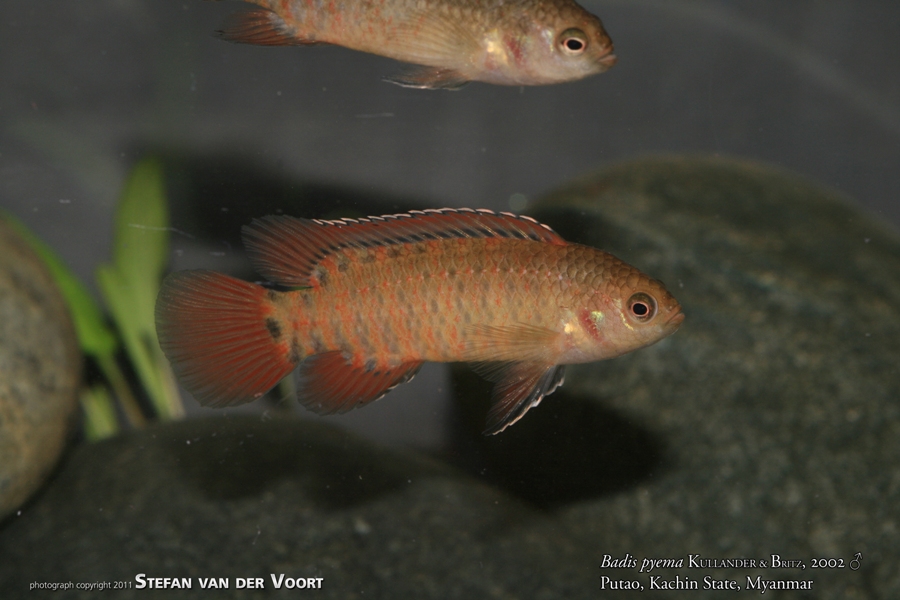
Badis pyema
Badidae · Kullander & Britz, 2002
Like most badids B. pyema is poorly documented in aquarium literature and has yet to find significant popularity in the hobby, though given its restricted natural distribution it is unlikely ever to be available in large numbers and has only been collected on three occasions to date. It has a very slender body shape, likely an adaptation to its habitat, and in this respect is similar to B. kyar. However B. kyar possesses relatively solid dark, uniform vertical bars on the flanks whereas in B. p...
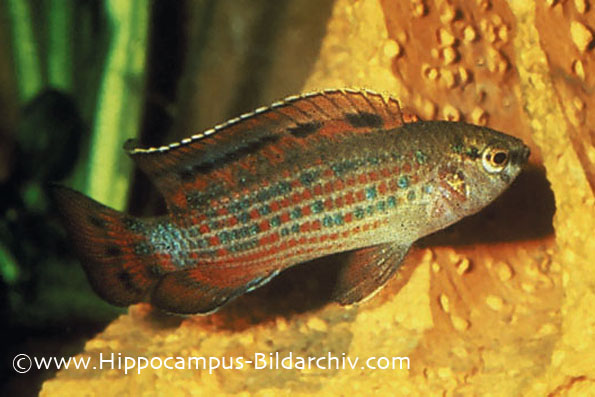
Badis ruberBurmese Badis
Badidae · Schreitmüller, 1923
B. ruber is among the better known Badis species in the aquarium hobby with trade names including 'Burmese badis' and 'red badis'. It was referred as Badis badis burmicanus for a number of years and will be seen labelled as such in older literature. Among congeners it is most easily confused with...
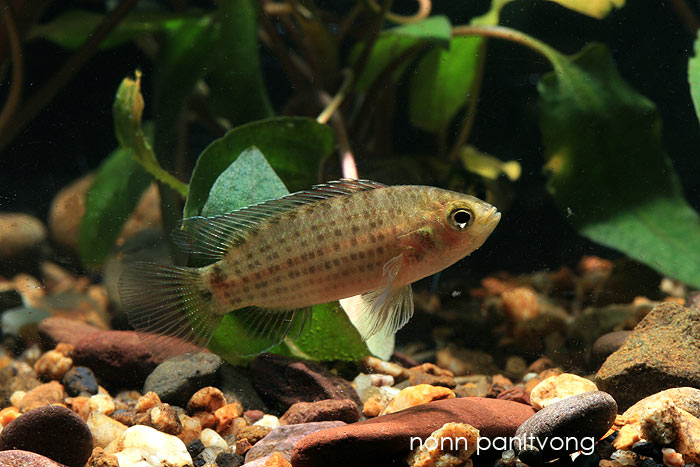
Badis siamensis
Badidae · Klausewitz, 1957
Like most badids this species is poorly documented and has yet to find significant popularity in the aquarium hobby; to date it has only been exported in very limited numbers. It was for a number of years known as Badis badis siamensis and will be seen labelled as such in older literature. Within the genus it is most easily confused with B. khwae and B. ruber but can be identified by the flank patterning which consists of rows of horizontally-arranged dark markings. In B. ruber these appear mor...
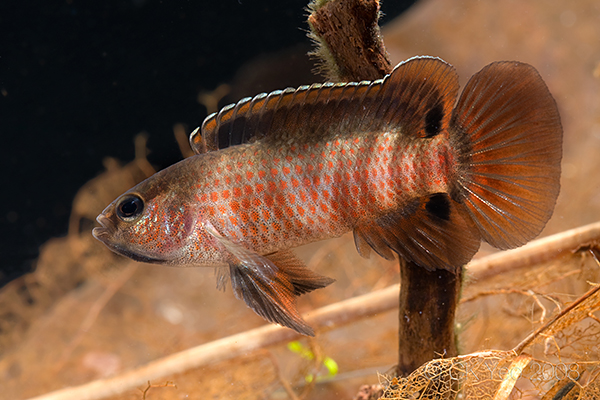
Badis sp. 'Buxar'
Badidae · authority not recorded
This undescribed species has been available in the aquarium hobby since 2006. It may also be seen on sale with the name Badis sp. 'flame dot' in reference to the body scales which in males possess a bright red centre or B. sp. 'red' as it appeared in a 2007 German magazine article. It appears to belong to the B. corycaeus group of species (see below). Since the species Badis singenensis was...
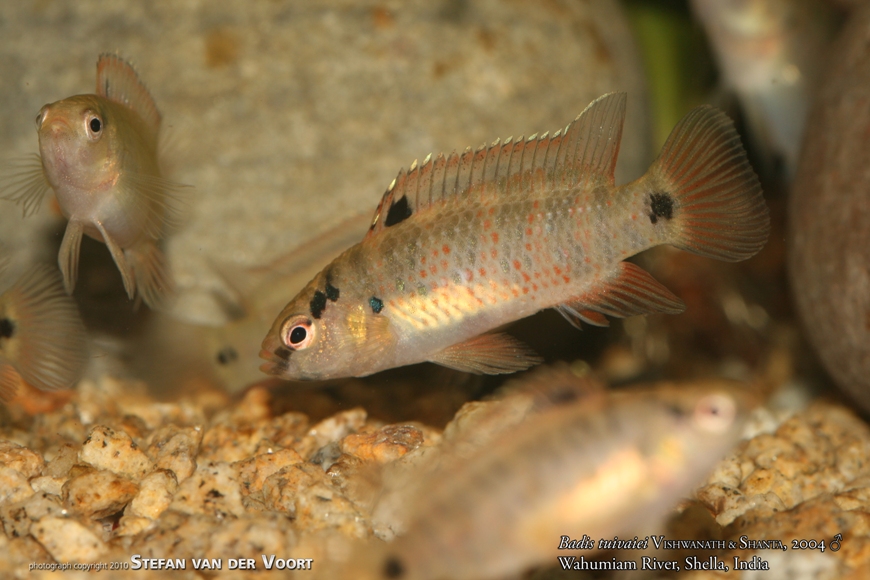
Badis tuivaiei
Badidae · Vishwanath & Shanta, 2004
This fish has yet to appear in the aquatic trade and only been exported in extremely limited numbers to date. Specimens collected from the Wahumiam River close to the settlement of Shella Bholaganj by Peter Cottle and Andrew Rao in 2006 were initially considered an undescribed species and referred to as B. sp.'Wahumiam River' or B. sp. 'terracotta', but later found to match B. tuivaiei in terms of morphology, meristics, etc. (S. van der Voort, pers. comm.).
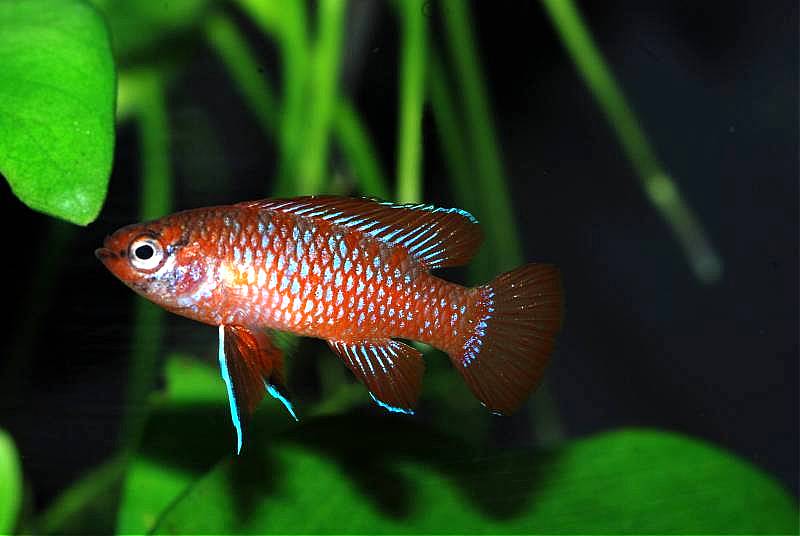
Dario darioScarlet Badis
Badidae · Hamilton, 1822
This species is among the more well-known badids in the aquarium hobby, and is a popular choice for 'nano' aquaria since it is among the smallest percoid fishes known. It is easily told apart from congeners since it is the only species in which males possess a series of seven iridescent blue vertical bars on the flanks.
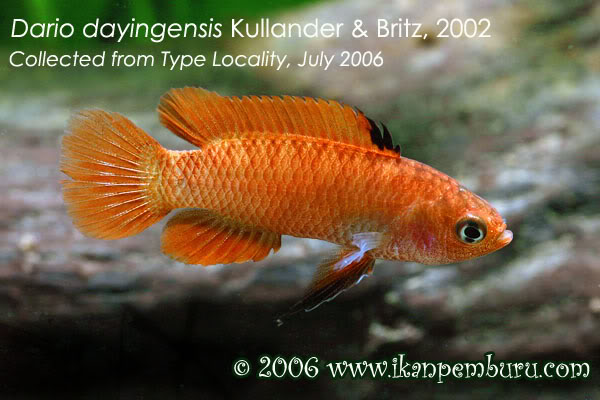
Dario dayingensis
Badidae · Kullander & Britz, 2002
This species has not appeared in the ornamental fish trade to date though has been maintained by a handful of private collectors and enthusiasts. It was known for some years prior to description and identified as Badis dario (as Dario dario was known at the time) but is actually much closer to D. hysginon.
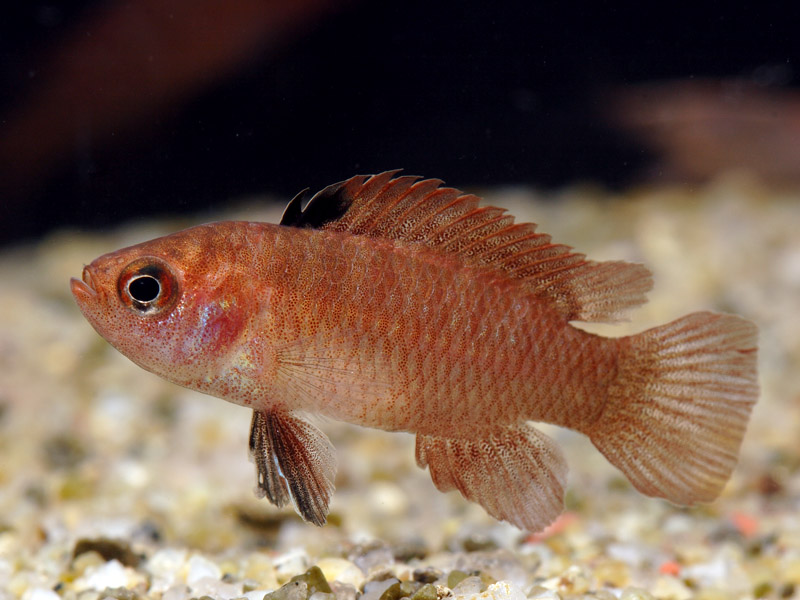
Dario hysginon
Badidae · Kullander & Britz, 2002
This species is traded under various names such as 'red melon Dario' or 'flame red Dario'. Among congeners D. dayingensis is most similar since it differs only in a few meristic counts and by its slightly larger adult size. D. hysginon can be told apart by possessing 22-24, usually 23, lateral scales (vs. 24-25 in D. dayingensis), 8½ (vs. 9½) scales in the transverse scale row, a...
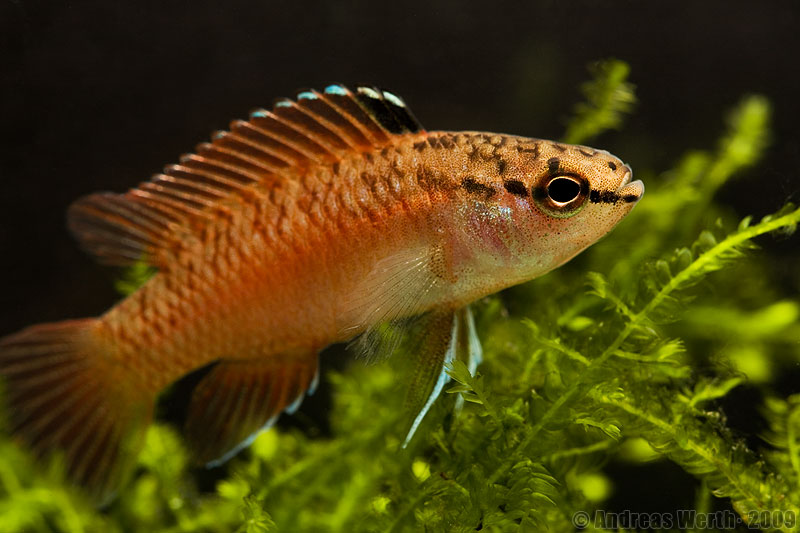
Dario kajal
Badidae · Britz & Kullander, 2013
This species was referred to as Dario sp. ‘Jaintia Hills’ or D. sp. ‘Bangladesh’ prior to its description. Type locality is 'India, Meghalaya, Jaintia Hills, Seinphoh stream at Umolong, 7 km from Jowai town, 25°31’36’’N 92°08’27’’E, 1320 m asl', and in India it has not been found elsewhere to date.
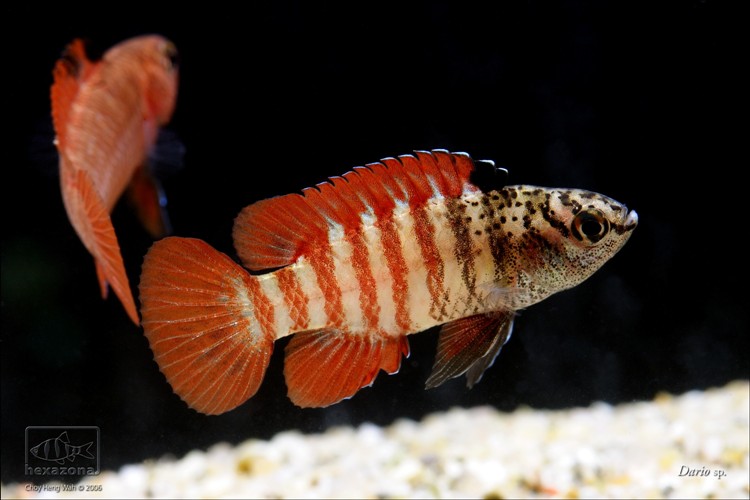
Dario sp. 'Myanmar'Black Tiger Dario
Badidae · authority not recorded
This fish first became available to hobbyists in 2005 and has also been referred to as Dario sp. 'pyjamas' or 'fire red tiger badis'. Despite the striking differences in colour pattern it's officially recognised as a colour form of D. hysginon as per Kullander and Britz (2002) although D. sp. 'Myanmar' is now known to have an appreciably larger adult size (S. van der Voort, pers. comm.).
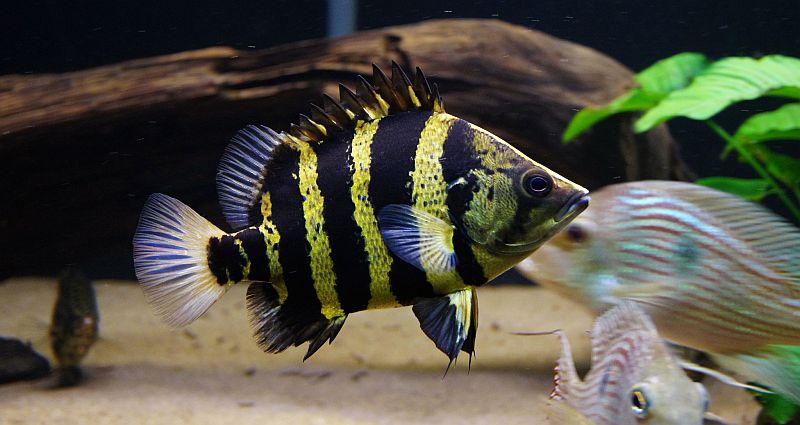
Datnioides campbelliNew Guinea Tiger Perch
Datnioididae · Whitley, 1939
Apparently restricted to the southern portion of New Guinea, between the Lorentz River in Papua province, Indonesia, and Kikori River in Gulf province, Papua New Guinea. The majority of records pertain to the lower Fly River basin in Western province, southwestern Papua New Guinea.
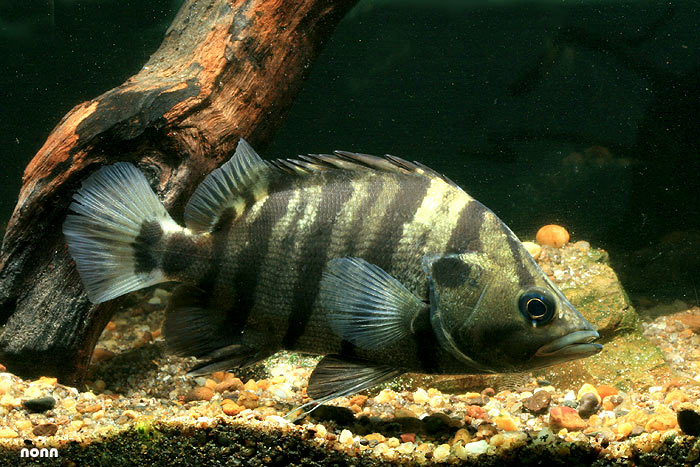
Datnioides polotaSilver Tiger Perch
Datnioididae · Hamilton, 1822
D. polota is sometimes referred to as D. quadrifasciatus (Sevastianov, 1809) but the original name of the latter, Chaetodon quadrifasciatus Sevastianov, 1809, is a junior primary homonym of the older Chaetodon quadrifasciatus Bloch & Schneider 1801, thus Coius polota Hamilton, 1822 takes precedence.
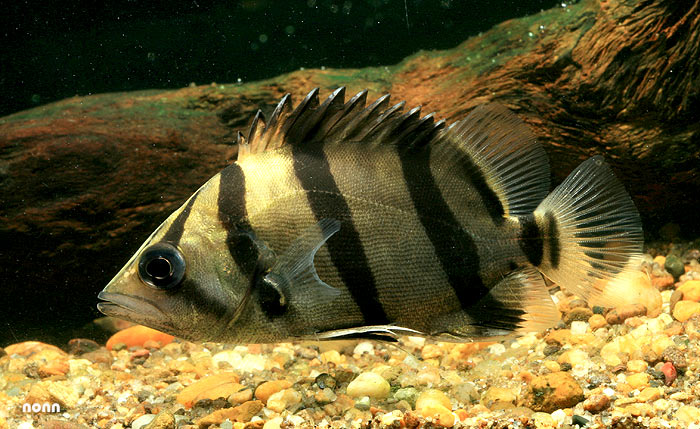
Datnioides undecimradiatusMekong Tiger Perch
Datnioididae · Roberts & Kottelat, 1994
An efficient, largely piscivorous, predator with highly protrusible mouthparts. In the aquarium, juveniles can be offered chironomid larvae (bloodworm), small earthworms, chopped prawn, and suchlike, while adults will accept strips of fish flesh, whole prawns, mussels, live river shrimp, larger earthworms, etc. Older individuals do not require feeding on a daily basis, with 2-3 times per week sufficient.
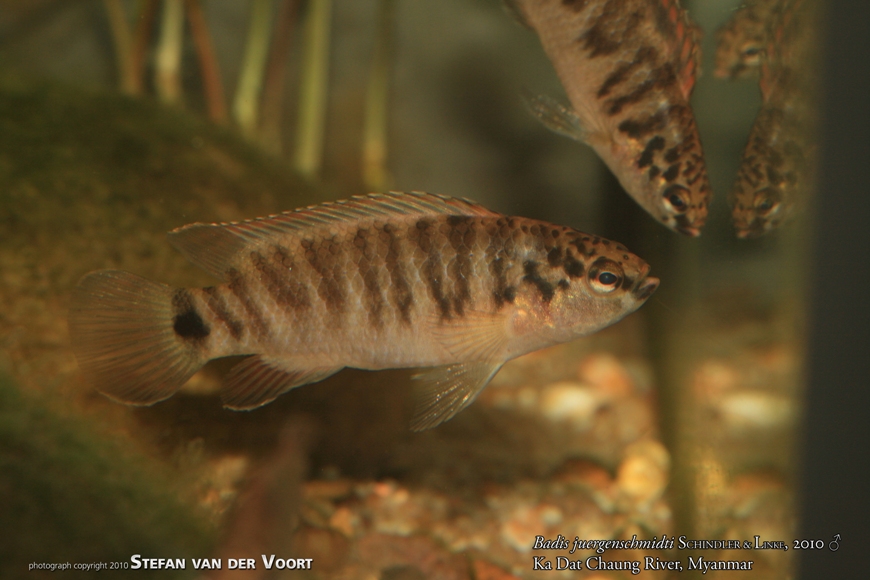
Badis juergenschmidti
Badidae · Schindler & Linke, 2010
This species is essentially unknown in the hobby at time of writing. It was discovered by German aquarist Horst Linke in early 2010 and before official description was known as B. sp. ‘East Myanmar’ (‘Ost Myanmar’ in Germany). It can be differentiated from other members of the genu...
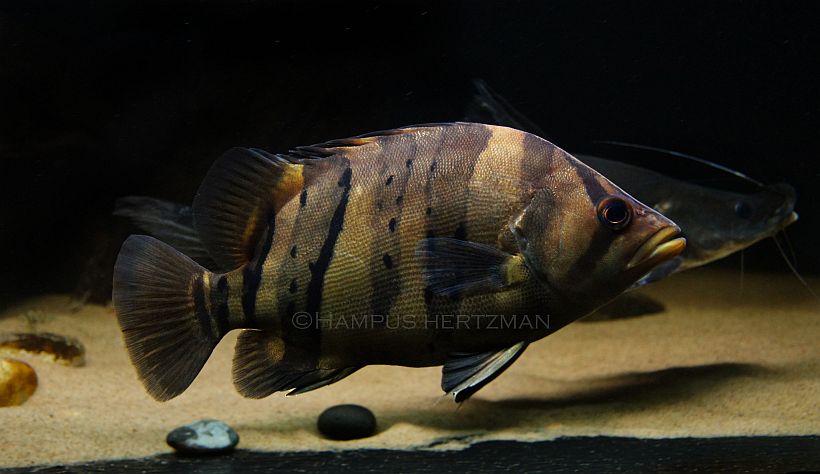
Datnioides microlepisIndonesian Tiger Perch
Datnioididae · Bleeker, 1854
In aquarium literature this species is also referred to as 'fine scaled tiger fish', 'Indonesian tiger fish', 'Sumatran tiger fish', 'Indo datnoid', and 'Indo dat'. The common name of 'tiger fish' is also used in reference to the African alestid genus Hydrocynus, and the more appropriate 'tiger perch' was suggested by Roberts and Kottelat (1994).
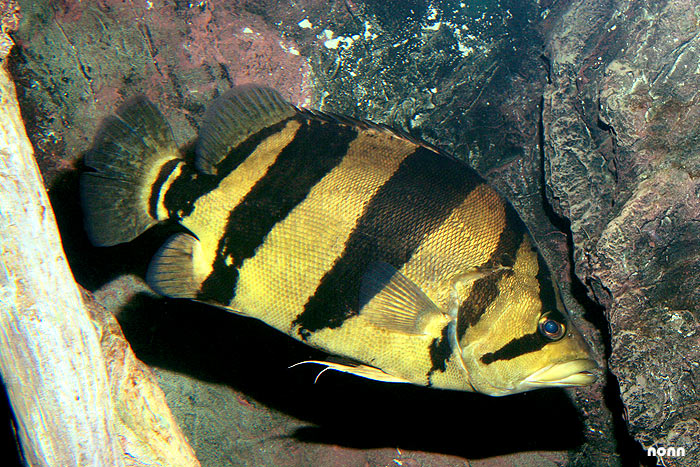
Datnioides pulcherSiamese Tiger Perch
Datnioididae · Kottelat, 1998
The massive decline in wild populations, hypothesised to be in excess of 90% since the mid-1980s, is thought to have been caused by a variety of factors, including habitat alteration due to construction of dams and other infrastructure, removal of riparian vegetation, and urban pollution, plus over fishing for both human consumption and the aquarium trade.
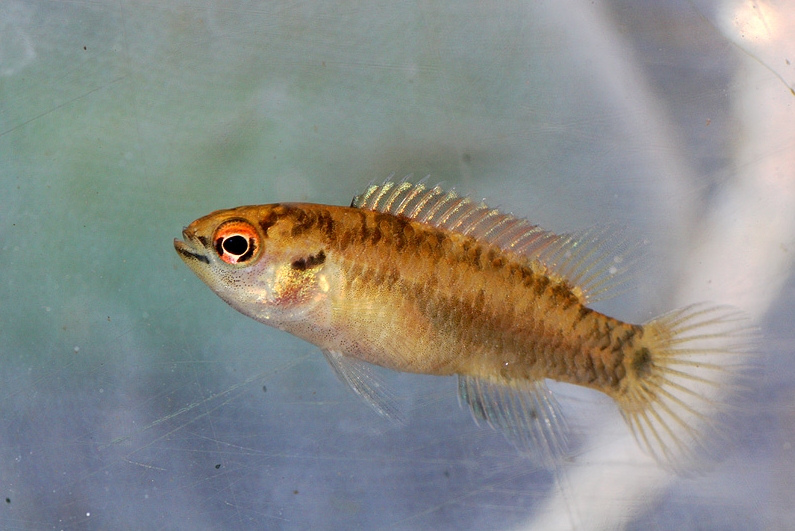
Dario urops
Badidae · Britz, Ali & Philip, 2012
This species has not yet entered the aquarium trade but is maintained by a handful of private collectors. Though described in 2012 it was in fact first collected in the latter half of the 19th century with Day (1875-1878) having mentioned the presence of Badis dario in ‘Wynaad’ and its occurrence "along the Western Ghats" (the chain of mountains in southwestern India).