Region · Indonesia
Bangka
- Species
- 10
- Countries
- 1
- Photographed
- 10 of 10
- Difficulty rated
- 10 of 10
Split acrossfrom the record that named both
Countries hereone fauna, more than one flag
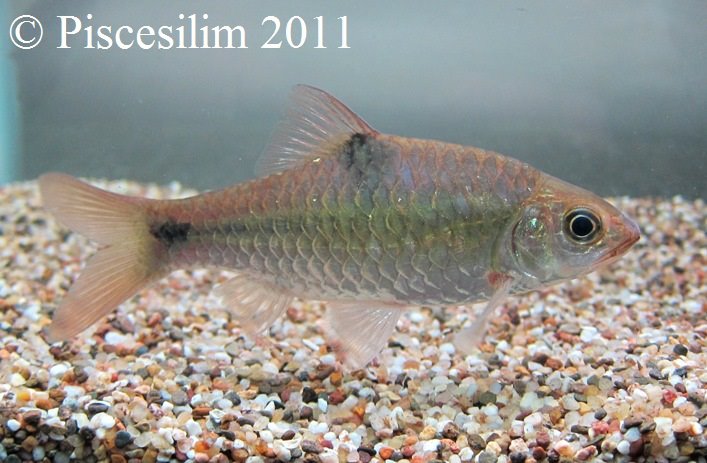
Barbodes binotatusSpotted Barb
Cyprinidae · Valenciennes, 1842
This species is so ubiquitous across its natural range that it's often referred to simply as 'common barb'. Basic adult colour pattern consists of a small, dark spot at the base of the dorsal-fin origin and another on the caudal peduncle but overall appearance varies somewhat depending on origin, with the anterior dark spot enlarged ventrally forming a bar or posterior spot extending into the caudal-fin, for example. The spots may also appear darker or lighter in some individuals.
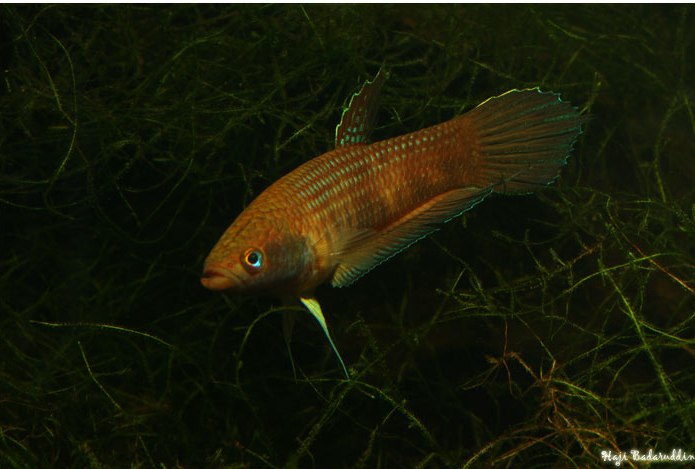
Betta cracens
Osphronemidae · Tan & Ng, 2005
The type locality is a stream in a forest swamp with dense growth of Barclaya motleyi at intervals, part of which had been turned over to cultivation of rubber trees in 1997. The water depth varied between 5-80 cm, pH was 5.8 and syntopic species included 'Puntius' banksi, Rasbora einthoveni, Trigonopoma pauciperforatum, Hemirhamphodon pogonognathus, Betta pugnax, Sphaerichthys osphromenoides, Trichogaster trichopterus, Channa gachua and C. lucius.
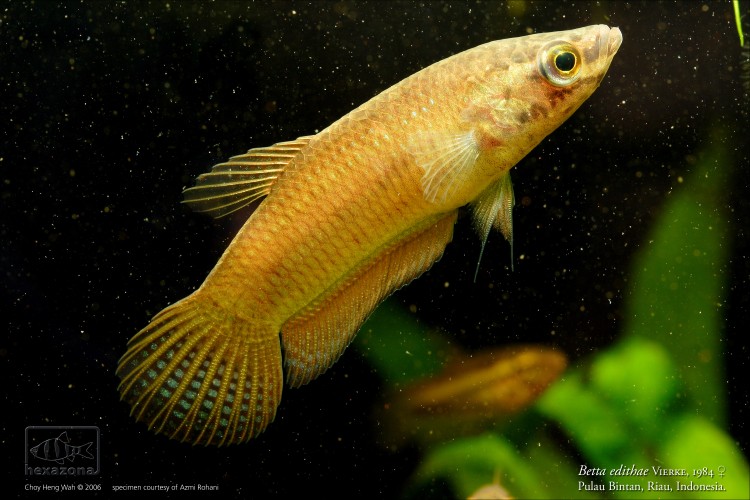
Betta edithae
Osphronemidae · Vierke, 1984
This species is the only member of the B. edithae group within the genus, and separated from all other Betta spp. by the fact that the branchiostegal membrane and posterior portion of the opercle are opaque or translucent. The original diagnosis by Vierke also states that it has relatively small eyes and short fins with a typical pattern of partial barring.
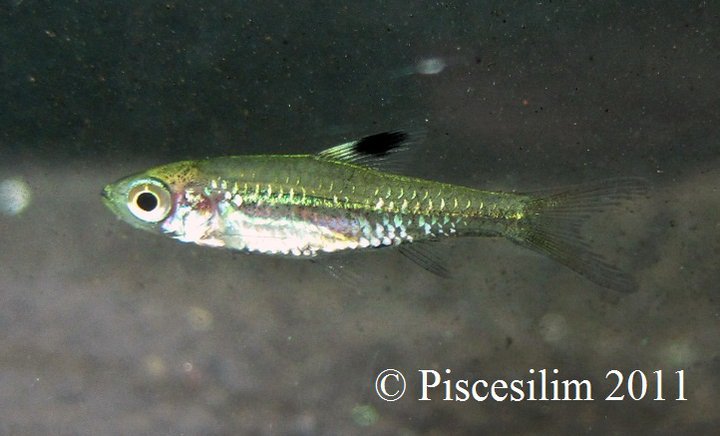
Brevibora cheeya
Cyprinidae · Liao & Tan, 2011
This species is very rare in the trade and is normally imported only as bycatch among shipments of other fishes. It can be told apart from its well-known congener B. dorsiocellata by a combination of characters as follows: lateral line complete (25-30 pored scales vs. 4-9); more scales in the lateral row (29-32 vs. 25-27); larger adult siz...
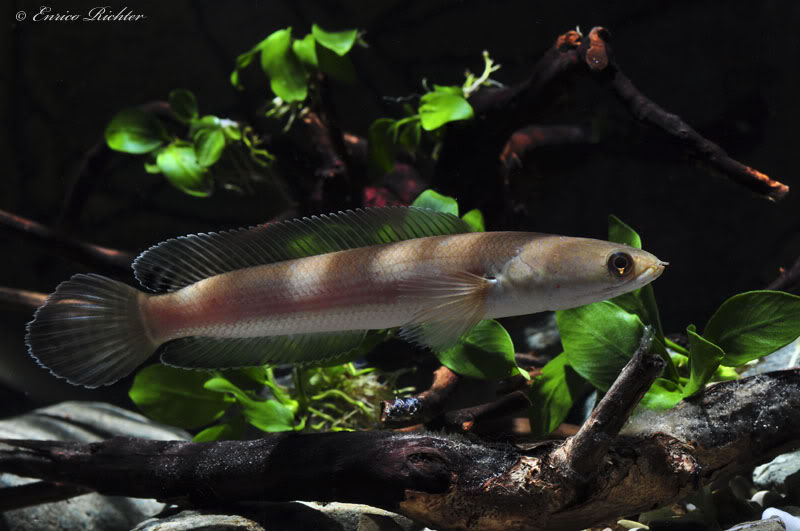
Channa melasomaBlack Snakehead
Channidae · Bleeker, 1851
This species can be told apart from the similar-looking congener C. baramensis (once considered synonymous with C. melasoma) by absence (vs. presence) of a black spot in the centre of numerous body scales and absence (vs. presence in specimens larger than 120 mm SL) of a barred caudal-fin pattern.
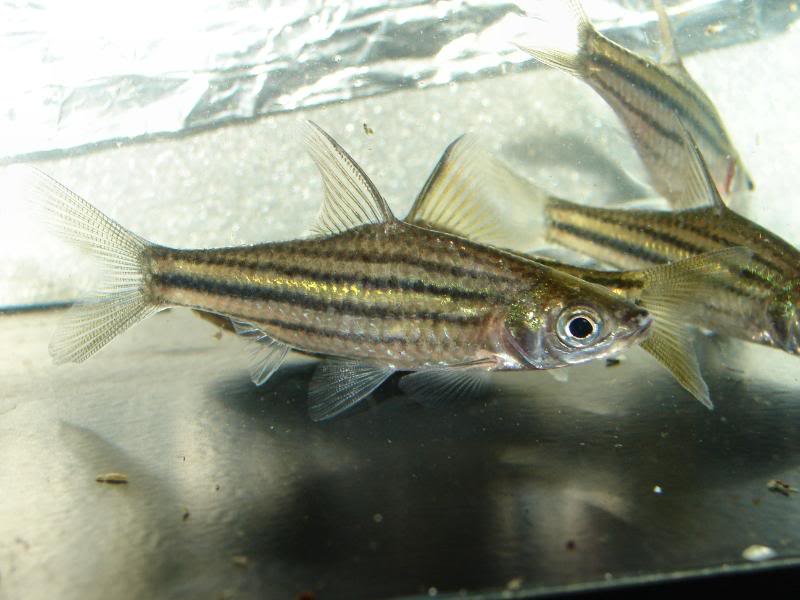
Desmopuntius gemellus
Cyprinidae · Kottelat, 1996
The type series was purchased from a market in Jambi province, eastern Sumatra, Indonesia and this species is also known from neighbouring Riau province plus the island province of Bangka. On Sumatra it may be restricted to the Indragiri and Batang Hari river systems. Inhabits peat swamp forests and associated black water streams in which the water is typically stained brown with humic acids and other chemicals released by decaying organic material. The dissolved mineral content is generally negligible and the pH can be as...
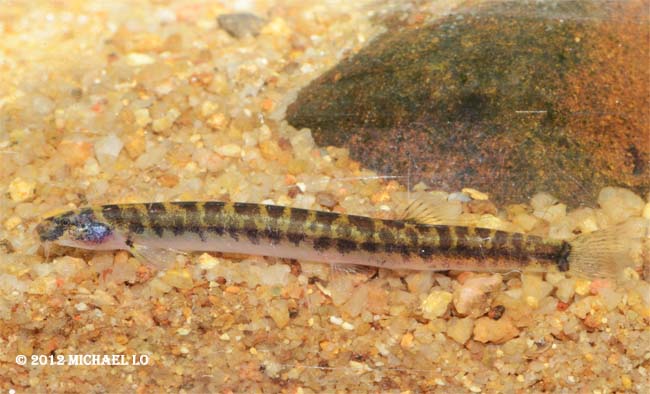
Pangio shelfordii
Cobitidae · Popta, 1903
Patterning is highly variable depending both within and between populations and the species may comprise an assemblage containing a number of taxa (Kottelat and Lim, 1993; Tan and Kottelat, 2009). For example, those from Singapore and Johor possessing intricate mottling on the dorsal surface while individuals from Terengganu have a series of saddle-like markings either alternating or connecting with the midlateral markings.
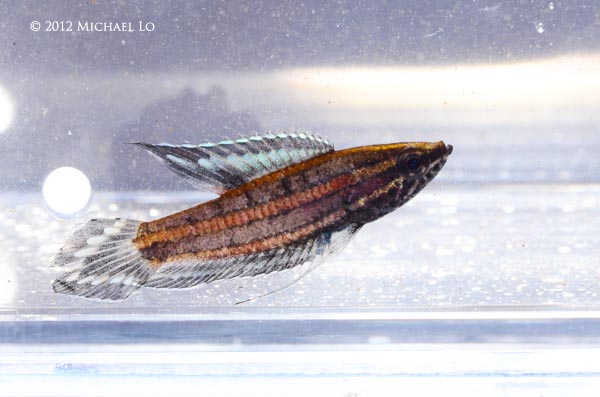
Parosphromenus deissneriDeissner's Liquorice Gourami
Osphronemidae · Bleeker, 1859
P. deissneri was the only recognised member of the genus for almost a century following its description in 1859. As a result its name has and continues to be widely misapplied in both aquarium and ichthyological literature although it's probably always been very rare in the hobby, while a number of fishes previously identified under the name from other pa...
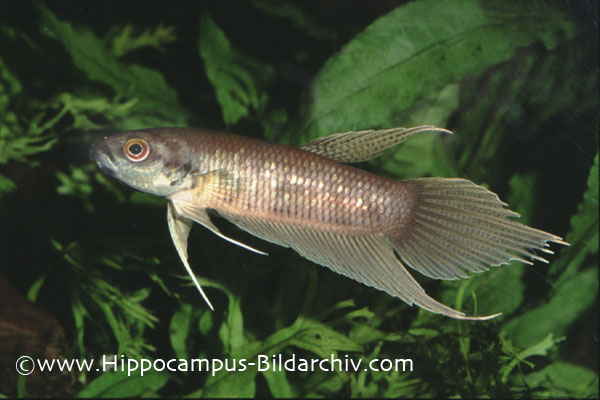
Betta chloropharynxGreen Throat Mouthbrooder
Osphronemidae · Kottelat & Ng, 1994
B. chloropharynx is included in the Betta waseri group/complex of closely-related species within the genus, an assemblage which also includes a handful of potentially new species such as B. sp. 'Medas' on an unofficial basis. The easiest way to distinguish these is by examining the throat markings which vary according to species. In this case the lighter of these form a shape that roughly resembles a horizontal figure of ei...
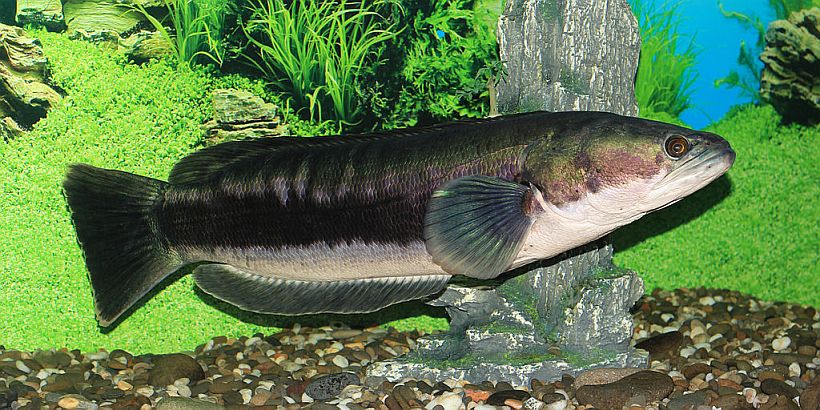
Channa micropeltesGiant Snakehead
Channidae · Cuvier, 1831
C. micropeltes is also referred to as 'Indonesian', 'red', or 'redline' snakehead, the latter names in reference to the appearance of juveniles which often appear in the ornamental trade despite its unsuitability for home aquaria. It is somewhat hyperbolised in the media as a fearsome, invasive "monster" fish with a reputation for killing more fish than it can eat, and even the occasional human, although in reality...