Channa micropeltes
Giant Snakehead
Formerly Ophicephalus micropeltes Cuvier, 1831 · Ophicephalus serpentinus Cuvier, 1831 · Ophicephalus bivittatus Bleeker, 1845 · Ophicephalus stevensii Bleeker, 1854 · Ophiocephalus studeri Volz, 1903 · Ophiocephalus flos Pétillot, 1911
On this page13 sections
Quick facts
Difficulty6 of 6 measures
More bars, more demanding.
- Space
- very large tank
- Water
- tap water
- Temp
- unfussy
- Temperament
- species tank
- Social
- kept alone
- Compatibility
- not a community fish
C. micropeltes is also referred to as 'Indonesian', 'red', or 'redline' snakehead, the latter names in reference to the appearance of juveniles which often appear in the ornamental trade despite its unsuitability for home aquaria. It is somewhat hyperbolised in the media as a fearsome, invasive "monster" fish with a reputation for killing more fish than it can eat, and even the occasional human, although in reality...
Etymology
Channa: from the Latin channe, used to refer to an unspecified species of sea perch.
micropeltes: from the Ancient Greek μικρός (mikros), meaning 'small', and πέλτη (péltē), meaning 'shield', in reference to the shield-like scales on the head of the fish.
Distribution
This species is widespread throughout much of Southeast Asia, with its range extending southwest from the Mekong River drainage in Laos, Thailand, Cambodia (including the Tonlé Sap system), and Vietnam, to central and southern (peninsular) Thailand, Peninsular Malaysia, Singapore, and the Greater Sunda Islands of Sumatra, Borneo, and Java. It also occurs in a number of smaller archipelagos including Bangka and Belitung (Billiton).
Type locality is 'Java, Indonesia'.
C. micropeltes has been reported from U.S. several states including Maine, Massachusetts, Maryland, Rhode Island, Virginia, and Wisconsin, but is not thought to have become established due to its tropical requirements. Aquarium hobbyists are considered most likely to blame for these occurrences, having released the fish when they outgrew their home aquaria. It has also been introduced to the Philippines as a sport fish.
Habitat
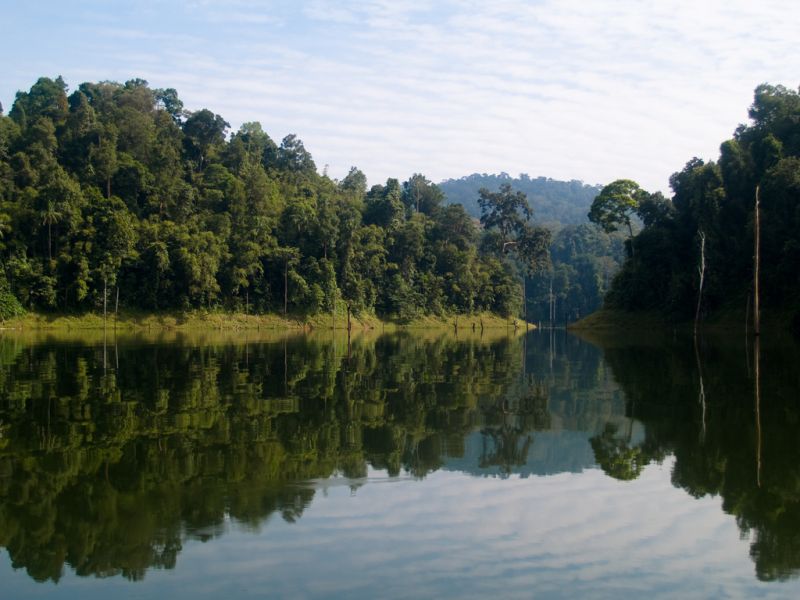
Displays a preference for standing to slow-moving environments such as larger, deep, lowland river channels, inland lakes, and swamps, including man-made canals and reservoirs.
Aquarium size
Suitable only for public installations or the very largest private aquaria.
Maintenance
Relatively unfussy although some surface cover in the form of floating or overhanging vegetation or branches is appreciated. Unlike most Channa spp. it is pelagic and requires plenty of room to swim.
It is essential to use a tightly-fitting hood since Channa spp. are notorious for their ability to escape, and a gap should be left between this and the water surface as they require access to a layer of humid air.
Water conditions
Diet
An obligate predator feeding on smaller fishes, amphibians, invertebrates and terrestrial insects in nature but in most cases adapts well to dead alternatives in captivity. Some specimens even accept dried foods though these should never form the staple diet.
Young fish can be offered chironomid larvae (bloodworm), small earthworms, chopped prawn and suchlike while adults will accept strips of fish flesh, whole prawns/shrimp, mussels, etc. Older individuals do not require feeding on a daily basis, with 2-3 times per week sufficient.
This species should not be fed mammalian or avian meat such as beef heart or chicken since some of the lipids contained in these cannot be properly metabolised by the fish and may cause excess fat deposits and even organ degeneration. Similarly there is no benefit in the use of 'feeder' fish such as livebearers or small goldfish which carry with them the risk of parasite or disease introduction, and tend not have a high nutritional value unless properly conditioned beforehand.
These boxes carry affiliate links and we may earn a commission. What they recommend comes from each profile’s own figures, never chosen by hand or paid for.
Behaviour and compatibility
Best-maintained in a species-specific aquarium, but can apparently be maintained alongside similarly-sized fishes if sufficient space is available.
Juveniles and subadults are relatively peaceful with one another but become aggressive when they reach sexual maturity.
Sexual dimorphism
There does not appear to be any reliable method to sex this species by external means.
Reproduction
Captive breeding has been achieved but an enormous amount of space and investment is required simply in order to produce a large number of juveniles with little-to-no monetary value. In addition, this species is said not to become sexually mature until approximately two years of age, by which point it should measure 50 – 60 cm20 – 24 in in length.
Little has been published regarding the reproductive activity of wild fish, but apparently adults form pairs in flooded areas or small streams with submerged vegetation at the onset of the wet season. Some sources state that they build a nest in which to spawn, others that the eggs float at the water surface until they hatch, with the latter most likely given that the same strategy has been observed in some congeners.
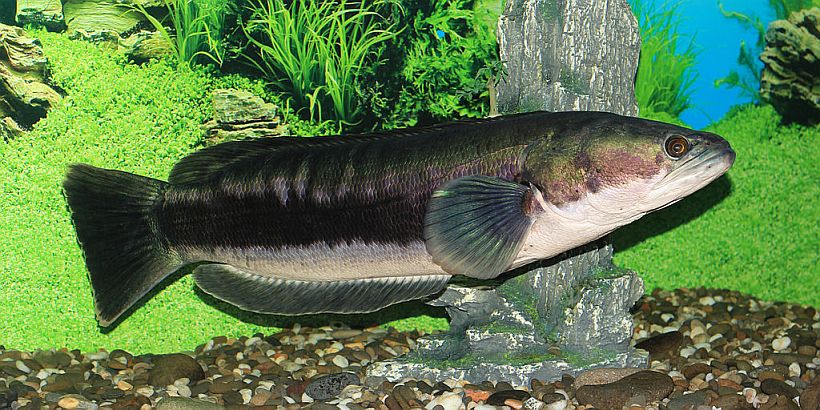
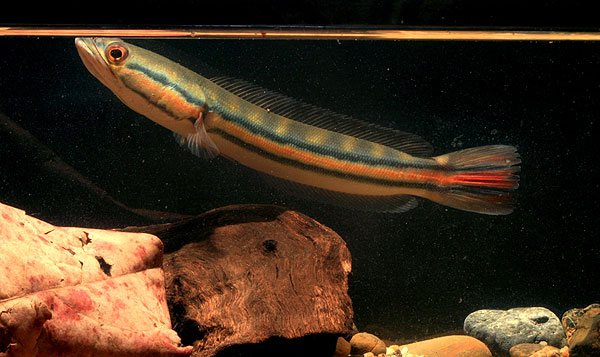
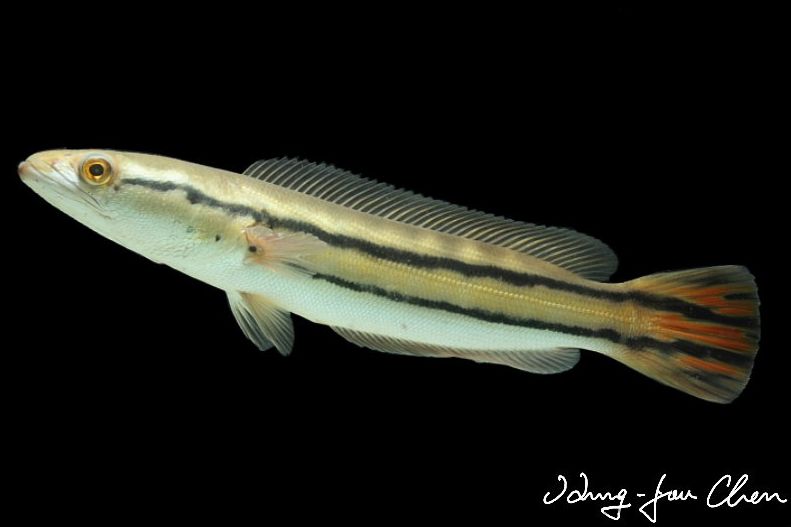
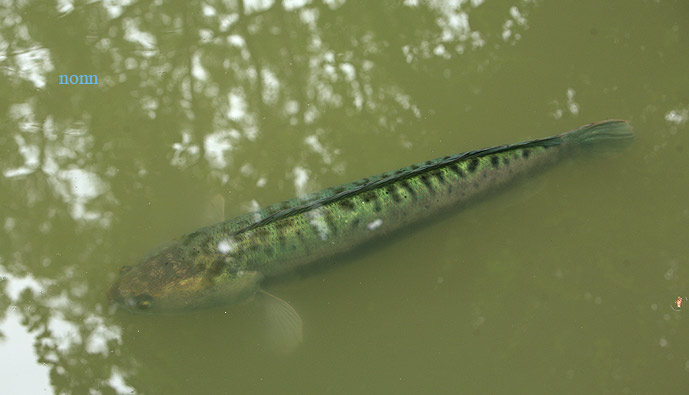
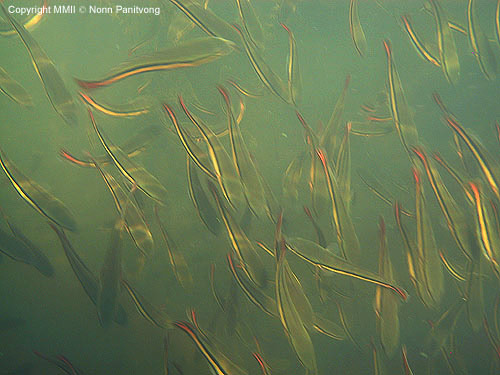
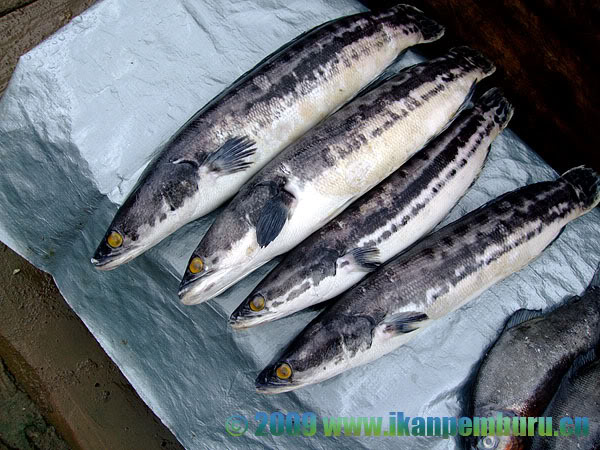
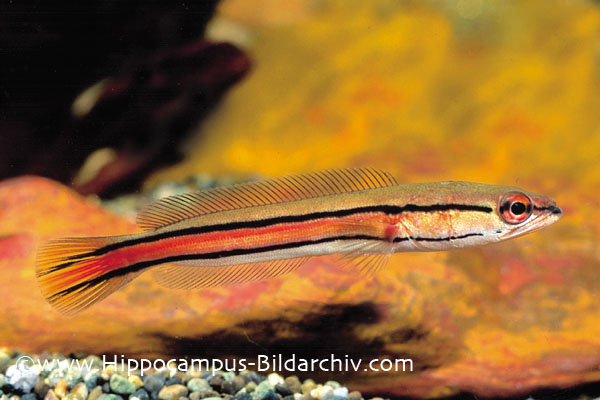
Whereas adults exhibit a colour pattern comprising a broad, dark longitudinal stripe, juveniles possess two black longitudinal stripes with a bright orange area between, and once free swimming are gregarious and highly mobile. Parental care is relatively extended and the adults are extremely aggressive in defending their brood, with wild fish occasionally injuring humans. Older juveniles have been observed to form large aggregations, presumably as a means to reduce the threat posed by predators.
Notes
C. micropeltes is also referred to as 'Indonesian', 'red', or 'redline' snakehead, the latter names in reference to the appearance of juveniles which often appear in the ornamental trade despite its unsuitability for home aquaria. It is somewhat hyperbolised in the media as a fearsome and invasive"monster" fish with a reputation for killing more fish than it can eat, and even the occasional human, although in reality there is no evidence for the latter and it has yet to become established anywhere outside Southeast Asia.
This species is heavily cultured throughout its native range, both as a sport fish and for human consumption, and is also used in medicine in some countries. Cage farming is the most common method employed, but it is now limited in Vietnam and banned in Cambodia due to the capture of countless small fish for use as food, many of which tend to be juveniles of commercially important species.
Some wild populations exhibit variations in colour pattern, and it is thought that the species as currently considered may contain hidden genetic diversity. Several broader genetic analyses of the genus Channa have already been published, and indicate that the sister species of C. micropeltes is the similar-looking C. diplogramma from southwestern India. These two species possess a region of gular scales that is present in only a few Asian Channa species but shared with the related African genus Parachanna, and it is hypothesised that this may be a plesiomorphic character.
C. micropeltes can be distinguished from C. diplogramma by a combination of characters as follows: shorter pre-anal length (mean 50.64 mm2.0 in vs. 55.66 mm2.2 in in C. diplogramma); deeper body (mean 20.05 cm8 in vs. 15.6 cm6 in); more cheek scales (23-25 vs. 16-20); more total vertebrae (57 vs. 53-54); less caudal-fin rays (14 vs. 15-17).
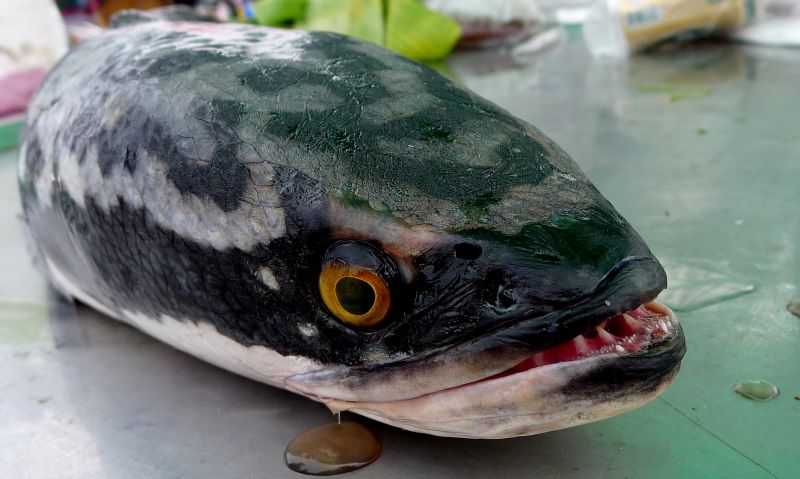
Members of the family Channidae are commonly referred to as 'snakeheads' due to possession of large scales on the head of most species which are reminiscent of the epidermal scales (cephalic plates) on the heads of snakes. There currently exist over 30 valid species but diversity within the group is likely to prove significantly greater.
All Channa spp. possess supplementary breathing apparatus in the form of paired suprabranchial chambers located behind and above the gills, although these are not labyrinthic but lined with respiratory epithelium. These chambers allow the fish to breathe atmospheric air and survive in hypoxic conditions or even out of the water for a considerable period of time, and in aquaria they are often seen rising to the surface to take gulps of air.
References
- Brede, N. and P. Antler (2009). Schlangenkopffische—Die Gattungen Channa und Parachanna. Natur und Tier Verlag, Münster, 62 pp.
- Kottelat, M. (2013). The fishes of the inland waters of southeast Asia: a catalogue and core bibiography of the fishes known to occur in freshwaters, mangroves and estuaries. The Raffles Bulletin of Zoology Supplement 27, 1-663
- Benziger, A., S. Philip, R. Raghavan, P. H. Anvar Ali, M. Sukumaran, J. C. Tharian, N. Dahanukar, F. Baby, R. Peter, K. Rema Devi, K. V. Radhakrishnan, M. A. Aniffa, R. Britz, and A. Antunes (2011). Unraveling a 146 Years Old Taxonomic Puzzle: Validation of Malabar Snakehead, Species-Status and Its Relevance for Channid Systematics and Evolution. PLoS ONE 6(6), e21272
- Kottelat, M. and E. Widjanarti (2005). The fishes of Danau Sentarum National Park and the Kapuas Lakes area, Kalimantan Barat, Indonesia. Raffles Bulletin of Zoology Supplement 13, 139-173
- Tan, H. H. and P. K. L. Ng (2005). The labyrinth fishes (Teleostei: Anabanatoidei, Channoidei) of Sumatra, Indonesia. Raffles Bulletin of Zoology Supplement 13, 115-138
- Courtenay, W. R., Jr. and J. D. Williams (2004). Snakeheads (Pisces, Channidae) - a biological synopsis and risk assessment. Circular, U. S. Department of the Interior, Geological Survey No. 1251, i-v + 1-143
- Kottelat, M. (2001). Fishes of Laos. WHT Publications, Colombo, 1-198
- Freyhof, J., D. V. Serov and T. N. Nguyen (2000). A preliminary checklist of the freshwater fishes of the River Dong Nai, South Vietnam. Bonner Zoologische Beiträge 49(1-4), 93-99
- Ng, H. H. and H.-H. Tan (1999). The fishes of the Endau drainage, Peninsular Malaysia with descriptions of two new species of catfishes (Teleostei: Akysidae, Bagridae). Zoological Studies 38(3), 350-366
- Kottelat, M. (1998). Fishes of the Nam Theun and Xe Bangfai basins, Laos, with diagnoses of twenty-two new species (Teleostei: Cyprinidae, Balitoridae, Cobitidae, Coiidae and Odontobutidae). Ichthyological Exploration of Freshwaters 9(1), 1-128
- Rainboth, W. J. (1996). FAO species identification field guide for fishery purposes. Fishes of the Cambodian Mekong. Rome, FAO, 1-265
- Roberts, T. R. (1993). The freshwater fishes of Java, as observed by Kuhl and van Hasselt in 1820-23. Zoologische Verhandelingen (Leiden) 285, 1-94
- Lim, K. K. P., P. K. L. Ng and M. Kottelat (1990). On a collection of freshwater fishes from Endau-Rompin, Pahang-Johore, Peninsular Malaysia. Bulletin of the Raffles Museum 38(1), 31-54
- Roberts, T. R. (1989). The freshwater fishes of western Borneo (Kalimantan Barat, Indonesia). Memoirs of the California Academy of Sciences 14, 1-210
- Tan, H. H. and M. Kottelat (2009). The fishes of the Batang Hari drainage, Sumatra, with description of six new species. Ichthyological Exploration of Freshwaters 20(1), 13-69
- Serrao, N. R., D. Steinke, and R. H. Hanner (2014). Calibrating Snakehead Diversity with DNA Barcodes: Expanding Taxonomic Coverage to Enable Identification of Potential and Established Invasive Species. PLoS ONE 9(6), e99546
- Adamson, E. S., D. A. Hurwood, and P. B. Mather (2010). A reappraisal of the evolution of Asian snakehead fishes (Pisces, Channidae) 3 using molecular data from multiple genes and fossil calibration. Molecular Phylogenetics and Evolution 56(2), 707-717
- Cuvier, G. and A. Valenciennes. (1831). Histoire naturelle des poissons. Tome septième. Livre septième. Des Squamipennes. Livre huitième. Des poissons à pharyngiens labyrinthiformes. Histoire naturelle des poissons. v. 7, 1-531
Species images · 9
Used with the photographer’s permission. Not licensed for reuse.
Distribution
- Cambodia
- Indonesia
- Laos
- Malaysia
- Singapore
- Thailand
- Vietnam
- Bangka
- Belitung
- Borneo
- Java
- Peninsular Malaysia
- Sumatra
- Barito
- Bera
- Bukit Merah
- Busang
- Chao Phraya
- Chenderoh
- Cheow Lan
- Chi
- Cisadane
- Dong Nai
- Endau
- Indragiri
- Kampar
- Kapuas
- Kenyir
- Khao Laem
- Khwae Noi
- Khwae Yai
- Kinchin
- Lematang
- MacRitchie Reservoir
- Mae Klong
- Mekong
- Musi
- Nam Ngum
- Pa Sak
- Pao
- Perak
- Phum Duang
- Sambas
- Sirindhorn
- Tapi
- Tasik Bera
- Tasik Kenyir
- Toba
- Tonlé Sap
- Vajiralongkorn
- Xe Bang Fai
Profile completeness22 of 24
92% complete
Missing: aquarium size, water condition notes.