Region · Indonesia
Belitung
- Species
- 10
- Countries
- 1
- Photographed
- 10 of 10
- Difficulty rated
- 10 of 10
Split acrossfrom the record that named both
Countries hereone fauna, more than one flag
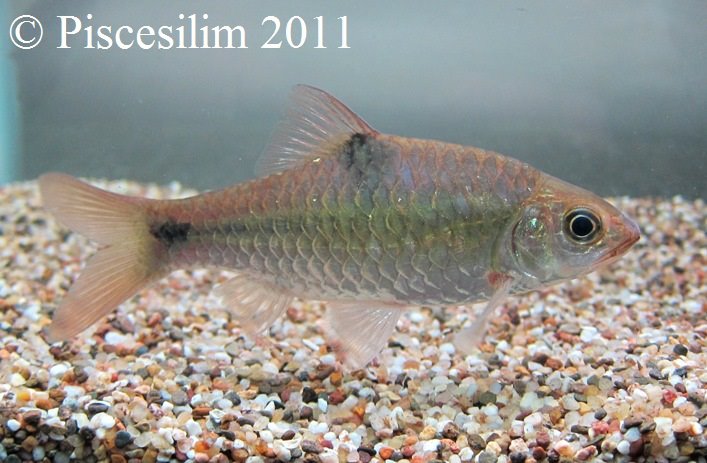
Barbodes binotatusSpotted Barb
Cyprinidae · Valenciennes, 1842
This species is so ubiquitous across its natural range that it's often referred to simply as 'common barb'. Basic adult colour pattern consists of a small, dark spot at the base of the dorsal-fin origin and another on the caudal peduncle but overall appearance varies somewhat depending on origin, with the anterior dark spot enlarged ventrally forming a bar or posterior spot extending into the caudal-fin, for example. The spots may also appear darker or lighter in some individuals.
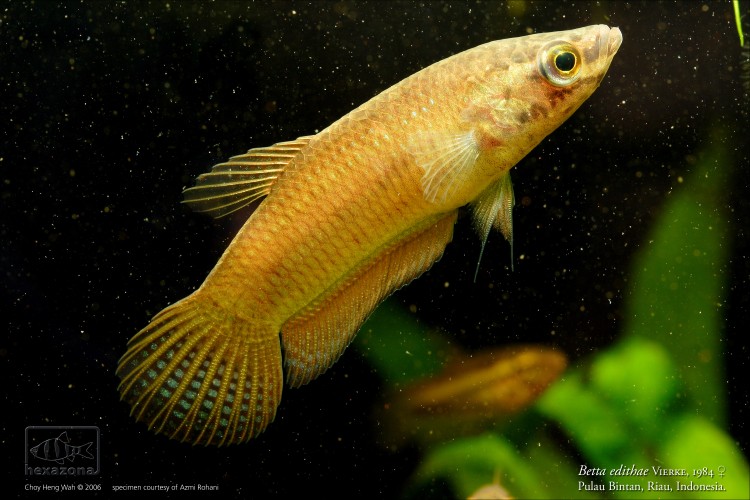
Betta edithae
Osphronemidae · Vierke, 1984
This species is the only member of the B. edithae group within the genus, and separated from all other Betta spp. by the fact that the branchiostegal membrane and posterior portion of the opercle are opaque or translucent. The original diagnosis by Vierke also states that it has relatively small eyes and short fins with a typical pattern of partial barring.
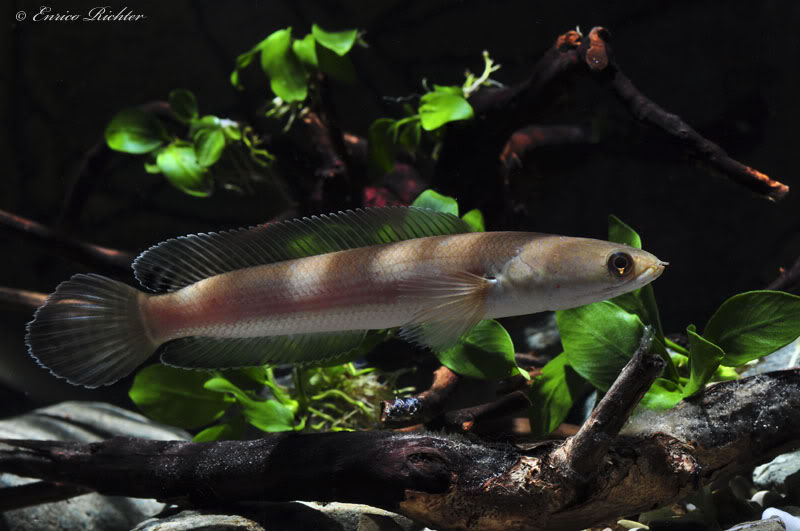
Channa melasomaBlack Snakehead
Channidae · Bleeker, 1851
This species can be told apart from the similar-looking congener C. baramensis (once considered synonymous with C. melasoma) by absence (vs. presence) of a black spot in the centre of numerous body scales and absence (vs. presence in specimens larger than 120 mm SL) of a barred caudal-fin pattern.
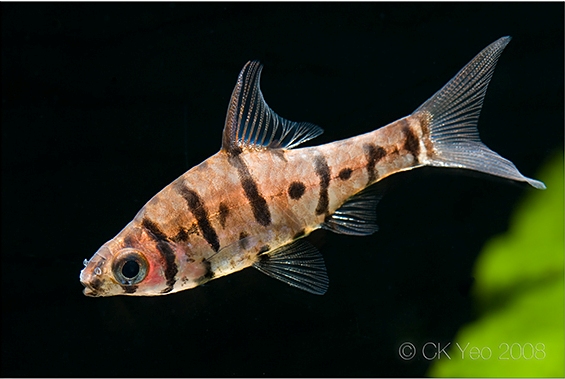
Eirmotus insignis
Cyprinidae · Tan & Kottelat, 2008
Typically inhabits slow-moving, shallow, shady rainforest streams and swamps with dense submerged and marginal vegetation. The conditions are often rather turbid and the substrate composed of mud or fallen leaves, twigs and branches. Such environments characteristically contain soft, weakly acidic water and are often dimly-lit due to the rainforest canopy above. The fish are found sheltering among overhanging tree roots and aquatic vegetation.
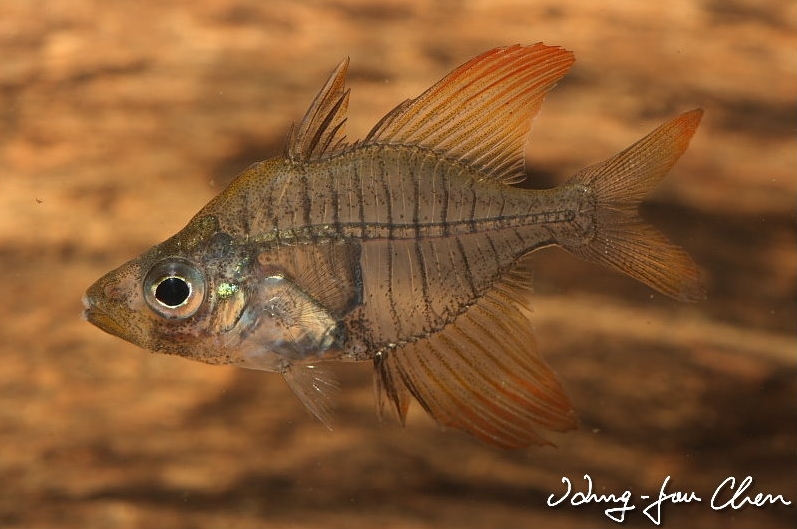
Gymnochanda verae
Ambassidae · Tan & Lim, 2011
A densely-planted tank with floating vegetation and roots, twigs or branches and natural leaf litter would seem appropriate. There's no need to use natural peat, the collection of which is both unsustainable and environmentally-destructive. Filtration should not be strong with an air-powered sponge-type unit ideal, and given it naturally inhab...
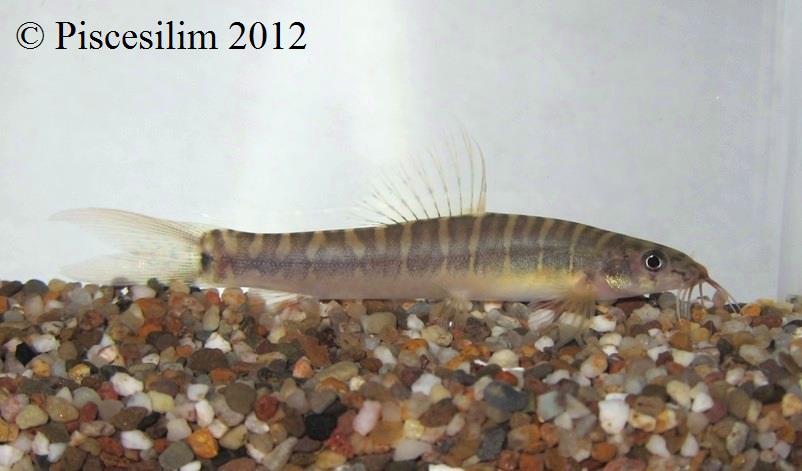
Nemacheilus selangoricus
Nemacheilidae · Duncker, 1904
N. selangoricus is most similar to N. spiniferus since it possesses acuminate scales above and below the lateral line on the caudal peduncle, a feature not shared with any other congener. It can however be distinguished by the following characters: presence of 8-12 very regular dark bars on flanks (vs. 10-13 irregularly-shaped bars in N. spiniferus), 3-5 times...
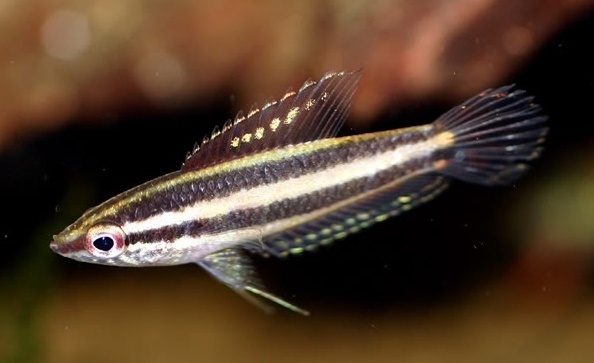
Parosphromenus bintan
Osphronemidae · Kottelat & Ng, 1998
This species is not generally available in the aquarium hobby on a commercial basis but is occasionally collected and distributed by private aquarists. It's name is sometimes misapplied to commercial shipments of other species, and there also exist a number of other fish with rounded caudal-fins that may or may not be conspecific, including P. sp. 'blue line' and P. sp. 'Selatan' from Sumatra.
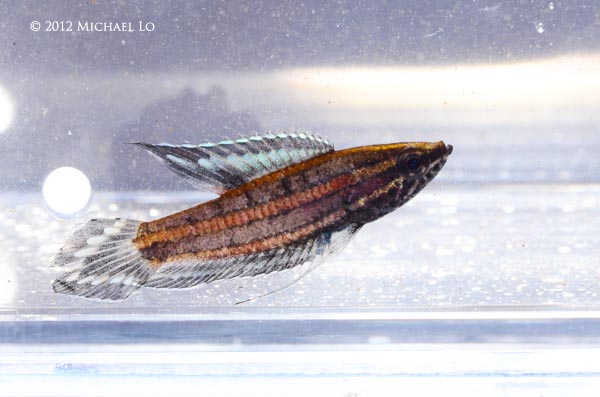
Parosphromenus deissneriDeissner's Liquorice Gourami
Osphronemidae · Bleeker, 1859
P. deissneri was the only recognised member of the genus for almost a century following its description in 1859. As a result its name has and continues to be widely misapplied in both aquarium and ichthyological literature although it's probably always been very rare in the hobby, while a number of fishes previously identified under the name from other pa...
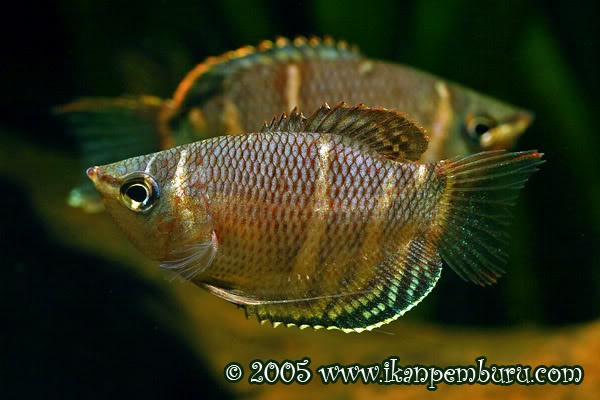
Sphaerichthys osphromenoidesChocolate Gourami
Osphronemidae · Canestrini, 1860
The genus Sphaerichthys currently comprises four species with S. osphromenoides by far the best known in the hobby. It's easily distinguishable from the congeners S. vaillanti and S. acrostoma since both exhibit a notably more elongate head and body profile, reverse sexual dimorphism (i.e. females are the more colourful/strongly-patterened), and are paternal mouthbrooders.
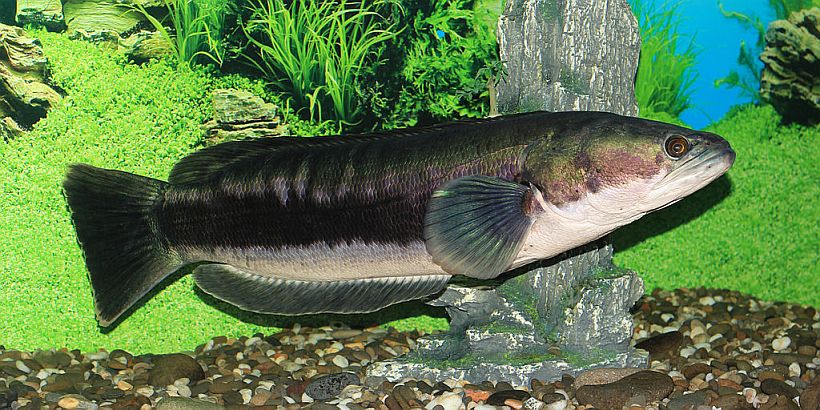
Channa micropeltesGiant Snakehead
Channidae · Cuvier, 1831
C. micropeltes is also referred to as 'Indonesian', 'red', or 'redline' snakehead, the latter names in reference to the appearance of juveniles which often appear in the ornamental trade despite its unsuitability for home aquaria. It is somewhat hyperbolised in the media as a fearsome, invasive "monster" fish with a reputation for killing more fish than it can eat, and even the occasional human, although in reality...