Region · Indonesia
Java
- Species
- 38
- Countries
- 1
- Photographed
- 38 of 38
- Difficulty rated
- 38 of 38
Split acrossfrom the record that named both
Countries hereone fauna, more than one flag
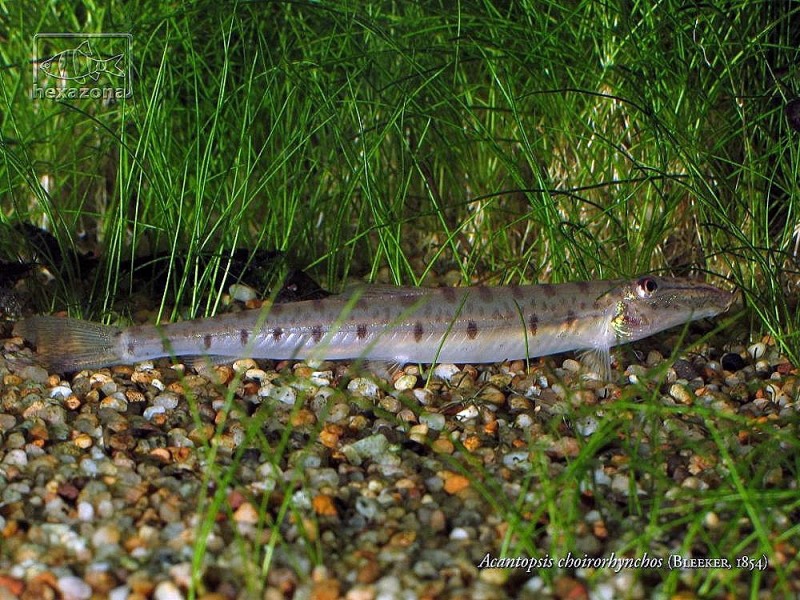
Acantopsis dialuzonaHorseface Loach
Cobitidae · van Hasselt, 1823
Juveniles of this 'species' (probably a group of species - see 'distribution') are traded in large numbers but it's still uncommon to see adult specimens in the hobby suggesting their needs are not catered for often enough. This is a shame as when maintained properly they're hardy, long-lived and interesting aquarium residents. Other trade names include 'long-nosed' and 'banana' loach. Please note although certain that more than one species is being tr...
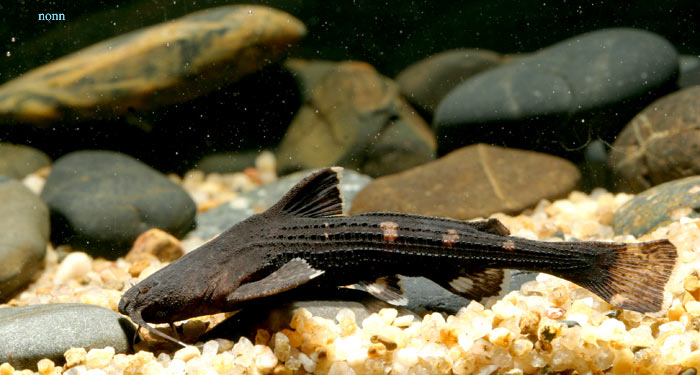
Acrochordonichthys rugosusAsian Banjo Catfish
Akysidae · Bleeker, 1846
This is the most commonly-encountered representative of the genus in the aquatic trade though is by no means common. As in other members of the genus body colouration is highly variable, even among individuals collected from a single locality, although a few useful regularities have been observed which can be used to distinguish certain species. This is thought related to the fact that Acrochordonichthys spp. periodically shed their skins and appear paler post-moulting. A. rugosus lends its ...
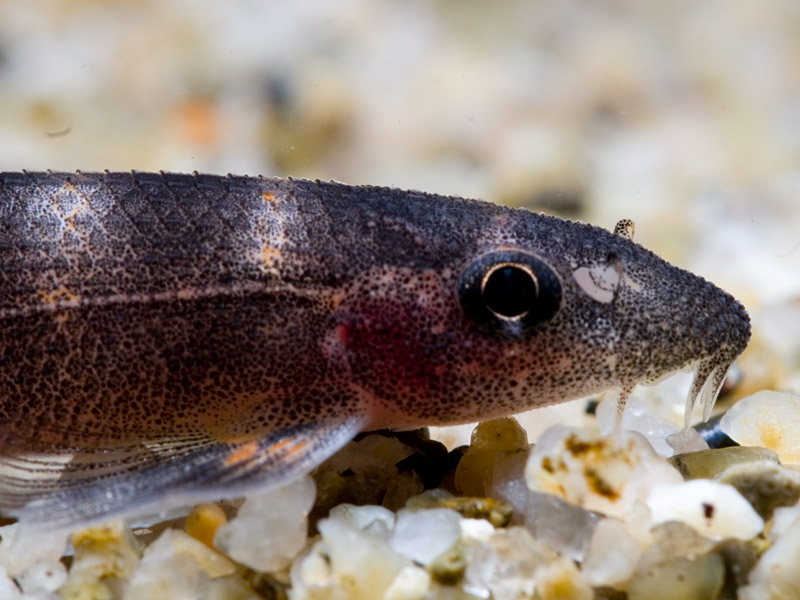
Balitoropsis zollingeri
Balitoridae · Bleeker, 1853
An obligate dweller of swiftly-flowing streams and headwaters containing clear, oxygen-saturated water. It often inhabits riffles and runs and is likely to show a preference for shallower zones. Substrates are generally composed of gravel, rocks, boulders or bedrock carpeted with a rich biofilm formed by algae and other micro-organisms. Juveniles are often found in slower-moving stretches with gravel substrate and submerged tree roots. In both cases patches of aquatic plants are only occasionally pres...
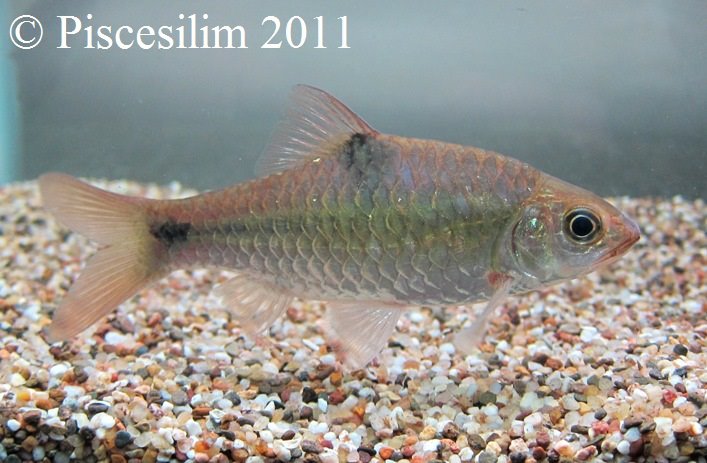
Barbodes binotatusSpotted Barb
Cyprinidae · Valenciennes, 1842
This species is so ubiquitous across its natural range that it's often referred to simply as 'common barb'. Basic adult colour pattern consists of a small, dark spot at the base of the dorsal-fin origin and another on the caudal peduncle but overall appearance varies somewhat depending on origin, with the anterior dark spot enlarged ventrally forming a bar or posterior spot extending into the caudal-fin, for example. The spots may also appear darker or lighter in some individuals.
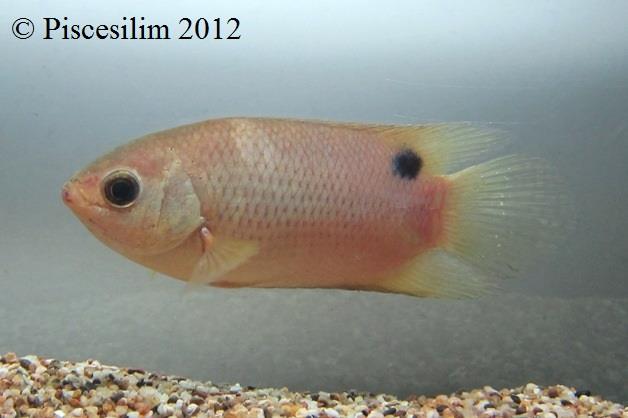
Belontia hasseltiJava Combtail
Osphronemidae · Cuvier, 1831
This species is also referred to by the vernacular name 'Malay combtail'. In terms of external characters it differs most obviously from its only congener, B. signata by its overal brownish grey (vs. reddish) body colouration and presence of a mosaic-type patterning in the unpaired fins (vs. absence). The position of relatedness of the genus Belontia with respect to other anabantoids remains somewhat...
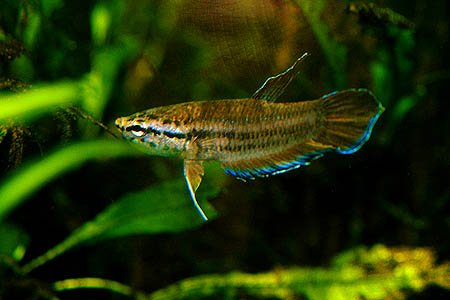
Betta pictaSpotted Betta
Osphronemidae · Valenciennes, 1846
This species lends its name to the Betta picta complex of closely-related species, an assemblage of which members share the following combination of characters: unpaired fins rounded (anal fin sometimes pointed): I-III, 18-24 anal-fin rays; anal and caudal fins with dark distal margins, most pronounced in mature males; pre- and post-orbital stripes present; chin bar present; opercle with iridescent blue, green, or gold scales.
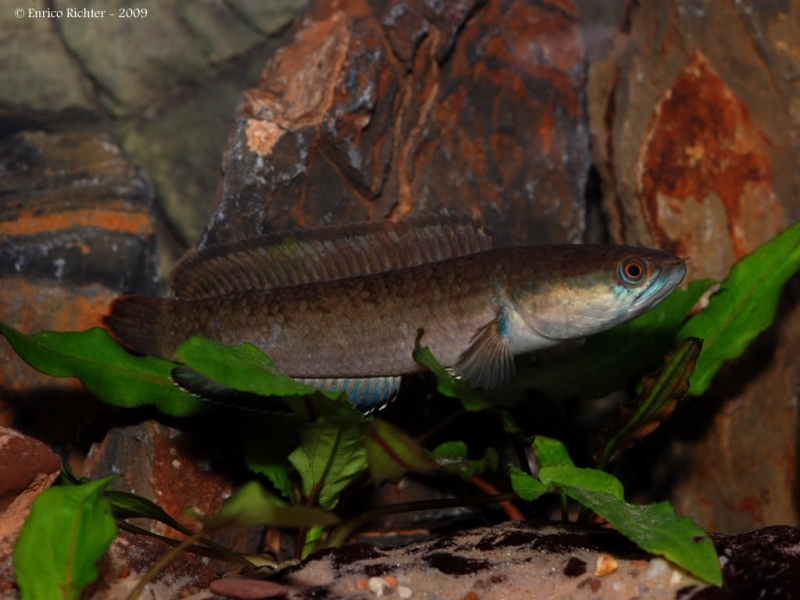
Channa gachuaDwarf Snakehead
Channidae · Hamilton, 1822
Generally considered to have an enormous natural range extending from Iran to Taiwan and Bali, with records existing from Iran, Iraq, Afghanistan, Pakistan, Nepal, India, Sri Lanka, Bangladesh, Bhutan, China, Myanmar, Thailand, Laos, Cambodia, Vietnam, Malaysia, Indonesia, and Singapore. However there exists significant evidence to suggest that C. gachua as currently understood represents a complex of similar-looking species, and a taxonomic review of the group is clearly required.
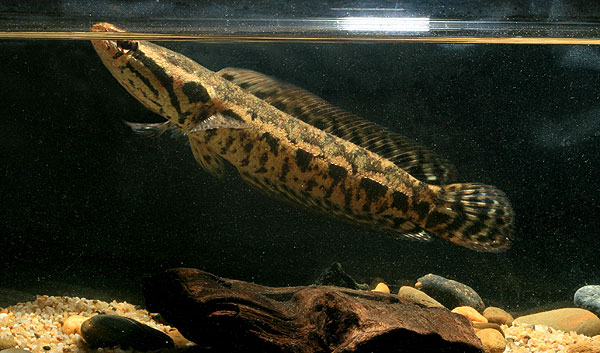
Channa luciusForest Snakehead
Channidae · Cuvier, 1831
Prefers a dimly-lit aquarium with plenty of cover in the form of live plants, driftwood branches, terracotta pipes, plant pots, etc., arranged to form a network of nooks, crannies, and shaded spots. Surface vegetation such as Ceratopteris spp. is also appreciated and makes the fish less inclined to conceal themselves.
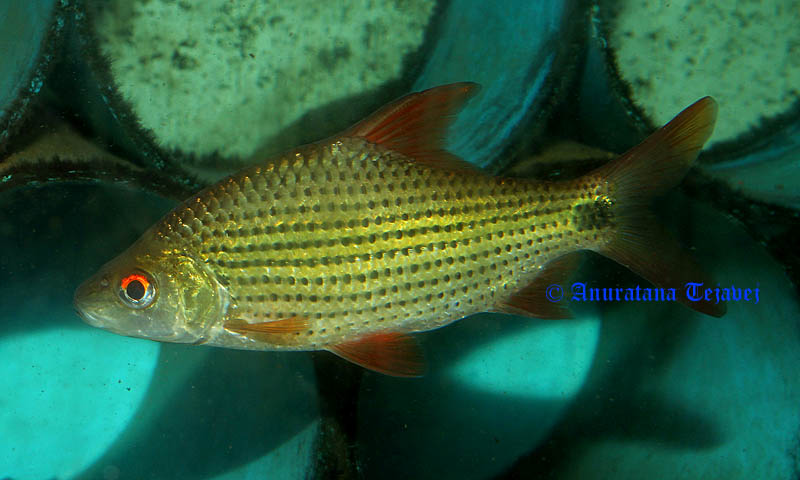
Cyclocheilichthys apogonBeardless Barb
Cyprinidae · Valenciennes, 1842
In the aquarium trade this species may also be seen on sale as 'skinhead barb'. As with others in the genus little has been written regarding its captive care but it makes a peaceful and unusual addition to larger aquaria. The best way of obtaining it may be to keep an eye on shipments of wild fishes from Indochina and the Greater Sunda Islands as it's rarely imported in large numbers and most often arrives as bycatch.
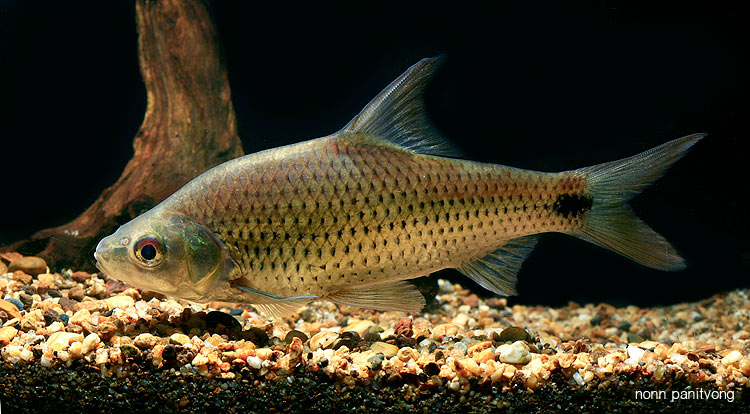
Cyclocheilichthys armatus
Cyprinidae · Valenciennes, 1842
It can be distinguished from congeners by possessing one or two pairs of barbels, a black blotch at the base of the caudal-fin, and rows of dark spots along the lateral scale rows. Members of Cyclocheilichthys are characterised by possessing a serrated dorsal fin spine, 9 branched pelvic fin rays, a conical snout, small, subterminal...
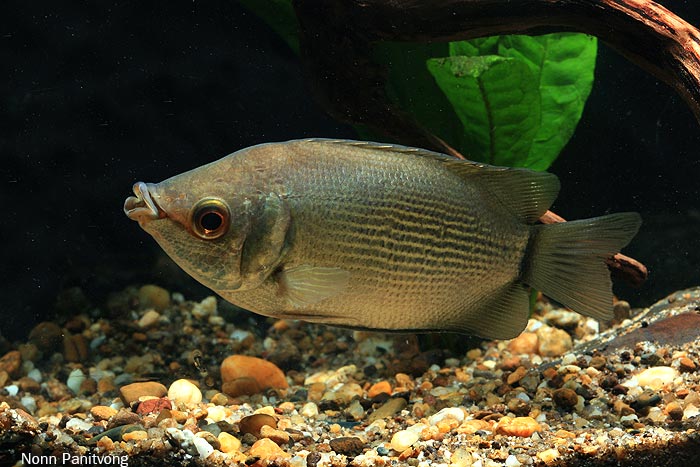
Helostoma temminkiiKissing Gourami
Helostomatidae · Cuvier, 1829
The pinkish-white form of this species is among the most widely-traded aquarium fishes in the world but does not occur naturally and is in fact a leucistic variant bred specifically for ornamental purposes. The 'short-bodied' or 'balloon' variety also continues to be fashionable but under no circumstances do we recommend the purchase of these intentionally disfigured animals which tend to have much shorter life spans than the naturally-shaped fish. There also exists a less-po...
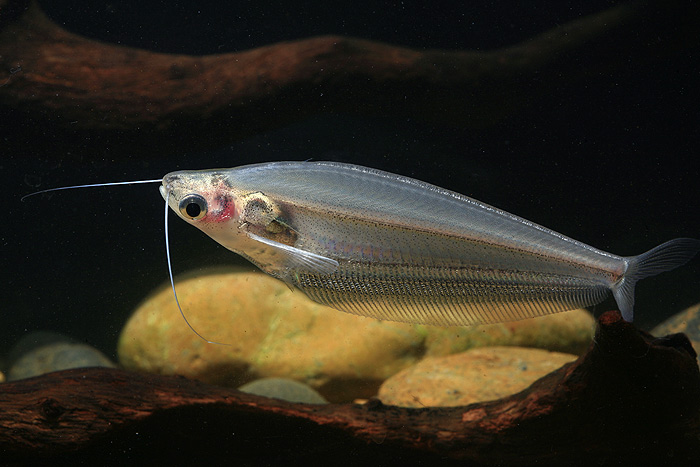
Kryptopterus bicirrhis
Siluridae · Valenciennes, 1840
Generally peaceful though it may predate on smaller fishes and is somewhat timid so does not compete well with much larger, robust or otherwise boisterous species. Peaceful, comparably-sized cyprinids, loaches and other catfishes perhaps constitute the best options but be sure to research your choices thoroughly prior to purchase.
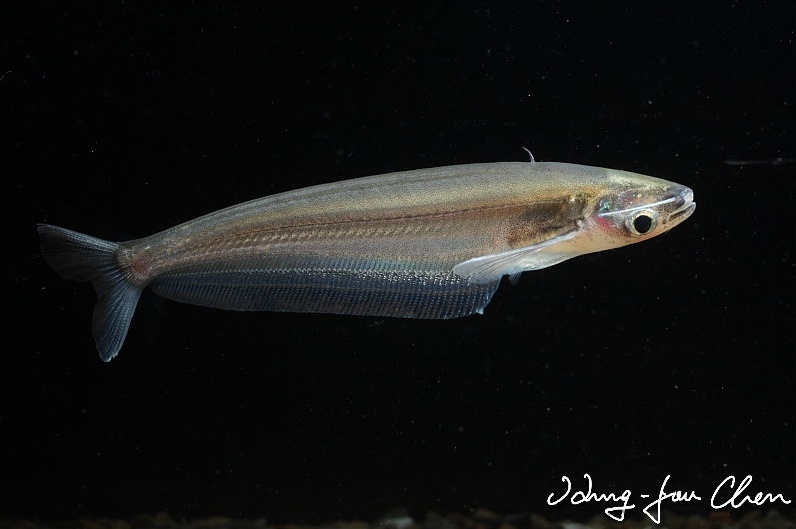
Kryptopterus cryptopterusBlue Sheatfish
Siluridae · Bleeker, 1851
Known from the Malay Peninsula and Singapore plus Greater Sunda Islands of Sumatra, Borneo and Java in Indonesia with populati0ns from Thailand, Cambodia, Laos and Vietnam formerly considered as conspecific now referred to K. geminus (Ng, 2003). Type locality is given as 'Bandjarmassing' which corresponds to a town now more commonly referred to as 'Banjarmasin' in South Kalimantan (Kalimantan Selatan) province, Indonesia (Borneo).
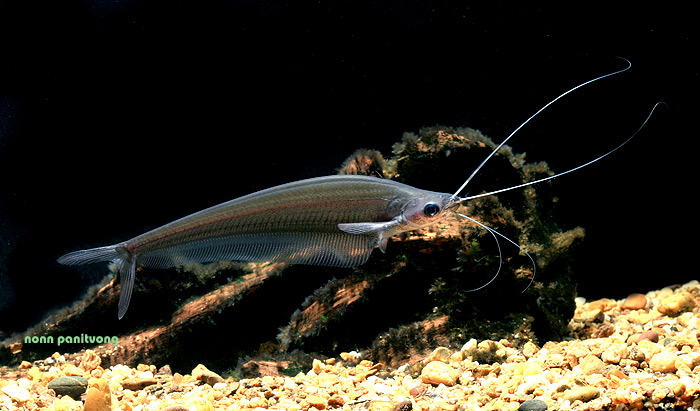
Kryptopterus limpok
Siluridae · Bleeker, 1852
Type locality is 'Palembang, Sumatra, Indonesia', but this species is widely-distributed throughout much of Southeast Asia including major river systems in Thailand, Laos, Cambodia, Vietnam and Peninsular Malaysia plus the Greater Sunda Islands of Sumatra, Borneo and Java. It's been extensively recorded from the Mekong, Cha...
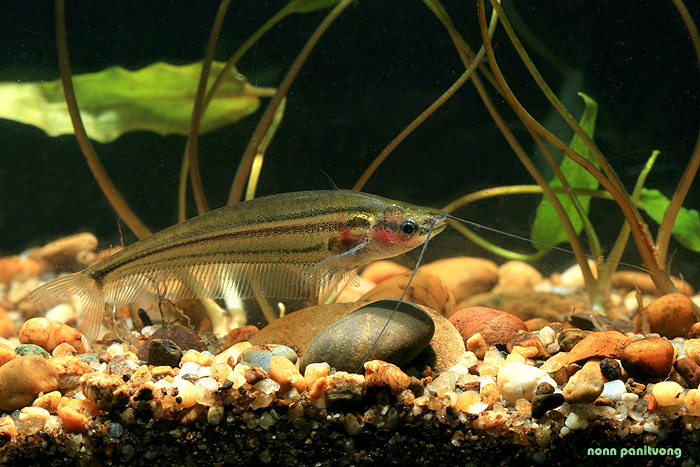
Kryptopterus macrocephalusStriped Glass Catfish
Siluridae · Bleeker, 1858
Has been recorded in fast-flowing environments but most commonly associated with peat swamp forests and associated blackwater streams. Many such habitats have suffered degradation of some kind but in unaltered cases the dense canopy of branches above means very little light penetrates the surface of such environments, and riparian vegetation also tends to grow thickly.
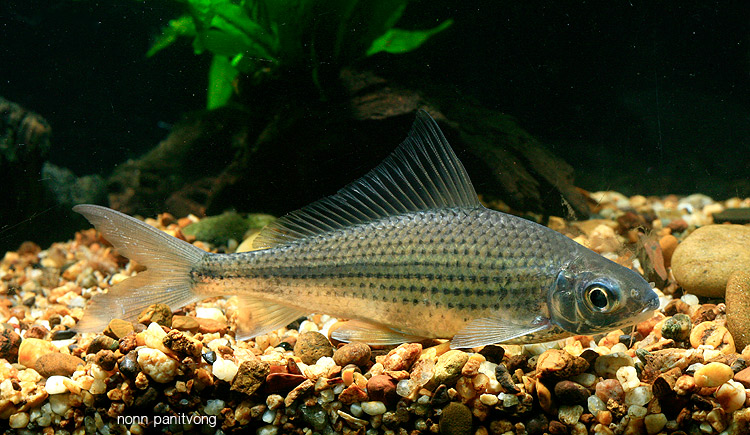
Labiobarbus leptocheilus
Cyprinidae · Valenciennes, 1842
Different populations vary in appearance somewhat (see image of Salween specimen for example), and L. leptocheilus may turn out to represent a group of closely-related species rather than a single taxon. The population from the Cambodian Mekong has been considered to represent a distinct species, Labiobarbus lineatus, although that name is currently a synonym of L. leptocheilus following Kottelat (2013). It is widely used in the ornamental trade, however.
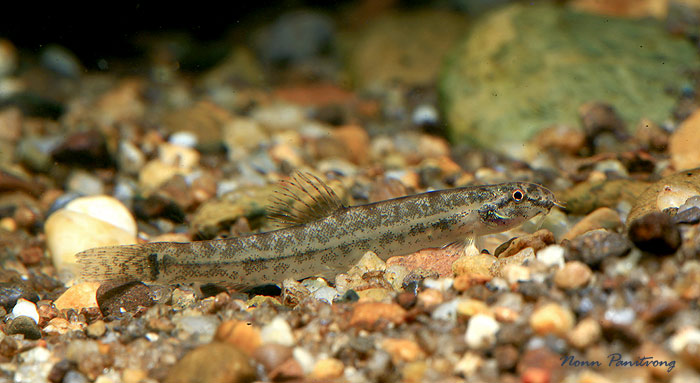
Lepidocephalichthys hasselti
Cobitidae · Valenciennes, 1846
At one locality close to Ban Na Hwai, Chiang Mai Province, Thailand L. hasselti was collected from a shallow (<0.5 m) pool in a swampy zone between forest and rice fields. The substrate was of mud, there was no aquatic vegetation and it was being used as drinking water by local animals, with the only effluent connected to a 'small creek'. Other species found there were Physoschistura pseudobrunneana, Rasbora hobelmani and Systomus cf. orphoides.
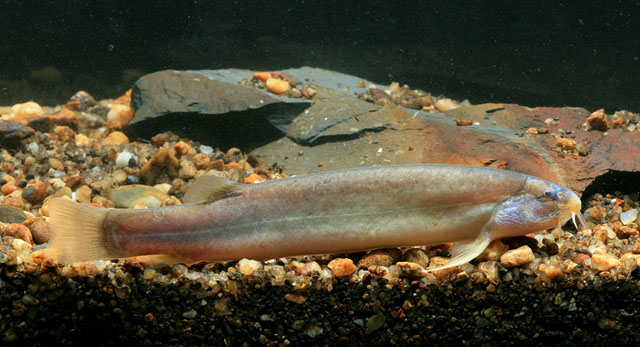
Lepidocephalus macrochir
Cobitidae · Bleeker, 1854
The distribution records for this species are somewhat confusing. It was described from the confluence of the Lamatang and Enim rivers, Palambang Province, Sumatra and has since been recorded from Thailand (Chao Phraya River), Peninsular Malaysia (Pahang River) plus the islands of Java (Solo River) and Borneo (Kapuas and Barito rivers).
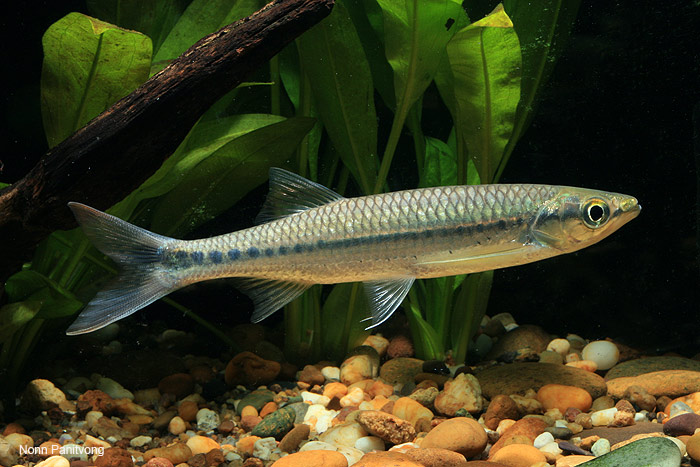
Luciosoma setigerumApollo Shark
Cyprinidae · Valenciennes, 1842
There is a fish of unknown geographical origin which matches the majority of diagnostic features for L. setigerum with the exception that the dark lateral stripe is absent in the anterior portion of the body and is not composed of interconnected spots. It is relatively common in the aquarium trade and included here as L. cf. setigerum until a confirmed identity is established.
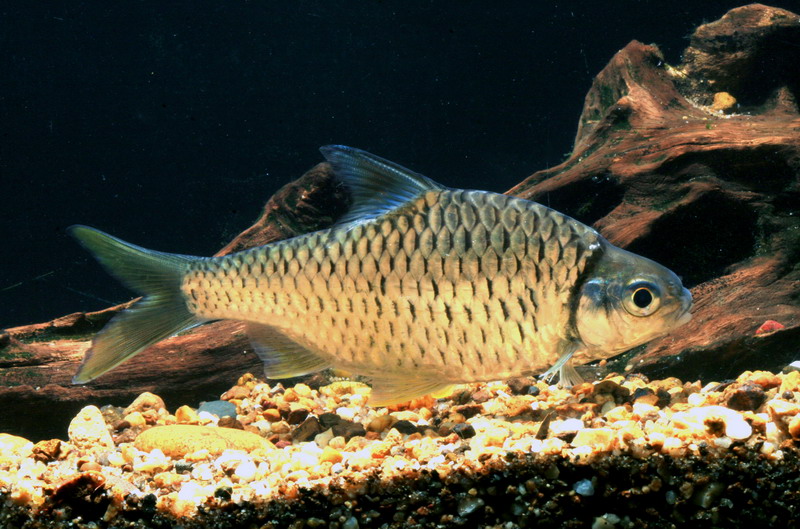
Mystacoleucus obtusirostris
Cyprinidae · Valenciennes, 1842
This species is occasionally marketed as 'Burmese Rainbow Barb' in the ornamental trade. others may have been exported in small numbers or as bycatch among shipments of other species. It was referred to as Mystacoleucus marginatus for decades, but that name is a simultaneous subjective synonym of M. obtusirostris following Kottelat (2013).
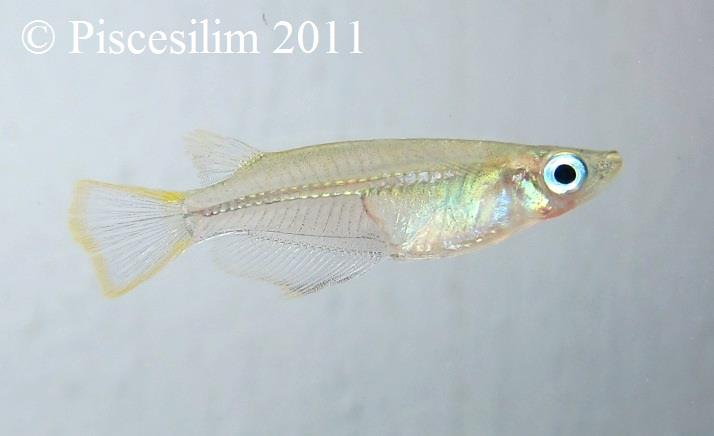
Oryzias javanicusJavanese Ricefish
Adrianichthyidae · Bleeker, 1854
This species is widely-distributed throughout Peninsular Thailand, Malaysia (Malay Peninsula plus the states of Sabah and Sarawak, Borneo), Singapore and Indonesia, with records from the Riau Archipelago, Sumatra, Java, Borneo, Bali, Lombok, and Sulawesi existing in the latter. Type locality is 'Panimbang River, Perdana, Indonesia'. It's typically found in coastal, normally brac...
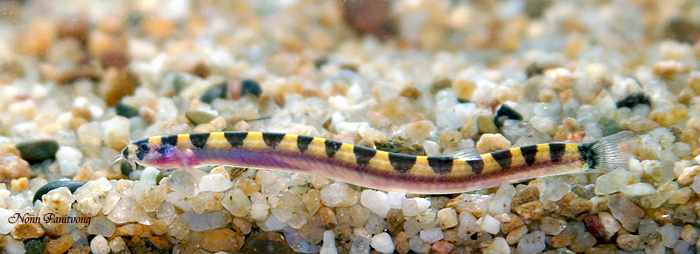
Pangio cuneovirgata
Cobitidae · Raut, 1957
Infrequently encountered in the aquarium trade, most often as bycatch among shipments of similar-looking congeners. It's included in the P. kuhlii group of closely-related species within the genus, and can be distinguished from other members by...
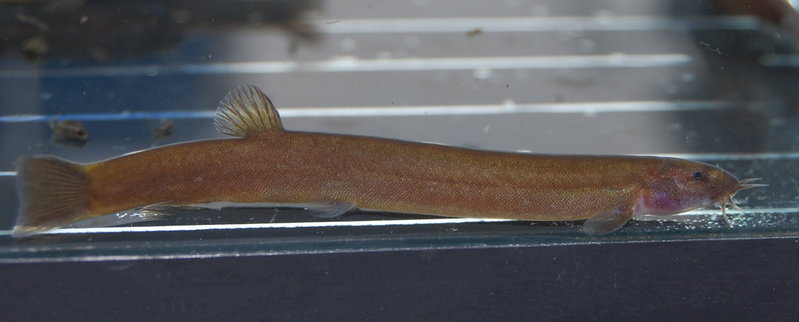
Pangio oblongaBlack Kuhli Loach
Cobitidae · Valenciennes, 1846
Described from close to the city of Bogor, Jawa Barat (West Java) province on the island of Java, Indonesia, but currently considered widespread with recorded occurrences on Java, Sumatra, Borneo and mainland Peninsular Malaysia. Some populations exhibit lighter...
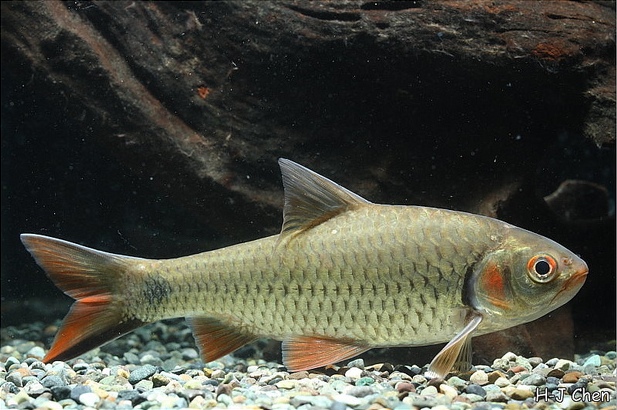
Systomus orphoides
Cyprinidae · Valenciennes, 1842
The genus Puntius is currently viewed as something of a catch-all for well over 100 species of small to mid-sized cyprinid. Most experts agree that a full revision is required with the likely outcome that many species will be placed into new or different genera since it is clearly polyphyletic. When describing the grouping in 1822 Hamilton identified the defining characteristics as: presence or absence o...
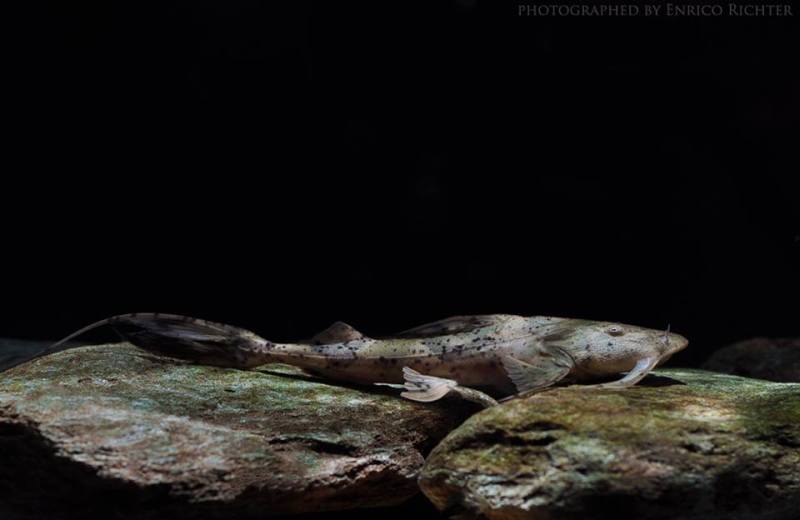
Bagarius yarrelliGoonch
Sisoridae · Sykes, 1839
This species is clearly unsuitable for the home aquarium given its eventual size and natural behaviour, and we know of only a handful of private aquarists with the facilities required to house it long-term. The grouping currently contains four species but is in urgent need of review with a number of additional taxa thought to exist and B. yarrelli possibly representing a synonym of B. bagarius.
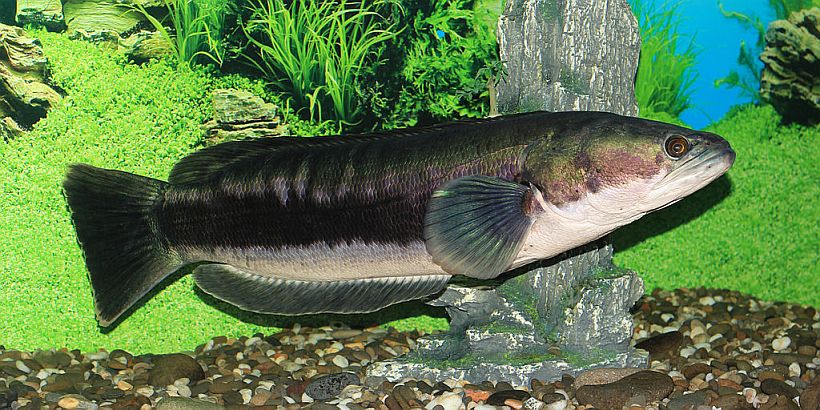
Channa micropeltesGiant Snakehead
Channidae · Cuvier, 1831
C. micropeltes is also referred to as 'Indonesian', 'red', or 'redline' snakehead, the latter names in reference to the appearance of juveniles which often appear in the ornamental trade despite its unsuitability for home aquaria. It is somewhat hyperbolised in the media as a fearsome, invasive "monster" fish with a reputation for killing more fish than it can eat, and even the occasional human, although in reality...
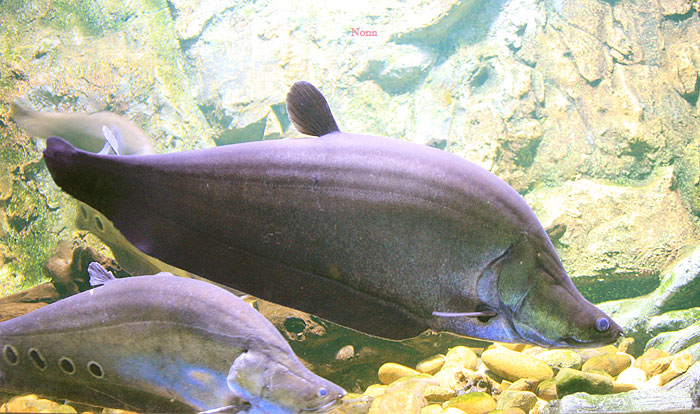
Chitala lopisGiant Featherback
Notopteridae · Bleeker, 1851
This species is not collected for the aquarium trade at time of writing. In contrast to other members of the genus older juvenile and adult individuals lack dark markings on the body while the jaw is more pronounced.
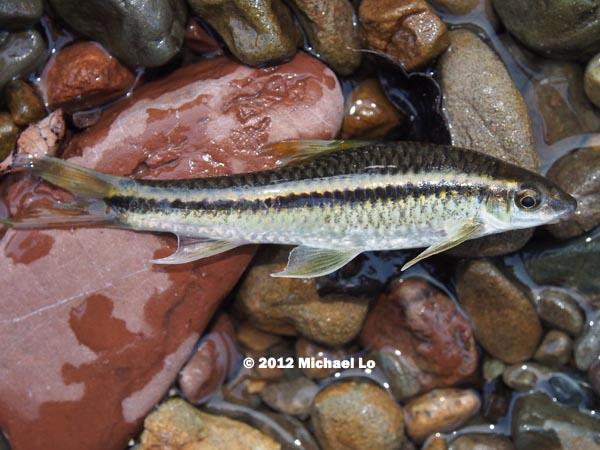
Crossocheilus cobitis
Cyprinidae · Bleeker, 1854
Given its wide natural range it seems logical that this species is or has been available in the aquarium trade, although its correct name may never have been applied. It is told apart from congeners by the following combination of characters: two pairs of barbels; a continuous midlateral stripe from the tip of the snout to the base of the caudal-fin, with a conspicuous small blotch at the posterior extremity, faintly marked on the caudal-fin; a faint mark between the anus and the anal-fin origin in juveniles; a narrow mouth.
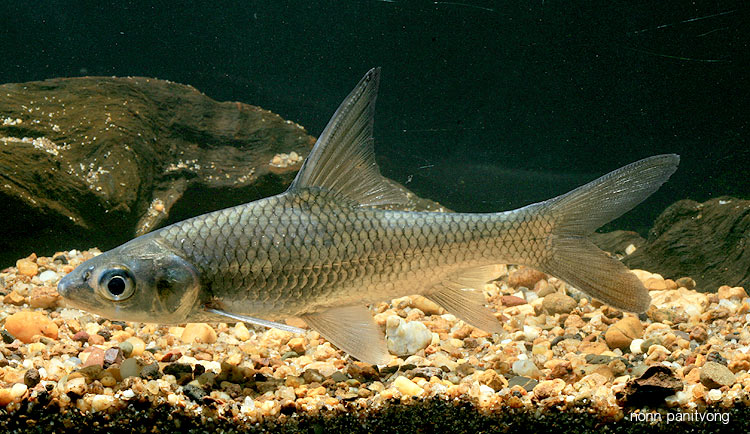
Cyclocheilos enoplos
Cyprinidae · Bleeker, 1849
In the Mekong, it has been observed to migrate upstream from Phnom Penh to Khone Falls between November and February, returning downstream between May and August. The downstream migration ends in the Mekong delta area in Vietnam, where the fish remain until the floods reach their peak in October and November. These lower Mekong migrations mostly comprise juveniles and sub-adults, whereas above Khone Falls...
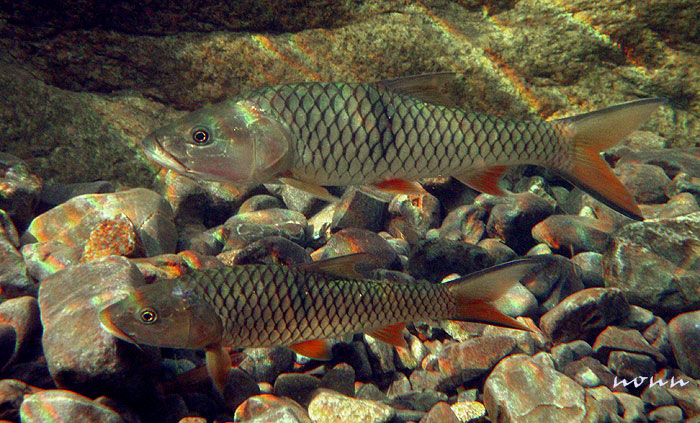
Hampala macrolepidotaHampala Barb
Cyprinidae · Kuhl & van Hasselt, 1823
This species is also known by the vernacular 'jungle perch' or 'sidebar barb' and should not be considered an aquarium subject in all but the most extreme circumstances since it can grow to over 2 feet in length, weigh in excess of 5 kg and is a powerful, pelagic predator. It's also a popular sport fish with a reputation for striking hard.
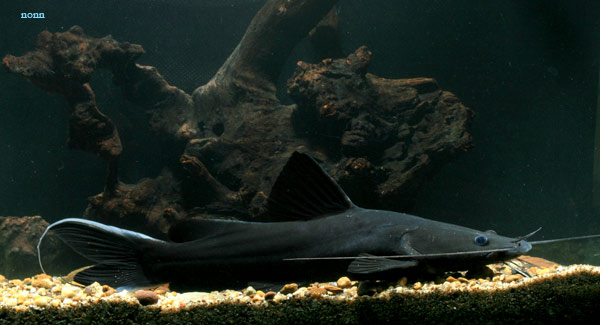
Hemibagrus wyckiiCrystal-eyed Catfish
Bagridae · Bleeker, 1858
Aggressively territorial and incompatible with other fishes in all but the largest public installations and even then may attack its tankmates. It's also one of few freshwater fishes that appear unafraid of humans meaning care must be exercised when performing maintenance.
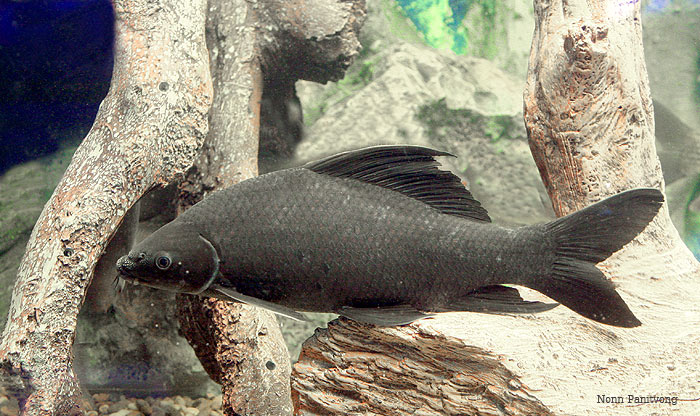
Labeo chrysophekadionBlack Shark
Cyprinidae · Bleeker, 1849
L. chrysophekadion is also known as 'black sharkminnow'. It continues to be available in the ornamental trade despite its patent unsuitability for the home aquarium, and an albino form has been selectively bred for the purpose. It can be distinguished from other members of the genus by the following combination...
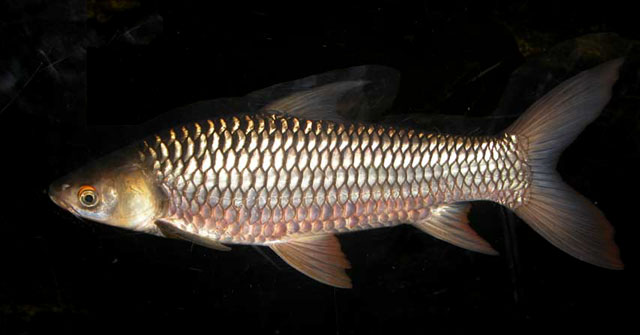
Leptobarbus hoeveniiMad Barb
Cyprinidae · Bleeker, 1851
Apparently native to Peninsular Malaysia plus the Greater Sunda Islands of Borneo, Sumatra, and Java. Reports of this species from the Mekong, Chao Phraya, and other rivers in Indochina refer to the congener L. rubripinna (see 'Notes'). Type locality is 'Indonesia: Borneo: Kalimantan Selatan: Banjarmasin'.
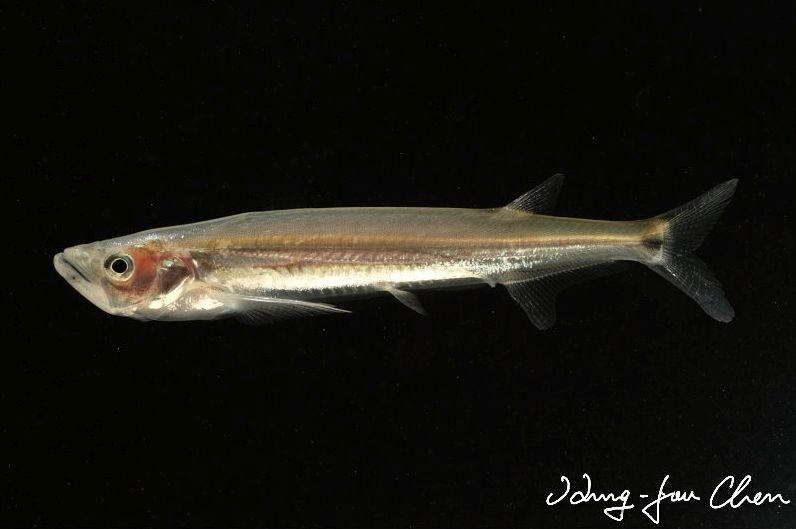
Macrochirichthys macrochirusGiant Sword Minnow
Cyprinidae · Valenciennes, 1844
It is thought to have been extirpated from the Chao Phraya and Mae Klong rivers, Lake Songkhla, and the entire island of Java due to a variety of anthropogenic factors, and the Mekong populations have also been drastically reduced. In particular, it is sensitive to pollution and gillnetting, and is heavily overfished.
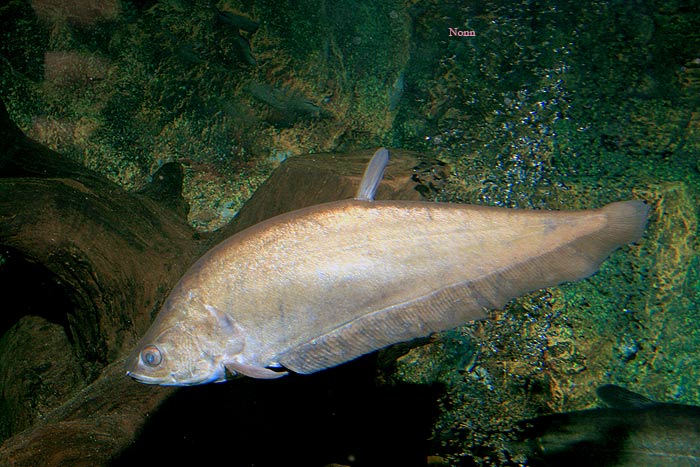
Notopterus notopterusBronze Featherback
Notopteridae · Pallas, 1769
This species is also referred to as 'Asian knifefish' or 'ghost knifefish' in the aquarium trade in the aquarium trade but arguably has no place in the ornamental hobby given its adult size and specialised requirements. It is sometimes confused with the African species Xenomystus nigri but is easily told apart by its larger adult size and presence (vs. absence) of a dorsal fin.
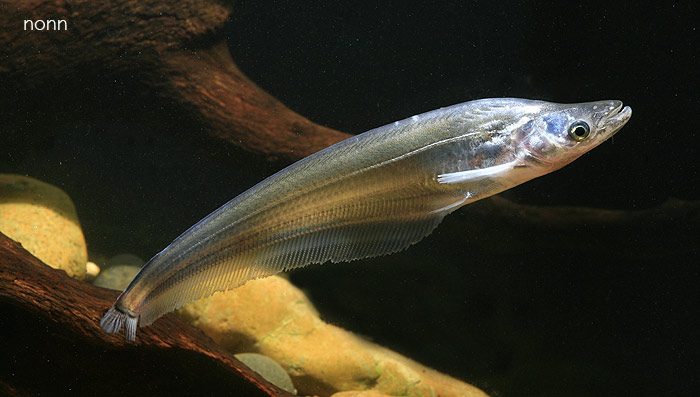
Phalacronotus apogon
Siluridae · Bleeker, 1851
P. apogon has formerly been placed within the genera Kryptopterus, Micronema (Rainboth, 1996) and more recently Phalacronotus (Ferraris, 2007) and is an important food fish across much of its native range. It's very similar to P. micronema but can be told apart by its longer head (HL fits 4.6± 5.3 times in...
Brachygobius xanthozonus
Gobiidae · Bleeker, 1849
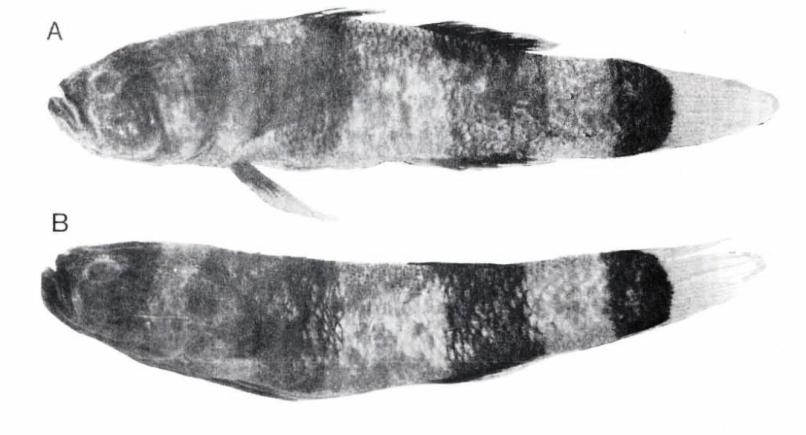
B. xanthozonus can be considered something of an enigma since its name has been widely misapplied in aquarium literature for decades, when in reality it's probably never been exported for the ornamental trade. The majority of fish seen labelled as such are either B. doriae or B. sabanus, themselves often misidentified.
Hemibagrus planiceps
Bagridae · Valenciennes, 1840
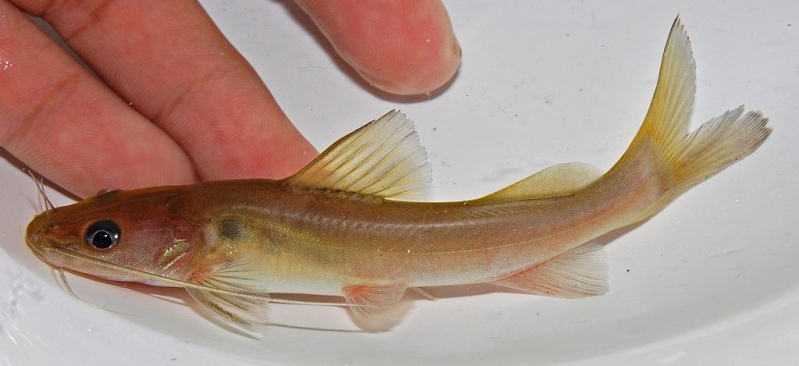
This species is now considered endemic to Java but has been confused with the congeners H. gracilis (from eastern Peninsular Malaysia), H. velox (Sumatra) and H. bongan (Borneo) in the past, while the population formerly considered to inhabit northwestern Peninsular Malaysia has been described as H. divaricatus (Ng and Kottelat, 2013).