Country · Asia
Laos
Every profile recorded in Laos, native or introduced.
- Species
- 142
- Families
- 20
- Genera
- 69
- Found only here
- 5
- Photographed
- 142 of 142
Where it isAsia
Shares its fishes withspecies recorded in both
Found only here5
5 of these profiles carry Laos and no other country. That is not the same as endemic. Most of these distributions are only half recorded.
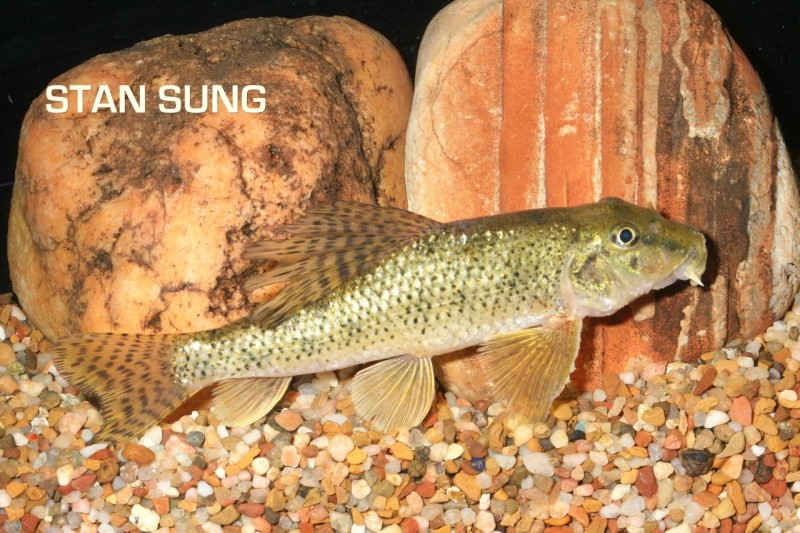
Abbottina rivularisChinese False Gudgeon
Cyprinidae · Basilewsky, 1855
Native to continental China, the Korean peninsula, and southern Japan. Type locality is given only as 'Lakes and rivers, northern China', with the type series possibly originating from the Pai-ho River near Beijing. It has been widely introduced and is considered invasive elsewhere, including the Mekong river basin (records from Laos and Thailand), Salween river (Myanmar), northern Japan, Taiwan, Turkmeni...
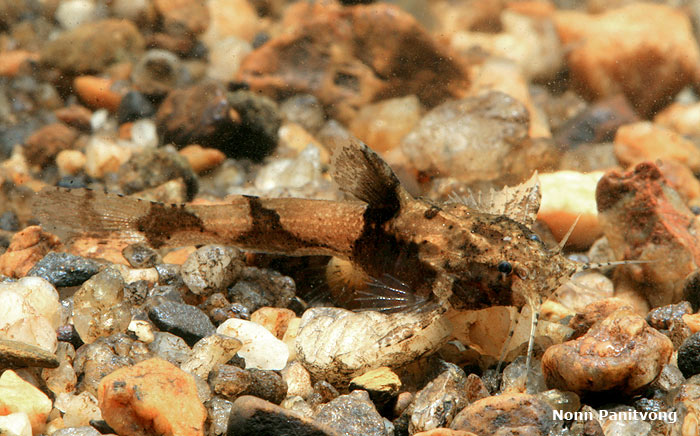
Akysis variusVariable Stream Catfish
Akysidae · Ng & Kottelat, 1998
This species is among the smaller members of the family. It can be differentiated from all other Akysis species by the following combination of characters: caudal peduncle length 16.1-19.8% of standard length (SL); caudal peduncle depth 6.5-9.3% SL; length of adipose-fin base 25.6-29.5% SL; interorbital distance 42.0-46.0% of head length (HL), eye diameter 13.0-20.0% HL; length of nasal barbel 44.0-66.0% HL; lateral margins of the head appear straight when viewed from above; possession of 0-5 se...
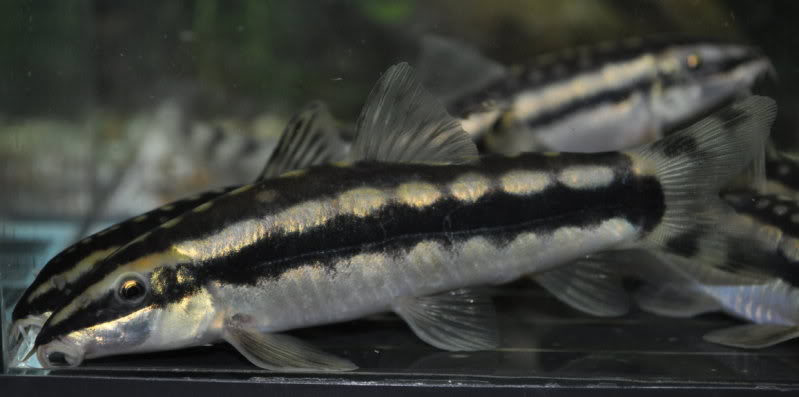
Ambastaia nigrolineataBlack-Lined Loach
Botiidae · Kottelat & Chu, 1987
This specie is relatively rare in the aquarium trade and much sought after by enthusiasts as a result. It looks relatively similar to A. sidthimunki but according to the original description by Kottelat and Chu (1987) can be told apart by colour patterning which uniquely consists of a solid da...
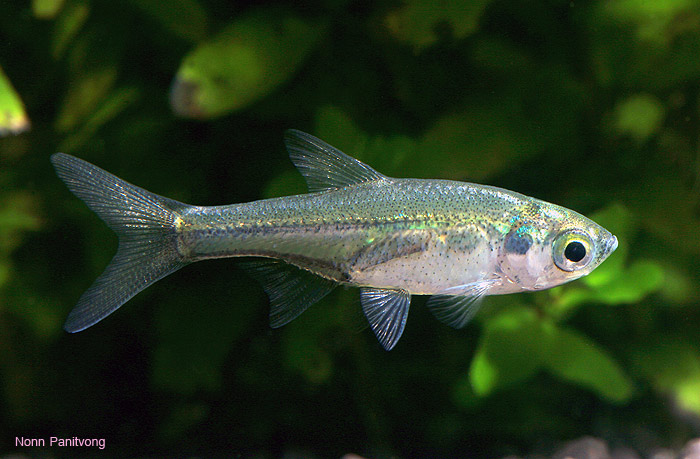
Amblypharyngodon chulabhornaePrincess Carplet
Cyprinidae · Vidthayanon & Kottelat, 1990
The genus Amblypharyngodon currently contains five valid species, and A. chulabhornae can be distinguished from congeners by the following combination of characters: 42-50 (vs. 50-79) scales in the lateral row; lateral line incomplete with 6-7 (vs. 7-23) perforated scales; 4-5 scales on a transverse row between the lateral line and pelvic-fin base. All members of the genus lack barbels.
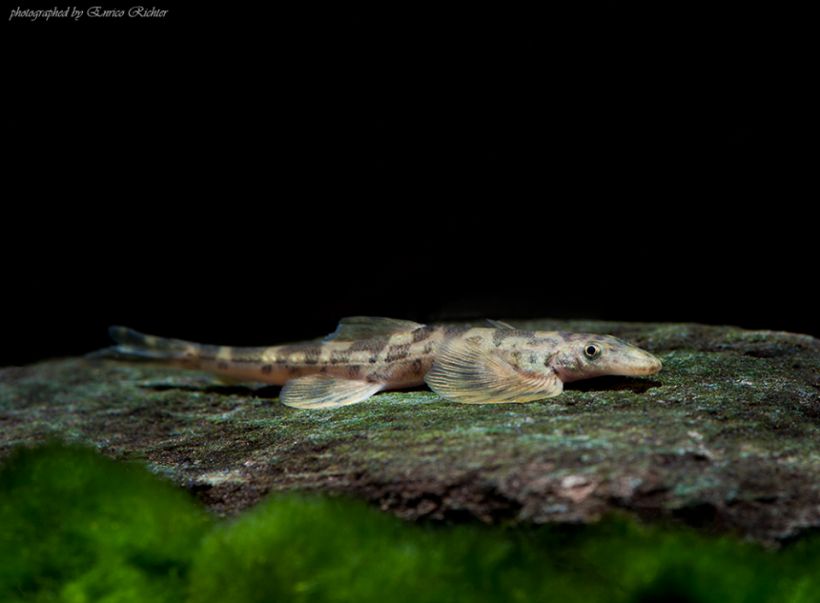
Annamia normaniVietnamese Giraffe Loach
Gastromyzontidae · Hora, 1931
Traditionally considered to be a micropredator feeding on insect larvae and suchlike (Rainboth, 1996), but a study by Herder and Freyhof (2006) revealed adult A. normani inhabiting the Duc My River in central Vietnam to be specialised grazers of cyanobacteria. In rapids the latter form hard encrustations on rock surfaces from which adults are able to bite chunks.
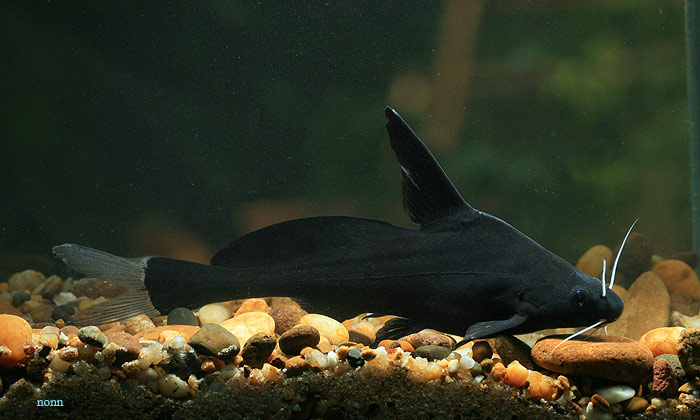
Bagrichthys majusculusWhite-Whisker Lancer
Bagridae · Ng, 2002
The vernacular name 'lancer' is derived from the extended dorsal spine possessed by several members of the genus, which currently contains 7 species. Among them B. majusculus is most similar to B. macracanthus and B. vaillantii but can be told apart from both by possession of longer pectoral-fin spines (length 15.8 - 20.7 % SL vs. 11.5 - 16.2 %), from the former by possession of a larger adipose fi...
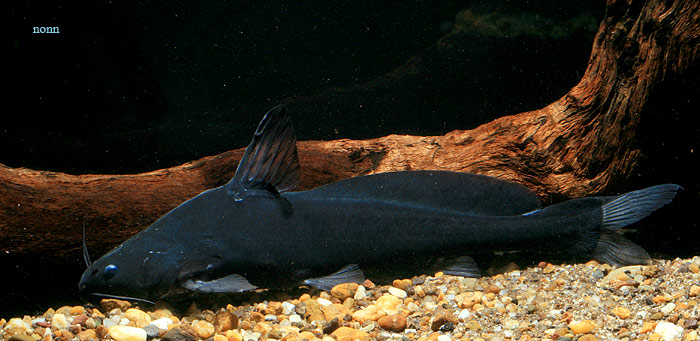
Bagrichthys obscurus
Bagridae · Ng, 1999
The vernacular name 'lancer' is derived from the extended dorsal spine possessed by several members of the genus, which currently contains 7 species. B. obscurus is diagnosable from congerners by the following combination of characters: mouth opening relatively small and narrow; oral dentition significantly reduced; dorsal-fin spi...
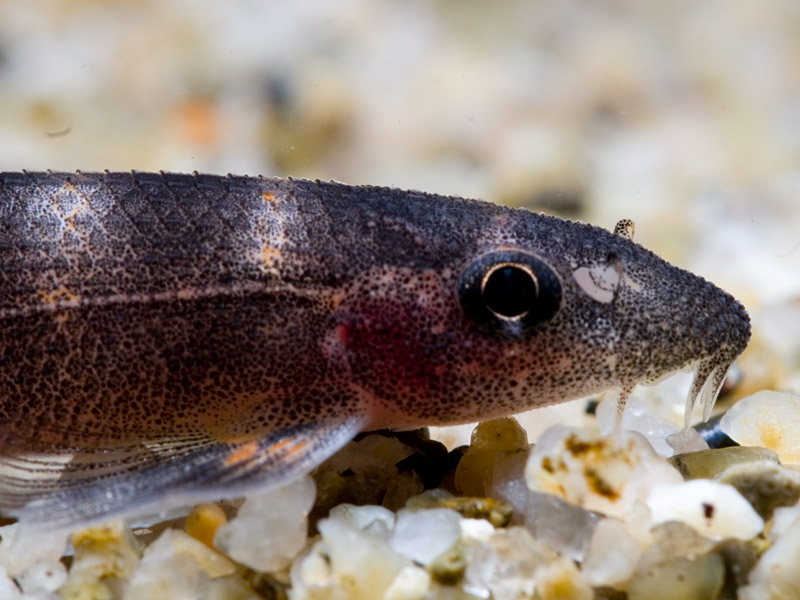
Balitoropsis zollingeri
Balitoridae · Bleeker, 1853
An obligate dweller of swiftly-flowing streams and headwaters containing clear, oxygen-saturated water. It often inhabits riffles and runs and is likely to show a preference for shallower zones. Substrates are generally composed of gravel, rocks, boulders or bedrock carpeted with a rich biofilm formed by algae and other micro-organisms. Juveniles are often found in slower-moving stretches with gravel substrate and submerged tree roots. In both cases patches of aquatic plants are only occasionally pres...
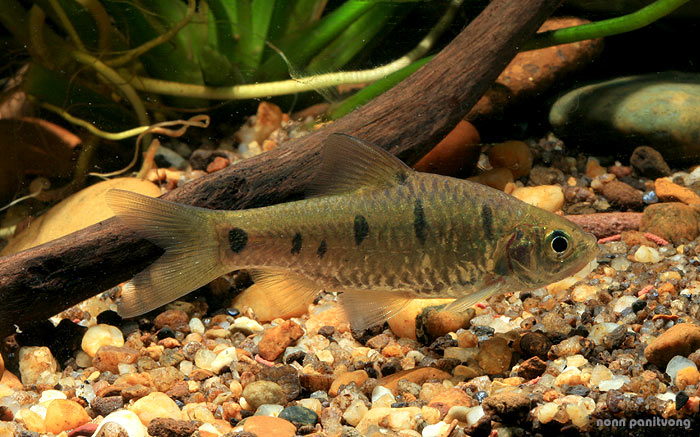
Barbodes aurotaeniatus
Cyprinidae · Tirant, 1885
B. aurotaeniatus is uncommon in the aquarium trade. Following Kottelat (1998) it has a single pair of maxillary barbels, a complete lateral line and colour pattern usually comprising four small, vertically-orientated black markings on the flanks (located above anterior lateral line origin, below dorsal-fin origin, below posterior end of dorsal-fin base and on caudal peduncle, respectively) and one on the dorsal surface, below dorsal-fin origin.
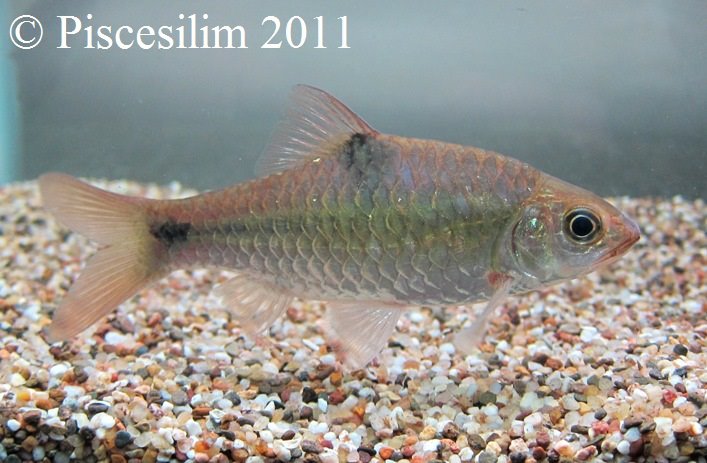
Barbodes binotatusSpotted Barb
Cyprinidae · Valenciennes, 1842
This species is so ubiquitous across its natural range that it's often referred to simply as 'common barb'. Basic adult colour pattern consists of a small, dark spot at the base of the dorsal-fin origin and another on the caudal peduncle but overall appearance varies somewhat depending on origin, with the anterior dark spot enlarged ventrally forming a bar or posterior spot extending into the caudal-fin, for example. The spots may also appear darker or lighter in some individuals.
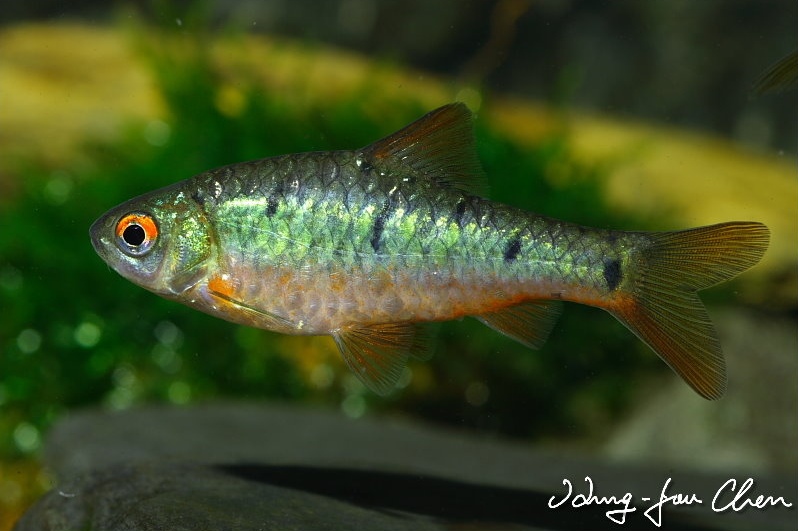
Barbodes semifasciolatusGolden Barb*
Cyprinidae · Günther, 1868
This species is also known by the alternative names 'green' or 'Chinese' barb. The natural 'green' form is an infrequent find in the aquarium trade whereas the selectively-bred 'golden' variant is farmed in huge numbers and is among the most popular of freshwater aquarium fish. The latter was first produced in the 1960s and is now so ubiquitous that many hobbyists are initially unaware that it is not the natural form.
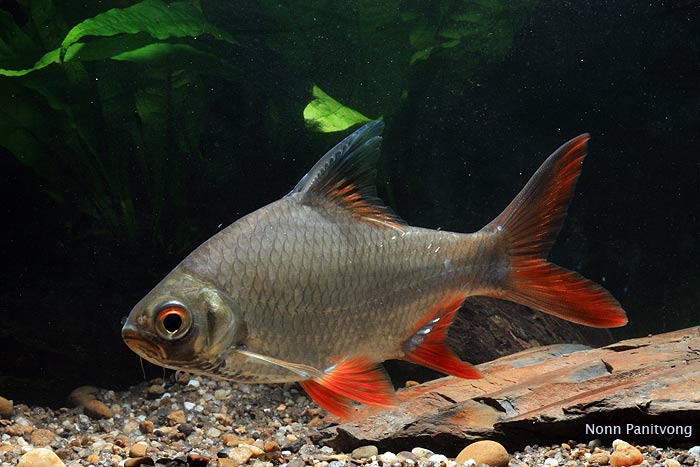
Barbonymus altusRed-tailed Tinfoil Barb
Cyprinidae · Günther, 1868
This is one of two species sold with the common/trade name of "tinfoil barb", the other being the more widely-recognised B. schwanenfeldii. Despite this it appears that B. altus is just as widely available as B. schwanenfeldii and in many cases is seen on sale more regularly. Unfortunately both are usually offered at a small size (usually around 2 - 3"/5 - 7.5cm) with little to no information regarding the eventual size of the fish. Although B. altus is the ...
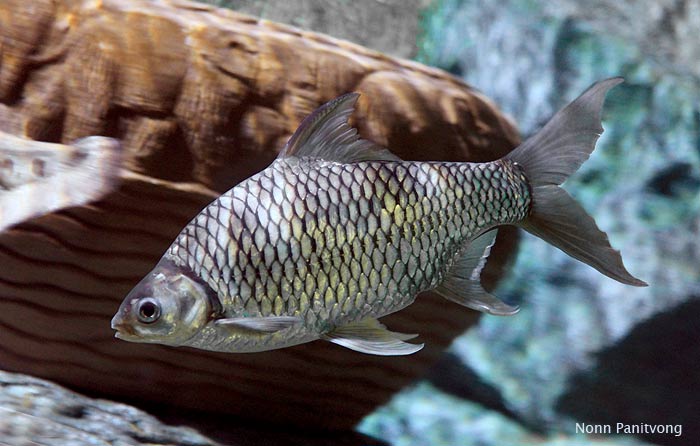
Barbonymus gonionotus
Cyprinidae · Bleeker, 1849
The genus Barbonymus was erected by Kottelat in 1999 and contains former members of Barbodes from southeast Asia. The type species is B. schwanenfeldii and currently there exist only three other representatives; B. altus, B. collingwoodii and B. gonionotus. The latter two are rare in the hobby although an SF member has kept B. gonionotus in the past so they are worth looking out for if you harbour an...
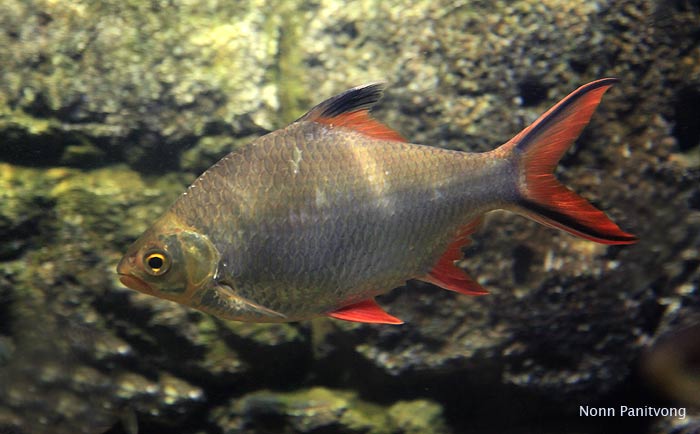
Barbonymus schwanefeldiiTinfoil barb
Cyprinidae · Bleeker, 1854
This is one of two species traded under the vernacular name 'tinfoil barb', the other being the less well-known congener B. altus. Despite this it appears that B. altus is just as widely available as B. schwanefeldii and in many cases is seen on sale more regularly. Unfortunately both are usually offered at a small size (usually around 50 - 75 mm) with little to no information regarding the eventual size of the fish.
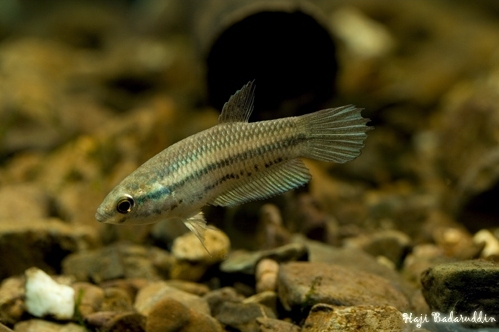
Betta prima
Osphronemidae · Kottelat, 1994
It can be told apart from other members of the B. pugnax group by the following characters: second postorbital stripe on opercle complete; no transverse bars in caudal-fin; 20-22 predorsal scales; preanal length 50.6-54.8 % SL. Not all authors consider it a member of this group, however, with some placing it in the B. picta complex, e.g., Schindler and Schmidt (2006). The genus is th...
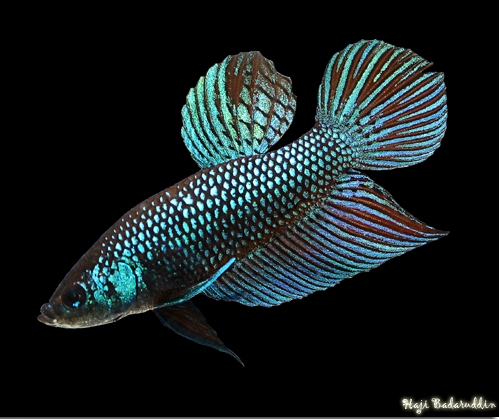
Betta smaragdinaEmerald Betta
Osphronemidae · Ladiges, 1972
This species is included in the Betta splendens complex of closely-related species within the genus, of which members share the following set of characters: head length short 22-31 % SL; often a brightly-coloured body; iris of the eye with iridescent green or blue patches; body elongate or slender; opercles parallel when head viewed dorsally; caudal-fin rays red or brown and contrasting with the iridescent interradial membranes; unpaired fins without an iridescent margin; opercle with red or blue vertical bars in males; dorsal-fin rays 0-II, 7-9; anal-fin rays II-V, 21-26.
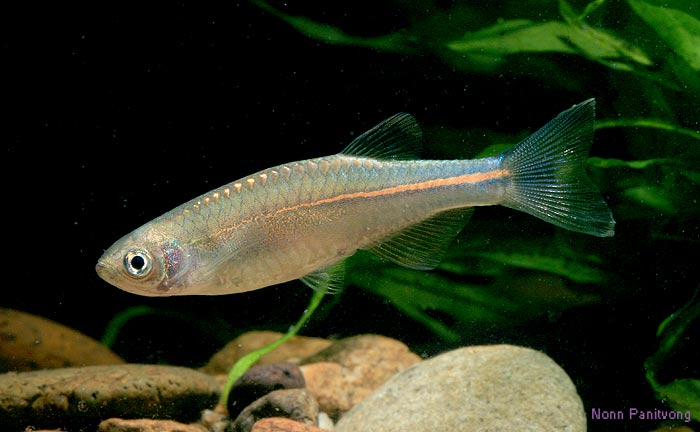
Brachydanio albolineataPearl 'Danio'
Cyprinidae · Blyth, 1860
Doubts remain whether B. albolineata is representative of a single species or a group of similarly-patterned, closely-related fish, and the form from Chantaburi province in eastern Thailand was revalidated as B. pulchra (formerly Danio pulcher Smith, 1931) by Kottelat (2013). The status of the currently invalid Danio tweedei (Brittan, 1955) from Kedah state, northern Peninsular Malaysia may also be in question, since fish from that area are clearly...
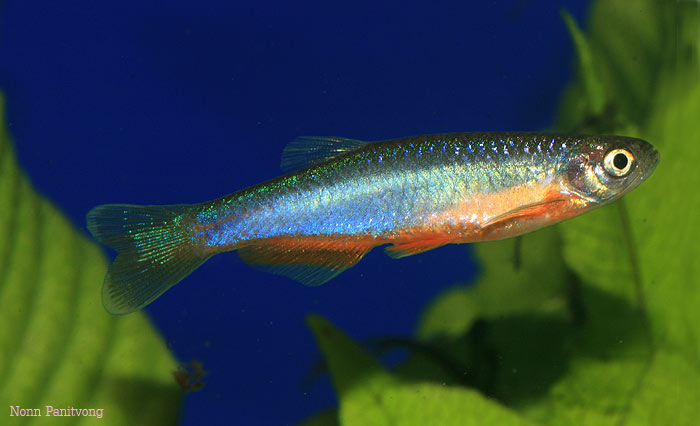
Brachydanio roseaRosy 'Danio'
Cyprinidae · Fang & Kottelat, 2000
B. rosea is a relatively recent addition to the aquarium trade but has proved very popular since it's colourful, hardy and usually quite cheap making it ideal for beginners. It's sometimes sold as 'purple passion danio'. It's very similar to B. albolineata sensu stricto but differs in several characters, notably the relatively slimmer body, shorter rostral barbels and lack of...
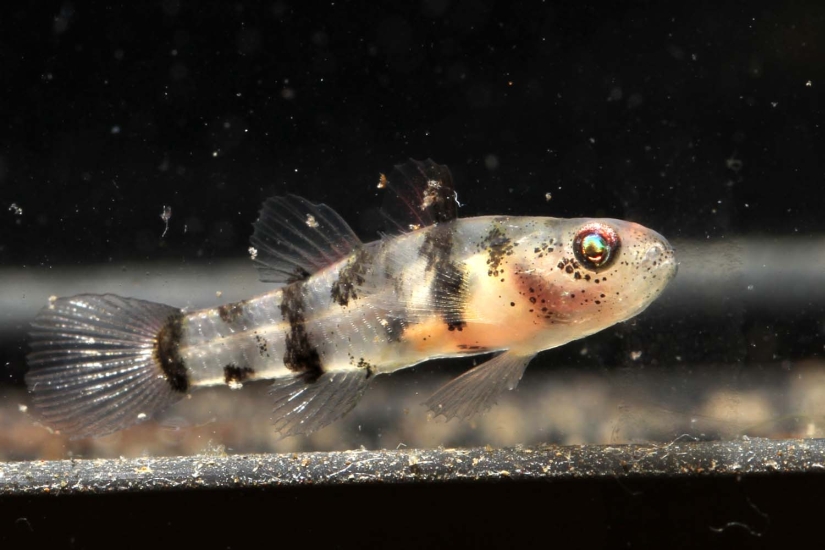
Brachygobius mekongensisMekong Bumblebee Goby
Gobiidae · Larson & Vidthayanon, 2000
Apparently restricted to slow-moving or standing freshwater habitats such as marshes, temporal swamps and floodplains where aquatic vegetation and submerged grasses proliferate. One locality consisted of undisturbed marshland with lightly tannin-stained water and dense growth of Vallisneria spp.
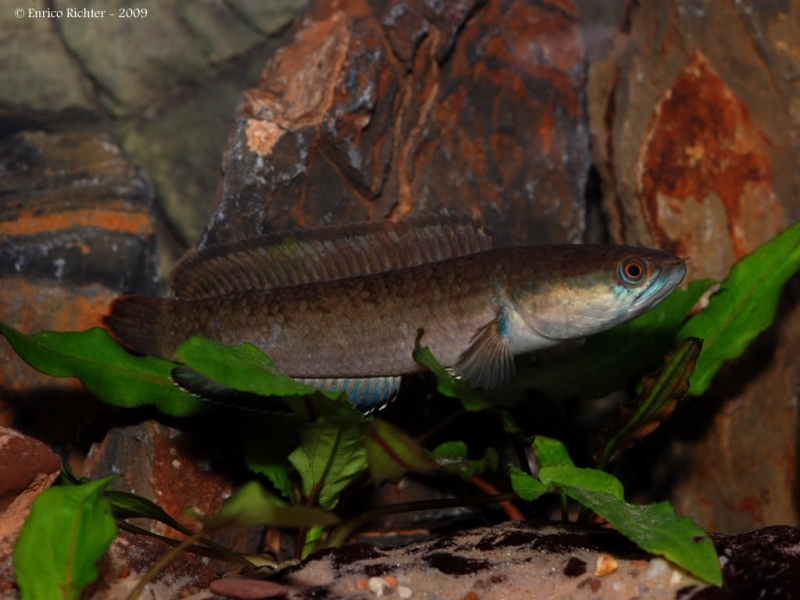
Channa gachuaDwarf Snakehead
Channidae · Hamilton, 1822
Generally considered to have an enormous natural range extending from Iran to Taiwan and Bali, with records existing from Iran, Iraq, Afghanistan, Pakistan, Nepal, India, Sri Lanka, Bangladesh, Bhutan, China, Myanmar, Thailand, Laos, Cambodia, Vietnam, Malaysia, Indonesia, and Singapore. However there exists significant evidence to suggest that C. gachua as currently understood represents a complex of similar-looking species, and a taxonomic review of the group is clearly required.
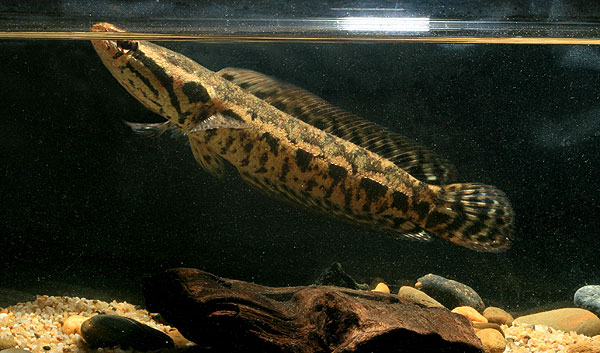
Channa luciusForest Snakehead
Channidae · Cuvier, 1831
Prefers a dimly-lit aquarium with plenty of cover in the form of live plants, driftwood branches, terracotta pipes, plant pots, etc., arranged to form a network of nooks, crannies, and shaded spots. Surface vegetation such as Ceratopteris spp. is also appreciated and makes the fish less inclined to conceal themselves.
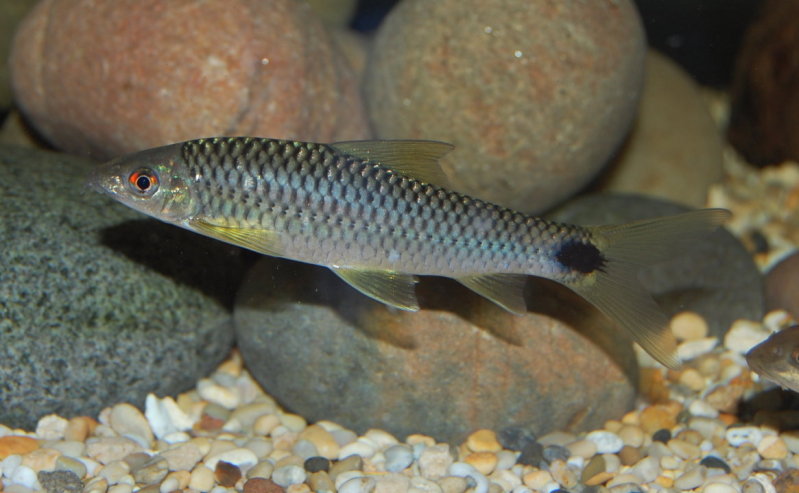
Crossocheilus reticulatus
Cyprinidae · Fowler, 1934
While some laterally-striped members of the genus look very similar to one another the combination of silvery body, dark-edged scales and dark caudal peduncle blotch set C. reticulatus uniquely apart. The names Crossocheilus tchangi, Epalzeorhynchos coatesi and E. stigmaeus are all now considered synonyms of the species but were erected because the fish vary, most often in minor aspects of patt...
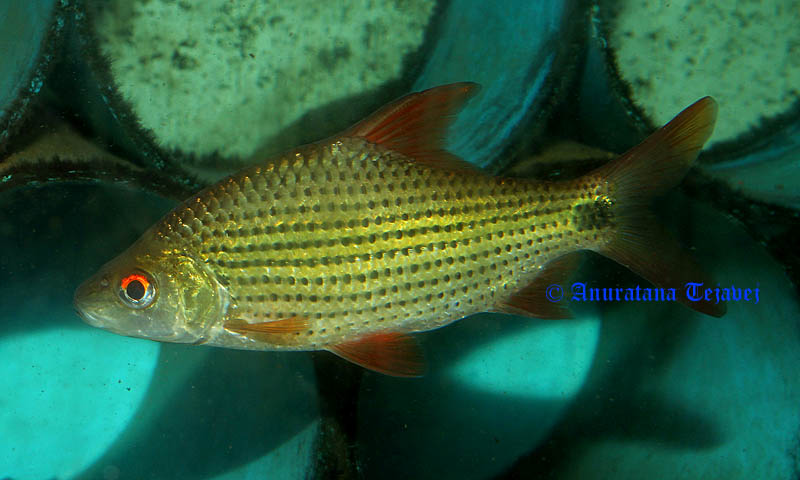
Cyclocheilichthys apogonBeardless Barb
Cyprinidae · Valenciennes, 1842
In the aquarium trade this species may also be seen on sale as 'skinhead barb'. As with others in the genus little has been written regarding its captive care but it makes a peaceful and unusual addition to larger aquaria. The best way of obtaining it may be to keep an eye on shipments of wild fishes from Indochina and the Greater Sunda Islands as it's rarely imported in large numbers and most often arrives as bycatch.
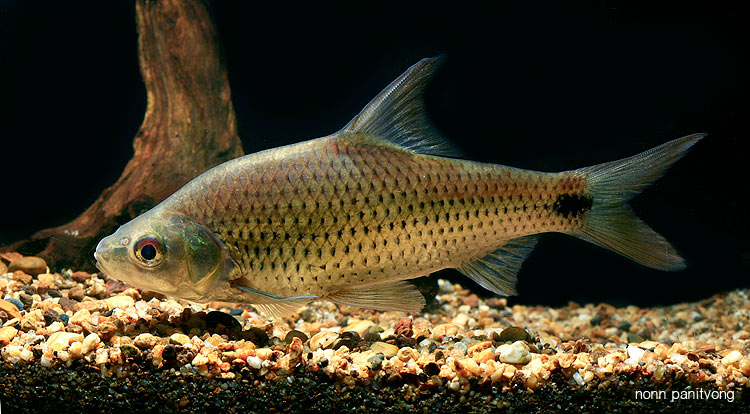
Cyclocheilichthys armatus
Cyprinidae · Valenciennes, 1842
It can be distinguished from congeners by possessing one or two pairs of barbels, a black blotch at the base of the caudal-fin, and rows of dark spots along the lateral scale rows. Members of Cyclocheilichthys are characterised by possessing a serrated dorsal fin spine, 9 branched pelvic fin rays, a conical snout, small, subterminal...
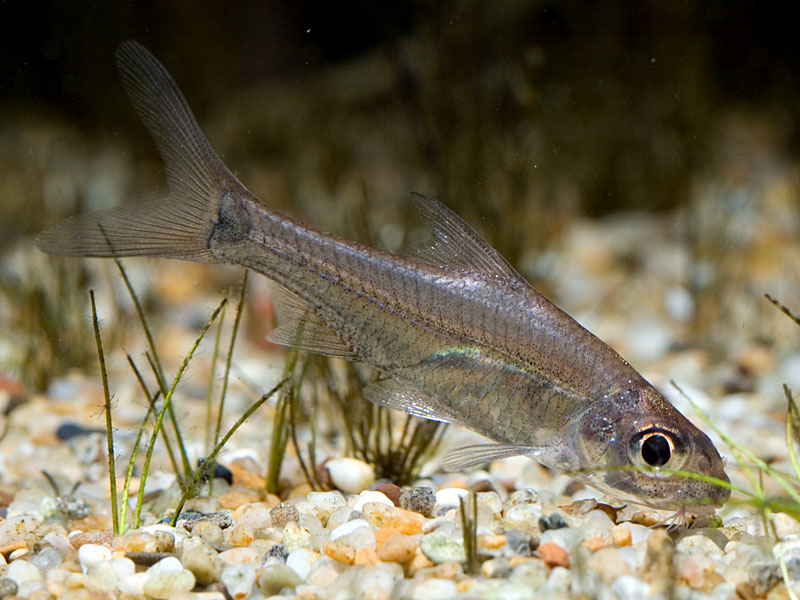
Cyclocheilichthys heteronema
Cyprinidae · Bleeker, 1854
This species is currently understood to have a considerable natural range extending eastwards from Myanmar via Thailand, Laos, Cambodia as far as Vietnam and to the south through Peninsular Malaysia and into the Greater Sunda Islands of Borneo and Sumatra. It thus occurs in the Mekong, Mae Klong and Chao Phraya drainages as well as a host of other river basins, lakes and reservoirs including the Tonlé Sap river...
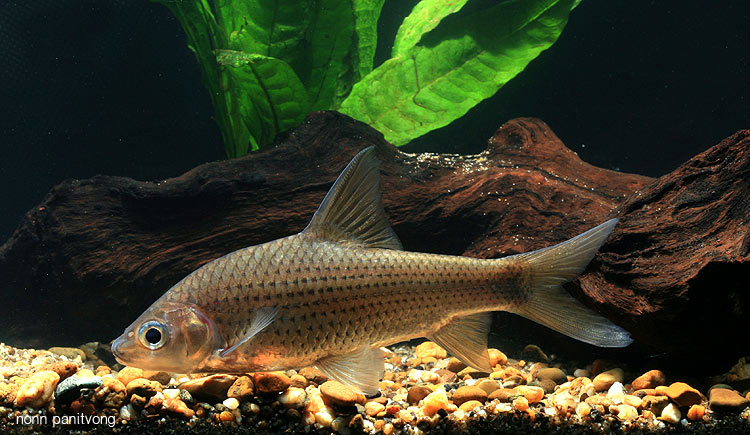
Cyclocheilichthys repasson
Cyprinidae · Bleeker, 1853
An ideal resident of the larger, well-furnished community set-up though it might upset slow-moving or timid companions simply by its size. There are plenty of suitable tankmates including many cyprinids, loaches, cichlids, catfish and characins, but as always when selecting a compatible community of fish proper research is essential. A community based around one of its native countries or river basins...
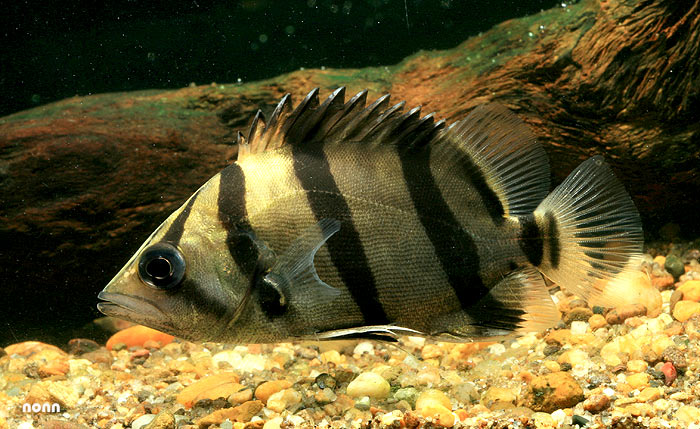
Datnioides undecimradiatusMekong Tiger Perch
Datnioididae · Roberts & Kottelat, 1994
An efficient, largely piscivorous, predator with highly protrusible mouthparts. In the aquarium, juveniles can be offered chironomid larvae (bloodworm), small earthworms, chopped prawn, and suchlike, while adults will accept strips of fish flesh, whole prawns, mussels, live river shrimp, larger earthworms, etc. Older individuals do not require feeding on a daily basis, with 2-3 times per week sufficient.
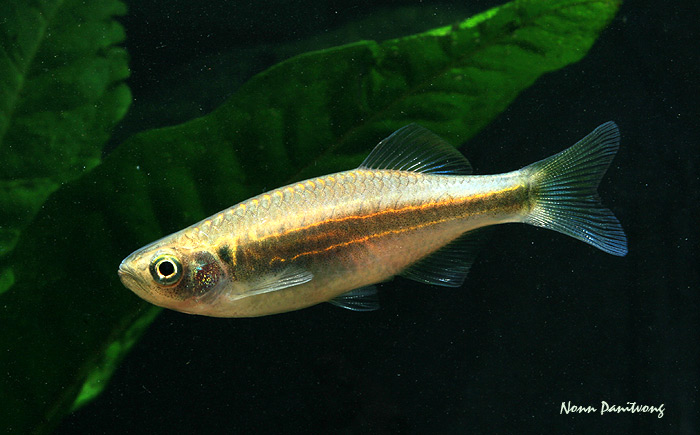
Devario acrostomus
Cyprinidae · Fang & Kottelat, 1999
The type series was collected during the dry season from localities with varying gradient both within the Nam Leuk mainstream and smaller tributaries. In the tributaries the fish were found congregating in pools some of which were isolated on steep slopes. All habitats above Tad Leuk falls were characterised by clear to very clear water under forest cover while below the falls they were dominated by exposed basalt slabs with some underground water channels.
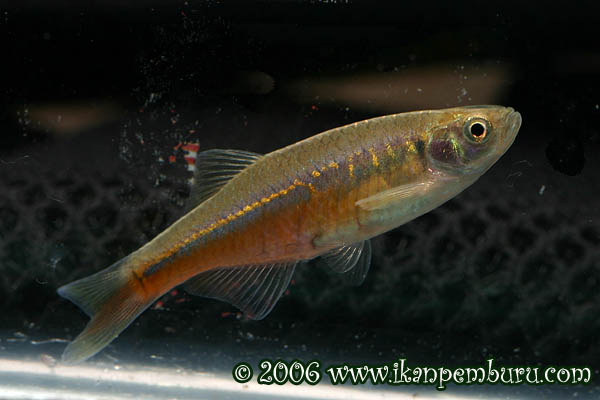
Devario chrysotaeniatus
Cyprinidae · Chu, 1981
This species is poorly known and first appeared in the hobby during 2005 but has rarely been seen since, probably because its natural waters lie outside the range of most commercial collectors. It can be distinguished by a combination of characters including: lateral line complete; infraorbital process absent; two pairs of short barbels; 8-9 branched dorsal fin rays; 12-13 branched anal fin rays; P stripe originating above pelvic fin and extending to en...
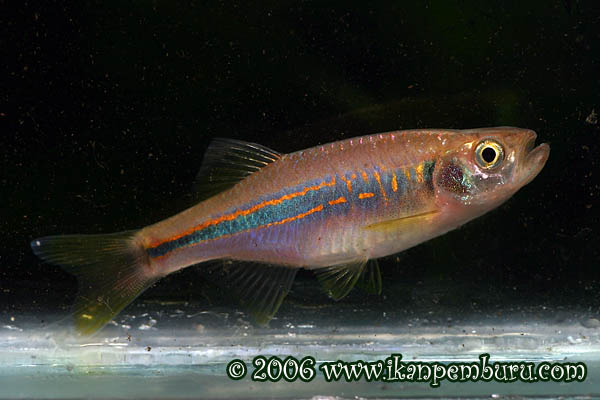
Devario laoensis
Cyprinidae · Pellegrin & Fang, 1940
It can be further distinguished from other species in the genus by colour pattern consisting of a dark, horizontal P stripe originating around mid-body, where it's relatively faint, this becoming thicker and darker in the posterior portion of the body and terminating at the base of the caudal-fin. Among congeners it's most similar to D. chrysotaeniatus but that species lacks the infraorbital process, has three rows of pharyngeal teeth and the P stripe extends to the end of the caudal-fin rays.
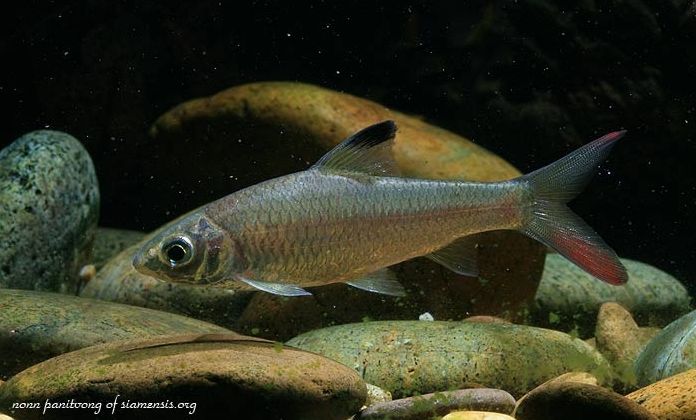
Discherodontus ashmeadi
Cyprinidae · Fowler, 1937
D. ashmeadi is the type species and exhibits differences in dental morphology compared with other members of the genus. It can also be told apart from D. halei by the red/pink (vs. orange) colouration in the dorsal and anal fins and serrated (vs. smooth) dorsal spine. D. schroederi is also similar-looking but as it matures the prominent dark dorsal blotch fades to a thin dark distal band whereas in D. ashmeadi it is retained throughout life.
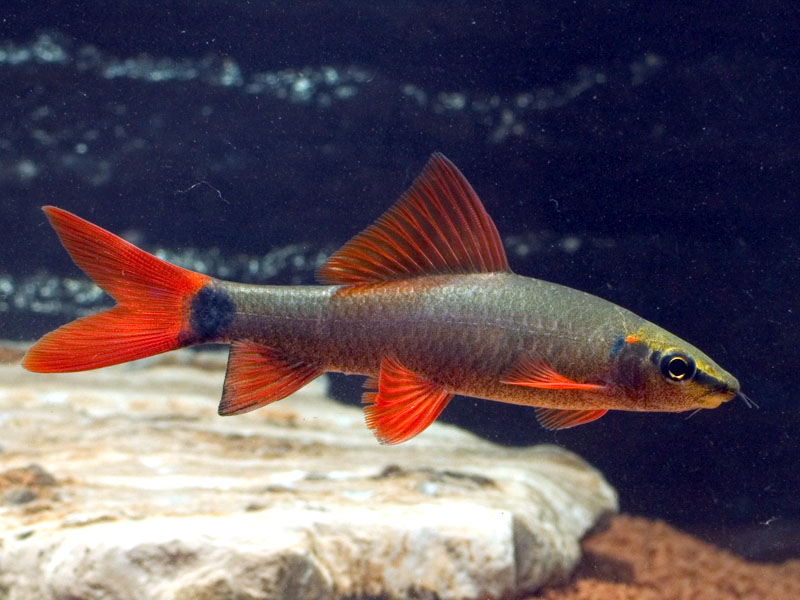
Epalzeorhynchos frenatumRainbow Shark
Cyprinidae · Fowler, 1934
The ornamental albino variant is widely-available and has become extremely popular in the hobby and there is a commercially-produced anerythristic (lacking red pigment) mutation that has pale yellowish fins and has sometimes been misidentified as E. munense. Also worthy of note is that the specific name is sometimes misspelled 'frenatus'. Most members of Epalzeorhynchos were formerly regarded as Labeo spp. and are thus referred to as such in older literature. According to Rainboth (1996) they're characterised by absence of a dorsal spine...
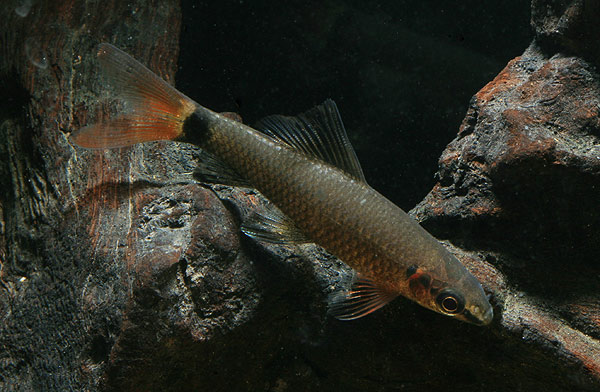
Epalzeorhynchos munense
Cyprinidae · Smith, 1934
This species does not appear to be in the aquarium hobby at time of writing though it may have been in the past, when exports of wild Epalzeorhynchos spp. still took place. Most members of the genus were formerly regarded as Labeo spp. and are thus referred to as such in older literature. According to Rainboth (1996) they're characterised by absence of a dorsal spine, possession of 10-13 branched dorsal fin rays, a thin membrane...
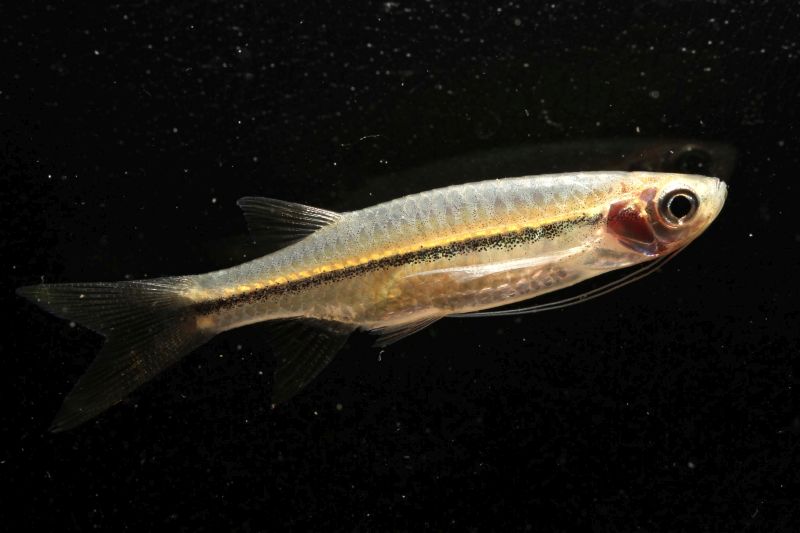
Esomus longimanusMekong Flying Barb
Cyprinidae · Lunel, 1881
Known from the Mekong river basin in Thailand, Laos, Cambodia, and Vietnam, the Tonlé Sap river and lake system in Cambodia, and smaller, coastal drainages in southeast Thailand. Records from Peninsular Malaysia are likely to refer to other species. Type locality is given simply as 'Cambodia'.
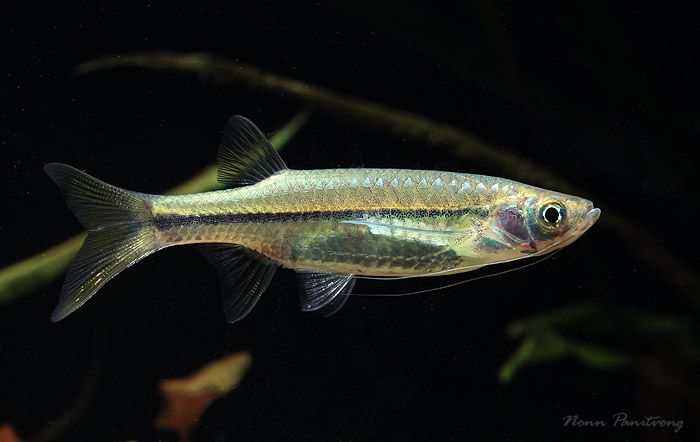
Esomus metallicusStriped Flying Barb
Cyprinidae · Ahl, 1923
There currently exist a dozen described Esomus spp. alhough few are seen in the aquarium trade and none are especially popular. Most are commonplace in their native countries and also quite plainly-patterned so generally overlooked by collectors. Their most common use in some areas is actually as a feeder fish in the aquaculture of larger species. They're characterised by greatly-enlarged pectoral fins and two pairs of barbels, of which the maxillary pair are extremely long and usually reach the pectoral fins.
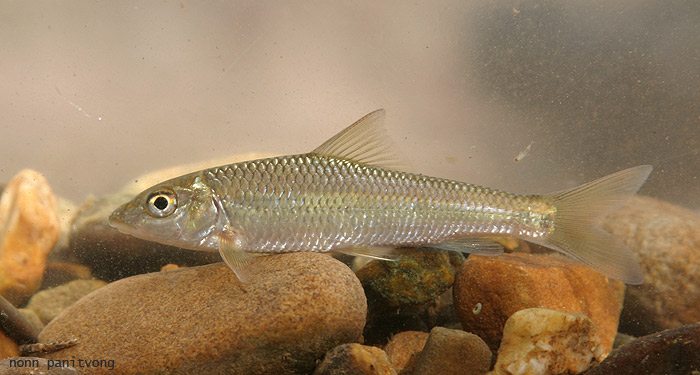
Folifer brevifilis
Cyprinidae · Peters, 1881
This species is widely-distributed in the Mekong river system in Thailand, Laos, and Vietnam, Salween and Ayeyarwaddy rivers in southern China, Myanmar, and Thailand, plus various smaller basins in Vietnam and China. It has also been recorded from the islands of Hainan and Hong Kong. Type locality is given as 'China: sent from Hong Kong'.
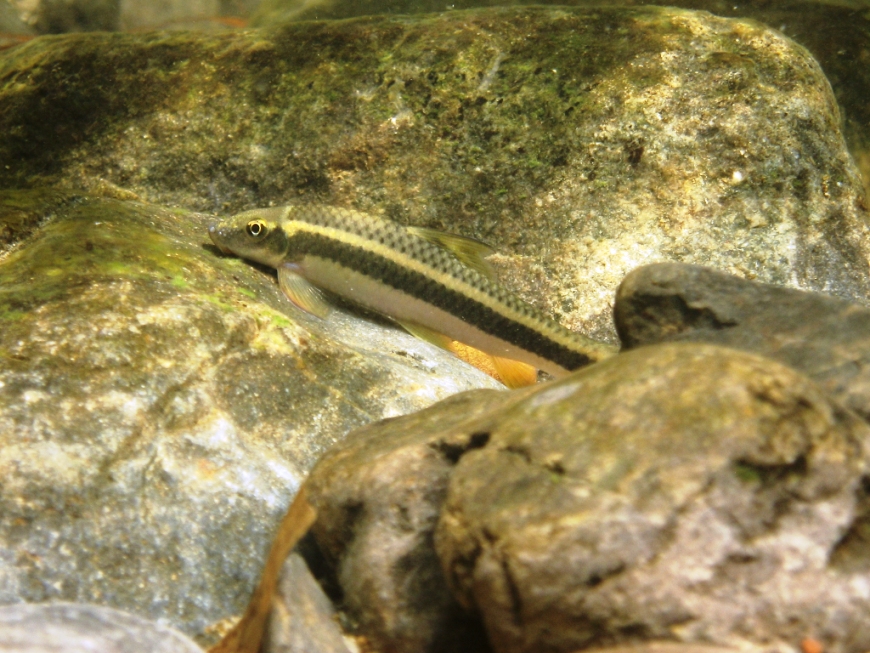
Garra cambodgiensisFalse SAE
Cyprinidae · Tirant, 1883
Also known by the vernacular names ''black band garra', 'stone-lapping minnow' or 'false flying fox' and continues to be traded as Garra taeniata, an invalid name synonymous with G. cambodgiensis. It is often confused with those laterally-striped members of the genus Crossocheilus sold as 'Siamese algae eater' or 'Siamese flying fox', but in those species the dark lateral body stripe continues into the caudal-fin whereas in G. cambodgiensis it terminates...
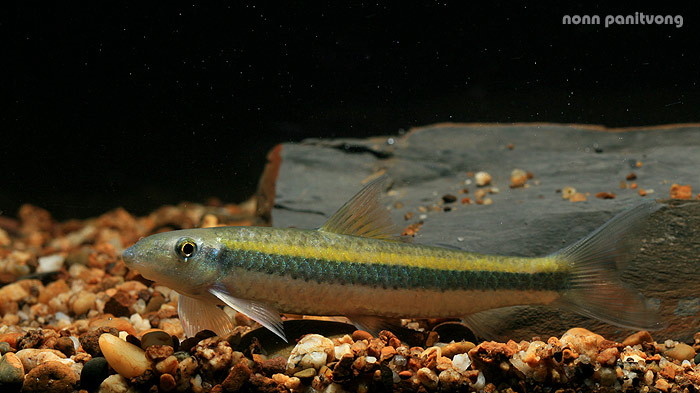
Garra fasciacauda
Cyprinidae · Fowler, 1937
Native to the Mekong river system in Thailand, Laos, Vietnam, and Cambodia, including the Tonlé Sap basin. Type locality is 'Kemarat, Thailand', which corresponds to the Mekoong River in Khemmarat district, Ubon Ratchathani province, northeastern Thailand.
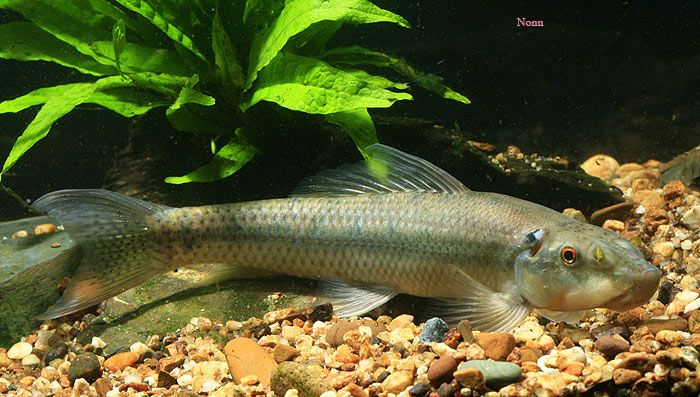
Gyrinocheilus aymonieriSucking 'Loach'
Gyrinocheilidae · Tirant, 1883
This species is among the most well-known fishes in the aquarium trade but juveniles are typically being offered for sale with little to no information regarding temperament, eventual size, and potential age in excess of 15 years. Wild examples are not currently traded, with all of those seen on sale produced on a commercial basis.
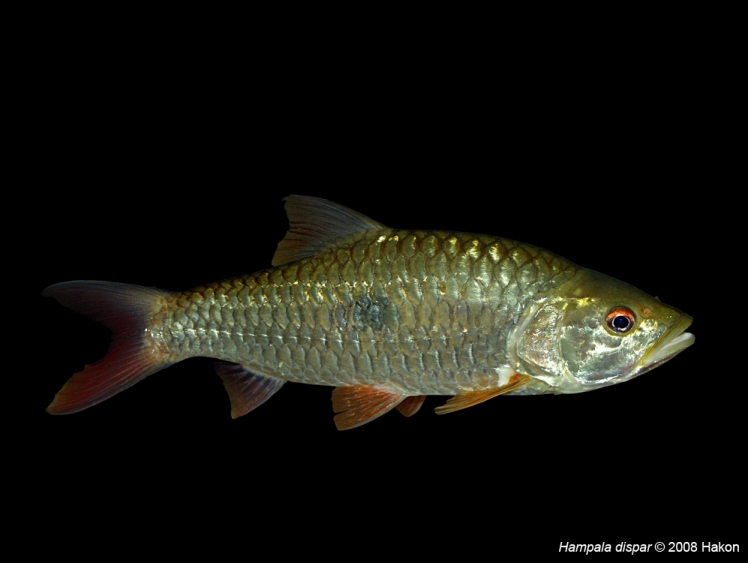
Hampala disparSpotted Hampala Barb
Cyprinidae · Smith, 1934
The genus currently contains seven species of which H. macrolepidota and, to a lesser extent, H. dispar are the only ones seen with any regularity in the aquarium trade. As well as having the widest distribution H. macrolepidota is also the largest member of the group. All representatives can appear superficially similar at first glance, the exception being H. lopezi which is endemic to a single island in The Philippines and displays a unique lateral band-like marking on the flanks.
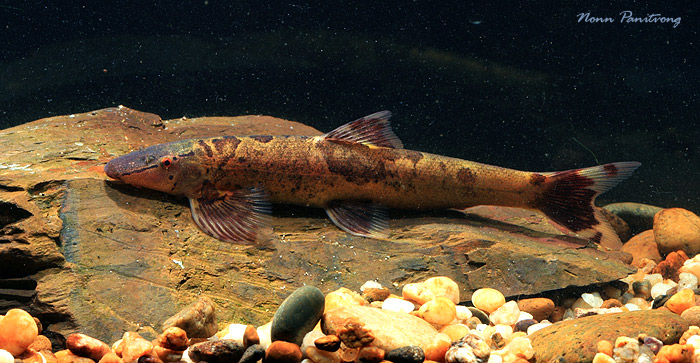
Homaloptera confuzona
Balitoridae · Kottelat, 2000
Most records pertain to the Mekong River basin downstream of the Khone waterfalls in Laos and Cambodia, but this species is also known from some smaller river drainages in southern Thailand, including parts of the Mae Klong system. Type locality is 'Khlong Fit at Ban Kraduk Chang, road 3157 from Trat to borai, about 2-3 kilometers after junction w...
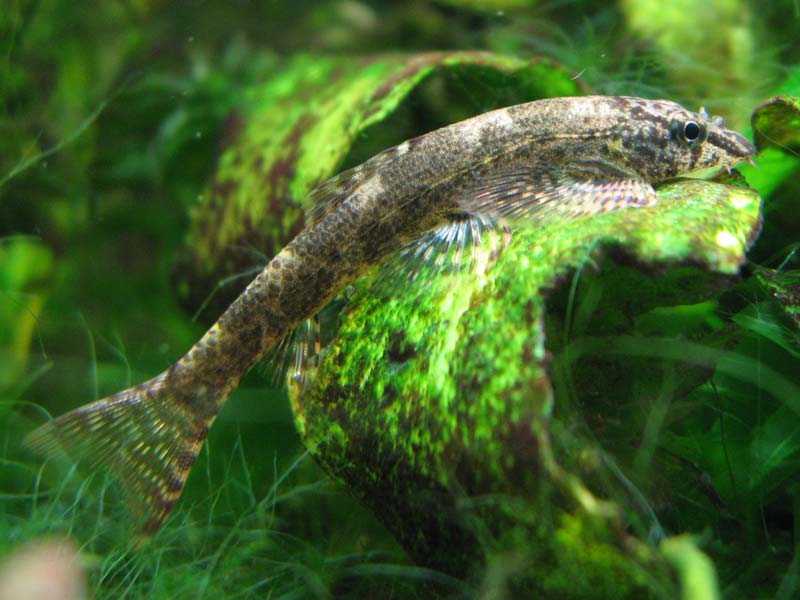
Homalopteroides smithi
Balitoridae · Hora, 1932
Described from close to the village of Ban Khiri Wong, Nakhon Si Thammarat Province, southern (peninsular) Thailand but since recorded throughout much of the country, including the Chao Phraya and Mekong river systems. It's also known from Peninsular Malaysia and parts of the Mekong basin in Laos, Cambodia and Vietnam. Rainboth (1996) considered it 'probably the commonest member of the genus in the Mekong' and in a 2008 study of balitorid habitats in centra...
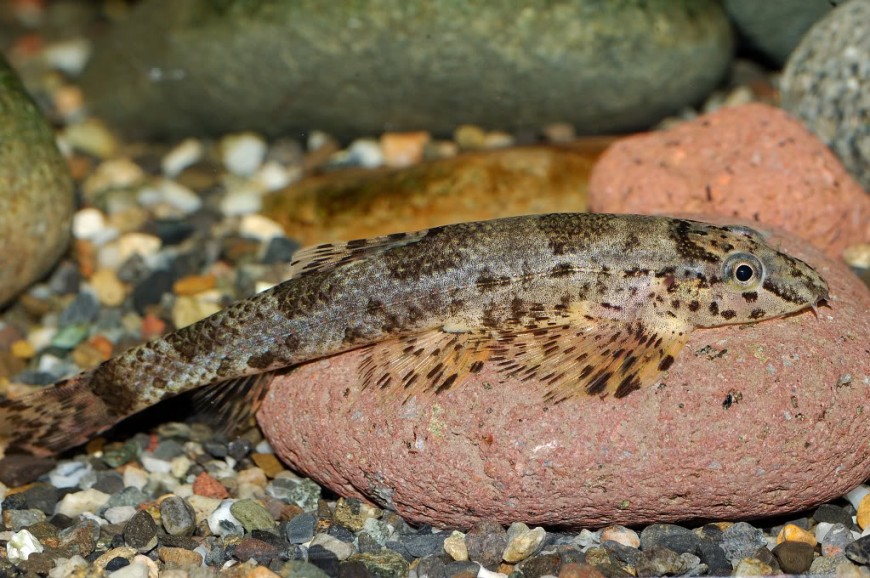
Homalopteroides tweediei
Balitoridae · Herre, 1940
Described from Kota Tinggi district, Johor state, Peninsular Malaysia but since recorded throughout much of the country as well as parts of the the Mekong river system in Thailand, Laos, Cambodia and Vietnam plus the Kapuas and several other river basins in Kalimantan Barat (West Kalimantan) province, Indonesian Borneo. In the Kahang River, part of the Endau drainage in Jo...
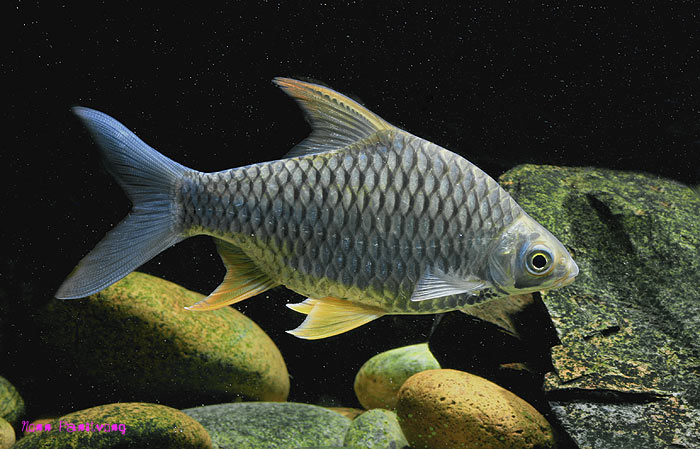
Hypsibarbus lagleri
Cyprinidae · Rainboth, 1996
This species is migratory on a seasonal basis; during the dry season it can be found in larger river channels, whereas during drier months it moves into smaller tributaries and flooded forests. Apparently displays a preference for rocky habitats and is not known to adapt to reservoirs or other artificial impoundments.
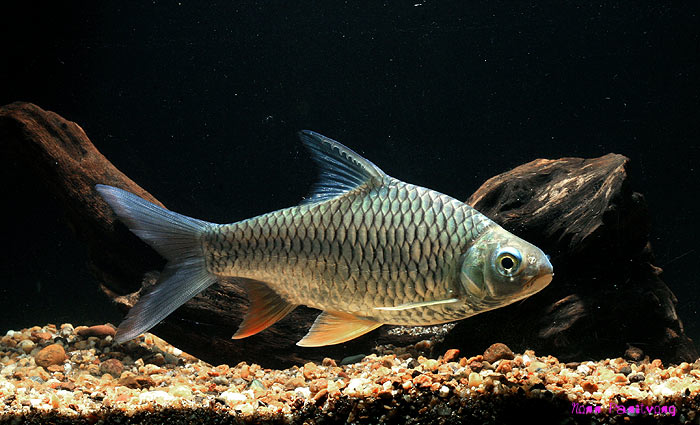
Hypsibarbus vernayi
Cyprinidae · Norman, 1925
It is very similar to H. wetmorei but can be told apart by possessing yellow (vs. orange to red in H. wetmorei) pectoral, pelvic, and anal fins. It thus appears likely that yellow-finned fish marketed as H. wetmorei or 'lemon fin barb' in the ornamental trade are actually H. vernayi, with both species available on a regular basis.
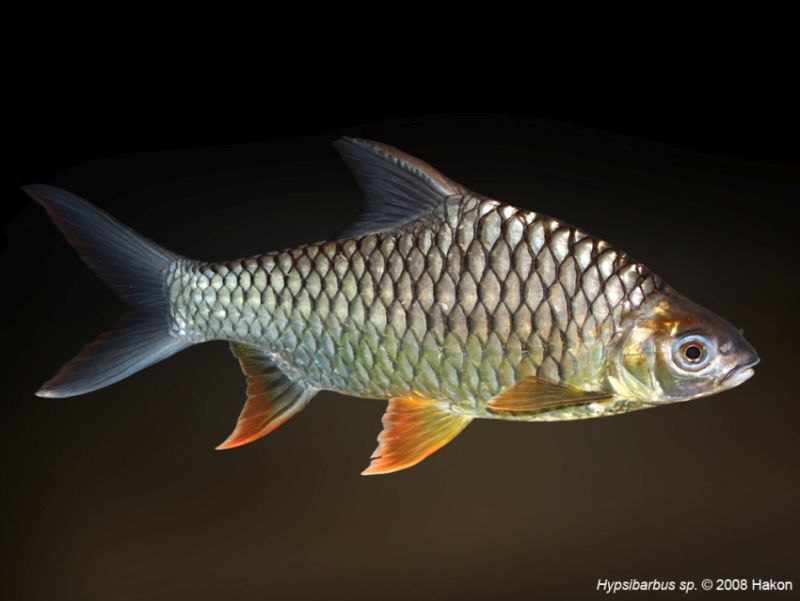
Hypsibarbus wetmorei
Cyprinidae · Smith, 1931
H. wetmorei is distinguished from congeners by the following combination of characters: upper body reddish brown; robust body, not compressed; usually 4½ scale rows between lateral line and dorsal-fin origin; 8-12 rakers on first gill arch; 7-9 predorsal scales; 14 circumpeduncular scale rows; usually two scale rows separating vent and anal-fin; <29 lateral line scales; 9-14 serrations on the spinous dorsal-fin ray; distance between distal serrae on posterior margin of last unbranched dorsal-fin ray much greater than the width of their bases.
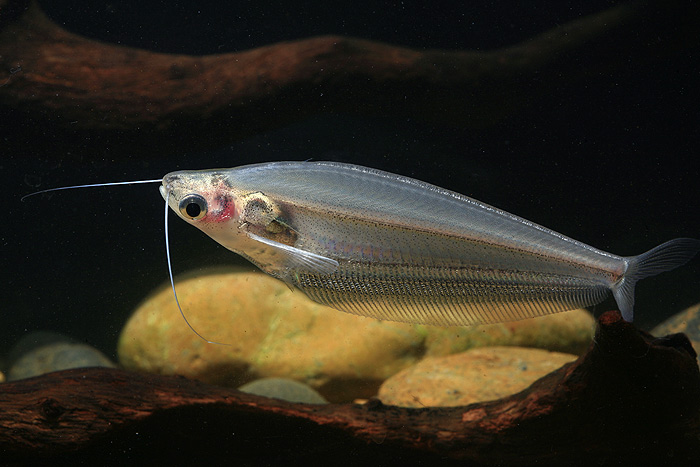
Kryptopterus bicirrhis
Siluridae · Valenciennes, 1840
Generally peaceful though it may predate on smaller fishes and is somewhat timid so does not compete well with much larger, robust or otherwise boisterous species. Peaceful, comparably-sized cyprinids, loaches and other catfishes perhaps constitute the best options but be sure to research your choices thoroughly prior to purchase.
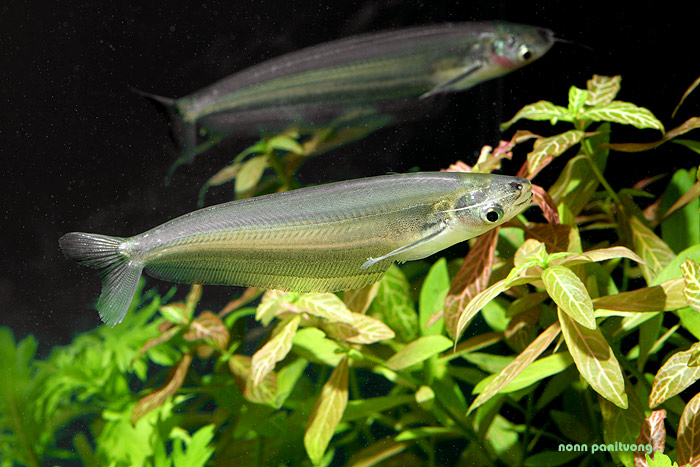
Kryptopterus geminus
Siluridae · Ng, 2003
This species is likely to be traded for aquaria but probably misidentified as the very similar-looking K. cyrptopterus with which wild populations were formerly considered conspecific. These two are closely-related and can be distinguished from congeners by the dorsal profile lacking a nuchal concavity (vs. possessing a nuchal concavity) and possessing short maxillary barbels (extending to the pectoral-fin base vs. ext...
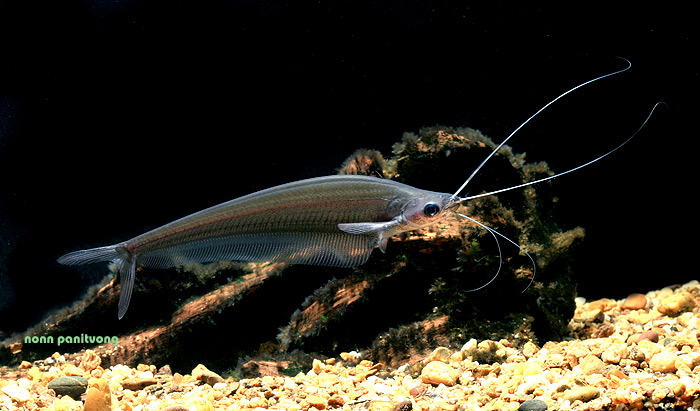
Kryptopterus limpok
Siluridae · Bleeker, 1852
Type locality is 'Palembang, Sumatra, Indonesia', but this species is widely-distributed throughout much of Southeast Asia including major river systems in Thailand, Laos, Cambodia, Vietnam and Peninsular Malaysia plus the Greater Sunda Islands of Sumatra, Borneo and Java. It's been extensively recorded from the Mekong, Cha...
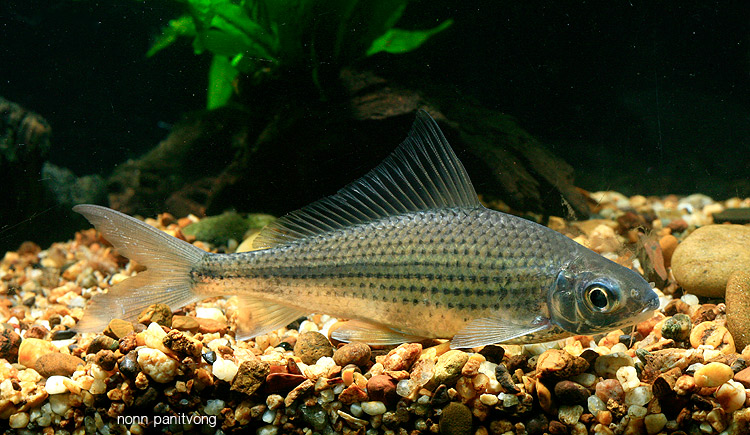
Labiobarbus leptocheilus
Cyprinidae · Valenciennes, 1842
Different populations vary in appearance somewhat (see image of Salween specimen for example), and L. leptocheilus may turn out to represent a group of closely-related species rather than a single taxon. The population from the Cambodian Mekong has been considered to represent a distinct species, Labiobarbus lineatus, although that name is currently a synonym of L. leptocheilus following Kottelat (2013). It is widely used in the ornamental trade, however.
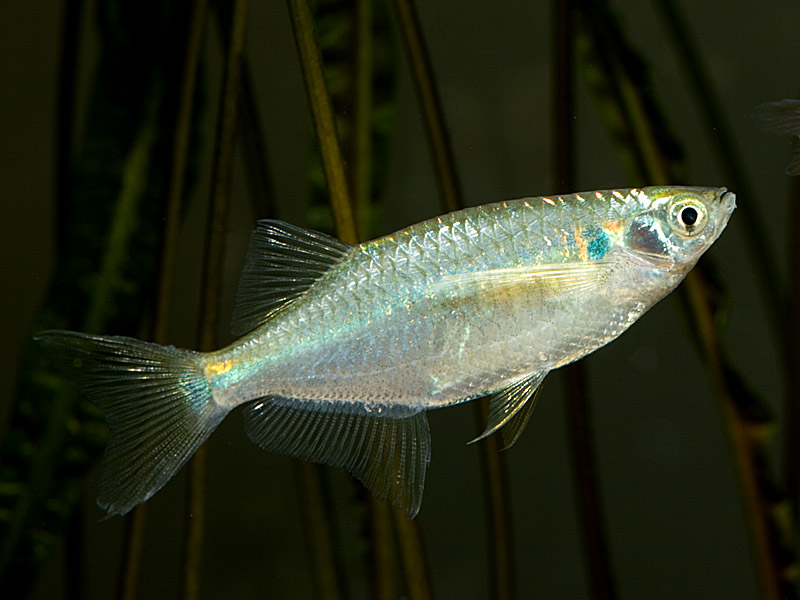
Laubuka caeruleostigmataFlying Minnow
Cyprinidae · Smith, 1931
This species is also known as 'leaping barb' and was once quite common in the ornamental trade but is now seldom seen. It can be distinguished from other members of the genus by the following characters: bright blue spot on top of head; series of 4-5 short faint bars on anterior portion of body; 19-23½ branched anal-fin rays; body depth fits 2.1-2.9 times in SL.
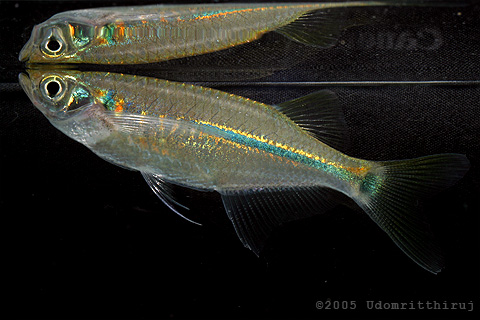
Laubuka siamensis
Cyprinidae · Fowler, 1939
Considered synonymous with the congener L. laubuca for a number of years, thus reports of that species from anywhere in Indochina actually refer to the current concept of L. siamensis. Given the distribution of L. siamensis, it seems likely that many of the fish entering the aquarium trade are also this species and not L. laubuca. The two species can be distinguished by...
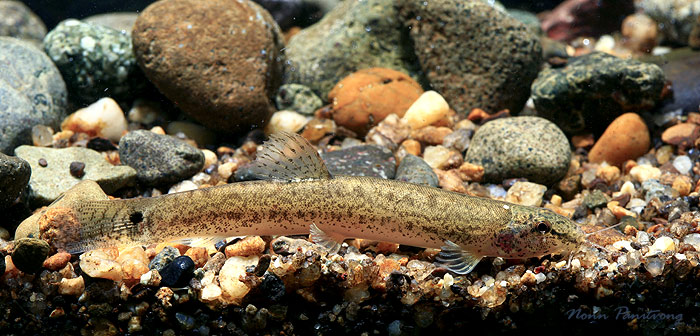
Lepidocephalichthys berdmorei
Cobitidae · Blyth, 1860
This is one of the most frequently-traded members of the genus and is an excellent choice for those new to keeping loaches. It's distinguishable from congeners by a combination of characters including: relatively large adult size (to at least 80 mm SL); rounded/truncate caud...
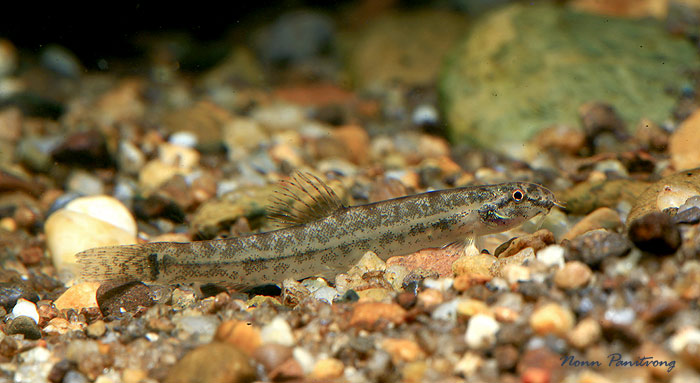
Lepidocephalichthys hasselti
Cobitidae · Valenciennes, 1846
At one locality close to Ban Na Hwai, Chiang Mai Province, Thailand L. hasselti was collected from a shallow (<0.5 m) pool in a swampy zone between forest and rice fields. The substrate was of mud, there was no aquatic vegetation and it was being used as drinking water by local animals, with the only effluent connected to a 'small creek'. Other species found there were Physoschistura pseudobrunneana, Rasbora hobelmani and Systomus cf. orphoides.
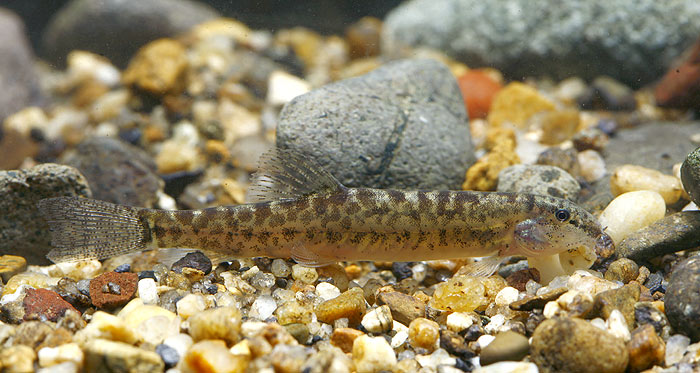
Lepidocephalichthys kranos
Cobitidae · Havird & Page, 2010
The family Cobitidae, often referred to as 'true' loaches, is widely-distributed across most of Eurasia with the Indian subcontinent, Southeast Asia and China representing particular centres of species diversity. Phylogenetic analyses by Tang et al. (2006), Šlechtová et al. (2007) and Šlechtová et a...
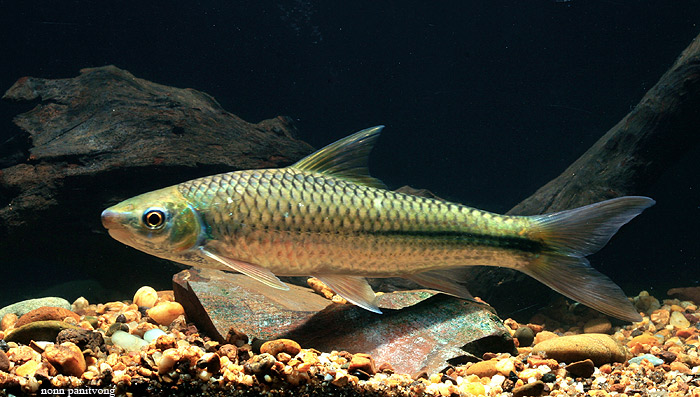
Lobocheilos melanotaenia
Cyprinidae · Fowler, 1935
The majority of Lobocheilos species are endemic to the Greater Sunda Islands of Borneo, Sumatra, and Java, and are uncommon in the aquarium trade, but the widespread Indochinese taxa L. melanotaenia and L. rhabdoura are available on a sporadic basis. L. melanotaenia can be distinguished from L. rhabdoura by the following comb...
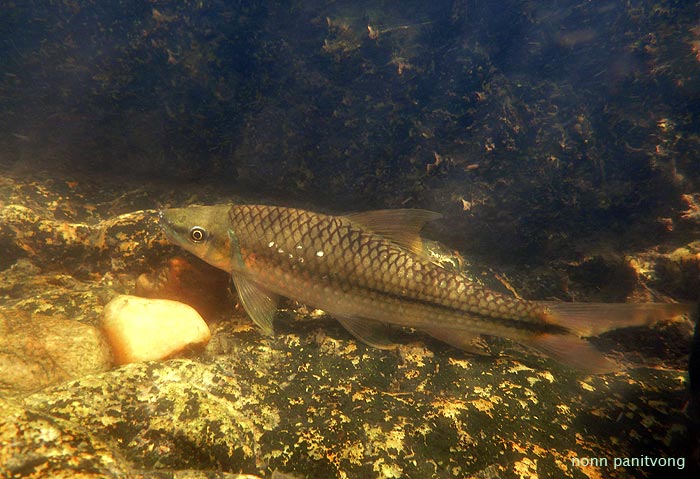
Lobocheilos rhabdoura
Cyprinidae · Fowler, 1934
Lobocheilos species are specialised grazers of periphyton, benthic algae, and other organisms which grow attached to rocks and other solid surfaces, and they typically leave visible scrape marks in places where they have been feeding. They are by no means herbivorous and should be offered meaty foods such as live or frozen chironomid larvae (bloodworm), Tubifex, Artemia, chopped prawn, etc., along with good quality, sinking dried products, at lea...
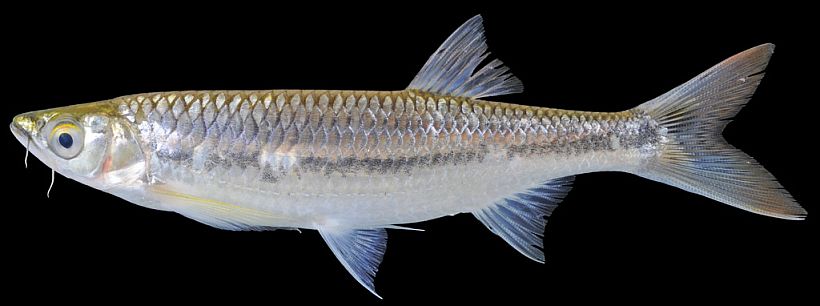
Luciosoma bleekeri
Cyprinidae · Steindachner, 1878
L. bleekeri is most-easily distinguished from the congener L. setigerum, with which it is frequently confused, by absence (vs. presence) of a series of black spots on the lateral line scales.
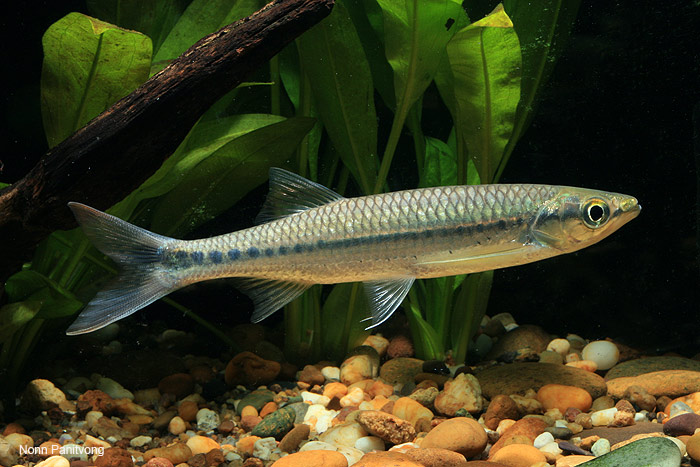
Luciosoma setigerumApollo Shark
Cyprinidae · Valenciennes, 1842
There is a fish of unknown geographical origin which matches the majority of diagnostic features for L. setigerum with the exception that the dark lateral stripe is absent in the anterior portion of the body and is not composed of interconnected spots. It is relatively common in the aquarium trade and included here as L. cf. setigerum until a confirmed identity is established.
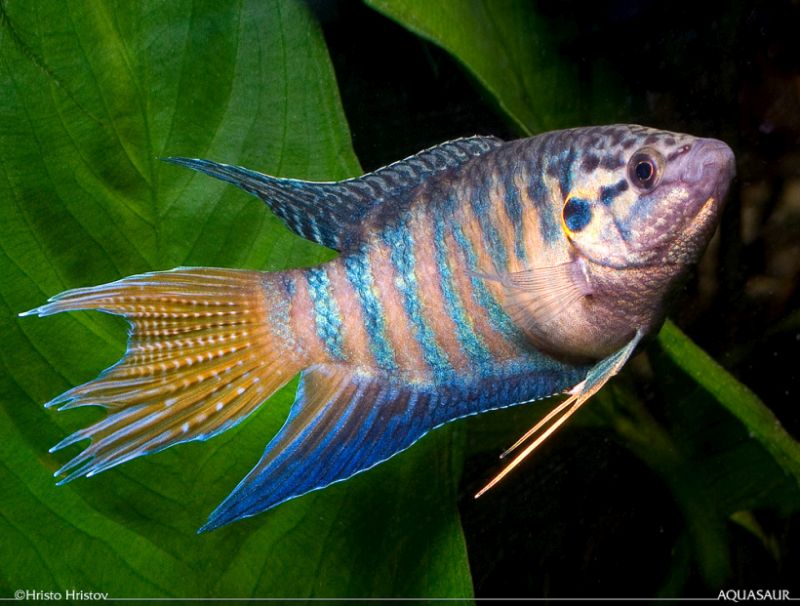
Macropodus opercularisParadise Fish
Osphronemidae · Linnaeus, 1758
M. opercularis is a classic aquarium fish, having been introduced to the hobby by a French soldier named Gerault in 1869. Of the initial 100 specimens shipped, 22 survived and were successfully bred later that same year by another Frenchman, the Parisian Pierre Carbonnier. This gives the species the distinction of being one of the very first ornamental fish imported to Europe. It is also known as 'Chinese fighting fish', 'paradise gourami', and 'blue paradise fish'.
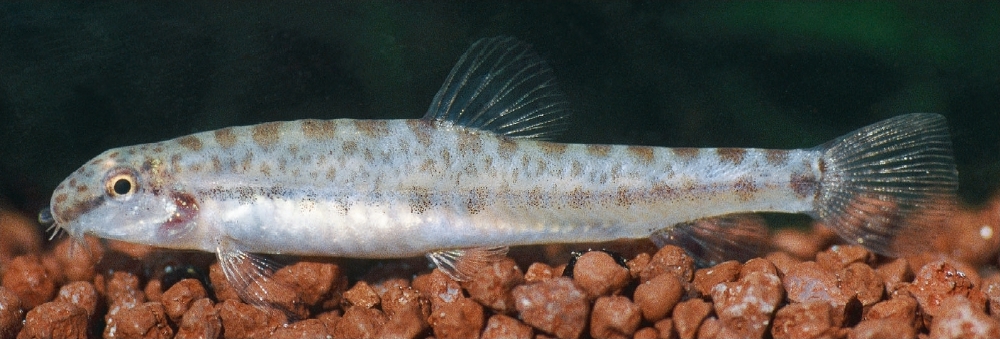
Microcobitis misgurnoides
Cobitidae · Rendahl, 1944
This species was initially described as a member of Cobitis and remained as such for over 60 years until being redescribed in the new genus Microcobitis by Bohlen and Harant (2011). It can be separated from Cobitis species by a number of char...
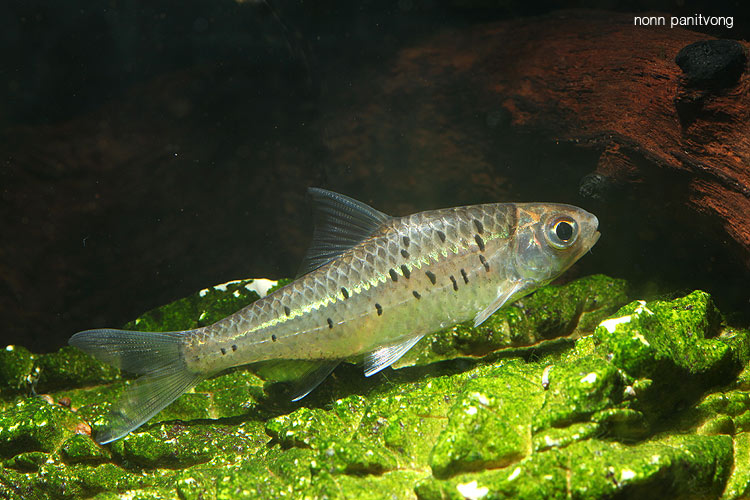
Mystacoleucus greenwayi
Cyprinidae · Pellegrin & Fang, 1940
Predominantly a riverine fish favouring clear, well-oxygenated, running water with substrates of sand or gravel and often present in rock and boulder-filled headwater streams. In the Mun River, close to the Pak Mun dam, Thailand, sympatric species included Hampala dispar, Cyclocheilichthys apogon, Osteochilus hasseltii,...
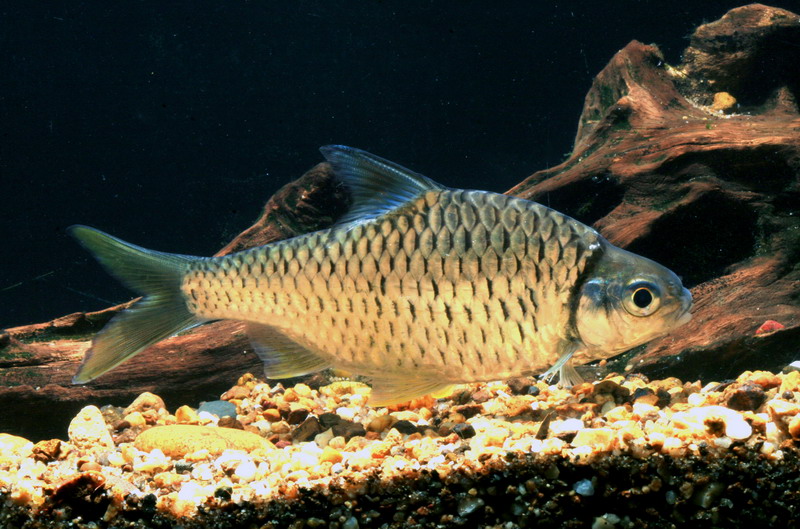
Mystacoleucus obtusirostris
Cyprinidae · Valenciennes, 1842
This species is occasionally marketed as 'Burmese Rainbow Barb' in the ornamental trade. others may have been exported in small numbers or as bycatch among shipments of other species. It was referred to as Mystacoleucus marginatus for decades, but that name is a simultaneous subjective synonym of M. obtusirostris following Kottelat (2013).
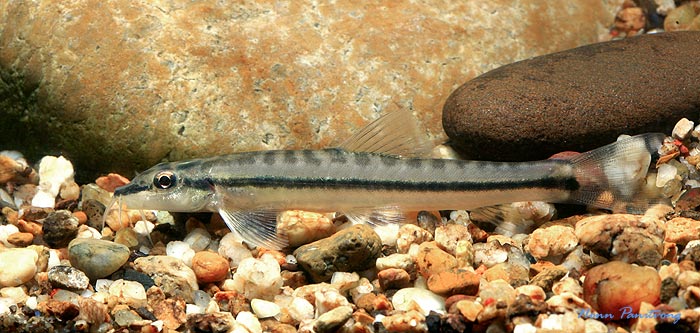
Nemacheilus longistriatusLaos Blackline Torpedo Loach
Nemacheilidae · Kottelat, 1990
Fishes which inhabit similar biotopes in nature constitute the best options, especially peaceful, open water-dwelling cyprinids since the presence of one or two schools can make a visible difference to the confidence of this naturally reclusive loach. Other possibilities include rheoph...
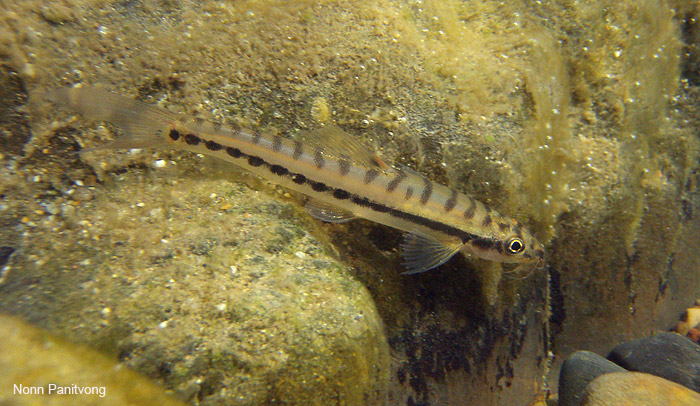
Nemacheilus pallidus
Nemacheilidae · Kottelat, 1990
The similar-looking N. masyai is sometimes traded as N. pallidus, but the two can be told apart by body depth (14.8-19.1 % in N. pallidus vs. 12.6-17.6 % SL in N. masyai), interorbital width (5.7-8.0 % vs. 4.9-6.8 % SL) and the fact that in N. pallidus the dark body bars and saddles are thinner than the light-coloured interspaces between (vs. wider in N. masyai).
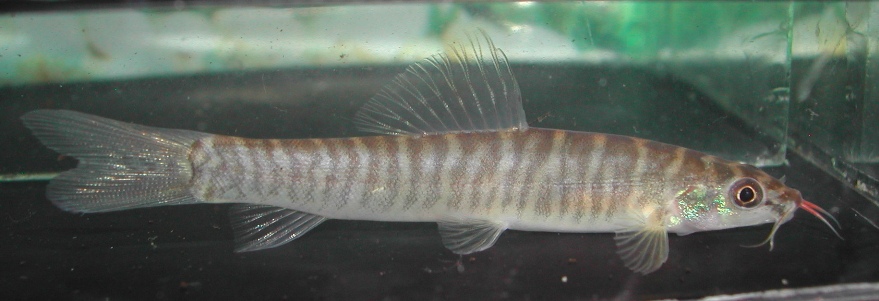
Nemacheilus platiceps
Nemacheilidae · Kottelat, 1990
This species is only traded occasionally. It's distinguished from congeners by a combination of characters including: 12-16 dark, irregular, vertical bars on body, usually split vertically; lips without furrows; inco...
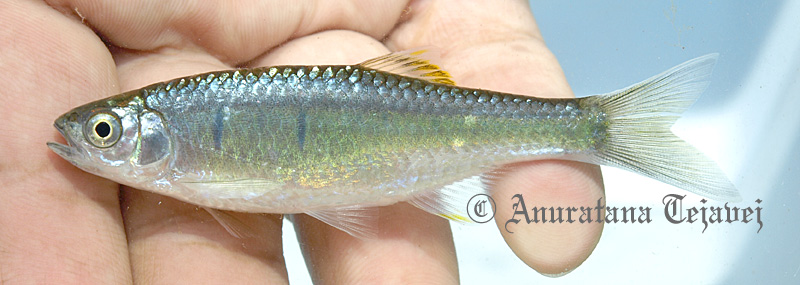
Opsarius koratensis
Cyprinidae · Smith, 1931
Inhabits well-oxygenated, low-to-medium gradient, slow to moderate-flowing rivers and streams with substrates of gravel, cobbles, larger boulders and exposed bedrock. At the habitat in our image pH was 7.5, temperature 26°C and cond...
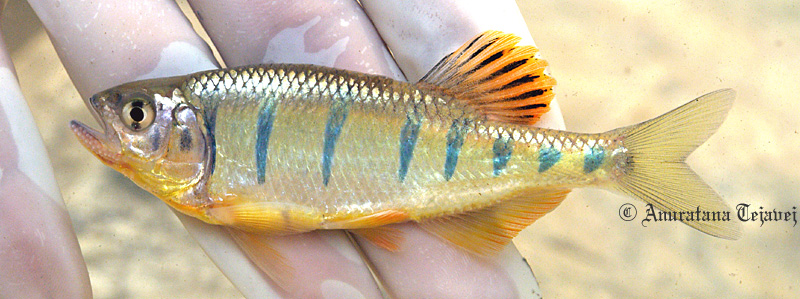
Opsarius pulchellus
Cyprinidae · Smith, 1931
This species is traded for aquaria under various names including 'butterfly barb', 'mackerel barb', 'green-barred danio', and 'royal opsarius'. It can be told apart from other memb...
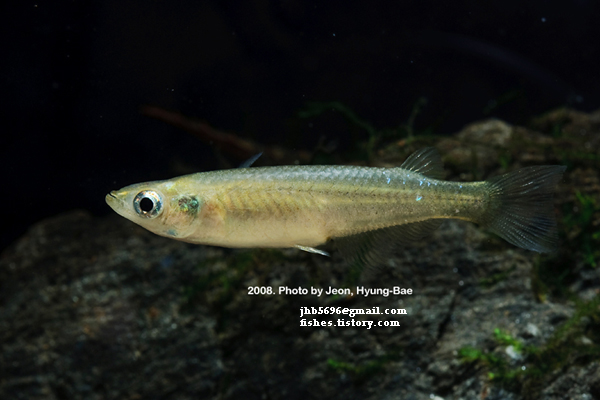
Oryzias latipesMedaka
Adrianichthyidae · Temminck & Schlegel, 1846
Commonly known as 'Japanese rice fish' or simply 'rice fish', O. latipes is well-known to science having been widely used as a model organism in genomic and experimental biology for well over a century and was the first vertebrate animal to mate in space during the mid-1990s. It's also been a popular aquarium fish for many years, though is less widely-available than it once was, with the ornamental 'gold' vari...
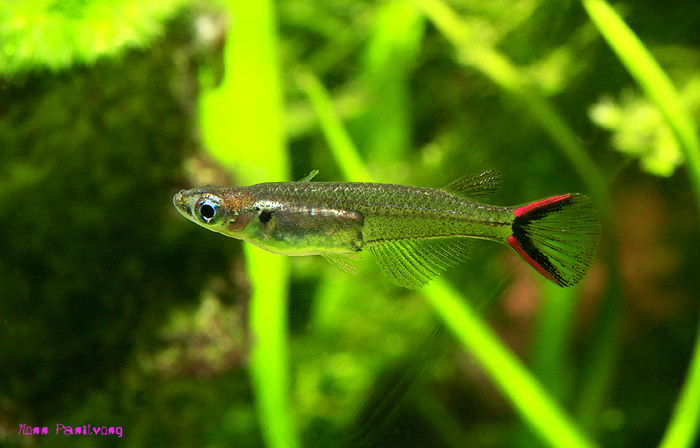
Oryzias mekongensisMekong Ricefish
Adrianichthyidae · Uwa & Magtoon, 1986
It can be further distinguished from congeners by the following combination of characters: small adult size; bright orange-red marginal bands on caudal-fin lobes in males; caudal-fin rounded and elongate; 5-7 dorsal-fin rays; relatively few (13-18) anal-fin rays without bony contact organs, the last ray branched; 6-8 pectoral-fin rays. Members of the family Adrianichthyidae are...
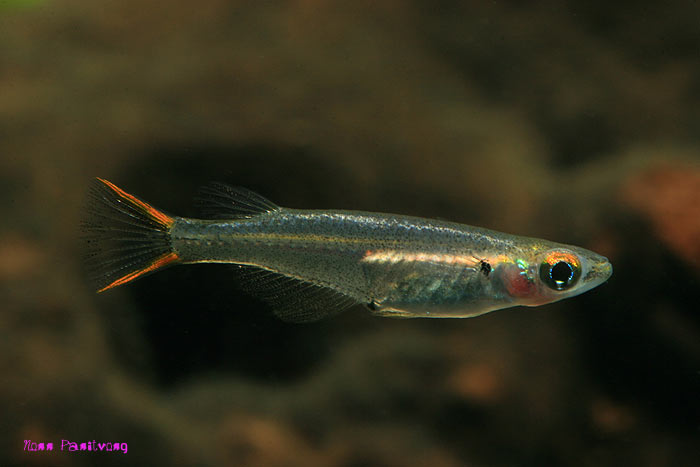
Oryzias songkhramensis
Adrianichthyidae · Magtoon, 2010
An exclusive inhabitant of fresh, normally standing, waters including shallow pools, ditches, rice paddies and clear water swamps. The type locality is a small ditch measuring just 3 - 6 metres in width and 0.5 - 2 metres deep. The water was clear and the substrate composed of sand, detritus and mud with growths of the macrophytes Nymphaea lotus, Jussiaea repens and Hydrilla verticillata.
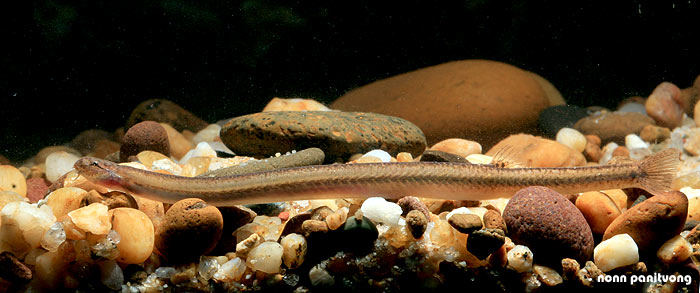
Pangio anguillaris
Cobitidae · Vaillant, 1902
One of a handful of Pangio spp. traded under the generic name 'eel loach'. Wild populations tend to differ in colour pattern to some extent, with some exhibiting a more intense lateral stripe while others display an irregular pattern of fine dark spots on the body, for example.
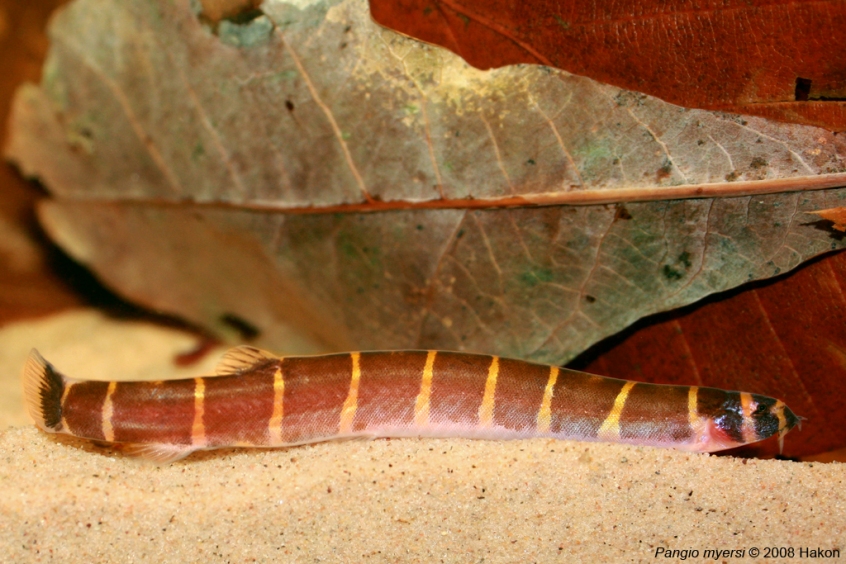
Pangio myersiGiant Kuhli Loach
Cobitidae · Harry, 1949
It's included in the P. kuhlii group of closely-related species and can be distinguished from other members by the following combination of characters: 8-11 very broad, quadrangular, regular dark body bars; orange base body colour; caudal-fin either entirely black or with a large black blotch at the base and a submarginal dark bar or row of spots. The latter feature can be useful in identifying young or newly-imported, undernourished specimens which can...
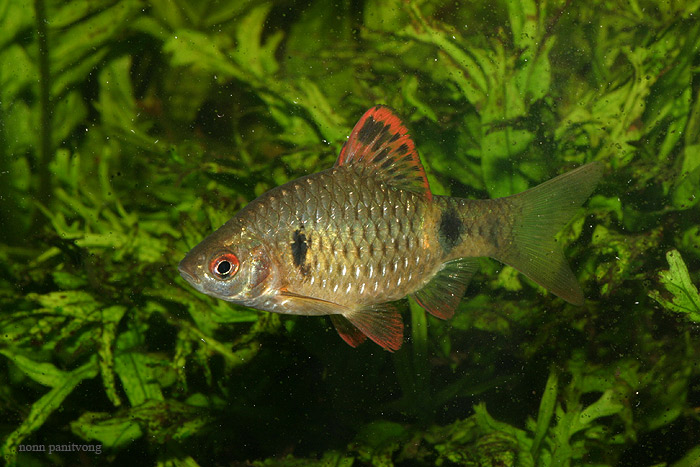
Pethia stoliczkana
Cyprinidae · Day, 1871
This species is confused with P. ticto in much of the available literature and is sometimes listed as a synonym of it. Although some populations of the two species possess a similar colour pattern (there are reports of a P. ticto variant from the south of West Bengal state in India with a red, black-flecked dorsal-fin, for example) they do not occur in the same waters in nature and can be distinguished by examining the lateral line. This is complete in...
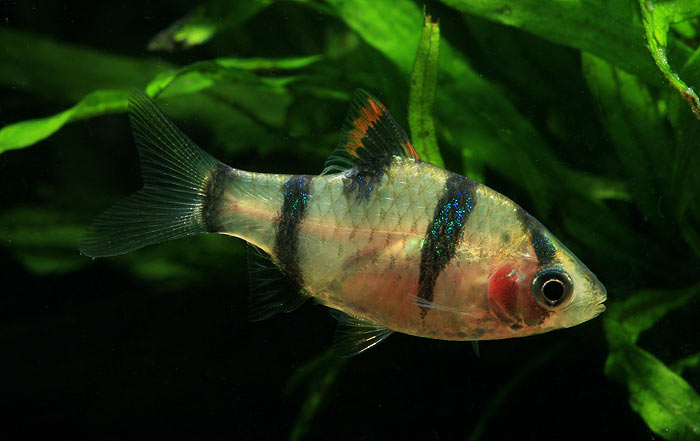
Puntigrus partipentazona
Cyprinidae · Fowler, 1934
Recorded from numerous river basins in Vietnam, Cambodia, Laos, Thailand, and Peninsular Malaysia, including the Mekong, Chao Phraya, Mae Khlong, Chanthaburi, Tapi, Golok, Terengganu, Pahang, Endau, and Muar. Type locality is 'Kratt, southeastern Siam', which corresponds to modern-day Trat Province, Thailand.
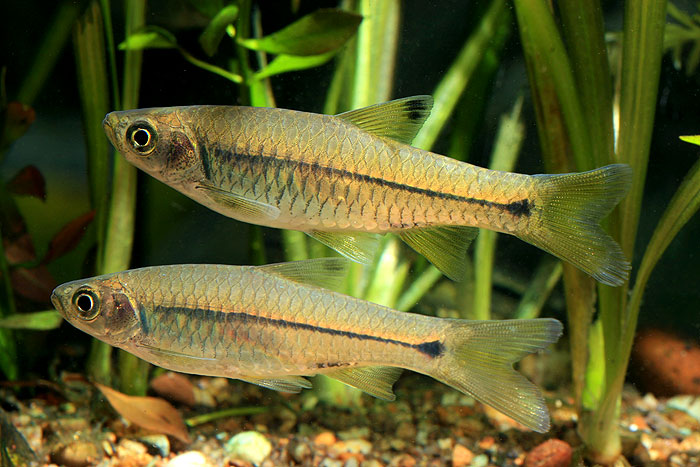
Rasbora dorsinotata
Cyprinidae · Kottelat, 1987
Type locality is 'Mae Nam Huey Bon, kilometer 45 on road from Amphoe ThaWang Pha to Amphoe Chiang Kham, Chiang Rai Province, Thailand', and this species appears restricted to the Mekong and upper Chao Phraya river basins in northern Thailand and northern Laos. The specimens pictured here were collected from th...
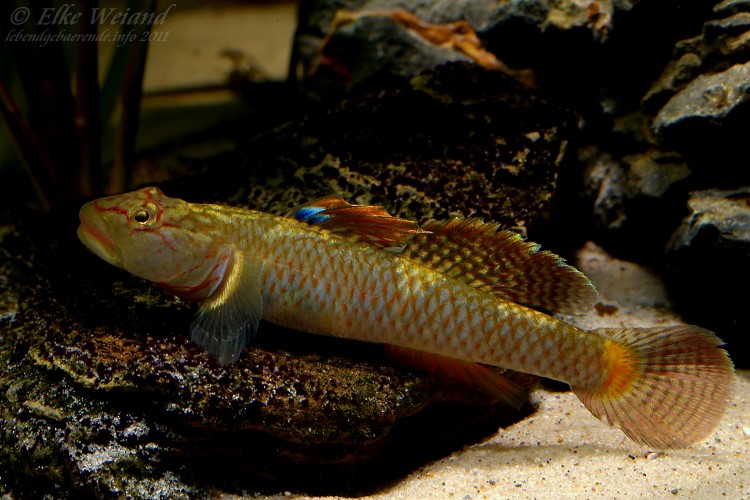
Rhinogobius leavelli
Gobiidae · Herre, 1935
This species appears to exist in a number of different forms which exhibit differences in colour pattern, morphology, or both, and it's currently unclear whether all of them are truly conspecific or not although those in the aquarium trade all appear similar to one another. We've been unable to obtain a copy of the original description so it's not currently possible to provide a detailed diagnosis either, with most recent studi...
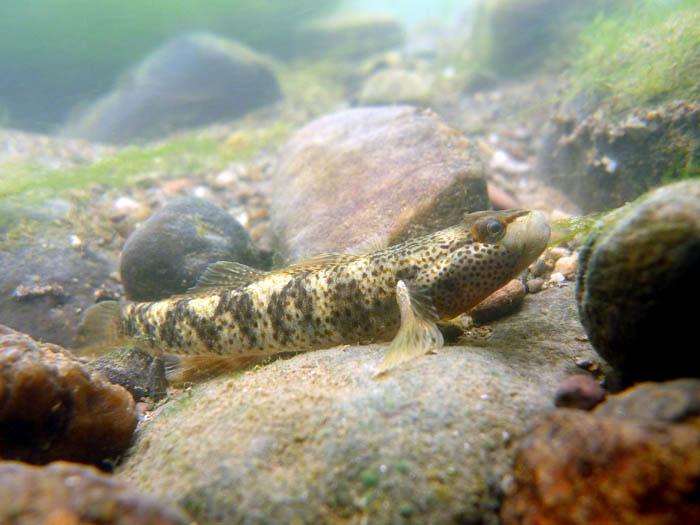
Rhinogobius mekongianus
Gobiidae · Pellegrin & Fang, 1940
Known from various parts of the middle and upper Mekong river basins with record existing from the Nam Tha, Nam Ou, Nam Khan, Nam Lik, Nam Ngum and Nam Mang tributary systems in Laos, the Nam Noeua (a tributary of Nam Ou) in Vietnam, and the Mae Nam Kok in Thailand. Occurrences in the Chao Phraya drainage in central Thailand most likely refer to the congener R. chiengmaiensis.
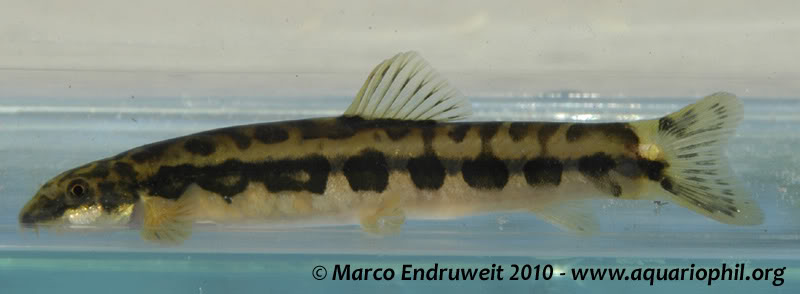
Schistura kloetzliae
Nemacheilidae · Kottelat, 2000
Appears restricted to highly-oxygenated, fast-flowing riffles of small-to-medium sized streams. These typically contain clear water with substrates of gravel, rocks, boulders, and bedrock with no aquatic plants.
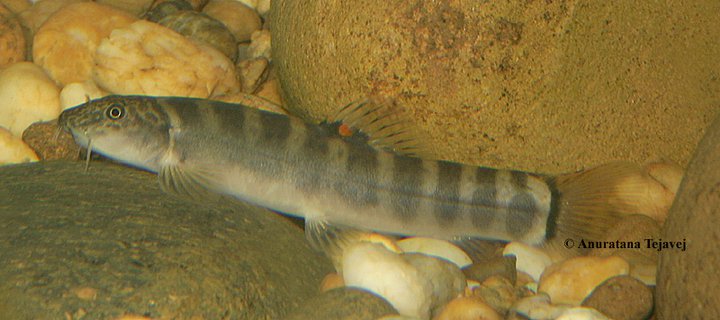
Schistura nicholsi
Nemacheilidae · Smith, 1933
This species is sometimes traded for aquaria but its name also appears to have been widely misapplied to other fishes. It can be identified via the following combination of characters: presence of 8-10 quite regular dark bars...
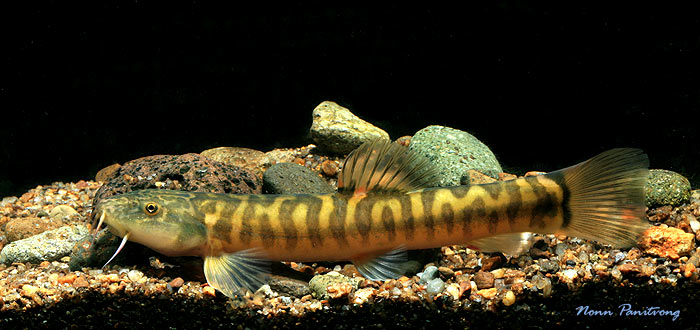
Schistura schultzi
Nemacheilidae · Smith, 1945
There appears to be some discrepancy between Smith's original description and Kottelat (1990) in that Smith states the fish is a member of a group of species lacking an ocellus at the upper caudal-fin base, whereas Kottelat mentions the presence of 'a black spot at upper extremity of caudal-fin base, surrounded by a whitish area'.
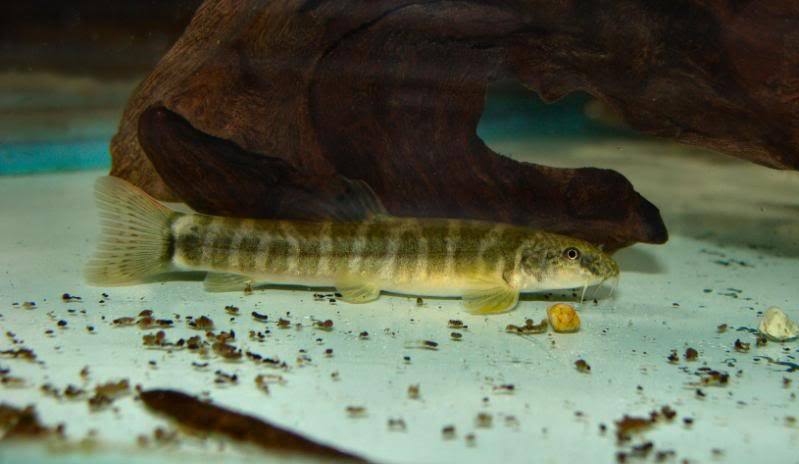
Schistura sp. 2Laos Redtail Loach
Nemacheilidae · authority not recorded
The identity of this fish is unclear but it has been traded as S. sp. 'Laos redtail'. Schistura is the most species-rich genus among nemacheilid loaches with some 190 members and it continues to grow with over 100 having been described since 1990. It may repre...
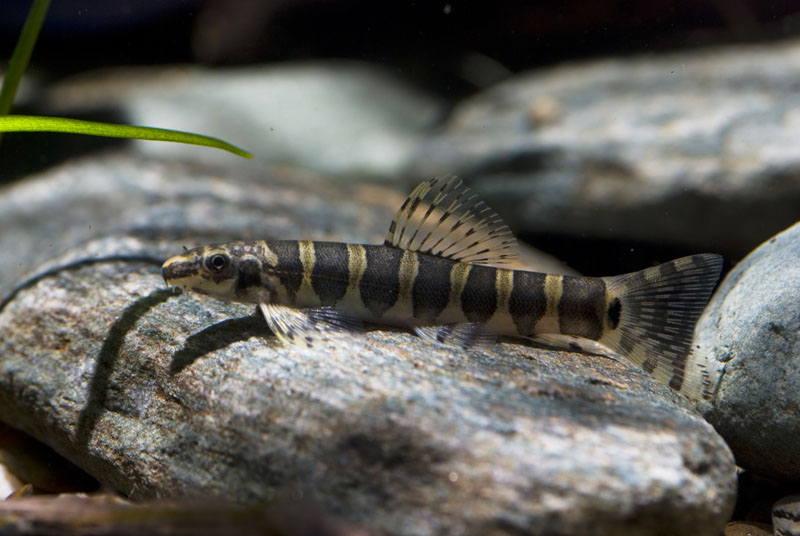
Serpenticobitis octozona
Serpenticobitidae · Roberts, 1997
This species exhibits some interesting behaviour including a degree of social interaction plus the ability to cling to vertical or overhanging surfaces. It's sometimes sold under the name 'serpent loach'. The genus currently contains just three members all of which are known only from the Mekong basin. S. octozona is the type species and separated from the others mainly by body patterning which consists of 7-8 dark bars on each flank, these extending the full depth of the body and much wider than the pale interspaces between.
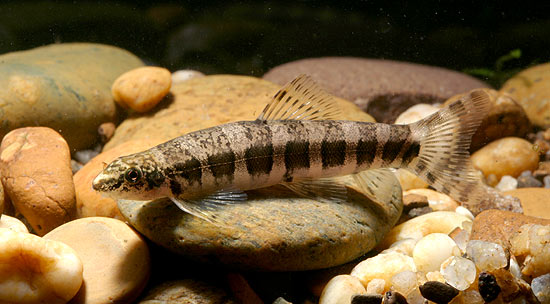
Serpenticobitis zonata
Serpenticobitidae · Kottelat, 1998
Fish sold under the name S. zonata are sporadically available in the aquarium trade but the majority appear to be the congener S. octozona. The genus currently contains just three members all of which are known only from the Mekong basin. S. octozona is the type species and separ...
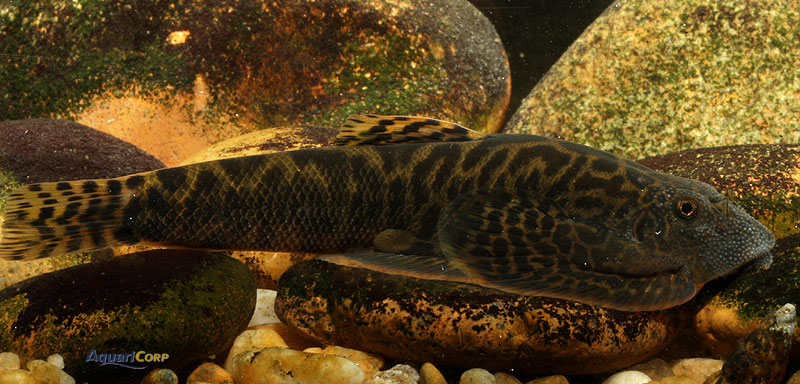
Sewellia elongata
Gastromyzontidae · Roberts, 1998
This species appeared in the trade during 2010 and its identity has been confirmed to us by Thai exporter and aquarist Kamphol Udomritthiruj who collects it from the Se Kong system for the aquarium hobby. To date only subadult specimens have reached the western market.
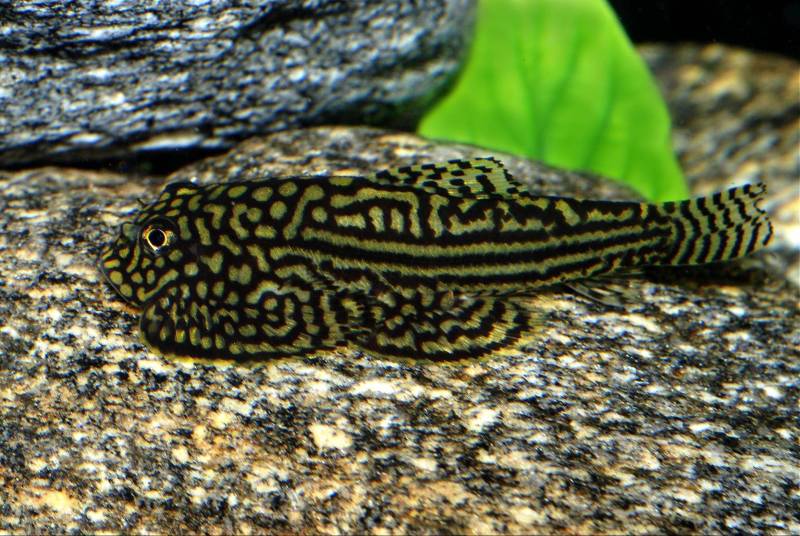
Sewellia lineolataTiger Hillstream Loach
Gastromyzontidae · Valenciennes, 1846
S. lineolata was first recorded by Diard over 150 years prior to its 'rediscovery' in the early-1990s. It became available to the aquarium trade in the mid-2000s and swiftly established itself as one of the more popular balitorids in the hobby due to its attractive body markings and ease of breeding. It's also sold under the names 'reticulated hillstream loach', 'Vietnamese hillstream loach' and 'gold ring butterfly sucker'. It's difficult to...
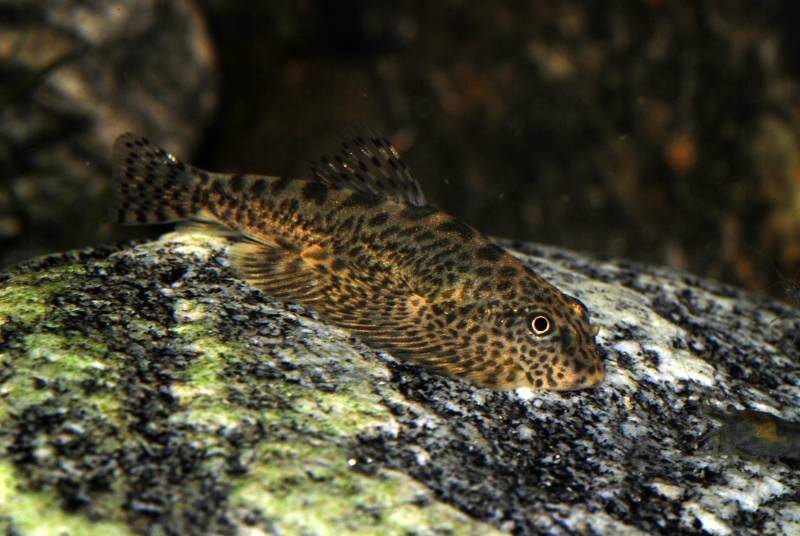
Sewellia speciosa
Gastromyzontidae · Roberts, 1998
This species first became available in early 2010 and sometimes appears on trade lists under the vernacular names 'Laos sucker' or 'Laos Sakura sucker'. It's distinguishable from other members of the genus by the following combination of characters: body spotted and without stripes; no concentric bands on paired fins; origin of pelvic-fin below origin of dorsal-fin; origin of pectoral-fin posterior to corner of mouth; pelvic fin reaching origin of anal fin; small elevated ...
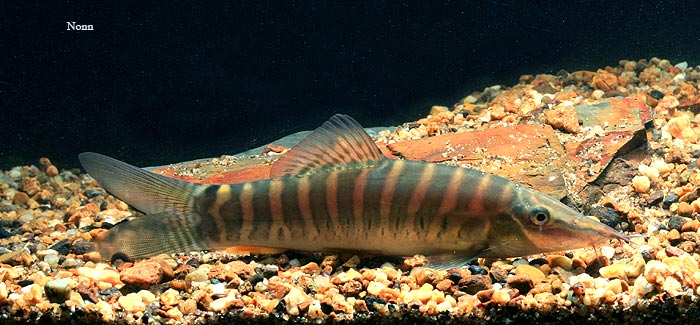
Syncrossus helodesBanded Tiger Loach
Botiidae · Sauvage, 1876
This species is sometimes confused with S. hymenophysa, native to the Greater Sunda Islands and Peninsular Malaysia, but differs in several ways, the most immediately identifiable of which are possession of small, irregular, dark markings in the lower half of the body and lack of a dark spot in the dorsal-fin. It also has 10-12 vertical body bars...
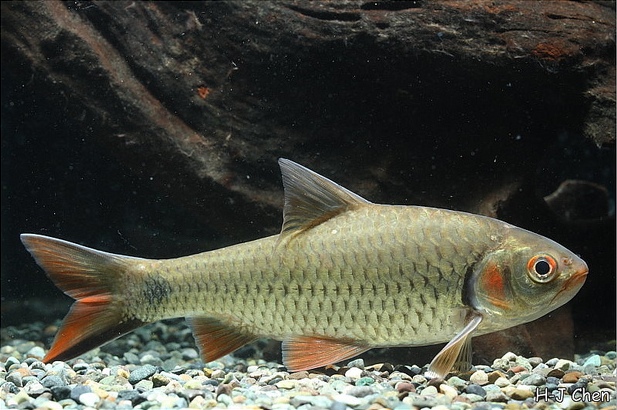
Systomus orphoides
Cyprinidae · Valenciennes, 1842
The genus Puntius is currently viewed as something of a catch-all for well over 100 species of small to mid-sized cyprinid. Most experts agree that a full revision is required with the likely outcome that many species will be placed into new or different genera since it is clearly polyphyletic. When describing the grouping in 1822 Hamilton identified the defining characteristics as: presence or absence o...
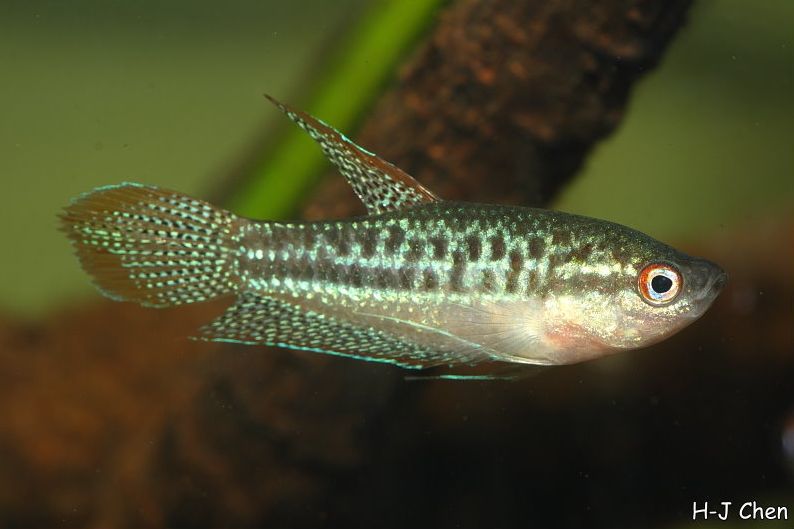
Trichopsis pumilaSparkling Gourami
Osphronemidae · Arnold, 1936
It can be distinguished from congeners by its small adult size and presence of a single solid dark midlateral stripe on the body, above which is a series of dark blotches forming a second stripe. In the similar but larger, T. schalleri the upper stripe is more variable depending on the mood of the fish, sometimes fading entirely.
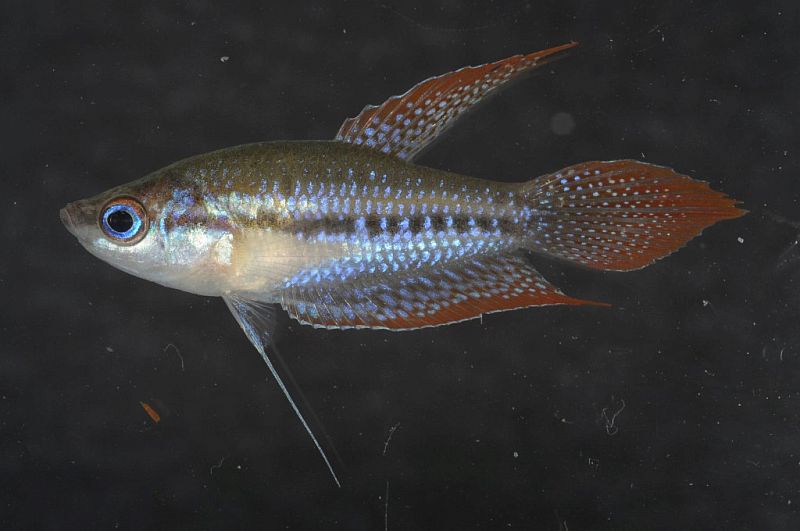
Trichopsis schalleri
Osphronemidae · Ladiges, 1962
Known from the lower Mekong River basin in Laos, Thailand, Cambodia, and Vietnam, plus tributaries of the Chao Phraya watershed in central Thailand, and drainages between the Chao Phraya and Mekong in eastern Thailand. Type locality is 'Nam-Mun at Korat, 135 miles northeast of Bangkok, Thailand'.
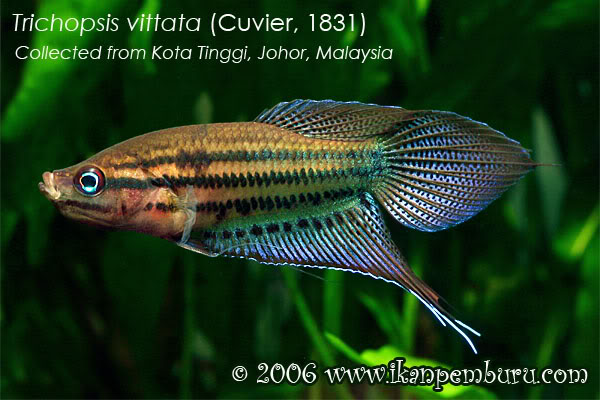
Trichopsis vittataCroaking gourami
Osphronemidae · Cuvier, in Cuvier & Valenciennes, 1831
The common name is derived from the ability of genus members to produce audible sounds via a specialised pectoral mechanism which is unique within the family Osphronemidae. The structure comprises modified pectoral-fin tendons and muscles which are stretched and plucked by basal elevations of two fin rays in a similar way to guitar strings via rapid beating of the fins. The pectoral-fins beat alternately, each able to generate short or long bursts of sound. These sounds are produced by both sexes, predom...
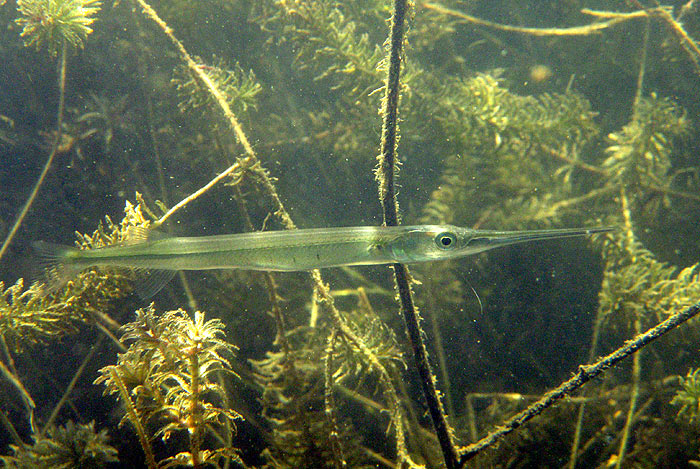
Xenentodon canciloides
Belonidae · Bleeker, 1854
This species is a near-exclusive inhabitant of the upper water column and appreciates surface cover in the form of floating or overhanging vegetation. Other décor is relatively unimportant but can consist of a sandy substrate with leaf litter plus some large driftwood branches and twisted roots. Plants which can grow rooted in sand can al...
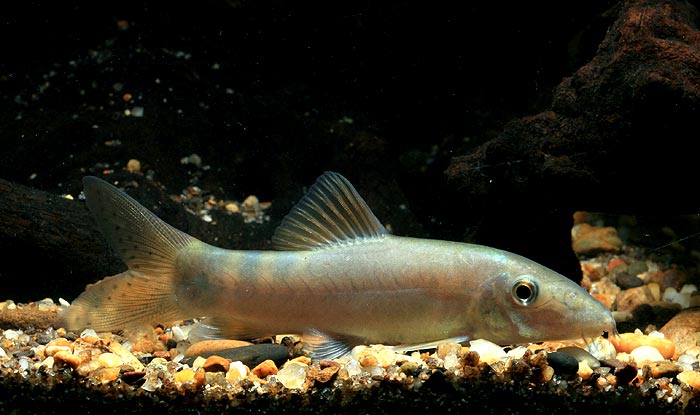
Yasuhikotakia caudipunctataSpeckle-tailed Loach
Botiidae · Taki & Doi, 1995
This specie is relatively rare in the aquarium trade and much sought after by enthusiasts as a result. It looks relatively similar to Y. splendida but can be told apart from it, and indeed all other members of the genus, by the following combination of characters: possession of 8 branched dorsal-fin rays; 32-33 vertebrae; one or two small, brownish, vertically-orientated markings on the dorsal part of the body posterior to the dorsal fi...
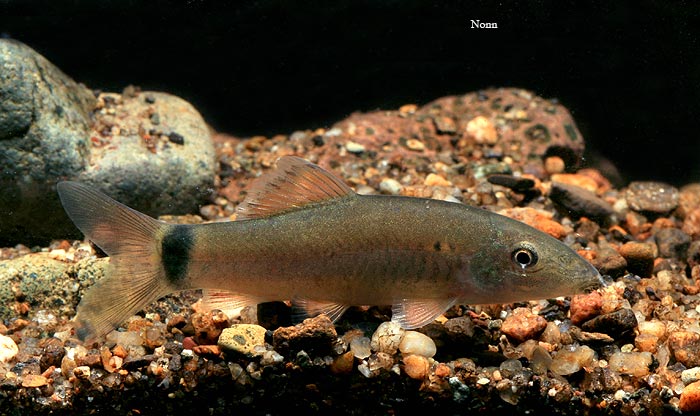
Yasuhikotakia eosSun Loach
Botiidae · Taki, 1972
Y. eos isn't as commonly-traded as it once was but is still available occasionally. It's difficult to confuse with any other member of the genus due to its colour pattern consisting of yellow to reddish brown base body colour (can appear greyish in some specimens, especially post-import or when introduced to a new aquarium) with a metallic green/blue golden sheen and large darkish marking on either side of the caudal peduncle. The fins can be yellowish to reddish, and the dorsal and c...
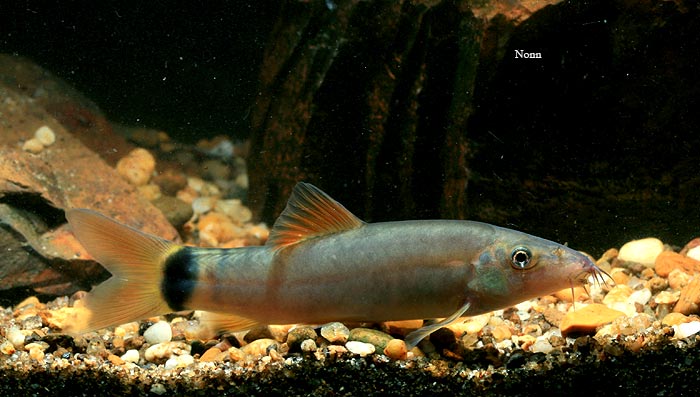
Yasuhikotakia leconteiSilver Loach
Botiidae · Fowler, 1937
This species is sometimes confused with Y. modesta though in reality the two are readily distinguishable from one another by body shape since Y. lecontei is a slimmer, more elongate fish. Further, in Y. lecontei the overall body colouration is usually brownish with a gold/green sheen and the dark markings...
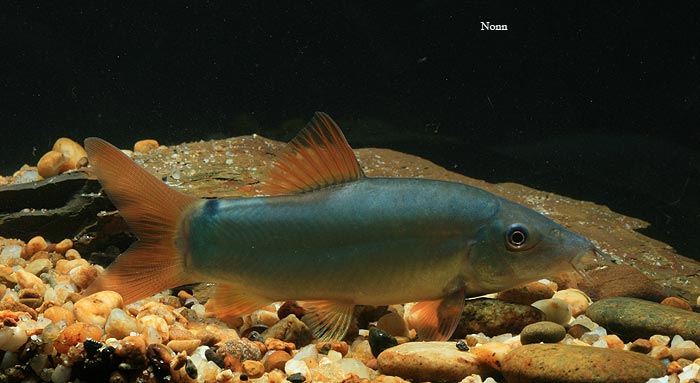
Yasuhikotakia modestaRedtail Loach
Botiidae · Bleeker, 1864
This species is one of the more commonly-encountered botiids in the hobby and is also sold as 'blue', 'orange-finned', or 'red-finned' botia/loach. It's sometimes subject to artificial colouring with bright blue or purple dyes and we strongly recommend you do not purchase such fish (they're illegal in several countries).
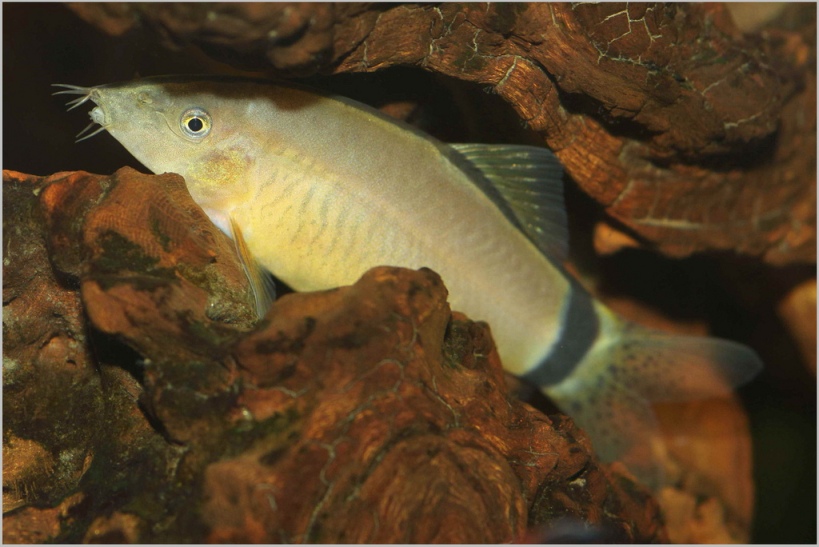
Yasuhikotakia morletiSkunk Loach
Botiidae · Tirant, 1855
This species is common in the hobby and also sold as 'skunk botia' or 'Hora's loach', the latter in reference to Botia horae Smith, 1931, currently considered a synonym of Y. morleti. It's similar in appearance to the rarely-seen Y. longidorsalis but can be told apart by the fact it has a dark stripe running over the dorsal surface (this giving rise to the vernacular name 'skunk loach') which is lacking in its relative. The two can be further separated...
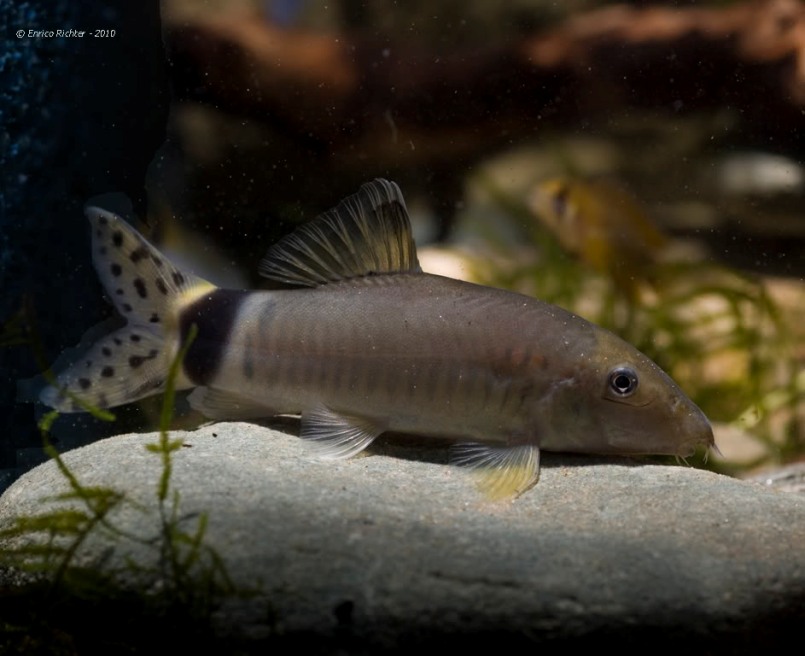
Yasuhikotakia splendida
Botiidae · Roberts, 1995
This species first appeared in the trade during 2009 with prices initially variable but in the main prohibitively expensive, and it remains expensive when available. We've seen it on sale under various names including 'jaguar loach', 'splendid loach' and 'yellow-tail polka dot loach'. It appears superficially similar to Y. caudipunctata, Y. longidorsalis and Y. morleti but can be distinguished from all by a combination of characters of which the most immedia...
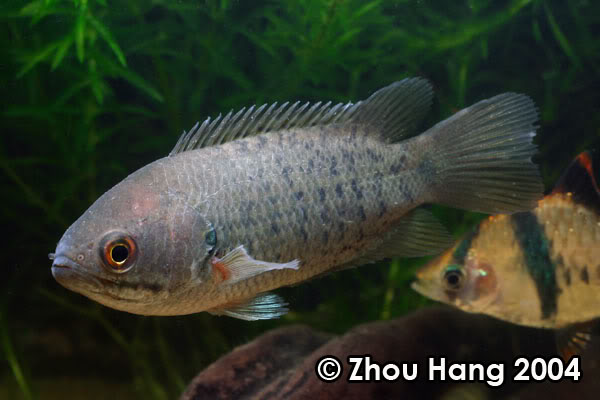
Anabas testudineusClimbing Perch
Anabantidae · Bloch, 1792
This species isn't especially popular in the aquarium trade but is undoubtedly interesting despite its lack of colour. In addition to its survival ability in the absence of water it's also capable of producing audible sounds though the purpose of these has not been fully-studied. Naturally-occurring xanthic and albino forms have also been recorded. There is considerable confusion as to the taxonomic status of the two species currently occupying this genus, with ichthyologists widely...
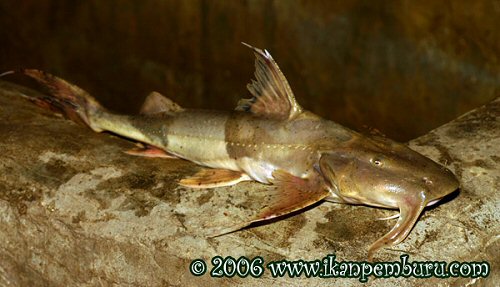
Bagarius rutilus
Sisoridae · Ng & Kottelat, 2000
Known from the from the Red River in northern Vietnam and Yunnan province, southern China, plus the Thái Bình, Sông Kỳ Cùng, Mã and Lam rivers in Vietnam and possibly the Nam Xam and Nam Ma drainages in Laos. Type locality is 'Market in Hanoi, Vietnam'.
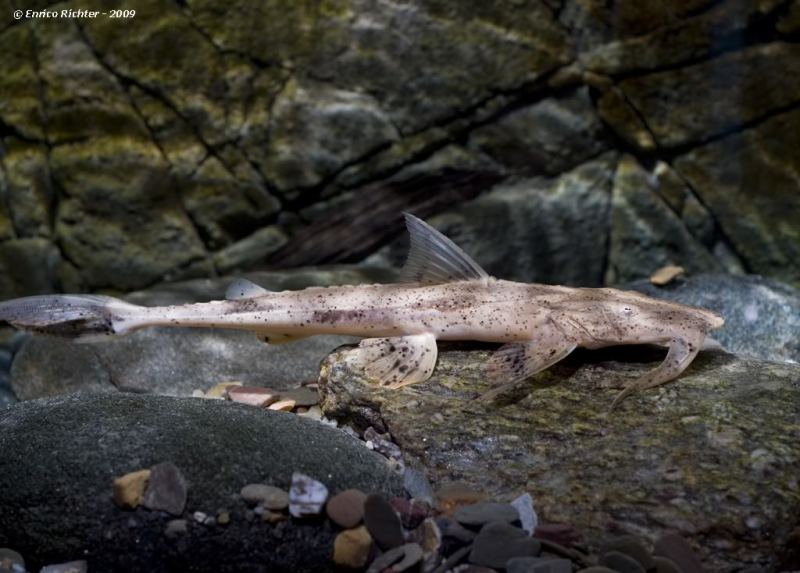
Bagarius suchusCrocodile Catfish
Sisoridae · Roberts, 1983
The genus Bagarius is distinguished from all other genera in the putative subfamily Sisoridae by having markedly heterodont teeth in the lower jaw. Teeth are present in two or three outer rows of relatively numerous, close-set conical teeth, and one or two inner rows of less numerous, widely separated, and much larger conical teeth (vs. dentition of the lower jaw consisting of only small conical teeth, or a roughened bony plate).
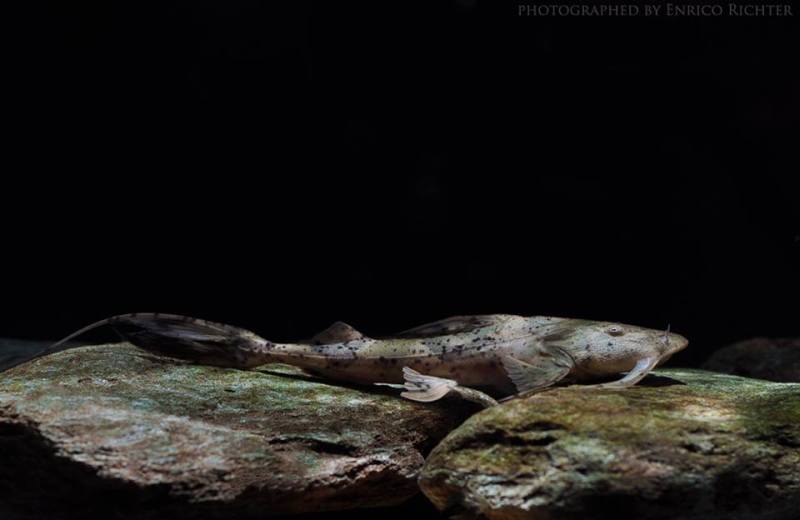
Bagarius yarrelliGoonch
Sisoridae · Sykes, 1839
This species is clearly unsuitable for the home aquarium given its eventual size and natural behaviour, and we know of only a handful of private aquarists with the facilities required to house it long-term. The grouping currently contains four species but is in urgent need of review with a number of additional taxa thought to exist and B. yarrelli possibly representing a synonym of B. bagarius.
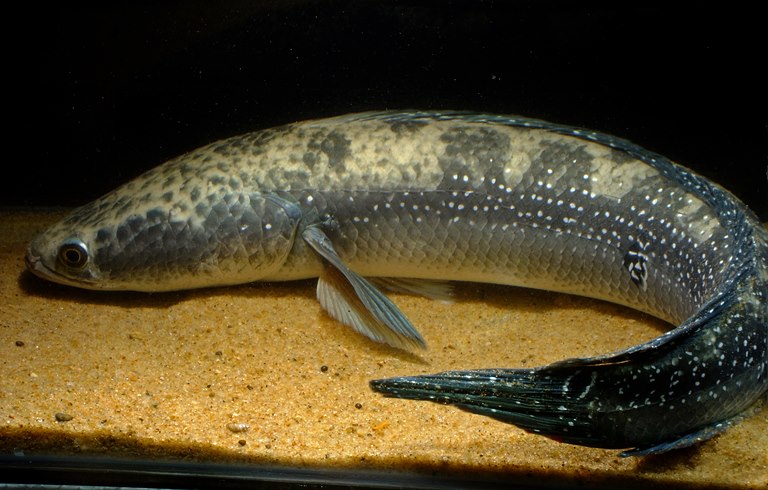
Channa maruliusBullseye Snakehead
Channidae · Hamilton, 1822
This species is also referred to as 'giant', 'great', 'cobra', or 'Indian' snakehead. Although currently-considered to be distributed throughout much of southern Asia it is widely-accepted to represent a complex of related species in need of additional research. A number of geographical variants exhibiting diffe...
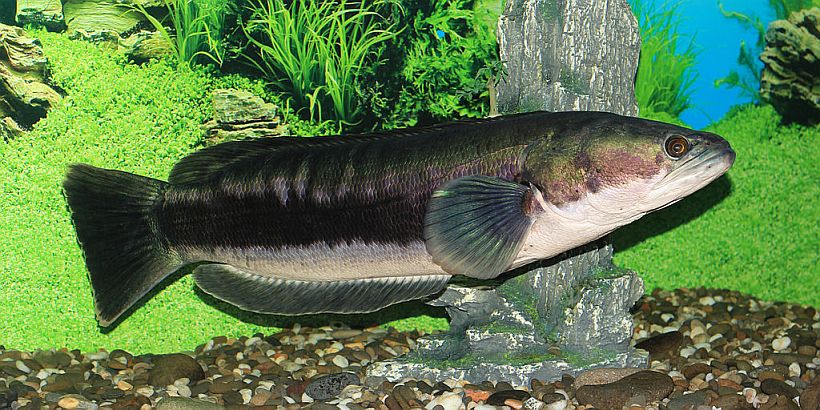
Channa micropeltesGiant Snakehead
Channidae · Cuvier, 1831
C. micropeltes is also referred to as 'Indonesian', 'red', or 'redline' snakehead, the latter names in reference to the appearance of juveniles which often appear in the ornamental trade despite its unsuitability for home aquaria. It is somewhat hyperbolised in the media as a fearsome, invasive "monster" fish with a reputation for killing more fish than it can eat, and even the occasional human, although in reality...
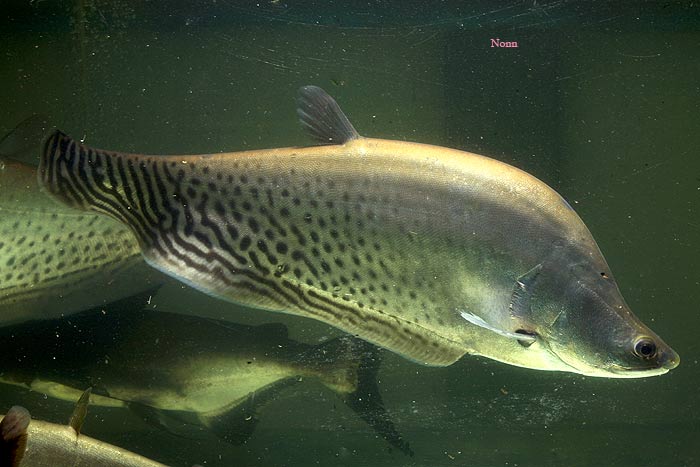
Chitala blanciRoyal Featherback
Notopteridae · d'Aubenton, 1965
This species is also referred to as 'royal knifefish' in the aquarium trade but arguably has no place in the ornamental hobby given its adult size and specialised requirements. It can be distinguished from congeners by presence of many small, dark spots on the anterior portion of the body which merge to form oblique, irregular stripes extending onto the anal and caudal fins posteriorly.
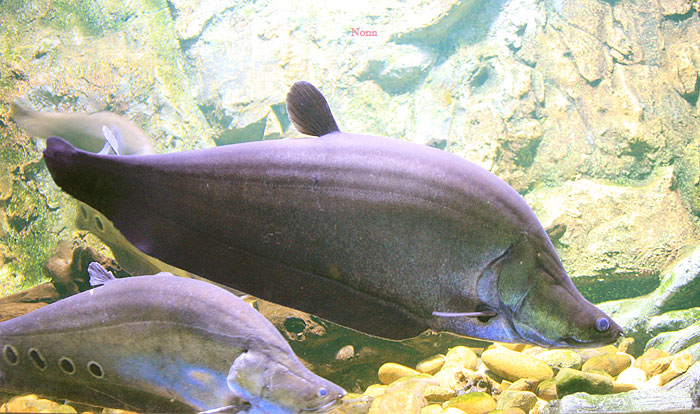
Chitala lopisGiant Featherback
Notopteridae · Bleeker, 1851
This species is not collected for the aquarium trade at time of writing. In contrast to other members of the genus older juvenile and adult individuals lack dark markings on the body while the jaw is more pronounced.
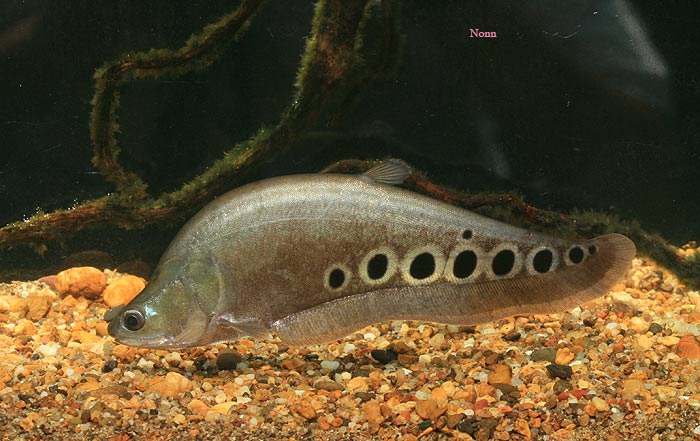
Chitala ornataClown Featherback
Notopteridae · Gray, 1831
This species is also referred to as 'clown knifefish' in the aquarium trade. It arguably has no place in the ornamental hobby given its adult size and specialised requirements but remains inexplicably popular and an albino form has even been line-bred for the purpose. It can be distinguished from all congeners by presence of one or more rows of large ocellated spots above the base of the anal-fin, but...
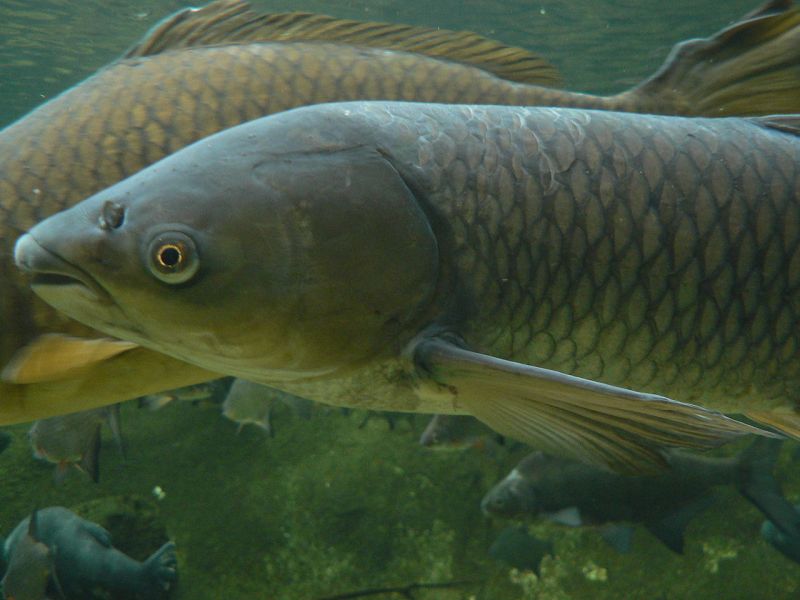
Ctenopharyngodon idellaGrass Carp
Cyprinidae · Valenciennes, 1844
Despite being a wholly unsuitable aquarium subject, C. idella is often traded as such, with an albino form having been developed specifically for the ornamental market. Individuals which have outgrown their aquarium or pond should never be released into natural waters, either, since this species has proven capable of causing serious environmental damage under a wide range of climatic conditions.
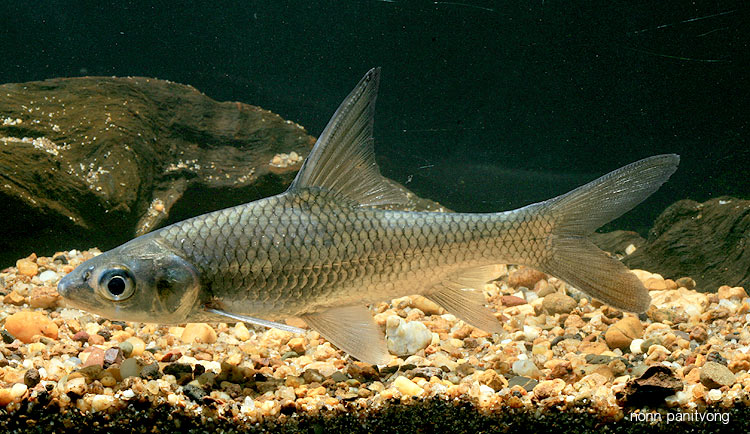
Cyclocheilos enoplos
Cyprinidae · Bleeker, 1849
In the Mekong, it has been observed to migrate upstream from Phnom Penh to Khone Falls between November and February, returning downstream between May and August. The downstream migration ends in the Mekong delta area in Vietnam, where the fish remain until the floods reach their peak in October and November. These lower Mekong migrations mostly comprise juveniles and sub-adults, whereas above Khone Falls...
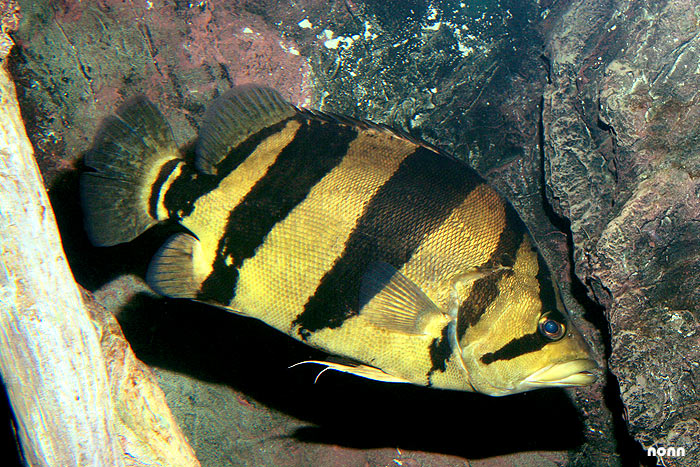
Datnioides pulcherSiamese Tiger Perch
Datnioididae · Kottelat, 1998
The massive decline in wild populations, hypothesised to be in excess of 90% since the mid-1980s, is thought to have been caused by a variety of factors, including habitat alteration due to construction of dams and other infrastructure, removal of riparian vegetation, and urban pollution, plus over fishing for both human consumption and the aquarium trade.
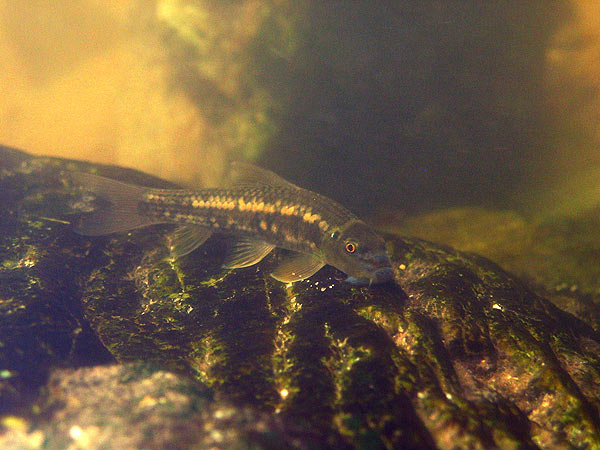
Garra fuliginosa
Cyprinidae · Fowler, 1934
Following Rainboth (1996) distinguishing characters for G. fuliginosa include: presence of rostral and maxillary barbels; a well-developed, trilobed rostrum; possession of 10 gill rakers on the lower portion of the first gill arch; no mid-lateral body stripe; 32-34 lateral line scales; body dark with random lighter scales in places. Kottelat (2001) states that the species can be told apart from other Garra occurring in Laos by a combination of: snout with a secondary rostrum, proboscis about twice as wide...
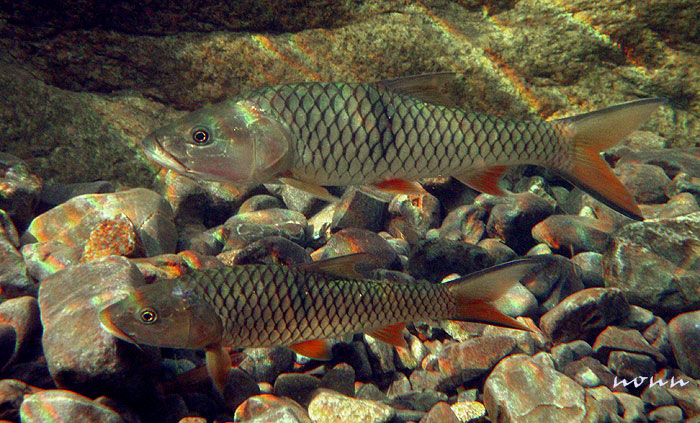
Hampala macrolepidotaHampala Barb
Cyprinidae · Kuhl & van Hasselt, 1823
This species is also known by the vernacular 'jungle perch' or 'sidebar barb' and should not be considered an aquarium subject in all but the most extreme circumstances since it can grow to over 2 feet in length, weigh in excess of 5 kg and is a powerful, pelagic predator. It's also a popular sport fish with a reputation for striking hard.
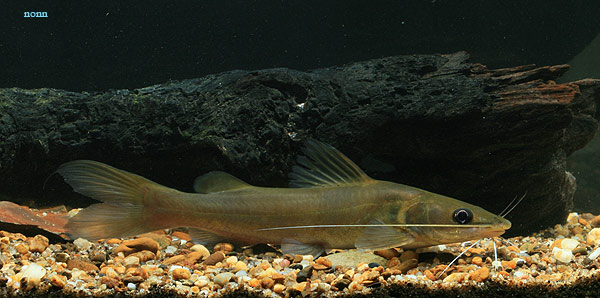
Hemibagrus spilopterus
Bagridae · Ng & Rainboth, 1999
This species is relatively common in the aquarium trade but has been widely misidentified as the congener H. nemurus which is native to Java and may never have been exported for ornamental purposes. Hemibagrus has been divided into a number of putative species groups which may or may not rep...
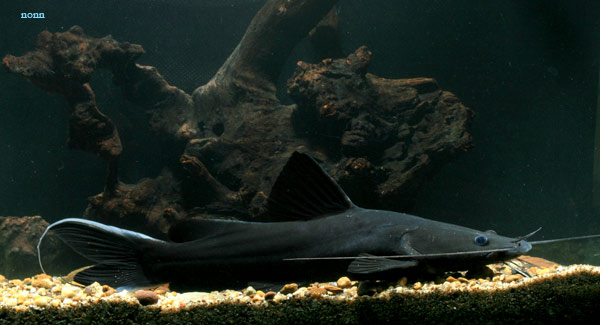
Hemibagrus wyckiiCrystal-eyed Catfish
Bagridae · Bleeker, 1858
Aggressively territorial and incompatible with other fishes in all but the largest public installations and even then may attack its tankmates. It's also one of few freshwater fishes that appear unafraid of humans meaning care must be exercised when performing maintenance.
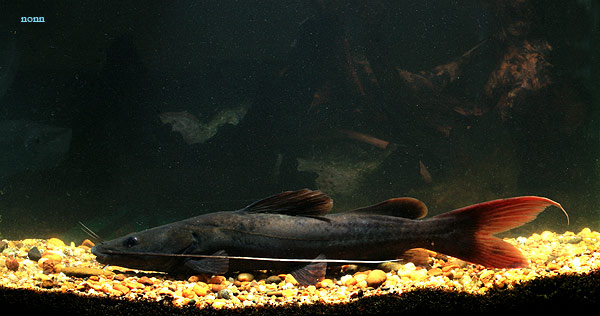
Hemibagrus wyckioidesAsian Red Tailed Catfish
Bagridae · Fang & Chaux, 1949
Juvenile specimens are sometimes available in the aquarium trade although their purchase is strongly discouraged, and this species probably shouldn't be considered a home aquarium subject at all given its eventual size plus the fact it can live for several decades. H. wyckioides can be told apart from mos...
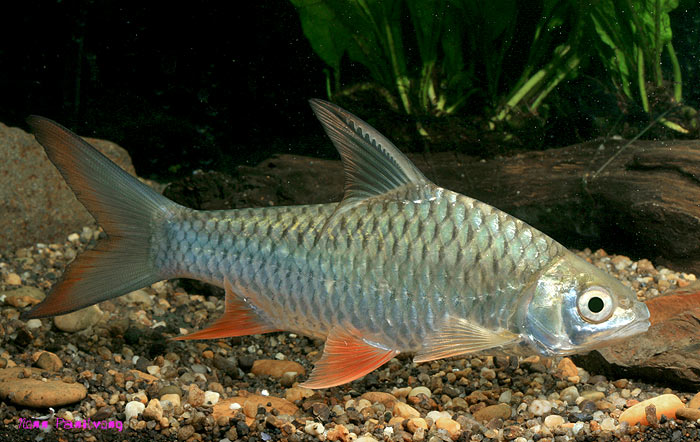
Hypsibarbus malcolmiGoldfin Tinfoil Barb
Cyprinidae · Smith, 1945
H. malcolmi is distinguished from congeners by the following combination of characters: 12-17 (usually 14-15) rakers on first gill arch; usually 16 circumpeduncular scale rows; less than 30 lateral line scales; some branched lateral line canals, but branching not extensive, median portion of dorsal-fin dark.
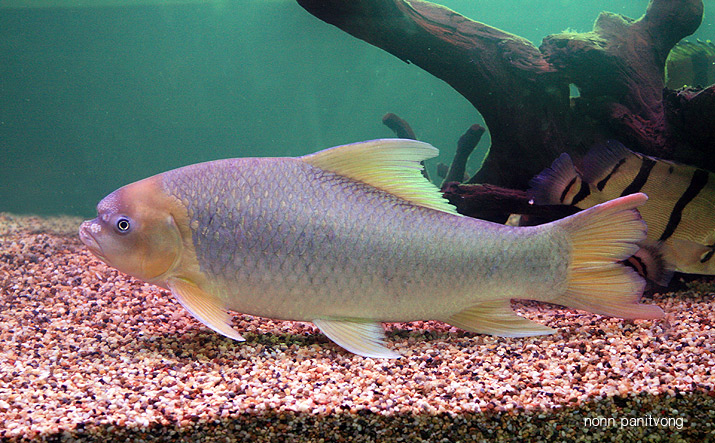
Incisilabeo behri
Cyprinidae · Fowler, 1937
The monotypic genus Incisilabeo is separated from the closely-related taxon Bangana by presence of a unique and conspicuous transverse notch across the top of the head, comparable in position to the ethmoid furrow in Bangana species. This notch approaches the eye, and the top of the head bulges forward, with the nostrils located partially beneath this projection and immediately anterior to the eyes. Tubercles cover the upper portion of the rostral fold, lower part of the notch, and upper surface of the forehead projection...
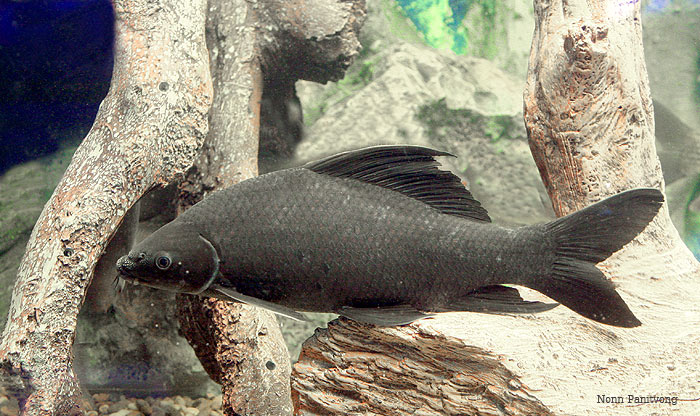
Labeo chrysophekadionBlack Shark
Cyprinidae · Bleeker, 1849
L. chrysophekadion is also known as 'black sharkminnow'. It continues to be available in the ornamental trade despite its patent unsuitability for the home aquarium, and an albino form has been selectively bred for the purpose. It can be distinguished from other members of the genus by the following combination...
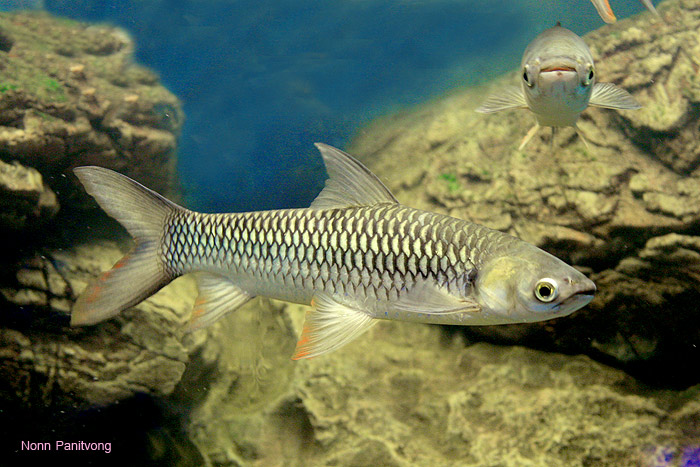
Leptobarbus rubripinnaRed-finned Cigar Shark
Cyprinidae · Fowler, 1937
This species was referred to as its congener Leptobarbus hoevenii for a number of decades and continues to be misidentified as such in the aquarium hobby, with both species traded under the same name. It is a popular sport fish in its native countries and is wholly unsuitable for private aquaria. Unfortunately it is...
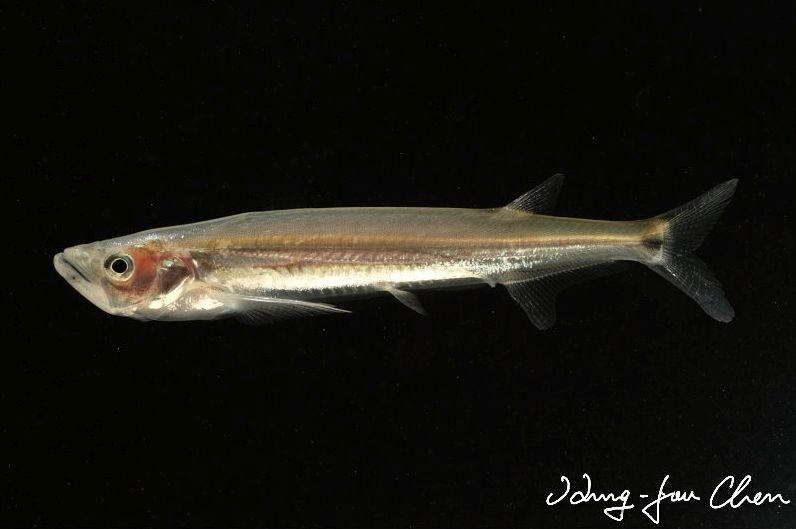
Macrochirichthys macrochirusGiant Sword Minnow
Cyprinidae · Valenciennes, 1844
It is thought to have been extirpated from the Chao Phraya and Mae Klong rivers, Lake Songkhla, and the entire island of Java due to a variety of anthropogenic factors, and the Mekong populations have also been drastically reduced. In particular, it is sensitive to pollution and gillnetting, and is heavily overfished.
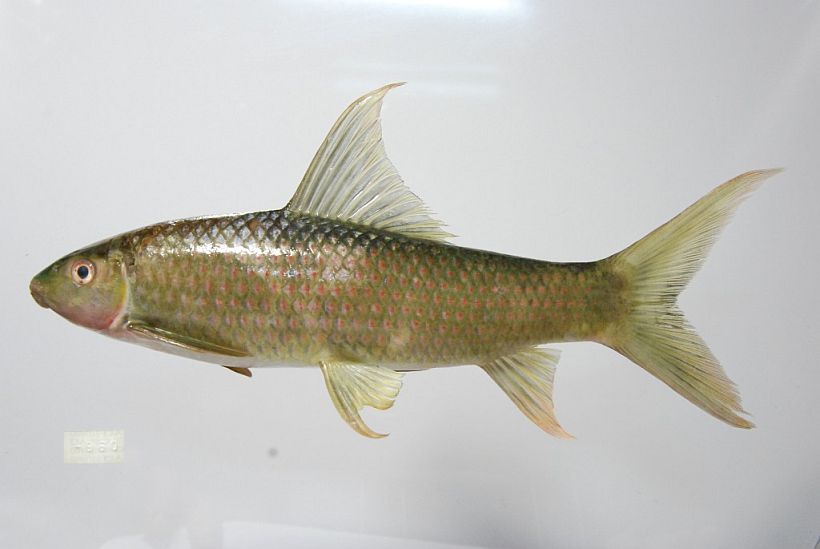
Mekongina erythrospila
Cyprinidae · Fowler, 1937
Endemic to the middle and lower Mekong River system in Laos, Thailand, Cambodia, and Vietnam. Its known range extends from Chiang Rai province, Thailand in the north to Kratie province, Cambodia in the south, and it occurs in several important tributary systems including the Sesan, Srepok, and Tonlé Sap. Type locality is 'Mekong River at Kemarat, Thailand'.
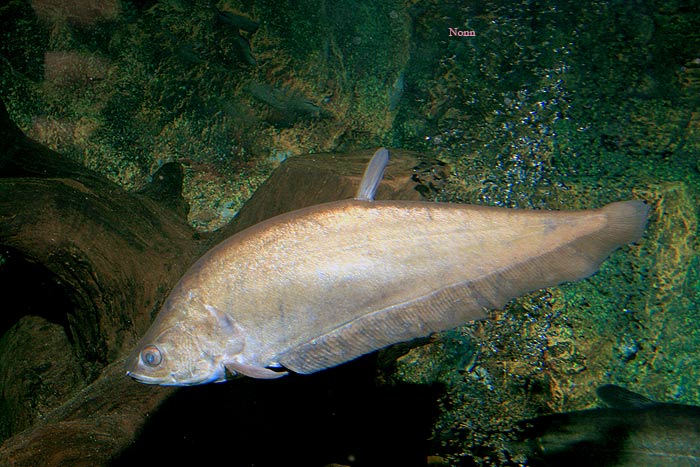
Notopterus notopterusBronze Featherback
Notopteridae · Pallas, 1769
This species is also referred to as 'Asian knifefish' or 'ghost knifefish' in the aquarium trade in the aquarium trade but arguably has no place in the ornamental hobby given its adult size and specialised requirements. It is sometimes confused with the African species Xenomystus nigri but is easily told apart by its larger adult size and presence (vs. absence) of a dorsal fin.
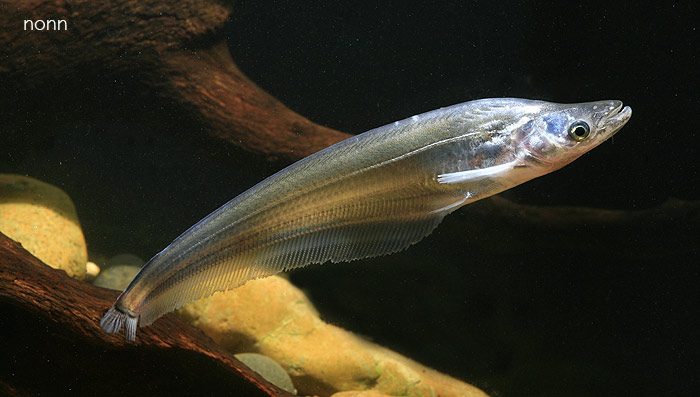
Phalacronotus apogon
Siluridae · Bleeker, 1851
P. apogon has formerly been placed within the genera Kryptopterus, Micronema (Rainboth, 1996) and more recently Phalacronotus (Ferraris, 2007) and is an important food fish across much of its native range. It's very similar to P. micronema but can be told apart by its longer head (HL fits 4.6± 5.3 times in...
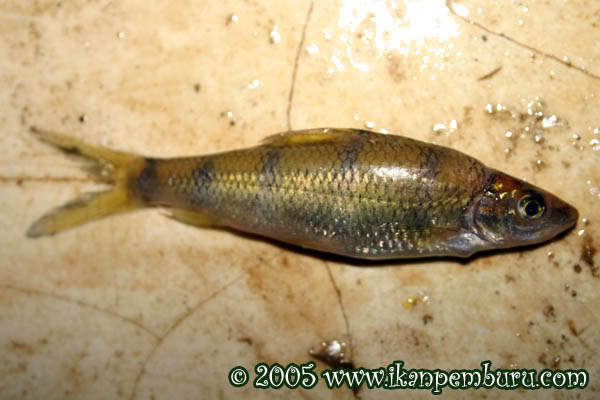
Acrossocheilus iridescens
Cyprinidae · Nichols & Pope, 1927
A. iridescens and its closest relative A. longipinnis can be distinguished from all other barred species of Acrossocheilus by the following characters: wider (vs. narrower) black vertical bars on the flank in adults, each five to eight (vs. no more than four) scales in width; a horse-shoe shaped (vs. arched) mouth gape; rostral barbel located posteriorly (vs. anteriorly) to a horizontal line through the anteriormost margin of the lower jaw; two postlabial grooves extending anteromedially beyond (vs. away from) a horizontal line through the roots of the rostral barbels.
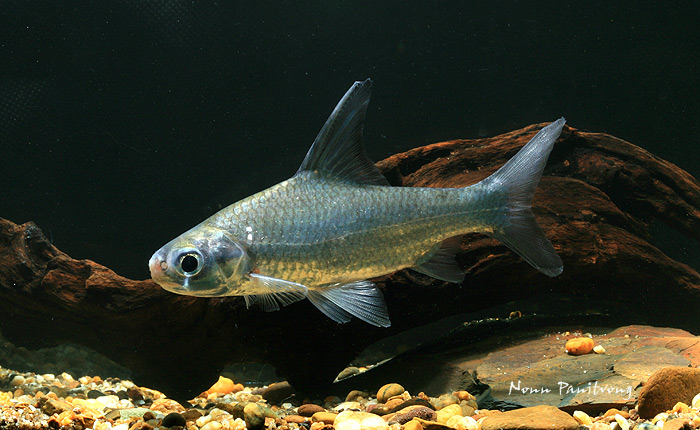
Amblyrhynchichthys micracanthus
Cyprinidae · Ng & Kottelat, 2004
Native to the Mekong River drainage in Laos (where Vientiane province represents the upper limit of its range), Thailand, Cambodia, and Vietnam, and the Tapi, Chao Phraya, and Mae Klong systems in Thailand. Type locality is '22 kilometers upstream from Phnom Penh, Tonle Sap River, Kandal Province, Cambodia'.
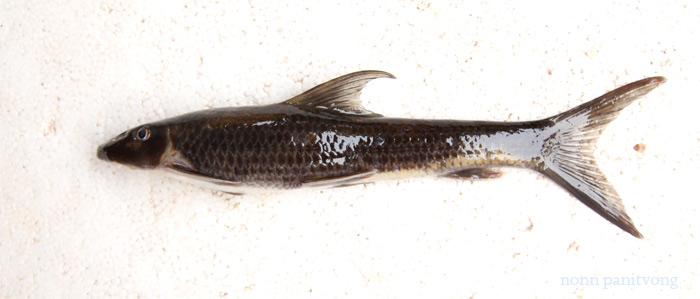
Garra theunensis
Cyprinidae · Kottelat, 1998
This species can be distinguished from congeners in Southeast Asia and China by the following combination of characters: plain brown body and fins, sometimes with 6-8 narrow, faintly distinct, longitudinal stripes; snout triangular in dorsal view, with small tubercules and without transverse groove...
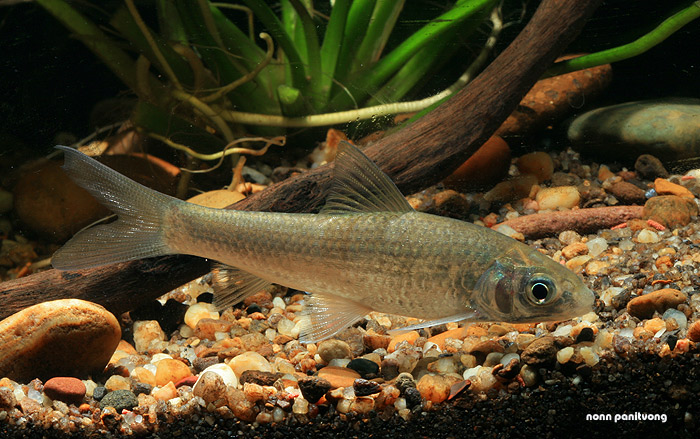
Gymnostomus lineatus
Cyprinidae · Smith, 1945
Recorded from the middle to lower Mekong river basin in southern China (Yiunnan province), Laos, Thailand, and Cambodia, plus the Chao Phraya watershed in central Thailand. Type locality is 'Thailand: Lam Ton Lang, a tributary of Menam Sak [Mae Nam Pa Sak; Ban Lam Thong Lang, village northwest of Pakjong'.
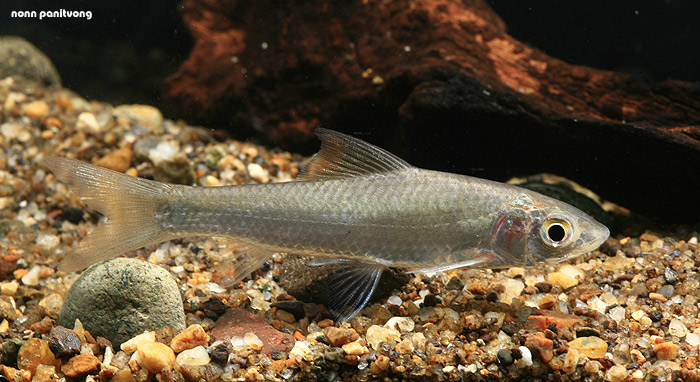
Gymnostomus lobatus
Cyprinidae · Smith, 1945
G. lobatus can be distinguished from congeners by the following combination of characters: possession of 32-33 + 2-3 lateral line scales; 5½ scale rows between lateral line and base of dorsal-fin; body relatively slender, depth fits 3.7-4.0 times in SL; snout often projecting strongly; body plain silver in colour.
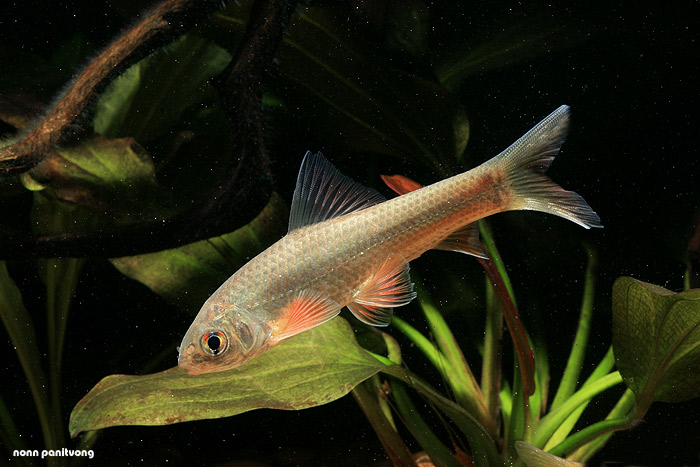
Gymnostomus ornatapinnis
Cyprinidae · Roberts, 1997
G. ornatapinnis can be distinguished from congeners by the following combination of characters: head small; snout relatively short and blunt; caudal peduncle very deep; pectoral, pelvic, and anal fins usually reddish-orange or rose-tinted; pelvic and anal fins often with white tips; barbels completely absent.
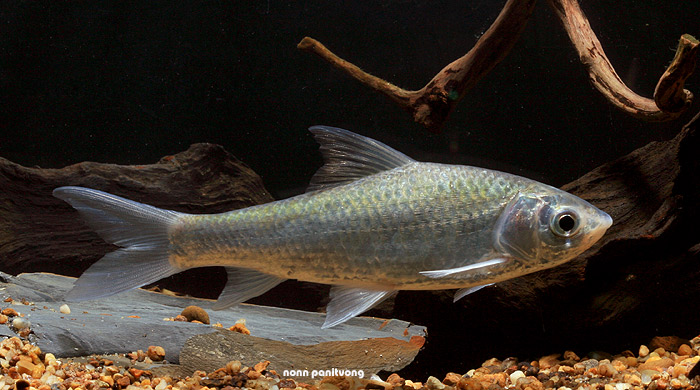
Gymnostomus siamensisSiamese Mud Carp
Cyprinidae · Sauvage, 1881
G. siamensis can be distinguished from congeners by the following combination of characters: possession of 5½ lateral line scales; body relatively deep, depth fits 3.2-3.4 times in SL; head large and broad, width fits 5.5-6.7 times in SL; snout not or only weakly projecting; body plain silver in colour with no dark marking on caudal peduncle.
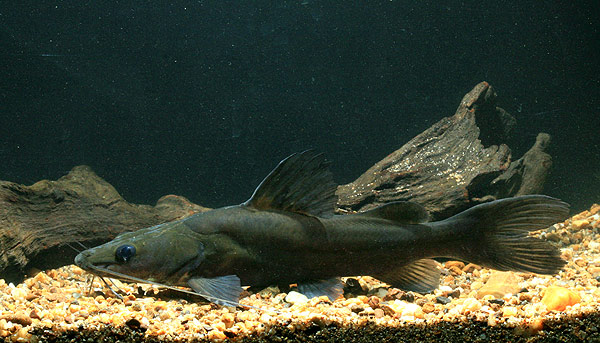
Hemibagrus filamentus
Bagridae · Fang & Chaux, 1949
This species appears to be unknown in the aquarium trade but is a valued food fish within its native range. Hemibagrus has been divided into a number of putative species groups which may or may not represent monophyletic assemblages, and following a major review by Ng and Kottelat (2013) H. filamentus is included in the H. nemurus group.
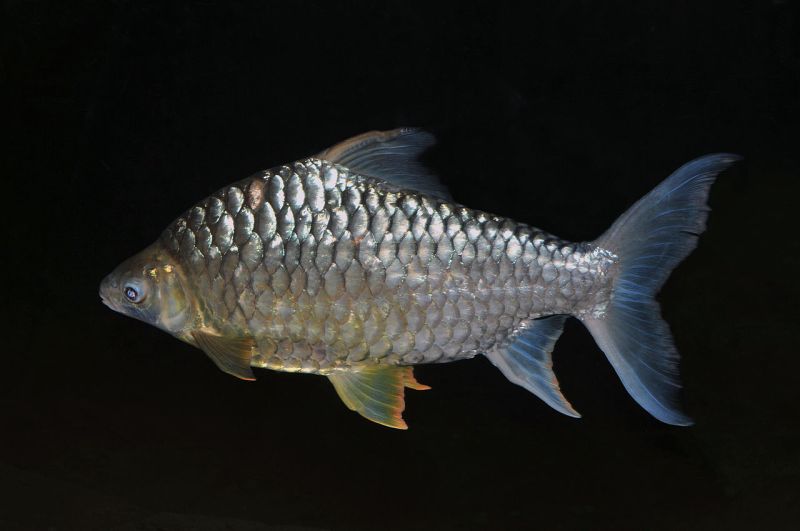
Hypsibarbus pierreiYellow Eyed Silver Barb
Cyprinidae · Sauvage, 1880
Known from the middle and lower Mekong basins in Laos, Thailand, Cambodia, and Vietnam, plus the Dong Nai drainage in central Vietnam. Type locality is 'Rapids of Dang-nai, Bien Hoa Province, Thailand', which corresponds to what is now the city of Biên Hòa in Đồng Nai province, southern Vietnam.
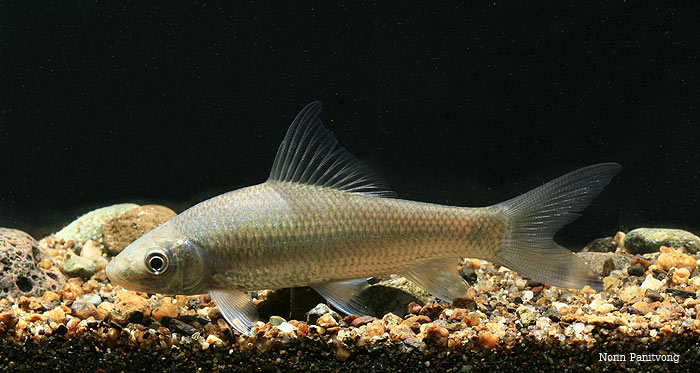
Labeo pierrei
Cyprinidae · Sauvage, 1880
This species can be distinguished by the following characters: juveniles with brown body and dark marking at base of caudal-fin; 37-42 + 3-4 lateral line scales; 11½ branched dorsal-fin rays; 7½ scale rows between lateral line and dorsal-fin origin; 20-25 predorsal scales; dorsal-fin relatively small with anterior branched rays shorter than head in juveniles, slightly longer than head in adults.
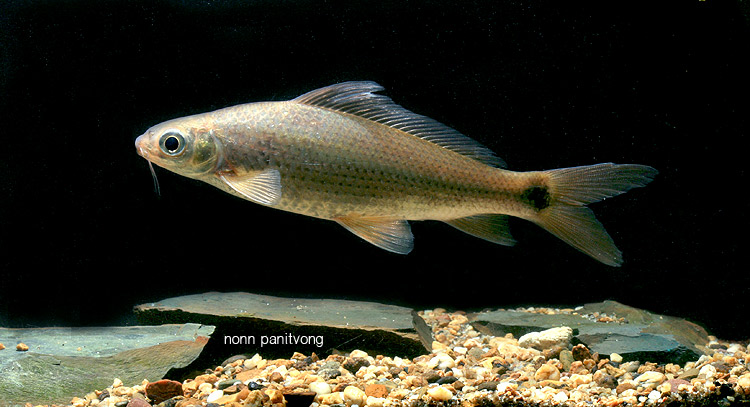
Labiobarbus siamensis
Cyprinidae · Sauvage, 1881
L. siamensis can be distinguished from congeners by the following combination of characters: 39-42 scales in the lateral series; shoulder spot usually absent, but sometimes well-defined; body with longitudinal stripes formed by a spot on each scale; dorsal fin with dusky median stripe and no red coloration; caudal fin dusky, sometimes with reddish coloration, but no well-defined stripes; 20-23 circumpeduncular scales...
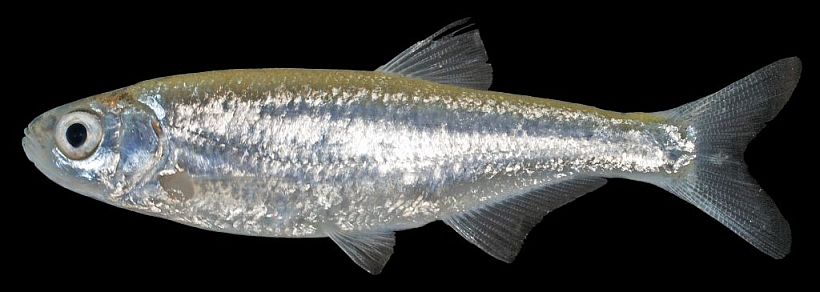
Metzia bounthobi
Cyprinidae · Shibukawa, Phousavanh, Phongsa & Iwata, 2012
This species can be distinguished from congeners by the following combination of characters: 18–20 (vs. 10-18) branched anal-fin rays; 49–55 (vs. 35-48) lateral-line scale rows; 33–36 (vs. 15-20) predorsal sca...
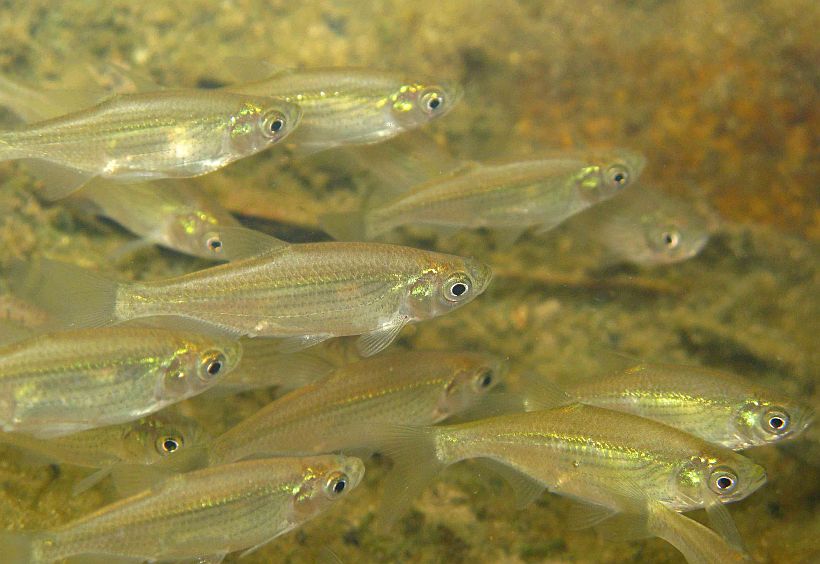
Metzia lineata
Cyprinidae · Pellegrin, 1907
Populations from the upper Pearl River (Nanpan Jiang basin) differ in several morphological characters from those inhabiting Guangdong, Guangxi, and Guizhou Provinces, and Hainan Island. Those from Vietnam also seem to be different (Gan et al., 2009), the implication being that there may be several species currently included under the name M. lineata.
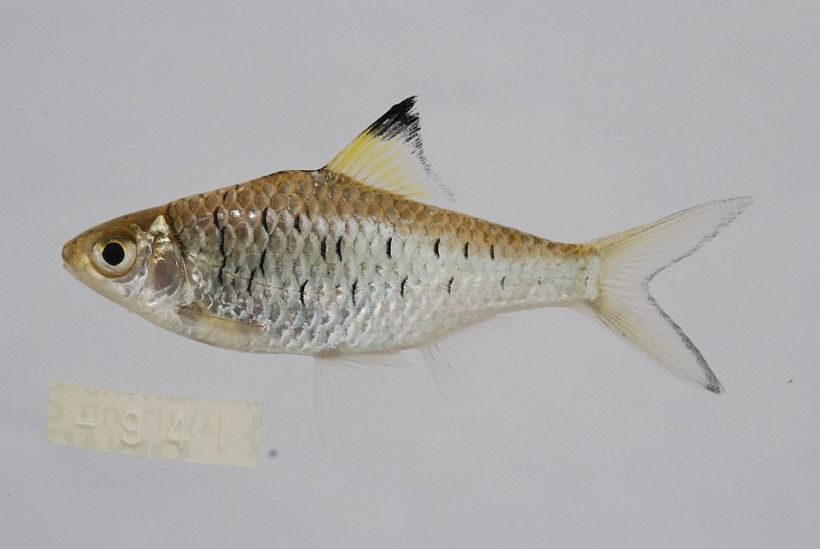
Mystacoleucus atridorsalis
Cyprinidae · Fowler, 1937
This species can be distinguished from congeners by the following combination of characters: body depth fits 2.5-2.7 times in SL; 28-31 +2-3 lateral line scales; 14-16 circumpeduncular scale rows; 5-5½ scale rows between the lateral line and dorsal-fin origin; a triangular distal blotch on the dorsal-fin; a few body scales with crescent-shaped black edges; a thin dark margin on the dorsal-fin, posterior to the distal blotch; a dark posterior margin on the caudal-fin; normally a single pair of rudimentary barbels present.
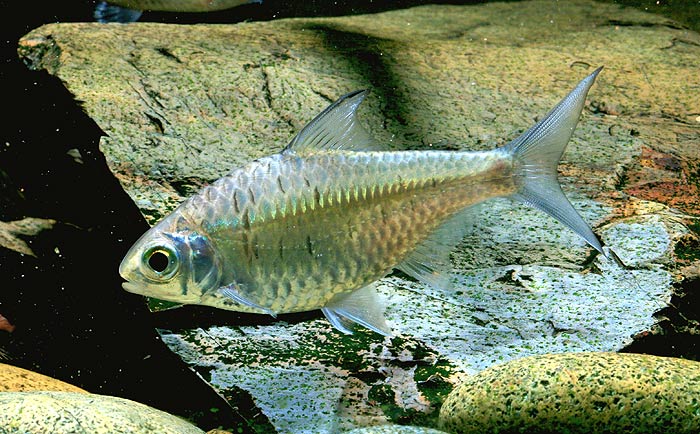
Mystacoleucus chilopterus
Cyprinidae · Fowler, 1935
Known from the middle Mekong basin in Laos and Thailand, including the Mun tributary drainage on the Khorat Plateau in northeastern Thailand, plus the Chao Phraya and Mae Klong watersheds in central and western Thailand, respectively. In the Mekong system it may also occur further upriver in Yunnan province, China, while the Khone Falls in Laos appear to represent its downstream limit.
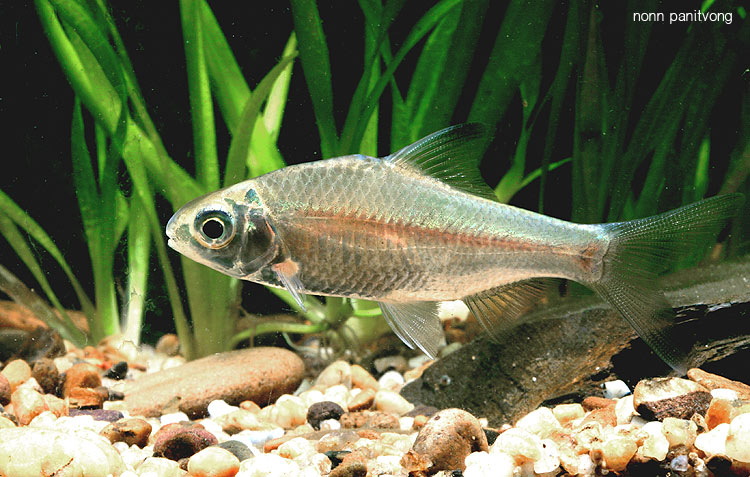
Mystacoleucus ectypus
Cyprinidae · Kottelat, 2000
Known from the middle Mekong basin in Laos and Thailand, and may be endemic to the Khorat Plateau. Records exist from the Mun and Songkhram watersheds in northeastern Thailand, and a number of Mekong tributaries in laos, including the Nam Mang and Nam Kou drainages. Type locality is 'Nam Mang downstream of Ban Thabok, between 18°22'25"N, 103°13'30"E, and about 1 kilometer upstream, Vientiane Province, Laos'.
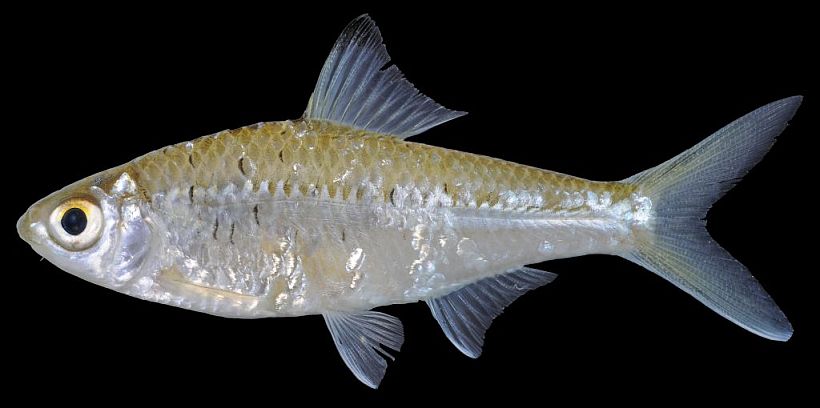
Mystacoleucus lepturus
Cyprinidae · Huang, 1979
This species can be distinguished from congeners by the following combination of characters: body relatively slender, depth fitting 3.4-3.8 times in SL; 32-33 + 2 lateral line scales; 14 circumpeduncular scale rows; presence of a single pair of barbels; black distal margin on dorsal-fin; numerous body scales with dark, crescent-shaped markings.
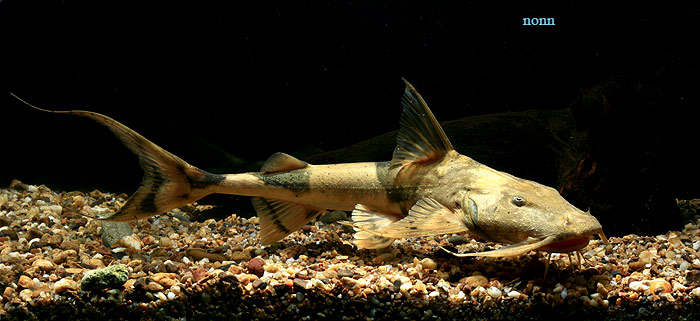
Bagarius bagarius
Sisoridae · Hamilton, 1822
There is considerable confusion surrounding the identity of B. bagarius with its name having been widely applied to a relatively small species that is said to reach only 200 mm SL and considered to be common in northern India and much of Indochina.