River
Lake Indawgyi
8 profiles across 6 families name the Lake Indawgyi as a locality.
- Species
- 8
- Families
- 6
- Photographed
- 8 of 8
- Difficulty rated
- 8 of 8
Shares fishes withspecies recorded from both
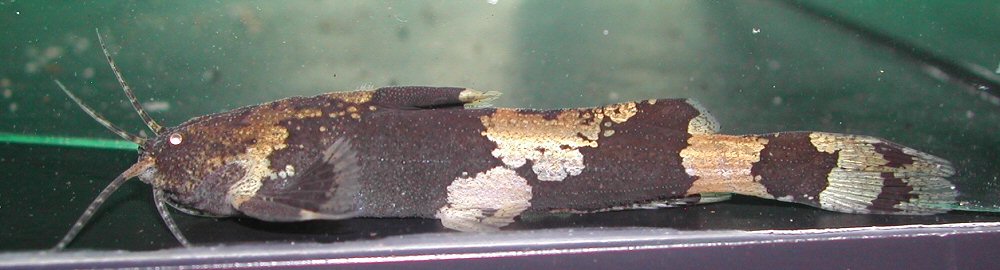
Akysis prashadiIndawgyi Stream Catfish
Akysidae · Hora, 1936
This species is among the few members of the family to be exported for the aquarium hobby though is by no means common. It can be differentiated from a...
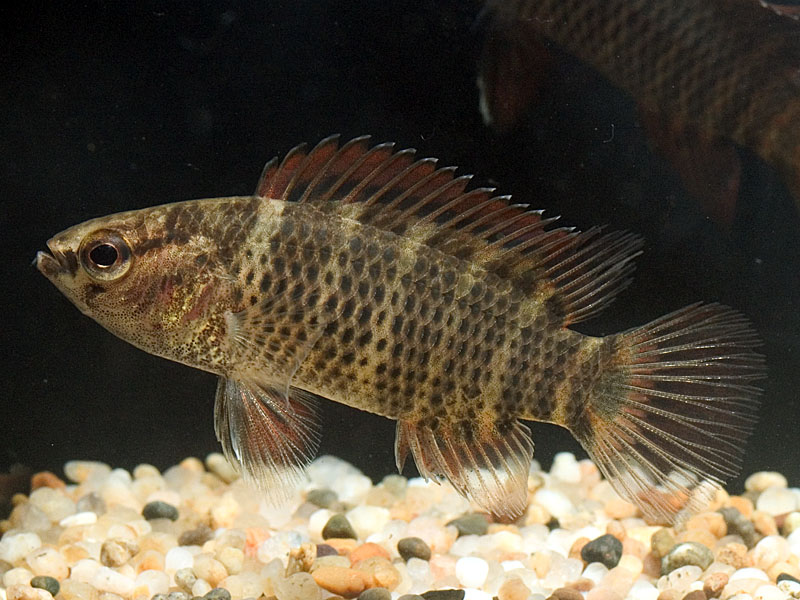
Badis corycaeus
Badidae · Kullander & Britz, 2002
Like most badids this species is poorly documented and has yet to find significant popularity in the aquarium hobby. Within the genus it is most closely-related to B. pyema but the two are unlikely to be confused as B. corycaeus is much the deeper, darker-bodied fish. Prior to 2002 the family Badidae included just five species of which only B. badis and, to a lesser extent, Badis dario (referred to as B. bengalensis by some sources) were popular in the aquarium hobby. However an extensive rev...
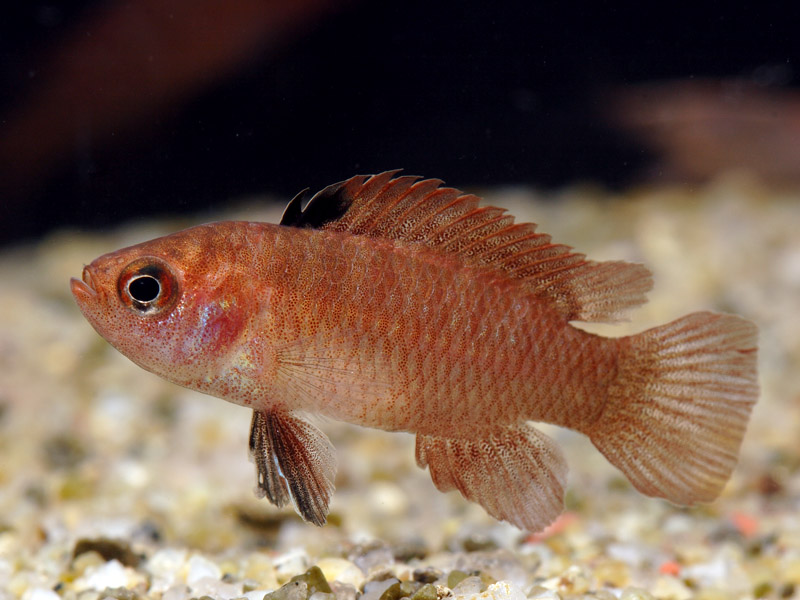
Dario hysginon
Badidae · Kullander & Britz, 2002
This species is traded under various names such as 'red melon Dario' or 'flame red Dario'. Among congeners D. dayingensis is most similar since it differs only in a few meristic counts and by its slightly larger adult size. D. hysginon can be told apart by possessing 22-24, usually 23, lateral scales (vs. 24-25 in D. dayingensis), 8½ (vs. 9½) scales in the transverse scale row, a...
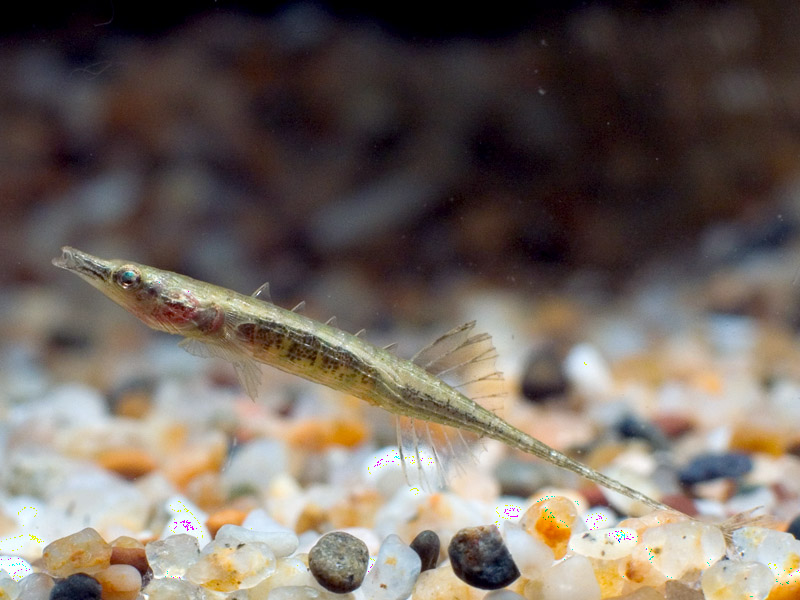
Indostomus paradoxusArmoured Stickleback
Indostomidae · Prashad & Mukerji, 1929
This species is rare in the aquarium hobby though its name is often misapplied to the closely-related I. crocodilus. It can be told apart from congeners by the following characters: dorsal and anal fins without dark markings, with a light brown bar in breeding males; ventral surface light brown; throat white, occasionally with a few brown spots; ridges of head bones weakly serrated or not serrated, depending on the bone. The family Indostomidae currently contains just a single genus with three species of which I. paradoxus is the type. It was raised alongside both family...
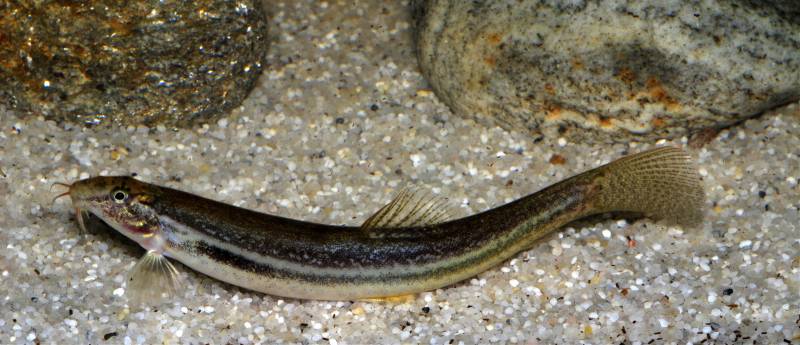
Lepidocephalichthys guntea
Cobitidae · Hamilton, 1822
This is one of the most frequently-traded members of the group and is an excellent choice for those new to keeping loaches. It's distinguishable from congeners by a combination of characters including: rounded/truncate caudal-fin; a scaleless patch on top of the head; relatively large adult size; flanks with spotted patterning in females and a solid...
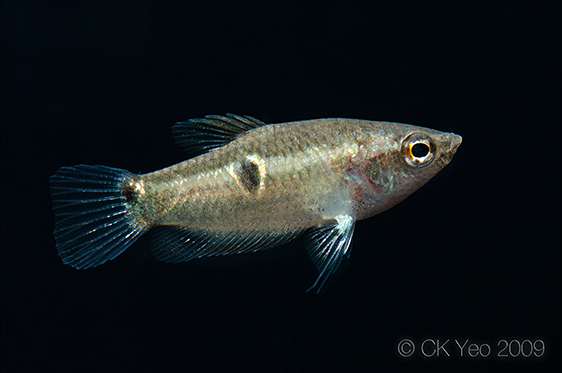
Parasphaerichthys ocellatusEyespot Gourami
Osphronemidae · Prashad & Mukerji, 1929
To date the species is known mostly from the upper Ayeyarwady River basin in northern Myanmar where it's been collected close to the city of Myitkyina in Kachin State as well as around nearby Lake Indawgyi, the largest inland lake in Southeast Asia and home to ten globally threatened bird species. The lake and surrounding area were designated a protected zone by the Ministry of Ecotourism in 1999 and now form the Indawgyi Lake Wildlife Sanc...
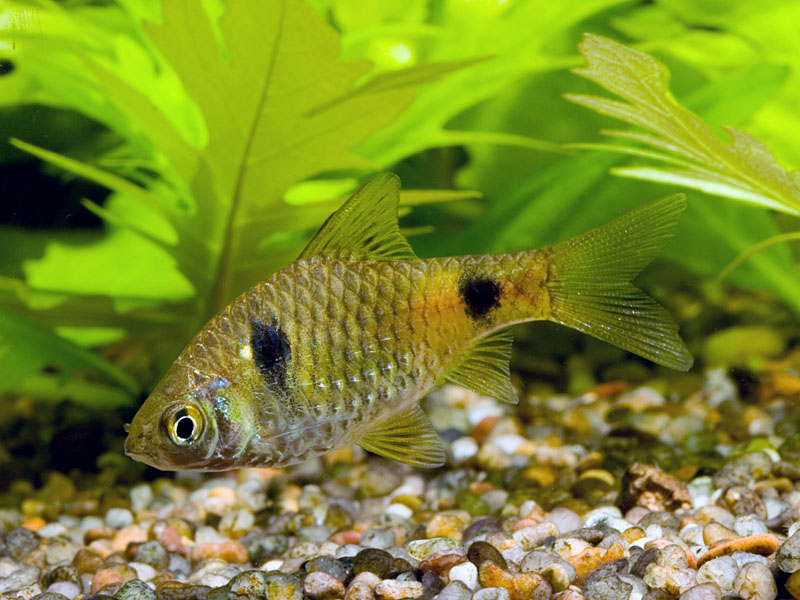
Pethia didi
Cyprinidae · Kullander & Fang, 2005
The type locality is a stream with a mixed substrate of mud and stones which flows swiftly through an area of bamboo forest so is quite well-shaded. At time of collection the water was clear but slightly tannin-stained and sympatric species included Pethia thelys, Puntius sophore, Devario strigillifer, Rasbora daniconius, R. rasbora, Acanthocobitis botia, Notopterus notopterus, plus unidentified species of Oreichthys, Parambassis, Xenentodon, and Mastacembelus.
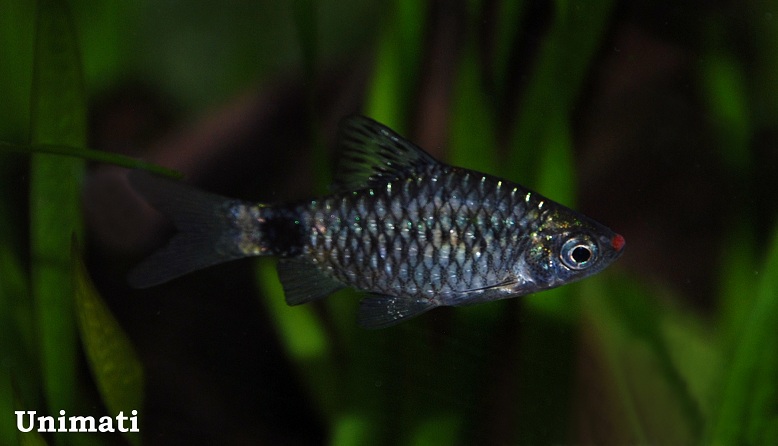
Pethia erythromycterLipstick Barb
Cyprinidae · Kullander, 2008
This species first appeared in the aquarium hobby in 2006 and is sometimes traded under the name 'Tulip barb'. It was officially described by Kullander in early 2008 in a paper describing five new Puntius species from Kachin, all of which are superficially similar in possession of a dark band or blotch on the caudal peduncle. P. erythromycter can be distinguished b...