River
Salween
57 profiles across 15 families name the Salween as a locality.
- Species
- 57
- Families
- 15
- Photographed
- 57 of 57
- Difficulty rated
- 56 of 57
Basin
Shares fishes withspecies recorded from both
Runs through
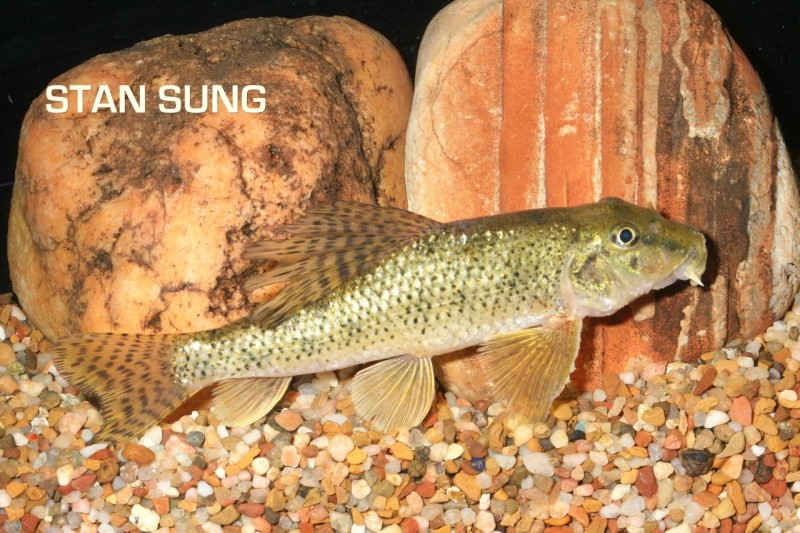
Abbottina rivularisChinese False Gudgeon
Cyprinidae · Basilewsky, 1855
Native to continental China, the Korean peninsula, and southern Japan. Type locality is given only as 'Lakes and rivers, northern China', with the type series possibly originating from the Pai-ho River near Beijing. It has been widely introduced and is considered invasive elsewhere, including the Mekong river basin (records from Laos and Thailand), Salween river (Myanmar), northern Japan, Taiwan, Turkmeni...
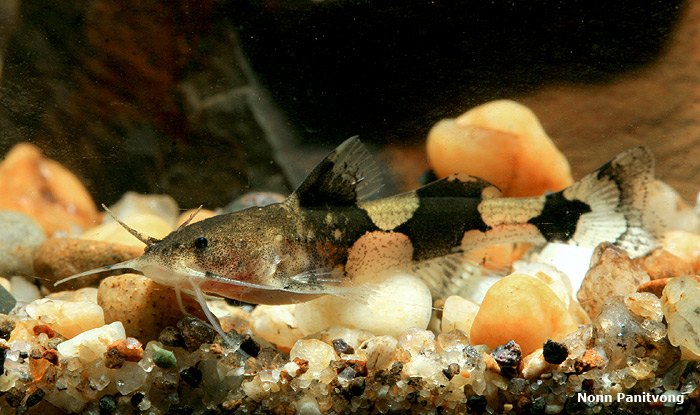
Akysis vespaOrange-Banded Stream Catfish
Akysidae · Ng & Kottelat, 2004
This species is among the few members of the family to be exported for the aquarium hobby and we've also seen it on sale under various names such as 'orange-banded stone catfish', 'orange micro bumblebee catfish', 'Burmese orange mini bee catfish' or more simply 'wasp catfish'. Though the majority of forms are yellowish to orange in colouration there appears to exist a bright red variant which to date we've only seen in photos.
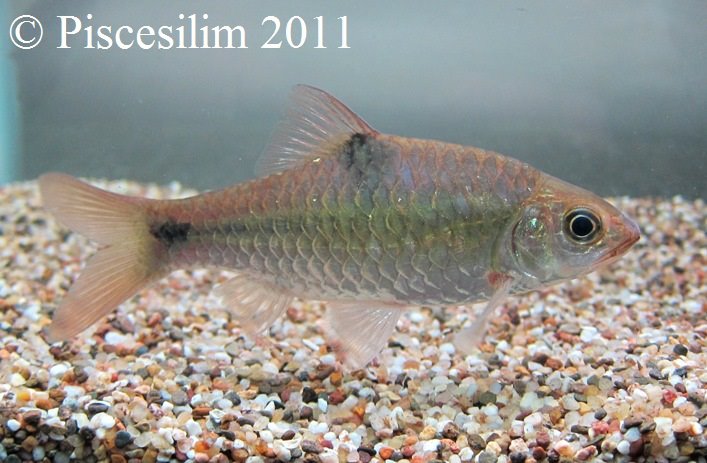
Barbodes binotatusSpotted Barb
Cyprinidae · Valenciennes, 1842
This species is so ubiquitous across its natural range that it's often referred to simply as 'common barb'. Basic adult colour pattern consists of a small, dark spot at the base of the dorsal-fin origin and another on the caudal peduncle but overall appearance varies somewhat depending on origin, with the anterior dark spot enlarged ventrally forming a bar or posterior spot extending into the caudal-fin, for example. The spots may also appear darker or lighter in some individuals.
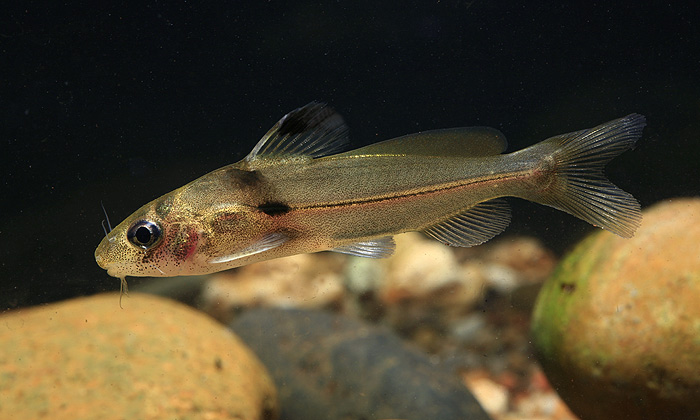
Batasio feruminatus
Bagridae · Ng & Kottelat, 2008
Batasio spp. are obligate inhabitants of headwater streams and the upper reaches of smaller rivers characterised by shallow, fast-flowing, highly-oxygenated stretches of riffles and runs broken up by pools or cascades in some cases. Images of the Ataran correspondingly depict flowing sections of forest-shaded, seemingly well-oxygenated headwaters containing clear water, a mixed sand/rock substrate and lots of submerged driftwood/leaf litter.
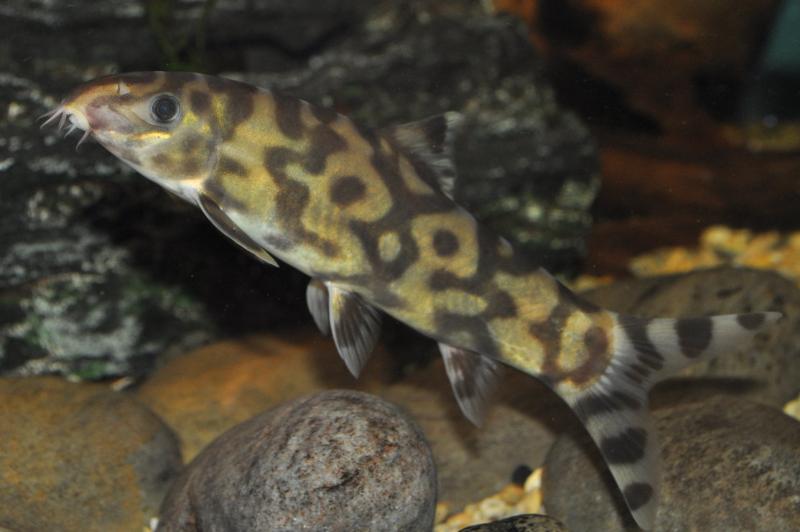
Botia histrionica
Botiidae · Blyth, 1860
Adult patterning of the different geographical forms can vary considerably though young specimens all possess 5 solid dark bars on each flank and are often confused with those species exhibiting a similar juvenile pattern, particularly B. kubotai. However the horizontal dark bars on the flanks in B. kubotai typically split at quite a young age and/or develop horizontally-orientated 'peaks' whereas those in B. histrionica remain solid for longer and the central bar usually has a pale spot at the top so forms a 'y' shape.
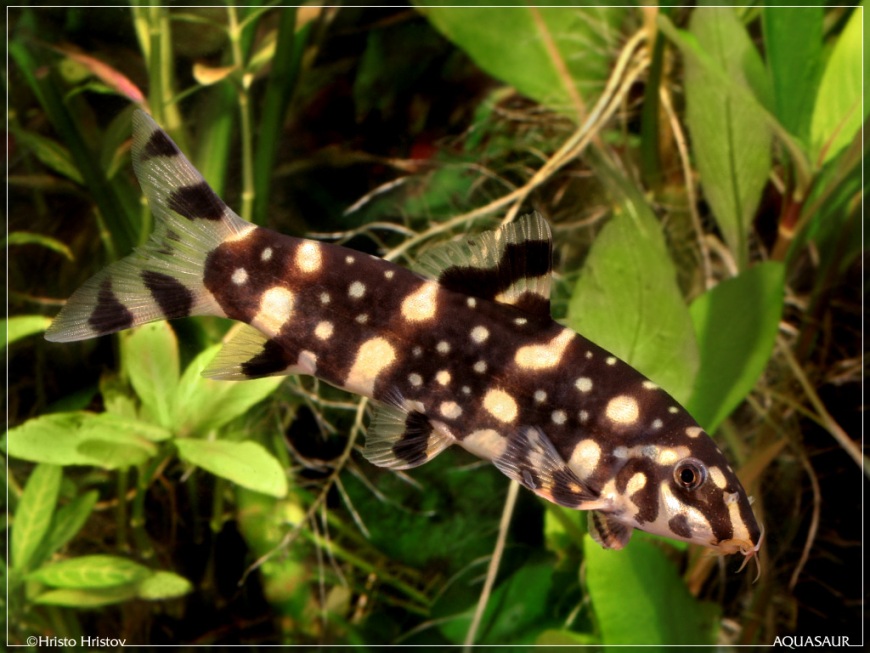
Botia kubotaiPolka-Dot Loach
Botiidae · Kottelat, 2004
Appears to be endemic to headwaters of the Salween River basin around the border between Myanmar and Thailand. The type specimens were collected from the Megathat Chaung (Megathat stream) in the upper Ataran (known as the Kasat in Thai) River basin, Kayin/Karen State, Myanmar and another population was later discovered in the Hanthayaw River (Suriya in Thai), Tak Province, Thailand.
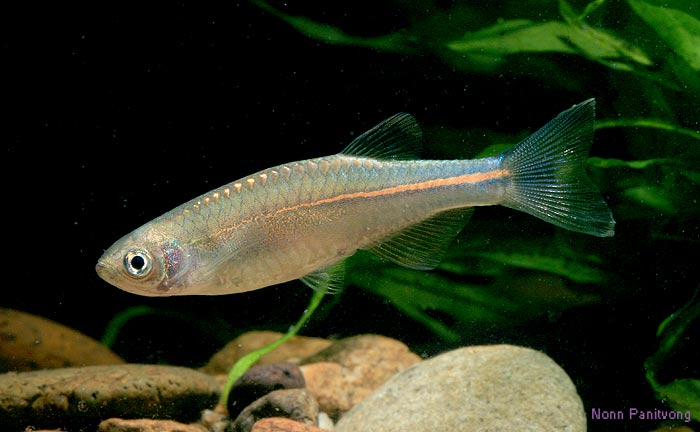
Brachydanio albolineataPearl 'Danio'
Cyprinidae · Blyth, 1860
Doubts remain whether B. albolineata is representative of a single species or a group of similarly-patterned, closely-related fish, and the form from Chantaburi province in eastern Thailand was revalidated as B. pulchra (formerly Danio pulcher Smith, 1931) by Kottelat (2013). The status of the currently invalid Danio tweedei (Brittan, 1955) from Kedah state, northern Peninsular Malaysia may also be in question, since fish from that area are clearly...
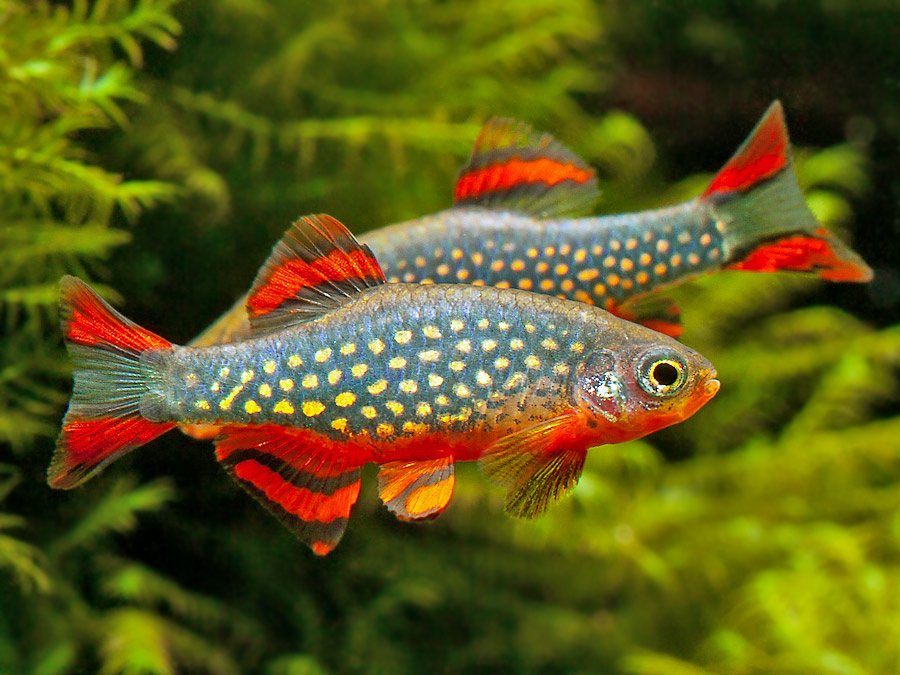
Celestichthys margaritatusCelestial Pearl 'Danio'
Cyprinidae · Roberts, 2007
The type locality is an area of permanently-flooded grassland formed by the damming of a spring for agricultural purposes. The water is only around 30cm deep, transparent and supports dense growths of aquatic plants, mostly from the family Hydrocharitaceae which includes such genera as Elodea, Egeria and Blyxa. Sympatric species included Devario sondhii, a Microrasbora very similar to M. rubescens, an undescribed Yunnanilus known to aquarists as the 'rosy' loach and Channa harcourtbutleri.
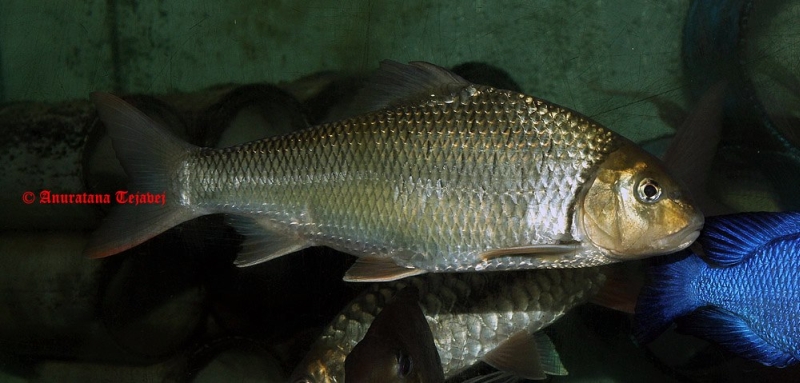
Chagunius baileyi
Cyprinidae · Rainboth, 1986
There are currently three species which look almost identical and are most easily separated by collection details since their ranges do not overlap in nature; C. chagunio is endemic to the Ganges and Brahmaputra drainages and C. nicholsi to the Ayeyarwady/Irrawaddy.
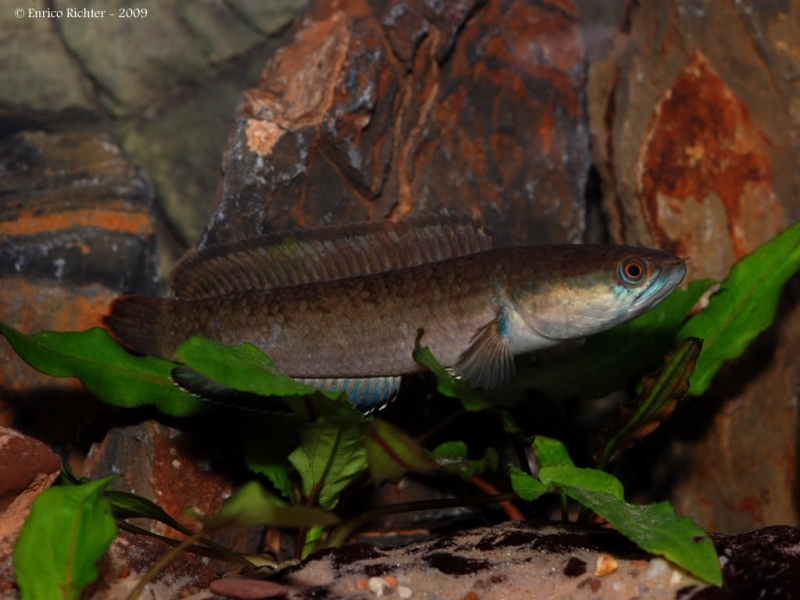
Channa gachuaDwarf Snakehead
Channidae · Hamilton, 1822
Generally considered to have an enormous natural range extending from Iran to Taiwan and Bali, with records existing from Iran, Iraq, Afghanistan, Pakistan, Nepal, India, Sri Lanka, Bangladesh, Bhutan, China, Myanmar, Thailand, Laos, Cambodia, Vietnam, Malaysia, Indonesia, and Singapore. However there exists significant evidence to suggest that C. gachua as currently understood represents a complex of similar-looking species, and a taxonomic review of the group is clearly required.
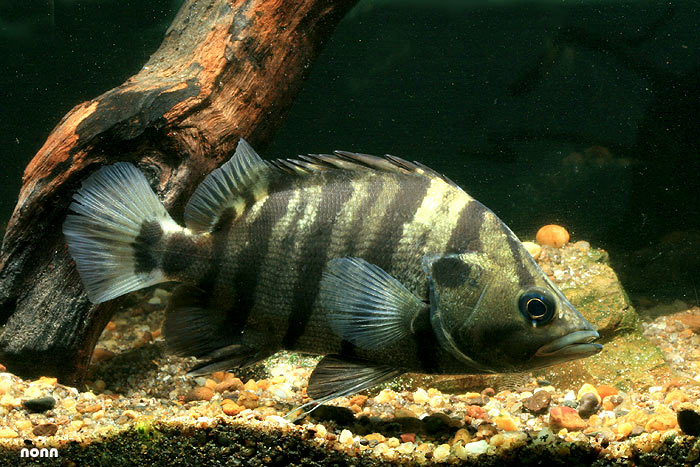
Datnioides polotaSilver Tiger Perch
Datnioididae · Hamilton, 1822
D. polota is sometimes referred to as D. quadrifasciatus (Sevastianov, 1809) but the original name of the latter, Chaetodon quadrifasciatus Sevastianov, 1809, is a junior primary homonym of the older Chaetodon quadrifasciatus Bloch & Schneider 1801, thus Coius polota Hamilton, 1822 takes precedence.
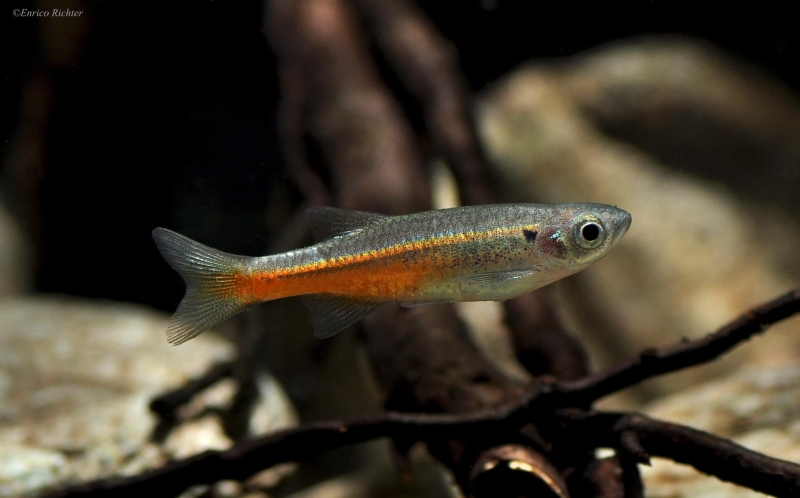
Devario sondhiiFireline Devario
Cyprinidae · Hora & Mukerji, 1934
The habitat near Hopong is an area of permanently-flooded grassland formed by the damming of a spring for agricultural purposes and is around 1,040 metres AMSL. The water is only around 30cm deep, transparent and supports dense growths of aquatic plants, mostly from the family Hydrocharitaceae which includes such genera as Elodea, Egeria and Blyxa.
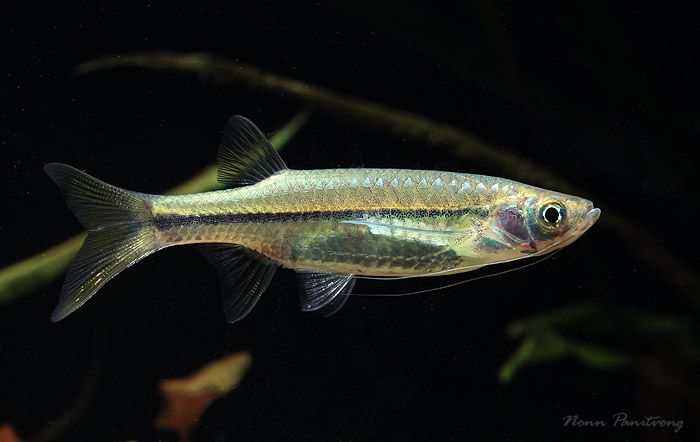
Esomus metallicusStriped Flying Barb
Cyprinidae · Ahl, 1923
There currently exist a dozen described Esomus spp. alhough few are seen in the aquarium trade and none are especially popular. Most are commonplace in their native countries and also quite plainly-patterned so generally overlooked by collectors. Their most common use in some areas is actually as a feeder fish in the aquaculture of larger species. They're characterised by greatly-enlarged pectoral fins and two pairs of barbels, of which the maxillary pair are extremely long and usually reach the pectoral fins.
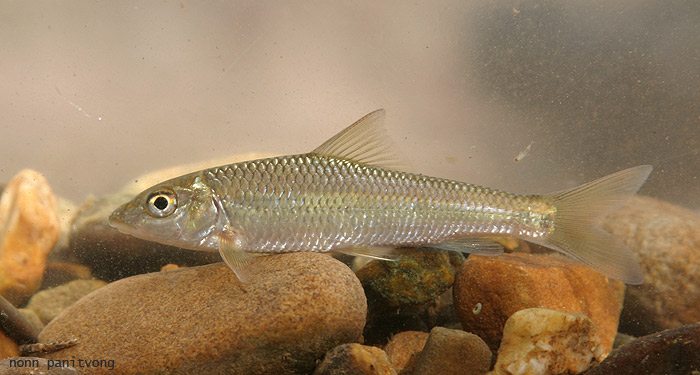
Folifer brevifilis
Cyprinidae · Peters, 1881
This species is widely-distributed in the Mekong river system in Thailand, Laos, and Vietnam, Salween and Ayeyarwaddy rivers in southern China, Myanmar, and Thailand, plus various smaller basins in Vietnam and China. It has also been recorded from the islands of Hainan and Hong Kong. Type locality is given as 'China: sent from Hong Kong'.
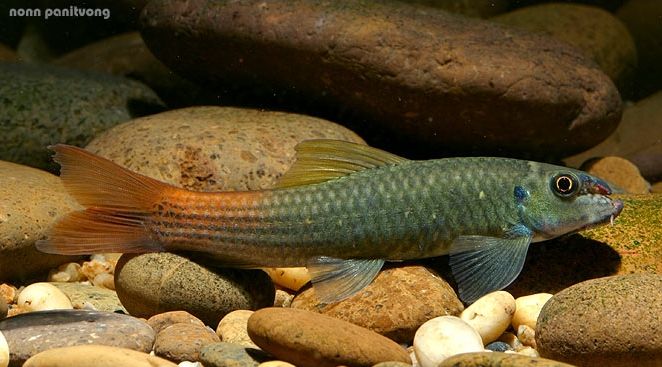
Garra sp. 'redtail'Burmese Red-tailed Garra
Cyprinidae · authority not recorded
A putatively undescribed species often imported and sold as G. sp. 'burmanicus'. It first appeared in the trade during 2005 and has since been available on a sporadic basis, usually with a relatively high price tag. As well as its unique colour pattern, a primary diagnostic character is the presence of a proboscis-like rostral process between the eyes.
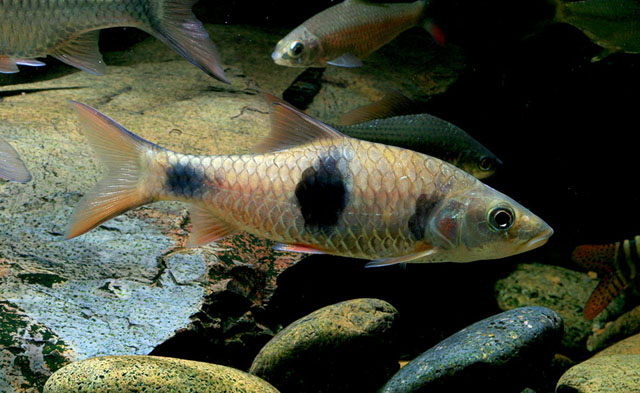
Hampala salweenensis
Cyprinidae · Doi & Taki, 1994
This species is poorly-known in the aquarium hobby and may have never been maintained outside its native countries. It can be distinguished from congeners by the following combination of characters: 26-27 lateral line scales; two roundish, dark blotches on each flank, one beneath dorsal-fin origin and above the lateral line, the other on the caudal peduncle and passing thro...
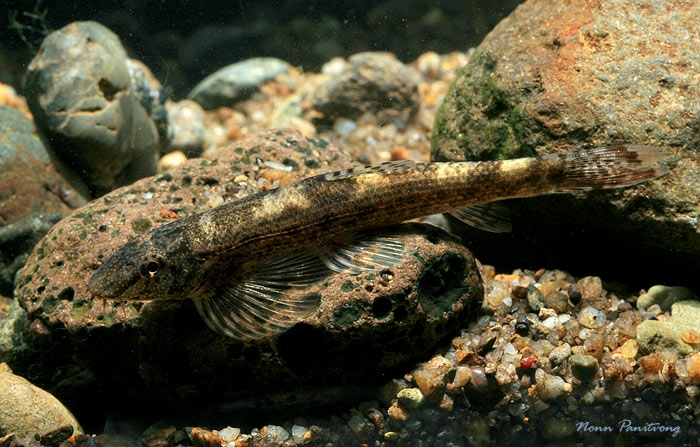
Homalopteroides modestus
Balitoridae · Vinciguerra, 1890
Homalopteroides spp. are specialised micropredators feeding on small crustaceans, insect larvae and other invertebrates. In captivity some sinking dried foods may be accepted but regular meals of live or frozen Daphnia, Artemia, bloodworm, etc., are essential for the maintenance of good health.
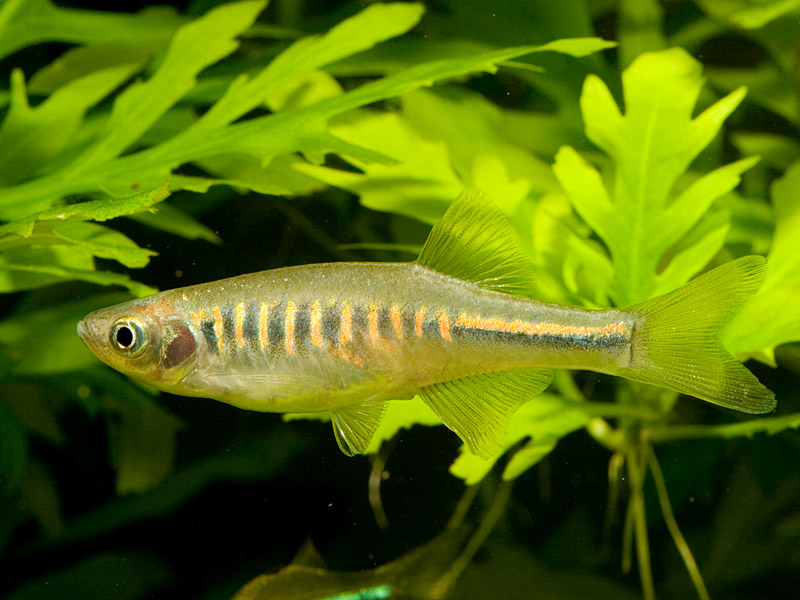
'Inlecypris' shanensis
Cyprinidae · Hora, 1928
This species is sometimes referred to as 'Hora danio' or Salween danio'. It is distinguished from similar-looking species by a combination of characters as follows: lateral line complete or incomplete with 22-33 pored scales; absence of infraorbital process; 7 branched dorsal-fin rays; usually 10 or 11 branched anal-fin rays; barbels absent or rudimentary; flank markings comprising a series of narrow vertical bars on the anterior portion of each flank, fol...
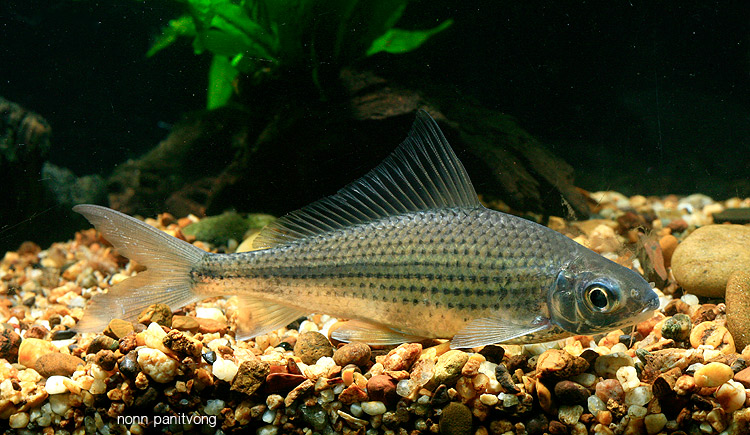
Labiobarbus leptocheilus
Cyprinidae · Valenciennes, 1842
Different populations vary in appearance somewhat (see image of Salween specimen for example), and L. leptocheilus may turn out to represent a group of closely-related species rather than a single taxon. The population from the Cambodian Mekong has been considered to represent a distinct species, Labiobarbus lineatus, although that name is currently a synonym of L. leptocheilus following Kottelat (2013). It is widely used in the ornamental trade, however.
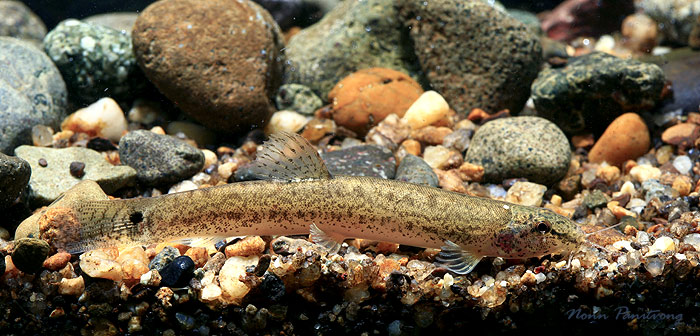
Lepidocephalichthys berdmorei
Cobitidae · Blyth, 1860
This is one of the most frequently-traded members of the genus and is an excellent choice for those new to keeping loaches. It's distinguishable from congeners by a combination of characters including: relatively large adult size (to at least 80 mm SL); rounded/truncate caud...
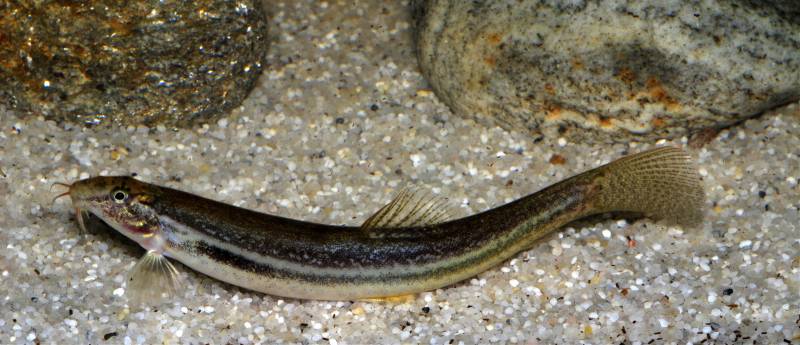
Lepidocephalichthys guntea
Cobitidae · Hamilton, 1822
This is one of the most frequently-traded members of the group and is an excellent choice for those new to keeping loaches. It's distinguishable from congeners by a combination of characters including: rounded/truncate caudal-fin; a scaleless patch on top of the head; relatively large adult size; flanks with spotted patterning in females and a solid...
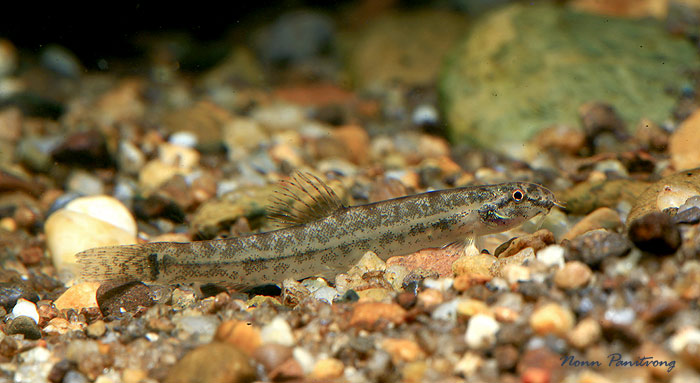
Lepidocephalichthys hasselti
Cobitidae · Valenciennes, 1846
At one locality close to Ban Na Hwai, Chiang Mai Province, Thailand L. hasselti was collected from a shallow (<0.5 m) pool in a swampy zone between forest and rice fields. The substrate was of mud, there was no aquatic vegetation and it was being used as drinking water by local animals, with the only effluent connected to a 'small creek'. Other species found there were Physoschistura pseudobrunneana, Rasbora hobelmani and Systomus cf. orphoides.
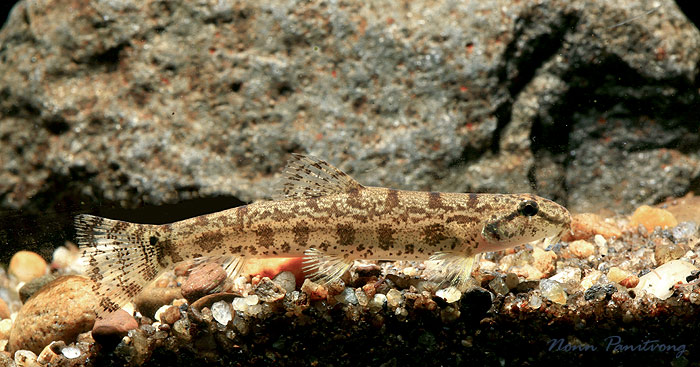
Lepidocephalichthys micropogon
Cobitidae · Blyth, 1860
According to Kottelat (2012) L. manipurensis Arunkumar, 2000, which was described from Moreh, Manipur state, northeastern India, close to the border with Myanmar, is a syonym of L. micropogon. Havird and Page (2010) differentiate the two based on caudal-fin patterning, predorsal length and ver...
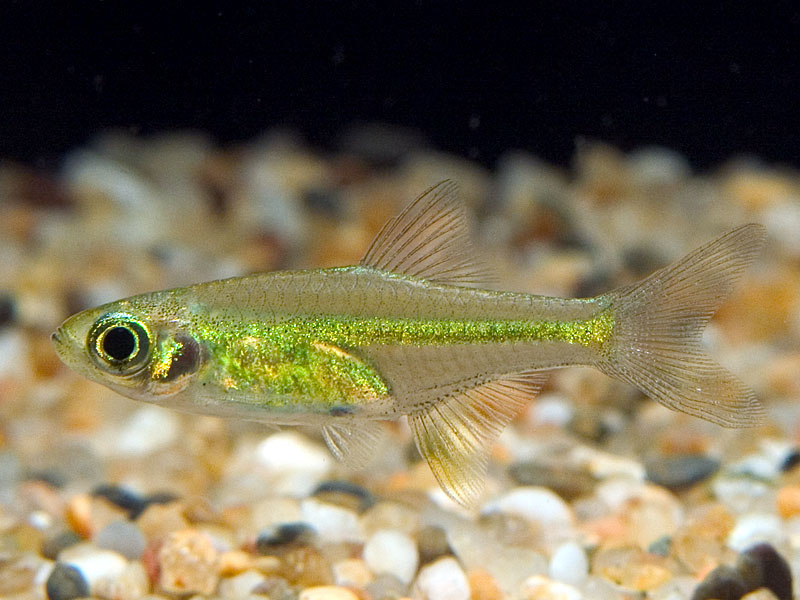
Microdevario kubotai
Cyprinidae · Kottelat & Witte, 1999
Apparently inhabits calm to moderately-flowing stretches of well-oxygenated headwaters and minor tributaries. Such habitats tend to comprise transparent water, substrates of sand, gravel, rocks, boulders, and patches of leaf litter, with submerged driftwood, roots of riparian vegetation, and aquatic vegetation in places.
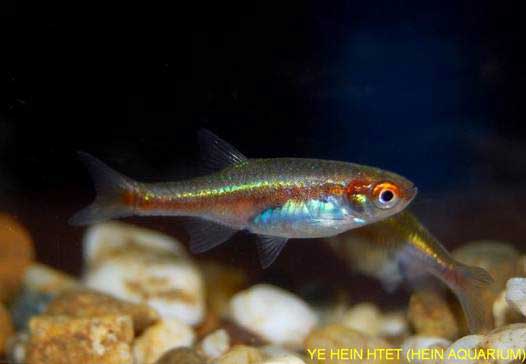
Microrasbora cf. rubescensFlame Red 'Rasbora'
Cyprinidae · authority not recorded
This is possibly an undescribed species and has been marketed as 'Asian Cardinal Rasbora', 'flame red rasbora', M. sp. 'rose blue line' or M. 'thuzari' in the ornamental trade. It differs from M. rubescens by its larger adult size, possession of a greenish to bluish lateral stripe, and lesser extent of orange pigmentation on the body. It also appears to represent a distinct genetic lineage (Collins et al., 2012).
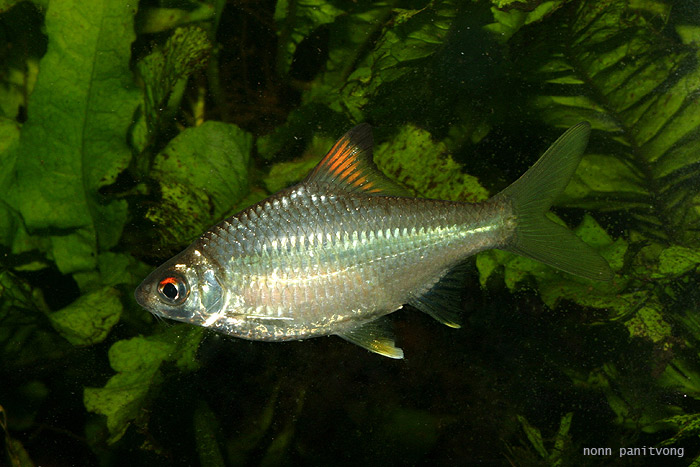
Mystacoleucus argenteus
Cyprinidae · Day, 1888
All Mystacoleucus species possess a procumbent predorsal spine orientated towards the head, though it can be difficult to spot with the naked eye. This can become entangled in an aquarium net so care must be taken when handling the fish. The trait is shared by members of Tor, Spinibarbus and Paraspinibarbus although there exists no strong evidence to suggest that these genera form a monophyletic lineage and it is...
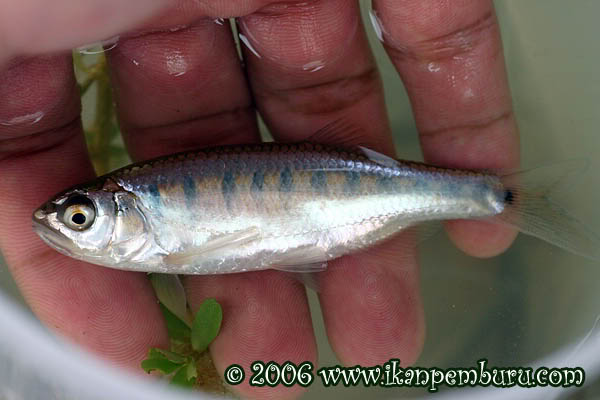
Opsarius caudiocellatus
Cyprinidae · Chu, 1984
This species may have appeared in the aquarium trade though probably not under the correct name. It can be told apart from similar-looking congeners by the following combination of characters: presence of a black round spot at the caudal base; dorsal-fin rays black with connecting membranes transparent; posterior dorsal-fin origin located midway between upper angle of gill aperture and caudal-fin base, or slightly closer to the latter.
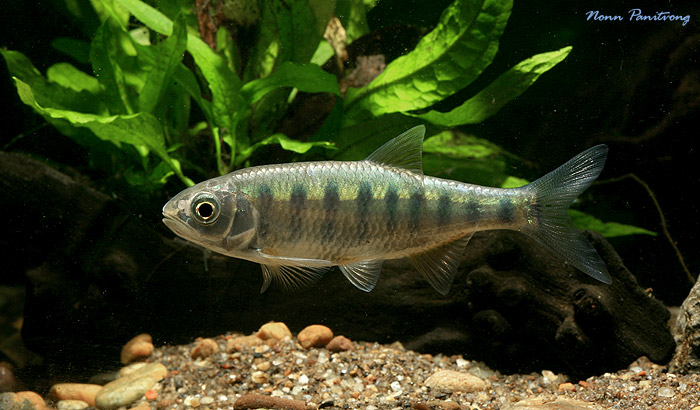
Opsarius infrafasciatus
Cyprinidae · Fowler, 1934
This species has previously been considered synonymous with both O. ornatus and O. pulchellus but is currently considered to be distinct following (Tejavej, 2012). It can be distinguished from congeners by a combination of characters including: small caudal spot presen...
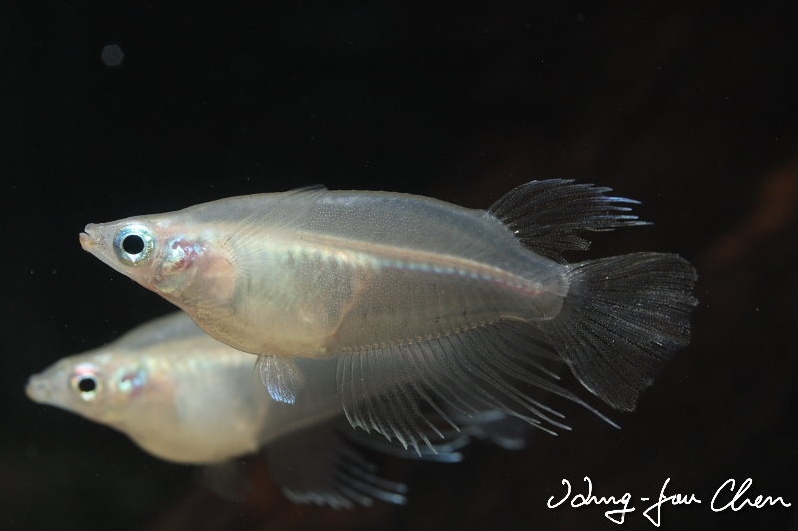
Oryzias dancenaIndian Ricefish
Adrianichthyidae · Hamilton, 1822
This species continues to be mislabelled as O. melastigma, a name currently considered invalid by the majority of recent workers, or O. javanicus, a valid but distinct taxon. Roberts (1998) demonstrated that MClelland's description of Aplocheilus melastigmus, later renamed O. melastigma, does not correspond with any known Oryzias species from the Indian subcontinent or Myanmar since it's said to have a dark spot in the dorsal-fin and an excessively slim body, among other anomalies.
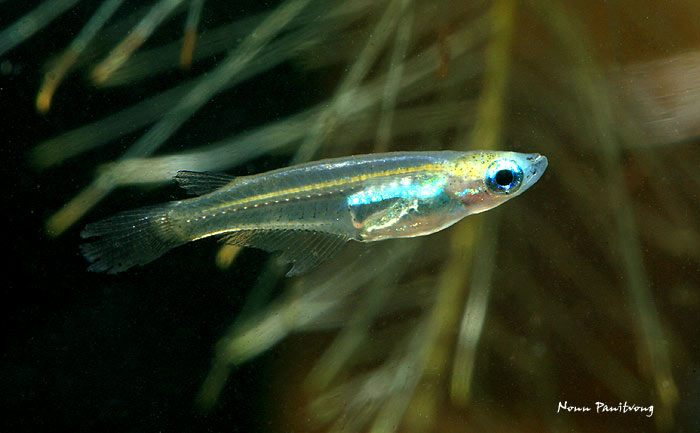
Oryzias minutillusDwarf Medaka
Adrianichthyidae · Smith, 1945
Best maintained in a heavily planted set-up, ideally with a dark substrate, patches of dense vegetation, and some open areas. Other décor can consist of twisted roots and pieces of bogwood, while surface vegetation is also appreciated by the fish. When maintained under such conditions they're more likely to display their best colours, and planted aquaria also offer fry a more favourable chance of survival alongside the adults.
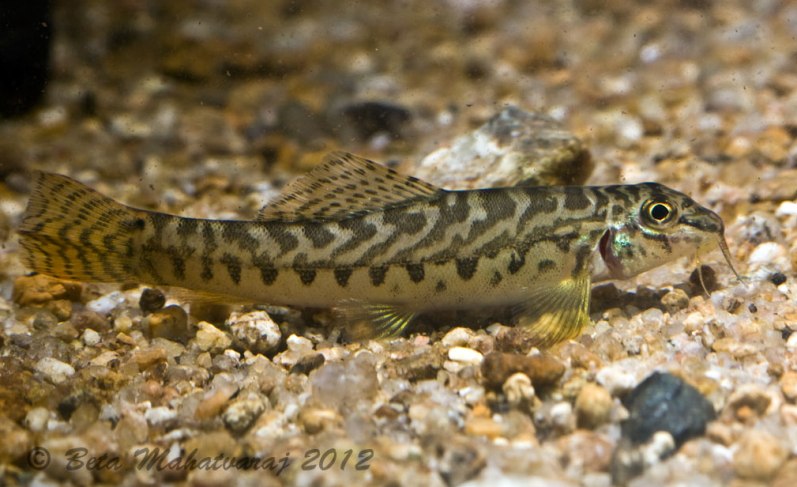
Paracanthocobitis botiaZipper Loach
Nemacheilidae · Hamilton, 1822
Traded under various names including 'mottled', 'eyepot', 'sand' and 'striped' loach. It's perhaps one of the better choices for those new to keeping nemacheilids being relatively hardy, peaceful and exhibiting some quirky behavioural traits. The characteristic ocellus, a dark marking at the top of the caudal peduncle that resembles an eye, is thought to have some function in predator distraction and is normally more intense in younger specimens.
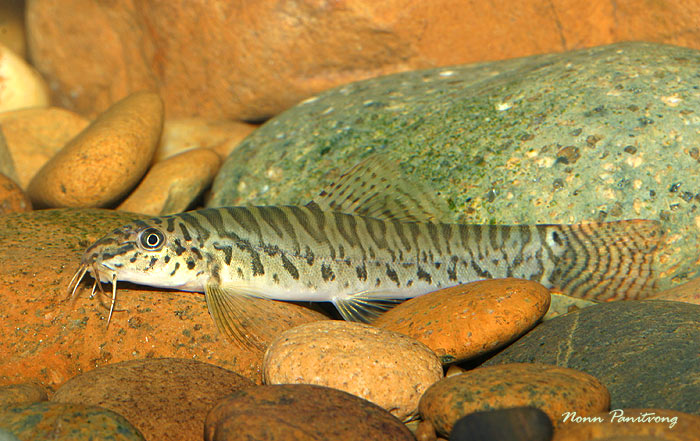
Paracanthocobitis pictilisCherry-fin Loach
Nemacheilidae · Kottelat, 2012
Prior to description this species was considered to represent, and traded as, A. rubidipinnis, but that species is apparently endemic to the lower Irrawaddy basin in Myanmar and unknown in the aquarium hobby. Male individuals of A. pictilis, A. botia and A. mandalaysensis possess a suborbital slit rather than suborbital flap which immediately distinguishes...
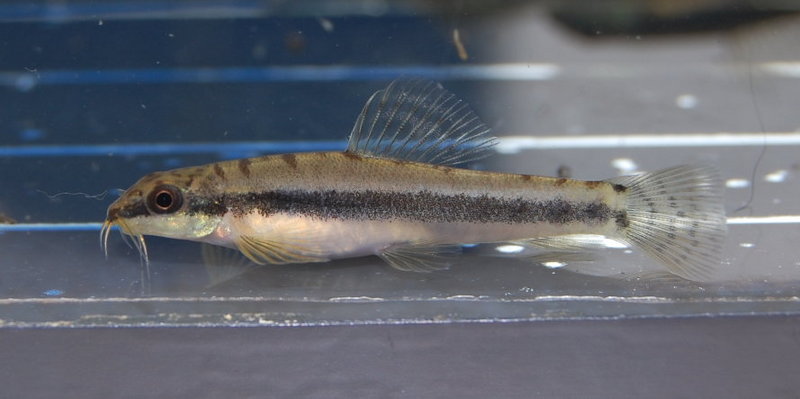
Paracanthocobitis zonalternans
Nemacheilidae · Blyth, 1860
According to Kottelat (1990) the chief distinguishing characters for the genus are: possession of 9-18½ branched dorsal-fin rays; colour pattern without black basal caudal bar, but with an ocellus at upper base of caudal-fin; upper lip with or without several rows of papillae; lower lip with a broad median interruption and a widened, papillated pad on each side.
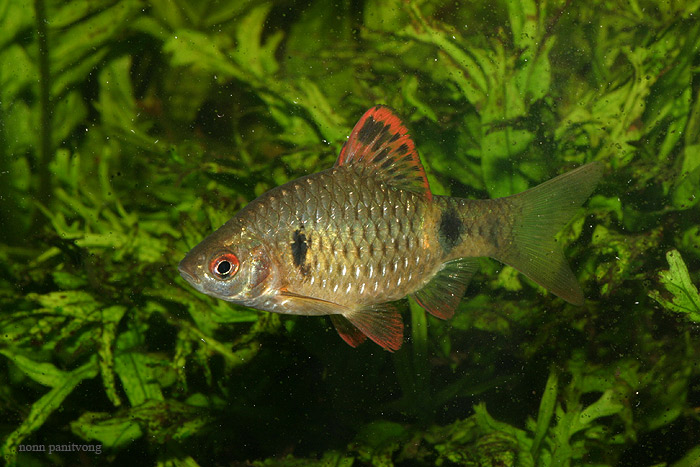
Pethia stoliczkana
Cyprinidae · Day, 1871
This species is confused with P. ticto in much of the available literature and is sometimes listed as a synonym of it. Although some populations of the two species possess a similar colour pattern (there are reports of a P. ticto variant from the south of West Bengal state in India with a red, black-flecked dorsal-fin, for example) they do not occur in the same waters in nature and can be distinguished by examining the lateral line. This is complete in...
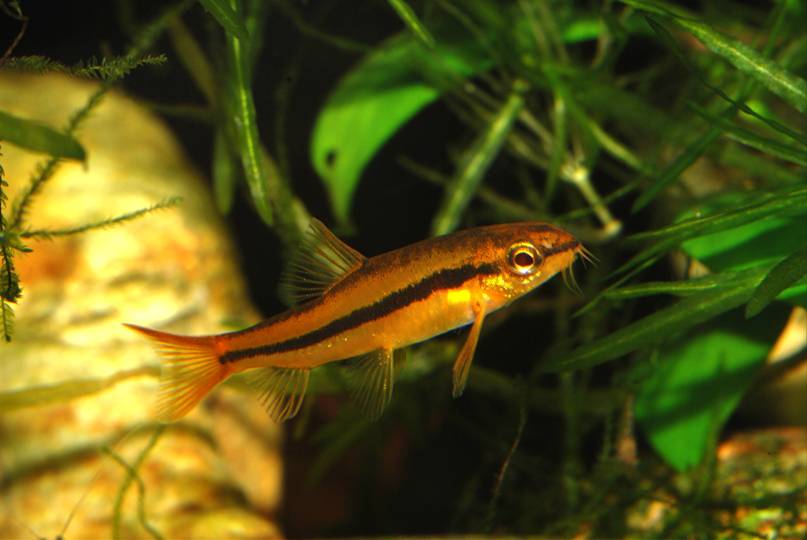
Petruichthys sp. 'rosy'Rosy Loach
Nemacheilidae · authority not recorded
This species continues to be referred to by the fictitious scientific name 'Tuberoschistura arakensis' but actually appears to be an undescribed Yunnanilus sp. and is also sometimes traded as Y. sp. 'orange' or 'Burmese pink loach' but appears to be a member of the genus Petruichthys as per Kottelat (2012). There exist more than 30 described Yunnanilus spp., the...
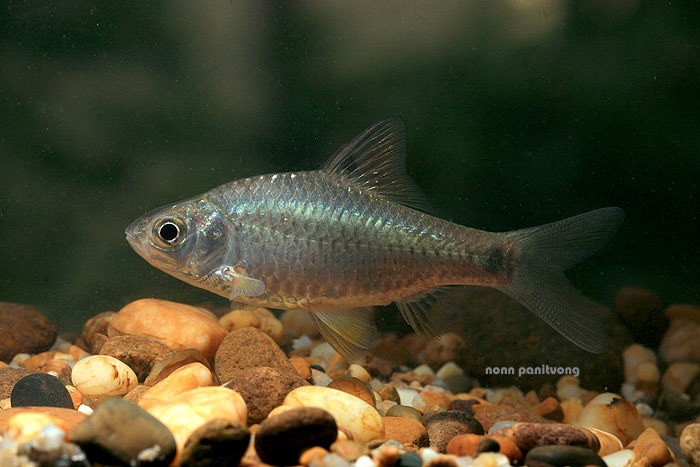
Puntius cholaSwamp Barb
Cyprinidae · Hamilton, 1822
P. chola was retained in Puntius sensu stricto, of which members are defined by the following combination of characters: adult size usually less than 120 mm SL; maxillary barbels absent or present; rostral barbels absent; 3-4 unbranched and 8 branched dorsal-fin rays; 3 unbranched and 5 branched anal-fin rays; last unbranched dorsal-fin ray weak or strong and unserrated; lateral line complete with 22-28 pored body scales...
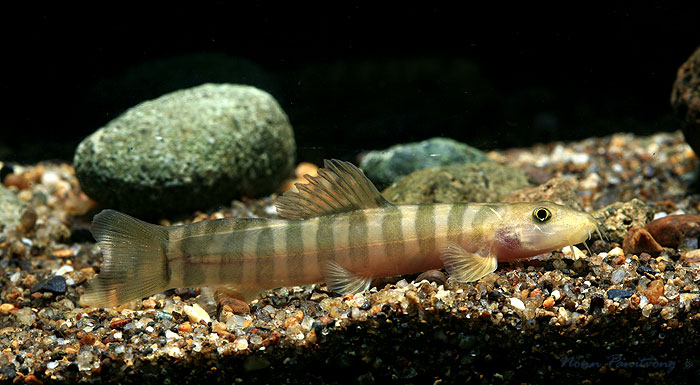
Schistura alticrista
Nemacheilidae · Kottelat, 1990
This species is very rare in the aquarium trade but available on occasion. It has 8-9 darkish body bars which usually split vertically as the fish mature, and like some conspecifics possesses a prominent dorsal adipose crest on the caudal peduncle. Schistura is the most species-rich genus among...
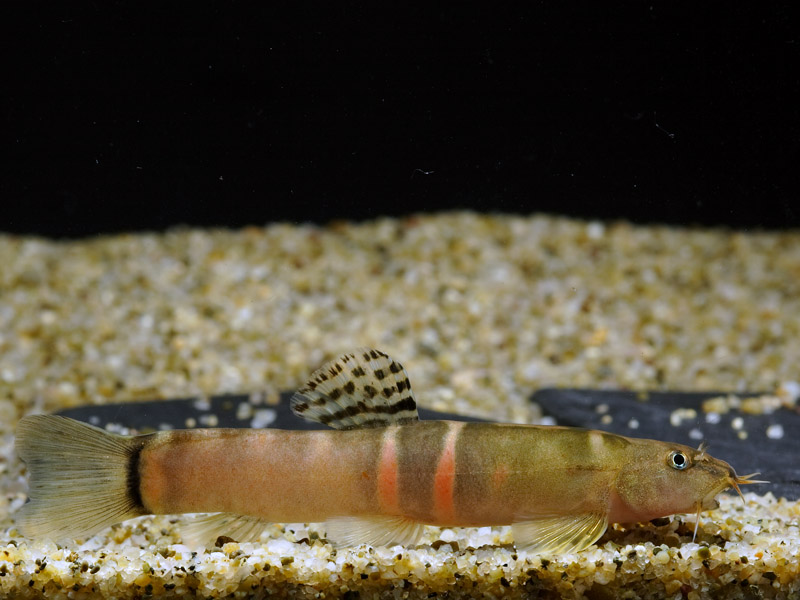
Schistura cf. balteataSumo Loach II
Nemacheilidae · authority not recorded
This apparently undescribed species has been available in the hobby since around 2006 and has been traded under several trade names of which others include 'tri-band sumo loach' and 'chubby loach'. The name 'Sumo II' is now in wide use to distinguish it from the real S. balteata since both have been traded as 'Sumo loach'...
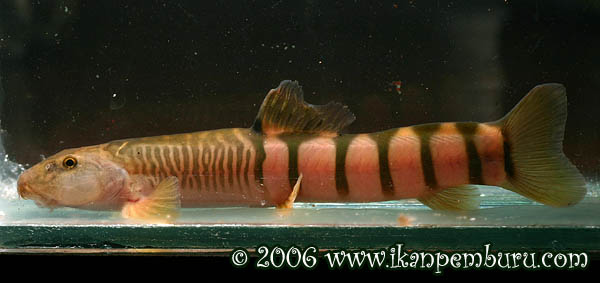
Schistura disparizona
Nemacheilidae · Zhou & Kottelat, 2005
Can be told apart from congeners by its colour pattern which consists of 8-11 closely-set, narrow dark bars in the anterior part of the body and 5 wider bars in the posterior part. It also possesses prominent dorsal and ventral adipose crests on the caudal peduncle and 9½ branched dorsal-fin rays.
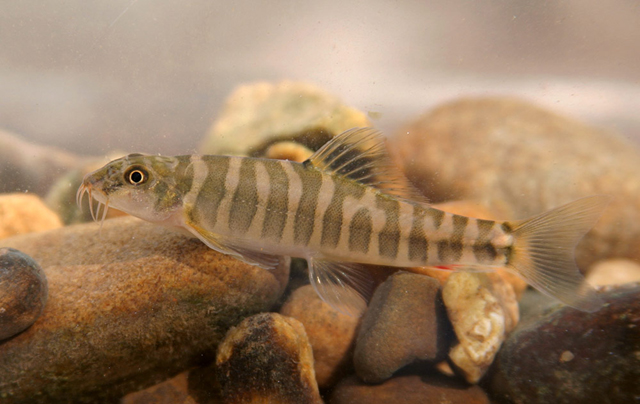
Schistura maepaiensis
Nemacheilidae · Kottelat, 1990
The type locality originally consisted of a shallow (0.5 - 1.5 m deep) stream with a substrate of rocks and boulders and flow varying from 'moderate to swift'. When the holotype was collected there in 1980 sympatric species included Acanthocobitis zonalternans, Puntius orphoides, Pethia ticto, Raiamas guttatus, Barilius barnoides, Mystacoleucus argenteus and Mastacembelus armatus plus unidentified members of Crossocheilus an...
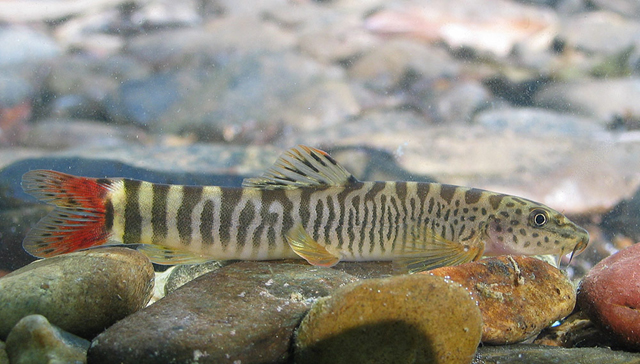
Schistura vinciguerrae
Nemacheilidae · Hora, 1935
This species is traded on a fairly regular basis and is similar in appearance to some congeners, most notably S. bella, S. mahnerti, S. multifasciata, S. poculi, S. reticulata, S. longa, S. conirostris and S. udomritthiruji. This assemblage has been referred to as the Schistura multifasciata 'group', and members share a...
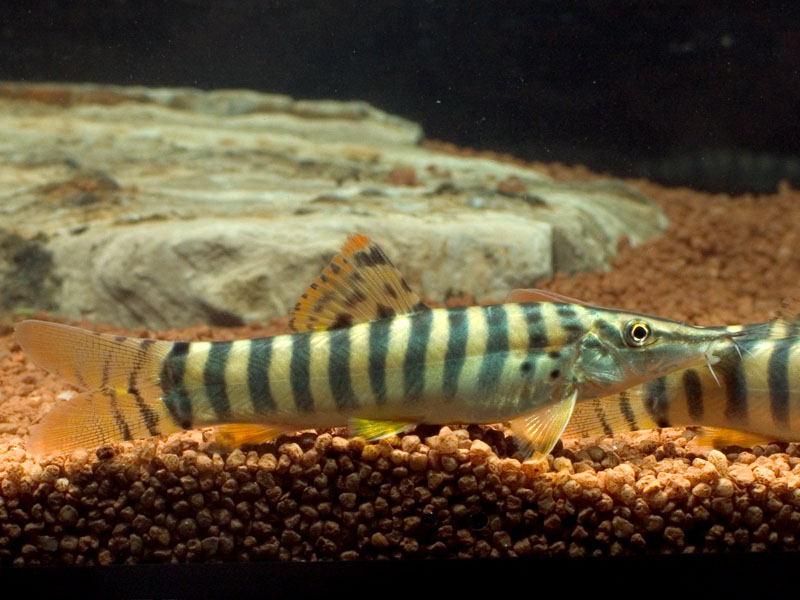
Syncrossus berdmoreiRedfin Tiger Loach
Botiidae · Blyth, 1860
Interestingly some observations suggest that the character of the highest-ranked, or alpha, fish appears to affect that of the whole group though it must be said that scientific studies of botiid loach behaviour are virtually non-existent. It certainly seems that they display a degree of 'personality' with some specimens being naturally bolder/more aggressive than others. The alpha is normally the largest specimen within the group and often female. Sound also appears to be an important factor in communication since these loaches are able...
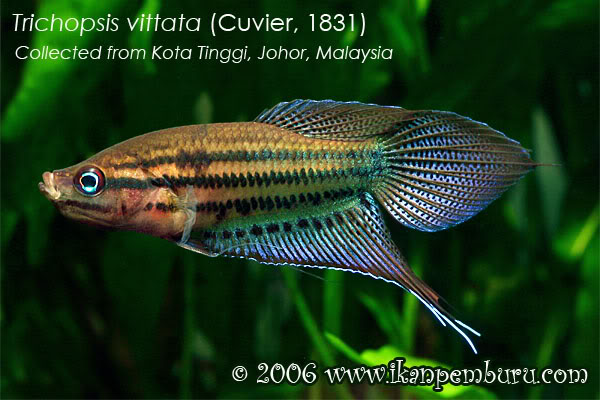
Trichopsis vittataCroaking gourami
Osphronemidae · Cuvier, in Cuvier & Valenciennes, 1831
The common name is derived from the ability of genus members to produce audible sounds via a specialised pectoral mechanism which is unique within the family Osphronemidae. The structure comprises modified pectoral-fin tendons and muscles which are stretched and plucked by basal elevations of two fin rays in a similar way to guitar strings via rapid beating of the fins. The pectoral-fins beat alternately, each able to generate short or long bursts of sound. These sounds are produced by both sexes, predom...
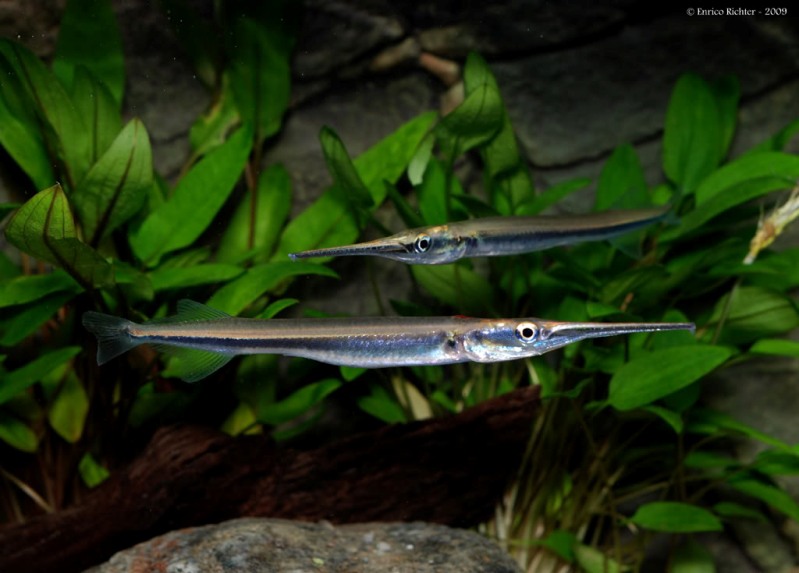
Xenentodon cancilaFreshwater Needlefish
Belonidae · Hamilton, 1822
X. cancila is often seen referred to as 'freshwater garfish', and although it does superficially resemble the true gars of the family Lepisosteidae, it's actually a member of the Belonidae, or needlefishes, the majority of which are marine or estuarine in existence. There are currently just two species in the genus although the probable existence of a third member has been noted by Roberts (1989) among oth...
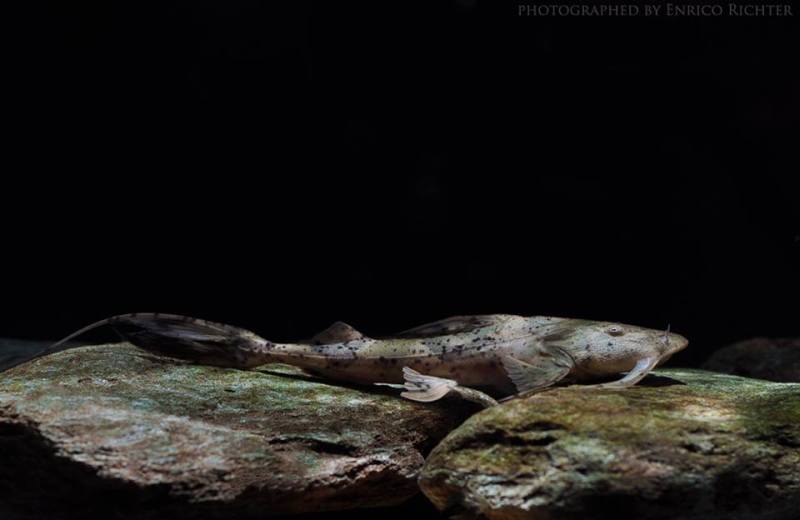
Bagarius yarrelliGoonch
Sisoridae · Sykes, 1839
This species is clearly unsuitable for the home aquarium given its eventual size and natural behaviour, and we know of only a handful of private aquarists with the facilities required to house it long-term. The grouping currently contains four species but is in urgent need of review with a number of additional taxa thought to exist and B. yarrelli possibly representing a synonym of B. bagarius.
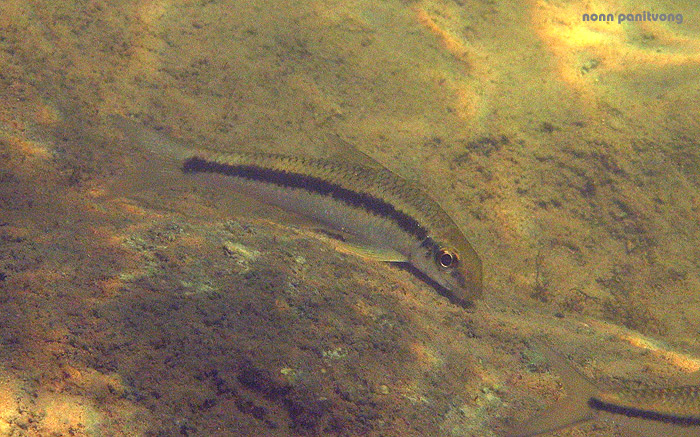
Crossocheilus burmanicus
Cyprinidae · Hora, 1936
We've been unable to obtain a diagnosis for this species to date but it can at least be distinguished from those congeners traded as 'Crossocheilus siamensis' (an invalid name synonymous with C. oblongus, which is itself of questionable identity), 'Siamese algae eater', or 'SAE' by the fact that the dark lateral stripe does not extend into the caudal-fin. Members of Crossocheilus are characterised by...
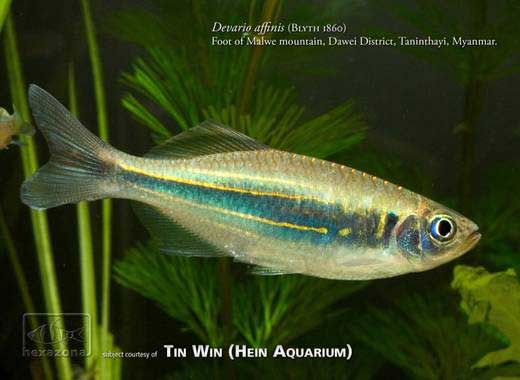
Devario affinis
Cyprinidae · Blyth, 1860
Type locality is 'Tenasserim, Myanmar' which at time of description was used to refer to the portion of Myanmar lying to the south and east of the Ayeyarwaddy/Irrawaddy river delta, including present-day Kayah, Kayin, and Mon states, Bago Division, and possibly the southern Tanintharyi Region. Blyth's description paper covered fishes collected from the Sittaung River (plus a few Gangetic species) in what is currently Bago Division, but we've been unable to locate any modern records of D. affinis fro...
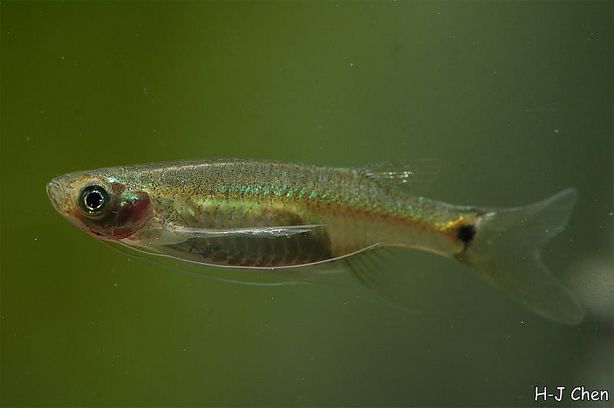
Esomus caudiocellatus
Cyprinidae · Ahl, 1924
E. caudiocellatus can be told apart from congeners by lacking a dark lateral stripe and possessing a prominent dark marking on the caudal peduncle. In recent years a number of phylogenetic studies involving Esomus and its near relatives have been conducted and conflicting results published. For example a 2003 study by Fang et al. concluded that the genus is the sister group, i.e., most closely-related to...
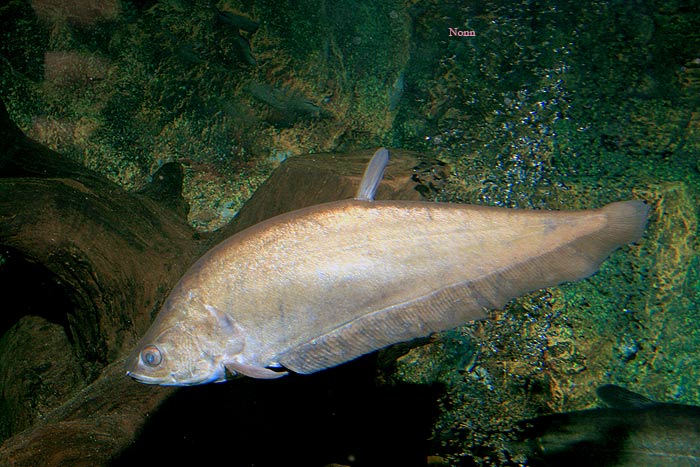
Notopterus notopterusBronze Featherback
Notopteridae · Pallas, 1769
This species is also referred to as 'Asian knifefish' or 'ghost knifefish' in the aquarium trade in the aquarium trade but arguably has no place in the ornamental hobby given its adult size and specialised requirements. It is sometimes confused with the African species Xenomystus nigri but is easily told apart by its larger adult size and presence (vs. absence) of a dorsal fin.
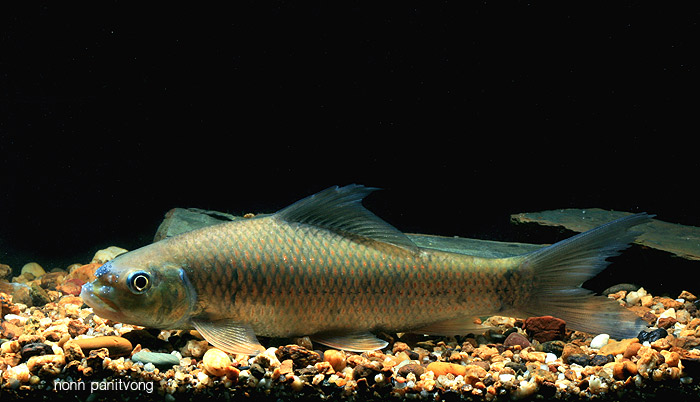
Bangana devdevi
Cyprinidae · Hora, 1936
Known with certainty from the Irrawaddy River system in Manipur state, India, and Myanmar, and the Salween watershed in eastern Myanmar and northwestern Thailand. Records from the Red River basin in Vietnam appear questionable. Type locality is 'Burma: Myitkyina District: Mali Hka basin: Phungin Hka;'.
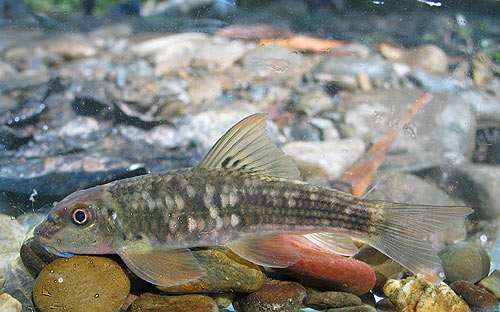
Garra notata
Cyprinidae · Blyth, 1860
G. notata is one of a number of congeners to lack both a transverse groove and a proboscis on the snout. It also possesses 33-34 lateral line scales and a series of dark spots at the base of the dorsal-fin rays, and lacks scales on the lower portion of the body and abdomen. The genus Garra is a particularly enigmatic grouping with new taxa...
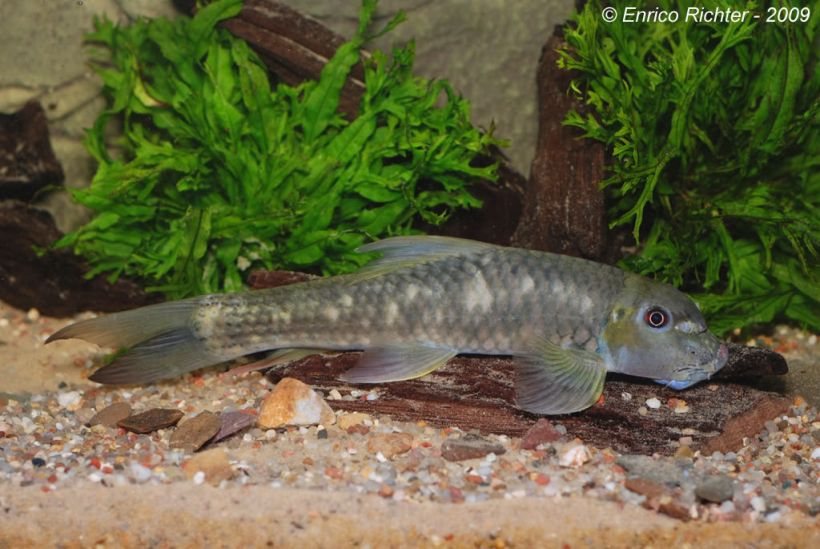
Garra salweenica
Cyprinidae · Hora & Mukerji, 1934
G. salweenica can be distinguished from other congeners inhabiting the Salween watershed by the following combinatuion of characters: body brownish; presence of a trilobed proboscis on the snout; snout blunt; a series of black spots at the base of the central dorsal-fin rays; presence of longitudinal stripes on the posterior portion of the body; a dark marking at the tip of the upper (and lower in some specimens) caudal-fin lobe; body depth 22.4-25.3 % SL.
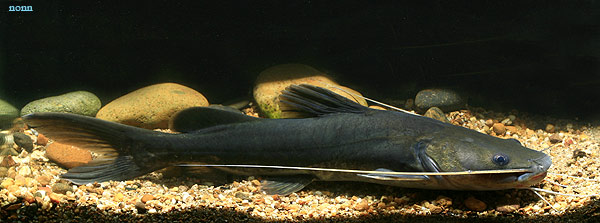
Hemibagrus microphthalmus
Bagridae · Day, 1877
This species cannot be considered a suitable home aquarium subject given its eventual size plus the fact it can live for several decades. It can be told apart from most oth...
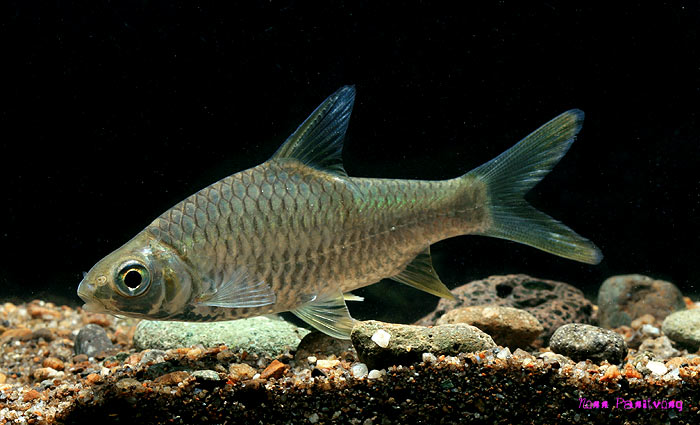
Hypsibarbus salweenensis
Cyprinidae · Rainboth, 1996
Endemic to the Salween river system in Yunnan province, southern China, eastern Myanmar, and northwestern Thailand. Type locality is 'Salween River midway between Mae Sam Laep and Paleh, Mae Hong Son province, Thailand.'
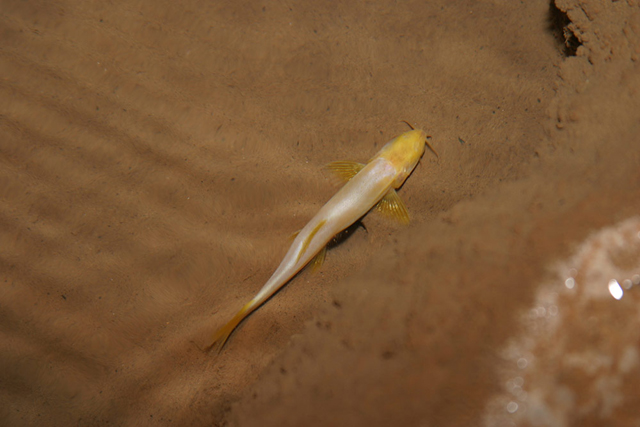
Schistura oedipus
Nemacheilidae · Kottelat, 1988
It's known from five caves in total, the others being Tham Huet, Tham Ban Louk Kow Larm, Tham Nong Pha Cham, and Tham Mae Lana. Streams flowing from these caves drain into the Nam Lang and Nam Khong rivers of the Salween drainage system, and the two easternmost caves, Tham Huet and Tham Nong Pha Cham, are both tributaries of the former.
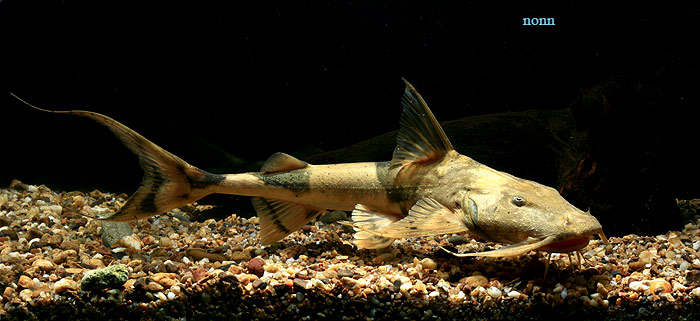
Bagarius bagarius
Sisoridae · Hamilton, 1822
There is considerable confusion surrounding the identity of B. bagarius with its name having been widely applied to a relatively small species that is said to reach only 200 mm SL and considered to be common in northern India and much of Indochina.
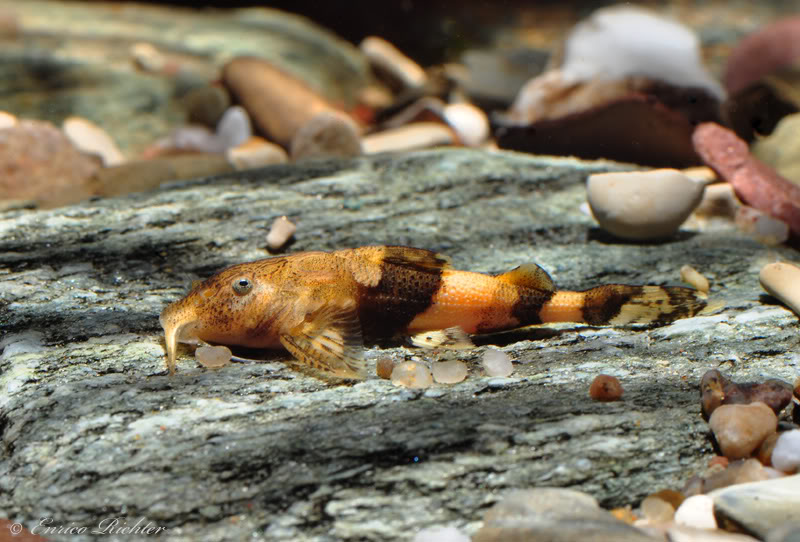
Caelatoglanis zonatus
Erethistidae · Ng & Kottelat, 2005
Known only from the Ataran River system in Kayin state, Myanmar. The Ataran forms the headwaters of part of the larger Salween drainage, and some of its tributaries extend across the nearby border into Thailand, where it’s known as the Kasat. Type locality is 'Stream ''Chon Son' between Kyondaw and Phadaw, about 20 kilometers north...